
Genital Warts Treatment Market Size and Share
Market Overview
| Study Period | 2020 - 2031 |
|---|---|
| Market Size (2026) | USD 2.06 Billion |
| Market Size (2031) | USD 2.73 Billion |
| Growth Rate (2026 - 2031) | 5.80 % |
| Fastest Growing Market | Asia-Pacific |
| Largest Market | North America |
| Market Concentration | Medium |
Major Players *Disclaimer: Major Players sorted in no particular order Image © Mordor Intelligence. Reuse requires attribution under CC BY 4.0. | |
Genital Warts Treatment Market Analysis by Mordor Intelligence
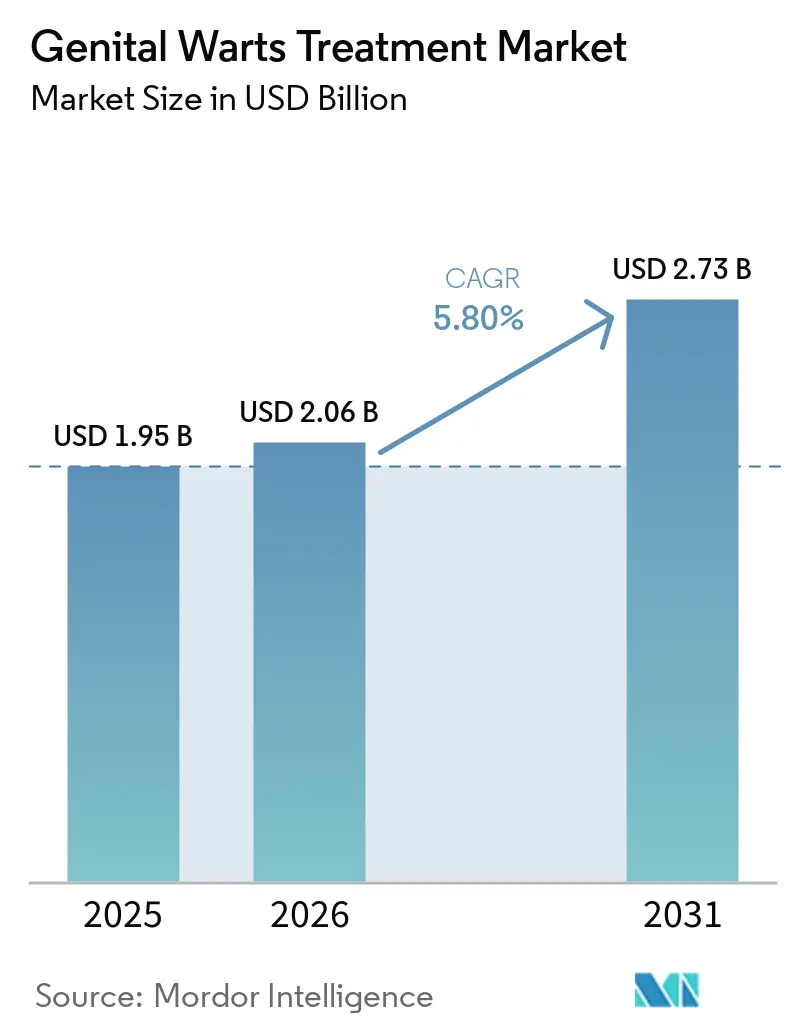
The Genital Warts Treatment Market size was valued at USD 1.95 billion in 2025 and is estimated to grow from USD 2.06 billion in 2026 to reach USD 2.73 billion by 2031, at a CAGR of 5.80% during the forecast period (2026-2031).
Low-risk human papillomavirus types 6 and 11 accounted for more than 90% of genital wart cases. Vaccination reduced the risk of future infections but did not treat existing infections, sustaining demand for diagnosis, prescription therapies, and follow-up care among unvaccinated adults and those infected before vaccination eligibility. Dutch primary care data showed that total annual costs for diagnosed genital warts increased by 108% between 2011 and 2021, reaching EUR 4.9 million (USD 5.3 million), while the cost per incident case rose from EUR 72 (USD 78) to EUR 99 (USD 107). Continued infections, recurrent lesions, remote consultation adoption, and access to affordable patient-applied medicines shaped the genital warts treatment market.
Key Report Takeaways
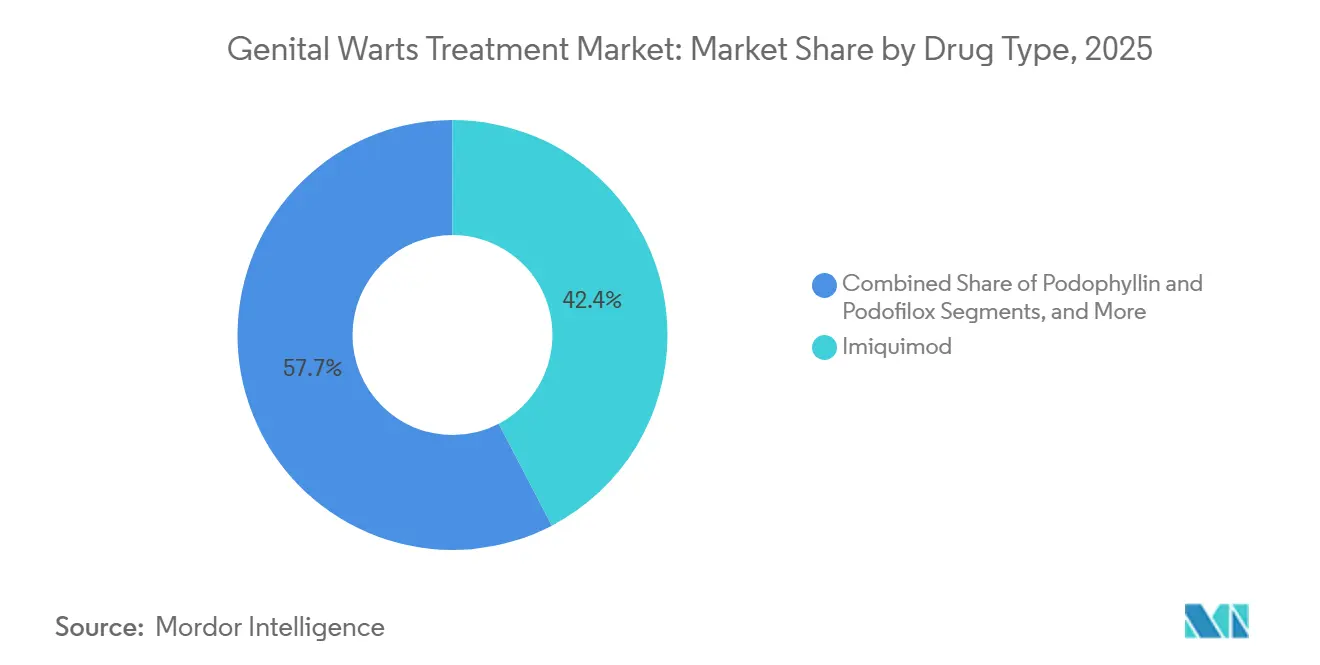
- By drug type, imiquimod held 42.35% revenue share in 2025, while sinecatechins is projected to grow at a CAGR of 6.56% through 2031.
- By route of administration, topical formulations accounted for 51.45% of revenue in 2025 and are projected to expand at a CAGR of 7.12% through 2031.
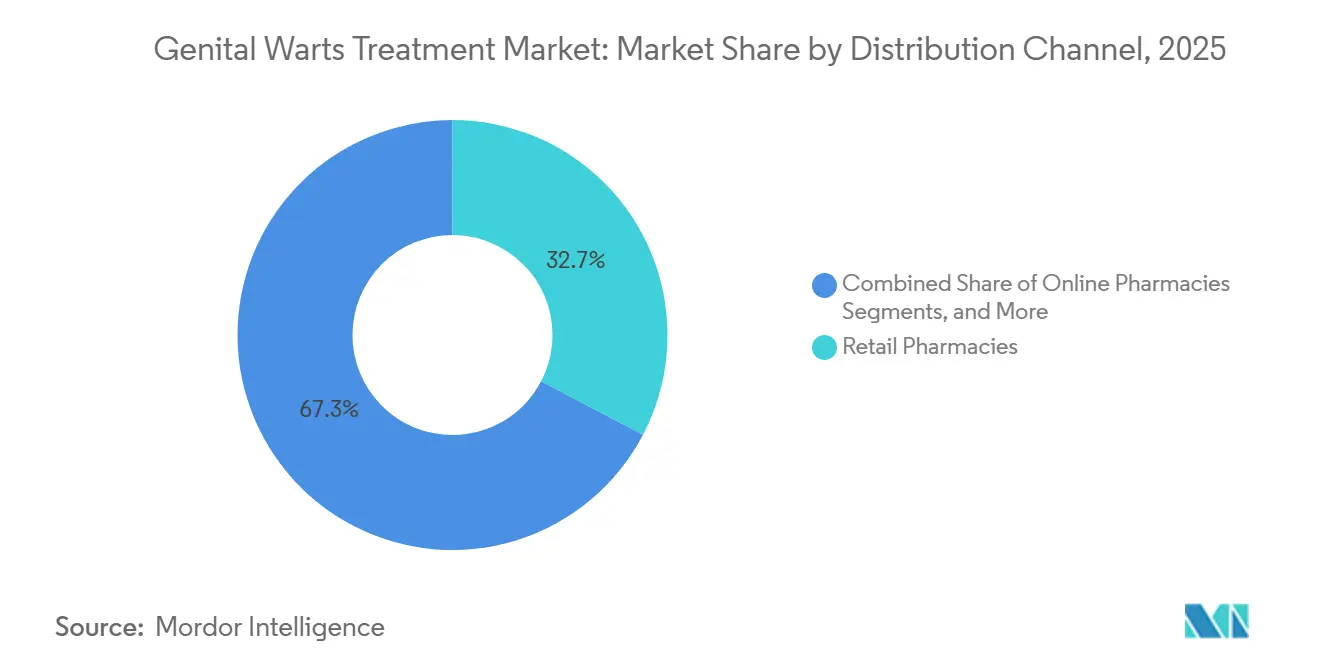
- By distribution channel, retail pharmacies held 32.67% of revenue in 2025, while online pharmacies are projected to record a CAGR of 7.45% through 2031.
- By geography, North America accounted for 40.67% of revenue in 2025, while Asia-Pacific is projected to grow at a CAGR of 6.88% through 2031.
Note: Market size and forecast figures in this report are generated using Mordor Intelligence’s proprietary estimation framework, updated with the latest available data and insights as of January 2026.
Market Trends and Insights
Drivers Impact Analysis of Genital Warts Treatment Market*
| DRIVER | (~) % IMPACT ON CAGR FORECAST | GEOGRAPHIC RELEVANCE | IMPACT TIMELINE |
|---|---|---|---|
| Persistent incidence of low-risk HPV infection | +1.0% | Global | Long term (≥ 4 years) |
| Increasing diagnosis of anogenital lesions | +0.9% | North America, Europe, APAC | Short term (≤ 2 years) |
| Rising preference for patient-applied treatment | +0.9% | North America and EU, with expansion to APAC | Short term (≤ 2 years) |
| Expansion of outpatient and ambulatory care | +0.8% | APAC, North America | Medium term (2-4 years) |
| Increasing treatment demand in immunocompromised patients | +0.7% | Global, with early gains in North America and EU | Medium term (2-4 years) |
| Commercialization of novel topical and lesion-destructive therapies | +0.5% | North America and EU | Long term (≥ 4 years) |
| Source: Mordor Intelligence | |||
Persistent Incidence of Low-Risk HPV Infection
Low-risk HPV infections continue to support demand in the genital warts treatment market despite long-standing vaccination programs. The CDC estimates that more than 42 million people in the United States have active HPV infection, with 13 million new infections occurring annually.[1] Nearly half of new infections occur among individuals aged 15–24 years. Dutch primary care records showed that genital warts incidence increased from 2.0 to 2.8 cases per 1,000 residents between 2011 and 2024, while male incidence rose from 2.0 to 3.5 cases per 1,000 residents. Adults aged 25–45 years who were outside catch-up programs remain a key treatment population, supporting prescription volumes over the forecast period.
Rising Preference for Patient-Applied Treatment
Patient-applied therapies are gaining importance in the genital warts treatment market as eligible virtual consultations enable convenient prescribing. The CDC recommends imiquimod 5% cream, podofilox 0.5% solution, and sinecatechins 15% ointment for external anogenital warts. These options reduce repeat clinic visits when remote diagnosis and prescribing are appropriate, while shortening the time from consultation to prescription fulfillment. Virtual care also addresses patient reluctance to seek in-person care due to stigma. Improved outpatient access supports treatment initiation and patient retention compared with clinic-based treatment schedules.
Increasing Treatment Demand in Immunocompromised Patients
Immunocompromised patients often require complex and repeated treatment, creating sustained demand in the genital warts treatment market. A 2026 study reported a 23.8% recurrence rate among immunocompromised women with condyloma, compared with 12.0% among immunocompetent controls.[2] These women were 4.1 times more likely to require multiple treatment courses and had a 9.9 times higher reported risk of progression to vulvar intraepithelial neoplasia. The CDC recommends a three-dose HPV vaccination schedule for immunocompromised individuals, including people living with HIV, transplant recipients, and those receiving immunosuppressive therapies. This population remains important for specialty dispensing and multi-course treatment.
Commercialization of Novel Topical and Lesion-Destructive Therapies
The genital warts treatment market has opportunities for therapies and protocols that improve outcomes after visible lesion clearance. A 2025 systematic review and individual patient data meta-analysis reported a 61.2% complete resolution rate with intramuscular HPV vaccination for recalcitrant warts and a 92.9% clinical response rate among immunocompromised patients.[3] These findings supported the evaluation of adjunctive approaches for lesions that did not respond to standard therapy. A patented lower-dose imiquimod approach described a 4–8-week treatment duration using 1%–4.25% concentrations, compared with a maximum 16-week course for standard 5% cream. Shorter regimens may reduce local skin reactions and treatment discontinuation.
Restraints Impact Analysis of Genital Warts Treatment Market*
| RESTRAINT | (~) % IMPACT ON CAGR FORECAST | GEOGRAPHIC RELEVANCE | IMPACT TIMELINE |
|---|---|---|---|
| High recurrence after visible wart clearance | -0.8% | Global | Long term (≥ 4 years) |
| Stigma-driven diagnosis and treatment delays | -0.5% | APAC, Middle East and Africa, South America | Medium term (2-4 years) |
| Treatment-related pain and local skin reactions | -0.4% | Global | Short term (≤ 2 years) |
| Limited evidence for durable HPV eradication | -0.3% | Global | Long term (≥ 4 years) |
| Source: Mordor Intelligence | |||
High Recurrence After Visible Wart Clearance
Recurrence remains a key clinical limitation in the genital warts treatment market, as visible lesion clearance does not ensure viral eradication. A Dutch primary care analysis estimated post-treatment recurrence rates at 20%–30%, with higher rates among immunocompromised patients. The 2024 BASHH guideline stated that all treatment modalities carry a recurrence risk and that no available treatment guarantees HPV eradication. This may reduce patient confidence and increase repeat prescriptions and follow-up care. France’s 2024 guidance shifted toward first-line combination treatment with cryotherapy and topical imiquimod or podophyllotoxin to improve durable clearance where monotherapy is insufficient.
Stigma-Driven Diagnosis and Treatment Delays
Stigma continues to delay diagnosis and treatment, particularly in areas with limited sexual health services and digital access. A 2025 Italian retrospective study found that the median age at diagnosis increased from 30 years in 1991–2000 to 37 years in 2011–2022. Patients older than 44 accounted for 30.4% of cases in 2011–2022, compared with 13.2% in 1991–2000. Anogenital warts affected an estimated 600,000–800,000 people annually across Europe, while a Catalan estimate cited in Dutch analysis indicated that primary care did not register 1 in 5 cases. Telehealth may help address this gap, although privacy concerns, limited services, and inadequate education continue to delay care.
*Our forecasts treat driver/restraint impacts as directional, not additive. The impact forecasts reflect baseline growth, mix effects, and variable interactions.
Genital Warts Treatment Market Segment Analysis
By Drug Type:
Imiquimod Leads, While Sinecatechins Grows FasterImiquimod held 42.35% of the genital warts treatment market share in 2025, supported by guideline recommendations and the availability of 5% and 3.75% patient-applied cream formulations. It activates local innate immune responses through toll-like receptor 7/8 activity and is used for eligible patients with external genital and perianal warts. Patent expiry increased generic competition from Glenmark, Teva, Taro, Perrigo, and Padagis. Generic availability reduced patient out-of-pocket costs while placing pressure on manufacturer margins. Podophyllin and podofilox remained relevant cytotoxic options, with podophyllotoxin accounting for 80.6% of topical prescriptions in participating Netherlands practices.
Sinecatechins is forecast to be the fastest-growing drug category at a CAGR of 6.56% through 2031. Growth is supported by Veregen, a sinecatechins ointment supplied by ANI Pharmaceuticals for external genital and perianal warts. Its green tea-derived catechin compounds offer a differentiated mechanism and may benefit patients who do not tolerate imiquimod-related skin reactions. Trichloroacetic acid remains a physician-applied option for resource-limited settings and lesions unsuitable for patient-applied therapies. Other drug types include interferon products, isotretinoin for recalcitrant cases, and pipeline therapies.

By Route of Administration:
Topical Formulations Lead Scale and GrowthTopical formulations accounted for 51.45% of the genital warts treatment market size in 2025 and are forecast to grow at a CAGR of 7.12% through 2031. Their leadership reflects the convenience of self-managed treatment and outpatient prescribing. The 2024 BASHH guideline identified podofilox 0.5% solution as an effective patient-administered option and retained imiquimod and sinecatechins as first-line self-treatment choices. These therapies support timely treatment initiation and routine pharmacy dispensing. Lower-dose imiquimod formulations under development may reduce application-site reactions and support adoption.
Parenteral treatment includes interferon injections and intralesional approaches for recalcitrant lesions and complex cases. A 2025 meta-analysis of intramuscular HPV vaccination reported a 61.2% complete resolution rate in recalcitrant warts, expanding consideration of parenteral approaches. Oral treatment mainly includes isotretinoin as a second-line adjunct for extensive or recalcitrant condyloma. Clinicians typically consider oral and parenteral options when topical therapy is insufficient. Prescription-only requirements and regional dispensing practices influence access across North America, Europe, and the Asia-Pacific.
By Distribution Channel:
Retail Pharmacy Leads, While Online Pharmacy Expands FasterRetail pharmacies held 32.67% of revenue in 2025, supported by the routine dispensing of generic imiquimod following the originator patent expiry. The channel provides access to medicines prescribed through clinics and virtual consultations and supports continuity of care for repeat treatment courses. Formularies, payer coverage, and pharmacy inventory remain important access factors amid generic competition. Hospital pharmacies support clinician-administered procedures and supervised medicines, including cryotherapy, electrosurgery, laser ablation, trichloroacetic acid, and injectable therapies. Specialty pharmacies support complex patients requiring multiple medicines or tailored dispensing services.
Online pharmacies are forecast to be the fastest-growing distribution channel at a CAGR of 7.45% through 2031. Digital care platforms connect eligible patients with clinician assessment, prescriptions, and pharmacy fulfillment. Amazon Health’s One Medical service offers online evaluation and treatment access for genital warts. Online channels can address privacy concerns and reduce time to prescription; however, their growth depends on telehealth regulations, prescription standards, reimbursement, and delivery capacity. In-person assessment remains necessary for atypical lesions, uncertain diagnoses, and procedural treatment needs.
Geography Analysis
North America Genital Warts Treatment Market
North America accounted for 40.67% of the genital warts treatment market share in 2025, supported by the availability of branded and generic medicines, reimbursed prescriptions, and widespread telehealth infrastructure. The United States represented the majority of regional demand due to its extensive prescription channels and broad access to clinician-directed care. Key treatment options included imiquimod formulations, sinecatechins, and podofilox. Generic competition increased the importance of product access and formulary placement over brand differentiation. Canada and Mexico made smaller contributions, while demand through 2031 is supported by immunocompromised patient needs and expanding telehealth use.
Europe Genital Warts Treatment Market
Europe remained the second-largest regional market, with Germany, the United Kingdom, France, Italy, and Spain accounting for a substantial share of treatment demand. The regional diagnosis burden remained significant despite lower incidence among vaccinated younger populations, with annual diagnoses estimated at 600,000-800,000 individuals. France updated its anogenital condyloma guidance in 2024, placing combined cryotherapy with topical imiquimod or podophyllotoxin in first-line care. This approach can increase the number of treatments used during an episode of care. Italian surveillance published in 2025 showed a growing share of older patients at diagnosis, supporting stable demand across public and private healthcare systems.
APAC, MEA and South America Genital Warts Treatment Market
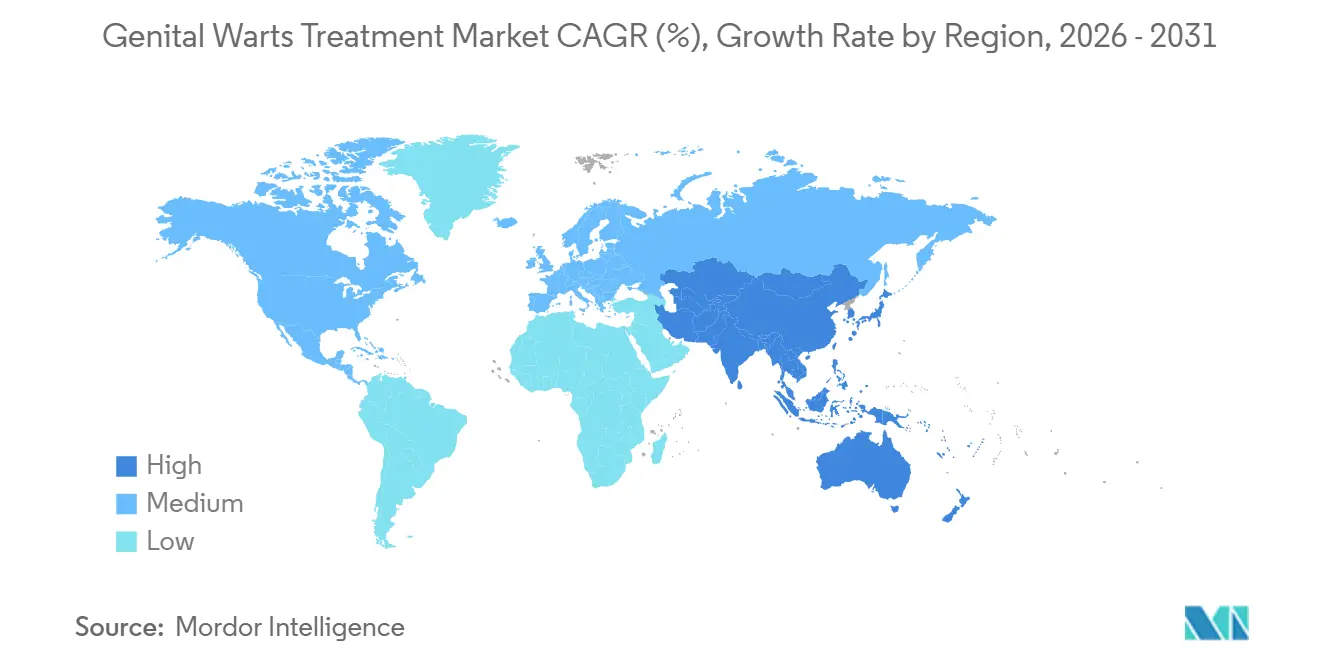
Asia-Pacific is forecast to grow at a CAGR of 6.88% through 2031, making it the fastest-growing region. China, India, Japan, South Korea, and Australia support growth through improved diagnostic access and pharmaceutical availability, while local treatment practices and domestic manufacturers influence market size. China has a concentrated domestic generic imiquimod segment, with 4 manufacturers controlling 98% of the segment. India’s CERVAVAC is a quadrivalent HPV vaccine covering types 6, 11, 16, and 18; its rollout through India’s Universal Immunization Program and planned exports in 2026-2027 can support long-term prevention but do not treat established infection. The Middle East and Africa remain earlier-stage markets, while GCC countries are investing in preventive and sexual health services, and Brazil leads South American demand.
Competitive Landscape
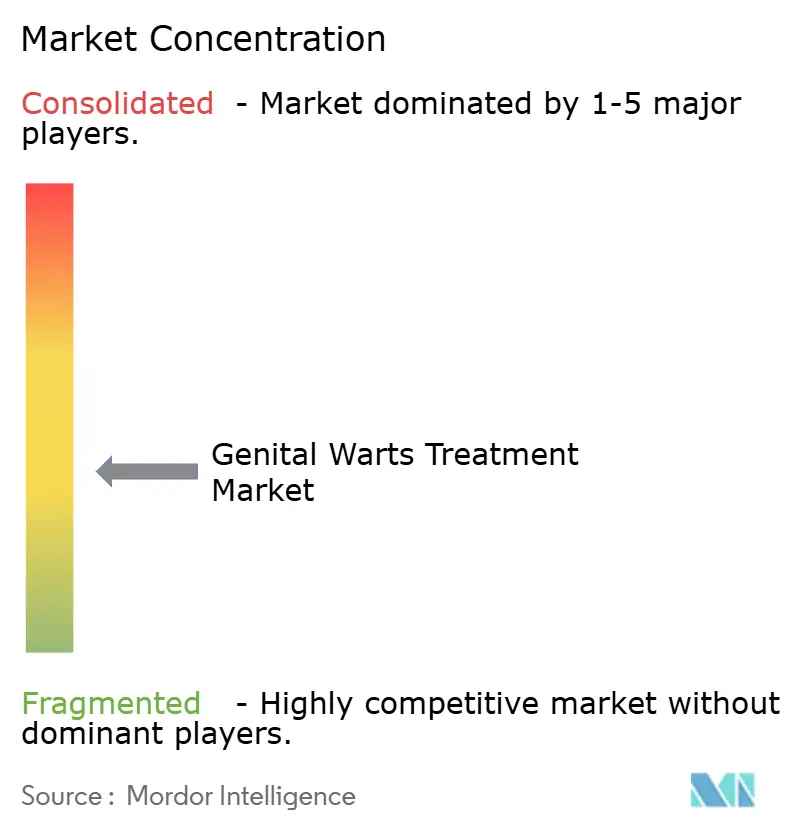
The genital warts treatment market remained moderately fragmented, with competition spanning branded and generic imiquimod formulations, sinecatechins, podofilox products, and clinician-administered procedures such as cryotherapy, electrosurgery, and laser treatment. High generic penetration of imiquimod cream shifted competition toward pricing, payer access, pharmacy availability, and formulary placement. Generic manufacturers competed through distribution reach, contracting, rebates, and copay support programs where permitted. ANI Pharmaceuticals supported Veregen as a differentiated botanical sinecatechins product, while Padagis introduced generic podofilox 0.5% gel in 2025, increasing supply options in a category affected by shortages.
France’s 2024 first-line recommendation for cryotherapy in combination with topical therapy supported demand for both procedural care and prescription products. Companies therefore competed through reliable product availability, lower patient costs, compatibility with combination treatment, and channel access. The most significant unmet need remained among immunocompromised patients and individuals with recalcitrant lesions, as existing products did not have specific FDA labeling for genital warts treatment in immunocompromised populations. Evidence from 2025 on intramuscular HPV vaccination for recalcitrant warts also highlighted interest in adjunctive approaches, while shorter-course imiquimod formulations aimed to reduce tolerability barriers.
A 2026 study reported a 23.8% recurrence rate among immunocompromised women, a 4.1-times greater likelihood of requiring multiple treatment courses, and a 9.9-times higher risk of progression to vulvar intraepithelial neoplasia than in the control group. These requirements reinforced the role of specialty pharmacies, hospital dispensing, and specialist-led care for complex cases. ANI Pharmaceuticals’ Veregen remained differentiated from imiquimod and podofilox, while podofilox gel shortages demonstrated the importance of dependable supply. This balance of generic access, differentiated formulations, combination treatment, and specialist care kept the genital warts treatment market moderately fragmented.
Genital Warts Treatment Industry Leaders
-
Bausch Health Companies Inc.
-
GSK plc
-
Merck & Co., Inc.
-
Pfizer Inc.
-
Sanofi
- *Disclaimer: Major Players sorted in no particular order
Genital Warts Treatment Market Companies Covered in this Report
- Abbvie
- ANI Pharmaceuticals
- Astellas Pharma
- Bausch Health
- Bayer
- CryoConcepts, LP
- Glenmark Pharmaceuticals
- GlaxoSmithKline
- Medtronic
- Merck
- Novan, Inc.
- Orgenesis Inc.
- Padagis US LLC
- Perrigo Company
- Pfizer
- Sanofi
- Serum Institute of India Private Limited
- Taro Pharmaceutical Industries Ltd.
- Teva Pharmaceutical Industries
- Verrica Pharmaceuticals Inc.
Recent Industry Developments in Genital Warts Treatment Market
- March 2026: Merck presented long-term efficacy data for Gardasil 9 and Gardasil at the EUROGIN Congress in Vienna, including 14-year effectiveness data for HPV types 6 and 11 and 18-year data for HPV 16- and 18-related disease.
- June 2025: China approved a domestically manufactured 9-valent HPV vaccine for females aged 9-45, intensifying competition for Gardasil 9. Merck extended its shipment pause to China through the end of 2025.
Global Genital Warts Treatment Market Report Scope
As per the scope of the report, genital warts are highly contagious, benign growths that appear on or around the skin of the genitals and anus, caused by specific low-risk strains of the Human Papillomavirus (HPV).
The genital warts treatment market is segmented by drug type, route of administration, distribution channel, and geography. By drug type, the market includes imiquimod, podophyllin and podofilox, trichloroacetic acid, sinecatechins, and other drug types. By route of administration, the market is segmented into topical, parenteral, and other routes of administration. By distribution channel, the market is categorized into hospital pharmacies, retail pharmacies, online pharmacies, specialty pharmacies, and other distribution channels. By geography, the market is analyzed across North America, Europe, Asia-Pacific, the Middle East and Africa, and South America. The report also covers the estimated market sizes and trends for 17 countries across major regions globally. The report offers market sizes and forecasts in terms of value (USD) for the above segments.
Segmentation Overview
| Imiquimod |
| Podophyllin and Podofilox |
| Trichloroacetic Acid |
| Sinecatechins |
| Other Drug Types |
| Topical |
| Parenteral |
| Others |
| Hospital Pharmacies |
| Retail Pharmacies |
| Online Pharmacies |
| Specialty Pharmacies |
| Others |
| North America | United States |
| Canada | |
| Mexico | |
| Europe | Germany |
| United Kingdom | |
| France | |
| Italy | |
| Spain | |
| Rest of Europe | |
| Asia-Pacific | China |
| India | |
| Japan | |
| Australia | |
| South Korea | |
| Rest of Asia-Pacific | |
| Middle East and Africa | GCC |
| South Africa | |
| Rest of Middle East and Africa | |
| South America | Brazil |
| Argentina | |
| Rest of South America |
| By Drug Type | Imiquimod | |
| Podophyllin and Podofilox | ||
| Trichloroacetic Acid | ||
| Sinecatechins | ||
| Other Drug Types | ||
| By Route of Administration | Topical | |
| Parenteral | ||
| Others | ||
| By Distribution Channel | Hospital Pharmacies | |
| Retail Pharmacies | ||
| Online Pharmacies | ||
| Specialty Pharmacies | ||
| Others | ||
| By Geography | North America | United States |
| Canada | ||
| Mexico | ||
| Europe | Germany | |
| United Kingdom | ||
| France | ||
| Italy | ||
| Spain | ||
| Rest of Europe | ||
| Asia-Pacific | China | |
| India | ||
| Japan | ||
| Australia | ||
| South Korea | ||
| Rest of Asia-Pacific | ||
| Middle East and Africa | GCC | |
| South Africa | ||
| Rest of Middle East and Africa | ||
| South America | Brazil | |
| Argentina | ||
| Rest of South America | ||
Key Questions Answered in the Report
What is the 2026 value of the genital warts treatment market?
The genital warts treatment market is valued at USD 2.06 billion in 2026 and is projected to reach USD 2.73 billion by 2031.
What is driving demand for genital warts treatments?
Ongoing HPV infections, repeat treatment needs, patient-applied medicines, and greater access to telehealth support demand.
Which drug type had the largest share in 2025?
Imiquimod led drug types with 42.35% share in 2025.
Which treatment route is growing the fastest?
Topical formulations are forecast to grow at a CAGR of 7.12% through 2031.
Which distribution channel is expanding fastest?
Online pharmacies are projected to grow at a CAGR of 7.45% through 2031, supported by telehealth-enabled prescribing.
Which region will grow fastest through 2031?
Asia-Pacific is forecast to record the fastest regional CAGR at 6.88% through 2031.