
Gellan Gum Market Size and Share
Market Overview
| Study Period | 2021 - 2031 |
|---|---|
| Market Size (2026) | USD 235.43 Million |
| Market Size (2031) | USD 304.76 Million |
| Growth Rate (2026 - 2031) | 6.58 % |
| Fastest Growing Market | Asia-Pacific |
| Largest Market | North America |
| Market Concentration | Medium |
Major Players *Disclaimer: Major Players sorted in no particular order Image © Mordor Intelligence. Reuse requires attribution under CC BY 4.0. | |
Gellan Gum Market Analysis by Mordor Intelligence
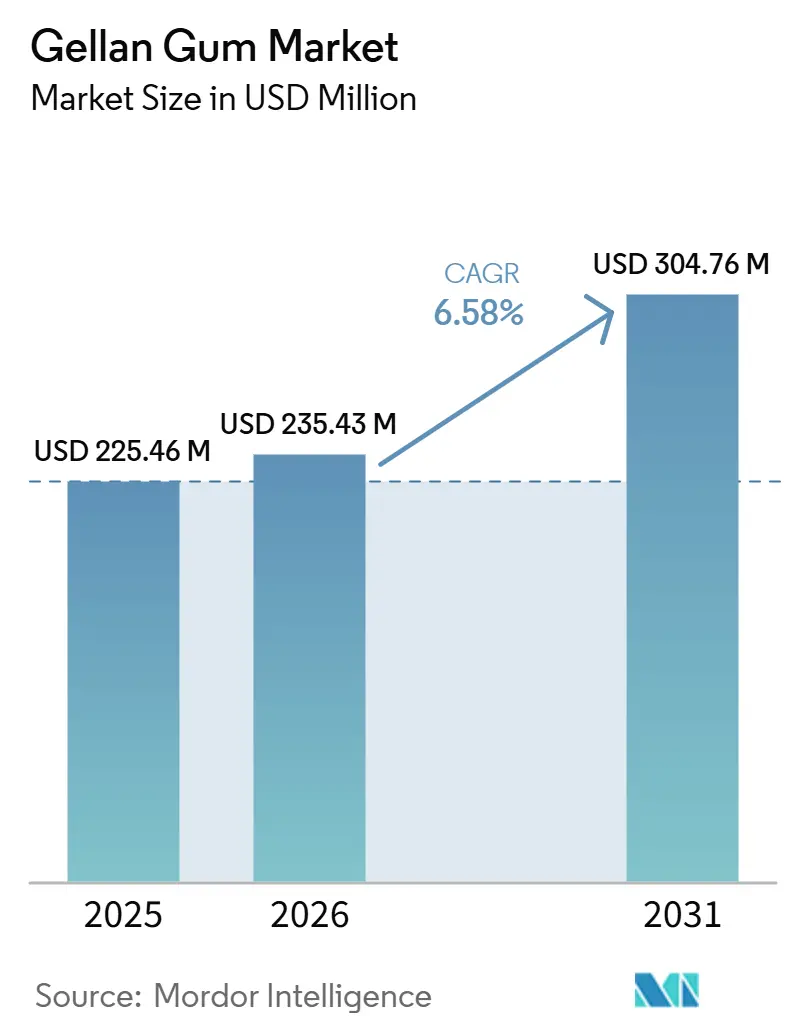
The gellan gum market size was valued at USD 225.46 million in 2025 and is estimated to grow from USD 235.43 million in 2026 to reach USD 304.76 million by 2031, at a CAGR of 6.58% during the forecast period (2026-2031). The gellan gum market is supported by food manufacturers seeking naturally fermented ingredients with recognizable production origins. Its use in plant-based dairy and fortified beverages reflects the need to suspend particles while maintaining a clear or lightly textured product. Pharmaceutical formulators are also evaluating its biocompatibility and ion-sensitive gelation for ocular, nasal, oral, and injectable delivery systems. Competition centers on grade range, traceability, and application support, while Chinese fermentation suppliers retain an important role in standard food-grade supply. The gellan gum market also faces cost pressure from xanthan gum, guar gum, and blended hydrocolloid systems, which can be less expensive in price-sensitive applications.
Key Report Takeaways
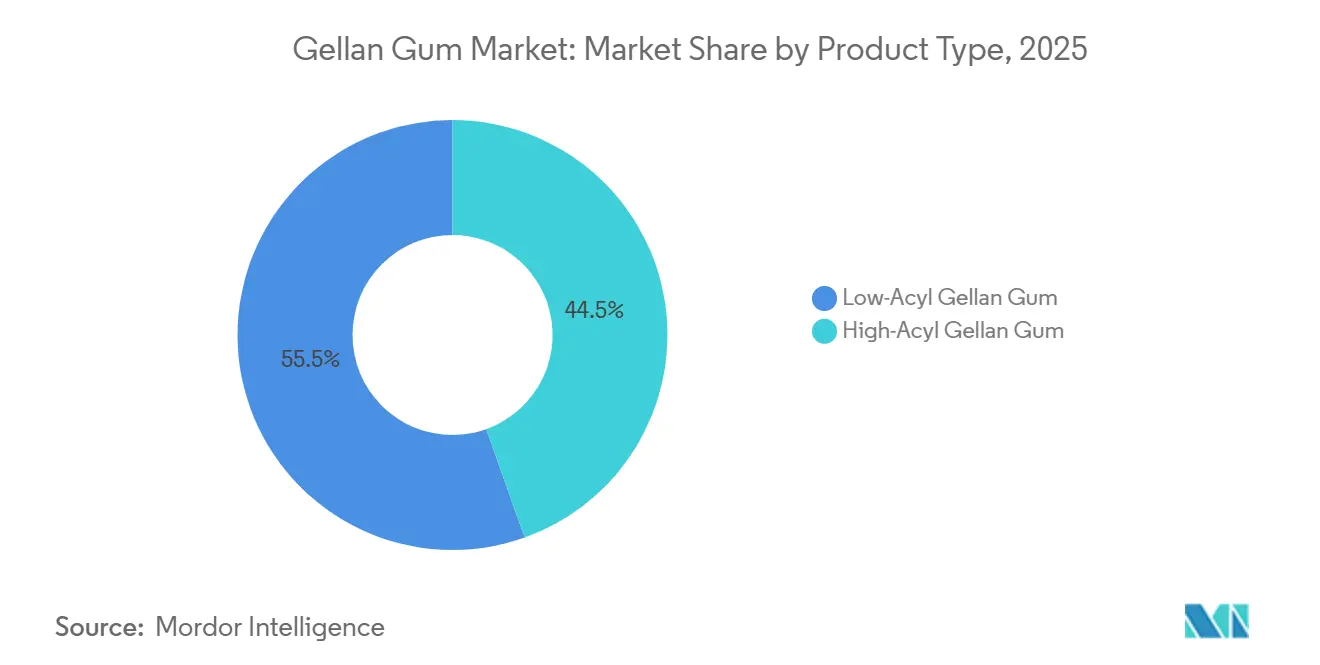
- By product type, low-acyl gellan gum held 55.46% of the gellan gum market share in 2025, while high-acyl gellan gum is forecast to grow at a CAGR of 7.35% through 2031.
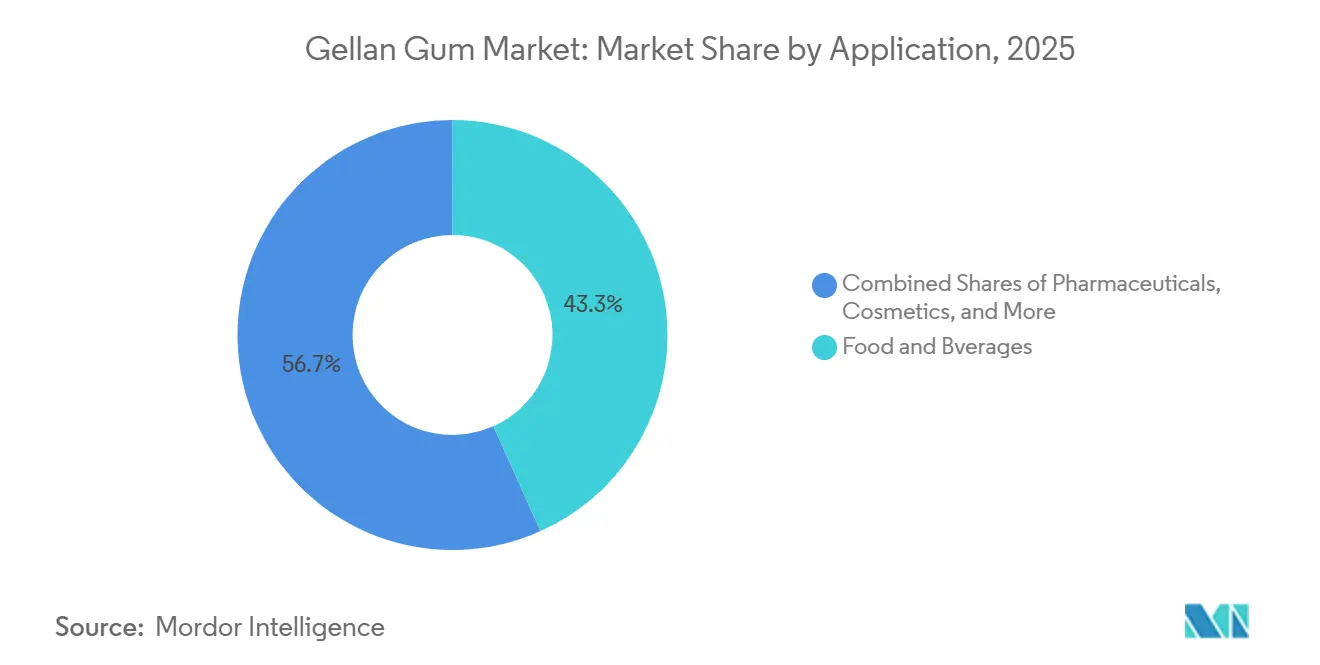
- By application, food and beverages accounted for 43.28% of the gellan gum market size in 2025, while pharmaceuticals is forecast to expand at a CAGR of 7.55% through 2031.
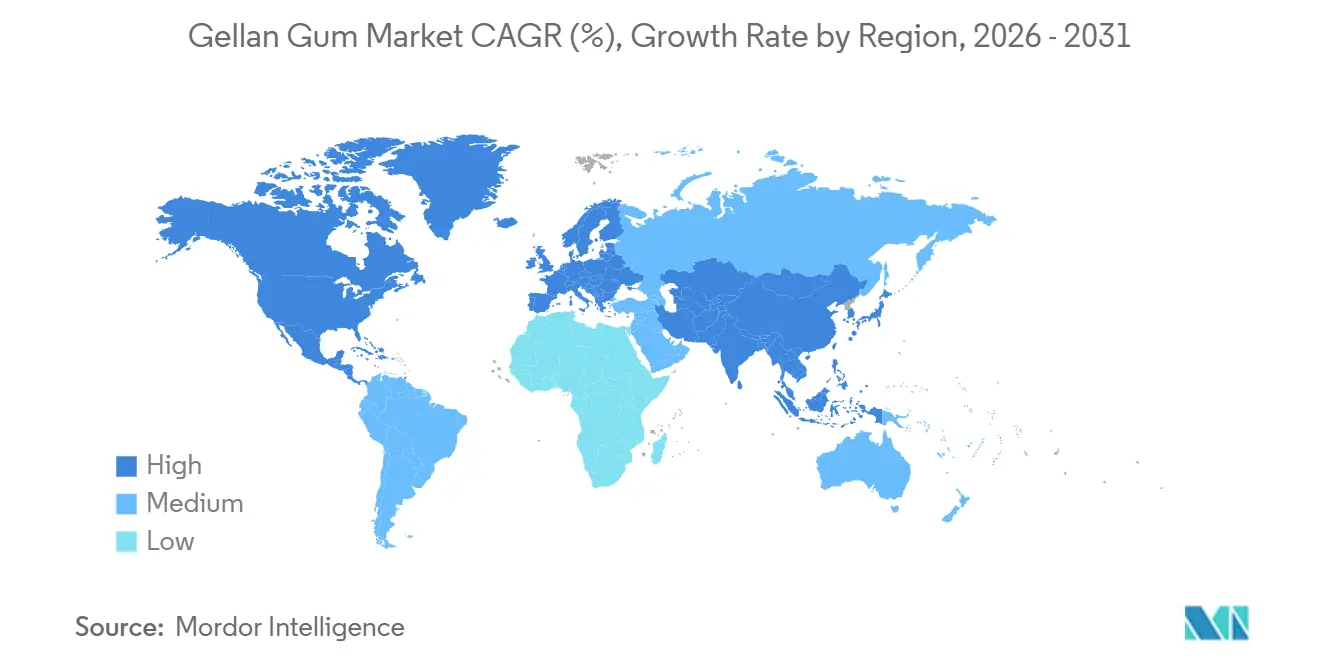
- By geography, North America held 39.62% of demand in 2026, while Asia-Pacific is forecast to grow at a CAGR of 7.68% through 2031.
Note: Market size and forecast figures in this report are generated using Mordor Intelligence’s proprietary estimation framework, updated with the latest available data and insights as of January 2026.
Market Trends and Insights
Drivers Impact Analysis of Gellan Gum Market*
| Driver | (~) % Impact on CAGR Forecasts | Geographic Relevance | Impact Timeline |
|---|---|---|---|
| Rising Preference for Clean-Label and Naturally Fermented Hydrocolloids | +1.5% | Global (strongest in North America and EU) | Short term (≤ 2 years) |
| Expansion of Plant-Based Food and Dairy Product Applications | +1.3% | Global (North America, EU, China core; spill-over to APAC, MEA) | Short-Medium term (2–4 years) |
| Increasing Demand for Superior Suspension, Clarity, and Texture Performance at Low Dosages | +0.9% | Global (APAC core, spill-over to North America) | Medium term (2–4 years) |
| Growing Utilization in Pharmaceutical and Advanced Biomedical Formulations | +1.2% | North America, EU, East Asia | Long term (≥ 4 years) |
| Advancements in Specialized High-Acyl and Low-Acyl Gellan Gum Grades | +0.7% | Global (concentrated in EU and China) | Medium-Long term (2–5 years) |
| Continuous Improvements in Fermentation Efficiency and Downstream Processing Technologies | +0.6% | China, Global | Long term (≥ 4 years) |
| Source: Mordor Intelligence | |||
Rising Preference for Clean-Label and Naturally Fermented Hydrocolloids
Gellan gum is produced through aerobic fermentation of Sphingomonas elodea, which supports its use in formulations that emphasize fermentation-derived ingredients. The Joint FAO/WHO Expert Committee on Food Additives assigned gellan gum an acceptable daily intake of “not specified,” which indicates that a numerical limit was not considered necessary under its normal conditions of use[1]Source: Joint FAO/WHO Expert Committee on Food Additives, “Gellan Gum,” FAO/WHO Food Standards Programme, accessed July 2026, fao.org.. This safety assessment gives food manufacturers an established basis for using the ingredient in regulated product categories. The gellan gum market benefits when private-label and branded food producers revise ingredient lists to reduce reliance on synthetic alternatives. Such reformulation activity can be driven by procurement requirements as well as consumer expectations about ingredient transparency. FDA GRAS notices and the European Union authorization of E418 provide an established regulatory setting for many of these applications.
Expansion of Plant-Based Food and Dairy Product Applications
Plant-based beverages create demand for hydrocolloids that keep mineral and protein particles suspended without adding excessive viscosity. At concentrations below 0.02%, gellan gum can provide this suspension function in fortified drinks and plant-protein beverages. The functional requirement favors gellan gum when product clarity and stability are central to the formulation. High-acyl grades also provide soft and thermoreversible textures for dairy-free desserts, plant-based butter replacements, and fillings. DSM-Firmenich positions its Gellaneer® ND-JY grade as a locust bean gum replacement for plant-based dairy alternatives. The gellan gum market gains another application route in meat alternatives, where structured textures are important for products aimed at vegan and flexitarian consumers.
Growing Utilization in Pharmaceutical and Advanced Biomedical Formulations
Pharmaceutical use of gellan gum extends across oral, nasal, ocular, and injectable drug delivery systems. A 2024 review described controlled-release platforms, cancer tissue targeting, wound healing substrates, and tissue-engineering scaffolds for bone, retina, cartilage, and cardiac tissue. Low-acyl gellan gum can gel on contact with tear-fluid cations, which can extend drug residence time on the eye surface. This property is relevant to dry eye and glaucoma treatments, where repeated topical dosing can create adherence challenges. A 2025 study reported that optimized low-acyl gellan gum and arabinogalactan hydrogels had rheological properties suitable for ophthalmic use and stronger mucoadhesion than single-polymer systems. The gellan gum market therefore has a route into applications that value controlled release, tissue compatibility, and formulation performance rather than low ingredient cost.
Advancements in Specialized High-Acyl and Low-Acyl Gellan Gum Grades
Grade specialization is an important source of differentiation in the gellan gum market. High-acyl and low-acyl forms have different performance characteristics, and suppliers are expanding options for specific uses. DSM-Firmenich identifies Gellaneer® HS for high-solids applications such as custards, confectionery spreads, and dysphagia foods. Research published in 2026 reported directed biosynthesis of an ultrahigh molecular weight acetylated gellan gum through a Sphingomonas sanxanigenens system. The material had acetyl content comparable with standard high-acyl gellan gum while lacking glyceryl substituents. This work points to potential rheological options for functional food and pharmaceutical formulations.
Restraints Impact Analysis of Gellan Gum Market*
| Restraint | (~) % Impact on CAGR Forecasts | Geographic Relevance | Impact Timeline |
|---|---|---|---|
| Higher Cost Compared to Alternative Hydrocolloids | -1.1% | Global (most acute in South and Southeast Asia, MEA) | Short term (≤ 2 years) |
| Raw Material and Production Cost Volatility | -0.8% | China (primary production hub), Global | Short term (≤ 2 years) |
| Competition from Multi-Hydrocolloid Blends | -0.6% | EU, North America, APAC | Medium term (2–4 years) |
| Regulatory Approval Challenges in Some Markets | -0.5% | Emerging markets, MEA, parts of Southeast Asia | Long term (≥ 4 years) |
| Source: Mordor Intelligence | |||
Higher Cost Compared to Alternative Hydrocolloids
Gellan gum carries a per-kilogram premium over commodity hydrocolloids such as xanthan gum, guar gum, and carrageenan. Its performance at low use rates can offset part of that premium, but not in every food application. Sauces, dressings, and standard yogurt products can often use lower-cost alternatives where a clear suspension or specialized gel structure is not required. The cost issue is particularly relevant in South Asia, Southeast Asia, and the Middle East and Africa. Procurement teams generally assess the landed cost of the full formulation batch, including reformulation work, rather than the price of one ingredient in isolation. The gellan gum market can therefore be limited in applications where no distinctive benefit such as clarity, bake stability, or pharmaceutical-grade purity is required.
Raw Material and Production Cost Volatility
Gellan gum fermentation uses carbon substrates, principally glucose and sucrose derived from corn starch or cane sugar. Input costs can move with agricultural commodity prices, electricity tariffs, and the price of alcohols used during polysaccharide precipitation. China is a major production base, so changes in its corn starch and energy costs can affect supply pricing for international buyers. These changes make it harder for food and pharmaceutical manufacturers to plan multi-year formulation costs. A 2026 study reported production using enzymatically hydrolyzed wheat bran as an alternative carbon source and described a structurally characterized product. Commercial-scale use of alternative substrates would be needed before this approach could materially reduce exposure to corn-starch pricing cycles.
*Our forecasts treat driver/restraint impacts as directional, not additive. The impact forecasts reflect baseline growth, mix effects, and variable interactions.
Gellan Gum Market Segment Analysis
By Product Type:
Low-Acyl Dominates and High-Acyl Gains TractionLow-acyl gellan gum held 55.46% of 2025 revenue, giving it the leading position in the gellan gum market. It is used in beverages, structured food gels, and ophthalmic preparations because its transparent appearance, firm gel texture, thermal stability, and ion-responsive gelation suit those applications. The larger base for low-acyl grades supports established production processes, quality checks, technical documentation, and routine use where manufacturers require consistent performance. Jungbunzlauer introduced TayaGel LA in July 2025 for label-friendly and plant-based formulations, stating that it forms firm gels at low use concentrations. Its solubilization temperature can be adjusted from below 30°C to above 85°C through cation conditions, and the JECFA assessment supports use in established food applications.
High-acyl gellan gum is projected to grow at a CAGR of 7.35% from 2026 to 2031 within the gellan gum market. Its soft, elastic, and thermoreversible profile is suited to dairy alternatives, dessert formulations, dairy-free bakery products, and meat alternatives where sensory characteristics matter. Research on an ultrahigh molecular weight acetylated material indicates that new high-acyl variants may offer properties not available through conventional processing. The work expands potential pharmaceutical and functional-material uses, although new acyl-modified variants may face extended European technical review. The gellan gum industry is therefore increasingly shaped by grade-specific performance and regulatory readiness.



By Application:
Food Leads as Pharmaceutical Demand AcceleratesFood and beverages accounted for 43.28% of the gellan gum market size in 2025. This application includes bakery and confectionery, dairy and frozen desserts, meat and meat alternatives, sauces and dressings, and other food uses. Plant-protein beverages and fortified drinks use gellan gum for low-concentration particle suspension that supports clarity and stability. Dairy-free desserts use high-acyl grades for thermoreversible texture, while sauces and dressings can use low-acyl grades for clarity and stability in reduced-fat products. Plant-based fillings, custard-style spreads, and clear gel formats for skin care and hair care create further uses, particularly in South Korea and Japan.
Pharmaceuticals is projected to grow at a CAGR of 7.55% through 2031, making it the fastest-growing application in the gellan gum market. The application range includes ocular in situ gels, nasal hydrogels, injectable scaffolds, and controlled-release oral formulations. A 2025 study reported thiolated gellan gum and polyethylene glycol diacrylate hydrogels with chitosan nanoparticles for sustained timolol maleate delivery and enhanced ocular retention[2]Source: Golnaz Shajari et al., “Thiolated Gellan Gum/Polyethylene Glycol Diacrylate Hydrogels Containing Timolol Maleate-Loaded Chitosan Nanoparticles for Ophthalmic Delivery,” Biomedical Materials 20, no. 2, 2025, ioppublishing.org.. Another 2025 study described injectable gellan gum hydrogels containing PLGA-LDH microspheres for controlled alendronate release and bone regeneration. Food and beverages will remain the larger revenue application because of their established base, while pharmaceutical demand depends on clinical translation and validated performance.
Geography Analysis
North America Gellan Gum Market
North America represented 39.62% of gellan gum demand in 2026, making it the largest regional part of the gellan gum market. Large food processors, pharmaceutical manufacturers, and nutraceutical companies support demand, while FDA GRAS notices give formulators an established framework for food uses[3]Source: U.S. Food and Drug Administration, “GRAS Notice Inventory,” Office of Food Additive Safety, accessed July 2026, fda.gov.. The United States accounted for much of this demand through food processing clusters and pharmaceutical manufacturing hubs. Health Canada supports product-line coordination across the United States and Canada, and Mexico adds demand through processed food, beverages, and dairy-adjacent production.
Europe and South America Gellan Gum Market
Europe has a material position in the gellan gum market because E418 is authorized across 67 food categories. Germany, the United Kingdom, and France have strong manufacturing bases for dairy alternatives, confectionery, and personal care, and customers place weight on provenance and transparent labeling. Novel acyl-modified grades can face longer documentation timelines under the Novel Food process. This can lead processors to secure established low-acyl grades under multiyear supply arrangements. The Netherlands, Spain, Brazil, and Argentina contribute demand through plant-based foods, functional beverages, confectionery, and emerging pharmaceutical uses.
APAC and MEA Gellan Gum Market
Asia-Pacific is forecast to grow at a CAGR of 7.68% through 2031, the fastest regional rate in the gellan gum market. China is expanding fermentation capacity, while India and Japan are increasing consumption. Chinese suppliers including Fufeng Group, Hebei Xinhe Biochemical, Zhejiang Tech-Way Biochemical, and Inner Mongolia Rainbow Biotech supply standard food-grade material through scale and pricing. In 2024, Kimitex signed an exclusive distribution agreement with GBH Bioscience for Japan, while the Middle East and Africa remains the smallest segment despite longer-term demand potential.

Competitive Landscape
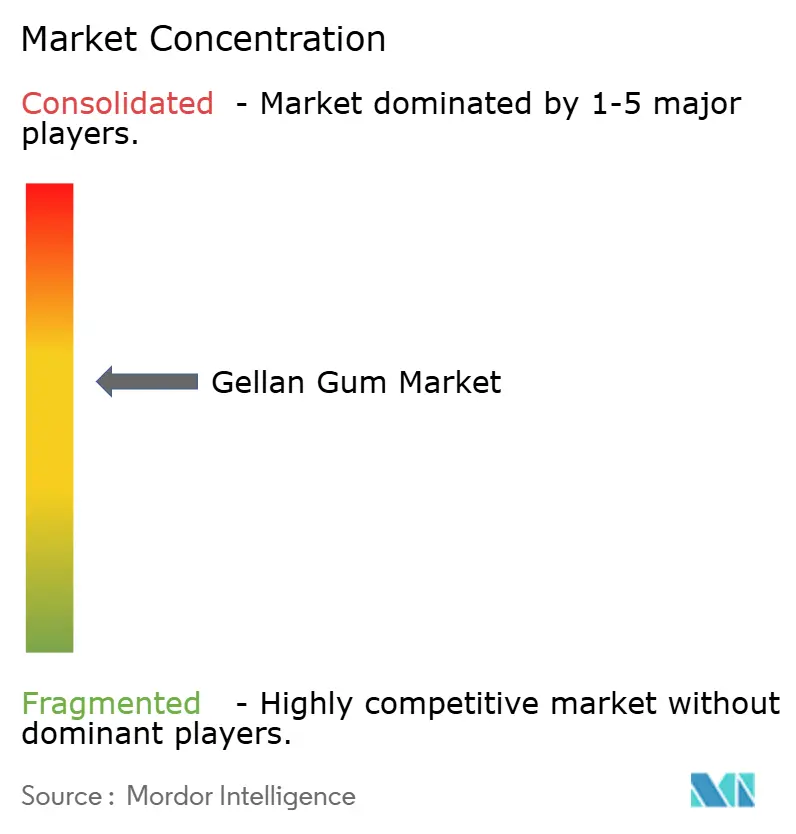
The gellan gum market is moderately consolidated, and the 5 leading suppliers collectively held 57% of revenue. Chinese fermentation specialists include Fufeng Group, Zhejiang Tech-Way Biochemical, Hebei Xinhe Biochemical, Inner Mongolia Rainbow Biotech, Zhengzhou Cinogel Biotech, and Hangzhou Gellan Solutions Biotec. They compete through fermentation scale, production efficiency, and prices for standard food-grade grades. DSM-Firmenich, Jungbunzlauer, Kerry Group, and Ingredion compete on grade range, application support, traceability, and access to pharmaceutical and functional food customers. The gellan gum market has different competitive requirements for commodity food grades and high-purity specialty grades.
Product differentiation is increasingly tied to application-specific grades. DSM-Firmenich markets Gellaneer® for defined viscosity, solids, and plant-based product needs. Jungbunzlauer launched TayaGel® LA in July 2025, completing its high-acyl and low-acyl range. The expanded range allows one supplier relationship to cover more formulation needs. Specialized-grade suppliers must provide formulation guidance and reliable quality documentation, which can be more important than price in pharmaceutical and functional food applications.
Ultra-high-purity pharmaceutical material and bioprinting scaffold applications offer a specialty space within the gellan gum market. These products require endotoxin-tested batches, compendial compliance, and controlled molecular weight distributions that differ from standard food-grade fermentation output. Suppliers with validated systems for food and pharmaceutical customers can have a stronger position in this limited but demanding area. The gellan gum market remains fragmented because supply is divided between several Chinese producers and multinational ingredient companies.
Gellan Gum Industry Leaders
Tate & Lyle Plc
DSM-Firmenich
Dancheng Caixin Sugar Industry Co., Ltd.
Fufeng Group
Ingredion Incorporated
- *Disclaimer: Major Players sorted in no particular order
Gellan Gum Market Companies Covered in this Report
- Tate & Lyle Plc
- DSM-Firmenich
- Dancheng Caixin Sugar Industry Co., Ltd.
- Zhejiang Tech-Way Biochemical Co., Ltd.
- Fufeng Group
- Hebei Xinhe Biochemical Co., Ltd.
- Hangzhou Gellan Solutions Biotec Co., Ltd.
- Meron Group
- Inner Mongolia Rainbow Biotech Co., Ltd.
- Ingredion Incorporated
- Avanschem
- Jungbunzlauer Suisse AG
- Kerry Group plc
- Cargill Incorporated
- Foodchem International Corporation
- Zhengzhou Cinogel Biotech Co., Ltd.
- Prinova Group LLC
- Zhejiang Zhongken Biotech Co., Ltd.
- Nanjing Joyfulchem Co., Ltd.
- IHC Chempharm

Recent Industry Developments in Gellan Gum Market
- December 2025: Jungbunzlauer expanded its texturant portfolio with the launch of TayaGel HA, a high-acyl gellan gum designed as a plant-based alternative to gelatin for vegan and vegetarian food applications. The ingredient delivers soft, elastic gel textures while providing excellent stability under varying processing conditions.
- October 2025: KIMICA Corporation strengthened its hydrocolloid portfolio by entering the gellan gum market through an exclusive distribution agreement with GBH BIOSCIENCE (YUNNAN) CO., LTD. in Japan.


Global Gellan Gum Market Report Scope
| High-Acyl Gellan Gum |
| Low-Acyl Gellan Gum |
| Food and Beverages | Bakery and Confectionery |
| Dairy and Frozen Desserts | |
| Meat and Meat Alternatives | |
| Sauces and Dressings | |
| Other Food and Beverages | |
| Pharmaceuticals | |
| Cosmetics and Personal Care | |
| Other Applications |
| North America | United States |
| Canada | |
| Mexico | |
| Rest of North America | |
| Europe | Germany |
| United Kingdom | |
| France | |
| Italy | |
| Spain | |
| Netherlands | |
| Rest of Europe | |
| Asia-Pacific | China |
| India | |
| Japan | |
| Australia | |
| Rest of Asia-Pacific | |
| South America | Brazil |
| Argentina | |
| Rest of South America | |
| Middle East and Africa | United Arab Emirates |
| South Africa | |
| Rest of Middle East and Africa |
| Product Type | High-Acyl Gellan Gum | |
| Low-Acyl Gellan Gum | ||
| Application | Food and Beverages | Bakery and Confectionery |
| Dairy and Frozen Desserts | ||
| Meat and Meat Alternatives | ||
| Sauces and Dressings | ||
| Other Food and Beverages | ||
| Pharmaceuticals | ||
| Cosmetics and Personal Care | ||
| Other Applications | ||
| By Geography | North America | United States |
| Canada | ||
| Mexico | ||
| Rest of North America | ||
| Europe | Germany | |
| United Kingdom | ||
| France | ||
| Italy | ||
| Spain | ||
| Netherlands | ||
| Rest of Europe | ||
| Asia-Pacific | China | |
| India | ||
| Japan | ||
| Australia | ||
| Rest of Asia-Pacific | ||
| South America | Brazil | |
| Argentina | ||
| Rest of South America | ||
| Middle East and Africa | United Arab Emirates | |
| South Africa | ||
| Rest of Middle East and Africa | ||


Key Questions Answered in the Report
What is the projected value of the gellan gum market by 2031?
The gellan gum market is projected to reach USD 304.76 million by 2031, expanding at a 6.58% CAGR from 2026.
Which product type has the largest share of gellan gum demand?
Low-acyl gellan gum led with 55.46% of revenue in 2025, supported by beverage, structured-food, and ophthalmic uses.
Which application is growing fastest through 2031?
Pharmaceuticals is forecast to grow at a 7.55% CAGR through 2031, supported by ocular, nasal, oral, and injectable formulation research.
Why is gellan gum used in plant-based beverages?
It can suspend mineral and protein particles at low concentrations while helping the beverage remain clear or lightly textured.
Page last updated on:





