
Gastrointestinal OTC Drugs Market Size and Share
Market Overview
| Study Period | 2020 - 2031 |
|---|---|
| Market Size (2026) | USD 48.88 Billion |
| Market Size (2031) | USD 60.19 Billion |
| Growth Rate (2026 - 2031) | 4.25 % |
| Fastest Growing Market | Asia-Pacific |
| Largest Market | North America |
| Market Concentration | Medium |
Major Players *Disclaimer: Major Players sorted in no particular order Image © Mordor Intelligence. Reuse requires attribution under CC BY 4.0. | |
Gastrointestinal OTC Drugs Market Analysis by Mordor Intelligence
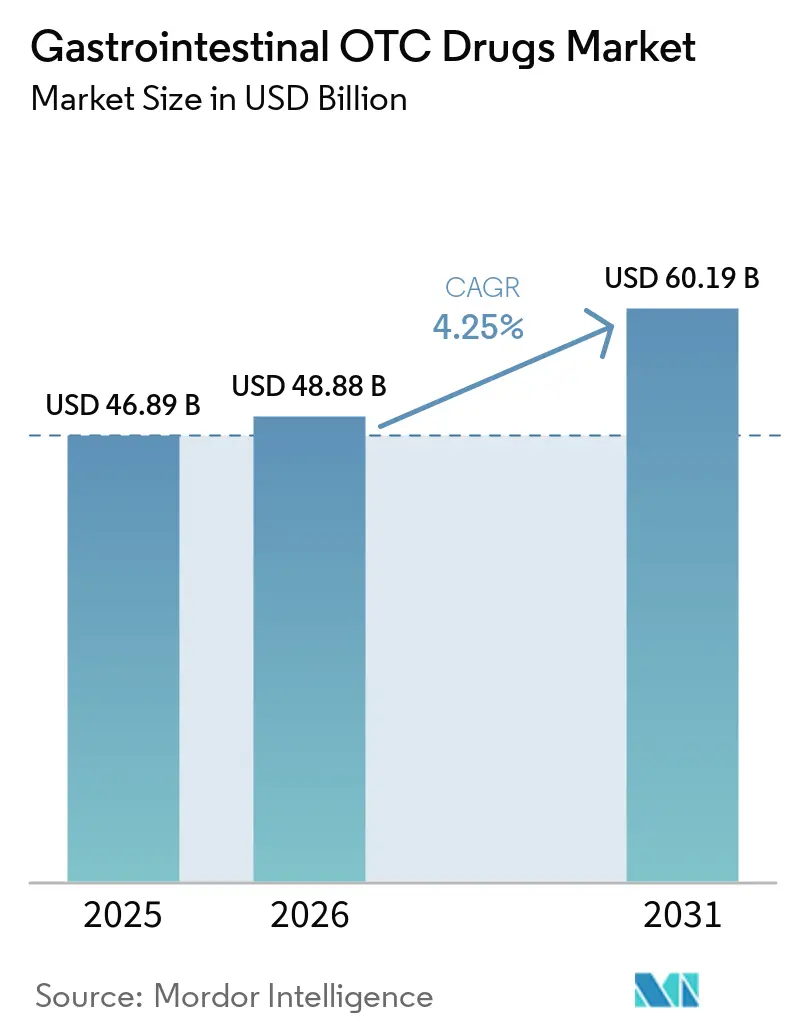
The Gastrointestinal OTC Drugs Market size was valued at USD 46.89 billion in 2025 and is estimated to grow from USD 48.88 billion in 2026 to reach USD 60.19 billion by 2031, at a CAGR of 4.25% during the forecast period (2026-2031).
Dietary imbalances, sedentary urban lifestyles, and aging populations in major regions support demand for gastrointestinal OTC drugs. The growing use of GLP-1 receptor agonists also increased the need for short-term digestive symptom relief. A 2026 systematic review found that nausea, vomiting, diarrhea, and constipation affected 50%–60% of GLP-1 receptor agonist users during treatment initiation. Consequently, the gastrointestinal OTC drugs market has seen increased use of antacids, anti-diarrheals, and anti-emetics as accessible first-line treatment options. Companies are responding through convenient formats, expanded digital availability, and products tailored to local consumer preferences.
Key Report Takeaways
- By drug class, antacids led with 28.67% revenue share in 2025, while proton pump inhibitors are projected to grow at a 5.67% CAGR through 2031.
- By indication, heartburn and indigestion held 32.44% revenue share in 2025, while GERD is projected to grow at a 6.23% CAGR through 2031.
- By formulation, tablets held 38.45% revenue share in 2025, while chewable tablets and gummies are projected to grow at a 6.67% CAGR through 2031.
- By route of administration, oral products held 89.34% revenue share in 2025, while rectal products are projected to grow at a 5.77% CAGR through 2031.
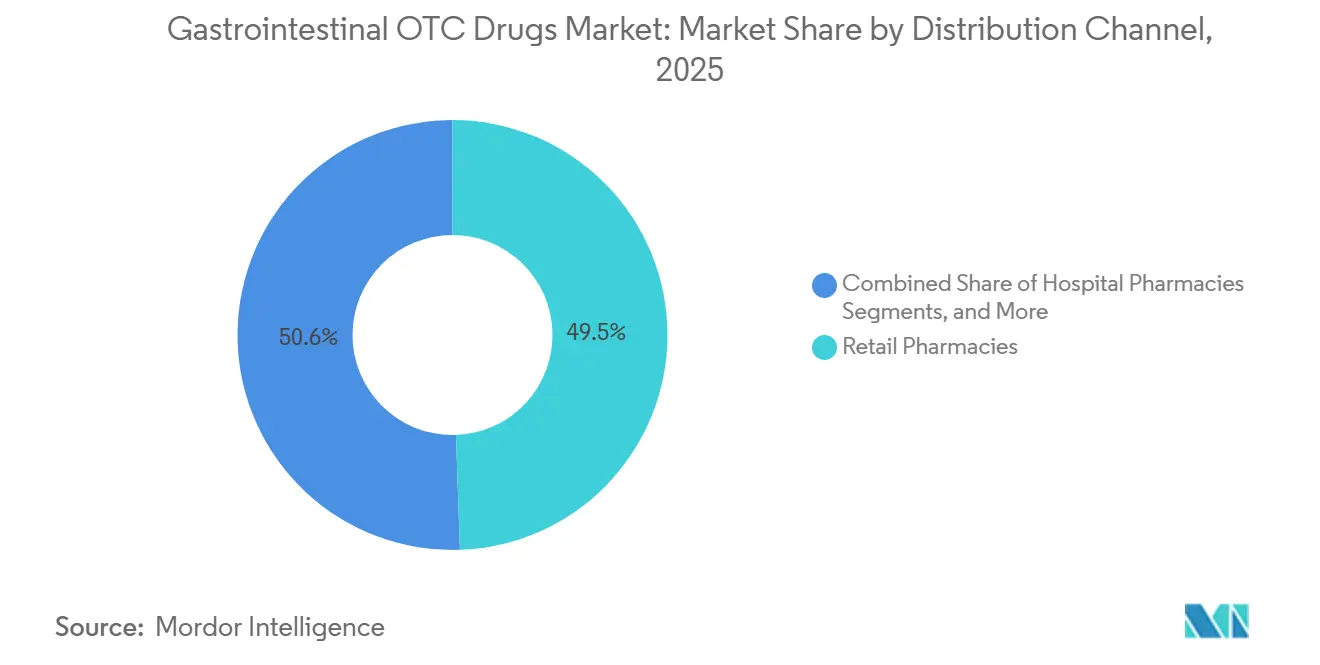
- By distribution channel, retail pharmacies held 49.45% revenue share in 2025, while online pharmacies are projected to grow at a 4.87% CAGR through 2031.
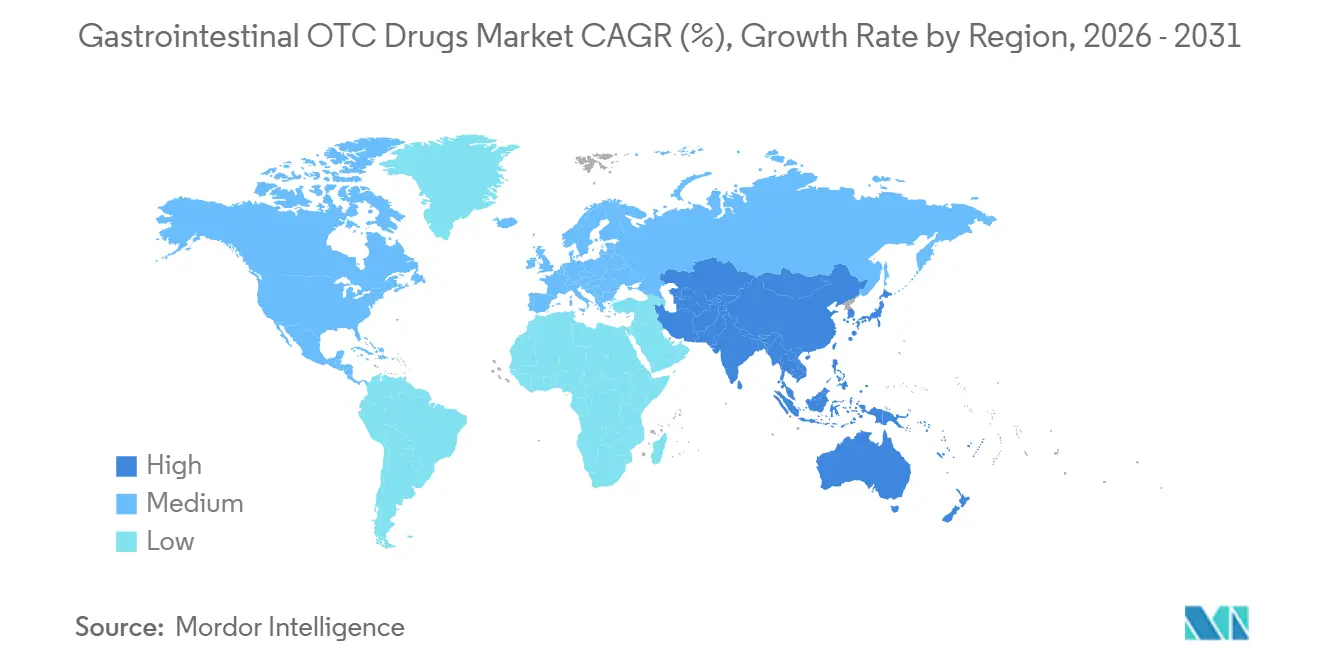
- By geography, North America held 40.44% revenue share in 2025, while Asia-Pacific is projected to grow at a 6.98% CAGR through 2031.
Note: Market size and forecast figures in this report are generated using Mordor Intelligence’s proprietary estimation framework, updated with the latest available data and insights as of January 2026.
Market Trends and Insights
Drivers Impact Analysis of Gastrointestinal OTC Drugs Market*
| DRIVER | (~) % IMPACT ON CAGR FORECAST | GEOGRAPHIC RELEVANCE | IMPACT TIMELINE |
|---|---|---|---|
| Rising heartburn, constipation, and acute gastrointestinal symptoms | +0.9% | Global | Long term (≥ 4 years) |
| Self-care and pharmacist-led treatment expansion | +0.7% | North America and Europe | Medium term (2-4 years) |
| OTC switches for acid-control therapies | +0.7% | Japan, Asia-Pacific, and North America | Medium term (2-4 years) |
| E-commerce and omnichannel digestive-health availability | +0.6% | Asia-Pacific, with spillover to the Middle East and Africa | Short term (≤ 2 years) |
| Shift toward proactive gut-health solutions | +0.5% | North America and Europe | Medium term (2-4 years) |
| GLP-1-associated gastrointestinal symptom management | +0.5% | Global, concentrated in North America | Short term (≤ 2 years) |
| Source: Mordor Intelligence | |||
Rising Burden of Heartburn, Constipation, and Acute Gastrointestinal Symptoms
The gastrointestinal OTC drugs market benefited from the recurring prevalence of heartburn, constipation, and acute digestive symptoms, which consumers commonly managed without prescriptions. Dietary habits, sedentary lifestyles, aging populations, and obesity sustained demand for acid-relief and constipation products, with obesity linked to both GERD and constipation. Heartburn and indigestion supported demand for low-cost antacids and acid-suppression products, while low fiber intake and limited activity drove laxative demand. In 2026, a systematic review reported gastrointestinal adverse effects in 50%–60% of patients initiating GLP-1 receptor agonists, supporting demand for antacids, anti-diarrheals, fiber products, and anti-emetics.[1]
OTC Switches and Broader Access to Acid-Control Therapies
The gastrointestinal OTC drugs market gained momentum from prescription-to-OTC switches for acid-control therapies. Japan approved the Rx-to-OTC switch of Pariet S, a rabeprazole product, in 2025, and Eisai subsequently launched it as Japan’s first proton pump inhibitor to transition from prescription status to OTC availability. In the United States, the FDA’s Additional Condition for Nonprescription Use rule became effective on May 27, 2025, enabling additional conditions such as technology-assisted processes or pharmacist consultation when labeling alone was insufficient.[2] These developments expanded consumer access but also increased the need for pharmacist guidance, while creating greater price competition from retailers and generic suppliers.
E-Commerce and Omnichannel Availability of Digestive-Health Products
Digital channels strengthened product discovery and repeat purchases in the gastrointestinal OTC drugs market through online pharmacies, quick-commerce platforms, and modern retail formats. Bayer introduced Dulcolax-branded lactulose in China through a collaboration with JD Health in July 2025, using consumer data to develop cylindrical packaging for e-commerce channels and younger urban consumers. Bayer also launched Alka-Seltzer in India in June 2026 through e-pharmacies, quick-commerce, and modern retail channels. The company planned distribution through 100,000 retail outlets and outreach to 100 million households over four years, while online pharmacy growth increased the need for compliance with regional consumer data privacy requirements.
GLP-1-Associated Gastrointestinal Symptom Management
GLP-1 receptor agonists created a distinct consumer segment requiring support for nausea, diarrhea, and constipation associated with delayed gastric emptying and reduced intestinal motility. These symptoms could affect treatment persistence and daily comfort, particularly in markets with broader GLP-1 access. Procter & Gamble promoted Metamucil fiber products for consumers on a GLP-1 treatment journey, focusing on regularity support rather than prescription-linked claims. The current product portfolio primarily addressed these symptoms through existing stock-keeping units, while potential combination anti-emetic and anti-diarrheal products would require appropriate evidence and regulatory clearance.
Restraints Impact Analysis of Gastrointestinal OTC Drugs Market*
| RESTRAINT | (~) % IMPACT ON CAGR FORECAST | GEOGRAPHIC RELEVANCE | IMPACT TIMELINE |
|---|---|---|---|
| Safety concerns and long-term acid-suppression misuse | -0.5% | Global | Medium term (2-4 years) |
| Diagnostic substitution and delayed referral for alarm symptoms | -0.3% | Global | Long term (≥ 4 years) |
| Regulatory and evidence complexity for probiotic and herbal claims | -0.3% | Europe and North America | Medium term (2-4 years) |
| Retailer private-label and price-led substitution | -0.6% | North America and Europe | Short term (≤ 2 years) |
| Source: Mordor Intelligence | |||
Safety Concerns and Misuse of Long-Term Acid Suppression
Safety concerns limited the repeat use of acid-suppression products without appropriate guidance. Reviews published in 2025 and 2026 discussed potential associations between long-term proton pump inhibitor use and several health outcomes, although causal relationships remained difficult to establish in some cases.[3] These concerns made pharmacists and healthcare providers more cautious about repeated self-treatment. The gastrointestinal OTC drugs market needed to balance accessibility with clear use instructions, referral guidance, and appropriate labeling. Community pharmacies also helped consumers distinguish occasional heartburn from symptoms requiring medical assessment, particularly as more prescription-grade therapies became available over the counter.
Retailer Private-Label and Price-Led Substitution
Private-label products created sustained pricing pressure in mature OTC categories, particularly for antacids, laxatives, and anti-diarrheals containing long-off-patent active ingredients. Retailer brands offered comparable formulations at lower prices than established brands, encouraging price-led substitution. Perrigo reported store-brand share gains in laxative categories in its third-quarter 2025 results, while store-brand PPI consumption declined during the period. Prescription-to-OTC switches increased category volumes but also intensified price competition, which could limit margin benefits for originator brands. Branded companies used gummies, probiotic combinations, and fast-dissolve formats to differentiate their offerings.
*Our forecasts treat driver/restraint impacts as directional, not additive. The impact forecasts reflect baseline growth, mix effects, and variable interactions.
Gastrointestinal OTC Drugs Market Segment Analysis
By Drug Class:
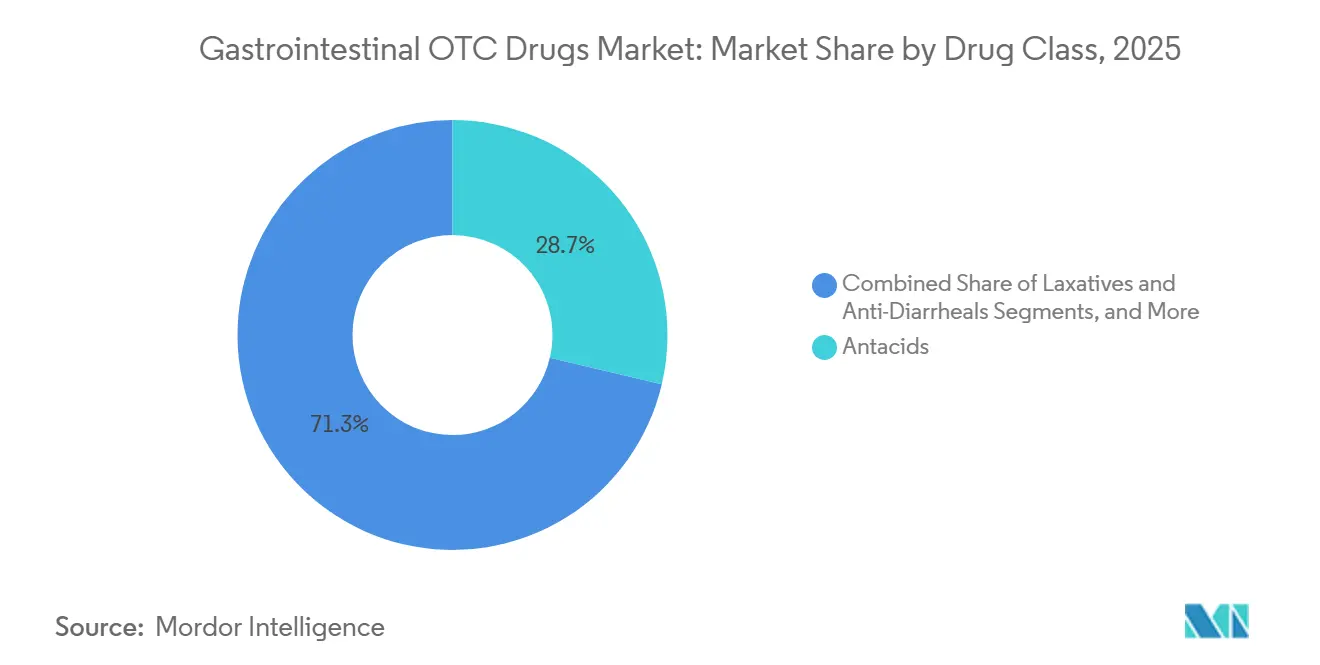
Antacids Lead, While PPIs Increase Access to Longer-Lasting ReliefAntacids held 28.67% of the gastrointestinal OTC drugs market share by drug class in 2025. Their leading position reflected broad availability, affordable pricing, and rapid relief for occasional symptoms within 1–5 minutes. Laxatives, antidiarrheals, antiemetics, and H2 receptor antagonists, including famotidine- and cimetidine-based products, also maintained demand across self-managed gastrointestinal conditions.
Proton pump inhibitors (PPIs) are forecast to record the highest growth at a CAGR of 5.67% from 2026 to 2031. Japan’s 2025 switch approvals and the U.S. ACNU pathway supported access to PPIs for recurring reflux management. While PPIs provide sustained acid suppression, safety concerns reinforce the need for pharmacist guidance and support demand for digestive enzymes, simethicone, and specialty products.

By Indication:
Heartburn and Indigestion Lead, While GERD Has the Highest Growth RateHeartburn and indigestion held 32.44% of the indication-based market share in 2025. The gastrointestinal OTC drugs market addressed short-term post-meal discomfort and recurring symptom management, with antacids commonly used for immediate relief. Constipation, diarrhea, nausea, vomiting, gas, flatulence, and bloating also supported demand for self-medication products, including simethicone and probiotic-oriented offerings.
GERD is forecast to grow at a CAGR of 6.23% from 2026 to 2031. This segment reflects demand for sustained acid control, leading consumers to prefer PPIs and H2 receptor antagonists over traditional antacids. Regulatory switches improved pharmacy access; however, persistent symptoms require pharmacist guidance and may need medical evaluation.
By Formulation:
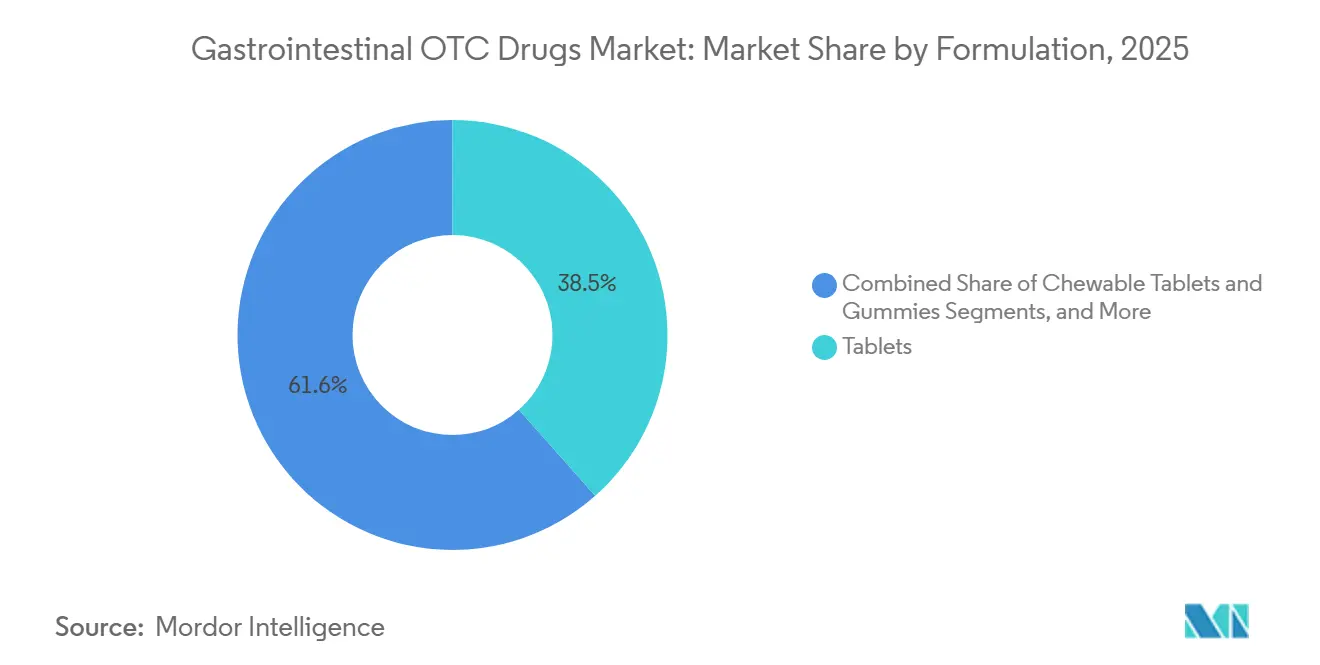
Tablets Retain Scale, While Gummies Change Consumer PreferencesTablets held 38.45% of the gastrointestinal OTC drugs market share by formulation in 2025, supported by familiar dosing, shelf stability, and low manufacturing costs. Capsules and softgels remained important for delayed-release PPIs and digestive enzymes, while liquids and suspensions served pediatric diarrhea, vomiting, and rapid antacid relief needs. Effervescent granules and tablets also remained relevant in markets familiar with fast-dissolving formats.
Chewable tablets and gummies are forecast to grow at a CAGR of 6.67% from 2026 to 2031. Haleon cited Tums Gummy Bites as a digestive-health growth contributor in its 2025 results, while Procter & Gamble offers Pepto-Bismol in gummy formats. Fast-dissolve strips and powders further provide travel convenience and improve product acceptability among children.
By Route of Administration:
Oral Products Dominate, While Rectal Products Address Specific NeedsOral products held 89.34% of the route-of-administration market share in 2025. The gastrointestinal OTC drugs market used oral delivery for antacids, PPIs, H2 receptor antagonists, laxatives, and antidiarrheals. Chewable, effervescent, and fast-dissolving formats improved accessibility for older adults and pediatric users with difficulty swallowing standard tablets, while topical products maintained a stable role in hemorrhoid management.
Rectal products are forecast to grow at a CAGR of 5.77% through 2031. Glycerin suppositories, bisacodyl formulations, and microenemas support consumers with severe constipation who cannot tolerate oral laxatives. Perrigo’s GoodSense bisacodyl rectal product remained actively listed in U.S. OTC records, and the FDA OTC laxative monograph provided an established framework for eligible products.
By Distribution Channel:
Retail Pharmacies Lead, While Online Pharmacies Expand ConvenienceRetail pharmacies held 49.45% of the distribution channel share in 2025. Pharmacists helped consumers select products based on symptoms and intended duration of use, while in-store promotions supported acute digestive health categories. Supermarkets and hypermarkets remained relevant for antacid and laxative purchases, and hospital pharmacies served discharge-related and short-term symptom management needs.
Online pharmacies are forecast to grow at a CAGR of 4.87% through 2031. Bayer’s China collaboration and India launch placed digital access at the center of product availability, while recurring-delivery models supported repeat purchases. Online channels also enabled private purchases, although retail pharmacy guidance remained important for consumers with persistent or unusual symptoms.
Geography Analysis
North America Gastrointestinal OTC Drugs Market
North America held 40.44% of the gastrointestinal OTC drugs market share in 2025, supported by high OTC healthcare spending and mature retail pharmacy infrastructure. The FDA’s ACNU rule, effective in May 2025, supported nonprescription access for products requiring additional conditions for safe use. This framework could support future switches for acid-control and anti-diarrheal products. Canada aligned closely with U.S. regulatory standards, while Mexico followed the COFEPRIS framework.
Europe Gastrointestinal OTC Drugs Market
Europe remained the second-largest regional market, although country-specific requirements slowed coordinated product launches. Community pharmacies played a key advisory role in France, Italy, and Spain by supporting product selection and referrals for persistent symptoms. Private-label competition remained significant in the United Kingdom and Germany, where store brands occupied substantial supermarket and pharmacy shelf space. The region combined strong self-care demand with a focus on pricing and professional guidance.
APAC, MEA and South America Gastrointestinal OTC Drugs Market
Asia-Pacific is forecast to grow at a CAGR of 6.98% from 2026 to 2031. China held 36.05% of the Asia-Pacific OTC drugs market in 2025, supported by urban e-commerce access, while India is expected to register the highest sub-regional CAGR. Bayer expanded Alka-Seltzer in India across 100,000 retail outlets, targeting 100 million households over four years. South America, the Middle East, and Africa offer long-term potential through expanding pharmacy networks, self-care regulations, and digital retail access.
Competitive Landscape
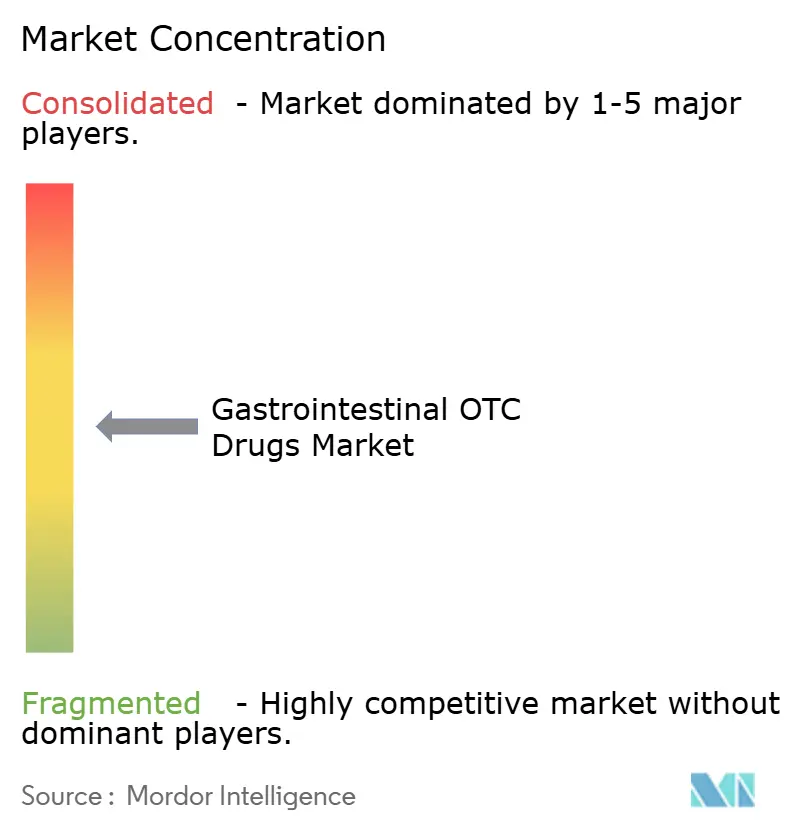
The gastrointestinal OTC drugs market had moderate concentration, with Haleon, Kenvue, Reckitt, Procter & Gamble, Bayer, and Sanofi maintaining strong shelf presence across major digestive health categories. These companies competed through brand recognition, formulation convenience, and retail distribution. As core active ingredients have long been off patent, companies invested in gummies, combination products, and fast-dissolve systems to differentiate their offerings.
Bayer launched Alka-Seltzer in India in June 2026 as an effervescent sachet product with probiotic support. The company targeted e-pharmacies, quick-commerce platforms, modern trade, and broader retail channels. Haleon’s Tums Gummy Bites launch supported digestive health growth in its 2025 results. Kenvue received FDA approval for Tylenol with Naproxen in July 2026, demonstrating the potential for fixed-dose OTC combinations to obtain U.S. clearance.
Indian generic companies, including Cipla, Dr. Reddy’s Laboratories, Sun Pharmaceutical, Alkem Laboratories, and Zydus Lifesciences, competed through cost-efficient portfolios and broad pharmacy reach. Perrigo remained a key private-label supplier in North America and Europe, with its 2025 results reflecting store-brand gains in digestive health laxative categories. Brands with credible support for nausea and motility management may be well positioned to address GLP-1-related needs, subject to clear regulatory requirements. Access, format, price, and consumer trust continued to influence purchasing decisions.
Gastrointestinal OTC Drugs Industry Leaders
-
Bayer AG
-
Johnson & Johnson
-
Sanofi
-
Pfizer Inc.
-
Sun Pharmaceutical Industries Limited
- *Disclaimer: Major Players sorted in no particular order
Gastrointestinal OTC Drugs Market Companies Covered in this Report
- Abbott Laboratories
- Alkem Laboratories Limited
- Bayer
- Boehringer Ingelheim
- Cipla
- Dr. Reddy’s Laboratories
- Haleon plc
- Johnson & Johnson
- Kenvue Inc.
- Nestle S.A.
- Perrigo Company
- Pfizer
- Prestige Consumer Healthcare
- Reckitt Benckiser Group
- Sanofi
- Sun Pharmaceuticals Industries
- Takeda Pharmaceuticals
- Teva Pharmaceutical Industries
- Procter & Gamble
- Zydus Lifesciences Limited
Recent Industry Developments in Gastrointestinal OTC Drugs Market
- June 2026: Bayer’s Consumer Health division launched Alka-Seltzer in India as the country’s first OTC antacid with probiotic support in the AYUSH category, targeting 100,000 retail outlets and 100 million households within four years.
- August 2025: Japan’s MHLW expert panel endorsed the prescription-to-OTC switch of vonoprazan for short-term use. The potassium-competitive acid blocker offered a mechanism distinct from traditional PPIs.
- July 2025: Japan approved its first PPI prescription-to-OTC switches, including lansoprazole and rabeprazole sodium. Eisai launched Pariet S as the country’s first prescription-to-OTC PPI product.
- July 2025: Bayer and JD Health launched Dulcolax-branded lactulose in China through a data-driven commercial collaboration, targeting younger urban consumers through e-commerce-focused packaging.
Global Gastrointestinal OTC Drugs Market Report Scope
As per the scope of the report, Gastrointestinal over-the-counter (OTC) drugs are non-prescription medications used to self-treat common digestive issues like heartburn, constipation, diarrhea, and gas.
The gastrointestinal OTC drugs market is segmented by drug class, indication, formulation, route of administration, distribution channel, and geography. By drug class, the market includes antacids, laxatives, antidiarrheals, antiemetics, proton pump inhibitors, H2-receptor antagonists, and digestive enzymes, simethicone, and other products. By indication, the market is segmented into heartburn and indigestion, gastroesophageal reflux disease, constipation, diarrhea, nausea and vomiting, motion sickness, gas, flatulence, and bloating, and others. By formulation, the market is categorized into tablets, chewable tablets and gummies, capsules and softgels, liquids and suspensions, effervescent granules and tablets, fast-dissolving strips and powders, and others. By route of administration, the market is segmented into oral, topical, and rectal products. By distribution channel, the market includes retail pharmacies, hospital pharmacies, supermarkets and hypermarkets, online pharmacies, and others. By geography, the market is analyzed across North America, Europe, Asia-Pacific, the Middle East and Africa, and South America. The report also covers the estimated market sizes and trends for 17 countries across major regions globally. The report offers market sizes and forecasts in terms of value (USD) for the above segments.
Segmentation Overview
| Antacids |
| Laxatives |
| Anti-Diarrheals |
| Anti-Emetics |
| Proton Pump Inhibitors |
| H2-Receptor Antagonists |
| Digestive Enzymes, Simethicone, and Other Products |
| Heartburn and Indigestion |
| Gastroesophageal Reflux Disease |
| Constipation |
| Diarrhea |
| Nausea and Vomiting |
| Motion Sickness |
| Gas, Flatulence, and Bloating |
| Others |
| Tablets |
| Chewable Tablets and Gummies |
| Capsules and Softgels |
| Liquids and Suspensions |
| Effervescent Granules and Tablets |
| Fast-Dissolve Strips and Powders |
| Others |
| Oral |
| Topical |
| Rectal |
| Retail Pharmacies |
| Hospital Pharmacies |
| Supermarkets and Hypermarkets |
| Online Pharmacies |
| Others |
| North America | United States |
| Canada | |
| Mexico | |
| Europe | Germany |
| United Kingdom | |
| France | |
| Italy | |
| Spain | |
| Rest of Europe | |
| Asia-Pacific | China |
| India | |
| Japan | |
| Australia | |
| South Korea | |
| Rest of Asia-Pacific | |
| Middle East and Africa | GCC |
| South Africa | |
| Rest of Middle East and Africa | |
| South America | Brazil |
| Argentina | |
| Rest of South America |
| By Drug Class | Antacids | |
| Laxatives | ||
| Anti-Diarrheals | ||
| Anti-Emetics | ||
| Proton Pump Inhibitors | ||
| H2-Receptor Antagonists | ||
| Digestive Enzymes, Simethicone, and Other Products | ||
| By Indication | Heartburn and Indigestion | |
| Gastroesophageal Reflux Disease | ||
| Constipation | ||
| Diarrhea | ||
| Nausea and Vomiting | ||
| Motion Sickness | ||
| Gas, Flatulence, and Bloating | ||
| Others | ||
| By Formulation | Tablets | |
| Chewable Tablets and Gummies | ||
| Capsules and Softgels | ||
| Liquids and Suspensions | ||
| Effervescent Granules and Tablets | ||
| Fast-Dissolve Strips and Powders | ||
| Others | ||
| By Route of Administration | Oral | |
| Topical | ||
| Rectal | ||
| By Distribution Channel | Retail Pharmacies | |
| Hospital Pharmacies | ||
| Supermarkets and Hypermarkets | ||
| Online Pharmacies | ||
| Others | ||
| By Geography | North America | United States |
| Canada | ||
| Mexico | ||
| Europe | Germany | |
| United Kingdom | ||
| France | ||
| Italy | ||
| Spain | ||
| Rest of Europe | ||
| Asia-Pacific | China | |
| India | ||
| Japan | ||
| Australia | ||
| South Korea | ||
| Rest of Asia-Pacific | ||
| Middle East and Africa | GCC | |
| South Africa | ||
| Rest of Middle East and Africa | ||
| South America | Brazil | |
| Argentina | ||
| Rest of South America | ||
Key Questions Answered in the Report
What is the projected value of gastrointestinal OTC drugs in 2031?
The category is projected to reach USD 60.19 billion by 2031, from USD 48.88 billion in 2026, at a 4.25% CAGR.
Which gastrointestinal OTC drug class leads sales?
Antacids led drug-class revenue with a 28.67% share in 2025 because they provide accessible and rapid symptom relief.
What is driving growth in OTC treatment for GERD?
GERD is projected to grow at a 6.23% CAGR through 2031, supported by demand for sustained acid control and new OTC access pathways.
Why are GLP-1 therapies relevant to digestive product demand?
Nausea, vomiting, diarrhea, and constipation affected 50%-60% of patients starting GLP-1 receptor agonists in a 2026 review.
Which sales channel is growing fastest for digestive OTC products?
Online pharmacies are forecast to grow at a 4.87% CAGR through 2031 as consumers value convenience, privacy, and recurring delivery.
Which region is growing fastest for gastrointestinal OTC drugs?
Asia-Pacific is forecast to grow at a 6.98% CAGR from 2026 to 2031, supported by digital commerce and expanding pharmacy access.