
Freeze-Dried Pet Food Market Size and Share
Market Overview
| Study Period | 2022 - 2032 |
|---|---|
| Market Size (2027) | USD 15.27 Billion |
| Market Size (2032) | USD 24.10 Billion |
| Growth Rate (2027 - 2032) | 9.56 % |
| Fastest Growing Market | Asia-Pacific |
| Largest Market | North America |
| Market Concentration | Medium |
Major Players *Disclaimer: Major Players sorted in no particular order Image © Mordor Intelligence. Reuse requires attribution under CC BY 4.0. | |
Freeze-Dried Pet Food Market Analysis by Mordor Intelligence
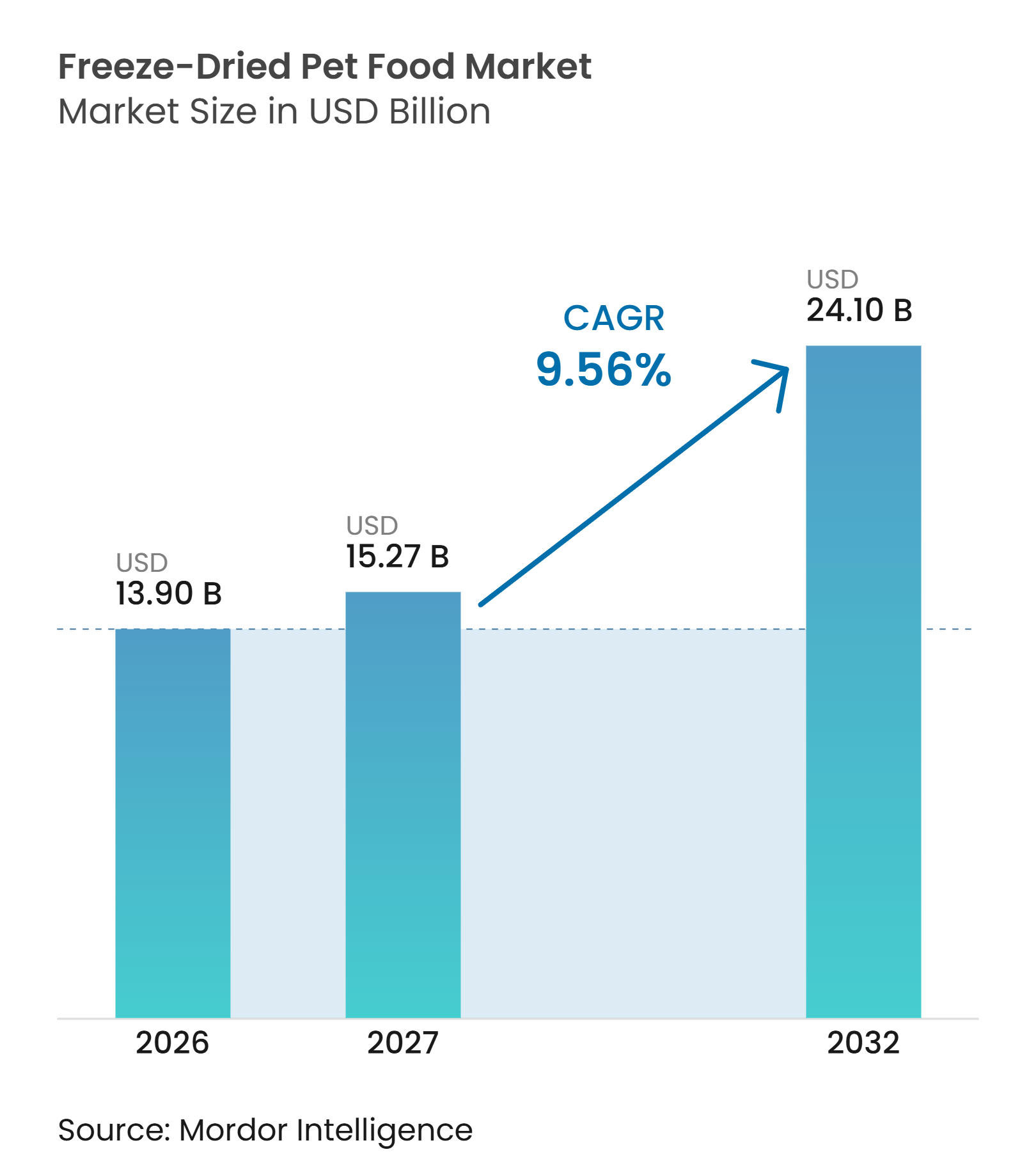
The freeze-dried pet food market size was valued at USD 13.90 billion in 2026 and is forecast to grow from USD 15.27 billion in 2027 to USD 24.10 billion by 2032, at a CAGR of 9.56% from 2027 to 2032. The market benefits as pet owners place greater value on ingredient transparency, protein content, feeding convenience, and products that fit established household routines. Freeze-dried products address these preferences by combining raw-style positioning with ambient storage, enabling brands to serve households that cannot manage frozen food or make frequent trips to specialty stores. The market also provides manufacturers with a path to premium pricing through complete meals, treats, and toppers that suit different feeding routines and allow consumers to enter the category at varying levels of commitment. Food safety, packaging performance, and access to production capacity will remain central to how brands scale and maintain retailer confidence. Companies that document formula quality and pathogen controls can strengthen their market position as freeze-dried pet food reaches wider retail and online audiences, where consumers evaluate value, convenience, and product credibility together.
Key Report Takeaways
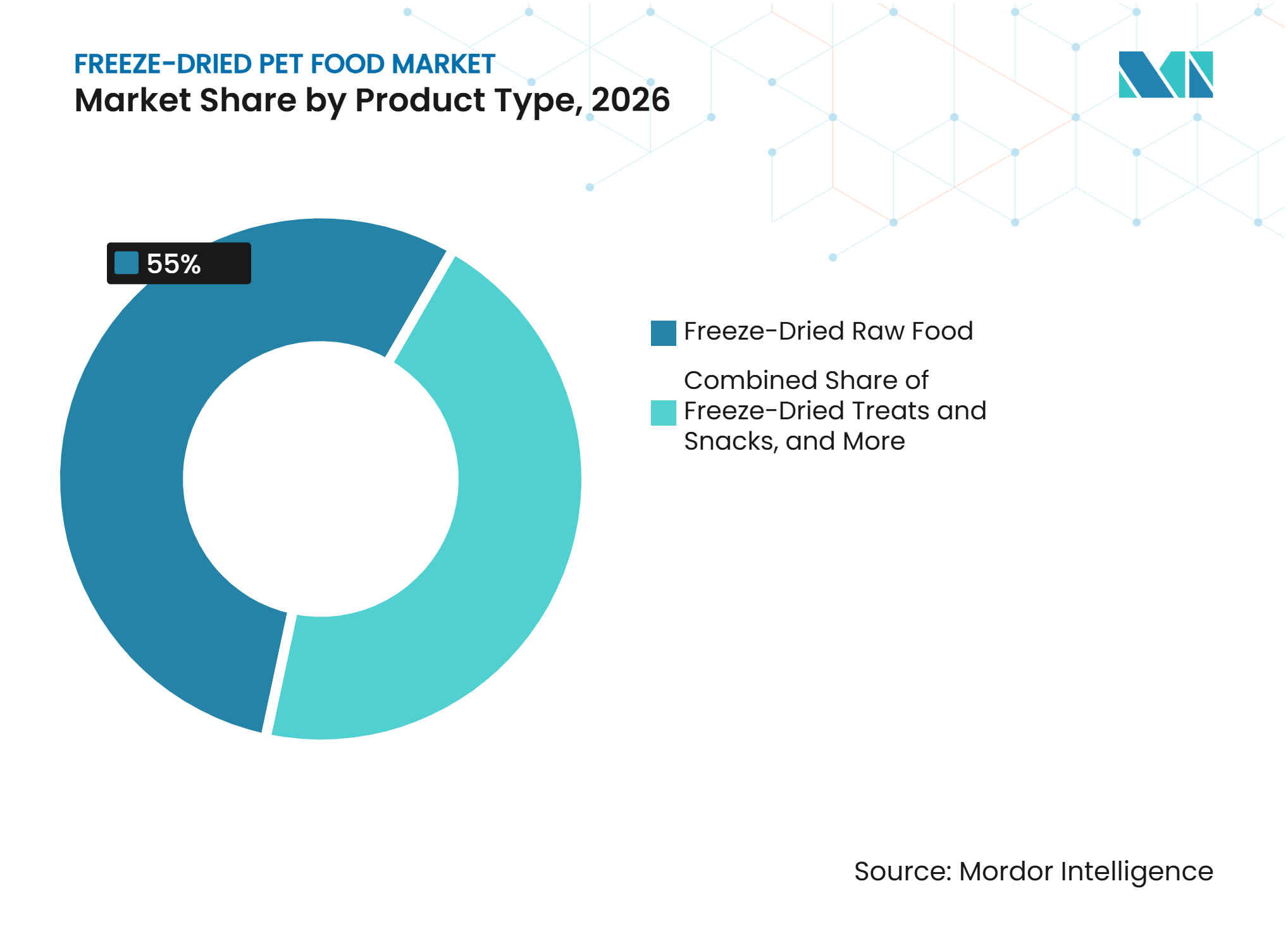
- By product type, freeze-dried raw food accounted for 55% of the freeze-dried pet food market share in 2026, while freeze-dried meal toppers and mixers are forecast to grow at a CAGR of 11.2% from 2027 to 2032.
- By pet type, dogs accounted for 60% of the freeze-dried pet food market size in 2026, while cats are forecast to grow at a CAGR of 10.4% from 2027 to 2032.
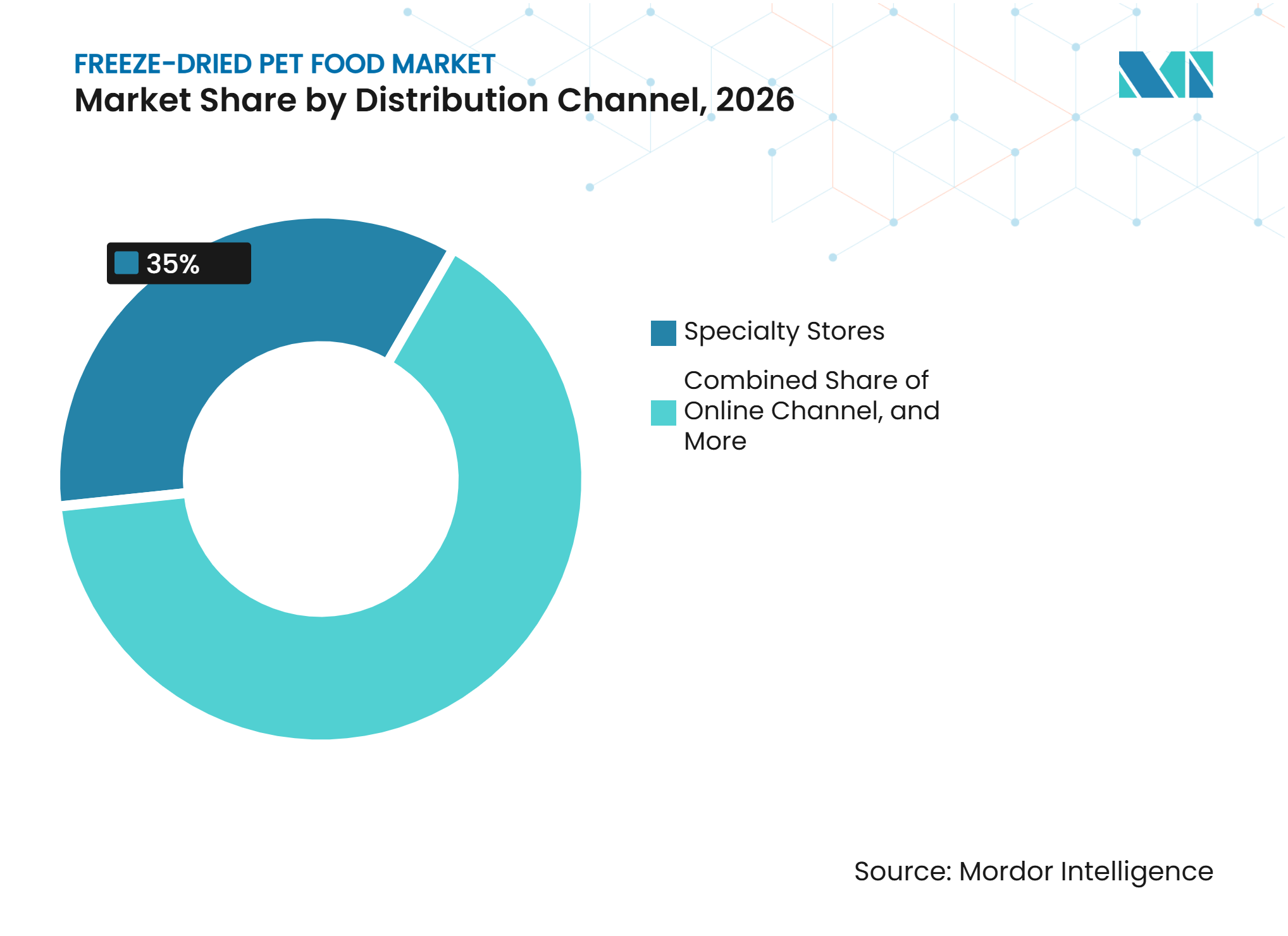
- By distribution channel, specialty stores accounted for 35% of the market share in 2026, while the online channel is forecast to grow at a CAGR of 10.9% from 2027 to 2032.
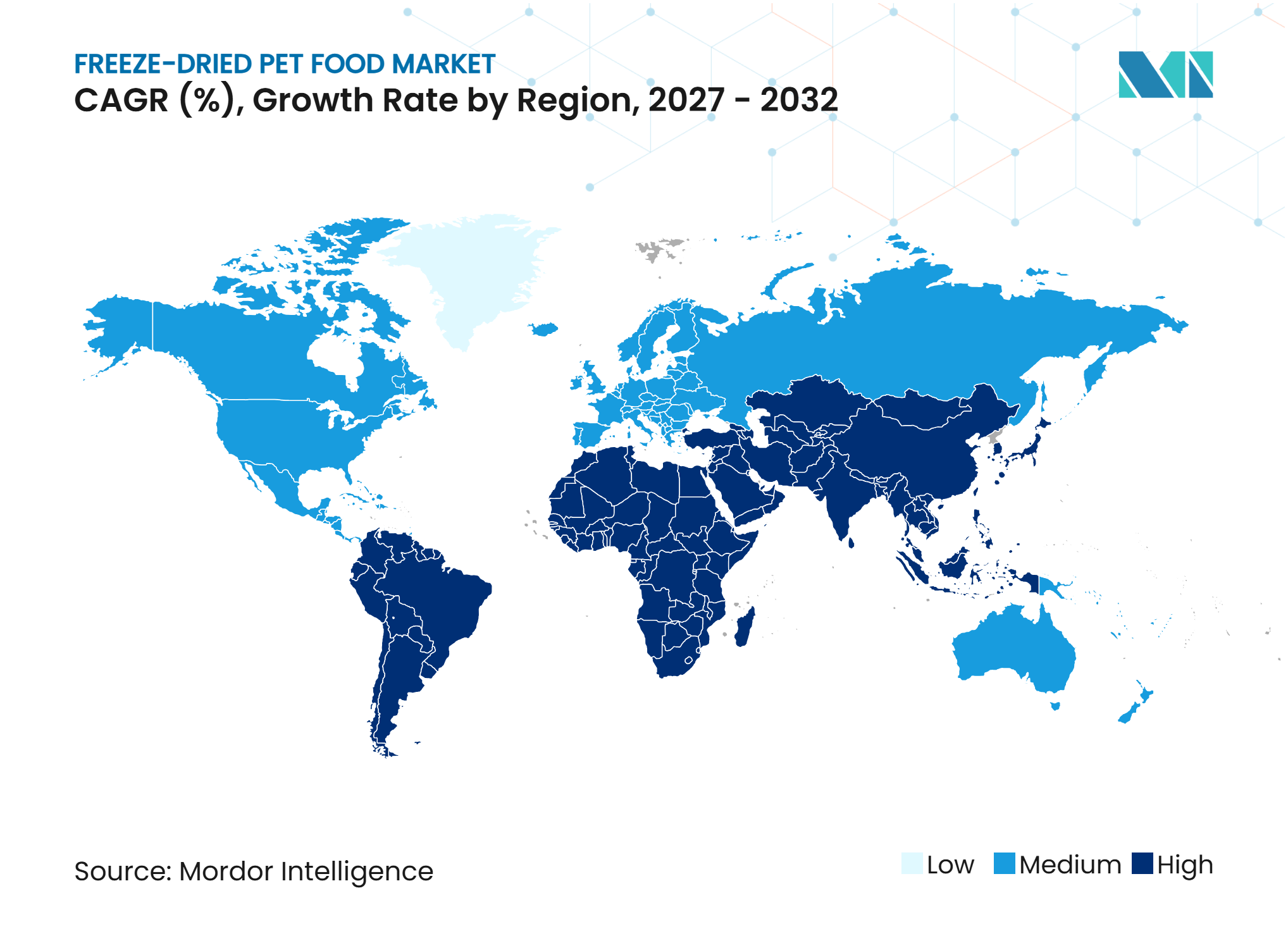
- By geography, North America accounted for 40% of the market share in 2026, while Asia-Pacific is forecast to grow at a CAGR of 10.7% from 2027 to 2032.
Note: Market numbers in this report are based on Mordor Intelligence's proprietary estimation framework, which combines nine months of actuals with Q4 projections for base year 2026.
Market Trends and Insights
Drivers Impact Analysis of Freeze-Dried Pet Food Market*
| Driver | (~) % Impact on CAGR Forecast | Geographic Relevance | Impact Timeline |
|---|---|---|---|
| Pet Humanization and Premiumization | +2.8% | Global, strongest in North America and Europe | Long term (≥ 4 years) |
| Demand for Minimally Processed, High-Protein Nutrition | +2.2% | North America and Europe, with spillover to Asia-Pacific | Medium term (2-4 years) |
| E-Commerce Expansion and Direct-to-Consumer Distribution | +1.5% | Asia-Pacific, followed by North America and Europe | Medium term (2-4 years) |
| Convenience of Shelf-Stable Raw-Style Feeding | +0.8% | Global, with early gains in urban Asia-Pacific and Europe | Short term (≤ 2 years) |
| Cat-Specific Protein and Palatability Innovation | +0.7% | North America, Europe, and Asia-Pacific | Medium term (2-4 years) |
| Process Automation and Higher Freeze-Dryer Throughput | +0.5% | North America and Asia-Pacific, with early EU contract-manufacturing gains | Long term (≥ 4 years) |
| Source: Mordor Intelligence | |||
Pet Humanization and Premiumization
Pet owners increasingly view companion animals as members of the household, which supports spending on premium feeding formats. This shift favors products that show recognizable ingredients and make clear nutritional claims. The freeze-dried pet food market benefits because its products can be positioned as both convenient and closer to raw feeding practices. The market has also benefited from a shift away from basic pet food toward premium options, creating opportunities for brands to introduce complete freeze-dried meals alongside smaller trial formats. This trend also underscores the importance of clear feeding guidance, quality controls, and credible product information that help consumers compare claims, serving methods, and each product's role in daily feeding. As a result, pet humanization and premiumization continue to support demand for differentiated, higher-value pet food products.
Demand for Minimally Processed, High-Protein Nutrition
Demand for raw-inspired and high-protein foods supports the freeze-dried pet food market, as freeze-drying produces a shelf-stable format that requires no refrigeration. The process helps brands reach buyers seeking products with a simpler ingredient profile than conventional kibble. GEA highlights that freeze-dried pet food offers a long shelf life and convenient handling while retaining the nutritional characteristics of its ingredients [1]. Ambient storage also allows products to reach households and retail formats that cannot support frozen raw food. This distribution flexibility broadens the range of households that can consider a premium raw-style diet. Products still need complete nutritional claims and practical rehydration instructions to maintain buyer confidence across different pet sizes, life stages, and product formats. These characteristics strengthen the appeal of freeze-dried pet food among consumers seeking convenient alternatives to conventional and frozen raw diets.
E-Commerce Expansion and Direct-to-Consumer Distribution
Online purchasing supports repeat orders for lightweight, stable products at ambient temperature. The freeze-dried pet food market can use subscription models to make recurring feeding routines easier for consumers. Direct sales also allow brands to explain protein sources, portion sizes, and safe handling in more detail than a retail shelf often allows. These capabilities are useful when buyers are trying freeze-dried food for the first time. They can also help brands introduce toppers and treats before encouraging customers to move to complete meals. Digital expansion does not remove the need for safety controls, as online customers can quickly react to quality concerns or recall notices and expect brands to communicate promptly and clearly. The growth of online purchasing and subscription-based sales therefore provides brands with additional opportunities to build customer relationships and encourage repeat purchases.
Convenience of Shelf-Stable Raw-Style Feeding
Shelf stability makes raw-style feeding more practical for travel, smaller homes, and households without freezer capacity. The freeze-dried pet food market can therefore serve consumers who value the appeal of raw diets but need easier storage. Ambient products may also simplify transport and inventory planning compared with frozen products. This advantage is especially relevant for online fulfillment and smaller pack sizes. Convenient formats such as patties, nibs, and toppers allow consumers to choose how much freeze-dried food to add to an existing diet. The format must still be protected from moisture and oxygen to retain quality throughout its stated shelf life and preserve the consumer experience that supports repeat purchasing. These storage and handling advantages strengthen the appeal of freeze-dried products as practical alternatives to frozen raw pet food.
Restraints Impact Analysis of Freeze-Dried Pet Food Market*
| Restraint | (~) % Impact on CAGR Forecast | Geographic Relevance | Impact Timeline |
|---|---|---|---|
| Premium Price and Consumer Trade-Down Risk | -2.1% | Global, with highest sensitivity in South America, the Middle East, and Africa | Short term (≤ 2 years) |
| Energy Intensity and Production-Capacity Constraints | -1.5% | North America and Europe, with rising pressure in Asia-Pacific | Medium term (2-4 years) |
| Pathogen-Control, Recall, and Validation Burden | -1.2% | North America, with secondary relevance in Europe | Medium term (2-4 years) |
| Packaging Cost, Barrier Performance, and Sustainability Trade-Offs | -0.8% | Europe and North America, with spillover to Asia-Pacific | Long term (≥ 4 years) |
| Source: Mordor Intelligence | |||
Premium Price and Consumer Trade-Down Risk
The premium price of freeze-dried pet food limits the number of households that can use it as a complete diet, exposing the market to consumer trade-down risk as buyers shift to lower-cost alternatives. Archer-Daniels-Midland Company (ADM) reported in 2025 that affordability remained an important concern for pet owners, including those making nutrition-related decisions[2]. Toppers, treats, and partial feeding options can reduce the upfront cost commitment for price-sensitive buyers and may help brands retain customers without requiring a full transition to a freeze-dried diet. However, lower-priced entry formats require clear labeling so buyers can distinguish between complete meals and supplements and make informed feeding decisions. The relatively high cost of freeze-dried products compared with conventional pet food may therefore limit their adoption among price-sensitive households.
Energy Intensity and Production-Capacity Constraints
Freeze-drying requires specialized equipment, lengthy processing cycles, and substantial energy use, creating structural capacity constraints for the freeze-dried pet food market. Brands that rely on contract production may face limited production availability during periods of rising demand. Large, vertically integrated operators tend to have greater control over supply, production schedules, and product quality, while smaller companies may respond by focusing on a narrow range of high-value products rather than maintaining a broad portfolio. Capacity constraints can also slow the expansion from regional distribution to wider retail coverage, particularly when manufacturers must prioritize established customers and predictable order volumes. These operational requirements limit production scalability and increase the cost of expanding freeze-dried pet food manufacturing capacity.
*Our forecasts treat driver/restraint impacts as directional, not additive. The impact forecasts reflect baseline growth, mix effects, and variable interactions.
Freeze-Dried Pet Food Market Segment Analysis
By Product Type:
Freeze-Dried Raw Food Leads, While Freeze-Dried Meal Toppers and Mixers Grow FastestFreeze-dried raw food accounted for 55% of the freeze-dried pet food market share in 2026. Its position reflects demand for complete, raw-inspired meals that offer protein-focused nutrition with shelf stability. Complete meals generate regular purchases as they serve as a primary feeding option. They also give brands the opportunity to communicate ingredients, rehydration methods, and feeding portions in terms that are easy for new users to understand. Freeze-dried treats and snacks can serve as an accessible first purchase for households that primarily use kibble, helping companies introduce buyers to the texture and ingredient profile of freeze-dried products before asking them to change their daily feeding routine.
Freeze-dried meal toppers and mixers are forecast to grow at a CAGR of 11.2% from 2027 to 2032. Growth in this segment is driven by buyers seeking to add premium nutrition without replacing an existing diet. Toppers make it easier to control spending and evaluate a brand before moving to a complete meal. They also support portion flexibility for multi-pet homes and variable feeding routines, which is useful where household budgets and preferences differ. Other product types, including veterinary and condition-specific formulas, remain smaller but offer specialized opportunities. The Association of American Feed Control Officials (AAFCO) nutrient profiles provide nutritional benchmarks to substantiate complete-and-balanced claims, whereas supplemental products are subject to different nutritional labeling requirements.



By Pet Type:
Dogs Lead the Market, While Cats Grow FastestDogs accounted for 60% of the market share in 2026. The dog category covers complete meals, puppy recipes, meal mixers, functional toppers, and single-ingredient treats. This range gives manufacturers several ways to reach households at different price points and through different product occasions. Treats can bring first-time buyers into a brand before they consider a full meal plan. Stella & Chewy's and Vital Essentials offer freeze-dried treats and meal formats for different dog-feeding occasions. The size of the dog segment also gives retailers a reason to dedicate specialty shelf space to multiple product formats and protein options.
Cats are forecast to grow at a CAGR of 10.4% from 2027 to 2032. This growth rate is linked to the alignment between feline dietary needs and high-protein, low-carbohydrate raw-style formulations. Smaller kibble-like pieces and tailored protein blends can make products more suitable for cats. Other pet types, including small mammals and exotic animals, remain early-stage opportunities that require more specialized development, such as species-specific formulations and precise feeding instructions that set clear expectations for owners.
By Distribution Channel:
Specialty Stores Lead, While the Online Channel Grows FastestSpecialty stores accounted for 35% of the market share in 2026. The channel's role is tied to staff guidance for first-time buyers who need support with protein rotation, rehydration, and serving sizes. Specialty retailers can also offer a broader selection of complete meals, toppers, and treats than many general retailers. This setting helps premium products justify higher prices compared to kibble and clarifies how their use differs from conventional food. Vital Essentials expanded its distribution through Pet Supplies Plus in September 2025, making its freeze-dried raw dog and cat food and treats available at more than 725 stores across the United States and through the retailer's online channel[3]. This expansion illustrates how specialty partnerships can support broader access while retaining the benefits of knowledgeable retail staff.
The online channel is forecast to grow at a CAGR of 10.9% from 2027 to 2032. This growth supports the freeze-dried pet food market by enabling products to be shipped without a cold chain. Subscription services may improve order regularity for frequently purchased products and help households plan regular replenishment. Digital product pages can also provide detailed guidance on ingredients, feeding amounts, and product safety, which matters when an owner compares complete meals with supplemental toppers. Online selling also places greater pressure on brands to respond clearly when safety concerns arise. Companies with well-documented controls can use that transparency to build confidence with repeat buyers and reinforce the value of responsible product handling.

Geography Analysis
North America accounted for 40% of the freeze-dried pet food market share in 2026. The region has extensive specialty retail coverage and a consumer base familiar with premium pet nutrition. Strong retail networks give brands multiple routes to introduce complete meals, treats, and toppers. Food and Drug Administration (FDA) oversight makes food safety a central part of product credibility, particularly for raw-protein formats. AAFCO nutrient profiles provide a recognized framework for formulating and labeling complete diets. FDA recall notices indicate that compliance can shape consumer trust quickly when contamination issues arise. Retail expansion by Vital Essentials into more than 725 Pet Supplies Plus locations in 2025 reflects continued demand for specialty distribution. The region also allows companies to test different product formats, retailer education approaches, and dietary options before wider distribution.
Asia-Pacific is forecast to grow at a CAGR of 10.7% from 2027 to 2032. Urban households and digital retail make shelf-stable premium pet food easier to discover and reorder. The freeze-dried pet food market is well-positioned for online sales, as its products do not require frozen delivery. Subscription programs can support repeat purchases when consumers regularly use complete meals or toppers. Regional growth will depend on product education, local distribution, and clear safety communication. Companies entering the region need to adapt pack sizes and feeding directions to local routines. Product innovation that emphasizes convenient storage and high-protein nutrition can be particularly relevant as urban households seek practical feeding options. Online discovery and recurring delivery create an opportunity for brands to build familiarity with a format that may be new to many consumers.
Europe, South America, the Middle East, and Africa offer growth opportunities at different stages of premium pet food adoption. Europe has a strict compliance environment in which FEDIAF guidance and Regulation (EC) No 767/2009 govern feed hygiene, labeling, and market access. These requirements can favor brands with robust documentation for ingredients, nutritional suitability, and packaging. South America presents potential as formal pet-specialty retail expands, although price sensitivity remains a constraint. The Middle East has an import-dependent premium consumer base concentrated in major urban areas. Africa remains at an earlier stage of development, with retail modernization gradually expanding access to premium packaged products. Across these regions, recyclable high-barrier packaging may become more relevant as the freeze-dried pet food market adapts to evolving materials expectations. Market entry is likely to favor companies that can align product claims, packaging choices, and distribution plans with local requirements.
Competitive Landscape
Market Concentration
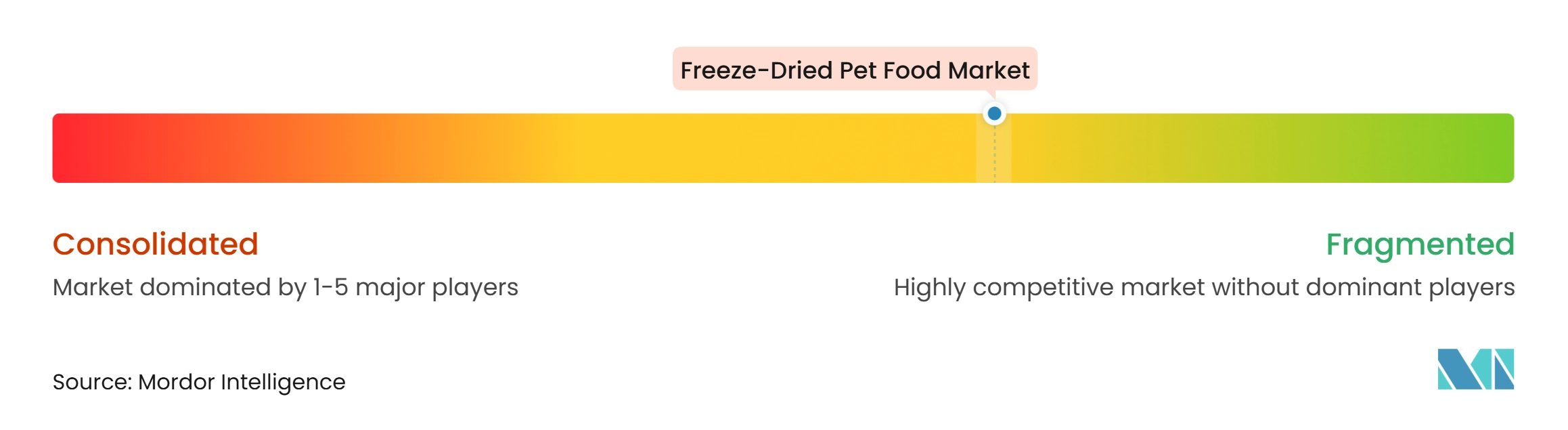
The freeze-dried pet food market was moderately fragmented in 2026. Stella and Chewy’s LLC, Primal Pet Foods, Inc., Vital Essentials, Open Farm Inc., and K9 Natural Limited are identified as leading suppliers. The competitive landscape includes both established brands and smaller specialists offering focused protein sourcing, single-protein recipes, and narrower product ranges. Competitive positioning depends not only on product claims but also on reliable manufacturing, distribution reach, and food-safety documentation. Brands that combine these capabilities are better positioned to build customer loyalty and generate repeat demand. The absence of a dominant supplier allows companies to differentiate through product innovation, retail access, and consistent execution.
Capacity control is becoming a key competitive issue because freeze-drying is capital-intensive. Companies that own or secure production resources may have more control over timing, quality, and availability. GEA's freeze-drying equipment portfolio underscores the importance of hygienic, reliable processing systems for commercial pet food manufacturers. Smaller brands can compete by using specialized formulas and clear ingredient provenance, but they remain dependent on reliable production partners. This gap can influence which companies are able to expand from regional sales to national retail programs and can also affect the range of pack sizes and products a company can offer. Manufacturers that maintain reliable production while meeting safety requirements may therefore hold a practical advantage in negotiations with retailers and in supply planning.
Product and channel developments remain important sources of differentiation. Vital Essentials introduced Crunchy Micro Nibs for cats at Global Pet Expo 2026, reflecting demand for smaller-bite freeze-dried formats designed for feline anatomy. The company also expanded into Pet Supplies Plus in September 2025, extending access through more than 725 locations. In 2025, Borouge, Siegwerk, and TPN Food Packaging introduced a recyclable mono-material packaging solution, providing food brands with an additional packaging option. These developments indicate that competition in the freeze-dried pet food market spans product design, shopper access, and packaging improvements. Companies must also demonstrate that their products are handled and tested responsibly. The strongest competitive approaches will connect these operational decisions with product information that consumers and retail partners can clearly understand.
Freeze-Dried Pet Food Industry Leaders
-
Stella & Chewy’s LLC
-
Primal Pet Foods, Inc. (Pure Treats Inc.)
-
Vital Essentials (Carnivore Meat Company, LLC)
-
Open Farm Inc.
-
K9 Natural Limited
- *Disclaimer: Major Players sorted in no particular order
Freeze-Dried Pet Food Market Companies Covered in this Report
- Stella & Chewy’s LLC
- Primal Pet Foods, Inc. (Pure Treats Inc.)
- Carnivore Meat Company, LLC (Vital Essentials)
- Open Farm Inc.
- K9 Natural Limited
- Nature’s Variety, Inc.
- Wellness Pet Company, Inc.
- Northwest Naturals LLC
- Steve’s Real Food
- Bravo Pet Foods LLC (BrightPet Nutrition Group, LLC)
- Carnivora Pet Food Inc.
- Grandma Lucy’s, LLC
- Smallbatch Pets, Inc.
- RAWZ Natural Pet Food, Inc.
- Wisconsin Freeze Dried LLC
Recent Industry Developments in Freeze-Dried Pet Food Market
- June 2026: Open Farm Inc. partnered with PetSmart to distribute its pet food portfolio, including freeze-dried raw products, across nearly 1,700 PetSmart stores in the United States and Canada. The expansion increased the company's retail availability to more than 9,500 locations across North America.
- March 2026: Carnivore Meat Company, LLC, through its Vital Essentials brand, introduced Crunchy Micro Nibs for Cats at Global Pet Expo 2026. The freeze-dried product features smaller, protein-rich bites in four novel protein blends: Chicken and Whitefish, Pork and Lamb, Salmon and Tuna, and Turkey and Duck. The product is available in 12 oz. packages, with select varieties offered in 25 oz. packages.
- May 2025: Stella and Chewy's LLC expanded its retail distribution through PetSmart stores across the United States and PetSmart.com. The launch included more than 80 products, covering freeze-dried raw dinners and meal mixers, raw-coated kibble, wet food, toppers, and freeze-dried raw treats.
Global Freeze-Dried Pet Food Market Report Scope
Freeze-dried pet food consists of products made by removing moisture from frozen raw or prepared ingredients through a low-temperature, vacuum-based dehydration process. This process preserves the ingredients while producing lightweight, shelf-stable products that generally require no refrigeration before opening.
The Freeze-Dried Pet Food Report is Segmented by Product Type (Freeze-Dried Raw Food, Freeze-Dried Treats and Snacks, Freeze-Dried Meal Toppers and Mixers, and Other Product Types), by Pet Type (Dogs, Cats, and Others), by Distribution Channel (Convenience Stores, Online Channel, Specialty Stores, Supermarkets and Hypermarkets, and Other Channels), and by Geography (North America, South America, Europe, Asia-Pacific, Middle East, and Africa). The Market Forecasts are Provided in Value (USD).
Segmentation Overview
| Freeze-Dried Raw Food |
| Freeze-Dried Treats and Snacks |
| Freeze-Dried Meal Toppers and Mixers |
| Other Product Types |
| Dogs |
| Cats |
| Others |
| Convenience Stores |
| Online Channel |
| Specialty Stores |
| Supermarkets and Hypermarkets |
| Other Channels |
| North America | Canada |
| Mexico | |
| United States | |
| Rest of North America | |
| South America | Argentina |
| Brazil | |
| Rest of South America | |
| Europe | France |
| Germany | |
| Italy | |
| Netherlands | |
| Poland | |
| Russia | |
| Spain | |
| United Kingdom | |
| Rest of Europe | |
| Asia-Pacific | Australia |
| China | |
| India | |
| Indonesia | |
| Japan | |
| Malaysia | |
| Philippines | |
| South Korea | |
| Thailand | |
| Vietnam | |
| Rest of Asia-Pacific | |
| Middle East | Saudi Arabia |
| Turkey | |
| United Arab Emirates | |
| Rest of Middle East | |
| Africa | Egypt |
| South Africa | |
| Rest of Africa |
| By Product Type | Freeze-Dried Raw Food | |
| Freeze-Dried Treats and Snacks | ||
| Freeze-Dried Meal Toppers and Mixers | ||
| Other Product Types | ||
| By Pet Type | Dogs | |
| Cats | ||
| Others | ||
| By Distribution Channel | Convenience Stores | |
| Online Channel | ||
| Specialty Stores | ||
| Supermarkets and Hypermarkets | ||
| Other Channels | ||
| By Geography | North America | Canada |
| Mexico | ||
| United States | ||
| Rest of North America | ||
| South America | Argentina | |
| Brazil | ||
| Rest of South America | ||
| Europe | France | |
| Germany | ||
| Italy | ||
| Netherlands | ||
| Poland | ||
| Russia | ||
| Spain | ||
| United Kingdom | ||
| Rest of Europe | ||
| Asia-Pacific | Australia | |
| China | ||
| India | ||
| Indonesia | ||
| Japan | ||
| Malaysia | ||
| Philippines | ||
| South Korea | ||
| Thailand | ||
| Vietnam | ||
| Rest of Asia-Pacific | ||
| Middle East | Saudi Arabia | |
| Turkey | ||
| United Arab Emirates | ||
| Rest of Middle East | ||
| Africa | Egypt | |
| South Africa | ||
| Rest of Africa | ||
Key Questions Answered in the Report
What is the market size of the freeze-dried pet food market?
The freeze-dried pet food market size was valued at USD 13.90 billion in 2026 and is forecast to grow from USD 15.27 billion in 2027 to USD 24.10 billion by 2032, at a CAGR of 9.56% from 2027 to 2032.
What is driving demand for freeze-dried pet food?
Demand is driven by premium feeding preferences, high-protein nutrition, and the convenience of shelf-stable raw-style products that do not require frozen storage.
Which freeze-dried pet food product type leads the market?
Freeze-dried raw food leads with a 55% market share in 2026, while meal toppers and mixers are forecast to grow at a CAGR of 11.2% from 2027 to 2032.
Which distribution channel is growing fastest for freeze-dried pet food?
The online channel is forecast to grow at a CAGR of 10.9% from 2027 to 2032, supported by direct delivery, subscriptions, and convenient product replenishment.
What safety issues should buyers consider with freeze-dried pet food?
Buyers should check handling instructions and manufacturer safety controls, particularly pathogen monitoring and traceability for raw-protein products.