
External Nasal Dilator Market Size and Share
Market Overview
| Study Period | 2020 - 2031 |
|---|---|
| Market Size (2026) | USD 354.03 Million |
| Market Size (2031) | USD 478.49 Million |
| Growth Rate (2026 - 2031) | 6.21 % |
| Fastest Growing Market | Asia-Pacific |
| Largest Market | North America |
| Market Concentration | Medium |
Major Players *Disclaimer: Major Players sorted in no particular order Image © Mordor Intelligence. Reuse requires attribution under CC BY 4.0. | |
External Nasal Dilator Market Analysis by Mordor Intelligence
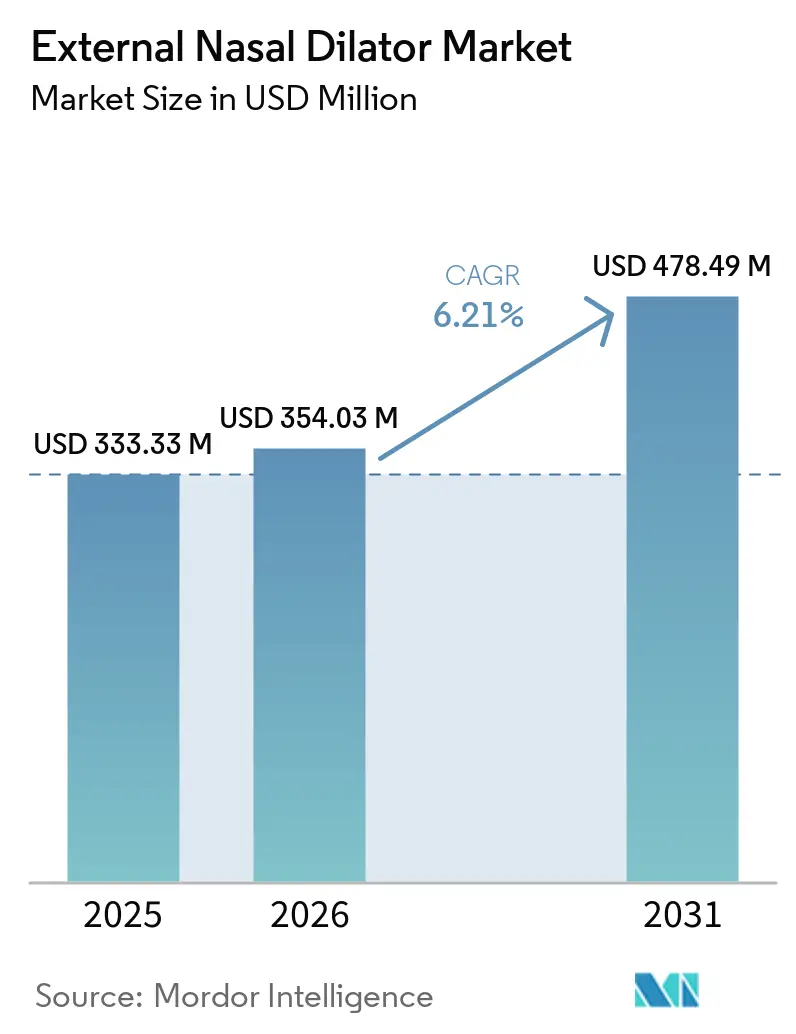
The External Nasal Dilator Market size is expected to increase from USD 333.33 million in 2025 to USD 354.03 million in 2026 and reach USD 478.49 million by 2031, growing at a CAGR of 6.21% over 2026-2031.
The external nasal dilator market covers adhesive strips and semi-rigid clip-style devices that widen the nasal vestibule without medication. Demand is supported by consumers who seek relief from snoring, nasal congestion, sleep-related breathing concerns, and restricted airflow during exercise. A broader preference for drug-free mechanical options is strengthening the category's role within consumer health. Pharmacy placement and online availability give brands two distinct ways to reach first-time buyers and repeat users. The external nasal dilator market also faces clear limits because these products cannot address sleep apnea caused by oropharyngeal anatomy, while fit, skin comfort, and claim substantiation continue to shape purchase decisions.
Key Report Takeaways
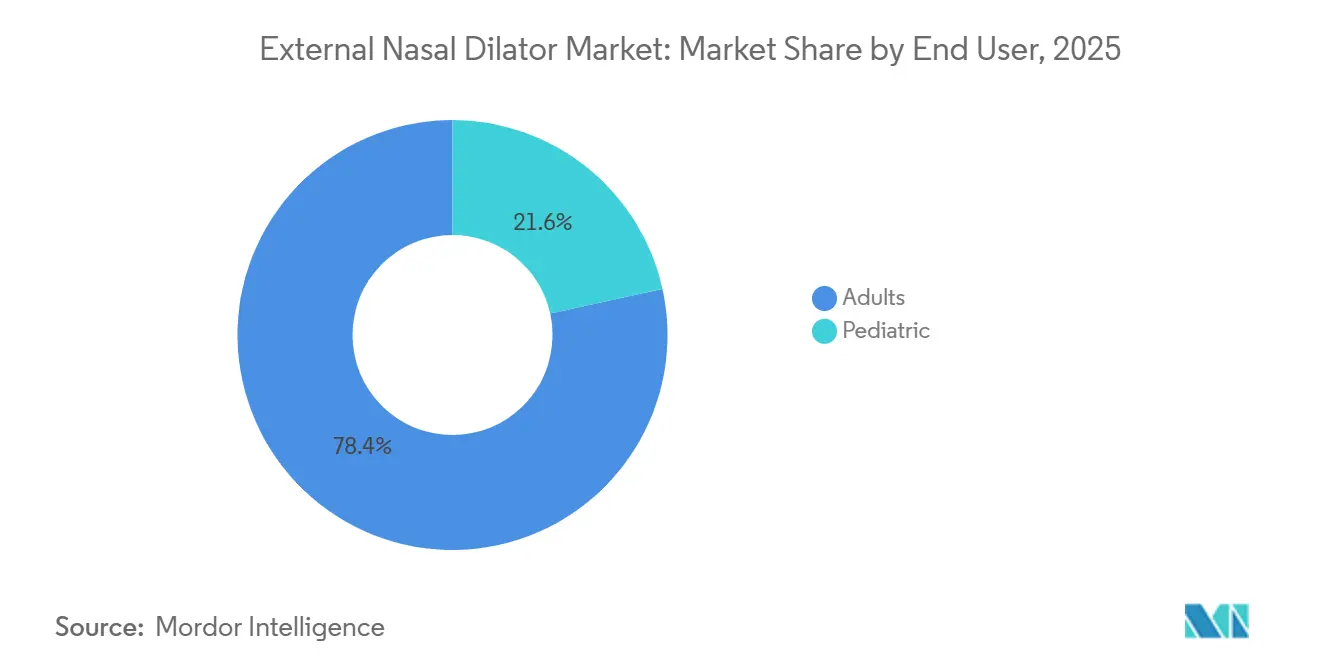
- By application, snoring held 48.5% of external nasal dilator market share in 2025, while exercise and sports breathing is forecast to grow at an 8.5% CAGR through 2031.
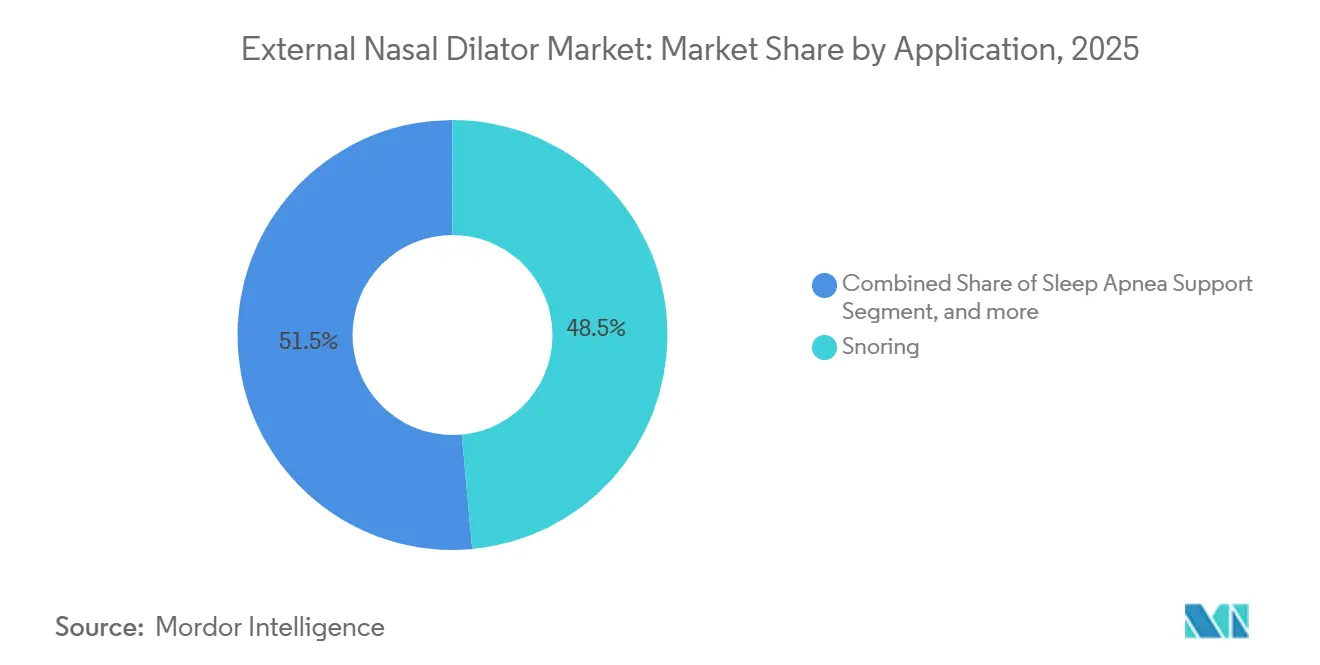
- By end user, adults accounted for 78.4% of external nasal dilator market share in 2025, while the pediatric segment is forecast to expand at an 8.8% CAGR through 2031.
- By distribution channel, offline channels retained 65.4% of revenue in 2025, while online distribution is forecast to grow at a 9.7% CAGR through 2031.
- By geography, North America held 42.4% of global revenue in 2025, while Asia-Pacific is forecast to grow at a 7.4% CAGR through 2031.
Note: Market size and forecast figures in this report are generated using Mordor Intelligence’s proprietary estimation framework, updated with the latest available data and insights as of January 2026.
Market Trends and Insights
Drivers Impact Analysis of External Nasal Dilator Market*
| Driver | (~) % Impact on CAGR Forecast | Geographic Relevance | Impact Timeline |
|---|---|---|---|
| Rising Snoring, Congestion, and Sleep-Disordered Breathing | +2.10% | Global, with the highest concentration in North America, Europe, and urban Asia-Pacific | Long term (≥ 4 years) |
| Preference for Drug-Free, Non-Invasive Airflow Relief | +1.30% | North America and Europe, with growing relevance in Asia-Pacific | Medium term (2-4 years) |
| Direct-to-Consumer and E-Commerce Expansion | +0.90% | Global, led by Asia-Pacific and North America | Short term (≤ 2 years) |
| Adjustable, Reusable, and Hypoallergenic Product Innovation | +0.70% | North America and Europe | Medium term (2-4 years) |
| Exercise and Sports Breathing Adoption | +0.60% | North America, Europe, and Asia-Pacific | Medium term (2-4 years) |
| Demand for Measurable Breathing and Sleep Outcomes | +0.40% | North America and Europe | Medium term (2-4 years) |
| Source: Mordor Intelligence | |||
Rising Prevalence of Snoring, Nasal Congestion, and Sleep-Disordered Breathing
An estimated 936 million adults aged 30 to 69 had mild-to-severe obstructive sleep apnea globally, and prevalence had risen 12% from the prior decade. A 2025 literature-based review estimated that 83.7 million U.S. adults lived with obstructive sleep apnea in 2024, representing a modeled adult prevalence of 32.4%. The external nasal dilator market addresses the nasal-origin snoring and congestion component of this burden, rather than the anatomical causes of apnea. Urbanization, obesity, physical inactivity, and air quality pressures can also increase allergic rhinitis and chronic nasal symptoms. These factors extend demand beyond sleep use and into daily congestion management. Annual workplace productivity losses related to obstructive sleep apnea were estimated at USD 180.2 billion in the United States and GBP 4.22 billion, or USD 5.5 billion, in the United Kingdom.
Growing Preference for Drug-Free, Non-Invasive Airflow Relief
Many consumers prefer mechanical airflow relief because it does not involve systemic absorption, drug interactions, or rebound congestion. This preference is especially relevant for people who avoid decongestants because of potential side effects or repeated use concerns. The external nasal dilator market can therefore serve a broad group of consumers seeking a non-drug option. A 2026 study of well-trained endurance athletes found that nasal decongestion lowered mean capillary blood lactate after an exhaustion test and improved ventilatory efficiency during submaximal exercise stages. The results support interest in nasal patency, although they do not establish that every nasal strip improves peak athletic performance[1]. The distinction between device registration and a cleared therapeutic claim makes peer-reviewed evidence important for brands that seek stronger, compliant positioning.
Rising Adoption for Exercise and Sports Breathing
Professional cycling visibility has increased consumer awareness of nasal strips during exercise and recovery. The sports audience is less focused on low price and more willing to consider products with a differentiated performance and recovery proposition. A 2025 study of adolescent futsal players found differences in VO₂ max, peak nasal inspiratory flow, and perceived exertion across facial types when external nasal dilators were compared with placebo conditions. A separate 2025 study found that surgical correction of nasal obstruction improved athletes' running economy through lower oxygen consumption at submaximal treadmill stages. These findings explain the interest in nasal patency while preserving the distinction between surgery and strip-only interventions. A 2025 study also found faster post-exercise muscle reoxygenation during nasal breathing than oral breathing, with rates of 0.45% per second and 0.23% per second, respectively.
Expansion of Direct-to-Consumer Availability and Product Innovation
The external nasal dilator market benefits when digital channels make product comparison, repeat ordering, and adjacent wellness purchases easier. Subscription programs can turn an initial trial into recurring demand, particularly when reusable products have defined replacement cycles. Direct-to-consumer distribution also gives newer brands a route to athletes and other consumers who may not begin their search in a pharmacy. Rhinomed reported FY2024 revenue growth of 21% to AUD 9.2 million, or USD 6.1 million, and raised AUD 3.54 million, or USD 2.3 million, to support retail network expansion. Adjustable structures, reusable formats, hypoallergenic materials, and better outcome communication can help brands reduce the limitations of a basic, single-format adhesive strip. The external nasal dilator market has room for these improvements because facial anatomy, comfort expectations, and use occasions differ across buyers.
Restraints Impact Analysis of External Nasal Dilator Market*
| Restraint | (~) % Impact on CAGR Forecast | Geographic Relevance | Impact Timeline |
|---|---|---|---|
| Limited Efficacy for Non-Nasal Causes of Obstructive Sleep Apnea | -1.00% | Global; most pronounced in North America where OSA clinical awareness is highest | Long term (≥ 4 years) |
| Skin Irritation, Fit Variability, and Adherence Drop-Off | -0.70% | Global | Medium term (2–4 years) |
| Weak Clinical Differentiation Across Low-Cost Private-Label Products | -0.50% | North America, Europe, APAC | Short to medium term |
| Regulatory and Claims-Substantiation Burden for Medical Positioning | -0.40% | North America (FDA), Europe (EU MDR) | Medium term (2–4 years) |
| Source: Mordor Intelligence | |||
Limited Efficacy for Non-Nasal Causes of Obstructive Sleep Apnea
Nasal dilators can improve airflow and lower nasal resistance, but they do not resolve apnea caused by tongue-base collapse or other oropharyngeal anatomy. A 2024 clinical policy review reported that 12 of 14 reviewed studies found no significant change in the apnea-hypopnea index with nasal dilators. This limitation keeps the external nasal dilator market focused on nasal-origin snoring, congestion, and selected wellness needs[2]. Consumers whose snoring persists may stop repurchasing after they recognize that the underlying cause is outside the product's scope. Broad snoring claims can therefore lead to returns and unfavorable online reviews when brands do not explain the appropriate use case. Stronger clinical differentiation is difficult when lower-priced products make similar broad claims without meaningful evidence.
Skin Irritation, Fit Variability, and Claim Requirements
Adhesive strips can cause skin irritation, particularly after repeated nightly use, and some users discontinue after the first two to four weeks. Facial geometry differs across ethnicity, age, and individual anatomy, while many existing designs reflect a narrow anthropometric range. The 2025 facial-type study showed that external nasal dilator outcomes varied across dolicofacial, mesofacial, and brachyfacial participants. This supports the need for better fit options and hypoallergenic adhesive systems in the external nasal dilator market. Brands that do not address comfort and fit can experience lower repeat purchase frequency and higher acquisition costs. Claims also require careful evidence and labeling, which can slow medical positioning for companies seeking to move beyond general wellness messaging.
*Our forecasts treat driver/restraint impacts as directional, not additive. The impact forecasts reflect baseline growth, mix effects, and variable interactions.
External Nasal Dilator Market Segment Analysis
By Application:
Snoring Holds the Largest Base while Sports Breathing Leads GrowthSnoring commanded 48.5% of revenue in 2025, while exercise and sports breathing is projected to expand at an 8.5% CAGR through 2031. Snoring remains the largest application because adhesive strips have deep consumer recognition as a simple response to nighttime breathing concerns. The segment benefits from buyers who identify nasal congestion as a contributor to snoring and want a drug-free option. Sleep apnea support and nasal congestion form the next major application groups after snoring. These use cases often overlap because people who buy for nighttime congestion can also recognize an effect on nasal-origin snoring. This overlap supports trial across more than 1 use occasion. The external nasal dilator market has a clear boundary in this segment because the product does not treat apnea caused by non-nasal anatomy. Brands must communicate that boundary clearly to avoid consumer expectations that cannot be met.
Exercise and sports breathing is growing as nasal strips become more visible during training and recovery. The 2025 nasal-breathing study found faster post-exercise muscle oxygenation recovery with nasal breathing, which supports recovery-oriented communication. Rhinomed separates its sport-focused Turbine product from its sleep-focused mute dilator through sporting goods distribution. This approach recognizes that athletic users and sleep users can respond to different product messages and buying locations. Other applications include post-surgical nasal support, travel use, and seasonal allergy management. These episodic uses increase the number of potential occasions for product trial. Sports-oriented products also face a higher evidence standard because performance claims can be contested. The segment is better supported when brands focus on nasal patency, comfort, and recovery rather than making broad promises about athletic results.

By End User:
Adults Provide the Largest Revenue Base while Pediatric Demand ExpandsAdults accounted for 78.4% of the external nasal dilator market revenue in 2025, and the pediatric segment is forecast to grow at an 8.8% CAGR through 2031. The adult base is anchored by people with snoring and congestion concerns, including men aged 30 to 60. The 2025 U.S. review estimated obstructive sleep apnea prevalence at 39.1% among males and 26.0% among females. Younger active adults are a distinct part of the adult base because they are more likely to encounter nasal dilators through digital-first sports brands. They may use the product for training or recovery rather than solely for sleep. This pattern expands the adult opportunity without changing the size of the established nighttime user base. The external nasal dilator industry remains closely tied to adult product formats because most current designs are built and validated for adult anatomy. The adult segment, therefore, provides a stable demand while brands consider new use occasions.
The pediatric segment is growing as caregivers seek drug-free options for children with recurring nasal congestion. Most existing products are not specifically validated for children's anatomy, and caregiver purchases can amount to adaptations of adult-oriented formats. This leaves a practical gap for companies that can develop purpose-built pediatric designs. A 2025 systematic review found that obstructive sleep apnea remains substantially underdiagnosed among pediatric and adult populations. Greater awareness and screening can support demand for non-pharmacological approaches when nasal congestion is involved. Product design must still reflect the clinical limits of nasal dilators for apnea that is not nasal in origin. The external nasal dilator market can expand in this area only when brands balance caregiver interest with age-appropriate fit and responsible claims. Early product development may give companies a clearer position before the segment draws broader competition. The growth rate indicates the appeal of this opportunity, but it does not remove the need for product-specific validation.
By Distribution Channel:
Offline Retains Discovery Strength while Online Drives GrowthOffline channels held 65.4% of external nasal dilator market revenue in 2025, whereas Online distribution is forecast to grow at a 9.7% CAGR through 2031. Pharmacies and grocery stores remain important because strips are often impulse purchases and many buyers value pharmacist advice before an initial trial. Pharmacy outlets also give established brands visibility at the point of need. Chemist Warehouse, TerryWhite Chemmart, and Priceline in Australia, along with CVS and Walgreens in the United States, remain important discovery locations. This route is particularly useful for consumers who have not used a nasal dilator before. The external nasal dilator market can retain this channel advantage where pharmacist recommendations influence consumer health purchases. Germany and France illustrate markets where pharmacy-led purchasing can remain more resilient than in the United States or Asia-Pacific. Offline sales are therefore not simply being replaced by digital sales.
Online distribution offers broader assortment, recurring purchase options, and opportunities to bundle nasal dilators with mouth tape and sleep tracking devices. These features support repeat ordering and allow brands to reach users who search for sports recovery or sleep wellness products online. Digital channels can also help companies separate sport-focused and sleep-focused messaging. Private-label products with strong reviews can gain visibility online and reduce the premium that established brands earned through shelf placement. This creates margin pressure for brands that rely mainly on pharmacy distribution. The external nasal dilator market is likely to benefit when companies treat pharmacy discovery and online replenishment as complementary routes. The online channel also makes product feedback visible quickly, so problems with adhesion, comfort, or fit can influence future sales. Brands need both compelling product differentiation and disciplined review management to protect repeat demand.
Geography Analysis
North America External Nasal Dilator Market
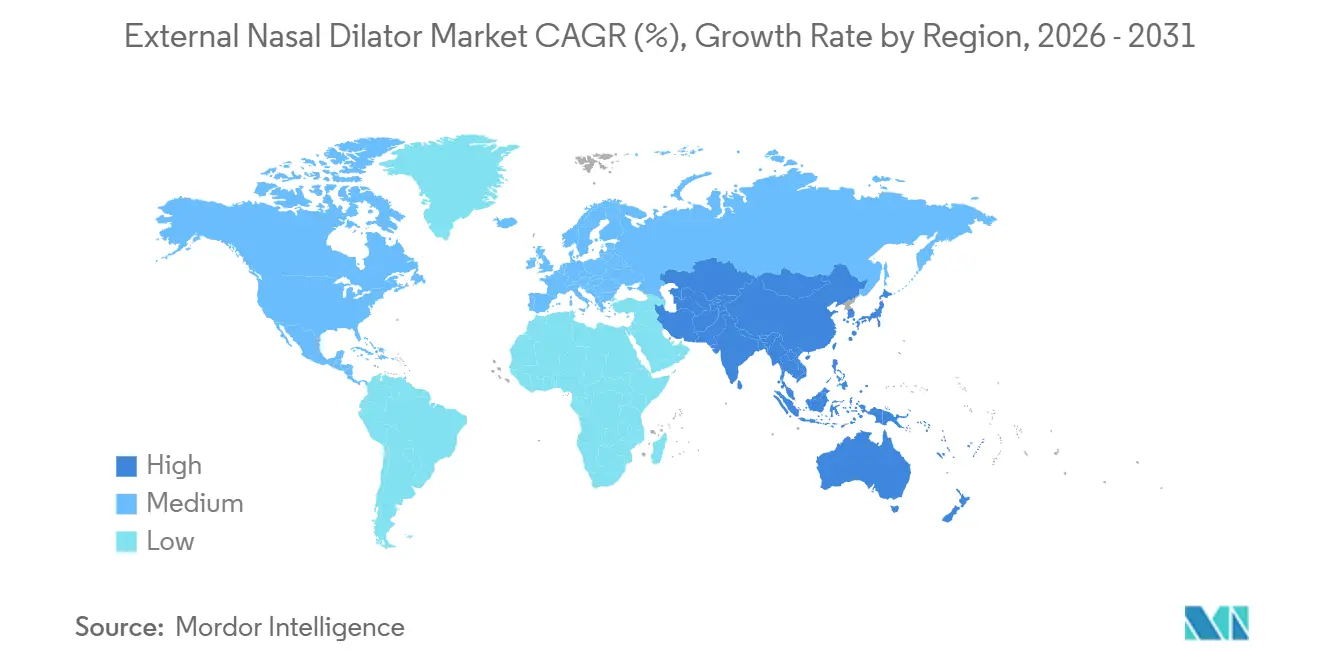
North America held 42.4% of external nasal dilator market revenue in 2025, making it the largest regional base. The United States accounts for most regional demand because of its sleep-health burden, established OTC retail network, and active product development environment. An estimated 83.7 million U.S. adults were living with obstructive sleep apnea in 2024, while related workplace productivity losses were estimated at USD 180.2 billion annually. Prestige Consumer Healthcare completed its acquisition of Breathe Right for USD 1.045 billion in June 2026, reinforcing the strategic importance of the U.S. nasal strip category. Canada and Mexico add to the regional base, while the United States remains central to patents, launches, and clinical activity.
Europe External Nasal Dilator Market
Europe is the second-largest region in the external nasal dilator market, with Germany, the United Kingdom, and France as its strongest national markets. Germany benefits from a developed pharmacy network, while the United Kingdom has established branded-product advocacy in digital retail and France has a more physician-influenced purchase pattern. Sports events have also increased consumer visibility in France, although clinical evidence behind some airflow claims remains contested. Italy and Spain are growing secondary markets, and Scandinavia and the Benelux region add meaningful volume to the Rest of Europe. The region's pharmacy culture helps physical retail remain important as e-commerce expands.
APAC, MEA and South America External Nasal Dilator Market
Asia-Pacific is projected to grow at a 7.4% CAGR through 2031, the fastest rate among geographic segments. China, India, and Japan offer large potential consumer bases as urban awareness and e-commerce access expand, while South Korea's athletic culture supports sports-breathing demand. In Australia, pharmacy-led consumer health retail remains important for brands distributed through Chemist Warehouse and Priceline. Middle East and Africa and South America have smaller shares, but rising urban sleep-health awareness and consumer wellness spending support their development.
Competitive Landscape
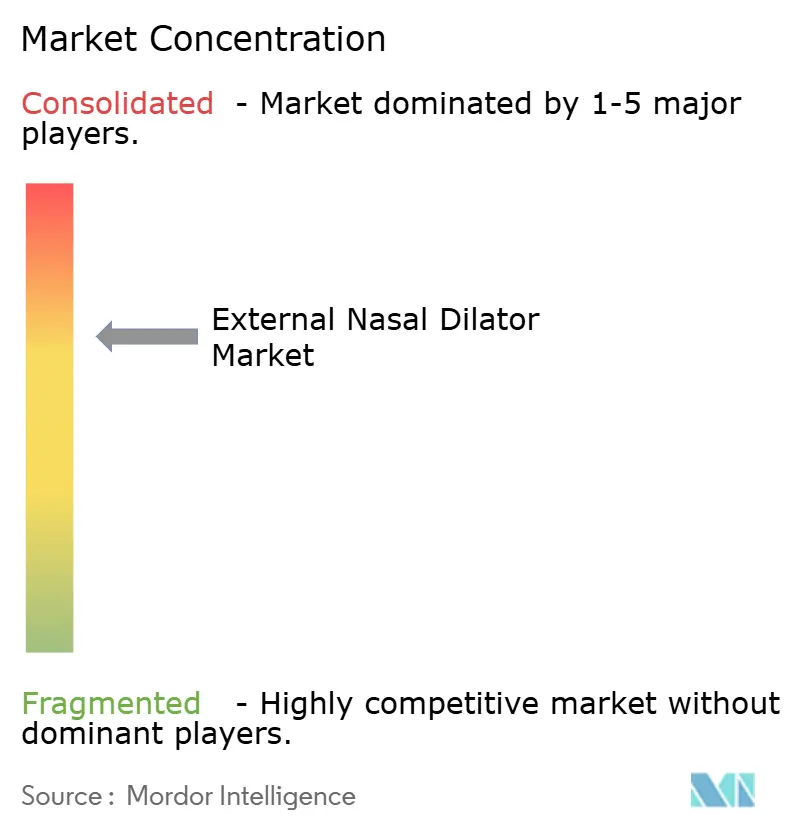
The external nasal dilator market has moderate concentration, with established global brands holding strong consumer recognition and a fragmented lower tier competing heavily on price. Breathe Right is the best-known adhesive-strip brand, and Prestige Consumer Healthcare's June 2026 acquisition placed it in a larger consumer health portfolio. Prestige stated that Breathe Right generated USD 200 million in revenue and USD 95 million in core profit in 2025. The acquisition can support marketing, retail expansion, and international distribution. Rhinomed is another scaled participant with Mute, Turbine, and Mute Mouth Tape, which creates a platform across related sleep and breathing needs.
Competition centers on product ecosystems, digital distribution, and evidence that supports defensible claims. Rhinomed expanded its Mute ecosystem into a companion mouth tape and distributed products through Australian pharmacy retailers with pharmacy training support. Prestige's Breathe Right acquisition gives the company its first nasal-strip brand and a larger base for category investment. U.S. Patent 12616597, granted in May 2026, covers a modular device with adjustable arm depth and bridge length. Adjustable, filtered, and multifunction designs aim to support pricing beyond a standard adhesive strip[3].
White-space opportunities include pediatric formats, hypoallergenic adhesives for extended wear, and better fit for varied facial anatomies. The external nasal dilator market is exposed to commoditization when low-cost products imitate familiar claims and compete mainly on price, while differentiated companies face risk if claims exceed evidence or device classification. Companies that invest in clinical support can communicate within clearer boundaries, while price-focused sellers can face margin pressure from online comparison. Competitive intensity is likely to rise as larger brands expand distribution and smaller challengers pursue sports and digital-first customers.
External Nasal Dilator Industry Leaders
-
Foundation Consumer Healthcare LLC
-
Rhinomed Limited
-
ASO LLC
-
Splintek, Inc.
-
SANOSTEC CORP
- *Disclaimer: Major Players sorted in no particular order
External Nasal Dilator Market Companies Covered in this Report
- AdvaCare
- AirWare Labs Corp.
- ASO LLC
- Creganna
- CNS, Inc.
- Corbett Lair Inc.
- GlaxoSmithKline
- Foundation Consumer Healthcare LLC
- M&M Pure Air Systems LLC
- McKeon Products, Inc.
- Nasanita
- Nasal Aid
- Perrigo Company
- Scandinavian Formulas
- SANOSTEC CORP
- Splintek, Inc.
- The Sleep Better Company
- Tomed GmbH
- Victoreks Health Products Ltd.
- WoodyKnows
- Rhinomed Limited
Recent Industry Developments in External Nasal Dilator Market
- June 2026: Prestige Consumer Healthcare completed its USD 1.045 billion acquisition of the Breathe Right brand from Foundation Consumer Healthcare, financed with available cash and a new Term Loan B. Breathe Right became Prestige's largest brand and its first entry into the nasal strip category. Breathe Right generated USD 200 million in revenue and USD 95 million in core profit in 2025.
- May 2026: U.S. Patent 12616597 was granted for a modular nasal dilating device with adjustable arm depth and bridge length, enabling a single device to serve multiple nasal anatomical profiles and reduce disposable product waste.
- March 2026: U.S. Design Patents USD1116105S and USD1116106S were granted to Nasal Dilator LLC for nasal dilator designs, including a variant with a retention member for improved in-nostril stability during sleep and exercise.
Global External Nasal Dilator Market Report Scope
According to the report’s scope, an external nasal dilator is a device applied to the outside of the nose to widen the nasal passages and improve airflow during breathing. It is commonly used to reduce nasal congestion and enhance breathing comfort.
The external nasal dilator market is segmented into application, end user, distribution channel, and geography. By application, the market is segmented into snoring, sleep apnea support, nasal congestion, exercise and sports breathing, and other external nasal dilator applications. By end user, the market is segmented into adults and pediatric. By distribution channel, the market is segmented into online and offline. By geography, the market is segmented into North America, Europe, Asia-Pacific, the Middle East and Africa, and South America. The report also covers the estimated market sizes and trends for 17 countries across major regions globally. The report offers values (USD) for all the above segments.
Segmentation Overview
| Snoring |
| Sleep Apnea Support |
| Nasal Congestion |
| Exercise and Sports Breathing |
| Other External Nasal Dilator Applications |
| Adults |
| Pediatric |
| Offline |
| Online |
| North America | United States |
| Canada | |
| Mexico | |
| Europe | Germany |
| United Kingdom | |
| France | |
| Italy | |
| Spain | |
| Rest of Europe | |
| Asia-Pacific | China |
| Japan | |
| India | |
| Australia | |
| South Korea | |
| Rest of Asia-Pacific | |
| Middle East and Africa | GCC |
| South Africa | |
| Rest of Middle East and Africa | |
| South America | Brazil |
| Argentina | |
| Rest of South America |
| By Application | Snoring | |
| Sleep Apnea Support | ||
| Nasal Congestion | ||
| Exercise and Sports Breathing | ||
| Other External Nasal Dilator Applications | ||
| By End User | Adults | |
| Pediatric | ||
| By Distribution Channel | Offline | |
| Online | ||
| Geography | North America | United States |
| Canada | ||
| Mexico | ||
| Europe | Germany | |
| United Kingdom | ||
| France | ||
| Italy | ||
| Spain | ||
| Rest of Europe | ||
| Asia-Pacific | China | |
| Japan | ||
| India | ||
| Australia | ||
| South Korea | ||
| Rest of Asia-Pacific | ||
| Middle East and Africa | GCC | |
| South Africa | ||
| Rest of Middle East and Africa | ||
| South America | Brazil | |
| Argentina | ||
| Rest of South America | ||
Key Questions Answered in the Report
What is driving growth in the external nasal dilator market?
The category is forecast to grow at a 6.2% CAGR from 2026 to 2031, supported by demand for drug-free relief from snoring and congestion, as well as wider online availability.
Which external nasal dilator application is largest?
Snoring was the largest application, accounting for 48.5% of revenue in 2025.
Which application is growing fastest through 2031?
Exercise and Sports Breathing is projected to expand at an 8.5% CAGR through 2031 as nasal breathing gains visibility in training and recovery use.
Which customer group has the largest revenue base?
Adults held 78.4% of revenue in 2025, while Pediatric use is projected to grow at an 8.8% CAGR through 2031.
Are nasal dilators effective for obstructive sleep apnea?
They can support airflow where nasal congestion is involved, but they do not resolve apnea caused by tongue-base collapse or other non-nasal anatomy.
Which sales channel is expanding fastest?
Online distribution is forecast to grow at a 9.7% CAGR through 2031, although Offline channels retained 65.4% of revenue in 2025.