
Esophageal Stents Market Size and Share
Market Overview
| Study Period | 2020 - 2031 |
|---|---|
| Market Size (2026) | USD 257.81 Million |
| Market Size (2031) | USD 335.99 Million |
| Growth Rate (2026 - 2031) | 5.44 % |
| Fastest Growing Market | Asia-Pacific |
| Largest Market | North America |
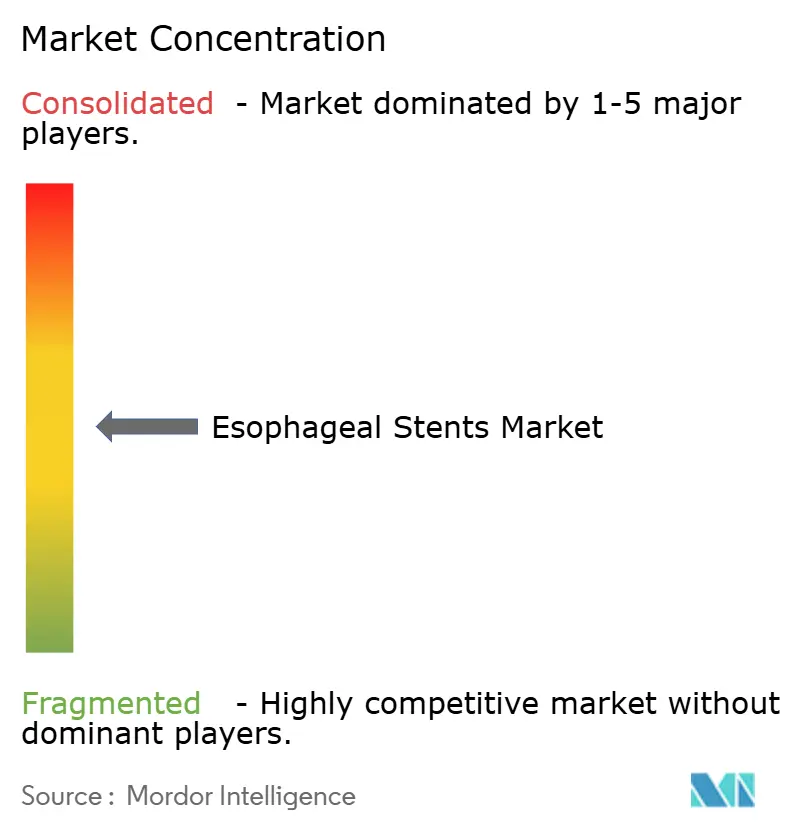
| Market Concentration | Medium |
Major Players *Disclaimer: Major Players sorted in no particular order Image © Mordor Intelligence. Reuse requires attribution under CC BY 4.0. | |
Esophageal Stents Market Analysis by Mordor Intelligence
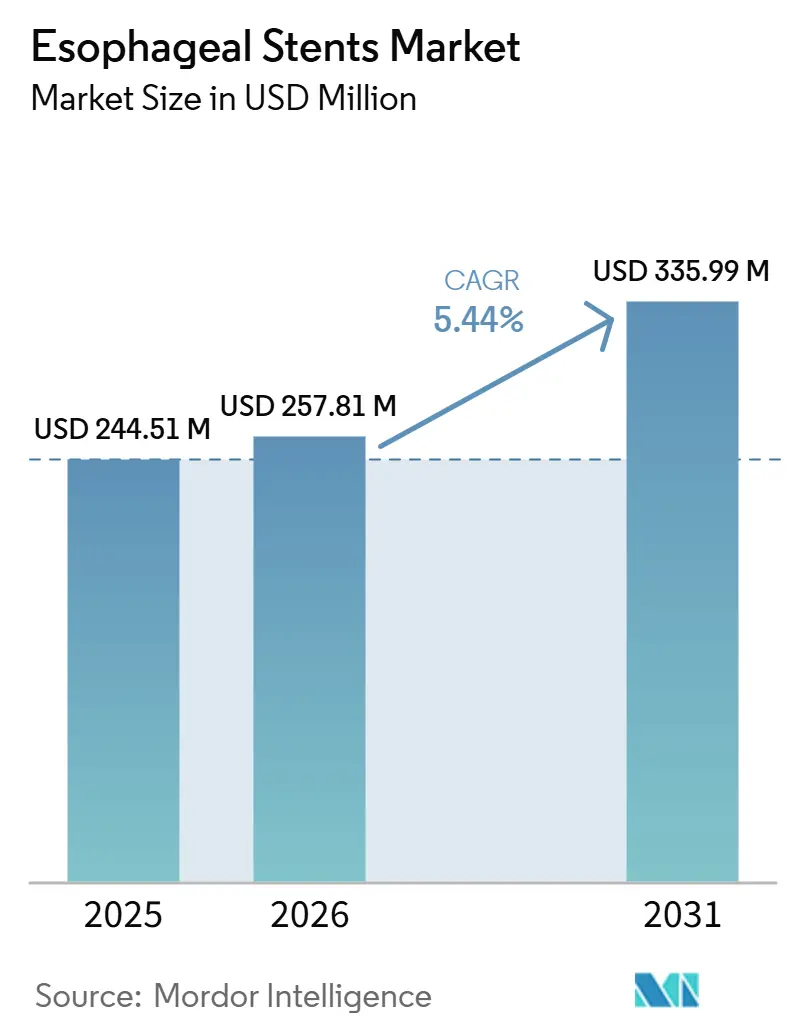
The Esophageal Stents Market size is expected to increase from USD 244.51 million in 2025 to USD 257.81 million in 2026 and reach USD 335.99 million by 2031, growing at a CAGR of 5.44% over 2026-2031.
The main support for this expansion is the rising burden of esophageal cancer, with 511,054 new cases and 445,391 deaths recorded worldwide in 2022. Global annual cases are projected to reach 922,638 by 2050, which keeps the treatment pool for palliative dysphagia management on a clear upward path. North America remains the largest regional base because reimbursement pathways, procedural infrastructure, and therapeutic endoscopy volumes are already established. Asia-Pacific is expanding faster because China alone represented 43.8% of global incidence in 2022, while more centers across the region are building endoscopy capacity. The esophageal stents market is also gaining from better delivery systems, stronger palliative care integration, and product designs that address migration risk and outpatient use.
Key Report Takeaways
- By product type, self-expanding metal stents led with 73.48% revenue share in 2025, while biodegradable stents are forecast to expand at a 5.89% CAGR through 2031 in the esophageal stents market.
- By material, nitinol held 68.24% of segment revenue in 2025, while plastic and polymer materials recorded the highest projected CAGR at 6.32% through 2031.
- By application, malignant indications accounted for 76.51% of segment revenue in 2025, while tracheoesophageal fistulas are advancing at a 7.25% CAGR through 2031 in the esophageal stents market.
- By end user, hospitals held 62.31% of the segment in 2025, while endoscopy centers recorded the highest projected CAGR at 8.41% through 2031.
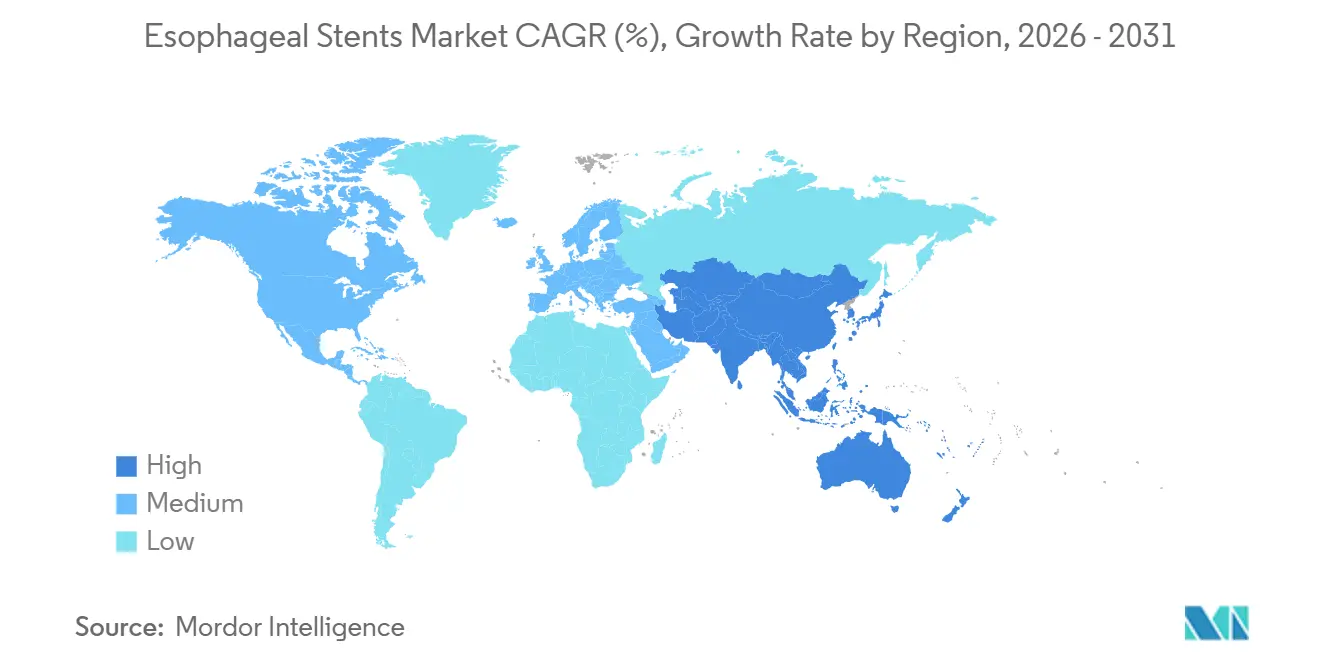
- By geography, North America held 37.68% of the esophageal stents market share in 2025, while Asia-Pacific recorded the highest projected CAGR at 8.93% through 2031.
Note: Market size and forecast figures in this report are generated using Mordor Intelligence’s proprietary estimation framework, updated with the latest available data and insights as of January 2026.
Market Trends and Insights
Drivers Impact Analysis of Esophageal Stents Market*
| Driver | (~) % Impact on CAGR Forecast | Geographic Relevance | Impact Timeline |
|---|---|---|---|
| Rising Incidence of Esophageal Cancer and Malignant Dysphagia | +1.5% | Global, concentrated in East Asia, Eastern Africa, and South-Central Asia | Long term (≥ 4 years) |
| Expanding Use of Minimally Invasive Endoscopic Therapy | +1.2% | Global, led by North America and Western Europe, accelerating in Asia-Pacific | Medium term (2-4 years) |
| Product Innovation in Covered, Anti-Migration, and Biodegradable Designs | +0.9% | North America and Europe, with spillover to South Korea and Japan | Medium term (2-4 years) |
| Broader Adoption in Palliative Care Pathways | +0.7% | North America and Europe, emerging in GCC and Southeast Asia | Short term (≤ 2 years) |
| Reimbursement Pull for Therapeutic Endoscopy in Mature Markets | +0.5% | United States, Germany, United Kingdom, and France | Short term (≤ 2 years) |
| Growing Procedure Shift to Ambulatory and High-Throughput Endoscopy Settings | +0.5% | North America, with early adoption in the United Kingdom, Germany, and Australia | Medium term (2-4 years) |
| Source: Mordor Intelligence | |||
Rising Incidence Of Esophageal Cancer And Malignant Dysphagia
Esophageal cancer remains the strongest volume driver in the esophageal stents market, with 511,054 new cases and 445,391 deaths recorded globally in 2022. Global annual cases are projected to rise to 922,638 by 2050, which supports a long runway for palliative intervention demand. China represented 43.8% of the worldwide incidence in 2022, with 224,012 new diagnoses, which creates a very large regional treatment base for dysphagia management. The same projection work showed large future increases in East Asia and high human development index countries, so the disease burden is broadening across both mature and developing systems. Malawi and Uganda already reported age-standardized incidence rates of 17.9 and 13.2 per 100,000, yet access to advanced endoscopic care in many African settings remains limited. As oncology access improves in underserved regions, the esophageal stents market should benefit from both newly treated patients and higher procedural throughput.
Expanding Use Of Minimally Invasive Endoscopic Therapy
The shift from open surgery toward endoscopic management is changing how the esophageal stents market is used in routine care. Endoscopic stent placement can allow oral intake within 1 to 2 days and can reduce hospitalization time compared with surgical alternatives.[1]“Stents and Emerging Alternatives in Upper Gastrointestinal Diseases,”That treatment pattern fits well with payer and provider efforts to limit inpatient use and shorten recovery time. Smaller delivery systems are also making placement more feasible in tight spaces and less dependent on highly specialized operating environments. This is helping more outpatient endoscopy units consider procedures that were once concentrated in large hospitals. As training expectations become more consistent, the esophageal stents market benefits from a broader pool of endoscopists who can perform placements safely and efficiently.
Product Innovation In Covered, Anti-Migration, And Biodegradable Designs
Product design remains a major competitive lever in the esophageal stents market. A 2025 multicenter study found that fully covered self-expanding metal stents fixed with clips that used anchor prongs achieved a 43% relative risk reduction in migration compared with unfixed controls. That result matters because migration rates in benign stricture settings have historically ranged from 4% to 54%, which keeps follow-up burden high for both clinicians and patients. ELLA-CS released updated HV Stent Plus and Flexella Plus biodegradable stents with a 20 mm diameter option and a 22F slim delivery system, which expanded eligibility in tighter anatomical strictures.[2]“New Version of the HV Stent Plus and Flexella Plus Released,” These refinements improve fit across a wider case mix and make advanced designs easier to use in difficult anatomy. As fixation and delivery continue to improve together, the esophageal stents market gains from better procedure confidence as well as a broader set of treatable patients.
Broader Adoption In Palliative Care Pathways
Palliative oncology remains a steady demand base for the esophageal stents market. A 2025 retrospective study from Cambridge University Hospitals found that self-expanding metal stents provided meaningful symptom relief in late-stage esophageal cancer.[3]“Clinical Characteristics, Complications, and Post-stent Survival in Patients Undergoing Palliative Oesophageal Stenting, A Retrospective Study,” This supports the role of stenting as a quality-of-life intervention when curative treatment is not possible. Care pathways in the United States, the United Kingdom, and Germany are also treating stenting more as a standard response for inoperable malignant dysphagia, which makes procedural demand more predictable. Multidisciplinary teams are increasingly aligning stent timing with radiotherapy schedules to maintain swallowing function during treatment. This pattern supports the esophageal stents market because it favors suppliers that can offer reliable covered stents and dependable clinical support across oncology centers.
Restraints Impact Analysis of Esophageal Stents Market*
| Restraint | (~) % Impact on CAGR Forecast | Geographic Relevance | Impact Timeline |
|---|---|---|---|
| Stent-Related Complications and Re-Intervention Risk | -0.9% | Global, with high re-intervention burden in high-volume Asia-Pacific centers | Long term (≥ 4 years) |
| Limited Reimbursement and Budget Pressure in Price-Sensitive Markets | -0.7% | South Asia, Southeast Asia, sub-Saharan Africa, and Latin America | Medium term (2-4 years) |
| Clinical Preference for Surgery or Other Definitive Therapies In Select Cases | -0.4% | North America and Western Europe, especially centers with high surgical volume | Medium term (2-4 years) |
| Evidence Gaps for Benign and Off-Label Indications | -0.3% | Global, most visible in emerging markets with limited clinical trial infrastructure | Long term (≥ 4 years) |
| Source: Mordor Intelligence | |||
Stent-Related Complications And Re-Intervention Risk
Complications still limit how far the esophageal stents market can expand in benign disease. A 2024 multicenter study reported migration rates of 22.8% for conventional fully covered self-expanding metal stents and 26.6% for segmented fully covered self-expanding metal stents.[4]“Safety and Efficacy of Conventional Compared to Segmented Esophageal Fully Covered Self-Expanding Metal Stents, A Retrospective Multicenter Case-Control Study,” Those rates sit within a broader published range of 4% to 54%, which shows that current engineering approaches have not fully resolved the problem. A 2025 systematic review and meta-analysis of biodegradable stents found hyperplastic tissue reactions in 16.4% of patients, with high heterogeneity across studies. Anchoring tools, such as through-the-scope suturing, may improve stability, but they also add equipment needs and operator skill requirements. This keeps many complex cases concentrated in tertiary centers and slows wider adoption across community settings in the esophageal stents market.
Limited Reimbursement And Budget Pressure In Price-Sensitive Markets
Reimbursement gaps continue to hold back the esophageal stents market in price-sensitive healthcare systems. High-income countries support more consistent therapeutic endoscopy volumes because payment pathways are clearer and hospital procurement budgets are stronger. In contrast, many systems across South Asia, Southeast Asia, Latin America, and sub-Saharan Africa still lack dependable procedure-level coverage for palliative stenting. Hospitals in those settings often need to balance device costs against limited oncology budgets, even when patient need is clear. This also creates room for lower-priced local products with uneven clinical validation to enter the supply base. Until payer support improves, the esophageal stents market will continue to show a gap between underlying disease burden and realized procedural volume.
*Our forecasts treat driver/restraint impacts as directional, not additive. The impact forecasts reflect baseline growth, mix effects, and variable interactions.
Esophageal Stents Market Segment Analysis
By Product Type:
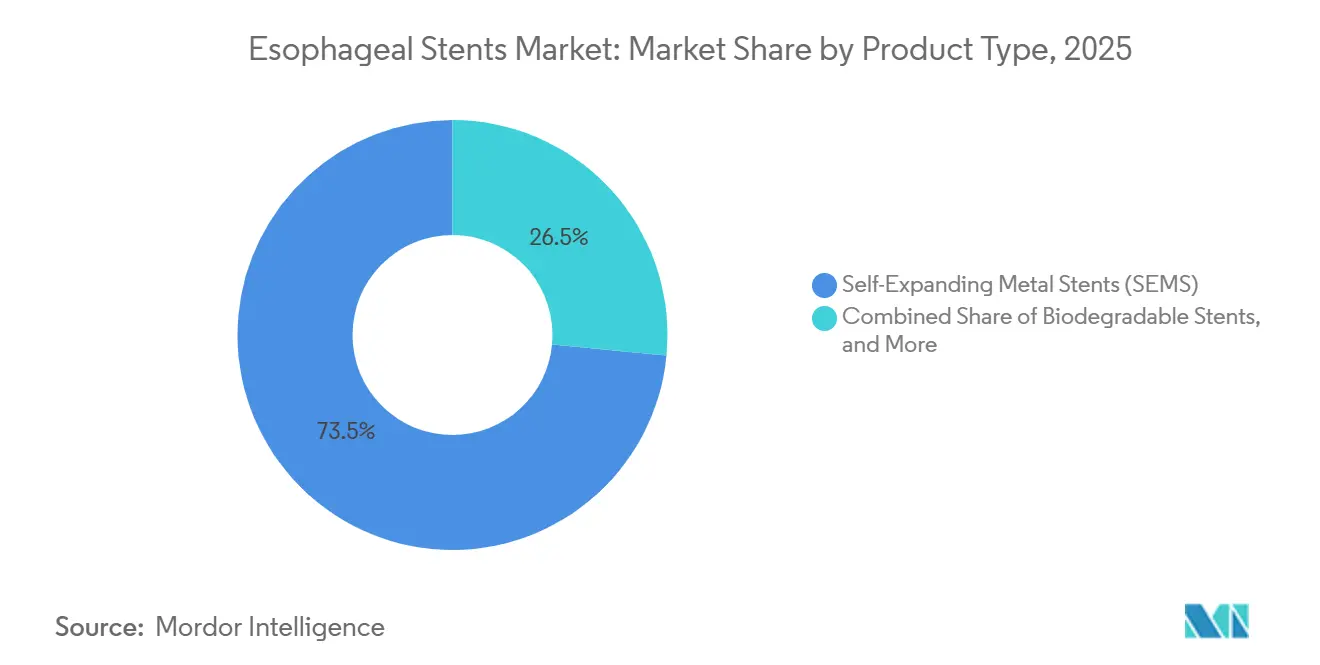
SEMS Lead While Biodegradable Stents Expand The Treatable PoolSelf-expanding metal stents accounted for 73.48% of the esophageal stents market size in 2025. Their lead reflects long clinical use in malignant dysphagia, broad physician familiarity, and the availability of covered, partially covered, and uncovered formats for different stricture types. The esophageal stents market continues to lean heavily on this category because product progress is coming through steady refinement rather than full technology replacement. Self-expanding plastic stents now occupy a narrower role because larger catheter profiles, higher migration risk, and greater handling complexity have reduced their appeal in malignant use.
Biodegradable stents are projected to grow at 5.89% CAGR from 2026 to 2031 in the esophageal stents industry. Their main advantage is that they can degrade within 3 to 4 months and avoid a retrieval endoscopy in selected benign stricture cases. That makes growth in the esophageal stents market more additive than disruptive, because some patients who avoided stenting may accept a biodegradable option. A 2024 review found that biodegradable stents had not shown clear statistical superiority over self-expanding metal or plastic stents in meta-analyses, yet sequential placement strategies are receiving more attention for extending dysphagia-free intervals.



By Material:
Nitinol Holds The Core While Polymer Use BroadensNitinol held 68.24% of material revenue in 2025 within the esophageal stents market. Its shape memory, superelastic behavior, and stable radial force make it the standard material for devices that must function through repeated esophageal motion. This has steadily reduced the role of stainless steel in modern esophageal stent design. Established suppliers also benefit because validated material sourcing and manufacturing experience matter in regulated implantable devices.
Plastic and polymer materials are projected to grow at 6.32% CAGR through 2031 in the esophageal stents market. Part of that rise comes from cost pressure in outpatient procurement, while another part comes from faster work on biodegradable platforms. Polydioxanone and PLLA are central to this shift because they support temporary scaffolds that do not need later removal in selected use cases. A 2025 Biomaterials study described a degradable biomimetic stent with hydrogel and a directional TGF-loaded nanofiber membrane for esophageal fistula treatment, which shows how polymer research is moving beyond passive lumen support.
By Application:
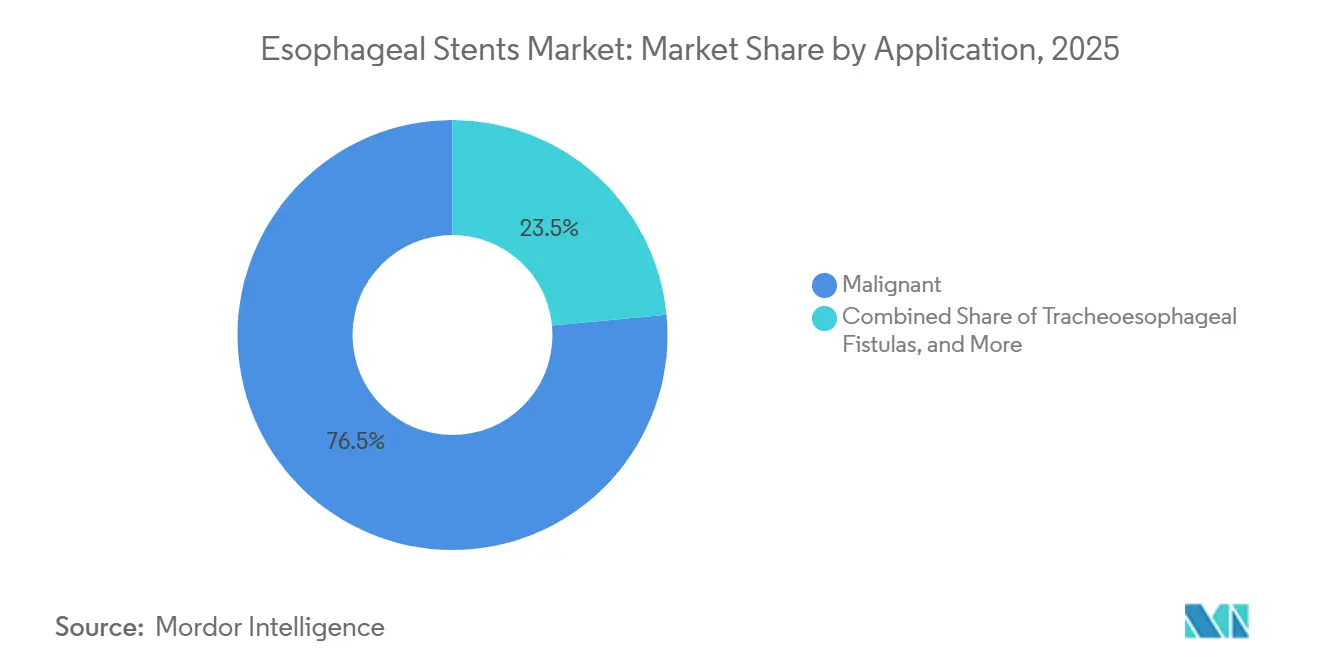
Malignant Cases Anchor Demand While Fistula Care Grows FasterMalignant indications accounted for 76.51% of the esophageal stents market size in 2025. Dysphagia palliation in inoperable esophageal, gastric, and lung cancers remains the most standardized use case and the biggest source of predictable procedure volumes. The esophageal stents market still draws most of its commercial base from malignant care because referral patterns are established and treatment pathways are clearer than they are in many benign settings. A 2025 single-center retrospective study reported that 64% of esophageal stent placements were for malignant causes and 36% were for benign causes, with self-expanding metal stents used in all patients.
Tracheoesophageal fistulas are projected to grow at 7.25% CAGR through 2031 and represent the fastest-growing application in the esophageal stents market. Growth is being supported by the wider use of dual esophageal and airway stenting in patients who are not good surgical candidates. A 2024 study found that stent implantation reduced pneumonia incidence from 83.5% at baseline to 33.5% at 1 month in malignant tracheoesophageal fistula care. A 2025 review also reported better fistula closure and quality-of-life outcomes with endoscopic management, which supports continued expansion in high-acuity oncology centers.
By End User:
Hospitals Stay Largest While Endoscopy Centers Gain SpeedHospitals held 62.31% of the esophageal stents market share in 2025. They remain the leading care setting because complex gastrointestinal endoscopy often requires imaging support, oncology coordination, and access to acute care backup. The esophageal stents market has long been centered in hospital departments, especially for difficult malignant strictures and medically fragile patients. Specialty clinics and ambulatory settings still play a role in selected benign cases and referral-based tertiary programs.
Endoscopy centers are projected to grow at 8.41% CAGR through 2031 and are the fastest-growing end-user group in the esophageal stents market. Smaller delivery systems are making placement more feasible in outpatient environments, especially when cases do not require the resources of a full hospital department. This shift is broadening the site-of-care mix in the esophageal stents market and is increasing demand for products that are easier to stock, handle, and deploy. Manufacturers that tailor packaging and delivery features to routine endoscopy workflows should benefit as more procedures move into these settings.
Geography Analysis
North America Esophageal Stents Market
North America held 37.68% of the esophageal stents market size in 2025. The United States accounted for most of that base because accredited endoscopy capacity, therapeutic expertise, and established reimbursement pathways supported high procedure throughput. Canada and Mexico added smaller contributions, with growth tied to oncology protocol development in Canada and private hospital investment in Mexico. The esophageal stents market in North America is also an important launch region for advanced covered stents because large health systems can adopt refinements faster than many other regions.
APAC Esophageal Stents Market
Asia-Pacific is forecast to expand at 8.93% CAGR through 2031 and is the fastest-growing region in the esophageal stents market. China represented 43.8% of global esophageal cancer incidence in 2022, which gives the region a very deep underlying treatment pool. Expansion of endoscopy infrastructure in China is opening more procedural capacity in second-tier and third-tier cities, which should support future placement volumes. Japan and South Korea remain early adopters of specialized stent platforms, and strong endoscopic practice patterns support quicker uptake of new designs. India is still smaller, but it is gaining traction as private tertiary hospitals expand advanced gastroenterology services.
EMEA and South America Esophageal Stents Market
Europe holds a steady position in the esophageal stents market, with Germany, the United Kingdom, France, and Italy supported by strong procedural standards and aging patient pools. South America is growing more gradually because public budget limits continue to weigh on adoption, even though private hospitals are adopting more advanced endoscopy protocols. The Middle East is seeing selective investment in oncology infrastructure, especially in GCC systems that are building advanced care capacity. Sub-Saharan Africa has some of the highest disease incidence, including 17.9 cases per 100,000 in Malawi, but much of that need remains commercially underserved because endoscopy access and reimbursement are still limited.

Competitive Landscape
The esophageal stents market shows moderate concentration rather than control by a single supplier. Boston Scientific and Cook Medical remain leading participants because they combine broad self-expanding metal stent portfolios with long-standing hospital relationships and strong clinical familiarity. Olympus strengthened its position when it completed the acquisition of Taewoong Medical in January 2024 for up to USD 370 million, adding the Niti-S stent platform to its therapeutic solutions portfolio. That deal gave Olympus a stronger position across esophageal and other gastrointestinal stent categories. The esophageal stents market is therefore seeing competition built around portfolio breadth, hospital access, and the ability to support therapeutic endoscopy accounts across regions.
Merit Medical also expanded its gastrointestinal footprint in July 2024 through a USD 105 million asset purchase agreement with EndoGastric Solutions for the EsophyX Z+ device, which widened cross-selling opportunities around its existing esophageal offerings. Even though that transaction focused on GERD treatment, it deepened Merit Medical's reach into the same clinician base that uses advanced esophageal devices. The esophageal stents market is also being reshaped by CONMED's December 2025 decision to exit gastroenterology product lines, which removed an established set of commercial relationships from the field. That move has made account access more contestable for mid-tier suppliers and regional challengers.
Micro-Tech Endoscopy moved quickly in March 2026 by signing an agreement to acquire the Duraclip, Precisor, and Optibite product lines from CONMED, which expanded its global gastrointestinal endoscopy presence. This matters to the esophageal stents market because channel relationships in endoscopy often influence future device adoption beyond the exact product acquired. At the same time, niche specialists such as ELLA-CS and ENDO-FLEX retain protected positions through biodegradable platforms and coating expertise that larger companies have not matched at the same commercial depth. Competition in the esophageal stents market is likely to stay active across premium hospital accounts, outpatient settings, and price-sensitive regions rather than settling around a single model.
Esophageal Stents Industry Leaders
Becton, Dickinson and Company (BD)
Boston Scientific Corporation
Cook Medical
Leufen Medical
Merit Medical Systems, Inc.
- *Disclaimer: Major Players sorted in no particular order
Esophageal Stents Market Companies Covered in this Report
- Beckton Dickinson
- Boston Scientific
- Cook Group
- ELLA-CS, s.r.o.
- EndoVastec
- H & R Medical LLC
- Hanarostent (M.I. Tech brand)
- Hunan Handlike Medical
- Leufen Medical
- M.I. Tech Co., Ltd.
- Meril Life Science
- Merit Medical Systems
- Micro-Tech Endoscopy Co., Ltd.
- S&G Biotech Inc.
- Taewoong Medical

Recent Industry Developments in Esophageal Stents Market
- May 2026: TaeWoong Medical USA received FDA 510(k) clearance for the Niti-S SPAXUS Stent, expanding its EUS-guided therapeutic portfolio and reinforcing Olympus's GI stent capabilities in the US market following the 2024 acquisition of the South Korean parent.
- March 2026: Micro-Tech Endoscopy signed a definitive agreement to acquire global distribution rights for the Duraclip, Precisor, and Optibite product lines from CONMED Corporation, integrating these GI endoscopy accessories into its commercial operations and directly expanding its US and global footprint in clinical endoscopy settings.
- December 2025: CONMED Corporation announced its strategic exit from all gastroenterology product lines, including termination of its distribution agreement with W.L. Gore & Associates for the Gore VIABIL biliary stent, effective January 2026. GI product lines generated USD 90-95 million in 2025 revenue.


Global Esophageal Stents Market Report Scope
As per the scope of the report, esophageal stents are flexible, tubular medical implants placed endoscopically to keep a narrowed or obstructed esophagus open. They are typically made of self‑expandable metal or polymer and provide immediate relief from dysphagia caused by malignant tumors, benign strictures, or fistulas. By mechanically supporting the esophageal lumen, these stents restore swallowing function and improve patient quality of life.
The esophageal stents market is segmented by product type, material, application, end user, and geography. By product type, the market is segmented into self-expanding metal stents, self-expanding plastic stents, and biodegradable stents. By material, the market is segmented into nitinol, stainless steel, and plastic/polymer. By application, the market is segmented into malignant, benign, and tracheoesophageal fistulas. By end user, the market is segmented into hospitals, specialty clinics, ambulatory surgical centers, and others. The geography segment is further divided into North America, Europe, Asia-Pacific, the Middle East and Africa, and South America. The report also covers the estimated market sizes and trends for 17 countries across major regions globally. The report offers the market size and forecasts in value (USD) for the above segments.
| Self-Expanding Metal Stents (SEMS) |
| Self-Expanding Plastic Stents (SEPS) |
| Biodegradable Stents |
| Nitinol |
| Stainless Steel |
| Plastic/Polymer |
| Malignant |
| Benign |
| Tracheoesophageal Fistulas |
| Hospitals |
| Specialty Clinics |
| Ambulatory Surgical Centers |
| Others |
| North America | United States |
| Canada | |
| Mexico | |
| Europe | Germany |
| United Kingdom | |
| France | |
| Italy | |
| Spain | |
| Rest of Europe | |
| Asia-Pacific | China |
| India | |
| Japan | |
| Australia | |
| South Korea | |
| Rest of Asia-Pacific | |
| Middle East and Africa | GCC |
| South Africa | |
| Rest of Middle East and Africa | |
| South America | Brazil |
| Argentina | |
| Rest of South America |
| By Product Type | Self-Expanding Metal Stents (SEMS) | |
| Self-Expanding Plastic Stents (SEPS) | ||
| Biodegradable Stents | ||
| By Material | Nitinol | |
| Stainless Steel | ||
| Plastic/Polymer | ||
| By Application | Malignant | |
| Benign | ||
| Tracheoesophageal Fistulas | ||
| By End User | Hospitals | |
| Specialty Clinics | ||
| Ambulatory Surgical Centers | ||
| Others | ||
| By Geography | North America | United States |
| Canada | ||
| Mexico | ||
| Europe | Germany | |
| United Kingdom | ||
| France | ||
| Italy | ||
| Spain | ||
| Rest of Europe | ||
| Asia-Pacific | China | |
| India | ||
| Japan | ||
| Australia | ||
| South Korea | ||
| Rest of Asia-Pacific | ||
| Middle East and Africa | GCC | |
| South Africa | ||
| Rest of Middle East and Africa | ||
| South America | Brazil | |
| Argentina | ||
| Rest of South America | ||


Key Questions Answered in the Report
What is driving growth in esophageal stents through 2031?
Growth is being supported by the rising burden of esophageal cancer, broader use of minimally invasive endoscopic therapy, and stronger adoption in palliative care pathways.
How large is the esophageal stents space expected to become by 2031?
It is forecast to reach USD 335.99 million by 2031 from USD 244.51 million in 2025, with a 5.44% CAGR from 2026 to 2031.
Which product category leads current revenue?
Self-expanding metal stents lead product revenue with a 73.48% share in 2025 because they remain the standard option in malignant dysphagia care.
Which application is growing fastest?
Tracheoesophageal fistula care is the fastest-growing application, with a projected 7.25% CAGR through 2031, supported by strong outcomes in pneumonia reduction and fistula management.
Which region is expanding the fastest?
Asia-Pacific is the fastest-growing region at an 8.93% CAGR through 2031, largely because China carries a high disease burden and regional endoscopy capacity is expanding.
Page last updated on:





