
Ergothioneine Market Size and Share
Market Overview
| Study Period | 2022 - 2032 |
|---|---|
| Market Size (2027) | USD 110.71 Million |
| Market Size (2032) | USD 226.67 Million |
| Growth Rate (2027 - 2032) | 15.41 % |
| Fastest Growing Market | Asia-Pacific |
| Largest Market | North America |
| Market Concentration | High |
Major Players *Disclaimer: Major Players sorted in no particular order Image © Mordor Intelligence. Reuse requires attribution under CC BY 4.0. | |
Ergothioneine Market Analysis by Mordor Intelligence
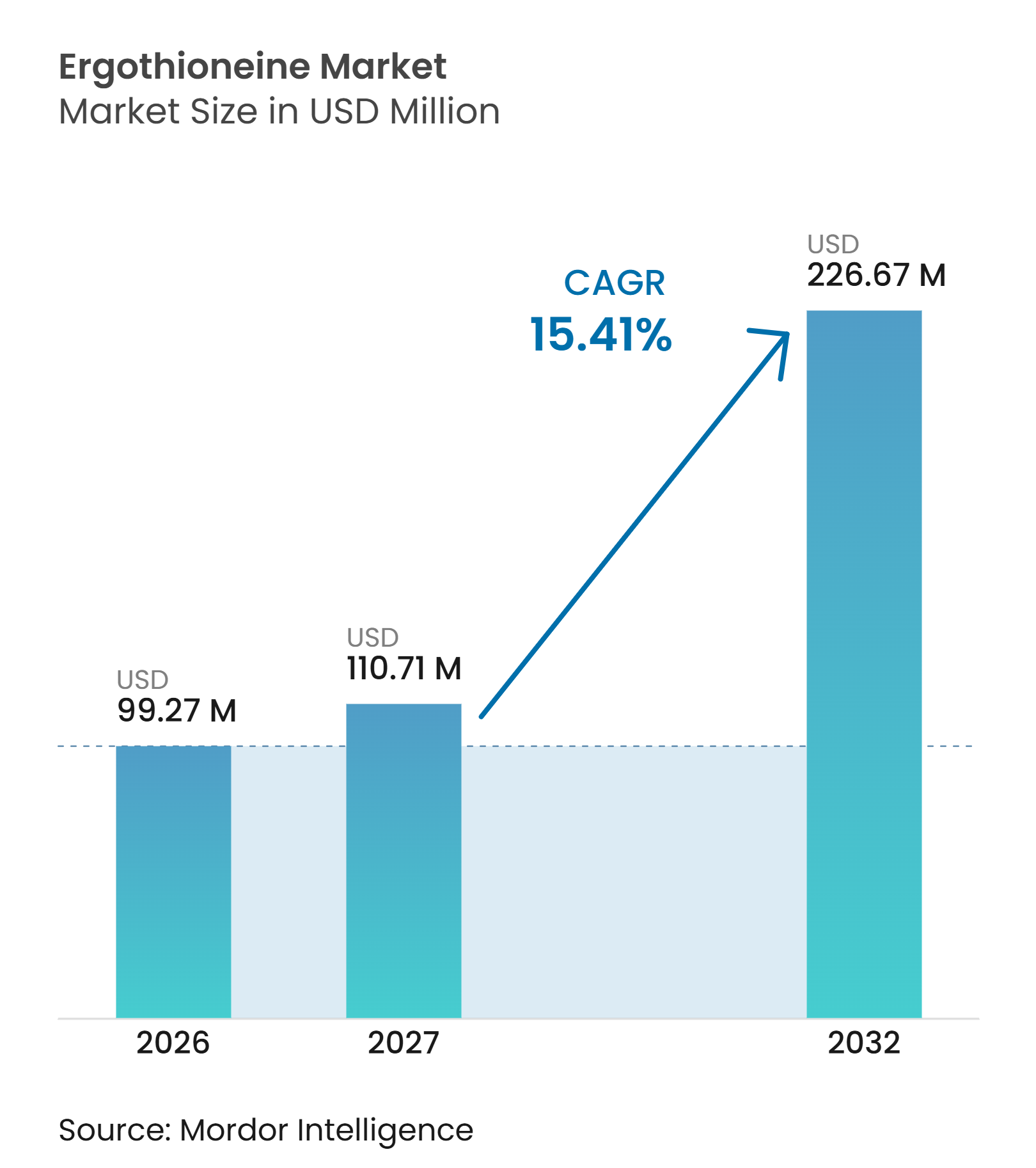
The ergothioneine market size is expected to grow from USD 99.27 million in 2026 to USD 110.71 million in 2027 and is forecast to reach USD 226.67 million by 2032 at 15.41% CAGR over 2027-2032. The market is supported by a clinical evidence base that links the compound with cognitive health, sleep, mitochondrial function, and healthy aging. Its uptake through the OCTN1 transporter gives manufacturers a distinct scientific basis for positioning it against conventional antioxidant ingredients. Precision fermentation is changing the supply outlook by reducing dependence on mushroom extraction and supporting food and beverage formulations. Regulatory clearances in the United States, Europe, and parts of Asia-Pacific remain central to commercial access, because they define permitted formats and use levels. Companies with clinical data, fermentation capabilities, and completed regulatory filings hold a stronger position as the category moves into larger consumer channels.
Key Report Takeaways
-
By form, powder held 54.76% of the ergothioneine market share in 2026, while liquid is projected to grow at a 16.91% CAGR through 2032.
-
By source, mushrooms accounted for 81.18% of the ergothioneine market share in 2026, while bacteria and engineered microorganisms are projected to expand at a 16.33% CAGR through 2032.
-
By application, dietary supplements commanded 41.37% of the ergothioneine market size in 2026, while functional food and beverages are forecast to advance at a 16.56% CAGR through 2032.
-
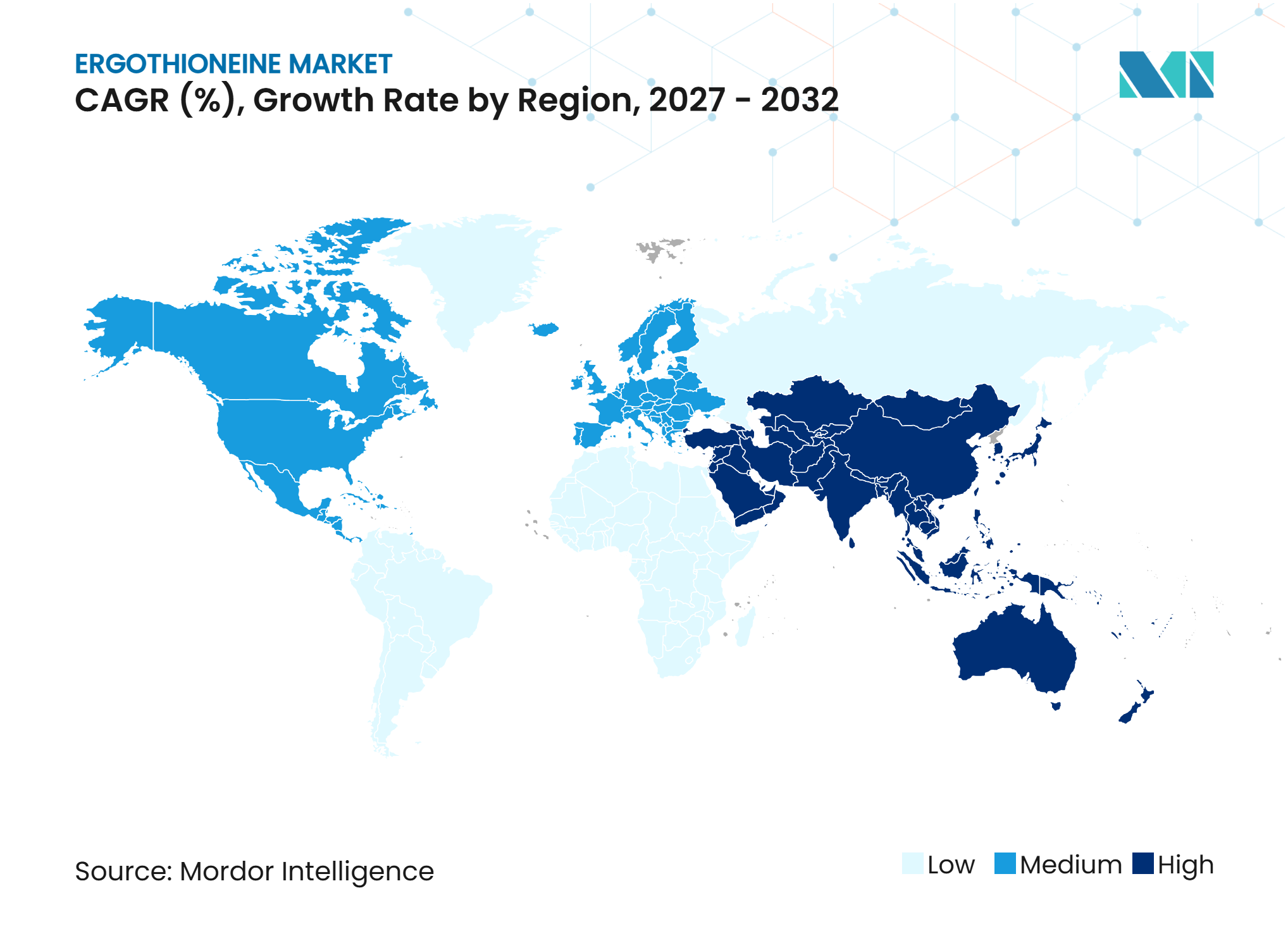
By geography, North America held 34.76% of the ergothioneine market share in 2026, while Asia-Pacific is projected to grow at a 16.78% CAGR through 2032.
Note: Market numbers in this report are based on Mordor Intelligence's proprietary estimation framework, which combines nine months of actuals with Q4 projections for base year 2026.
Market Trends and Insights
Drivers Impact Analysis of Ergothioneine Market*
| Driver | (~) % Impact on CAGR Forecast | Geographic Relevance | Impact Timeline |
|---|---|---|---|
| Rising Demand for Antioxidant Ingredients | +3.8% | Global | Short term (≤ 2 years) |
| Growing Focus on Healthy Aging and Longevity | +4.2% | Global, North America and Europe leading | Long term (≥ 4 years) |
| Expanding Applications in Dietary Supplements | +2.6% | North America, Europe and Asia-Pacific | Medium term (2-4 years) |
| Increasing Use of Ergothioneine in Anti-Aging Skincare | +2.9% | Asia-Pacific core, spillover to North America and Europe | Medium term (2-4 years) |
| Growing Incorporation into Functional Foods and Beverages | +3.1% | North America, Europe and China | Medium term (2-4 years) |
| Growing Demand for Naturally Derived Bioactive Ingredients | +2.4% | Global, with European Union and North American emphasis | Medium term (2-4 years) |
| Source: Mordor Intelligence | |||
Rising Demand for Antioxidant Ingredients
Growing awareness of oxidative stress, cellular health, and healthy ageing is encouraging demand for antioxidant-rich ingredients across the nutraceutical and functional food industries. Ergothioneine is gaining attention due to its ability to neutralize reactive oxygen species and protect cellular components from oxidative damage. Its selective uptake and retention in human tissues through the OCTN1 transporter further distinguish it from several conventional dietary antioxidants. According to the World Health Organization (WHO), the global population aged 60 years and above is expected to increase from 1 billion in 2020 to 1.4 billion by 2030, strengthening the focus on healthy ageing and preventive nutrition[1]. This demographic shift is creating opportunities for ergothioneine-based dietary supplements, functional beverages, and fortified food products.
Growing Focus on Healthy Aging and Longevity
The increasing focus on extending healthy life expectancy and maintaining physical and cognitive well-being is creating opportunities for bioactive ingredients such as ergothioneine. Consumers are increasingly seeking nutritional solutions that support cellular health, reduce oxidative damage, and address age-related physiological changes. Ergothioneine is attracting interest due to its antioxidant and cytoprotective properties, particularly its potential to protect cells against oxidative stress associated with ageing. According to the United Nations, the global population aged 65 years and above is projected to increase from 761 million in 2021 to 1.6 billion by 2050[2]. This demographic shift is encouraging nutraceutical manufacturers to develop longevity-focused supplements and functional nutrition products. Ergothioneine is consequently gaining attention as an ingredient for healthy-ageing formulations, including antioxidant supplements and functional beverages.
Expanding Applications in Dietary Supplements
The growing incorporation of specialized antioxidants into nutritional formulations is expanding the application of ergothioneine across the dietary supplements industry. Its ability to protect cells against oxidative stress and its selective accumulation in human tissues make it an attractive ingredient for manufacturers developing health-focused supplements. Ergothioneine is increasingly being incorporated into capsules, tablets, powders, and combination formulations alongside vitamins, minerals, and other antioxidants. Rising consumer interest in preventive healthcare, immune support, cellular health, and healthy ageing is further encouraging demand for differentiated nutraceutical products. Additionally, growing scientific research into ergothioneine's potential health benefits is strengthening its positioning as a specialty bioactive ingredient.
Increasing Use of Ergothioneine in Anti-Aging Skincare
The growing demand for science-backed skincare ingredients that address premature ageing is creating opportunities for ergothioneine in the personal care industry. Its potent antioxidant properties help neutralize free radicals generated by ultraviolet (UV) exposure and environmental pollution, which contribute to oxidative stress and skin ageing. Ergothioneine also offers potential skin-protective benefits by helping preserve cellular integrity and reduce oxidative damage. These properties are encouraging cosmetic ingredient manufacturers to incorporate it into anti-ageing serums, facial creams, moisturizers, and other protective skincare formulations[3]. Additionally, increasing consumer preference for multifunctional skincare products targeting fine lines, skin damage, and environmental stressors is supporting interest in antioxidant-based formulations.
Restraints Impact Analysis of Ergothioneine Market*
| Restraint | (~) % Impact on CAGR Forecast | Geographic Relevance | Impact Timeline |
|---|---|---|---|
| High Production and Manufacturing Costs | -2.4% | Global | Short term (≤ 2 years) |
| Limited Availability of Natural Sources | -1.9% | Global | Medium term (2-4 years) |
| Complexities in Large-Scale Production | -2.1% | Asia-Pacific core, with global spillover | Medium term (2-4 years) |
| Inconsistent Raw Material Quality and Standardization | -1.6% | Global | Long term (≥ 4 years) |
| Source: Mordor Intelligence | |||
High Production and Manufacturing Costs
The production of ergothioneine involves specialized extraction, purification, and fermentation processes, which can increase manufacturing costs and limit its commercial scalability. Mushroom-derived ergothioneine requires controlled cultivation, raw material processing, and multiple purification stages to obtain high-purity ingredients, increasing production time and operational expenditure. Similarly, microbial fermentation-based production requires optimized microbial strains, specialized bioreactors, controlled fermentation conditions, and downstream purification technologies. Maintaining consistent product purity and quality further adds to manufacturing complexity, particularly for pharmaceutical-grade and premium nutraceutical applications. Additionally, investments in research, process optimization, and quality-control infrastructure increase the capital requirements for manufacturers.
Limited Availability of Natural Sources
The availability of naturally derived ergothioneine is constrained by its dependence on specific biological sources, particularly mushrooms and certain fungi and bacteria. Although mushrooms such as shiitake and oyster varieties contain ergothioneine, their concentrations vary considerably depending on species, cultivation conditions, substrate composition, and maturity. This variability creates challenges for manufacturers seeking consistent raw material quality and standardized ergothioneine concentrations. Additionally, extracting the compound from natural sources requires substantial quantities of biomass and specialized processing to achieve the purity levels required for nutraceutical and pharmaceutical applications. Seasonal variations, agricultural conditions, and fluctuations in mushroom production can further affect raw material availability and procurement costs.
*Our forecasts treat driver/restraint impacts as directional, not additive. The impact forecasts reflect baseline growth, mix effects, and variable interactions.
Ergothioneine Market Segment Analysis
By Form:
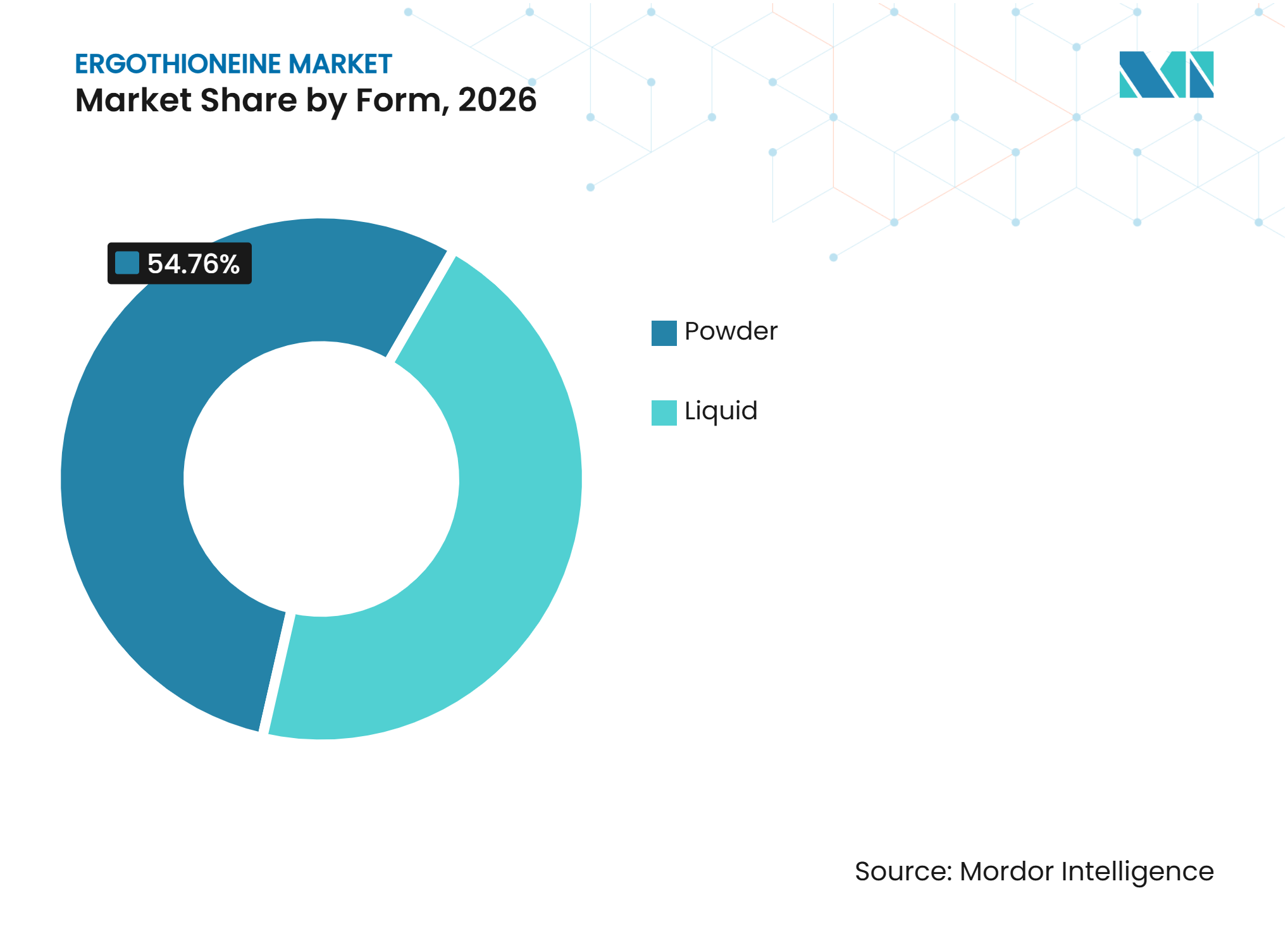
Liquid Formats Extend Use Beyond CapsulesBy form, powder accounted for the largest share of the ergothioneine market, representing 54.76% in 2026. Its dominance is primarily supported by its longer shelf life, storage stability, and ease of incorporation into various formulations. Powdered ergothioneine is widely preferred by dietary supplement manufacturers due to its suitability for capsules, tablets, and powdered nutritional blends. Its concentrated nature also allows manufacturers to achieve precise ingredient dosages across different product formulations. Additionally, powder offers greater convenience in transportation, handling, and bulk storage compared to liquid formulations.
The liquid segment of the ergothioneine market is projected to register the fastest growth, at a CAGR of 16.91% through 2032. Its growth is driven by increasing demand for convenient and ready-to-consume nutritional formulations. Liquid ergothioneine can be incorporated into functional beverages, liquid dietary supplements, and nutritional shots, expanding its potential application base. The format also eliminates the need for consumers to dissolve or mix powdered ingredients before consumption. Additionally, liquid formulations offer flexibility for manufacturers developing combination products containing antioxidants and other functional ingredients.



By Source:
Microbial Production Changes the Long-Term Supply MixBy source, mushrooms accounted for the largest share of the ergothioneine market, representing 81.18% in 2026. Their dominance is primarily attributed to their naturally high ergothioneine content compared to several other dietary sources. Certain mushroom varieties, particularly shiitake, oyster, and king oyster mushrooms, are recognized as rich sources of this antioxidant compound. The established use of mushroom-derived ergothioneine also supports its adoption among dietary supplement, functional food, and nutraceutical manufacturers.
Bacteria and engineered microorganisms are projected to register the fastest growth in the ergothioneine market, expanding at a CAGR of 16.33% through 2032. Growth in this segment is driven by increasing investments in microbial fermentation and biotechnology-based production processes. Engineered microorganisms offer opportunities for controlled ergothioneine production by optimizing microbial strains and fermentation conditions. Compared to conventional extraction from mushrooms, microbial production can provide greater consistency in product quality and help reduce dependence on agricultural raw material availability.
By Application:
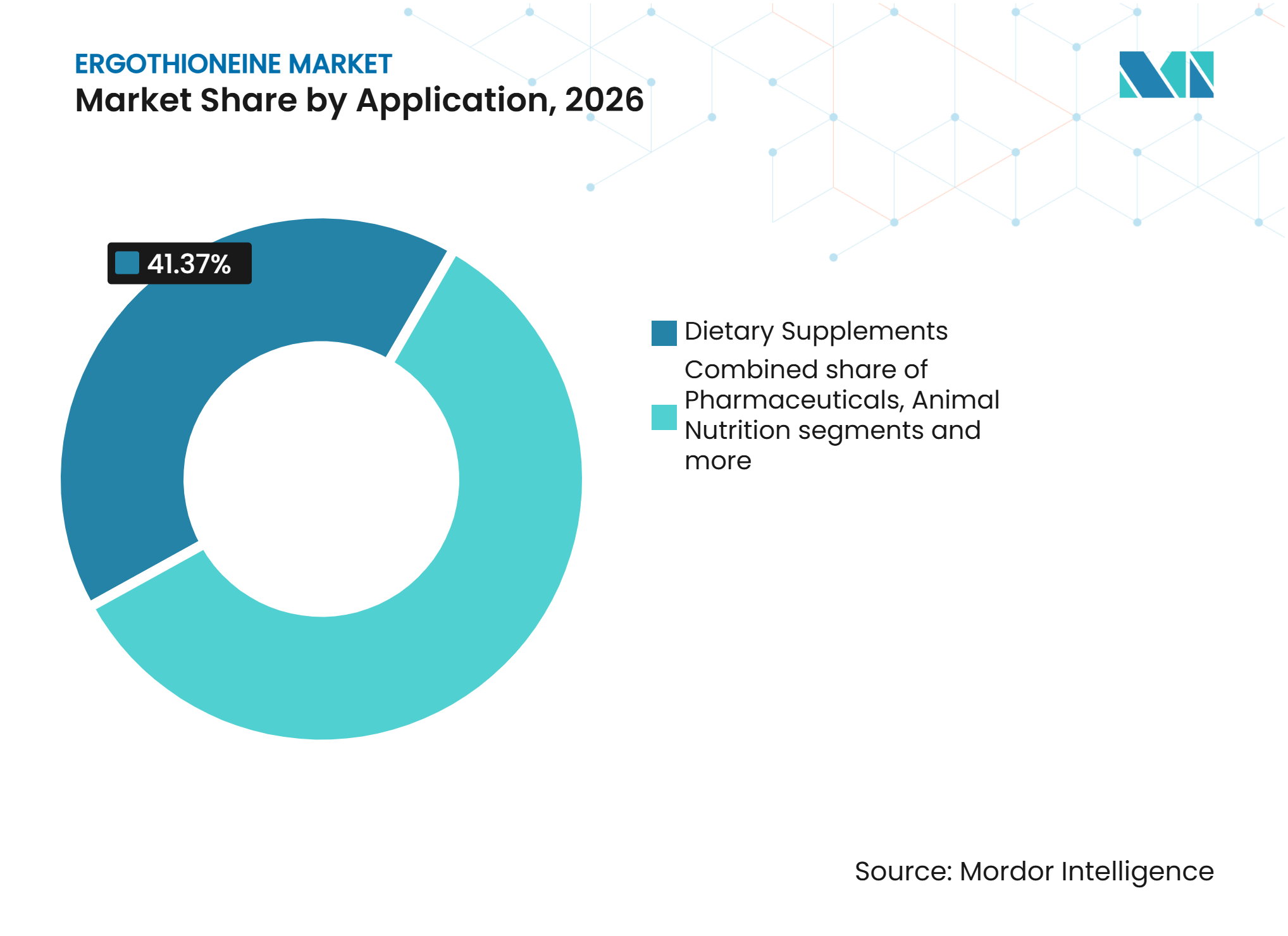
Supplements Lead While Food and Beverage Use ExpandsBy application, dietary supplements accounted for the largest share of the ergothioneine market, representing 41.37% in 2026. The segment's dominance is primarily driven by growing consumer awareness of oxidative stress and the role of antioxidants in supporting cellular health. Ergothioneine is increasingly incorporated into dietary supplement formulations due to its ability to protect cells against oxidative damage. Its specific cellular uptake mechanism through the OCTN1 transporter further strengthens its positioning as a functional ingredient in nutritional products. Supplement manufacturers are incorporating ergothioneine into capsules, tablets, and powdered formulations, often alongside other antioxidants and vitamins.
Functional food and beverages are projected to register the fastest growth in the ergothioneine market, expanding at a CAGR of 16.56% through 2032. Growth is supported by increasing consumer demand for foods and beverages that offer health benefits beyond basic nutrition. Ergothioneine's antioxidant properties make it an attractive functional ingredient for manufacturers developing products targeting cellular protection and overall wellness. Its incorporation into functional beverages, fortified foods, nutritional drinks, and wellness shots is creating new commercial opportunities.

Geography Analysis
North America
By geography, North America accounted for the largest share of the ergothioneine market, representing 34.76% in 2026. The region's dominance is supported by growing consumer awareness of antioxidant ingredients and their potential role in cellular health and healthy ageing. Increasing demand for premium dietary supplements and nutraceutical products is encouraging manufacturers to incorporate ergothioneine into their formulations. The presence of established nutraceutical companies, ingredient suppliers, and biotechnology firms further supports regional market development. Additionally, rising interest in preventive healthcare, longevity, and functional nutrition is strengthening demand for science-backed bioactive ingredients.
Asia-Pacific
Asia-Pacific is projected to register the fastest growth in the ergothioneine market, expanding at a CAGR of 16.78% through 2032. Growth is driven by increasing consumer awareness of preventive healthcare, antioxidant nutrition, and healthy ageing across major regional economies. Rising disposable incomes and expanding middle-class populations are supporting expenditure on dietary supplements and functional food products. The region's established mushroom cultivation industry also provides opportunities for sourcing ergothioneine from natural raw materials. Additionally, growing investments in biotechnology, microbial fermentation, and functional ingredient manufacturing are supporting the development of alternative production methods.
Europe, South America, and Middle East and Africa
Europe operates under the European Food Safety Authority’s Novel Food authorization framework, including EU 2017/1281 and Regulation 2017/2470. This framework permits L-ergothioneine in adult dietary supplements up to 30 mg per day and permits defined use in alcohol-free beverages, cereal bars, milk products, and chocolate confectionery. The European model places compliance factors at the center of formulation and labeling choices. Germany’s Federal Office of Consumer Protection and Food Safety reconstituted its food-medicine boundary expert commission in March 2025, which is relevant to high-dose products positioned between supplements and pharmaceuticals.South America is an emerging channel centered on Brazil and Argentina, where cross-border e-commerce has built consumer familiarity ahead of wider domestic rules. Middle East and Africa remain early-stage markets, with the United Arab Emirates serving as a regional distribution hub. Premium consumers in the Gulf Cooperation Council provide an entry point for globally compliant brands.
Competitive Landscape
Market Concentration
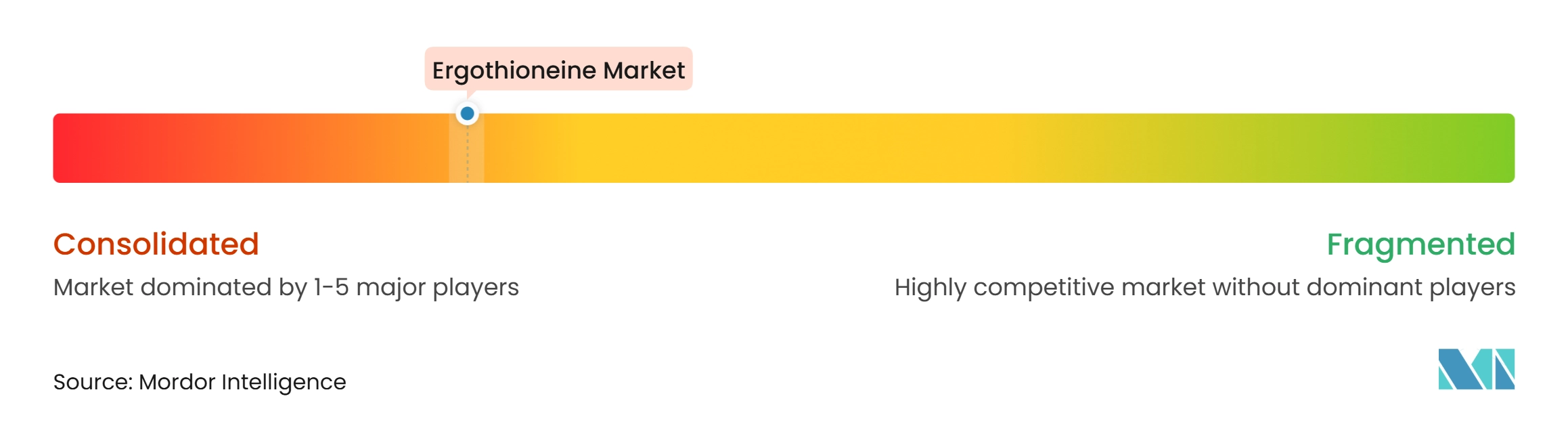
The ergothioneine market is highly consolidated, with a relatively small group of established manufacturers and specialized ingredient suppliers accounting for a significant share of the overall market. Competition is primarily driven by production capabilities, extraction technologies, product purity, supply consistency, and the ability to develop cost-effective manufacturing processes. Blue California’s ErgoActive holds an established position through precision fermentation and its FDA-notified GRAS status. Its clinical program includes a peer-reviewed 147-participant randomized trial, which supports evidence-based differentiation.
Shanghai EGT Synbio and GeneIII Biotech represent major competition from China’s synthetic biology suppliers. GeneIII’s GRAS notification and stated 150 mg per 100 g use level strengthen its position in food, protein, and nutrition powder applications. Tetrahedron S.A. has a distinctive European position through Novel Food authorization. Conagen and Anthem Biosciences bring fermentation expertise that becomes more relevant as biosynthesis expands.
GeneIII has pursued a strategy that combines fermentation production, regulatory clearance, and clinical research. The company stated that it uses proprietary Bacillus chromosome-editing technologies and holds 33 core patents. EGT Synbio has also focused on a fermentation-based ingredient that can serve supplement and food formats. These actions show that regulatory readiness and proof of performance are becoming more important than distributor scale alone. They also raise the requirements for smaller suppliers that compete mainly on price.
Ergothioneine Industry Leaders
-
Shanghai EGT Synbio Group Co., Ltd.
-
GENEIII Biotechnology Co., Ltd.
-
Blue California
-
Conagen, Inc.
-
Comhony Biotech Co., Ltd.
- *Disclaimer: Major Players sorted in no particular order
Ergothioneine Market Companies Covered in this Report
- Shanghai EGT Synbio Group Co., Ltd.
- GENEIII Biotechnology Co., Ltd.
- Blue California
- Tetrahedron S.A.
- Conagen, Inc.
- Comhony Biotech Co., Ltd.
- Anthem Biosciences Limited
- Changzhou Kansenbio Technology Co., Ltd.
- Sichuan Benepure Pharmaceutical Co., Ltd.
- Suzhou Ryway Biotech Co., Ltd.
- Xi'an Biof Bio-Technology Co., Ltd.
- Xi'an Healthway Biotech Co., Ltd.
- Xi'an Land Nutra Co., Ltd.
- Shanghai Natural Biotechnology Co., Ltd.
- EffePharm (Shanghai) Co., Ltd.
- Shaanxi Pioneer Biotech Co., Ltd.
- Natural Field Inc.
- Yanggu Huatai Health Tech Co., Ltd.
- Mironova Labs
- NAGASE & CO., LTD.
Recent Industry Developments in Ergothioneine Market
- January 2026: GENEIII announced that its fermentation-produced L-ergothioneine received a favourable US FDA GRAS determination under GRN 1270. The ingredient was cleared for specified food and beverage applications, including nutritional powders, beverages, protein bars, and confectionery, at notified use levels. The development supports the commercialization of microbial fermentation-derived ergothioneine in the United States market.
- April 2025: Jiangsu GeneIII Bio-Tec Co., Ltd. completed a RMB 100 million (approximately USD 13.8 million) Pre-A financing round led by JAFCO Asia with Kunquan Capital as financial advisor, earmarked for upgrading ergothioneine raw-material production lines, expanding end-consumer product categories, and building an international standards certification system.
- March 2025: EGT Synbio's Dr.Ergo® Ergothioneine received an FDA no-objection letter for GRAS Notice GRN 001191, marking the second US GRAS for ergothioneine, produced via a patented full enzymatic fermentation process licensed from the Chinese Academy of Science with NSF GMP, HACCP, HALAL, and ICH-guideline-aligned quality certifications.
Global Ergothioneine Market Report Scope
Ergothioneine (EGT) is a naturally occurring, sulphur-containing amino acid derivative with potent antioxidant properties. It is primarily produced by certain fungi, mushrooms, and bacteria and is obtained by humans through dietary sources such as mushrooms and other EGT-rich foods. The ergothioneine market is segmented by form, source, application and geography. Based on form, the market is segmented into powder and liquid. Based on source, the market is segmented into mushrooms, algae, bacteria and engineered microorganisms. Based on application, the market is segmented into dietary supplements, functional food and beverages, pharmaceuticals, personal care and cosmetics, animal nutrition and other applications. By geography, the market is segmented into North America, Europe, Asia-Pacific, South America, and Middle-East and Africa. For each segment, the market sizing and forecasting have been done in value terms (USD million).
Segmentation Overview
| Powder |
| Liquid |
| Mushrooms |
| Algae |
| Bacteria and Engineered Microorganisms |
| Yeast |
| Dietary Supplements |
| Functional Food and Beverages |
| Pharmaceuticals |
| Personal Care and Cosmetics |
| Animal Nutrition |
| Other Applications |
| North America | United States |
| Canada | |
| Mexico | |
| Rest of North America | |
| Europe | Germany |
| United Kingdom | |
| France | |
| Spain | |
| Italy | |
| Rest of Europe | |
| Asia-Pacific | China |
| India | |
| Japan | |
| Australia | |
| South Korea | |
| Rest of Asia-Pacific | |
| South America | Brazil |
| Argentina | |
| Rest of South America | |
| Middle East and Africa | United Arab Emirates |
| South Africa | |
| Saudi Arabia | |
| Rest of Middle East and Africa |
| By Form | Powder | |
| Liquid | ||
| By Source | Mushrooms | |
| Algae | ||
| Bacteria and Engineered Microorganisms | ||
| Yeast | ||
| By Application | Dietary Supplements | |
| Functional Food and Beverages | ||
| Pharmaceuticals | ||
| Personal Care and Cosmetics | ||
| Animal Nutrition | ||
| Other Applications | ||
| By Geography | North America | United States |
| Canada | ||
| Mexico | ||
| Rest of North America | ||
| Europe | Germany | |
| United Kingdom | ||
| France | ||
| Spain | ||
| Italy | ||
| Rest of Europe | ||
| Asia-Pacific | China | |
| India | ||
| Japan | ||
| Australia | ||
| South Korea | ||
| Rest of Asia-Pacific | ||
| South America | Brazil | |
| Argentina | ||
| Rest of South America | ||
| Middle East and Africa | United Arab Emirates | |
| South Africa | ||
| Saudi Arabia | ||
| Rest of Middle East and Africa | ||
Key Questions Answered in the Report
What is driving growth in the ergothioneine category?
Clinical research on cognitive health, sleep, mitochondrial function, and healthy aging supports demand. The global value is projected to reach USD 226.67 million by 2032 at a 15.41% CAGR.
Which ergothioneine form is growing fastest?
Liquid is projected to grow at a 16.91% CAGR through 2032, supported by ready-to-drink wellness beverages, shots, and oral beauty products.
What is the leading source of ergothioneine?
Mushrooms held 81.18% share in 2026, although bacteria and engineered microorganisms are expected to grow at 16.33% CAGR through 2032.
Which application holds the largest share of ergothioneine demand?
Dietary supplements held 41.37% share in 2026, supported by clinical evidence, established dosage forms, and consumer familiarity.