
ENT Endoscopy Devices Market Size and Share
Market Overview
| Study Period | 2020 - 2031 |
|---|---|
| Market Size (2026) | USD 6.36 Billion |
| Market Size (2031) | USD 8.82 Billion |
| Growth Rate (2026 - 2031) | 6.75 % |
| Fastest Growing Market | Asia-Pacific |
| Largest Market | North America |
| Market Concentration | Medium |
Major Players *Disclaimer: Major Players sorted in no particular order Image © Mordor Intelligence. Reuse requires attribution under CC BY 4.0. | |
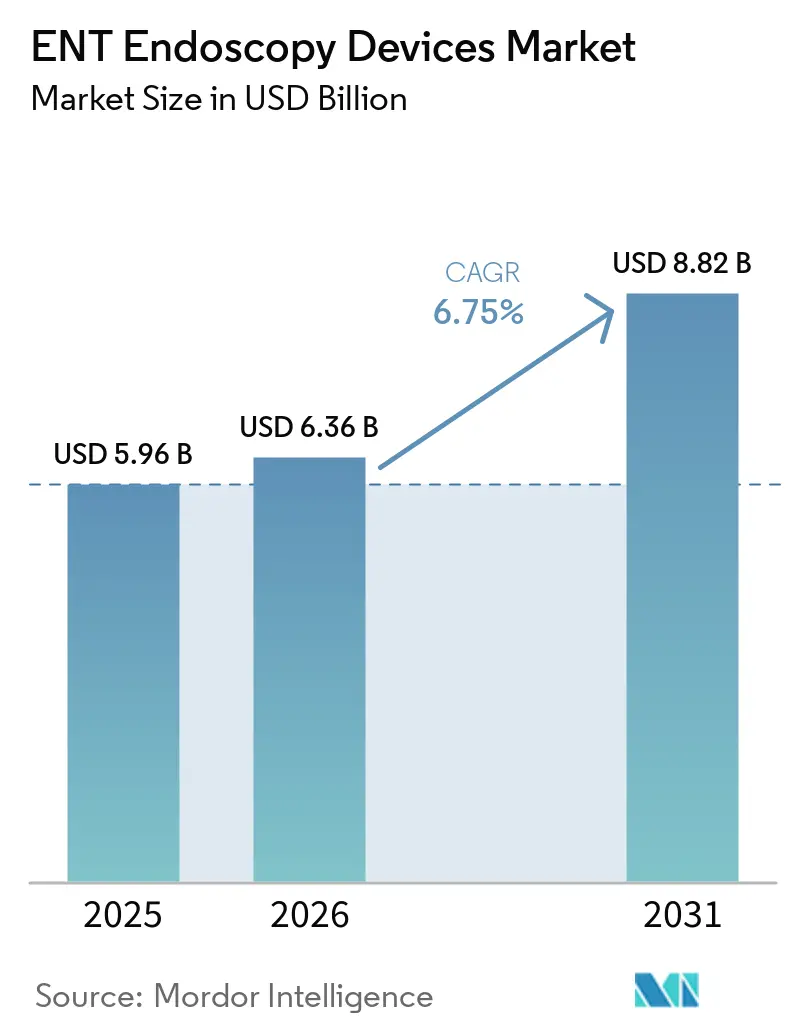
ENT Endoscopy Devices Market Analysis by Mordor Intelligence
The ENT Endoscopy Devices Market size is projected to expand from USD 5.96 billion in 2025 and USD 6.36 billion in 2026 to USD 8.82 billion by 2031, registering a CAGR of 6.75% between 2026 to 2031.
Procedure demand in rhinology, otology, and laryngology provides a stable base for equipment purchasing. Buyers are moving toward systems that combine visualization, documentation, and navigation rather than purchasing isolated hardware. This favors suppliers that can connect rigid optics, imaging platforms, and surgical workflow tools across hospital and outpatient settings. The ENT endoscopy devices market is also being shaped by a shift toward ambulatory care, where compact systems and single-use devices can fit simpler purchasing processes. At the same time, component supply constraints and reprocessing failures keep product reliability, service capacity, and infection control central to purchasing decisions.
Key Report Takeaways
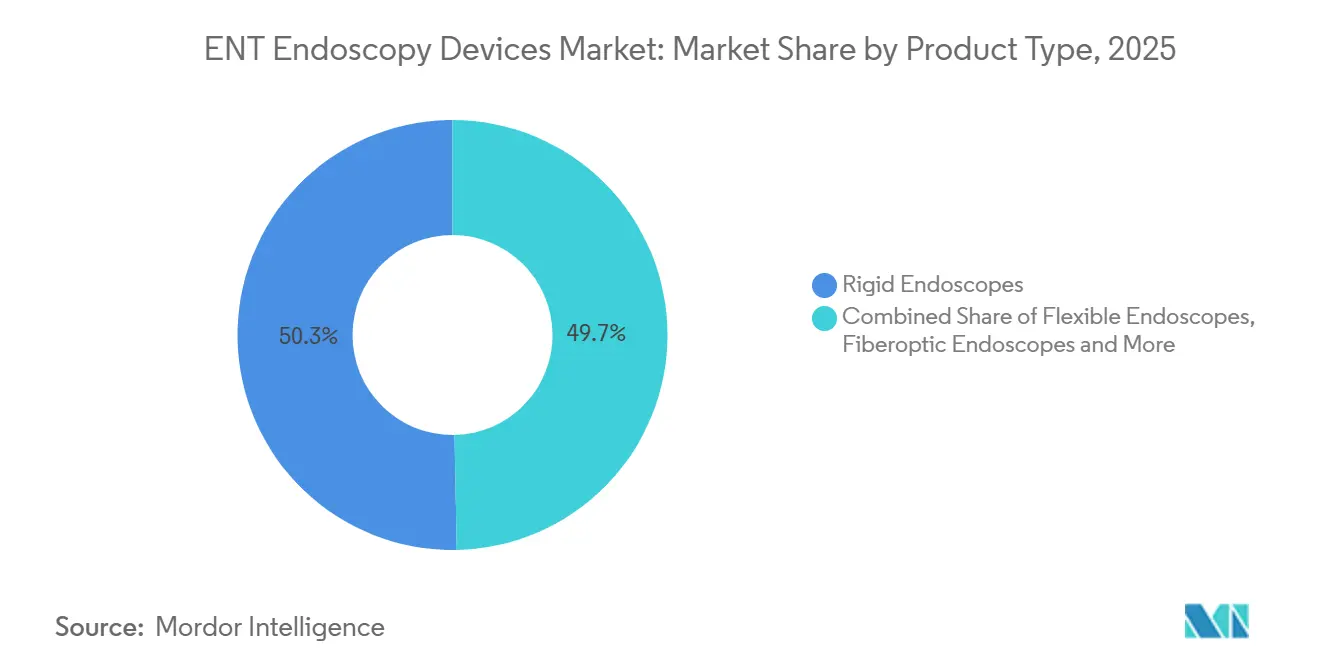
- By product type, rigid endoscopes held 50.31% of the ENT endoscopy devices market share in 2025, while flexible endoscopes are projected to grow at a CAGR of 8.58% through 2031.
- By usability, reusable devices held 76.24% of the ENT endoscopy devices market share in 2025, while single-use devices are projected to grow at a CAGR of 9.22% through 2031.
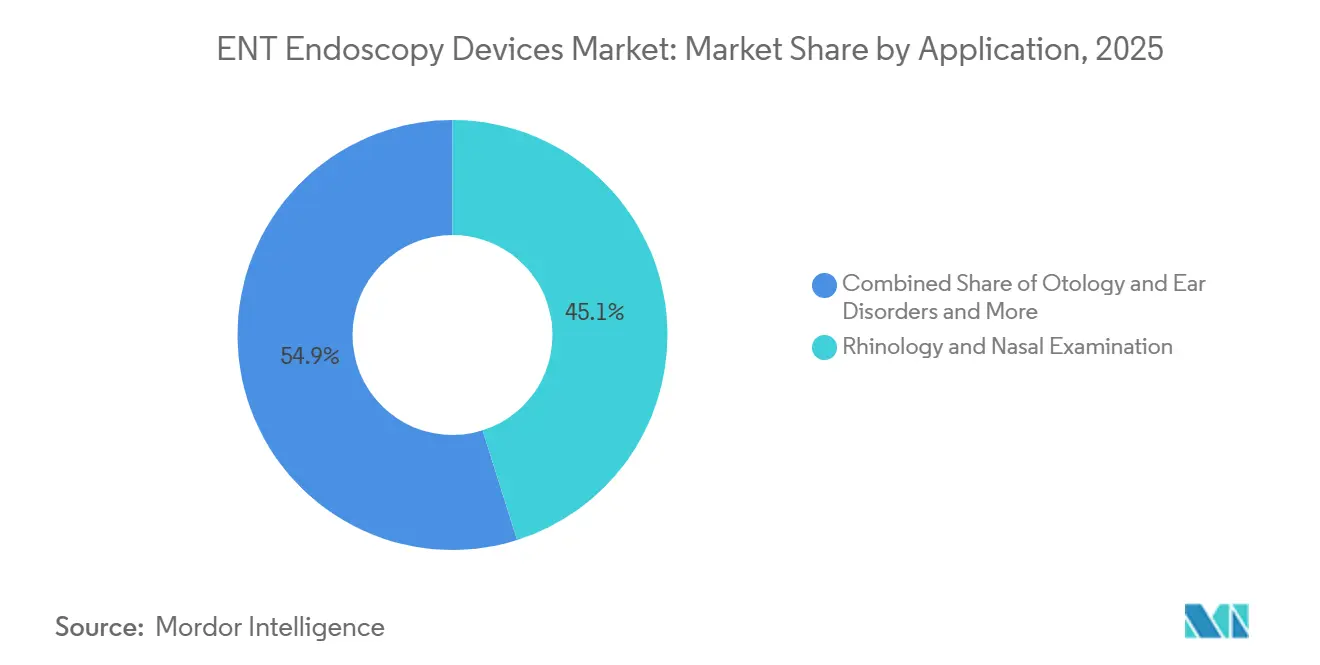
- By application, rhinology and nasal examination accounted for 45.14% of the ENT endoscopy devices market size in 2025, while otology and ear disorders are projected to grow at a CAGR of 8.82% through 2031.
- By end user, hospitals and academic medical centers held 54.65% of revenue in 2025, while ambulatory surgical centers are projected to grow at a CAGR of 9.15% through 2031.
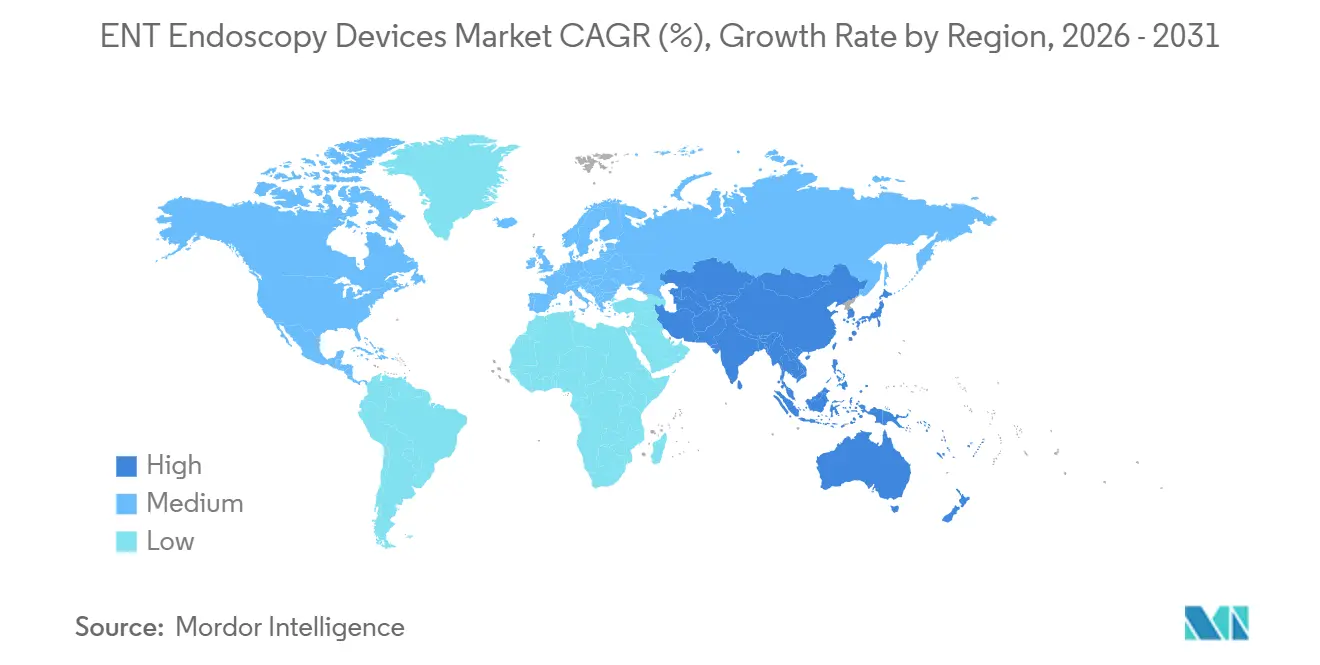
- By geography, North America held 38.61% of revenue in 2025, while Asia-Pacific is projected to grow at a CAGR of 8.75% through 2031.
Note: Market size and forecast figures in this report are generated using Mordor Intelligence’s proprietary estimation framework, updated with the latest available data and insights as of January 2026.
Market Trends and Insights
Drivers Impact Analysis of ENT Endoscopy Devices Market*
| Driver | (~) % Impact on CAGR Forecast | Geographic Relevance | Impact Timeline |
|---|---|---|---|
| Rising Burden of Chronic Sinusitis and Upper-Airway Disorders | +1.5% | Global, most acute in North America, Europe, and East Asia | Medium term (2-4 years) |
| Shift Toward Minimally Invasive and Office-Based ENT Procedures | +1.2% | North America and Western Europe | Medium term (2-4 years) |
| Expansion of High-Definition and Digital Visualization | +1.0% | Global, with early adoption in North America and Germany | Short term (≤ 2 years) |
| Growth of Ambulatory Surgical Centers and Outpatient ENT Care | +0.8% | North America, APAC core markets, and spillover to MEA | Medium term (2-4 years) |
| Aging Population and Rising ENT Procedure Volumes | +0.6% | Japan, Western Europe, and North America | Long term (≥ 4 years) |
| Procurement Shift Toward Portable, Plug-and-Play ENT Systems | +0.5% | North America and APAC emerging markets | Short term (≤ 2 years) |
| Source: Mordor Intelligence | |||
Rising Burden of Chronic Sinusitis and Upper-Airway Disorders
Chronic rhinosinusitis remains a major source of procedure volume for the ENT endoscopy devices market. Nasal inflammation associated with pollution exposure and allergen sensitization can sustain care needs outside infectious disease pathways, particularly where recurring symptoms require clinical monitoring, imaging, follow-up, and specialist review. This reduces the scope for pharmaceutical treatment alone to replace endoscopic assessment or surgery. Functional endoscopic sinus surgery is used when symptoms remain unresolved after medical management and when clinical evaluation supports intervention. A 10-year NHS analysis found a positive correlation of R = 0.74 between rhinology procedure volume and time. This relationship supports continuing demand for sinus endoscopes as clinical activity rises in the ENT endoscopy devices market.
Shift Toward Minimally Invasive and Office-Based ENT Procedures
Minimally invasive care is moving more ENT assessment and treatment into settings outside the main operating room. Office-based examinations need equipment that can be prepared quickly, used in smaller clinical rooms, and managed without extensive support infrastructure. Flexible rhinolaryngoscopes and portable video systems are well-suited to this setting. The purchasing decision increasingly considers setup time, service requirements, and the need for reprocessing support. Smaller practices may therefore prefer systems with fewer supporting components. This care model expands the range of potential buyers for the ENT endoscopy devices market and supports demand in community-based care.
Expansion of High-Definition and Digital Visualization
The move from HD imaging toward 4K, narrow-band imaging, and integrated digital visualization encourages replacement of related equipment. Olympus launched VISERA ELITE III in the United States in 2026 with True 4K, 3D, narrow-band imaging, Yellow Enhancement, and infrared imaging in one platform[1]. A shared imaging platform can expose the limits of older ENT scopes within the same operating room. Olympus also launched the VISERA S OTV-S500 in the United States in September 2025 for diagnostic rhinolaryngoscopy and vocal cord visualization. ZEISS positions its EXTARO 300 with 4K imaging and specialized viewing modes for ENT surgical workflows. These developments make visualization quality an important product requirement across several ENT procedures.
Growth of Ambulatory Surgical Centers and Outpatient ENT Care
Ambulatory surgical centers are changing where ENT endoscopy equipment is installed and how it is selected. These facilities favor compact systems with manageable maintenance needs, direct clinical workflows, and reliable availability between procedures. That preference supports portable video units and single-use flexible scopes over large tower configurations. The care shift also brings higher-acuity sinus and ear procedures into outpatient environments. Vendors need to offer training and service models that fit facilities with smaller technical teams. As this shift continues, the ENT endoscopy devices market can gain demand from purchasers beyond traditional hospital departments and central purchasing groups.
Restraints Impact Analysis of ENT Endoscopy Devices Market*
| Restraint | (~) % Impact on CAGR Forecast | Geographic Relevance | Impact Timeline |
|---|---|---|---|
| High Capital Cost and Lifecycle Maintenance Requirements | -0.8% | Global, most acute in APAC emerging markets and South America | Medium term (2-4 years) |
| Reprocessing, Sterilization, and Cross-Contamination Risk | -0.6% | Global, with the largest regulatory effect in North America and the EU | Short term (≤ 2 years) |
| Concentration of Specialized Rod-Lens and Optical Component Supply | -0.4% | Global supply chain, with greatest procurement exposure in Asia and South America | Long term (≥ 4 years) |
| Shortage of Biomedical Engineers Skilled in Optical Calibration and Scope Reprocessing | -0.3% | North America, Western Europe, and APAC | Long term (≥ 4 years) |
| Source: Mordor Intelligence | |||
High Capital Cost and Lifecycle Maintenance Requirements
Advanced ENT endoscopy systems require spending beyond the initial device purchase. Premium 4K rigid scope towers also need service, repair, calibration, software support, and replacement support through their working lives. Large academic hospitals can absorb these costs through bundled agreements, centralized technical teams, and established purchasing processes. Smaller clinics may defer replacement when repair costs become difficult to justify against other clinical spending priorities. The issue is more pronounced in emerging APAC and South American markets where authorized service coverage for imported equipment can be limited, leading to longer downtime and delayed upgrades. This creates uneven adoption of premium platforms even when clinical demand is present in the ENT endoscopy devices market.
Reprocessing, Sterilization, and Cross-Contamination Risk
Reprocessing failures remain a material compliance risk for reusable ENT endoscopy equipment. The FDA classified the Olympus MAJ-891 Forceps/Irrigation Plug recall as Class I in January 2025, after reports linked the device to 120 injuries and 1 death[2]. Multi-component accessories can add cleaning, inspection, and disassembly steps before high-level disinfection, creating more points where required procedures can be missed. The operational burden rises with procedure volumes and differences in staff training, staffing levels, and documentation practices. These incidents can strengthen the case for single-use products despite higher per-procedure purchasing costs and can affect how hospitals assess total equipment risk. Smaller facilities can face a disproportionate burden because infection-control resources and reprocessing expertise are limited, affecting the ENT endoscopy devices market.
*Our forecasts treat driver/restraint impacts as directional, not additive. The impact forecasts reflect baseline growth, mix effects, and variable interactions.
ENT Endoscopy Devices Market Segment Analysis
By Product Type:
Rigid Endoscopes Remain the Revenue Base, While Flexible Platforms Grow FastestRigid endoscopes held 50.31% of revenue in 2025. Their position reflects the continuing importance of functional endoscopic sinus surgery and endoscopic ear surgery in hospitals and established surgical centers. Rod-lens sinus telescopes and otology telescopes provide the optical clarity, stability, and working distance that these procedures require. Hospitals have also installed infrastructure for rigid scopes, camera heads, light sources, and supporting imaging equipment, which makes replacement purchases more practical than changing platforms. The 10-year NHS analysis reported a positive R = 0.74 relationship between rhinology procedure volume and time, supporting recurring procurement of rigid sinus scopes as clinical activity rises.
Flexible endoscopes are projected to grow at a CAGR of 8.58% through 2031. Their adoption is strongest in office-based rhinology diagnostics, airway assessment, follow-up examinations, and other workflows that need a maneuverable scope. Olympus launched ENDOEYE ULTRA in June 2026 with 4K and infrared observation capabilities in one flexible-tip videoscope. This reduces the historic choice between flexible access and high-quality visualization, while allowing clinicians to use a single device format in more procedures. Flexible rhinolaryngoscopes and nasopharyngoscopes serve high-volume diagnostic workflows outside surgical settings, while fiberoptic products remain relevant in cost-sensitive applications, and integrated video systems support premium outpatient workflows.

By Usability:
Reusable Devices Hold the Installed Base, While Single-Use Products Change PurchasingReusable devices accounted for 76.24% of revenue in 2025. Their position reflects years of hospital investment in capital equipment, central sterile services, and trained staff for reprocessing. Reusable rod-lens systems can offer favorable amortized economics where procedure volumes are sufficient to spread equipment and service costs across many cases. Their installed base also supports continuing purchases of repair services, maintenance contracts, accessories, and replacement components. This gives reusable equipment a durable role in the ENT endoscopy devices market, especially at hospitals that already manage the full operating workflow.
Single-use devices are projected to grow at a CAGR of 9.22% through 2031. Olympus introduced the Vathin E-SteriScope single-use flexible video rhinolaryngoscope in select EMEA markets in October 2025. KARL STORZ introduced the Slimline C-MAC S single-use video laryngoscope in April 2025. These products respond to reprocessing labor, infection-control concerns, equipment availability, and the need to simplify clinical preparation in facilities with limited technical support. They also shift purchasing toward recurring unit orders rather than large capital agreements. At the same time, limited-use devices remain a middle option for office settings where reusable infrastructure is limited and fully disposable economics remain difficult.
By Application:
Rhinology and Nasal Examination Lead, While Otology Grows the FastestRhinology and nasal examination represented 45.14% of the ENT endoscopy devices market size in 2025. Chronic sinusitis evaluations, nasal polyp surveillance, functional endoscopic sinus surgery, and routine nasal assessments support this demand across care settings. Sinus telescopes and flexible nasopharyngoscopes enable diagnostic examinations in office settings, which can avoid the need for general anesthesia in many cases. This accessibility broadens the number of clinical encounters that require endoscopic equipment and creates demand for both reusable and portable formats. Laryngology and voice disorders form a secondary application group that relies on video laryngoscopy, stroboscopy, and mucosal visualization for vocal fold pathology assessment and cancer screening.
Otology and ear disorders are projected to grow at a CAGR of 8.82% through 2031. The 3NT Medical Colibri Micro ENT Scope combines wide-angle otoscopic viewing with integrated suction for middle-ear visualization. Such designs can support endoscopic ear surgery with less bone removal and can reduce dependence on a microscope-based setup for some procedures. Pediatric and neonatal ENT applications benefit from continuing miniaturization of chip-on-tip imaging, which improves access to difficult anatomical areas. These use cases add clinical relevance to flexible and single-use designs in the ENT endoscopy devices market.
By End User:
Hospitals Hold Revenue, While Ambulatory Surgical Centers Gain GroundHospitals and academic medical centers accounted for 54.65% of the ENT endoscopy devices market size in 2025. These settings manage complex revision sinus surgery, pediatric ENT, oncologic resections, and navigation-guided procedures that require advanced imaging equipment and trained technical teams. They also have the operating rooms, sterile processing capacity, and capital budgets needed to support connected visualization systems. Academic centers influence adoption because clinicians develop platform familiarity during training, and those preferences can follow physicians into later practice settings. Hospitals will therefore remain important buyers of rigid scopes, video systems, navigation-related equipment, service support, and accessories.
Ambulatory surgical centers are projected to grow at a CAGR of 9.15% through 2031. Their expansion supports demand for compact and lower-maintenance ENT platforms that can fit faster patient turnover and smaller technical teams. Outpatient facilities increasingly need systems capable of supporting more complex sinus and ear procedures, including high-specification rigid and video equipment, which were once centered in hospital operating rooms. ENT specialty clinics and office-based practices are also important purchasers of portable and single-use devices because these products can simplify room setup and reprocessing needs. Diagnostic imaging centers serve a narrower role in swallowing evaluations and preoperative airway assessment, but they also add to the wider buyer base for the ENT endoscopy devices market.
Geography Analysis
North America ENT Endoscopy Devices Market
North America accounted for 38.61% of global revenue in 2025. Mature reimbursement systems, specialist availability, and outpatient migration support regional demand for the ENT endoscopy devices market. The region has a large base of hospital and ambulatory purchasers that can adopt advanced imaging systems and maintain them through established service channels. Portable and single-use scopes can extend access beyond hospital procurement departments and into office-based care. The region also faces close scrutiny of reusable-device reprocessing and product safety, which supports demand for reliable visualization and practical infection-control workflows.
Europe ENT Endoscopy Devices Market
Europe remains an important manufacturing base for rigid ENT optics and related equipment. EU MDR 2017/745 increases clinical evidence and post-market surveillance requirements for medical devices, raising the importance of established regulatory processes and notified-body relationships. German manufacturers, including Richard Wolf and XION, have deep experience in rigid optics and specialized ENT products, which supports their position in this environment. The United Kingdom faces unmet demand for rhinology surgery following post-pandemic backlogs, which can support capital procurement over time. European buyers also place strong emphasis on product service, documentation, compliance, and the ability to support long product life cycles.
APAC, MEA and South America ENT Endoscopy Devices Market
Asia-Pacific is projected to grow at a CAGR of 8.75% through 2031. China, India, Japan, South Korea, and Southeast Asia combine demographic demand with different levels of healthcare investment and equipment access. Research on China’s aging population supports the need for continuing hearing-loss assessment and otology care. India offers scope for adoption through hospital modernization and expansion of ENT specialty centers in Tier 2 cities, while Japan retains a significant domestic equipment base. GCC investment and rising procedure volumes in Brazil and Argentina can build a longer-term purchaser base in MEA and South America, where portable and single-use platforms may offer an initial route into the ENT endoscopy devices market.
Competitive Landscape
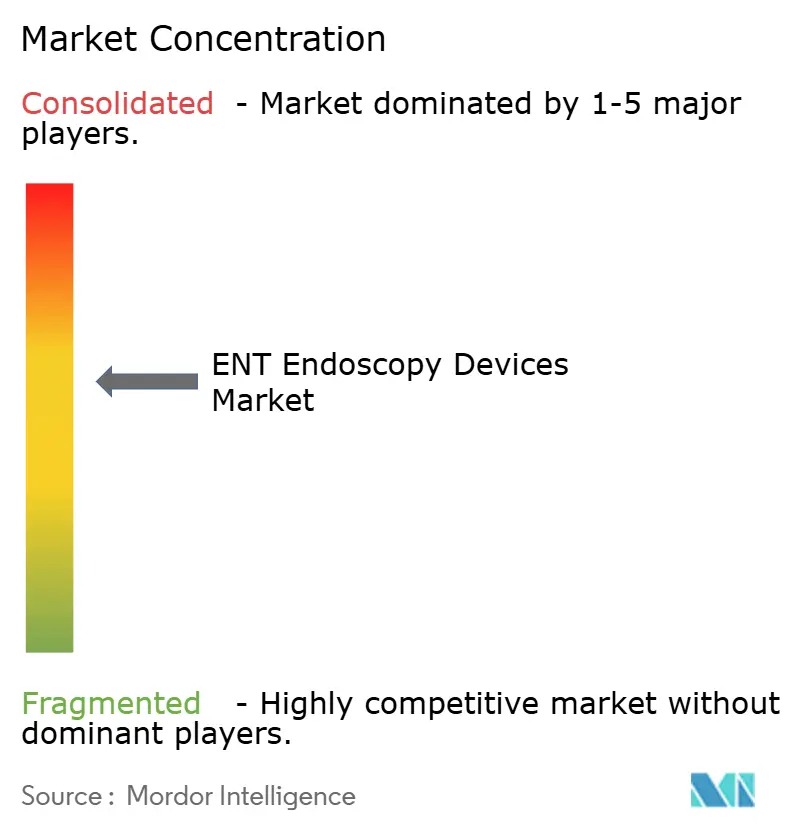
The ENT endoscopy devices market is moderately concentrated at the leading tier. KARL STORZ, Olympus, and Medtronic have established positions in rigid optics, video imaging, and surgical navigation, while other suppliers compete in single-use, flexible, and specialized product areas. Competition is moving from isolated hardware specifications toward connected clinical workflows that combine imaging, navigation, documentation, education, device support, and service continuity over the equipment life cycle.
In June 2026, Medtronic and KARL STORZ announced a collaboration that aligns Medtronic’s Stealth AXiS ENT surgical system with KARL STORZ visualization platforms in the AiBLE ENT ecosystem[3]. The arrangement includes joint medical education and fellowship programs and shows the move toward combined assessment, navigation, and visualization offerings rather than disconnected equipment purchases. KARL STORZ also acquired the medical business of visual collaboration software company T1V in January 2025. Olympus continues to add visualization platforms and distribute robot-assisted endoscopic technologies through its EndoTherapy portfolio. These moves make connected operating-room workflows, clinical data sharing, training, and support across care settings more important competitive factors in the ENT endoscopy devices market.
Ambu and CONMED are developing single-use flexible ENT positions around infection control and recurring purchasing. FUJIFILM is extending its imaging capabilities into respiratory applications, including the EB-710US balloon-less endobronchial ultrasound bronchoscope introduced in May 2026. Chinese manufacturers associated with global distribution networks are reducing image-quality gaps while offering lower-priced products in parts of Asia and EMEA. Regulatory clearance and compliance remain important because they determine launch timing, service obligations, buyer confidence, and the pace at which new systems can reach hospitals and outpatient sites. The competitive space remains open where image-guided sinus navigation, mucosal characterization, and intraoperative documentation need to operate together across both operating rooms and ambulatory settings.
ENT Endoscopy Devices Industry Leaders
-
Medtronic plc
-
Olympus Corporation
-
KARL STORZ SE & Co. KG
-
FUJIFILM Holdings Corporation
-
Stryker Corporation
- *Disclaimer: Major Players sorted in no particular order
ENT Endoscopy Devices Market Companies Covered in this Report
- Aesculap
- Ambu
- ATMOS MedizinTechnik
- B. Braun
- Boston Scientific
- Conmed
- FUJIFILM
- HOYA
- Karl Storz
- Medtronic
- Olympus
- Olympus Vathin
- OPTIM
- Pioneer Healthcare Technologies
- Richard Wolf
- Smiths Group
- Stryker
- XION GmbH
Recent Industry Developments in ENT Endoscopy Devices Market
- June 2026: Medtronic and KARL STORZ announced a strategic collaboration to expand integrated ENT surgical solutions in the United States, aligning Medtronic's FDA-cleared Stealth AXiS ENT surgical system with KARL STORZ visualization platforms within the AiBLE ENT ecosystem, with joint medical education and fellowship programs.
- May 2026: Olympus signed an exclusive global distribution agreement with EndoRobotics Co., Ltd. to distribute robot-assisted endoscopic technologies globally as part of its EndoTherapy portfolio, beginning in the United States.
Global ENT Endoscopy Devices Market Report Scope
As per the scope of the report, ENT endoscopy devices are specialized medical instruments used to visualize, diagnose, and sometimes treat conditions within the ear, nose, and throat (ENT) regions. These devices typically include flexible or rigid endoscopes equipped with light sources and cameras, allowing healthcare providers to examine areas that are difficult to see with the naked eye. They are essential tools in ENT practices for minimally invasive procedures, accurate diagnosis, and effective treatment planning.
The ENT endoscopy devices market is segmented by product type into rigid endoscopes, including rod lens endoscopes, sinus telescopes, otology telescopes, laryngeal telescopes, and pediatric and small-diameter telescopes; flexible endoscopes, including flexible rhino-laryngoscopes, flexible nasopharyngoscopes, flexible laryngoscopes, and flexible otoscopes; video endoscopes and imaging systems, including video rhino-laryngo endoscopes, video laryngoscopes, integrated ENT camera systems, and portable ENT imaging systems; fiberoptic endoscopes; and endoscopic accessories and consumables. By usability, the market is segmented into reusable devices, single-use devices, limited-use devices, and others (hybrid reusable and disposable platforms, and more). By application, the market is segmented into rhinology and nasal examination, laryngology and voice disorders, otology and ear disorders, pediatric and neonatal ENT, airway assessment and swallowing evaluation, and other applications. By end user, the market is segmented into hospitals and academic medical centers, ambulatory surgical centers, ENT specialty clinics, office-based ENT practices, diagnostic imaging centers, and other end users. By geography, the market is segmented into North America, Europe, Asia-Pacific, the Middle East and Africa, and South America. The market report also covers the estimated market sizes and trends for 17 countries across major regions globally. For each segment, the market size and forecast are provided in terms of value (USD).
Segmentation Overview
| Rigid Endoscopes | Rod-Lens Endoscopes |
| Sinus Telescopes | |
| Otology Telescopes | |
| Laryngeal Telescopes | |
| Pediatric and Small-Diameter Telescopes | |
| Flexible Endoscopes | Flexible Rhino-Laryngoscopes |
| Flexible Nasopharyngoscopes | |
| Flexible Laryngoscopes | |
| Flexible Otoscopes | |
| Video Endoscopes and Imaging Systems | Video Rhino-Laryngo Endoscopes |
| Video Laryngoscopes | |
| Integrated ENT Camera Systems | |
| Portable ENT Imaging Systems | |
| Fiberoptic Endoscopes | |
| Endoscopic Accessories and Consumables |
| Reusable Devices |
| Single-Use Devices |
| Limited-Use Devices |
| Others (Hybrid Reusable, Disposable Platforms, and More) |
| Rhinology and Nasal Examination |
| Laryngology and Voice Disorders |
| Otology and Ear Disorders |
| Pediatric and Neonatal ENT |
| Airway Assessment and Swallowing Evaluation |
| Other Applications |
| Hospitals and Academic Medical Centers |
| Ambulatory Surgical Centers |
| ENT Specialty Clinics |
| Office-Based ENT Practices |
| Diagnostic Imaging Centers |
| Other End Users |
| North America | United States |
| Canada | |
| Mexico | |
| Europe | Germany |
| United Kingdom | |
| France | |
| Italy | |
| Spain | |
| Rest of Europe | |
| Asia-Pacific | China |
| Japan | |
| India | |
| Australia | |
| South Korea | |
| Rest of Asia-Pacific | |
| Middle East and Africa | GCC |
| South Africa | |
| Rest of Middle East and Africa | |
| South America | Brazil |
| Argentina | |
| Rest of South America |
| By Product Type | Rigid Endoscopes | Rod-Lens Endoscopes |
| Sinus Telescopes | ||
| Otology Telescopes | ||
| Laryngeal Telescopes | ||
| Pediatric and Small-Diameter Telescopes | ||
| Flexible Endoscopes | Flexible Rhino-Laryngoscopes | |
| Flexible Nasopharyngoscopes | ||
| Flexible Laryngoscopes | ||
| Flexible Otoscopes | ||
| Video Endoscopes and Imaging Systems | Video Rhino-Laryngo Endoscopes | |
| Video Laryngoscopes | ||
| Integrated ENT Camera Systems | ||
| Portable ENT Imaging Systems | ||
| Fiberoptic Endoscopes | ||
| Endoscopic Accessories and Consumables | ||
| By Usability | Reusable Devices | |
| Single-Use Devices | ||
| Limited-Use Devices | ||
| Others (Hybrid Reusable, Disposable Platforms, and More) | ||
| By Application | Rhinology and Nasal Examination | |
| Laryngology and Voice Disorders | ||
| Otology and Ear Disorders | ||
| Pediatric and Neonatal ENT | ||
| Airway Assessment and Swallowing Evaluation | ||
| Other Applications | ||
| By End User | Hospitals and Academic Medical Centers | |
| Ambulatory Surgical Centers | ||
| ENT Specialty Clinics | ||
| Office-Based ENT Practices | ||
| Diagnostic Imaging Centers | ||
| Other End Users | ||
| By Geography | North America | United States |
| Canada | ||
| Mexico | ||
| Europe | Germany | |
| United Kingdom | ||
| France | ||
| Italy | ||
| Spain | ||
| Rest of Europe | ||
| Asia-Pacific | China | |
| Japan | ||
| India | ||
| Australia | ||
| South Korea | ||
| Rest of Asia-Pacific | ||
| Middle East and Africa | GCC | |
| South Africa | ||
| Rest of Middle East and Africa | ||
| South America | Brazil | |
| Argentina | ||
| Rest of South America | ||
Key Questions Answered in the Report
What is the 2026 value of the ENT endoscopy devices market?
The 2026 value is USD 6.36 billion, and it is projected to reach USD 8.82 billion by 2031 at a CAGR of 6.75%.
Which product category has the largest share of ENT endoscopy devices?
Rigid endoscopes held 50.31% of revenue in 2025, supported by their role in sinus and ear surgery.
Which ENT endoscopy device type is growing the fastest?
Flexible endoscopes are projected to grow at a CAGR of 8.58% through 2031, while single-use devices are projected to grow at 9.22%.
Which application accounts for the greatest demand?
Rhinology and nasal examination accounted for 45.14% of revenue in 2025, supported by chronic sinusitis assessment and functional endoscopic sinus surgery.
Which region is growing the fastest for ENT endoscopy devices?
Asia-Pacific is projected to grow at a CAGR of 8.75% through 2031, supported by healthcare investment and rising otology care needs.