
Electrodiagnostic Equipment Market Size and Share
Market Overview
| Study Period | 2020 - 2031 |
|---|---|
| Market Size (2026) | USD 5.07 Billion |
| Market Size (2031) | USD 7.03 Billion |
| Growth Rate (2026 - 2031) | 6.75 % |
| Fastest Growing Market | Asia-Pacific |
| Largest Market | North America |
| Market Concentration | Medium |
Major Players *Disclaimer: Major Players sorted in no particular order Image © Mordor Intelligence. Reuse requires attribution under CC BY 4.0. | |
Electrodiagnostic Equipment Market Analysis by Mordor Intelligence
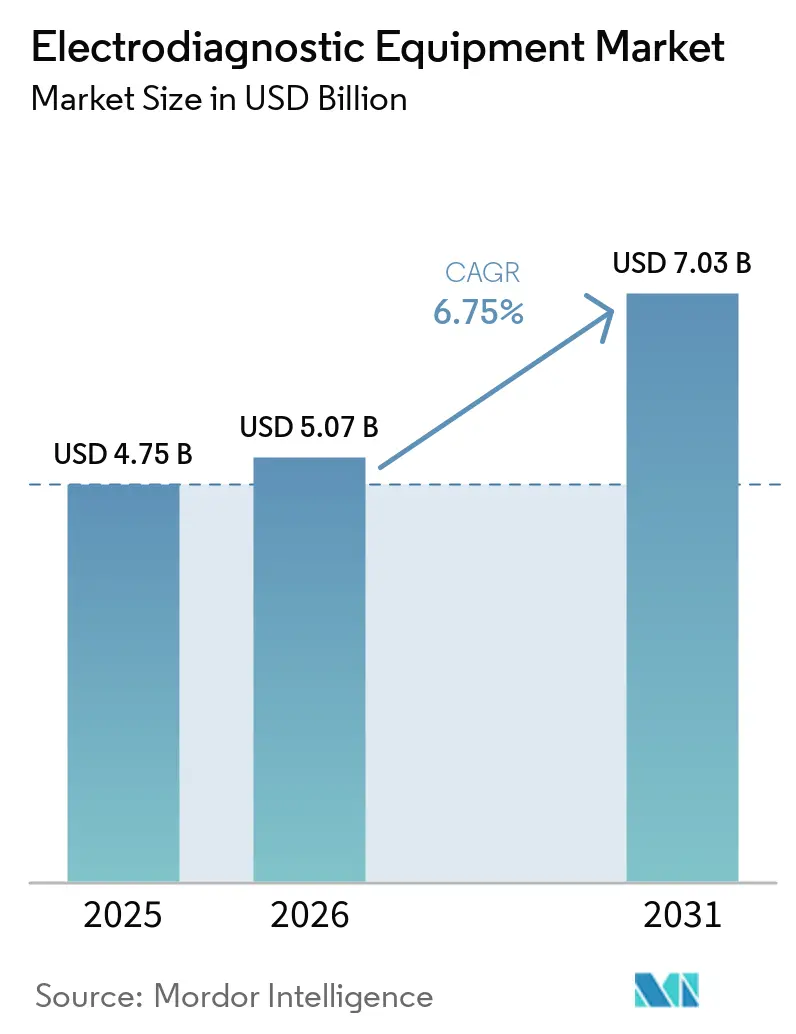
The Electrodiagnostic Equipment Market size is projected to expand from USD 4.75 billion in 2025 and USD 5.07 billion in 2026 to USD 7.03 billion by 2031, registering a CAGR of 6.75% between 2026 to 2031.
The electrodiagnostic equipment market is supported by rising clinical demand for neurological and neuromuscular assessment across more care settings. Neurological conditions affected more than 3 billion people and caused more than 11 million deaths each year, while fewer than 1 in 3 countries had a national neurological policy in 2025. This gap in specialist services supports the use of outpatient, ambulatory, and home-based testing where hospital-centered care cannot meet demand. Competition is shifting toward platforms that combine data acquisition, clinical software, remote review, and carefully governed AI support because acquisition hardware alone does not resolve reporting, specialist-availability, workflow, and compliance needs, and vendors that connect these functions can support capacity expansion more directly in the electrodiagnostic equipment market. The electrodiagnostic equipment market also faces higher compliance and integration requirements, which favor vendors that can support connected workflows and maintain clinical validation.
Key Report Takeaways
- By product type, electrocardiography equipment led with 46.31% revenue share in 2025, while electromyography and nerve-conduction equipment are forecast to expand at a 7.58% CAGR through 2031.
- By modality and form, stationary systems held 57.24% revenue share in 2025, while wearable and patch-based systems are expected to have a CAGR at 10.22% through 2031.
- By application, disease diagnosis accounted for 32.14% revenue share in 2025, while remote and home-based monitoring is expected to advance at a 10.82% CAGR through 2031.
- By end user, hospitals held 53.65% revenue share in 2025, while diagnostic centers are expected to record the highest CAGR at 8.95% through 2031.
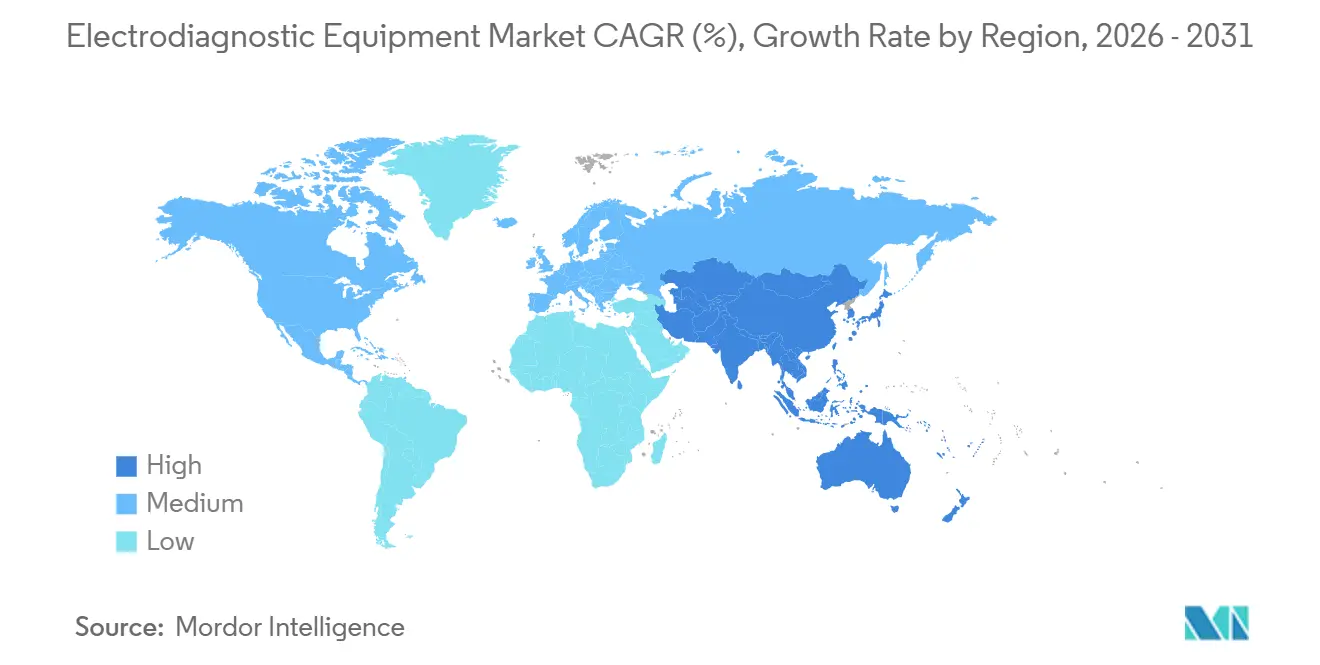
- By geography, North America held 38.61% of revenue in 2025, while Asia-Pacific is forecast to grow at a 9.25% CAGR through 2031.
Note: Market size and forecast figures in this report are generated using Mordor Intelligence’s proprietary estimation framework, updated with the latest available data and insights as of January 2026.
Market Trends and Insights
Drivers Impact Analysis of Electrodiagnostic Equipment Market*
| Driver | (~) % Impact on CAGR Forecast | Geographic Relevance | Impact Timeline |
|---|---|---|---|
| Rising Burden of Neurological and Neuromuscular Disorders | +1.6% | Global | Long term (≥ 4 years) |
| Expansion of Portable and Wireless Testing | +1.2% | North America, Europe, APAC | Medium term (2-4 years) |
| AI-Assisted Signal Interpretation and Workflow Automation | +1.0% | North America, Europe | Medium term (2-4 years) |
| Growth of Outpatient, Rehabilitation, and Home-Based Diagnostics | +0.9% | North America, Europe, APAC | Short term (≤ 2 years) |
| Integration of Neuromuscular Ultrasound With EMG and NCS | +0.5% | North America, Europe | Long term (≥ 4 years) |
| Neurodiagnostic Capacity Expansion in Asia-Pacific | +0.8% | APAC, spill-over to MEA | Medium term (2-4 years) |
| Source: Mordor Intelligence | |||
Rising Burden of Neurological and Neuromuscular Disorders
The rising burden of neurological and neuromuscular disorders is a long-term demand driver for the electrodiagnostic equipment market. Neurological conditions affected more than 40% of the global population in 2025, which represented more than 3 billion people. The same WHO update reported more than 11 million annual deaths from these conditions. Only 32% of Member States had a national neurological policy, which left major gaps in coordinated access to specialist services. Providers in low-specialist-density areas need diagnostic pathways that can extend beyond traditional referral networks. This need supports point-of-care, ambulatory, and other scalable testing models within the electrodiagnostic equipment market. It also shifts purchasing decisions toward tools that can be used by teams outside major specialist centers. Such systems need to preserve clinically useful signal quality while fitting local referral and reporting practices.
AI-Assisted Signal Interpretation and Workflow Automation
AI-assisted interpretation is moving into clinical neurophysiology, but adoption still depends on fit with physician-led workflows. A 2025 randomized controlled trial reported 93.3% sensitivity and 92.0% specificity for the INSPIRE multi-agent AI framework in distinguishing normal from abnormal electrodiagnostic studies. The framework exceeded the base large language model result of 62.6% accuracy in that study. Physician-AI integration did not significantly improve report quality over physician-only interpretation, with an AIGERS score of p=0.32, and clinicians rated workflow efficiency at 2.0 out of 5. The IFCN stated that AI cannot replace expert oversight without appropriate accuracy, safety, quality controls, diverse training data, and continuing performance monitoring[1]. The electrodiagnostic equipment market, therefore, rewards systems that reduce technologist workload while preserving clinician control over final interpretation. Providers need AI functions that fit existing documentation and review processes rather than separate systems that add interface work. This places value on practical implementation as well as reported model performance.
Integration of Neuromuscular Ultrasound With EMG and NCS
Integration of neuromuscular ultrasound with EMG and NCS is changing how specialist clinics evaluate complex neuropathies. A 2025 expert consensus stated that neuromuscular ultrasound should be used when electrodiagnostic testing alone cannot distinguish axonal from demyelinating processes or acquired from hereditary neuropathies. The consensus also identified scanning at least 2 upper-limb nerves as a minimum standard in this setting. This clinical approach makes combined workflows more relevant when clinics select new systems. In January 2026, Natus Medical launched Natus Elite EMG software with concurrent neuromuscular ultrasound and needle-EMG evaluation, together with its Augmented Visual Electromyograph algorithm. The electrodiagnostic equipment market is likely to favor platforms that bring these functions into one clinical interface. Combined workflows can also limit the need to move patients and data between separate testing systems. The benefit is most relevant when clinicians need a timely view of both structural and electrophysiological findings.
Growth of Outpatient, Rehabilitation, and Home-Based Diagnostics
Outpatient, rehabilitation, and home-based testing are expanding the settings that can use electrodiagnostic devices. X-trodes received FDA 510(k) clearance in February 2024 for a dry-electrode patch that acquires EEG, ECG, EOG, and EMG signals without gels or wires. InfoBionic.Ai received FDA clearance in August 2025 for its MoMe ARC 1-Lead Patch for extended remote cardiac monitoring. SmartCardia received FDA clearance in November 2024 for outpatient cardiac telemetry using its 7-lead ECG patch and cloud platform. These clearances strengthen the clinical basis for monitoring beyond hospital departments. The electrodiagnostic equipment market has a clearer opportunity where vendors can pair portable hardware with billing support, remote review, and reliable data handling. Portable devices alone do not resolve the operational needs of distributed care. Providers also need reliable clinical escalation, secure transmission, and access to qualified reviewers.
Restraints Impact Analysis of Electrodiagnostic Equipment Market*
| Restraint | (~) % Impact on CAGR Forecast | Geographic Relevance | Impact Timeline |
|---|---|---|---|
| High Total Cost of Ownership for Advanced Systems | -0.7% | Global, disproportionate in emerging markets | Long term (≥ 4 years) |
| Shortage of Trained Neurophysiology Professionals | -0.5% | Global, acute in rural and low-income regions | Long term (≥ 4 years) |
| Signal Artifacts and Low Spatial Resolution in Wearable Testing | -0.4% | Global | Medium term (2-4 years) |
| Interoperability, Cybersecurity, and Data-Governance Complexity | -0.3% | North America and the EU are expanding globally | Medium term (2-4 years) |
| Source: Mordor Intelligence | |||
High Total Cost of Ownership for Advanced Systems
High total cost of ownership continues to slow purchases of advanced multi-modality systems in cost-constrained health systems. The cost includes the initial system, calibration, maintenance contracts, electrode consumables, and periodic software licenses. Subscription pricing for AI-enabled software can shift spending from capital budgets to multi-year operating budgets. This model can be difficult for public procurement systems, particularly where neurology is not a priority department. FDA 510(k) requirements and the EU Medical Device Regulation add regulatory costs that vendors must recover during a product’s commercial life. The electrodiagnostic equipment market, therefore, retains a financing barrier in settings where procedure reimbursement remains low relative to the required equipment investment.
Shortage of Trained Neurophysiology Professionals
The shortage of trained neurophysiology professionals limits throughput, where new equipment is intended to increase testing volume. Neurodiagnostic technology programs in the United States reported 100% job placement for recent graduates. Program completions grew at 10% to 15% each year, while job openings continued to exceed available supply in rural and secondary-market facilities. ASET has introduced career-ladder and apprenticeship frameworks to expand the workforce pipeline. Specialty allied-health training requires 3 to 4 years before a technologist reaches independent practice. This constraint favors platforms that shorten setup time, automate quality checks, and require less specialized operator support in the electrodiagnostic equipment market. The need is particularly clear for long-term EEG monitoring, intraoperative monitoring, and combined NMUS-EMG assessment. These modalities have demanding workflows and steep learning requirements for new operators.
*Our forecasts treat driver/restraint impacts as directional, not additive. The impact forecasts reflect baseline growth, mix effects, and variable interactions.
Electrodiagnostic Equipment Market Segment Analysis
By Product Type:
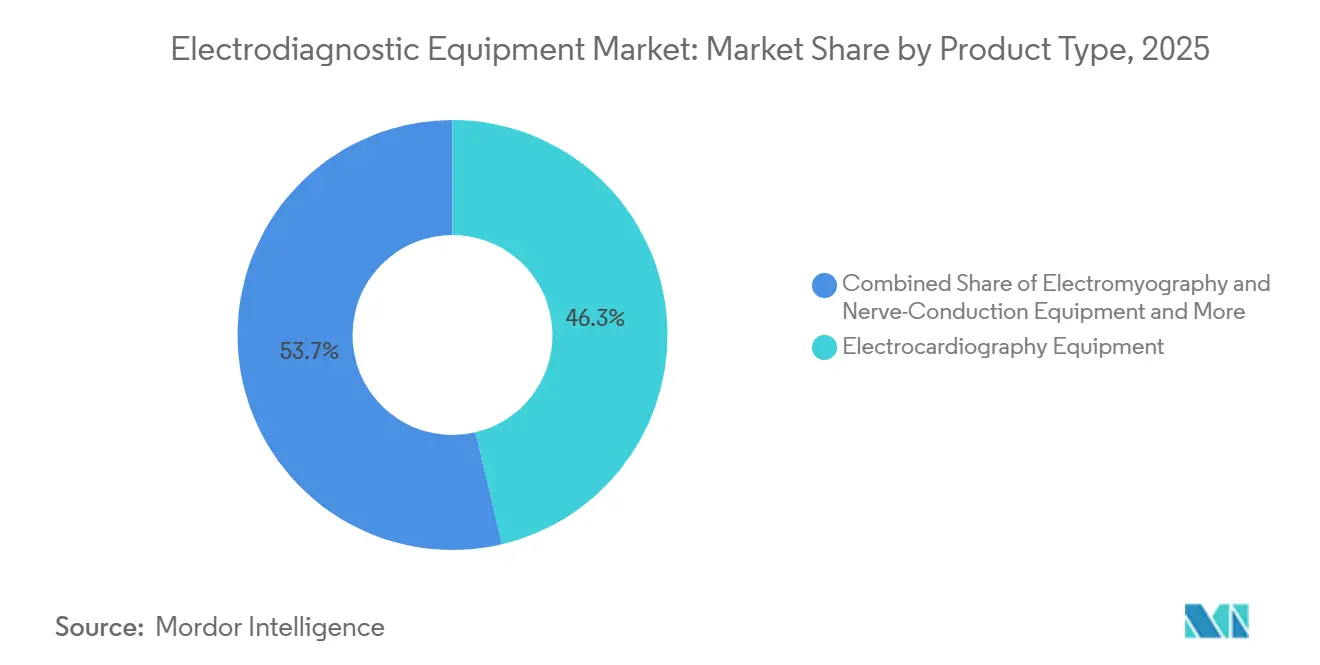
ECG Dominates, EMG-NCS Gains Clinical UrgencyElectrocardiography equipment held 46.31% of the electrodiagnostic equipment market share by product type in 2025. Its position reflected broad use in cardiology, primary care, emergency medicine, and ambulatory monitoring. Electroencephalography equipment was the second-largest product category, supported by seizure-disorder assessment and use in intraoperative and long-term monitoring. Electromyography and nerve-conduction equipment were the fastest-growing product categories, with a projected CAGR of 7.58% through 2031. Demand came from neuromuscular disorders, including diabetic neuropathy, ALS, and carpal tunnel syndrome. Electroretinography and electrogastrography remained specialty categories used in ophthalmology and gastric motility assessment.
Combined neuromuscular ultrasound and EMG systems can carry higher average selling prices than standalone EMG systems. This changes the revenue mix within the product category as clinics seek integrated clinical workflows. The electrodiagnostic equipment industry is also seeing ECG platforms differentiate through analytics rather than hardware alone. Philips introduced a cardiac workstation in 2024 that incorporated AI-enabled ECG workflow capabilities and third-party FDA-cleared algorithms, including Anumana’s low-ejection-fraction detection[2]. This approach connects diagnostic review, data management, and clinical decision support. It also places greater value on software that works within established clinical processes.

By Modality and Form:
Stationary Holds Position as Wearables Redefine the PerimeterStationary systems accounted for 57.24% of the electrodiagnostic equipment market size by modality and form in 2025. Hospital-grade EMG, EEG, and multi-parameter ECG systems retained a large installed base in high-volume clinical settings. Portable and handheld devices are gaining use in ambulatory surgical centers and outpatient clinics where space and workflow speed matter. Wearable and patch-based systems were the fastest-growing category, with a projected CAGR of 10.22% through 2031. FDA clearances for medical-grade patches have supported testing across several electrophysiological modalities. Integrated multi-modality systems also appeal to labs that want one interface for EMG, EEG, and evoked-potential acquisition.
Wearable testing can face signal fidelity issues during long-term ambulatory use. Motion artifacts and changes in electrode impedance remain relevant for patients with high levels of movement. Developers are investing in AI-based artifact rejection as a standard platform feature. Battery life and wireless data-security requirements also affect the suitability of wearable systems. First-generation wearable EEG platforms still require stronger clinical validation for real-time artifact rejection. The electrodiagnostic equipment industry is therefore competing on the ability to provide usable signals and secure data transfer outside controlled clinical settings.
By Application:
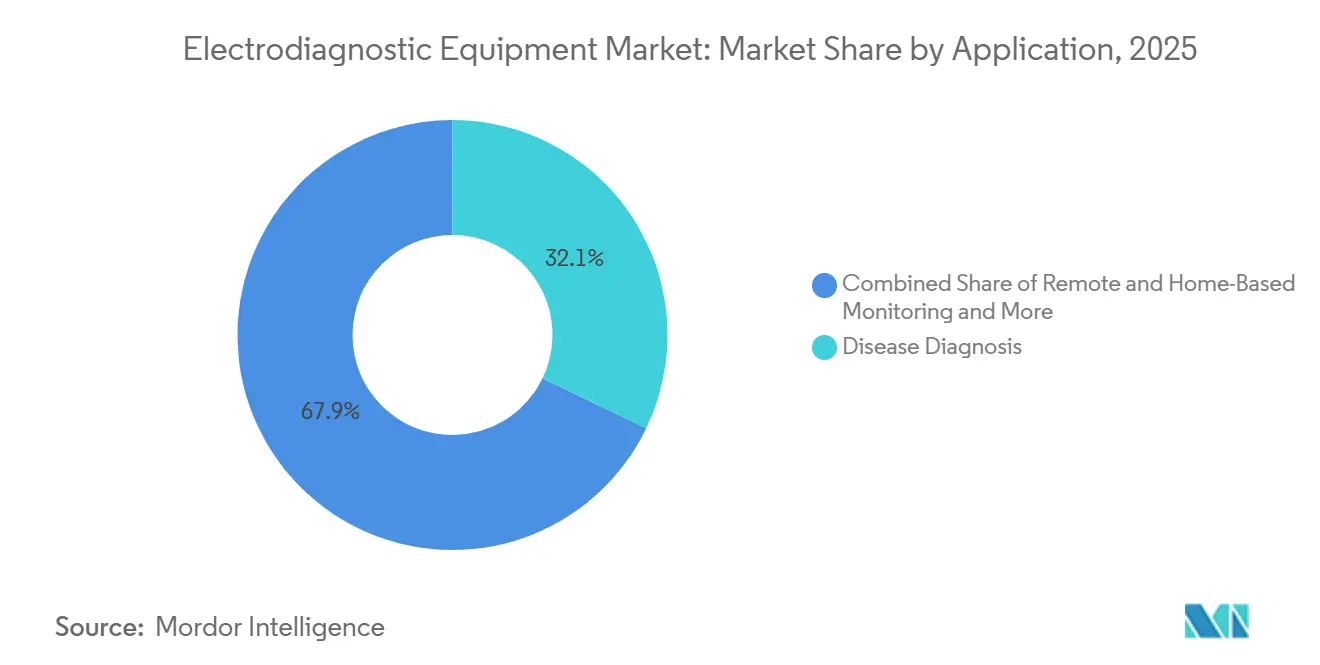
Diagnosis Anchors Revenue as Remote Monitoring SurgesDisease diagnosis accounted for 32.14% of application revenue in 2025. The share reflected the use of electrodiagnostic procedures across neurology, cardiology, and gastroenterology for primary and differential diagnosis. Trauma and surgery, anesthesia monitoring, and intraoperative neurophysiological monitoring were concentrated in institutional settings with high unit values. Sleep monitoring is also expanding as polysomnography networks grow and home sleep tests with EEG channels gain payer acceptance. Remote and home-based monitoring was the fastest-growing application, advancing at a 10.82% CAGR through 2031. Rehabilitation and physical therapy uses of EMG benefit from neuromuscular re-education protocols that incorporate biofeedback.
Application boundaries are extending from planned outpatient procedures to emergency and critical-care settings. In May 2025, Natus Medical commercially launched BrainWatch, a point-of-care EEG solution for critical-care settings that uses FDA-cleared Persyst seizure-detection algorithms. The launch illustrates the role of rapid EEG assessment in settings that need timely clinical review. It also supports the use of connected systems that can provide expert review when local specialists are unavailable. The electrodiagnostic equipment market can benefit as providers adopt workflows that bring diagnostic data closer to urgent care decisions. This shift still requires systems that fit clinical governance and operational processes.
By End User:
Hospitals Lead, Diagnostic Centers AccelerateHospitals captured 53.65% of end-user revenue in 2025. Their lead reflected the concentration of IONM, long-term EEG monitoring, multi-channel EMG, and other high-complexity diagnostics. Clinics and physician offices were the second-largest end-user category. They increasingly use portable ECG, handheld EMG, and ambulatory EEG systems as outpatient reimbursement expands. Diagnostic centers were the fastest-growing end-user group, with a projected CAGR of 8.95% through 2031. Rehabilitation centers also have potential for EMG-based neuromuscular assessment and biofeedback monitoring.
Ambulatory surgical centers are adding electrodiagnostic capabilities for nerve-block guidance, intraoperative monitoring, and post-procedural neurofunction assessment. Hospital systems are moving routine electrodiagnostic procedures to outpatient and diagnostic-center settings. This can moderate hospital volume growth while extending demand for portable and mid-tier stationary systems. In April 2025, Nihon Kohden introduced the second-generation Live View Panel Pro, which connects remote EEG technologists to multiple facilities at the same time[3]. The product supports multi-site diagnostic-center operations that use a limited specialist workforce across dispersed locations. The electrodiagnostic equipment market is adapting to a care model in which testing capacity is no longer centered only in hospitals. This model depends on connected systems that allow specialists to review data across locations without duplicating local expertise. It also makes responsiveness and system interoperability important in purchasing decisions.
Geography Analysis
North America Electrodiagnostic Equipment Market
North America held 38.61% of the electrodiagnostic equipment market share in 2025. The region benefited from dense neurology and cardiology infrastructure, established ambulatory-monitoring reimbursement, and early use of AI-assisted platforms. In the United States, premium AI-integrated systems expanded through health-system consolidation and value-based care contracts that support earlier diagnosis. Standard stationary systems faced more normal replacement cycles as installed bases reached mid-life. Canada and Mexico grew closer to the regional average, while Mexico’s private hospital sector supported EMG and EEG adoption as urban neurology coverage improved.
Europe and APAC Electrodiagnostic Equipment Market
Europe was the second-largest geography, with Germany, the United Kingdom, and France as major markets. German statutory insurers supported neurodiagnostic reimbursement, while NHS capital-refresh programs sustained demand in electrophysiology departments. The EU Medical Device Regulation extended market-access timelines for Class IIa and IIb electrodiagnostic devices. This raised the burden for smaller vendors that did not have established notified-body relationships. Asia-Pacific was the fastest-growing geography at a CAGR of 9.25% through 2031, and the electrodiagnostic equipment market is supported there by varied national demand patterns rather than one common purchasing model. China’s domestic ECG and EEG manufacturers increased price competition in ASEAN markets, although high-complexity multi-modal systems remained a premium tier. This split creates pressure for international vendors in lower-acuity categories. It also leaves scope for systems with broader clinical functions and specialized workflow support.
APAC, MEA and South America Electrodiagnostic Equipment Market
Japan and South Korea sustained high per-capita use of electrodiagnostic testing, supported by aging populations and demand for EMG and NCS. Australia’s telehealth infrastructure supported remote neurophysiology services in low-density areas. GCC countries invested in hospital-based neurology and cardiology units under healthcare diversification plans, supporting demand for premium stationary systems. South Africa’s private hospital networks were key purchasers in the MEA region, while public procurement remained constrained by budget cycles. Brazil led South America through its large private hospital sector and growing diagnostic-center network, while Argentina’s macroeconomic instability constrained capital-equipment purchases. These markets differ in purchasing capacity, local service coverage, and replacement cycles. Vendors need distribution and support models that reflect these differences.
Competitive Landscape
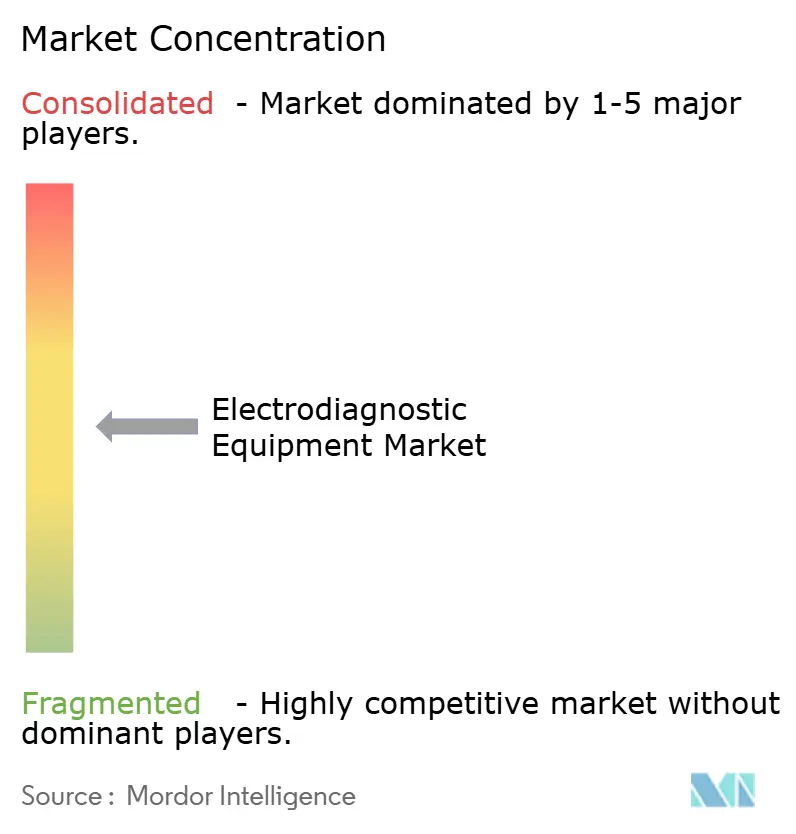
The electrodiagnostic equipment market is moderately concentrated in premium systems and fragmented across mid-market and specialty categories. Integrated vendors compete across ECG, EEG, and EMG, while single-modality specialists and regional manufacturers serve narrower needs. ECG procurement is more concentrated among established global medtech companies. Wearable and patch-based testing has a wider group of entrants competing on clinical validation and direct-to-payer models. AI-assisted interpretation, cloud connectivity, remote review, and EHR integration are becoming key procurement requirements. These capabilities move competition beyond hardware specifications toward complete clinical workflows. They also increase the importance of customer support, data integration, and evidence that software can be used safely in daily practice. Smaller vendors with proprietary data formats can face a higher compliance burden as connected systems become more common.
The electrodiagnostic equipment market also has opportunities in compact combined NMUS-EMG/NCS platforms for community neurology practices. In this part of the electrodiagnostic equipment market, systems designed for tertiary laboratories may not align with the space, staffing, and workflow needs of smaller clinics. Pediatric and neonatal applications remain underserved because adult-oriented systems may not meet all signal-quality and patient-safety needs. Integration of device-level signal data with longitudinal electronic health records is another area where providers need more practical solutions. Vendors with device and data-platform capabilities can use this need to differentiate their offerings.
Wearable entrants use dry-electrode technology and wireless chipsets to reduce the cost of ambulatory monitoring. Their products must still meet clinical evidence and data-governance expectations. The IFCN guidance on AI use provides a useful clinical standard for distinguishing evidence-based platforms from consumer-focused products. In March 2026, Natus Medical announced the global launch of autoSCORE, an FDA 510(k)-cleared and CE-marked tool for comprehensive EEG interpretation across routine EEG, long-term monitoring, and ambulatory EEG studies. The tool was trained on 30,000 expertly labeled EEG recordings and is available through Natus NeuroWorks software. The electrodiagnostic equipment market will remain shaped by vendors that can show clinical utility without treating AI as a substitute for clinical oversight. This balance is important because providers need support for staffing constraints without weakening quality control. Platforms that integrate validated assistance into routine review are better positioned than systems that rely only on automation claims.
Electrodiagnostic Equipment Industry Leaders
-
Natus Medical Incorporated
-
Nihon Kohden Corporation
-
Cadwell Industries, Inc.
-
Compumedics Limited
-
Medtronic plc
- *Disclaimer: Major Players sorted in no particular order
Electrodiagnostic Equipment Market Companies Covered in this Report
- ADInstruments Pty Ltd.
- Allengers
- ANT Neuro B.V.
- Bittium Corporation
- Brain Products GmbH
- Cadwell
- Compumedics
- Delsys Inc.
- EB Neuro
- Electrical Geodesics, Inc.
- g.tec medical engineering
- GE HealthCare Technologies Inc.
- Koninklijke Philips
- Lifelines Neurodiagnostic Systems, Inc.
- Medtronic
- Micromed S.p.A.
- Natus Medical
- Neurosoft
- NeuroWave Systems, Inc.
- Nihon Kohden
- Noraxon U.S.A. Inc.
- Siemens Healthineers
Recent Industry Developments in Electrodiagnostic Equipment Market
- March 2026: Natus Medical Incorporated announced the global launch of autoSCORE, the first AI model cleared for automatic, comprehensive clinical EEG interpretation across routine EEG, long-term monitoring (LTM), and ambulatory EEG studies.
- January 2026: Natus Medical launched the Augmented Visual Electromyograph (AVEMG) as the headline innovation of its updated Natus Elite EMG software. AVEMG applies a Natus-exclusive algorithm to quantify needle-EMG signal characteristics online while preserving the traditional auditory-based workflow, supplementing subjective interpretation with objective visual plots.
Global Electrodiagnostic Equipment Market Report Scope
As per the scope of the report, electrodiagnostic equipment refers to medical devices used to assess and diagnose the function of the nervous system and muscles by recording electrical activity. This equipment includes tools such as electromyography (EMG) machines, nerve conduction study devices, and other related instruments that measure electrical signals generated by nerves and muscles to identify abnormalities or nerve damage.
The electrodiagnostic equipment market is segmented by product type into electrocardiography equipment, electroencephalography equipment, electromyography and nerve conduction equipment, electroretinography equipment, electrogastrography equipment, and other electrodiagnostic equipment. By modality and form factor, the market is segmented into stationary systems, portable systems, handheld systems, wearable and patch-based systems, and integrated multimodality systems. By application, the market is segmented into disease diagnosis, trauma and surgery, anesthesia monitoring, sleep monitoring, intraoperative neurophysiological monitoring, rehabilitation and physical therapy, remote and home-based monitoring, and other applications. By end user, the market is segmented into hospitals, clinics and physician offices, diagnostic centers, rehabilitation centers, ambulatory surgical centers, and other end users. By geography, the market is segmented into North America, Europe, Asia-Pacific, the Middle East and Africa, and South America. The market report also covers the estimated market sizes and trends for 17 countries across major regions globally. For each segment, the market size and forecast are provided in terms of value (USD).
Segmentation Overview
| Electrocardiography Equipment |
| Electroencephalography Equipment |
| Electromyography and Nerve-Conduction Equipment |
| Electroretinography Equipment |
| Electrogastrography Equipment |
| Other Electro-Diagnostic Equipment |
| Stationary Systems |
| Portable Systems |
| Handheld Systems |
| Wearable and Patch-Based Systems |
| Integrated Multi-Modality Systems |
| Disease Diagnosis |
| Trauma and Surgery |
| Anesthesia Monitoring |
| Sleep Monitoring |
| Intraoperative Neurophysiological Monitoring |
| Rehabilitation and Physical Therapy |
| Remote and Home-Based Monitoring |
| Other Applications |
| Hospitals |
| Clinics and Physician Offices |
| Diagnostic Centers |
| Rehabilitation Centers |
| Ambulatory Surgical Centers |
| Other End Users |
| North America | United States |
| Canada | |
| Mexico | |
| Europe | Germany |
| United Kingdom | |
| France | |
| Italy | |
| Spain | |
| Rest of Europe | |
| Asia-Pacific | China |
| Japan | |
| India | |
| Australia | |
| South Korea | |
| Rest of Asia-Pacific | |
| Middle East and Africa | GCC |
| South Africa | |
| Rest of Middle East and Africa | |
| South America | Brazil |
| Argentina | |
| Rest of South America |
| By Product Type | Electrocardiography Equipment | |
| Electroencephalography Equipment | ||
| Electromyography and Nerve-Conduction Equipment | ||
| Electroretinography Equipment | ||
| Electrogastrography Equipment | ||
| Other Electro-Diagnostic Equipment | ||
| By Modality and Form | Stationary Systems | |
| Portable Systems | ||
| Handheld Systems | ||
| Wearable and Patch-Based Systems | ||
| Integrated Multi-Modality Systems | ||
| By Application | Disease Diagnosis | |
| Trauma and Surgery | ||
| Anesthesia Monitoring | ||
| Sleep Monitoring | ||
| Intraoperative Neurophysiological Monitoring | ||
| Rehabilitation and Physical Therapy | ||
| Remote and Home-Based Monitoring | ||
| Other Applications | ||
| By End User | Hospitals | |
| Clinics and Physician Offices | ||
| Diagnostic Centers | ||
| Rehabilitation Centers | ||
| Ambulatory Surgical Centers | ||
| Other End Users | ||
| By Geography | North America | United States |
| Canada | ||
| Mexico | ||
| Europe | Germany | |
| United Kingdom | ||
| France | ||
| Italy | ||
| Spain | ||
| Rest of Europe | ||
| Asia-Pacific | China | |
| Japan | ||
| India | ||
| Australia | ||
| South Korea | ||
| Rest of Asia-Pacific | ||
| Middle East and Africa | GCC | |
| South Africa | ||
| Rest of Middle East and Africa | ||
| South America | Brazil | |
| Argentina | ||
| Rest of South America | ||
Key Questions Answered in the Report
What is the projected size of the electrodiagnostic equipment market by 2031?
The electrodiagnostic equipment market is projected to reach USD 7.03 billion by 2031, from USD 5.07 billion in 2026, at a 6.75% CAGR.
Which product category leads electrodiagnostic equipment revenue?
Electrocardiography equipment led product-type revenue with a 46.31% share in 2025.
Which electrodiagnostic equipment modality is growing fastest?
Wearable and patch-based systems are forecast to grow at a 10.22% CAGR through 2031.
Which application is expanding fastest for electrodiagnostic systems?
Remote and home-based monitoring is forecast to advance at a 10.82% CAGR through 2031.
Which end user is expected to grow fastest?
Diagnostic centers are projected to grow at an 8.95% CAGR through 2031.
Which region is forecast to grow fastest?
Asia-Pacific is forecast to grow at a 9.25% CAGR through 2031.