
Egg Yolk Oil Market Size and Share
Market Overview
| Study Period | 2021 - 2031 |
|---|---|
| Market Size (2026) | USD 344.71 Million |
| Market Size (2031) | USD 448.68 Million |
| Growth Rate (2026 - 2031) | 5.41 % |
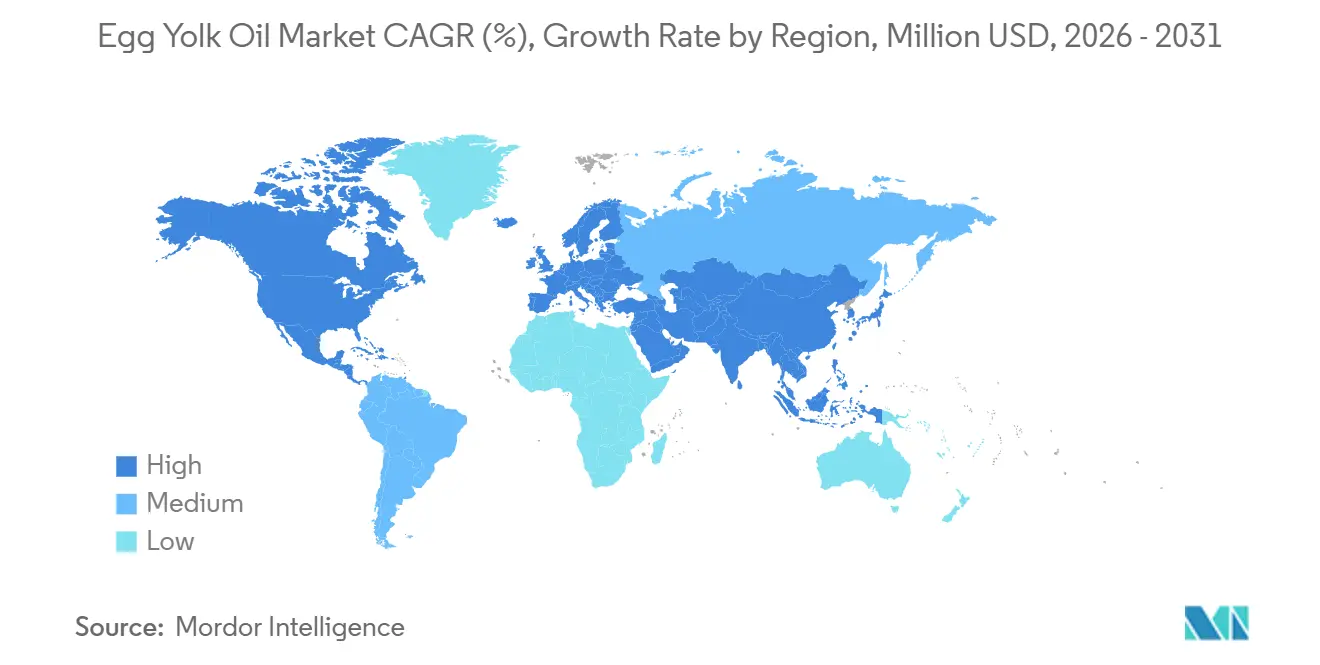
| Fastest Growing Market | North America |
| Largest Market | Asia-Pacific |
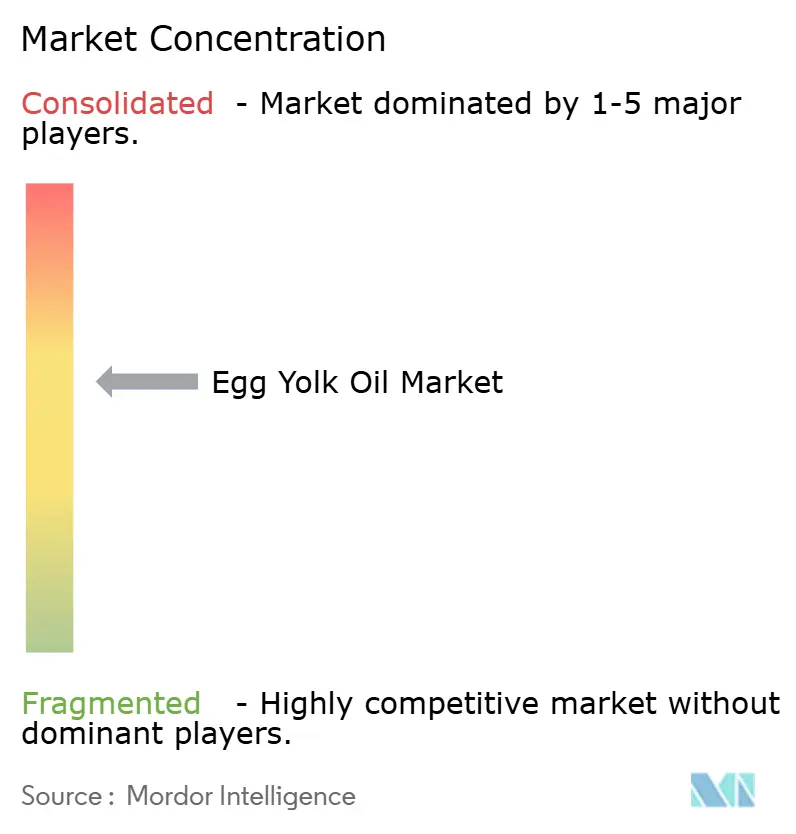
| Market Concentration | Medium |
Major Players *Disclaimer: Major Players sorted in no particular order Image © Mordor Intelligence. Reuse requires attribution under CC BY 4.0. | |
Egg Yolk Oil Market Analysis by Mordor Intelligence
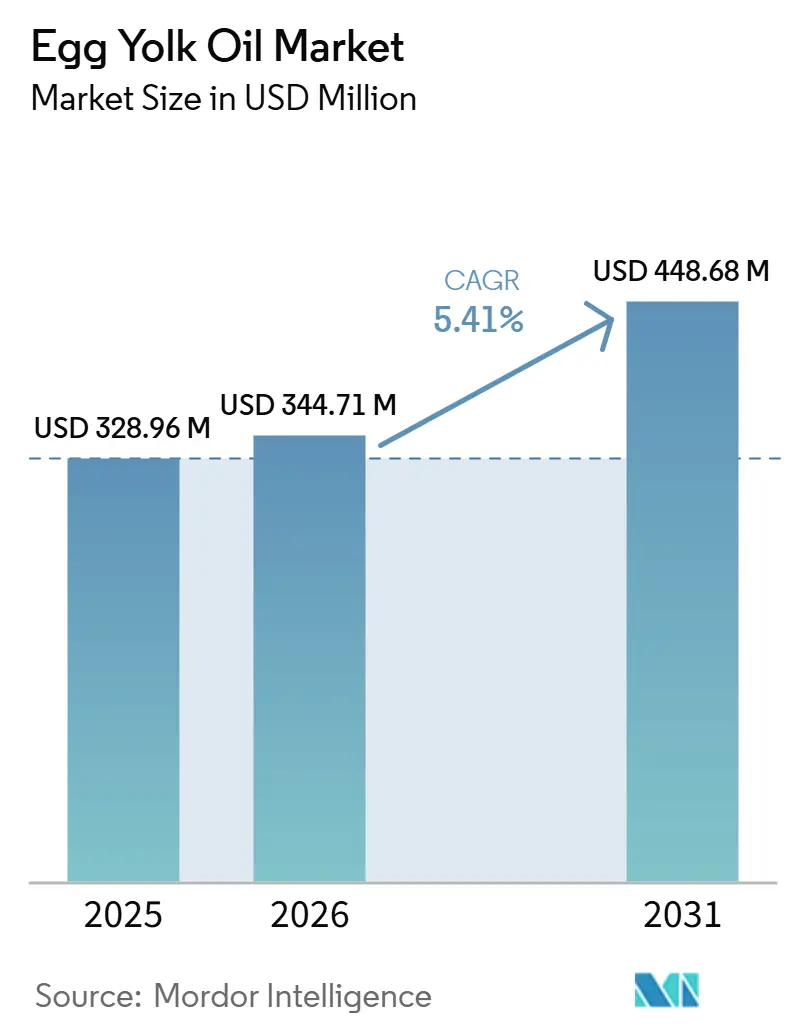
The Egg yolk oil market size is projected to be USD 328.96 million in 2025, USD 344.71 million in 2026, and reach USD 448.68 million by 2031, growing at a CAGR of 5.41% from 2026 to 2031. The Egg yolk oil market is being shaped by cleaner-label cosmetic formulations, wider use of egg phospholipids in delivery systems, and demand for natural ingredients in supplements. These uses create different quality requirements, which favor suppliers able to provide traceable material for cosmetics, nutrition, and pharmaceutical applications. Recurring highly pathogenic avian influenza outbreaks keep raw egg supply and prices uncertain, so processors have stronger incentives to improve extraction yields and diversify sourcing. High-purity phospholipids can generate far more value than cosmetic-grade oil, which makes pharmaceutical and liposomal uses important even when volumes are smaller. The Egg yolk oil market, therefore, depends on both dependable egg supplies and the ability to meet rising purity, documentation, and allergen-labeling requirements.
Key Report Takeaways
- By product type, hen egg yolk oil held 86.51% revenue share in 2025, while specialty egg yolk oils are forecast to grow at a 6.46% CAGR through 2031.
- By form, liquid held 73.62% revenue share in 2025, while powder is forecast to grow at a 7.11% CAGR through 2031.
- By nature, conventional egg yolk oil held 92.51% revenue share in 2025, while organic is forecast to grow at a 6.88% CAGR through 2031.
- By distribution channel, industrial held 79.13% revenue share in 2025, while retail is forecast to grow at a 7.51% CAGR through 2031.
- By geography, Asia-Pacific held 39.9% revenue share in 2025, while North America is forecast to grow at a 6.98% CAGR through 2031.
Note: Market size and forecast figures in this report are generated using Mordor Intelligence’s proprietary estimation framework, updated with the latest available data and insights as of January 2026.
Market Trends and Insights
Drivers Impact Analysis of Egg Yolk Oil Market*
| Driver | (~) % Impact on CAGR Forecast | Geographic Relevance | Impact Timeline |
|---|---|---|---|
| Growth in clean-label personal care ingredients | +1.2% | Global, with North America and Europe leading formulation shifts | Medium term (2-4 years) |
| Expansion of egg yolk phospholipid-based nutraceutical delivery | +1.0% | Global, the Asia-Pacific has the fastest adoption of liposomal supplements | Long term (≥ 4 years) |
| Growing demand for natural bioactive ingredients in cosmetics | +0.9% | Global, East Asia, and Europe are driving premium formulation demand | Medium term (2-4 years) |
| Increasing demand for nutraceutical and functional health ingredients | +0.8% | North America, Europe, and the Asia-Pacific | Medium term (2-4 years) |
| Increasing demand for natural hair and scalp care solutions | +0.7% | Asia-Pacific core; spillover to North America and the Middle East and Africa | Medium term (2-4 years) |
| Advancements in egg yolk oil extraction technologies | +0.6% | The Asia-Pacific and Europe; early-stage adoption in South America | Long term (≥ 4 years) |
| Source: Mordor Intelligence | |||
Growth in clean-label personal care ingredients
The shift toward ingredient transparency in personal care is now embedded in formulator strategy as brands reformulate away from synthetic emollients under tightening substance restrictions. EU Cosmetics Regulation (EC) No. 1223/2009 absorbed new amendments in early 2025, which added nanomaterial prohibitions and restricted several conventional cosmetic actives, effective February 2025, with full market withdrawal deadlines through November 2025, that redirected attention toward naturally derived lipids such as natural egg oil for cosmetics, which carry no REACH restriction concerns. A peer-reviewed overview in Frontiers in Nutrition confirmed that egg yolk lecithin forms bilayer vesicles structurally equivalent to human cell membranes, enabling dermal penetration of active compounds that synthetic alternatives cannot replicate, a functional credential that positions the ingredient as a regulatory-safe bioactive emollient in a single formulation component. The compliance advantage of egg-derived lipids is a structural tailwind embedded in a regulatory trajectory rather than a temporary consumer preference cycle.
Expansion of egg yolk phospholipid-based nutraceutical delivery
The driver frequently underweighted in market commentary is that pharmaceutical-grade egg yolk phospholipid demand is increasingly pulled by liposomal and LNP delivery formats, which require the high phosphatidylcholine purity that only egg-derived phospholipids reliably supply at injectable grades. A January 2026 review in Food Science (Liu et al., 47(2): 386–397) formally documented that egg yolk lecithin outperforms soy lecithin in liposome formation quality, neuroprotective bioactivity, and hepatoprotective function, strengthening the science basis for egg-sourced materials in clinical nutrition and advanced supplement formats. VAV Life Sciences' pharmaceutical-grade egg phospholipids, produced at its EU cGMP-certified facility, carry GRAS approval for preterm infant formula, a dual-channel qualification spanning pharmaceutical and functional food that soy-derived alternatives have not matched. As nutraceutical brands integrate liposomal delivery to justify premium pricing, egg yolk phospholipid procurement in this channel will increasingly follow pharmaceutical-grade specification requirements rather than commodity standards.
Advancements in egg yolk oil extraction technologies
Extraction technology is transforming the cost and quality profile of egg yolk oil in ways not yet fully reflected in commercial positioning. A 2025 study in Food Bioscience demonstrated that integrated enzymatic and supercritical CO₂ processing yields glycerylphosphorylcholine (GPC)-enriched defatted egg yolk powder without the solvent residue concerns of conventional hexane or chloroform extraction, directly addressing pharmaceutical and premium cosmetic buyer purity requirements[1]Source: Jiaxian Liu, “Advances in Research on Egg Yolk Lecithin: Extraction, Identification, Bioactivities and Applications,” Food Science, doi.org.. A 2024 comparative study in Journal of Food Science and Technology (Su et al., 61(11): 2111–2120) confirmed that solvent choice materially affects the phospholipid composition and functional retention of extracted lipid fractions, providing processors a technically defensible route to differentiate product grades for cosmetic versus pharmaceutical buyers. A 2024 MDPI Foods study showed that hexane:isopropanol extraction simultaneously preserves functional protein properties in defatted egg yolk powder, enabling dual-stream economics, lipid and protein value recovery from one input, which could meaningfully reduce per-unit production costs for processors who integrate this approach.
Increasing demand for natural hair and scalp care solutions
Egg yolk oil's convergence of phospholipids, triglycerides, and fat-soluble vitamins A and D makes it a structurally superior haircare active compared with silicone-based conditioning alternatives, and its commercial viability beyond industrial B2B channels is validated by VAV Life Sciences' EYOVA, self-described as the world's first egg-oil-based hair oil brand achieving retail positioning on scalp health credentials. South Korean company JS Beauty showcased proprietary egg yolk oil extraction technology at Egg Tech Korea 2025 with a "global-first" commercialization strategy, since establishing distribution agreements in Saudi Arabia, Australia, Canada, Hong Kong, and Malaysia, a geographic arc that mirrors the fastest-growing personal care markets globally. This channel-building indicates that haircare growth extends well beyond established formulation hubs in Japan and Europe, with meaningful expansion now underway across Middle Eastern and Southeast Asian markets.
Restraints Impact Analysis of Egg Yolk Oil Market*
| Restraint | (~) % Impact on CAGR Forecast | Geographic Relevance | Impact Timeline |
|---|---|---|---|
| Raw egg price volatility driven by HPAI outbreaks | -0.5% | North America primarily; secondary impact in Europe, and the Asia-Pacific | Short term (≤ 2 years) |
| High extraction and purification costs for pharmaceutical grades | -0.4% | Global; most acute for entrants in the Asia-Pacific and South America | Long term (≥ 4 years) |
| Egg-allergen labeling and product-approval requirements | -0.3% | North America and Europe; spillover to export-sensitive markets | Short term (≤ 2 years) |
| Feed-input volatility and captive supplier concentration | -0.3% | The Asia-Pacific core; North America's concentrated production structure | Medium term (2-4 years) |
| Source: Mordor Intelligence | |||
Raw egg price volatility
The structural vulnerability of the egg yolk oil supply chain became explicit during the 2024–2025 HPAI cycle. A wave of HPAI outbreaks from mid-October 2024 through early March 2025 resulted in the depopulation of 50.7 million egg-laying hens in the United States, according to the USDA Economic Research Service, coinciding with peak holiday baking demand and contributing to both wholesale and retail egg prices surging to all-time highs[2]Source: “Retail Egg Prices Fall, Following Declining Wholesale Prices,” U.S. Department of Agriculture Economic Research Service, ers.usda.gov.. The U.S. Bureau of Labor Statistics Consumer Price Index recorded a 53% year-over-year increase in retail egg prices from January 2024 to January 2025, with the national average reaching USD 6.23 per dozen in March 2025, a direct feedstock cost shock for processors. The Federal Reserve Bank of St. Louis documented that over 168 million egg-laying hens have been killed since 2022, and that egg demand is characteristically inelastic, meaning processors cannot easily pass input cost increases to price-sensitive industrial buyers[3]Source: “The Market for Eggs: How Prices Are Hatched,” Federal Reserve Bank of St. Louis, stlouisfed.org.. A less-discussed embedded restraint is that large concentrated production complexes, the same scale that enables cost-efficient processing, create systemic HPAI vulnerability, since a single positive detection triggers full complex depopulation under USDA biosecurity protocols, a structural risk unlikely to resolve within the forecast horizon.
Egg-allergen labelling and product-approval requirements
Labeling compliance obligations for egg-derived products expanded meaningfully following the FDA's January 2025 finalization of its Food Allergen Labeling Guidance, Edition 5. The guidance extended the definition of "eggs" as a major allergen under FALCPA to include eggs from ducks, geese, quail, and other fowl, not just chickens, with a requirement that non-chicken egg ingredients be declared by common name and bird source in ingredient lists or "Contains" statements. This is directly relevant to the Specialty Egg Yolk Oils segment, where duck and quail egg oils command growing cosmetic and nutraceutical interest. Manufacturers integrating these oils into dietary supplements or cosmetics sold in the United States must now update labeling, ingredient documentation, and declaration frameworks, a compliance cost disproportionately affecting smaller formulators with limited regulatory affairs capacity. In the EU, ECHA's REACH registration requirement for egg yolk lecithins (EC/List No. 297-639-2) imposes supply chain documentation obligations on importers and downstream users, adding a parallel compliance layer for cross-border trade.
*Our forecasts treat driver/restraint impacts as directional, not additive. The impact forecasts reflect baseline growth, mix effects, and variable interactions.
Egg Yolk Oil Market Segment Analysis
By Product Type:
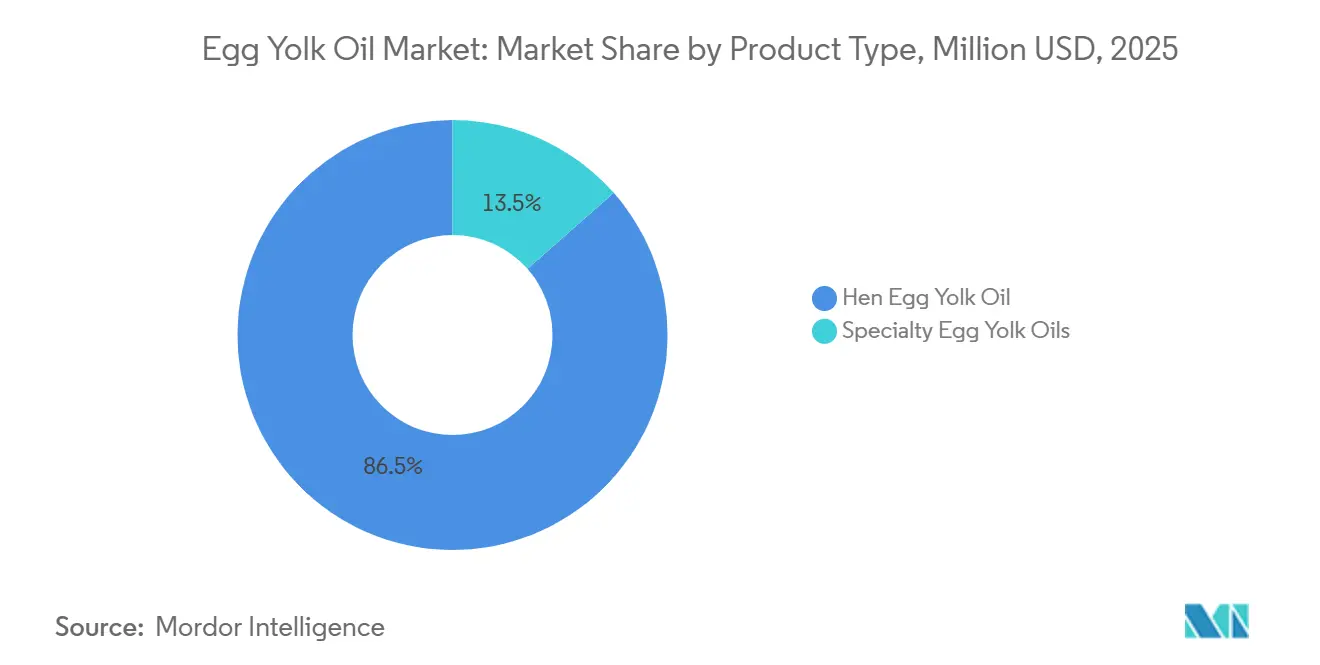
Specialty Grades Begin to Disrupt Hen Oil DominanceHen egg yolk oil held an 86.51% share in 2025, a position anchored by the global scale of hen egg production, established supply chains, and decades of regulatory acceptance across pharmaceutical, food, and cosmetic applications. Kewpie Corporation's EGG YOLK OIL PL-30S, containing approximately 30% phospholipids and conforming to Japanese Standards of Quasi-Drug Ingredients, illustrates hen-derived material's formulation versatility across emulsifier, emollient, and nutritional phospholipid functions in both food and cosmetic channels.
Specialty Egg Yolk Oils from duck, quail, and other avian sources are forecast to grow at 6.46% CAGR through 2031, the fastest in the segment, propelled by differentiated phospholipid profiles commanding premium cosmetic positioning, and by the FDA's January 2025 allergen guidance clarification that paradoxically created labelling clarity supporting commercialization of non-hen specialty oils. The 2026 Food Science review (Liu et al.) confirmed that structural variability between avian-source lecithin phospholipid compositions has meaningful implications for liposome performance, signaling that multi-species blending strategies for pharmaceutical and cosmetic grade differentiation will expand over the forecast period.



By Form:
Powder Unlocks New Application FormatsLiquid egg yolk oil maintained 73.62% of value share in 2025, reflecting established processing infrastructure, ease of handling, and direct formulation compatibility in topical, injectable, and liquid nutraceutical applications. Its established use in these formats supports stable demand from pharmaceutical, cosmetic, and nutraceutical manufacturers. Lipoid GmbH's pharmaceutical-grade egg phospholipid offerings, including LIPOID E 80 (80% phosphatidylcholine) and LIPOID E PC S (≥96% phosphatidylcholine), are manufactured in liquid or pasty form, underscoring the dominant role of liquid in high-value pharmaceutical channels.
Powder is the fastest-growing form at 7.11% CAGR through 2031, driven by innovation in spray-drying and microencapsulation that enables incorporation into solid supplement formats with improved oxidative stability, shelf life, and transportation efficiency. This format also supports broader use in tablets, capsules, functional foods, and dry blends. A 2024 Chinese-language study in China Oils and Fats optimized encapsulation parameters for egg yolk lipid powdered oil, confirming that supercritical CO₂-extracted lipids encapsulated with a maltodextrin, modified corn starch, and whey protein wall system achieved optimal encapsulation efficiency, a formulation now informing industrial-scale powder manufacturing in China's export-oriented ingredient sector.
By Nature:
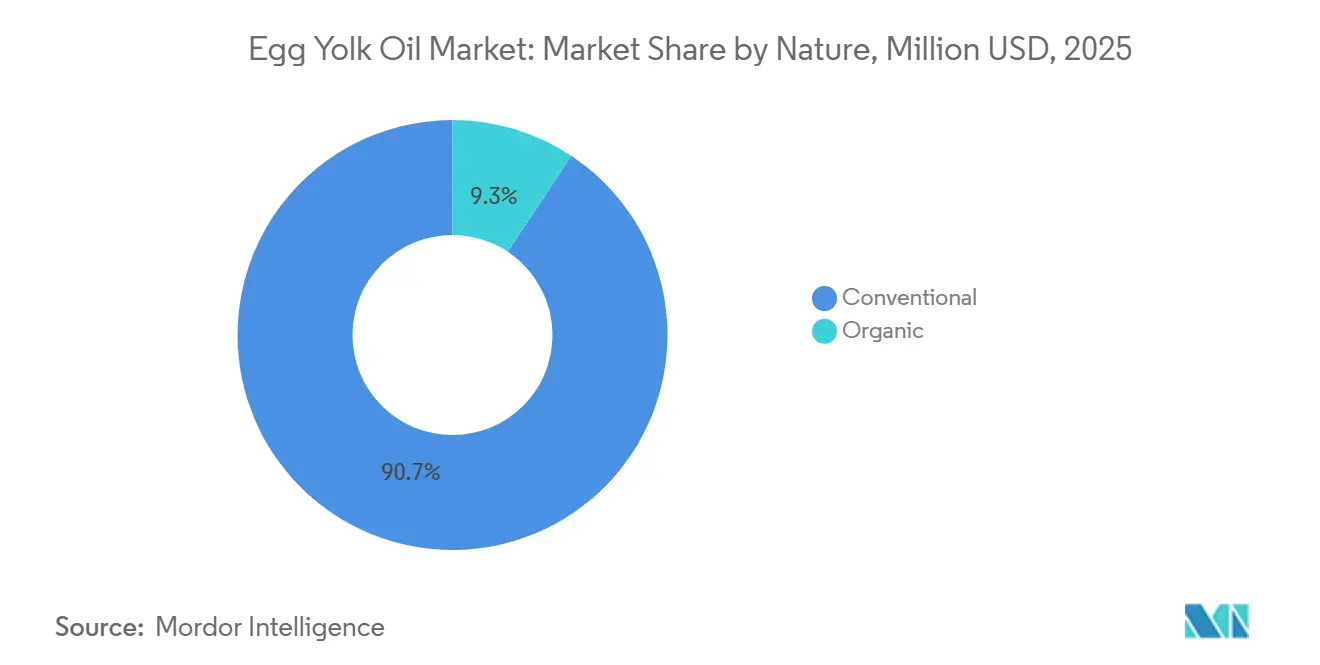
Organic Premium Momentum Outpaces Conventional Volume GrowthConventional egg yolk oil accounted for 92.51% of the market value in 2025, reflecting both the dominant scale of conventional egg production and the cost and certification barriers limiting organic supply. Conventional grades also benefit from established sourcing networks, greater batch availability, and lower production costs, making them the preferred option for large-scale pharmaceutical, nutraceutical, and personal care manufacturers. The organic segment is forecast to grow at 6.88% CAGR through 2031, the fastest-growing nature segment, anchored by premium personal care brands building sustainability narratives and health-conscious nutraceutical consumers in North America and Western Europe treating organic certification as a purity proxy.
Lipoid GmbH offers a certified organic egg lecithin grade (LIPOID E 20 O), confirming that pharmaceutical phospholipid specialists have recognized organic-certified egg materials as commercially viable even within highly regulated supply chains. This availability supports the use of organic-certified egg-derived ingredients in higher-value applications where traceability, certification, and ingredient positioning influence purchasing decisions. The organic segment's growth is structurally constrained by the limited scale of certified organic layer hen operations globally, a supply bottleneck likely to keep organic egg yolk oil at a meaningful premium to conventional grades through the forecast period, and one that compounds HPAI vulnerability given the lower biosecurity flexibility of certified organic flock management.
By Distribution Channel:
Industrial Sub-Segments Drive Quality StratificationThe industrial channel held 79.13% of the Egg yolk oil market in 2025. It includes cosmetics and personal care, dietary supplements, pharmaceuticals, food and beverage, and other industrial uses. Pharmaceutical applications have the highest unit values because parenteral fat emulsions and propofol delivery require high purity. Cosmetics and personal care are also expanding as egg-derived oil is used in serums, scalp treatments, and anti-aging creams. Industrial buyers, therefore, encourage suppliers to separate material into cosmetic, food, and pharmaceutical grades. This channel will remain central to volume and value creation.
Retail is forecast to grow at a 7.51% CAGR through 2031. Branded consumer health products are gaining shelf space in specialty wellness retail and online channels. VAV Life Sciences provides an example through EYOVA, its egg-oil-based hair oil brand. Retail demand can support a stronger product identity for egg yolk oil instead of treating it solely as a private-label ingredient. Foodservice provides a stable demand for bakery and culinary applications that use egg yolk oil for emulsification and flavor enhancement. Retail growth will widen direct consumer exposure, while foodservice and industrial applications preserve broader demand stability.
Geography Analysis
APAC Egg Yolk Oil Market
Asia-Pacific held 39.9% of the Egg yolk oil market share in 2025, making it the largest regional market. The region combines large-scale egg production with increasingly advanced processing and formulation capabilities. China supports raw material availability at competitive cost, while Japan contributes proprietary extraction knowledge and pharmaceutical-grade phospholipid manufacturing. Kewpie's egg ingredient portfolio and quasi-drug-grade product range demonstrate the region's ability to serve food and cosmetic applications. India is also building a position in pharmaceutical-grade supply through VAV Life Sciences' certified manufacturing capabilities. These conditions give Asia-Pacific a strong base in both high-volume oil and specialized phospholipid production.
North America Egg Yolk Oil Market
North America is forecast to grow at a 6.9% CAGR through 2031, the fastest among the regions considered. Demand comes from established supplement consumption, clean beauty adoption, and clear compliance pathways for experienced manufacturers. Balchem reported FY2025 net sales of USD 1,037 million, up 8.8% year over year, reflecting demand for encapsulated lipid and choline-based ingredient platforms across food, supplement, and pharmaceutical customers. The region also faced a sharp raw material shock after HPAI-related flock losses. U.S. retail egg prices reached USD 6.23 per dozen in March 2025 after 50.7 million laying hens were depopulated, according to the United States Department of Agriculture (USDA). This pressure is encouraging processors to assess supply diversification, including Canadian and Mexican sources.
EMEA and South America Egg Yolk Oil Market
Europe is a mature but technically demanding part of the Egg yolk oil market. Germany is a key supply center because Lipoid operates from the region and serves pharmaceutical-grade phospholipid demand. EU cosmetic restrictions and REACH documentation requirements favor certified producers with traceable supply chains. Regulation 2025/651 authorized lecithins, identified as E 322, as carriers in glazing agents for cassava and certain fresh fruits, creating additional food-grade use in the European Union. South America has future demand potential through Brazil's supplement sector and Argentina's agricultural processing base. The Middle East and Africa remain smaller markets, but personal care demand can provide a path for specialized haircare and skincare products.

Competitive Landscape
The Egg yolk oil market is moderately fragmented, with competition shaped by vertical integration and specialization across pharmaceutical excipients, cosmetic actives, and nutrition ingredients. Lipoid GmbH and Kewpie Corporation have stronger positions in high-purity applications because they combine product expertise, quality systems, and established customer relationships. Drug Master File registrations, pharmacopoeial compliance, and pharmaceutical manufacturing certifications are meaningful barriers for new suppliers. These requirements favor companies that can document raw material sourcing and production controls. Lipoid maintains egg phospholipid products for pharmaceutical applications, including high-phosphatidylcholine grades. VAV Life Sciences is an Indian supplier seeking to serve global injectable manufacturers that want alternatives to single-region sourcing.
Lipoid reported in August 2025 that logistics, administration, and production areas at its Cologne site were ready for planned commissioning in 2026. The project is part of a triple-digit million-euro investment designed to expand phospholipid production capacity. This move supports greater pharmaceutical-grade supply for injectable and liposomal applications. Kewpie's PL-30S product illustrates a different strategy, combining egg-derived phospholipids with a material suited to food and cosmetic formulation needs. VAV's focus on injectable-grade egg phospholipids reflects the opportunity to support both pharmaceutical and nutrition channels VAV.IN. Together, these strategies show that capacity, quality documentation, and application-specific products are more important than price alone in the highest-value segments.
The wider supplier base includes regional extract producers, specialty chemical distributors, and manufacturers competing on cost, local certification, and custom formulation support. A gap remains for standardized, documented organic egg yolk oil supply for North American and European clean beauty brands. Extraction technology firms can challenge established suppliers if they scale solvent-free supercritical carbon dioxide or enzymatic processes that meet cosmetic and pharmaceutical requirements. Those methods may reduce solvent-residue concerns and improve recovery from each egg input. Sanovo Technology Group launched a Farm Intelligence Unit in 2025 to improve quality-based egg sorting and grading, which could support stronger upstream raw material management. The competitive structure will remain fragmented outside the high-purity segment because regional suppliers can still compete through sourcing proximity and lower-cost materials.
Egg Yolk Oil Industry Leaders
Lipoid GmbH
Kewpie Corporation
Ecovatec Solutions Inc.
VAV Life Sciences Private Limited
Hunan Health-Guard Bio-Tech Inc.
- *Disclaimer: Major Players sorted in no particular order
Egg Yolk Oil Market Companies Covered in this Report
- Lipoid GmbH
- Kewpie Corporation
- Ecovatec Solutions Inc.
- VAV Life Sciences Private Limited
- Hunan Health-Guard Bio-Tech Inc.
- Natural Sourcing LLC
- Bizen Chemical Co., Ltd.
- Jiangxi Global Natural Spice Co., Ltd.
- PERSSEH Company
- BOC Sciences
- Go Natural Pakistan
- Ariul Essential
- Shaanxi GTL Biotech Co., Ltd.
- Tedukuri Shizenshoku Tomonokai
- Parchem Fine & Specialty Chemicals
- Balchem Corporation
- Sanovo Technology Group
- NutraScience Labs
- Pancosma S.A.
- Bioseutica S.L.

Recent Industry Developments in Egg Yolk Oil Market
- June 2026: SANOVO TECHNOLOGY GROUP, Canadian Egg Technologies, and MatrixSpec Solutions partnered to commercialize the world's earliest non-invasive in-ovo egg sexing system, using hyperspectral imaging for sex determination as early as day 4 of incubation. The global commercial launch was targeted for late 2026 or early 2027, with meaningful implications for specialty egg yolk supply chain planning as precise flock management became feasible.
- December 2025: Sanovo Technology Group expanded SANOVO TECHNOLOGY CHINA, its new production facility in China, reinforcing its ability to serve the world's largest egg processing market with locally manufactured equipment. The expansion strengthened the company's regional manufacturing footprint, improved its proximity to key customers, and supported faster delivery of egg processing solutions across China.
- August 2025: VAV Life Sciences expanded its EU cGMP-certified egg phospholipid facility in Ratnagiri, India, increasing its annual production capacity to 6,000 kg of pharmaceutical-grade egg lecithin. This capacity represented approximately 7% of the global annual demand of 85 tonnes and positioned the company as a viable alternative excipient supplier for European injectable formulation manufacturers.


Global Egg Yolk Oil Market Report Scope
Egg yolk oil (also called egg oil or ovum oil) is a natural, yellow, viscous oil extracted from chicken egg yolks. The egg yolk oil report is segmented by product type, form, nature, distribution channel, and geography. By product type, the market is segmented into hen egg yolk oil and specialty egg yolk oils. By form, the market is segmented into powder and liquid. By nature, the market is segmented into conventional and organic. By distribution channel, the market is segmented into industrial, foodservice, and retail. By geography, the market is segmented into North America, Europe, Asia-Pacific, South America, and Middle East and Africa. The market forecasts are provided in terms of value (USD).
| Hen Egg Yolk Oil |
| Specialty Egg Yolk Oils (Duck, Quail and Others) |
| Powder |
| Liquid |
| Conventional |
| Organic |
| Industrial | Food and Beverage |
| Cosmetics and Personal Care | |
| Dietary Supplements | |
| Pharmaceuticals | |
| Other Industrial Applications | |
| Foodservice | |
| Retail |
| North America | United States |
| Canada | |
| Mexico | |
| Rest of North America | |
| Europe | United Kingdom |
| Germany | |
| France | |
| Italy | |
| Spain | |
| Rest of Europe | |
| Asia-Pacific | China |
| Japan | |
| India | |
| Australia | |
| Rest of Asia-Pacific | |
| South America | Brazil |
| Argentina | |
| Colombia | |
| Rest of South America | |
| Middle East and Africa | United Arab Emirates |
| South Africa | |
| Saudi Arabia | |
| Turkey | |
| Rest of Middle East and Africa |
| Product Type | Hen Egg Yolk Oil | |
| Specialty Egg Yolk Oils (Duck, Quail and Others) | ||
| Form | Powder | |
| Liquid | ||
| Nature | Conventional | |
| Organic | ||
| Distribution Channel | Industrial | Food and Beverage |
| Cosmetics and Personal Care | ||
| Dietary Supplements | ||
| Pharmaceuticals | ||
| Other Industrial Applications | ||
| Foodservice | ||
| Retail | ||
| Geography | North America | United States |
| Canada | ||
| Mexico | ||
| Rest of North America | ||
| Europe | United Kingdom | |
| Germany | ||
| France | ||
| Italy | ||
| Spain | ||
| Rest of Europe | ||
| Asia-Pacific | China | |
| Japan | ||
| India | ||
| Australia | ||
| Rest of Asia-Pacific | ||
| South America | Brazil | |
| Argentina | ||
| Colombia | ||
| Rest of South America | ||
| Middle East and Africa | United Arab Emirates | |
| South Africa | ||
| Saudi Arabia | ||
| Turkey | ||
| Rest of Middle East and Africa | ||


Key Questions Answered in the Report
What is driving growth in egg yolk oil?
Clean-label personal care, liposomal nutrition products, and demand for natural cosmetic and haircare ingredients are supporting the Egg yolk oil market. The Egg yolk oil market is forecast to grow at a 5.41% CAGR from 2026 to 2031.
Which egg yolk oil product type has the largest demand?
Hen egg yolk oil led the Egg yolk oil market with an 86.51% share in 2025 because it benefits from broad egg supply, established processing, and accepted use across food, cosmetics, and pharmaceuticals.
Why are specialty egg yolk oils growing faster?
Specialty oils from duck, quail, and other birds are forecast to grow at a 6.46% CAGR through 2031. Their differentiated phospholipid profiles support premium cosmetic and nutrition uses in the Egg yolk oil market, although labeling rules are more detailed.
Which form is growing fastest?
Powder is projected to grow at a 7.11% CAGR through 2031. Microencapsulation and spray-drying support use in stable, solid supplement formats across the Egg yolk oil market.
Page last updated on:





