
Eczema Therapeutics Market Size and Share
Market Overview
| Study Period | 2020 - 2031 |
|---|---|
| Market Size (2026) | USD 25.16 Billion |
| Market Size (2031) | USD 37.58 Billion |
| Growth Rate (2026 - 2031) | 8.36 % |
| Fastest Growing Market | Asia-Pacific |
| Largest Market | North America |
| Market Concentration | Medium |
Major Players *Disclaimer: Major Players sorted in no particular order Image © Mordor Intelligence. Reuse requires attribution under CC BY 4.0. | |
Eczema Therapeutics Market Analysis by Mordor Intelligence
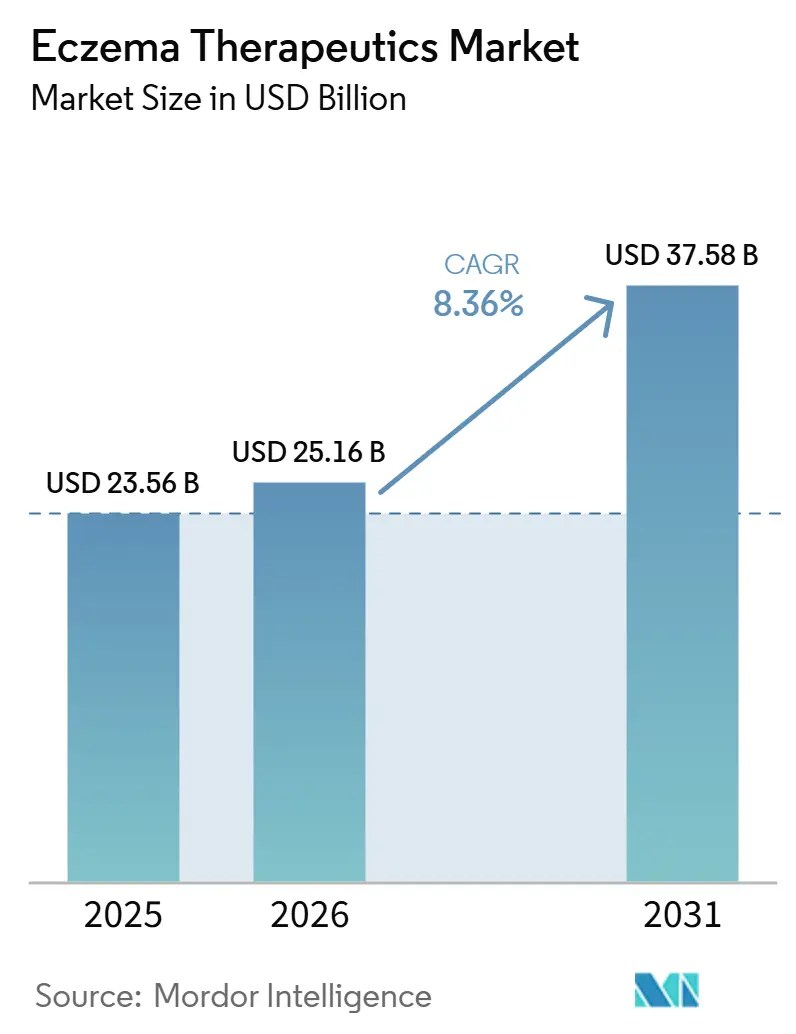
The Eczema Therapeutics Market size is projected to be USD 23.56 billion in 2025, USD 25.16 billion in 2026, and reach USD 37.58 billion by 2031, growing at a CAGR of 8.36% from 2026 to 2031.
Growth is being supported by a wider set of targeted treatments, improved diagnosis, and broader access to prescription care. Treatment choices are moving beyond corticosteroid-first care as biologics, oral therapies, and new topical products enter routine dermatology practice. Payer controls and safety warnings still affect the timing of systemic treatment, especially where patients must use lower-cost options first. The eczema therapeutics market also has room to expand in regions where diagnosis systems, specialty care, and reimbursement for newer treatments are still developing.
Key Report Takeaways
- By type of eczema, atopic dermatitis held 82.32% of the eczema therapeutics market share in 2025 and is forecast to grow at a 10.28% CAGR through 2031.
- By drug class, corticosteroids held 29.76% of the eczema therapeutics market share in 2025, while calcineurin inhibitors are expected to grow at a 14.21% CAGR through 2031.
- By route of administration, topical products accounted for 53.36% of the eczema therapeutics market size in 2025, while oral products are projected to advance at an 11.82% CAGR through 2031.
- By age group, adults accounted for 68.23% of the eczema therapeutics market size in 2025, while pediatric therapies are forecast to grow at a 10.16% CAGR through 2031.
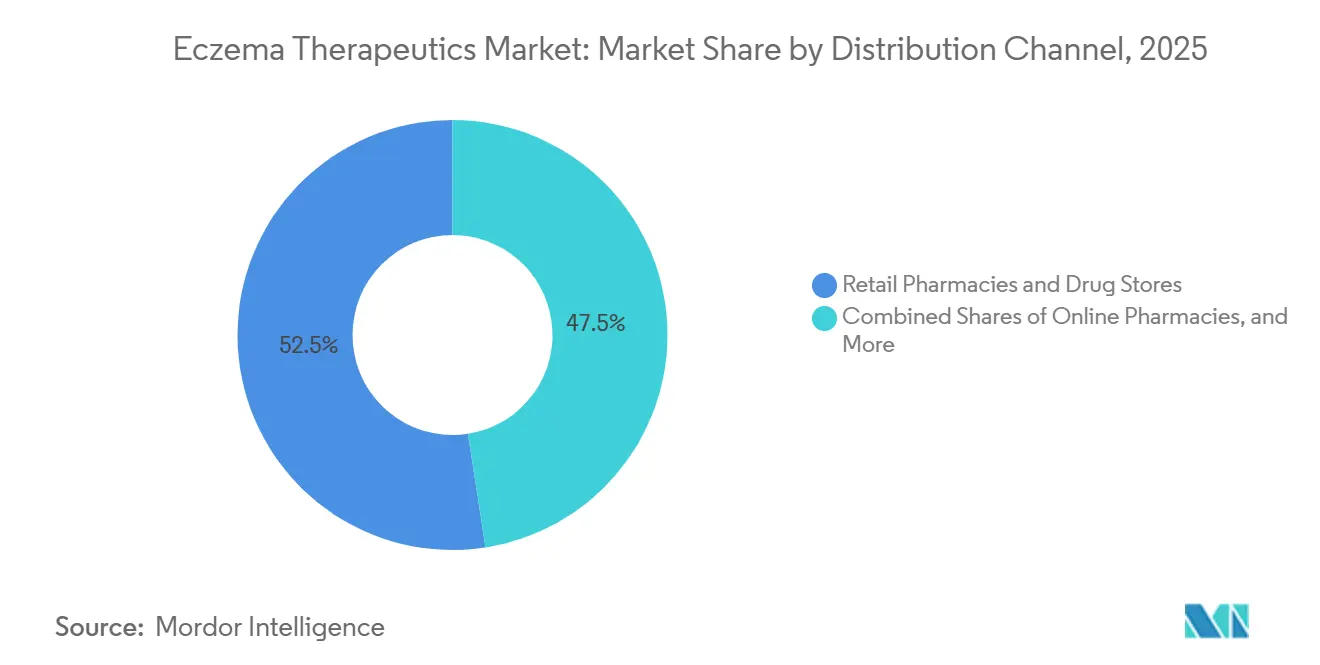
- By distribution channel, retail pharmacies and drug stores held 52.46% of the eczema therapeutics market share in 2025, while online pharmacies are projected to grow at a 13.64% CAGR through 2031.
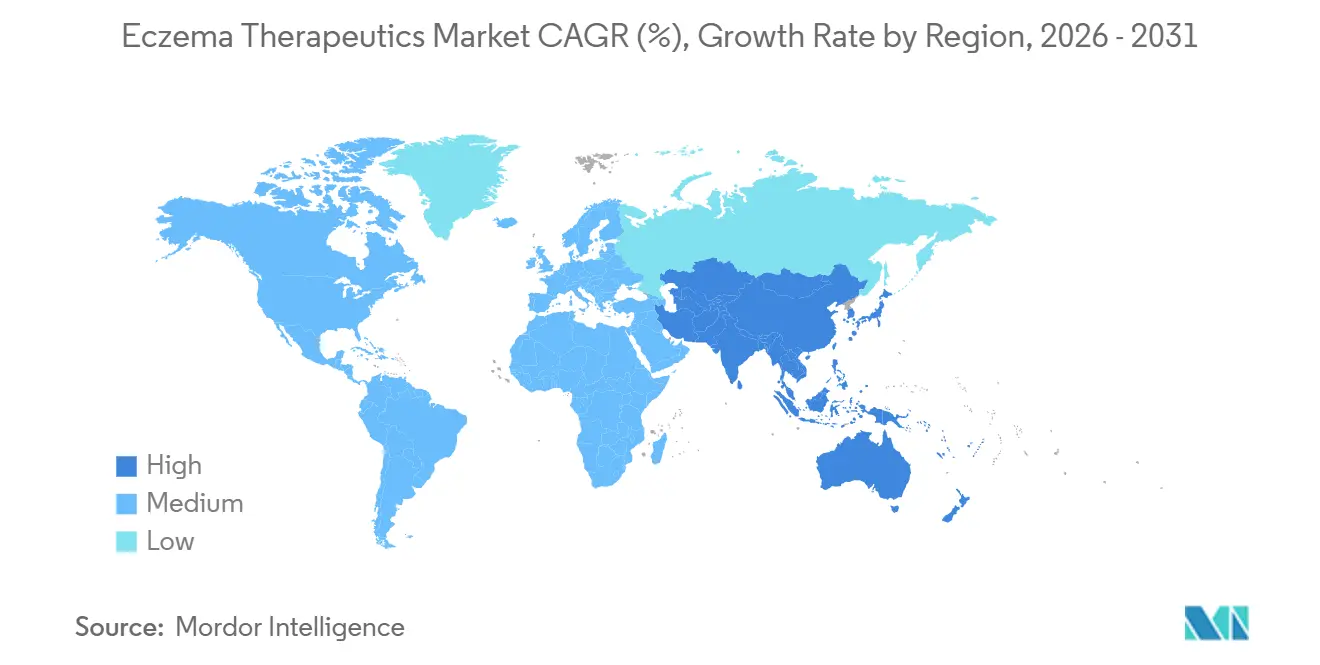
- By geography, North America accounted for 41.23% of the eczema therapeutics market size in 2025, while Asia-Pacific is forecast to expand at a 12.36% CAGR through 2031.
Note: Market size and forecast figures in this report are generated using Mordor Intelligence’s proprietary estimation framework, updated with the latest available data and insights as of January 2026.
Market Trends and Insights
Drivers Impact Analysis of Eczema Therapeutics Market*
| Driver | (~) % Impact on CAGR Forecast | Geographic Relevance | Impact Timeline |
|---|---|---|---|
| Rising Diagnosed and Drug-Treated Eczema Population | +1.8% | Global, with acute gains in APAC and MEA | Short term (≤ 2 years) |
| Expansion of Targeted Biologics and Small-Molecule Therapies | +2.2% | North America and Europe, with spillover to APAC | Medium term (2-4 years) |
| Broader Pediatric and Adolescent Label Coverage | +1.4% | North America, Europe, and East Asia | Short term (≤ 2 years) |
| Increasing Specialist and Specialty-Pharmacy Treatment Intensity | +0.9% | North America and Europe | Medium term (2-4 years) |
| Biomarker-Led Sequencing of Immune Pathways | +0.7% | North America, Europe, and Japan | Long term (≥ 4 years) |
| Home-Administration and Tele-Dermatology Refill Models | +0.5% | North America, with spillover to Europe and APAC urban centers | Medium term (2-4 years) |
| Source: Mordor Intelligence | |||
Rising Diagnosed and Drug-Treated Eczema Population
The diagnosed and drug-treated patient pool is expanding faster than prevalence data alone suggests. Better access to dermatologists, digital screening, and primary-care guidance is bringing more patients into prescription treatment. Many countries still lack systematic atopic dermatitis epidemiology, which means the addressable population in APAC and sub-Saharan Africa may be undercounted. A 2025 analysis of Global Burden of Disease data found that age-standardized atopic dermatitis prevalence and disability burden were highest in high-income Asia-Pacific settings. Urban growth and healthcare investment are therefore increasing demand in markets that can support higher-value care. This gives the eczema therapeutics market a broader base for prescription topicals and systemic medicines.
Expansion of Targeted Biologics and Small-Molecule Therapies
The approval pace for eczema treatments accelerated from 2024 through 2026. The FDA approved Eli Lilly’s lebrikizumab in September 2024[1]Eli Lilly and Company, “FDA Approves Lilly’s EBGLYSS for Adults and Children 12 Years and Older With Moderate-to-Severe Atopic Dermatitis,” Investor Relations, investor.lilly.com. for moderate-to-severe atopic dermatitis in patients aged 12 years and older. Galderma’s nemolizumab followed in December 2024[2]Galderma S.A., “Galderma Receives U.S. FDA Approval for Nemluvio for Patients With Moderate-to-Severe Atopic Dermatitis,” Investor News, investors.galderma.com. as the first FDA-approved IL-31 receptor antagonist for atopic dermatitis. These products give prescribers more ways to match treatment to symptoms and disease patterns. Sanofi reported positive Phase 3 results for amlitelimab across the COAST 1, COAST 2, and SHORE studies and plans global submissions in the second half of 2026. The eczema therapeutics market is becoming less dependent on one treatment approach as products act on IL-13, IL-31, OX40L, and related inflammatory pathways.
Broader Pediatric and Adolescent Label Coverage
Pediatric label expansion is opening treatment options for patients who previously had few approved prescription choices. Incyte[3]Incyte Corporation, “Incyte Announces Additional FDA Approval of Opzelura Ruxolitinib Cream in Children Ages 2 to 11 With Atopic Dermatitis,” Investor Relations, investor.incyte.com. received FDA approval in September 2025 for ruxolitinib cream in children aged 2 to 11 years with mild-to-moderate atopic dermatitis. Arcutis[4]Arcutis Biotherapeutics, Inc., “FDA Approves Arcutis’ Zoryve Roflumilast Cream 0.05% for the Treatment of Atopic Dermatitis in Children Ages 2 to 5,” Investor Relations, investors.arcutis.com. made roflumilast cream 0.05% available for U.S. children aged 2 to 5 years in late October 2025. Almirall also received EMA acceptance for a pediatric filing for lebrikizumab in children and adolescents aged 6 months to under 18 years who weigh below 40 kg. These approvals extend treatment exposure across childhood, adolescence, and adult care. They also make the eczema therapeutics market more relevant to dermatologists who manage long-term disease rather than isolated flares.
Increasing Specialist and Specialty-Pharmacy Treatment Intensity
Specialist prescribing and specialty-pharmacy services are increasing the intensity of treatment for patients with persistent disease. FDA step-therapy requirements and EMA pediatric investigation plans continue to influence the order in which targeted products reach patients. Clinicians are increasingly considering whether the disease is IL-4 and IL-13 dominant, IL-31 dominant, or linked to OX40L activity when selecting systemic treatment. Nemolizumab’s IL-31 receptor target shows how itch-focused treatment can be positioned alongside products focused on skin clearance. Gilead Sciences and LEO Pharma formed a partnership in January 2025 to develop an oral STAT6 program that acts downstream of IL-4 and IL-13 signaling. Home administration and tele-dermatology refill services can also make continued treatment easier for patients using maintenance therapies in the eczema therapeutics market.
Restraints Impact Analysis of Eczema Therapeutics Market*
| Restraint | (~) % Impact on CAGR Forecast | Geographic Relevance | Impact Timeline |
|---|---|---|---|
| High Annual Cost and Payer Utilization Controls | -1.2% | North America and Europe | Short term (≤ 2 years) |
| Long-Term Safety Warnings for Systemic Immunomodulators | -0.8% | Global | Medium term (2-4 years) |
| Treatment Persistence Erosion From Itch Relief and Skin-Clearance Mismatch | -0.5% | Global | Medium term (2-4 years) |
| Cold-Chain and Injection-Training Friction in Emerging Markets | -0.4% | APAC emerging markets, MEA, and South America | Long term (≥ 4 years) |
| Source: Mordor Intelligence | |||
High Annual Cost and Payer Utilization Controls
The annual U.S. list price of dupilumab exceeds USD 35,000. Prior authorization was the most frequently reported reason for insurance coverage delays for atopic dermatitis prescriptions in a 2024 peer-reviewed study. The same study found that biologic-related delays could extend beyond 3 weeks. Major U.S. payers commonly require patients to use topical corticosteroids or calcineurin inhibitors before covering biologics or JAK inhibitors. In Europe, reimbursement decisions also involve tendering, pricing negotiations, and cost-effectiveness requirements. These controls can delay new products in the eczema therapeutics market, even where clinical need is clear.
Long-Term Safety, Persistence, and Delivery Barriers
The FDA maintains a class-wide boxed warning for JAK inhibitors that addresses serious heart-related events, cancer, blood clots, and death. The original safety signal came from tofacitinib studies in older rheumatoid arthritis patients with cardiovascular risk factors, which differs from many atopic dermatitis patients. Still, the warning can make clinicians less willing to use oral JAK inhibitors early in treatment. This leaves room for non-JAK therapies that provide systemic efficacy without the same labeling burden. Patients can also discontinue treatment when itch relief and skin clearance do not meet expectations. Cold-chain needs and injection training can further limit biologic uptake in lower-income settings, affecting the eczema therapeutics market in emerging regions.
*Our forecasts treat driver/restraint impacts as directional, not additive. The impact forecasts reflect baseline growth, mix effects, and variable interactions.
Eczema Therapeutics Market Segment Analysis
By Type of Eczema:
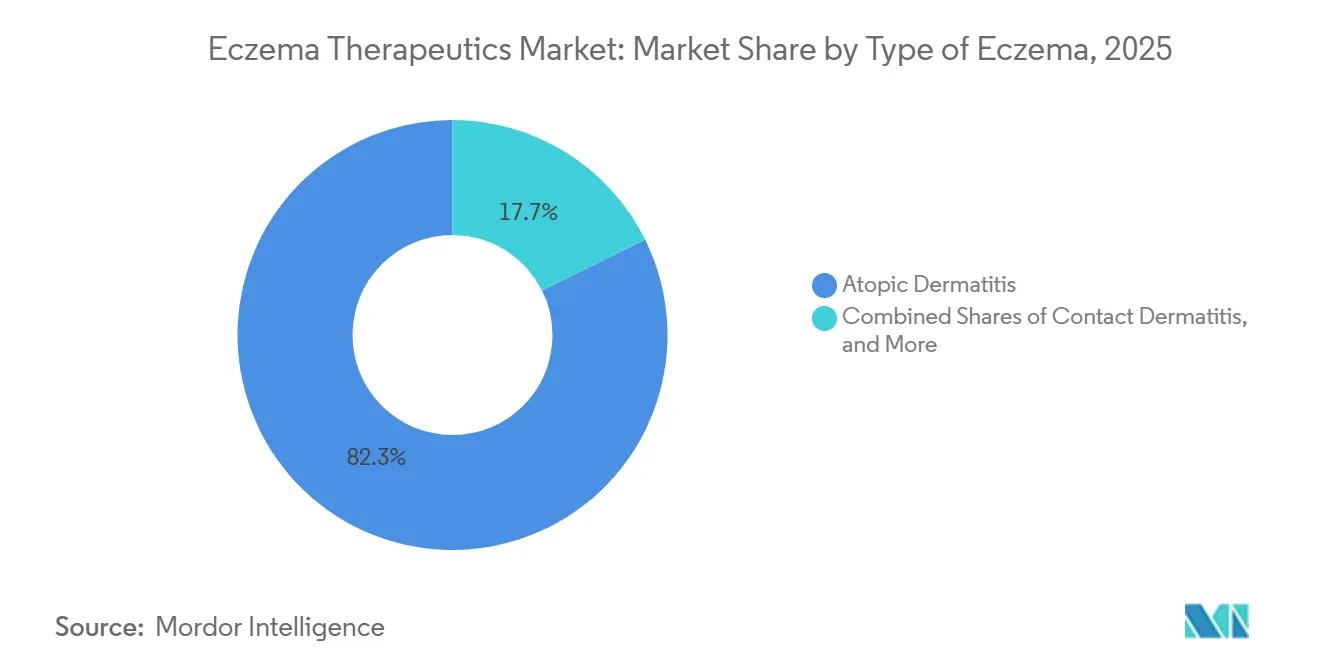
Atopic Dermatitis Remains the Main Revenue BaseAtopic dermatitis held 82.32% of the eczema therapeutics market share in 2025 and is forecast to expand at a 10.28% CAGR through 2031. Its scale reflects high prevalence and a greater ability to use higher-cost targeted therapies than other eczema subtypes. Pediatric approvals, added biologics, and stronger diagnosis in APAC and Eastern Europe support its growth.
Contact dermatitis is usually treated with generic topical medicines and has drawn less branded innovation. Seborrheic dermatitis and dyshidrotic eczema continue to produce prescribing demand for topical corticosteroids and antifungal combinations. Chronic hand eczema, included within other eczema types, received a dedicated U.S. option with the launch of delgocitinib cream in September 2025.



By Drug Class:
Targeted Medicines Change a Corticosteroid-Led MixCorticosteroids accounted for 29.76% of the eczema therapeutics market size by drug class in 2025. They remain the standard topical option across mild and severe disease because they are familiar, broadly available, and used with other treatments. Their large revenue position is mainly a volume measure rather than proof of superior long-term outcomes. Nemolizumab is approved for use with topical corticosteroids and or calcineurin inhibitors, showing that established topical products remain part of systemic care. Calcineurin inhibitors are projected to grow at a 14.21% CAGR through 2031. Their growth reflects lower generic prices, wider access in APAC, and use as steroid-sparing options for eyelid and facial eczema.
By Route of Administration:
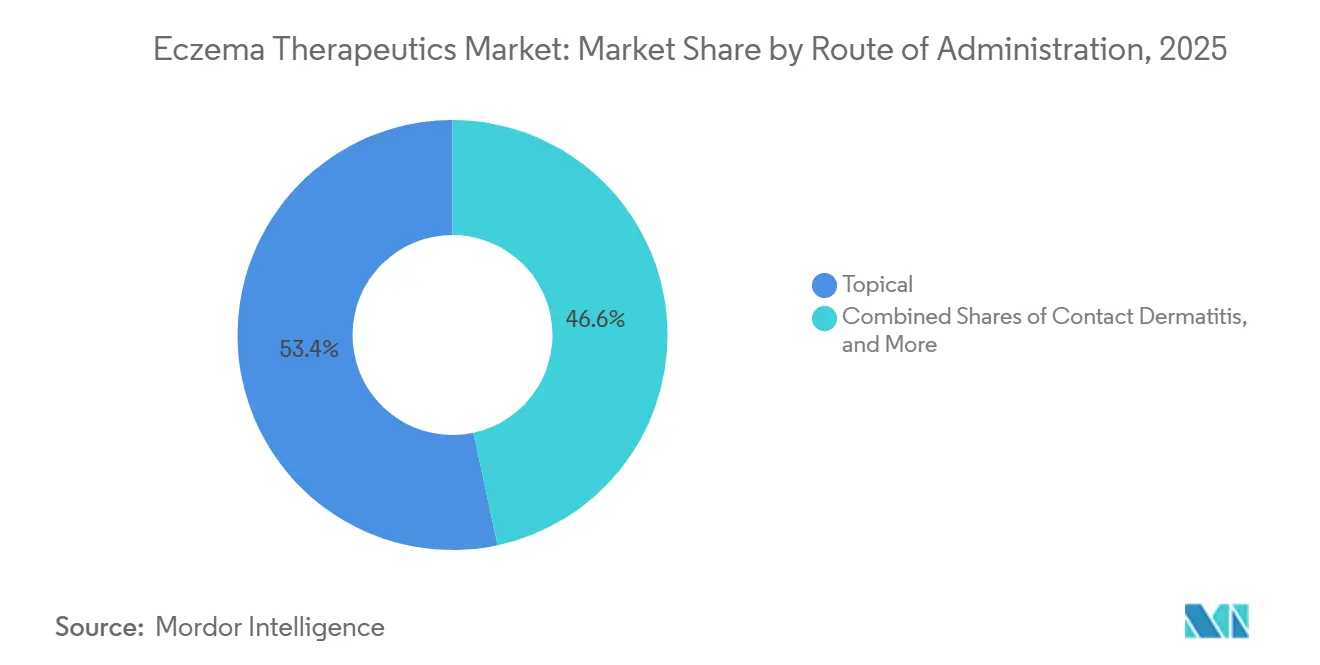
Topical Treatment Leads While Oral Therapy GrowsTopical products represented 53.36% of the eczema therapeutics market share in 2025. Their position reflects their role in first-line treatment and a growing group of topical PDE4 and JAK products. Oral products are expected to grow at an 11.82% CAGR through 2031. Abrocitinib and upadacitinib offer once-daily dosing for patients who prefer not to use injections or have disease across several body sites. Japanese Dermatological Association guidance, revised in October 2024, recognized oral JAK inhibitors as second-line systemic options. This has helped establish oral treatment as a practical option in the eczema therapeutics market.
By Age Group:
Pediatric Approvals Extend Long-Term CareAdults accounted for 68.23% of the eczema therapeutics market size in 2025. This group includes many patients with moderate-to-severe disease who require biologics or other higher-value treatment. Adults also produce the highest average therapy value per patient. Older patients add prescribing volume, especially for corticosteroids and lower-potency calcineurin inhibitors used for chronic eczema. Pediatric treatment is forecast to grow at a 10.16% CAGR through 2031. FDA approvals for ruxolitinib in children aged 2 to 11 years and roflumilast for children aged 2 to 5 years have expanded the available treatment set.
By Distribution Channel:
Online Pharmacies Gain Maintenance RefillsRetail pharmacies and drug stores held 52.46% of the eczema therapeutics market share in 2025. They remain the main dispensing setting for topical corticosteroids, calcineurin inhibitors, and barrier repair products. These treatments have broad use and are often renewed outside specialist hospitals. Hospital pharmacies remain important when biologics are initiated in specialist care, especially in Europe and Japan. Online pharmacies are expected to grow at a 13.64% CAGR through 2031. Tele-dermatology platforms and specialty pharmacy services help patients renew maintenance prescriptions without visiting a physical pharmacy.
Geography Analysis
North America Eczema Therapeutics Market
North America accounted for 41.23% of the eczema therapeutics market size in 2025. The region benefits from high spending on specialty dermatology products, private-payer coverage, and established specialty-pharmacy services. Canada and Mexico add demand, although public reimbursement in Canada can limit biologic use relative to the United States. North America, therefore, remains the leading commercial base for the eczema therapeutics market.
Europe and APAC Eczema Therapeutics Market
Europe is the second-largest regional contributor, supported by reimbursement systems in Germany, France, and the United Kingdom. NICE, Haute Autorité de Santé, and Gemeinsamer Bundesausschuss provide structured review paths for newer dermatology medicines. Asia-Pacific is expected to expand at a 12.36% CAGR through 2031. Japan has meaningful biologic revenue because its health insurance system reimburses dupilumab and JAK inhibitors after regulatory approval. China has a large opportunity because biologic use is still at an early stage, and access is widening through approvals and insurance coverage.

Competitive Landscape
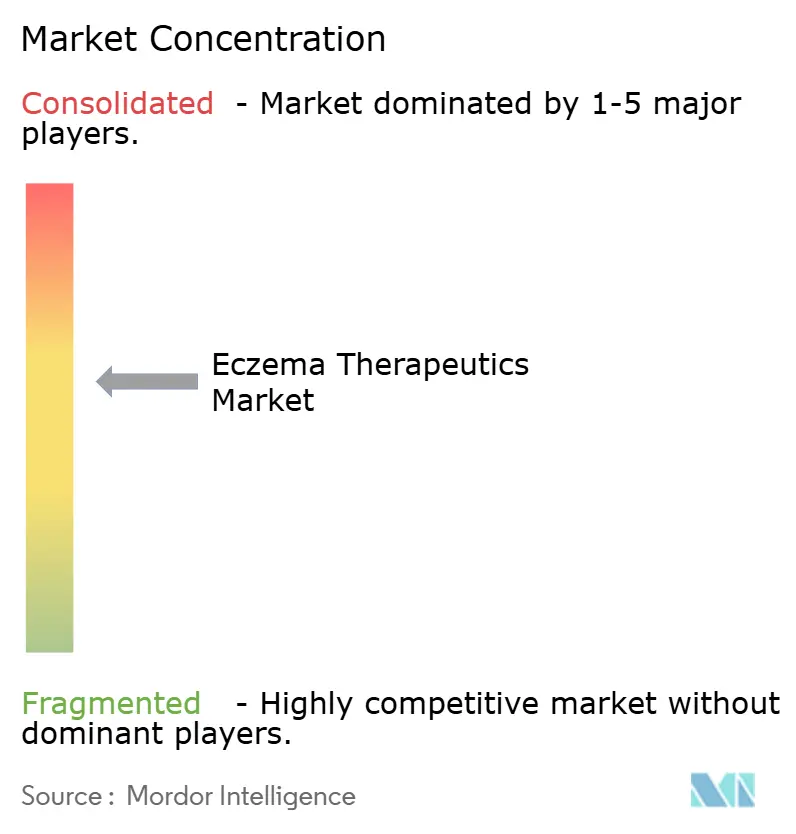
The eczema therapeutics market is moderately concentrated in high-value systemic treatment and fragmented in topical products. Sanofi and Regeneron hold the leading systemic position through dupilumab. Their position comes from early entry, broad labels across type 2 inflammatory conditions, and more than 1.4 million active patients globally. AbbVie’s upadacitinib and Pfizer’s abrocitinib compete for patients who prefer oral treatment. JAK class warnings and payer requirements affect the pace at which these medicines are used. Competition in the eczema therapeutics market is increasingly based on treatment mechanism, labeling, and access rather than on one treatment class alone.
Eczema Therapeutics Industry Leaders
Sanofi
Regeneron Pharmaceuticals, Inc.
AbbVie Inc.
Eli Lilly and Company
LEO Pharma A/S
- *Disclaimer: Major Players sorted in no particular order
Eczema Therapeutics Market Companies Covered in this Report
- Abbvie
- Almirall
- Amgen
- Arcutis Biotherapeutics, Inc.
- Astellas Pharma
- Bayer
- Bristol-Myers Squibb
- Dermavant Sciences Ltd.
- Eli Lilly and Company
- Galderma
- Incyte
- Kyowa Kirin
- Leo Pharma
- Novartis
- Organon
- Otsuka
- Pfizer
- Regeneron Pharmaceuticals
- Sanofi
- UCB
- Viatris

Recent Industry Developments in Eczema Therapeutics Market
- March 2026: Sanofi presented Phase 3 data from COAST 1, COAST 2, and SHORE studies for amlitelimab at the American Academy of Dermatology Annual Meeting. All three studies demonstrated statistically significant improvements in skin clearance versus placebo in patients aged 12 and older with moderate-to-severe AD.
- September 2025: Incyte received FDA approval for Opzelura ruxolitinib cream 1.5% for short-term and non-continuous chronic treatment of mild-to-moderate AD in children aged 2 to 11, extending one of the only topical JAK inhibitor labels into the pre-adolescent pediatric population.


Global Eczema Therapeutics Market Report Scope
As per the scope of the market, eczema therapeutics comprise pharmaceutical and biologic treatments used to manage eczema, a chronic inflammatory skin disorder characterized by itching, redness, dryness, and skin barrier dysfunction. Eczema therapies help reduce inflammation, relieve symptoms, prevent flare-ups, and improve patients' quality of life through topical, oral, and injectable treatment options.
The eczema therapeutics market report segments the market by type of eczema, including atopic dermatitis, contact dermatitis, seborrheic dermatitis, dyshidrotic eczema, and others (nummular eczema and chronic hand eczema). It also categorizes the market by drug class, covering corticosteroids, calcineurin inhibitors, PDE4 inhibitors, JAK inhibitors, IL-4 and IL-13 inhibitors, IL-31 inhibitors, antibiotics and antiseptics, systemic immunosuppressants, and others (antihistamines and other eczema therapies). The market is further segmented by route of administration into topical, oral, and parenteral therapies. By age group, the market is segmented into pediatric, adult, and geriatric populations. Additionally, the distribution channel segmentation includes hospital pharmacies, retail pharmacies and drug stores, and online pharmacies. Geographically, the market is segmented into North America, Europe, Asia-Pacific, the Middle East & Africa, and South America. The market report also covers the estimated market sizes and trends for 17 countries across major regions globally. For each segment, the market size and forecast are provided in terms of value (USD).
| Atopic Dermatitis |
| Contact Dermatitis |
| Seborrheic Dermatitis |
| Dyshidrotic Eczema |
| Others (Nummular Eczema, Chronic Hand Eczema) |
| Corticosteroids |
| Calcineurin Inhibitors |
| PDE4 Inhibitors |
| JAK Inhibitors |
| IL-4 and IL-13 Inhibitors |
| IL-31 Inhibitors |
| Antibiotics and Antiseptics |
| Systemic Immunosuppressants |
| Others (Antihistamines and Other Eczema Therapies) |
| Topical |
| Oral |
| Parenteral |
| Pediatric |
| Adults |
| Geriatric |
| Hospital Pharmacies |
| Retail Pharmacies and Drug Stores |
| Online Pharmacies |
| Other Distribution Channels |
| North America | United States |
| Canada | |
| Mexico | |
| Europe | Germany |
| United Kingdom | |
| France | |
| Italy | |
| Spain | |
| Rest of Europe | |
| Asia-Pacific | China |
| India | |
| Japan | |
| Australia | |
| South Korea | |
| Rest of Asia-Pacific | |
| Middle East and Africa | GCC |
| South Africa | |
| Rest of Middle East and Africa | |
| South America | Brazil |
| Argentina | |
| Rest of South America |
| By Type of Eczema | Atopic Dermatitis | |
| Contact Dermatitis | ||
| Seborrheic Dermatitis | ||
| Dyshidrotic Eczema | ||
| Others (Nummular Eczema, Chronic Hand Eczema) | ||
| By Drug Class | Corticosteroids | |
| Calcineurin Inhibitors | ||
| PDE4 Inhibitors | ||
| JAK Inhibitors | ||
| IL-4 and IL-13 Inhibitors | ||
| IL-31 Inhibitors | ||
| Antibiotics and Antiseptics | ||
| Systemic Immunosuppressants | ||
| Others (Antihistamines and Other Eczema Therapies) | ||
| By Route of Administration | Topical | |
| Oral | ||
| Parenteral | ||
| By Age Group | Pediatric | |
| Adults | ||
| Geriatric | ||
| By Distribution Channel | Hospital Pharmacies | |
| Retail Pharmacies and Drug Stores | ||
| Online Pharmacies | ||
| Other Distribution Channels | ||
| By Geography | North America | United States |
| Canada | ||
| Mexico | ||
| Europe | Germany | |
| United Kingdom | ||
| France | ||
| Italy | ||
| Spain | ||
| Rest of Europe | ||
| Asia-Pacific | China | |
| India | ||
| Japan | ||
| Australia | ||
| South Korea | ||
| Rest of Asia-Pacific | ||
| Middle East and Africa | GCC | |
| South Africa | ||
| Rest of Middle East and Africa | ||
| South America | Brazil | |
| Argentina | ||
| Rest of South America | ||


Key Questions Answered in the Report
What is the projected size of the eczema therapeutics market by 2031?
The eczema therapeutics market size is projected to be USD 37.58 billion by 2031, growing at a CAGR of 8.36% from 2026 to 2031.
Which eczema type has the largest treatment revenue base?
Atopic dermatitis held 82.32% of revenue in 2025 and is projected to grow at a 10.28% CAGR through 2031.
Which drug class is growing fastest in eczema treatment?
Calcineurin inhibitors are forecast to grow at a 14.21% CAGR through 2031, supported by steroid-sparing use and generic access.
Why are online pharmacies becoming important for eczema prescriptions?
Tele-dermatology and specialty refill services support continued treatment, and online pharmacies are projected to grow at a 13.64% CAGR through 2031.
Which region is growing fastest for eczema treatment?
Asia-Pacific is forecast to expand at a 12.36% CAGR through 2031 as diagnosis, reimbursement, and biologic access improve.
What limits the use of newer eczema therapies?
High treatment cost, prior authorization, JAK inhibitor safety warnings, persistence issues, and delivery barriers can delay uptake.
Page last updated on:





