
Disposable Oxygen Masks Market Size and Share
Market Overview
| Study Period | 2020 - 2031 |
|---|---|
| Market Size (2026) | USD 1.61 Billion |
| Market Size (2031) | USD 2.46 Billion |
| Growth Rate (2026 - 2031) | 8.88 % |
| Fastest Growing Market | Asia-Pacific |
| Largest Market | North America |
| Market Concentration | Medium |
Major Players *Disclaimer: Major Players sorted in no particular order Image © Mordor Intelligence. Reuse requires attribution under CC BY 4.0. | |
Disposable Oxygen Masks Market Analysis by Mordor Intelligence
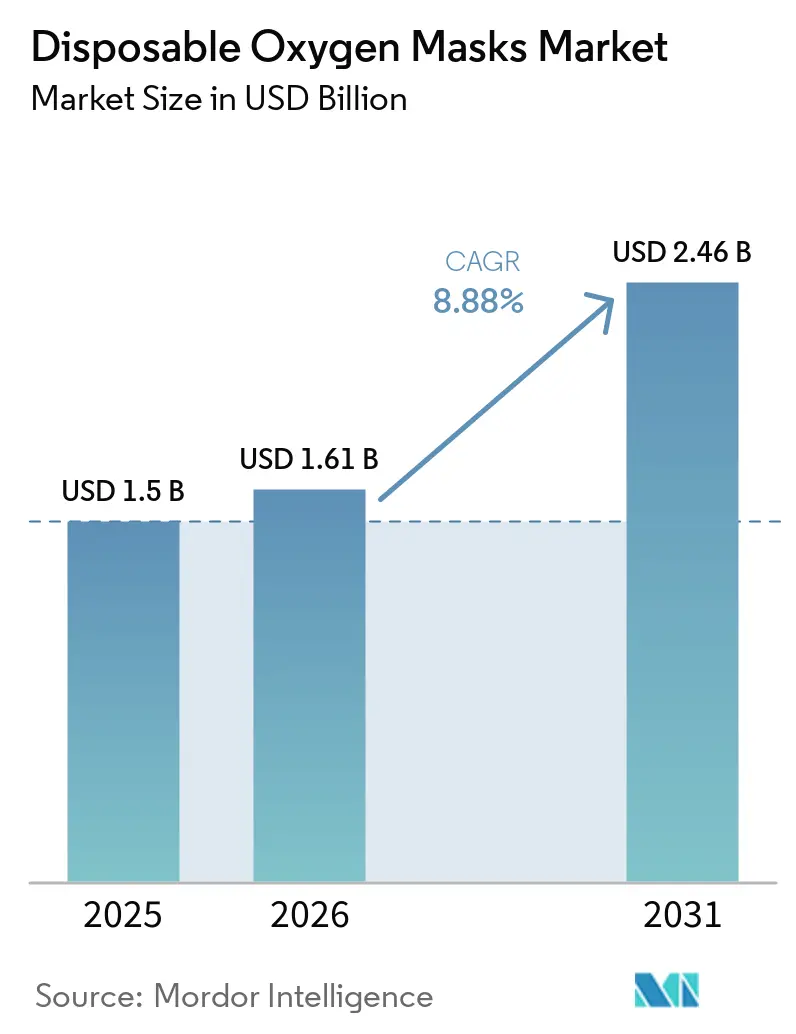
The Disposable Oxygen Masks Market size was valued at USD 1.5 billion in 2025 and is estimated to grow from USD 1.61 billion in 2026 to reach USD 2.46 billion by 2031, at a CAGR of 8.88% during the forecast period (2026-2031).
Demand is supported by chronic respiratory disease, wider use of single-use infection-control practices, and additional hospital capacity. The disposable oxygen masks market also benefits from the movement of oxygen therapy into home settings, where recurring replacement needs differ from episodic hospital purchases. Suppliers are responding with broader respiratory portfolios, products that cover several clinical uses, and distribution models that support institutional and homecare customers. Consolidation among established respiratory suppliers may strengthen the value of scale, regulatory documentation, and dependable channel relationships in the disposable oxygen masks market.
Key Report Takeaways
By product type, simple oxygen masks held 38.5% of the disposable oxygen masks market share in 2026, while specialty oxygen masks are forecast to grow at a 7.8% CAGR through 2031.
By material, PVC accounted for 58.4% of the disposable oxygen masks market share in 2026, while silicone is forecast to grow at an 8.2% CAGR through 2031.
By application, respiratory disorders accounted for 44.2% of the disposable oxygen masks market size in 2026, while aerosol therapy is forecast to grow at a 7.5% CAGR through 2031.
By end user, hospitals and clinics held 42.3% share in 2026, while homecare is forecast to grow at an 8.8% CAGR through 2031.
By distribution channel, direct sales held 53.1% share in 2026, while online stores are forecast to grow at a 9.5% CAGR through 2031.
By geography, North America held 35.4% share in 2025, while Asia-Pacific is forecast to grow at an 8.1% CAGR through 2031.
Note: Market size and forecast figures in this report are generated using Mordor Intelligence’s proprietary estimation framework, updated with the latest available data and insights as of January 2026.
Market Trends and Insights
Drivers Impact Analysis of Disposable Oxygen Masks Market*
| Driver | (~) % Impact on CAGR Forecast | Geographic Relevance | Impact Timeline |
|---|---|---|---|
| Rising Respiratory Disease and Acute-Care Demand | +2.5% | Global | Medium term (2-4 years) |
| Expansion of Home-Based Oxygen Therapy | +2.0% | North America, Europe, Asia-Pacific | Long term (≥ 4 years) |
| Infection-Control Preference for Single-Use Interfaces | +1.5% | Global, pronounced in North America and EU | Medium term (2-4 years) |
| Hospital and Emergency-Care Capacity Expansion | +1.2% | North America, Asia-Pacific | Medium term (2-4 years) |
| Interoperable Masks That Reduce Flow-Setting and Device-Switching Errors | +0.8% | North America, Europe | Long term (≥ 4 years) |
| Procurement Demand for Low-Inventory, Multi-Configuration Mask Kits | +0.6% | Global, with spillover to MEA and South America | Short term (≤ 2 years) |
| Source: Mordor Intelligence | |||
Rising Respiratory Disease and Acute-Care Demand
Chronic respiratory disease creates a continuing need for oxygen delivery interfaces across acute and long-term care settings. Chronic respiratory diseases caused 569.2 million prevalent cases and 4.2 million deaths worldwide in 2023, while COPD caused 3.4 million deaths. COPD was also identified as the third leading cause of death, which supports a durable clinical need for oxygen therapy. In the WHO South-East Asia Region[1], COPD moved from the seventh leading cause of death in 2000 to the fourth in 2021. This change shifts more potential volume toward health systems that are still building standardized procurement systems for disposable respiratory supplies, including purchasing processes that must balance clinical standards, predictable replenishment, local distribution capacity, and public budget limits across hospital and community settings. The disposable oxygen masks market is therefore linked to both established hospital demand and the developing respiratory-care capacity of lower- and middle-income countries.
Expansion of Home-Based Oxygen Therapy
Home oxygen coverage under Medicare can apply beyond standard hypoxemia thresholds in defined clinical circumstances, which supports care outside inpatient facilities. This setting changes the pattern of use because patients and suppliers manage recurring replenishment rather than a hospital's intermittent bulk order cycle, making service continuity, delivery coordination, and readily available replacement products important parts of routine care for homecare users nationwide each day without disruption. Homecare is forecast to grow at an 8.8% CAGR through 2031, making it the fastest-growing end-user setting in the disposable oxygen masks market. Home delivery and durable medical equipment channels can make replacement purchasing more regular for people who use oxygen therapy daily. Publicly supported care programs in India and China add another potential demand layer for home respiratory care, although procurement practices differ by location. The shift makes channel execution as important as product availability for suppliers serving the disposable oxygen masks market, because delivery schedules, prescription documentation, patient education, and coordination with durable medical equipment providers influence whether a product reaches the user on time.
Infection-Control Preference for Single-Use Interfaces
Single-use policies support demand because they require a new device for each patient encounter unless a validated remanufacturing process is used. The ACIPC[2] position statement issued in July 2025 states that devices labeled as single-use must not be reused without validated remanufacturing. AU CDC guidance similarly addresses risks associated with reuse when validated reprocessing is absent. Hospital systems that tighten compliance after an infection event or accreditation review can establish a higher baseline for the use of disposable interfaces. This makes demand less dependent on short-term purchasing decisions in regulated care environments, since infection-control policy, accreditation expectations, clinical training, and audit procedures can all reinforce continued use of new patient-contact devices. FDA Class II requirements and EU medical-device obligations apply across relevant product lines, which reinforces the role of compliant manufacturing in the disposable oxygen masks market.
Hospital and Emergency-Care Capacity Expansion
New hospitals and expanded acute-care facilities add bed capacity and create new opportunities for respiratory consumables to enter formularies. U.S. hospital and clinic construction starts are projected at USD 30.7 billion in 2026, 11.6% above 2025, and USD 38.8 billion by 2030. Supply agreements are often established during design and construction, before a facility begins treating patients. This can give suppliers a visible pipeline of future orders and create multi-year relationships around specified products, because selection decisions made early in a construction project may influence the respiratory-consumable portfolio used after commissioning, when clinical teams begin operating new wards, procedural areas, and emergency-care spaces. Wellstar Kennestone opened a USD 400 million, 235-bed patient tower in April 2026, adding acute-care, cardiology, and surgical services. Additional capacity supports the disposable oxygen masks market because oxygen interfaces are part of routine emergency, surgical, and ward preparedness, and new care spaces must be equipped for routine supplemental oxygen delivery before they begin receiving patients.
Restraints Impact Analysis of Disposable Oxygen Masks Market*
| Restraint | (~) % Impact on CAGR Forecast | Geographic Relevance | Impact Timeline |
|---|---|---|---|
| Substitution by Nasal Cannulas and High-Flow Nasal Cannula Systems | -1.2% | North America, Europe | Medium term (2-4 years) |
| Reimbursement and Tender-Price Pressure in Homecare | -0.8% | North America, Europe | Short term (≤ 2 years) |
| Material-Transition and Medical-Grade Resin Supply Exposure | -0.5% | Global, most acute in EU | Medium term (2-4 years) |
| Fit, Seal, and Oxygen-Concentration Variability in Real-World Use | -0.4% | Global | Long term (≥ 4 years) |
| Source: Mordor Intelligence | |||
Substitution by Nasal Cannulas and High-Flow Nasal Cannula Systems
High-flow nasal cannula use has grown in monitored settings for people with acute respiratory failure. Episodes at large U.S. health systems rose from 176 per month in early 2017 to 269 per month by late 2024. This modality competes most directly with conventional masks in intensive-care and step-down environments that need humidified high-flow oxygen, where the clinical objective, monitoring resources, and staffing model can support a more complex form of respiratory intervention than is typically used in a standard emergency, ward, or homecare encounter. A 2025 study found that ward-based use remained limited outside monitored areas because of equipment cost, titration requirements, and concerns about delayed recognition of therapy failure. Standard masks retain practical value in emergency departments, surgical care, general wards, and ambulatory care, where rapid setup and low cost matter. The restraint is concentrated in higher-acuity locations rather than across the entire disposable oxygen masks market, because conventional masks remain easier to deploy where staff need a familiar interface that requires limited equipment, setup time, and specialized monitoring.
Reimbursement and Tender-Price Pressure in Homecare
Competitive bidding and national tenders can limit selling prices for home respiratory consumables. Medicare competitive bidding affects the economics of durable medical equipment and can place pressure on suppliers of oxygen accessories. European public procurement systems also give buyers considerable influence over price in homecare supply contracts. Greater volume in homecare does not necessarily produce comparable revenue growth if suppliers cannot protect realized prices. Larger distributors may gain procurement leverage when smaller independent suppliers leave constrained channels. In the disposable oxygen masks market, manufacturers need product distinction and channel planning to balance volume growth with tender and reimbursement pressure, while distributors need enough operational efficiency to keep replenishment reliable without allowing contract prices to erode service quality.
*Our forecasts treat driver/restraint impacts as directional, not additive. The impact forecasts reflect baseline growth, mix effects, and variable interactions.
Disposable Oxygen Masks Market Segment Analysis
By Product Type:
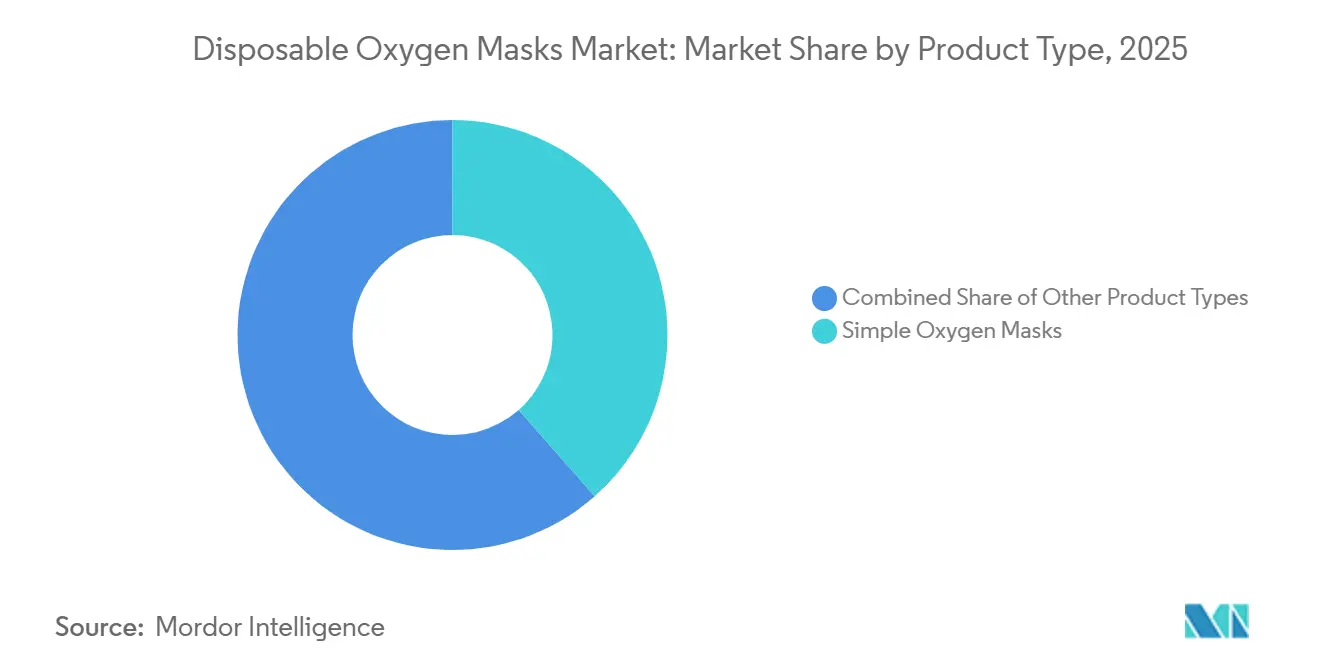
Specialty Masks Gaining Ground as Clinical Complexity IncreasesSimple oxygen masks held 38.5% of the disposable oxygen masks market share in 2026, the largest position among product types. Hospitals keep these masks in large quantities for emergency readiness, routine oxygen supplementation, and multi-ward protocols. Their familiar design and low deployment burden support steady institutional purchasing. Rebreather masks address applications where recirculation of inspired gas is clinically appropriate. Venturi masks are used when more precise fraction of inspired oxygen control is required, including care for COPD where uncontrolled oxygen delivery may create clinical risk. Specialty masks are forecast to grow at a 7.8% CAGR through 2031, reflecting demand for more differentiated functions.
Specialty configurations include products with carbon dioxide monitoring ports, combined aerosol and oxygen capability, and scavenging functions for post-anesthesia care. The disposable oxygen masks market size for specialty masks benefits when a single interface can replace a separate monitoring or delivery step. Vyaire Medical's AirLife Open Et mask received FDA 510(k) clearance in November 2024 as a disposable low-flow oxygen mask that integrates end-tidal carbon dioxide monitoring. Purchasing teams can favor these designs because they reduce formulary complexity and support consistent clinical setups. Intersurgical[3] reported a 2026 peer-reviewed study in which its EcoLite high-concentration mask delivered 15-27% higher oxygen concentrations than a conventional comparator under standardized parameters. The study attributed the result to one-way valve function, reservoir-bag volume, and improved facial seal, showing why clinical evidence can influence specialty-mask decisions when respiratory therapy teams compare oxygen-delivery consistency, patient fit, device functionality, and the operational value of an integrated design.

By Material:
PVC Remains Dominant, but a Defined Regulatory Horizon Favors SiliconePVC held 58.4% of the disposable oxygen masks market share in 2026, supported by cost advantages and validated manufacturing capacity. It remains widely used for standard oxygen-mask designs because suppliers and healthcare buyers are familiar with its processing and performance characteristics. PVC also supports high-volume production for institutional tenders that prioritize dependable supply and cost control. Silicone is forecast to expand at an 8.2% CAGR through 2031. It is used where extended-wear tolerance, neonatal use, or patient-contact specifications require a different material profile. The segment reflects a gradual material shift rather than a rapid replacement of PVC across all mask designs, since manufacturers must validate material performance, retain appropriate production capacity, maintain availability for existing buyers, and meet different regional compliance expectations.
The European Commission[4] extended the DEHP sunset date for medical devices to July 1, 2030 under Regulation (EU) 2023/2482. This deadline defines a compliance window for producers that use legacy DEHP-plasticized PVC in products sold in Europe, requiring them to consider material qualification, technical documentation, manufacturing validation, supplier readiness, and the timing of product changes before the regulatory horizon becomes more immediate. The disposable oxygen masks market size for silicone may gain support as manufacturers qualify alternative materials before that date. North American suppliers work under a different regulatory context, while California has stricter requirements beginning in 2030. Input supply is important because medical-grade silicone is produced by a limited group of vertically integrated suppliers. Rubber and other elastomers remain relevant in smaller specialty uses where neither standard PVC economics nor silicone specifications determine the material choice, giving suppliers a limited but stable option for designs with particular fit, performance, or application requirements.
By Application:
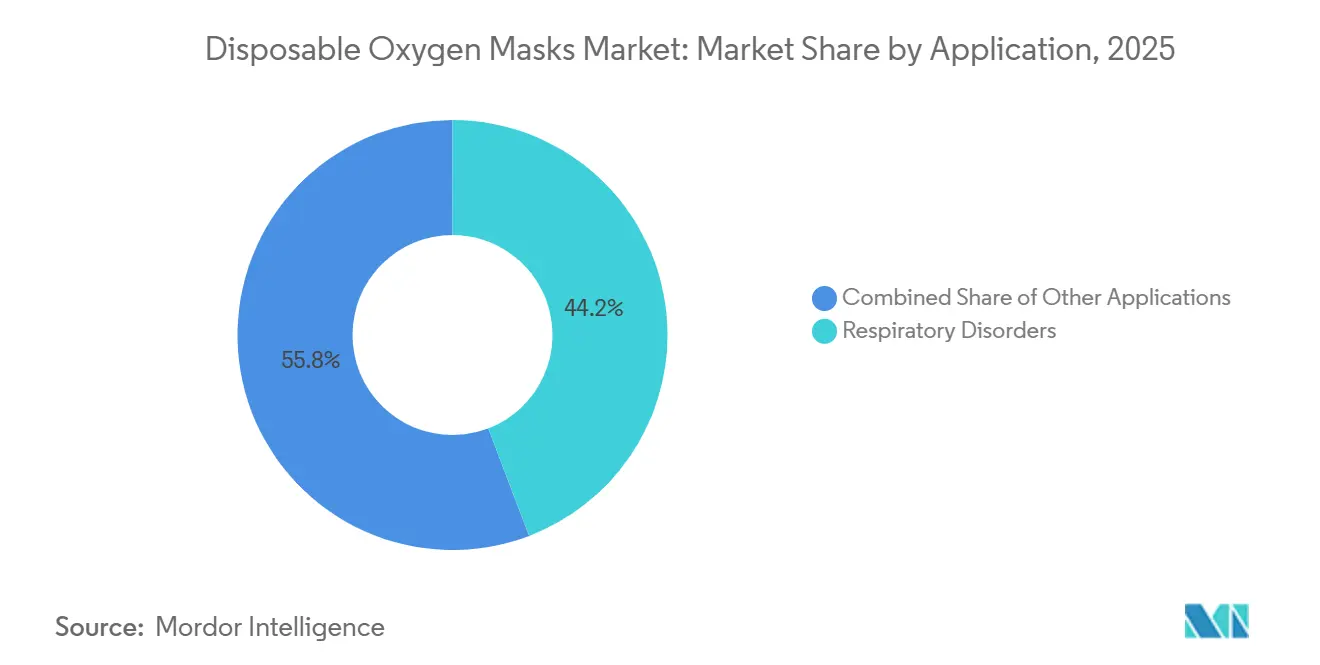
Respiratory Disorders Lead, while Aerosol Therapy Opens a Homecare Growth LaneRespiratory disorders accounted for 44.2% of the disposable oxygen masks market size in 2026, supported by COPD, asthma, and related conditions that can require repeat oxygen supplementation. This application spans hospitals, outpatient settings, and homecare. Chronic care needs create recurring purchases rather than demand limited to acute episodes. Emergency and critical care is the second-largest application because hospitals maintain on-hand inventory for patient-safety requirements. Surgical care also uses supplemental oxygen before and after anesthesia in operating rooms and post-anesthesia care units. These established uses give the disposable oxygen masks market a broad clinical base, as the same category serves chronic respiratory management, emergency readiness, perioperative care, and medication-delivery workflows across several types of healthcare provider.
Aerosol therapy is forecast to grow at a 7.5% CAGR through 2031. Aerosol masks can deliver nebulized medication while maintaining supplemental oxygen delivery, avoiding a need to interrupt oxygen therapy during drug administration. WHO identified limited availability of inhaled medicines in primary care as a system gap in South-East Asia. The combination of community-level care and daily therapy use supports replacement needs in outpatient and home settings, where a patient-facing interface must be accessible, straightforward to use, and available with sufficient regularity to support ongoing treatment routines. Teleflex markets the ISO-Gard Mask with ClearAir Technology for post-anesthesia use, combining scavenging and oxygen delivery functions. WHO's 2026 work on asthma and COPD care in Nepal and Sri Lanka also identifies a need to strengthen primary-care respiratory services.
By End User:
Hospitals Anchor Volume, while Homecare Redefines the Growth EquationHospitals and clinics held 42.3% of the disposable oxygen masks market share in 2026. Their position reflects the large number of acute-care encounters that need supplemental oxygen delivery and the stocking requirements of multiple clinical departments, where emergency, respiratory therapy, surgical, and ward teams all need immediate access to familiar products that can be supplied in consistent volumes and used without complex preparation. Purchasing is commonly managed through group purchasing organizations and national tenders. These channels reward certified quality systems, reliable fulfillment, and steady product specifications, since purchasing teams need confidence that the same item will remain available and suitable for staff training, clinical protocols, product traceability, and the broader operational requirements of a large provider network. Emergency services add a dependable purchasing base through resupply arrangements with first responders. Other healthcare facilities, including rehabilitation centers, nursing homes, and ambulatory surgery centers, add demand as more care moves beyond inpatient settings, because each facility type must maintain basic oxygen-delivery capability for the patient groups and procedures it supports.
Homecare is forecast to grow at an 8.8% CAGR through 2031. Patients who use oxygen therapy each day may replace disposable masks weekly or every 2 weeks, which creates higher annual consumption per patient than a single hospital encounter. This makes replenishment capability central to the disposable oxygen masks market. Durable medical equipment suppliers and home-delivery channels can maintain regular availability for these users. The setting also creates a different competitive environment because suppliers must manage patient access, reimbursement, delivery reliability, product availability, and the practical needs of people who may not have the centralized support available inside a hospital. As surgical activity moves to ambulatory facilities, these sites also expand their formularies for oxygen delivery products previously handled mainly by hospital supply chains.
By Distribution Channel:
Direct Sales Dominates, while Online Stores Set the Growth PaceDirect sales accounted for 53.1% of the disposable oxygen masks market share in 2026. Hospitals, emergency services, and large healthcare networks use direct manufacturer or authorized distributor agreements to obtain contract pricing, lot traceability, and fulfillment priority. This structure fits high-volume buyers that require consistent stock across several facilities, clear product traceability, coordinated deliveries, stable contract terms, and a dependable response when demand increases during respiratory illness periods, while allowing purchasing teams to standardize specifications, reduce administrative duplication, and maintain a clearer view of supplies moving through their care networks. Direct relationships also support the documentation and service requirements associated with regulated medical devices. Retail channels serve individual patients and smaller facilities that lack centralized procurement structures. The retail category overlaps with homecare when patients purchase masks for use with provider-supplied oxygen concentrators, creating a purchasing pathway that is less centralized than a hospital contract and more dependent on clear product availability, appropriate documentation, delivery options, and practical access for an individual user.
Online stores are forecast to grow at a 9.5% CAGR through 2031. Digital channels serve homecare patients and smaller clinics that do not have purchasing volumes sufficient for direct manufacturer contracts. Cardinal Health stated in February 2026 that supply-chain visibility and inventory management support product availability during respiratory illness demand surges. Prescription verification and medical-device documentation can limit remote sales in some jurisdictions. Manufacturers are also using digital business-to-business portals for SKU availability, contract adherence, and automatic resupply. These practices make the disposable oxygen masks market increasingly hybrid, combining direct account management with digital ordering tools, so suppliers can retain institutional relationships while giving procurement teams more immediate visibility of catalog items, stock status, and replenishment needs.
Geography Analysis
North America Disposable Oxygen Masks Market
North America held 35.4% of the disposable oxygen masks market share in 2025. The region combines hospital capacity, Medicare home-oxygen coverage, and single-use requirements that support consumption per patient encounter, while its established provider networks, purchasing organizations, and durable medical equipment channels create a setting in which suppliers can serve both hospital demand and the recurring needs of home-based oxygen users. U.S. hospital construction starts reached USD 33.9 billion in 2024 and are projected at USD 30.7 billion in 2026. New facilities establish formularies and supply agreements before opening, which can support future respiratory-consumable demand. Canada adds demand through provincial procurement that favors established contracted suppliers. Mexico contributes through expansion across the IMSS hospital network, where additional institutional activity can broaden the regional demand base for routine acute-care respiratory supplies and support procurement of standard oxygen-delivery interfaces.
Europe and APAC Disposable Oxygen Masks Market
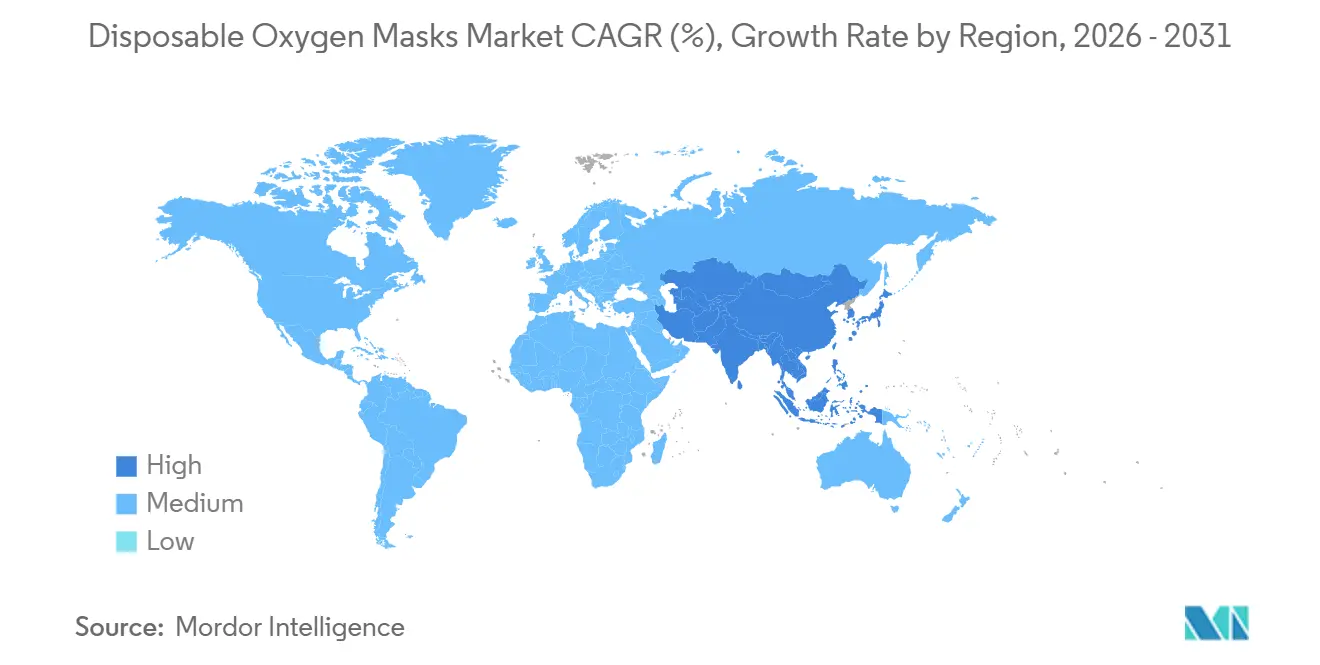
Europe is the second-largest regional setting, with Germany, the United Kingdom, and France supported by national hospital supply contracts and home-oxygen programs. The region's procurement systems make price, compliance, and dependable supply important to the disposable oxygen masks market. Asia-Pacific is forecast to grow at an 8.1% CAGR through 2031, the fastest regional rate. Chronic respiratory diseases account for 12% of deaths in the WHO South-East Asia Region. China is the region's largest national setting, while India is supported by subsidized care and local medical-device manufacturing measures. Japan, South Korea, and Australia have more mature home-respiratory-care needs shaped by aging populations, subsidy programs, and regulatory requirements, which can favor suppliers able to meet established quality expectations and serve home-based patients through organized care channels.
MEA and South America Disposable Oxygen Masks Market
The Middle East and Africa has a split demand profile. Saudi Arabia and the United Arab Emirates are building hospital infrastructure that requires compliant single-use respiratory products. South Africa and other sub-Saharan markets have less institutional capacity but can generate demand through acute-care programs and emergency stockpiles. South America is concentrated in Brazil and Argentina, where public systems manage substantial COPD and asthma needs under cost-sensitive purchasing budgets. Brazil's respiratory-care programs support volumes that remain focused on lower-cost simple masks. In emerging settings, the disposable oxygen masks market favors suppliers that can combine compliance, cost control, and sufficient distribution coverage, since affordable products must still reach hospitals and community settings with appropriate documentation, consistent quality, and dependable local supply.
Competitive Landscape
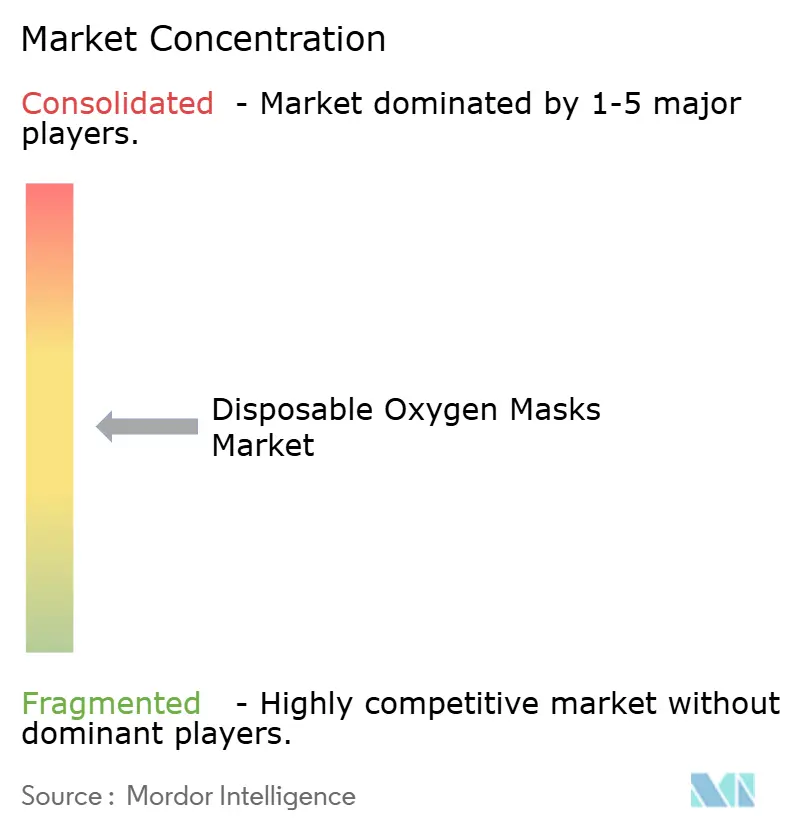
The disposable oxygen masks market is moderately consolidated among leading suppliers and fragmented among smaller regional producers. Intersurgical, Medline Industries, Vyaire Medical, Flexicare, Drive DeVilbiss Healthcare, and Dynarex compete through product breadth, institutional relationships, and compliant product lines. Their portfolios cover simple, Venturi, rebreather, and specialty designs, allowing them to address multiple hospital and homecare needs through a single supplier relationship, a practical benefit for customers that want fewer vendor accounts, more consistent product standards, and coordinated support across acute-care and community-care settings. Intersurgical agreed in December 2025 to acquire Teleflex's Acute Care and Interventional Urology businesses for USD 530 million, with closing expected in the second half of 2026. The transaction brings the Hudson RCI oxygen-therapy brand into Intersurgical's portfolio and reinforces the importance of scale in supplier relationships, because hospital group purchasing organizations and homecare distributors may prefer a partner that can supply connected respiratory categories, maintain regulatory support, and serve customers through a broader geographic and commercial network.
Competition in the disposable oxygen masks market is shaped by more than product price. Clinical data, ISO 13485 quality systems, FDA clearance, CE marking, and reliable distribution can affect eligibility for institutional purchasing. Fisher and Paykel Healthcare received a U.S. patent in October 2025 for an automatically adjusting headgear mechanism in a respiratory-mask assembly. This example shows continued investment in fit and patient-handling performance. Intersurgical's 2026 study of the EcoLite product provides another example of suppliers using performance data to distinguish their offerings. Such moves favor established companies that can support product development, documentation, and broad customer coverage, while also giving hospital customers evidence that a supplier can maintain product quality, meet regulatory needs, and address several respiratory-care requirements through one relationship.
There is still room for development in combination aerosol and oxygen masks for home-based chronic disease management. Cost-competitive DEHP-free PVC products made in India or Southeast Asia may also gain relevance if producers can meet institutional quality and regulatory requirements. Smaller companies such as Besmed Health Business Corp., Polymed Medical Devices, and GaleMed Corporation compete through regional distribution and price in Asia-Pacific and MEA tenders. This places pressure on less-differentiated products offered by larger companies, especially where buyers can compare standardized products primarily on tender price, local availability, product specifications, and the ability of a distributor to respond consistently to institutional requirements. Suppliers that link clinical evidence with manufacturing compliance and access to group purchasing organizations or durable medical equipment distributors hold an advantage.
Disposable Oxygen Masks Industry Leaders
-
Koninklijke Philips N.V.
-
Medtronic plc
-
Medline Industries, LP
-
Cardinal Health, Inc.
-
Becton, Dickinson and Company
- *Disclaimer: Major Players sorted in no particular order
Disposable Oxygen Masks Market Companies Covered in this Report
- Medline Industries
- Teleflex
- Intersurgical Ltd.
- Flexicare
- Dynarex
- VYAIRE MEDICAL, INC.
- Ambu
- Drive DeVilbiss Healthcare
- Besmed Health Business
- HEYER Medical AG
- BLS Systems Limited
- Cardinal Health
- Beckton Dickinson
- ICU Medical
- Dragerwerk AG and Co. KGaA
- Fisher & Paykel Healthcare
- Polymed Medical Devices
- GaleMed Corporation
- PFM medical AG
- Airways Surgical Pvt. Ltd.
- Armstrong Medical Ltd.
- Mercury Medical
- SunMed, LLC
- Convatec
- Zoll Medical
- Masimo
- Koninklijke Philips
- Medtronic
- Resmed
Recent Industry Developments in Disposable Oxygen Masks Market
- April 2026: Wellstar Kennestone Regional Medical Center in Marietta, Georgia, opened its USD 400 million, 235-bed Yellow Tower, adding acute-care capacity across cardiology, neurology, oncology, and surgery, expanding institutional consumption of single-use respiratory products immediately upon commissioning.
- April 2026: Intersurgical's SENTRI EcoLite adult oxygen mask series was published on FDA's Global Unique Device Identification Database, including versions with integrated carbon dioxide monitoring lines, broadening its registered U.S. footprint for high-concentration oxygen masks.
- December 2025: Intersurgical Ltd. entered a definitive agreement to acquire Teleflex's Acute Care and Interventional Urology businesses for USD 530 million in cash, pending regulatory approvals expected in the second half of 2026. The acquisition integrates Teleflex's anesthesia, airway-management, and oxygen-therapy product lines, including the Hudson RCI respiratory brand, into Intersurgical's global portfolio.
- November 2024: Vyaire Medical's AirLife Open Et Oxygen Mask and Open Et+ Oxygen Mask received FDA 510(k) clearance under 21 CFR 868.1400. The device integrates end-tidal carbon dioxide monitoring into a disposable low-flow oxygen therapy mask, eliminating a separate interface change step and reducing clinician workflow burden.
Global Disposable Oxygen Masks Market Report Scope
Segmentation Overview
| Simple Oxygen Masks |
| Rebreather Masks |
| Venturi Masks |
| Specialty Oxygen Masks |
| Polyvinyl Chloride |
| Silicone |
| Others (Rubber and Elastomer) |
| Respiratory Disorders |
| Emergency & Critical Care |
| Surgical Care |
| Aerosol Therapy |
| Hospitals & Clinics |
| Homecare |
| Emergency Services |
| Other Healthcare Facilities |
| Direct Sales |
| Retail |
| Online Stores |
| North America | United States |
| Canada | |
| Mexico | |
| Europe | Germany |
| United Kingdom | |
| France | |
| Italy | |
| Spain | |
| Rest of Europe | |
| Asia-Pacific | China |
| Japan | |
| India | |
| South Korea | |
| Australia | |
| Rest of Asia-Pacific | |
| Middle East and Africa | GCC |
| South Africa | |
| Rest of Middle East and Africa | |
| South America | Brazil |
| Argentina | |
| Rest of South America |
| Segmentation by Product Type | Simple Oxygen Masks | |
| Rebreather Masks | ||
| Venturi Masks | ||
| Specialty Oxygen Masks | ||
| Segmentation by Material | Polyvinyl Chloride | |
| Silicone | ||
| Others (Rubber and Elastomer) | ||
| Segmentation by Application | Respiratory Disorders | |
| Emergency & Critical Care | ||
| Surgical Care | ||
| Aerosol Therapy | ||
| Segmentation by End User | Hospitals & Clinics | |
| Homecare | ||
| Emergency Services | ||
| Other Healthcare Facilities | ||
| Segmentation by Distribution Channel | Direct Sales | |
| Retail | ||
| Online Stores | ||
| Segmentation by Geography | North America | United States |
| Canada | ||
| Mexico | ||
| Europe | Germany | |
| United Kingdom | ||
| France | ||
| Italy | ||
| Spain | ||
| Rest of Europe | ||
| Asia-Pacific | China | |
| Japan | ||
| India | ||
| South Korea | ||
| Australia | ||
| Rest of Asia-Pacific | ||
| Middle East and Africa | GCC | |
| South Africa | ||
| Rest of Middle East and Africa | ||
| South America | Brazil | |
| Argentina | ||
| Rest of South America | ||
Key Questions Answered in the Report
What is the projected growth rate for disposable oxygen masks through 2031?
The disposable oxygen masks market is projected to grow at an 8.9% CAGR from 2026 to 2031, reaching USD 2.46 billion by 2031.
Which product type leads disposable oxygen mask demand?
Simple oxygen masks led with 38.5% share in 2026 because hospitals purchase them in volume for routine oxygen delivery and emergency preparedness.
Why is homecare important for disposable oxygen mask suppliers?
Homecare is forecast to grow at an 8.8% CAGR through 2031, supported by recurring replacement needs for patients using daily oxygen therapy.
Which material is growing fastest in disposable oxygen masks?
Silicone is forecast to expand at an 8.2% CAGR through 2031 as manufacturers prepare for a changing regulatory environment and specialized patient-contact needs.
Which region is growing fastest for disposable oxygen masks?
Asia-Pacific is forecast to grow at an 8.1% CAGR through 2031, supported by respiratory disease burden and expanding care capacity.
What limits adoption of disposable oxygen masks in high-acuity care?
High-flow nasal cannula systems can replace conventional masks in monitored intensive-care and step-down settings, although masks remain useful in emergency, ward, surgical, and homecare settings.