
Digital Diagnostics Software Market Size and Share
Market Overview
| Study Period | 2020 - 2031 |
|---|---|
| Market Size (2026) | USD 5.23 Billion |
| Market Size (2031) | USD 9.35 Billion |
| Growth Rate (2026 - 2031) | 12.33 % |
| Fastest Growing Market | Asia-Pacific |
| Largest Market | North America |
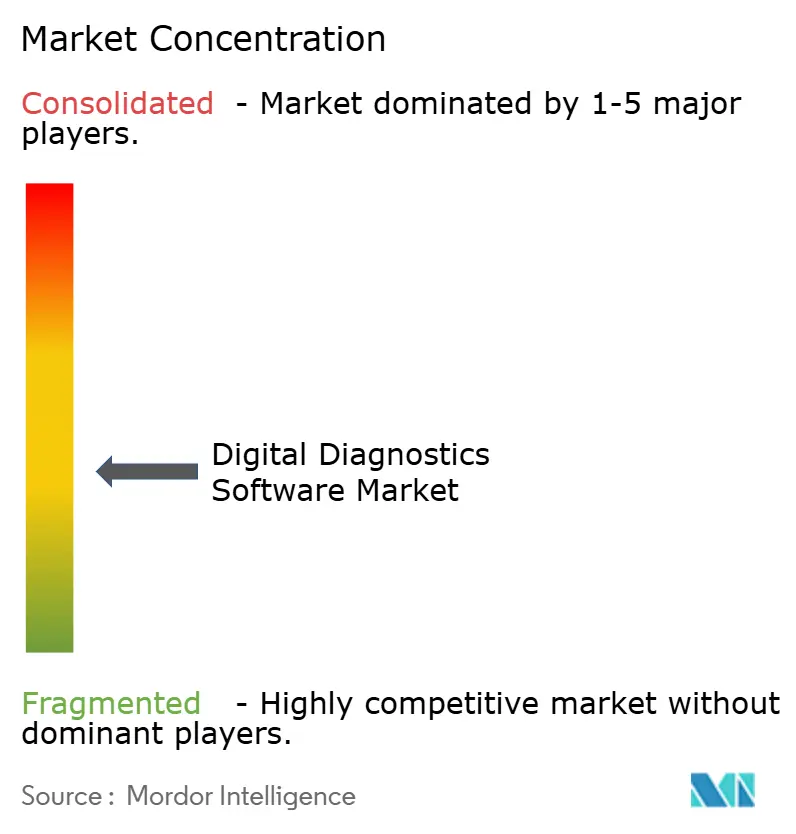
| Market Concentration | Medium |
Major Players *Disclaimer: Major Players sorted in no particular order Image © Mordor Intelligence. Reuse requires attribution under CC BY 4.0. | |

Digital Diagnostics Software Market Analysis by Mordor Intelligence
The Digital Diagnostics Software Market size is expected to increase from USD 4.56 billion in 2025 to USD 5.23 billion in 2026 and reach USD 9.35 billion by 2031, growing at a CAGR of 12.33% over 2026-2031.
The digital diagnostics software market is moving from device-centered imaging toward connected software platforms that support diagnostic work across clinical settings. Health systems are seeking higher throughput because imaging volumes are rising while specialist capacity remains limited. Procurement decisions increasingly consider integration, workflow management, and the ability to update models over time. Established imaging vendors can use their installed hospital relationships, while specialist AI firms compete through clinical validation and flexible deployment. The next stage of the digital diagnostics software market is likely to reach mid-sized hospitals and settings with limited specialist access, where remote review and triage can address practical gaps in care delivery.
Key Report Takeaways
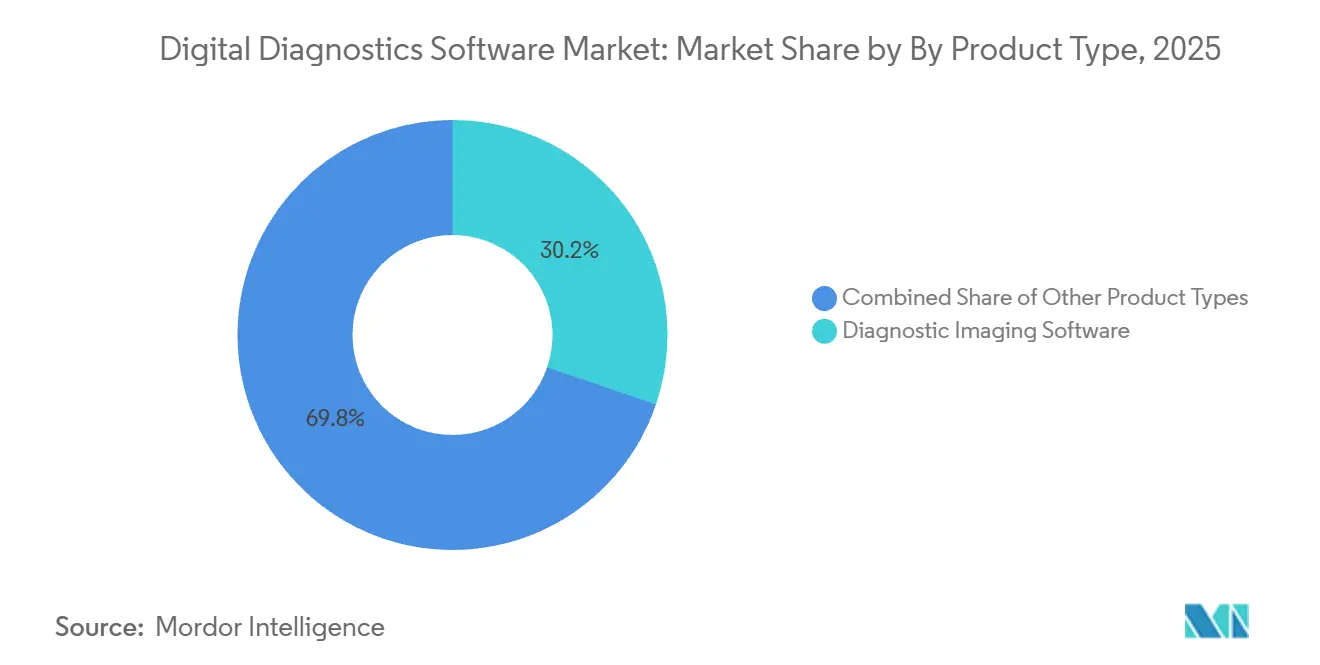
By product type, Diagnostic Imaging Software led with 30.2% revenue share in 2025, while Image Analysis and Computer Vision Software is forecast to expand at a 13.3% CAGR through 2031.
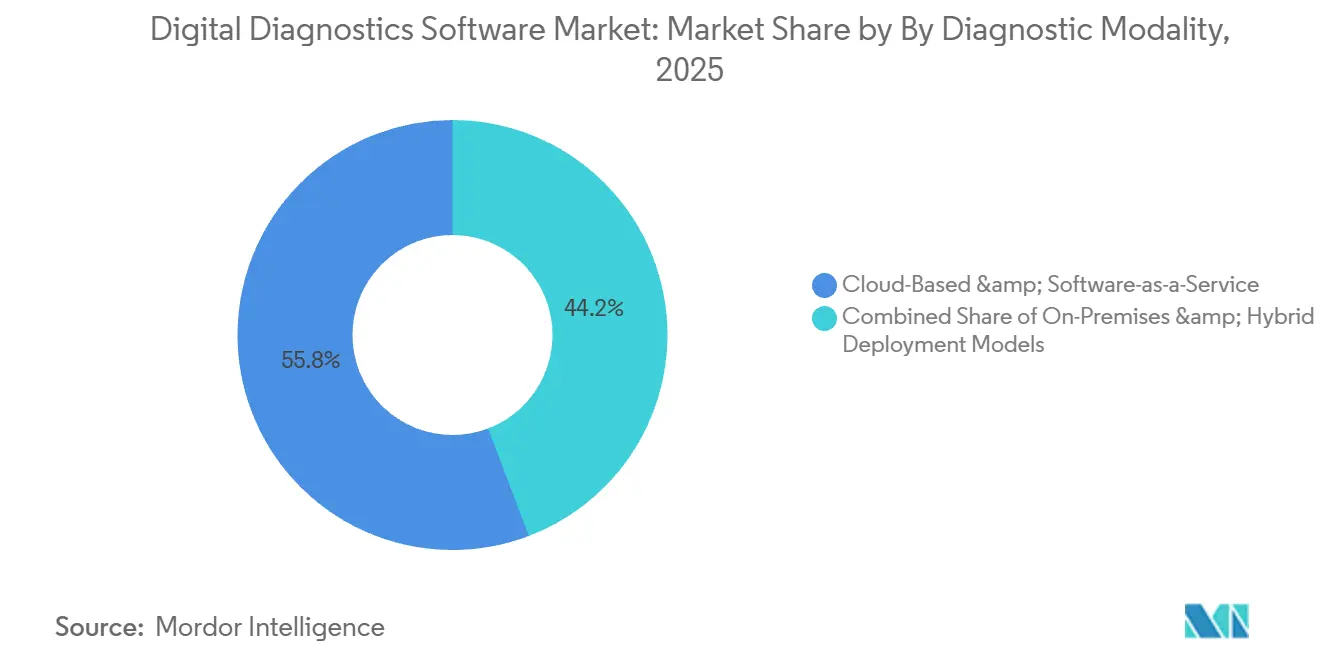
By deployment mode, Cloud-Based and Software-as-a-Service deployment held 55.8% of revenue in 2025.
By diagnostic modality, Imaging-Based Diagnostics held 38.5% revenue share in 2025, while Multi-Modal Diagnostics recorded the highest projected CAGR at 12.7% through 2031.
By application, Radiology accounted for 25.2% of revenue in 2025, while Oncology is forecast to expand at a 12.9% CAGR through 2031.
By end user, Hospitals and Health Systems held 43.4% of revenue in 2025, while Diagnostic Laboratories recorded the highest projected CAGR at 12.5% through 2031.
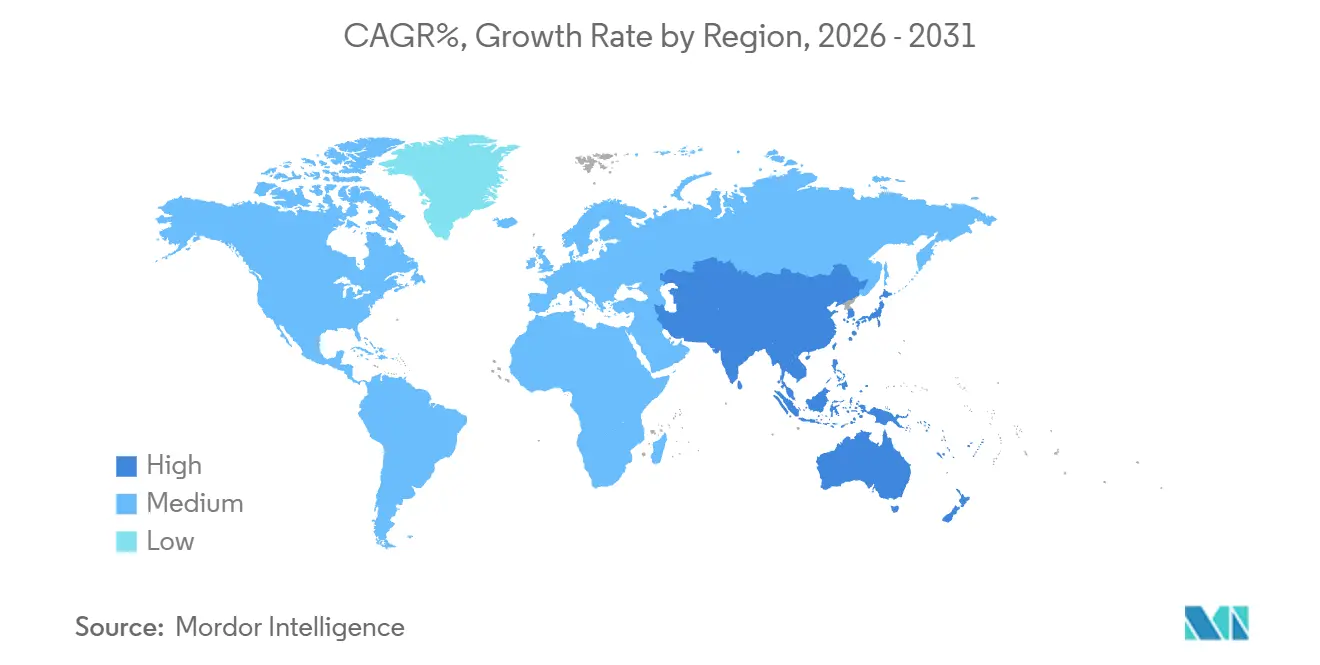
By geography, North America held 39.1% of revenue in 2025, while Asia Pacific is forecast to expand at a 12.6% CAGR through 2031.
Note: Market size and forecast figures in this report are generated using Mordor Intelligence’s proprietary estimation framework, updated with the latest available data and insights as of January 2026.
Global Digital Diagnostics Software Market Trends and Insights
Drivers Impact Analysis*
| Driver | (~) % Impact on CAGR Forecast | Geographic Relevance | Impact Timeline |
|---|---|---|---|
| Faster Triage and Early Disease Detection | +3.2% | Global | Short term (≤ 2 years) |
| AI-Enabled Radiology and Pathology Workflows | +2.8% | North America and Europe, with spillover to Asia Pacific | Short term (≤ 2 years) |
| Multi-Modal Clinical Data Convergence | +1.8% | Global | Medium term (2-4 years) |
| Workflow Automation by Providers | +1.5% | North America, Europe, and Asia Pacific | Short term (≤ 2 years) |
| Autonomous Point-of-Care Diagnostics in Specialist-Scarce Settings | +1.2% | Asia Pacific, Middle East and Africa, and South America | Medium term (2-4 years) |
| Algorithm Portability Across Imaging and Laboratory Data | +1.0% | Global | Medium term (2-4 years) |
| Source: Mordor Intelligence | |||
Rising Demand for Faster Triage and Early Disease Detection
Emergency and primary care teams are adopting AI-assisted triage tools as imaging demand and physician shortages place more pressure on diagnostic services. A 2026 clinical study[1]Weizhen Chen et al., “A DeepSeek-Powered AI System for Automated Chest Radiograph Interpretation in Clinical Practice,” Nature Communications, nature.com found that AI assistance in chest radiograph interpretation reduced junior radiologist report revisions and accelerated senior review, which can shorten the review cycle in high-volume institutions. The result supports demand for tools that help clinicians prioritize urgent cases without replacing clinical oversight. As software moves closer to first-line screening, providers need outputs that can be reviewed and explained during quality assurance and medicolegal review. This need favors systems that fit existing reporting processes and retain clear records of how the software supported a finding. In the digital diagnostics software market, faster triage therefore raises the value of workflow design and accountability alongside diagnostic performance.
Expansion of AI-Enabled Radiology and Pathology Workflows
AI is becoming part of the daily operating workflow in radiology and pathology rather than a separate tool used for selected cases. Yale New Haven Health deployed Rad AI across 16 outpatient imaging centers and 5 hospital campuses in June 2026, covering more than 700,000 annual examinations. The deployment showed that health systems place substantial weight on whether a platform can work across sites and existing systems. PathAI and MedStar Health also announced a multiyear partnership in April 2026 to deploy the AISight Dx digital pathology platform across a laboratory network of more than 40 pathologists. These deployments place emphasis on physician time and operational consistency, which broadens the group of hospital leaders involved in purchasing decisions. The digital diagnostics software market benefits when a platform can be extended across departments without requiring a separate technology project for each clinical use.
Multi-Modal Clinical Data Convergence
Diagnostic platforms are increasingly designed to combine images with structured health record data, genomic information, and physiological signals. The CLIMB clinical foundation model was trained on 4.5 million patient samples and 19.0 terabytes of cross-modal data, and it reported a 29% improvement in ultrasound performance and a 23% improvement in ECG analysis against single-modality baselines. These results show why vendors are working to connect data types that were historically stored and used separately. A company with longitudinal patient data may have an advantage because it can train and evaluate models across more complete clinical histories. That advantage can be difficult for smaller providers to match with algorithm development alone. The digital diagnostics software market is therefore placing greater value on data governance, interoperability, and access to linked clinical datasets.
Provider Push Toward Workflow Automation
Providers are using diagnostic software to shift repetitive tasks away from specialists so that they can focus on more complex cases. This approach changes the purchase case from a narrow accuracy discussion to a broader discussion of staffing, turnaround time, and capacity. DoctorNet[2]DoctorNet, “Chest CT Reading Support AI Engine Release,” DoctorNet received Japanese regulatory approval for its MONCAD CTLN chest CT engine in January 2025 and its Heuron CTS head CT engine in October 2025, both for use through the AI-RAD telemedicine platform. The platform served more than 1,500 medical institutions, which illustrates the role of networked delivery in addressing reading backlogs. Similar operating models can extend software use from radiology into pathology and laboratory services. This supports the digital diagnostics software market because automation can be adopted as part of an established clinical service rather than as a stand-alone technical purchase.
Restraints Impact Analysis*
| Restraint | (~) % Impact on CAGR Forecast | Geographic Relevance | Impact Timeline |
|---|---|---|---|
| Algorithm Explainability and Clinical Liability Concerns | -1.5% | Global, with highest compliance pressure in North America and the European Union | Short term (≤ 2 years) |
| PACS, EHR, and LIS Integration and Validation Costs | -1.2% | Global | Short term (≤ 2 years) |
| Dataset Shift Across Local Populations and Care Settings | -0.8% | Asia Pacific and Middle East and Africa, with spillover to South America | Medium term (2-4 years) |
| Limited Reimbursement for Software-Only Diagnostics | -1.0% | Global, with the greatest pressure in North America and Europe | Medium term (2-4 years) |
| Source: Mordor Intelligence | |||
Algorithm Explainability and Clinical Liability Concerns
Liability has become a direct procurement consideration for AI-assisted diagnostic tools. California AB-2575 addresses clinical decision support systems and reinforces the importance of clear governance for healthcare AI deployment. The American Medical Association[3]American Medical Association Council on Science and Public Health, “Explainability of Artificial/Augmented Intelligence and Machine Learning Algorithms,” American Medical Association noted in 2025 that guidance on AI explainability remained an active issue for clinical use. Providers need to understand how an output entered the clinical workflow, who reviewed it, and where final responsibility rests. This can favor suppliers that can offer detailed audit records, stronger governance support, and contractual assurance. The digital diagnostics software market may therefore see larger vendors benefit where customers place a premium on risk management.
High Integration and Validation Costs Across PACS, EHR, and LIS
The cost of diagnostic software deployment extends beyond the subscription or license fee. A hospital must connect the platform to imaging, health record, and laboratory systems while protecting data flow and clinical continuity. Each new site may also require local validation to confirm that the model performs reliably for its patients and care setting. This work can be more demanding for mid-sized institutions with smaller IT teams and fewer resources for system integration. As a result, adoption can remain concentrated among academic medical centers and integrated delivery networks even when cloud pricing lowers the direct software cost. These integration demands can slow the digital diagnostics software market because technical readiness differs widely between provider organizations.
*Our forecasts treat driver/restraint impacts as directional, not additive. The impact forecasts reflect baseline growth, mix effects, and variable interactions.
Segment Analysis
By Product Type: Image Analysis Expands the Role of Imaging Informatics
Diagnostic Imaging Software held 30.2% of 2025 revenue, making it the largest product category in the digital diagnostics software market. Its position reflects the extensive installed base of radiology departments that rely on PACS-integrated systems for routine image reading, reporting, storage, and communication between care teams. Image Analysis and Computer Vision Software is forecast to grow at a 13.3% CAGR through 2031 as providers introduce tools for lesion detection, segmentation, prioritization, and volumetric measurement. These functions address tasks that can consume substantial specialist time when imaging volumes are high and reporting windows are limited. Clinical Decision Support Software is gaining relevance in primary care, while Laboratory and In Vitro Diagnostics Software advances with laboratory automation and the need to work with existing information systems.
Pathology and Digital Microscopy Software is growing alongside the adoption of digitized whole-slide imaging, which gives laboratories a practical foundation for centralized review and software-supported analysis. Mayo Clinic reported in 2025 that Techcyte Fusion Anatomic Pathology supported its digital pathology transformation, showing that AI-enabled image management can be used across a large laboratory setting without separating the technology from routine workflows. Fujifilm launched an AI-based interstitial lung disease analysis software product in Japan in July 2025 after regulatory certification, linking product development with local clinical and regulatory requirements. The digital diagnostics software industry is seeing value shift toward products that fit established imaging workflows instead of requiring clinicians to work in separate reading environments. This favors suppliers that can combine image analysis, reporting, storage, audit functions, and enterprise workflow tools in a clinically coherent offering.



By Deployment Mode: Cloud and Software-as-a-Service Support Connected Operations
Cloud-Based and Software-as-a-Service deployment held 55.8% of 2025 revenue, the largest share of the digital diagnostics software market. The approach supports model updates, multisite coordination, and access to shared software services without maintaining separate hardware and version control processes at every location. It also helps providers apply the same workflow rules, user access controls, and software versions across distributed hospital and imaging networks. On-premises systems remain relevant where data residency requirements, local governance, or established infrastructure shape hospital preferences. Hybrid deployment is becoming an option when providers keep sensitive data locally while using cloud resources for selected computing, integration, and workflow tasks.
Cloud deployment also changes the position of legacy PACS vendors, which can offer diagnostic software as part of a broader managed service rather than as a separate technology purchase. Sectra activated its digital pathology module at Guelph General Hospital in February 2026 through the hospital’s existing Sectra One Cloud platform. The case shows how a cloud platform used for one imaging area can support an adjacent diagnostic module, drawing on familiar infrastructure and established user relationships. This can reduce the need for a separate procurement project, simplify implementation, and make it easier for clinical teams to adopt additional digital functions. In the digital diagnostics software market, this creates a distribution advantage for suppliers whose platforms can add new modules while preserving interoperability with the customer’s wider information environment.
By Diagnostic Modality: Multi-Modal Systems Link Clinical Evidence Sources
Imaging-Based Diagnostics commanded 38.5% of the digital diagnostics software market share in 2025, supported by the high volume of digitized radiology and pathology workflows. Multi-Modal Diagnostics is forecast to grow at a 12.7% CAGR through 2031, the highest rate among diagnostic modalities. The category brings image data together with structured health record information, genomic inputs, and other clinical evidence to support a more complete diagnostic review. This approach can improve clinical context, but it also requires well-labeled, longitudinally linked datasets and careful handling of different data standards. Signal-Based Diagnostics is emerging as another important area as software developers apply AI to physiological information captured during routine care.
Anumana’s March 2026 regulatory clearance for an AI-based ECG algorithm for early pulmonary hypertension detection shows how physiological signal data can move beyond general screening support toward a more direct diagnostic role in a defined clinical pathway. In Vitro and Molecular Diagnostics Software continues to advance with laboratory automation investment, while Ophthalmic Diagnostics supports screening in settings that may not have immediate specialist access. These developments broaden the digital diagnostics software market beyond traditional image interpretation and extend the range of clinical data that software platforms need to manage. Suppliers will need to connect these data types and workflows without making the user experience more fragmented for clinicians.
By Application: Oncology Receives Growing Attention for Diagnostic Workflow Support
Radiology held 25.2% of the digital diagnostics software market share in 2025, reflecting decades of imaging digitization, large study volumes, and the routine use of digital reporting workflows. Oncology is forecast to grow at a 12.9% CAGR through 2031 as cancer programs seek to reduce the time between scan acquisition, diagnostic review, and treatment decisions. Faster diagnostic progression can improve coordination across imaging, pathology, oncology, and other teams involved in a patient’s care pathway. Cardiology is also gaining support from AI-enabled imaging and procedural guidance, where clinicians need timely and consistent interpretation during interventions. Abbott[4]Abbott, “Abbott Receives FDA Clearance and CE Mark for Next-Generation Ultreon 3.0 AI-Powered Coronary Imaging Platform,” Abbott received FDA clearance and CE Mark for Ultreon 3.0 in April 2026, an AI-powered coronary imaging platform that uses optical coherence tomography.
Neurology has a strong unmet need because early cognitive assessment can be difficult to scale through specialist services alone. Otsuka launched Mirebo in Japan in January 2025 as an AI-powered eye-tracking neuropsychological test, and it became the country’s first cognitive-diagnostic software as a medical device to receive insurance reimbursement. Infectious Disease and Women’s Health are progressing more gradually because labeled training data is less available, and commercial focus has been stronger in large clinical specialties. Even so, these applications remain open spaces for suppliers that can establish clinical validation, appropriate referral guidance, and a clear fit with care delivery processes. The digital diagnostics software market can expand in these fields when developers meet the practical needs of non-specialist users without disrupting established diagnostic and treatment pathways.
By End User: Hospitals Lead While Diagnostic Laboratories Grow Fastest
Hospitals and Health Systems held 43.4% of 2025 revenue, the largest end-user position in the digital diagnostics software market. Large networks can support multiyear platform contracts and often have enough diagnostic volume to justify integrated imaging, workflow management, and clinical decision support tools. They also tend to have the information technology resources needed to connect software across imaging, laboratory, and health record systems. Diagnostic Laboratories are forecast to grow at a 12.5% CAGR through 2031 as cloud-native platforms allow advanced analytics to be added to existing laboratory information systems. This can reduce the need for a full technology replacement and offers laboratories a more gradual route to modernizing their analytical capability.
Diagnostic Imaging Centers commonly prioritize stand-alone triage and reporting functions that can be purchased on a per-study basis and incorporated into established operating routines. Clinics and primary care providers are an emerging group whose needs center on point-of-care support, clear referral guidance, and tools that can be used without extensive specialist staffing. Pharmaceutical and biotechnology companies use diagnostic software in clinical trial imaging endpoints and companion diagnostic development, where consistent and regulated outputs are essential. Tempus AI’s multi-omic platform reflects the use of AI-supported diagnostics in pharmaceutical research workflows and creates a parallel opportunity beyond direct patient care. Vendors serving these customers need to show that their systems can provide reproducible outputs across research and clinical settings while adapting to the differing workflows of each end-user group.
Geography Analysis
North America held 39.1% of the digital diagnostics software market in 2025, reflecting mature health record infrastructure, active payer experimentation, and a high concentration of diagnostic software providers. Health systems in the region are moving from separate AI tools toward platforms that manage workflow across imaging sites, outpatient centers, and hospital departments. Yale New Haven Health’s 2026 deployment of Rad AI across 5 hospital campuses and 16 outpatient centers shows the scale of this operating model. Canada is also extending adoption beyond major academic centers, as shown by the February 2026 activation of Sectra Digital Pathology at Guelph General Hospital.
Europe is adopting diagnostic AI within a compliance-focused environment shaped by the European Union’s AI Act and medical device requirements. These requirements can raise the quality threshold for tools that reach the market while adding time and cost for developers. Germany’s Asklepios hospital group deployed Aidoc’s aiOS across more than 25 clinic sites in 2025 through hospital digitization funding. The United Kingdom, France, and Nordic countries are progressing with digital pathology and imaging AI procurement, while Spain and Italy remain earlier in the adoption cycle.
Asia Pacific is forecast to grow at a 12.6% CAGR through 2031, the fastest regional rate in the digital diagnostics software market. China’s county-level remote diagnostic imaging services exceeded 68 million encounters in 2025, demonstrating the scale of demand for remote diagnostic capacity. China’s clinical need and large health service network make remote review and AI-assisted triage especially relevant. Japan has an expanding pipeline of regulated software, including AI Medical Service’s gastroAI model-G2 for early gastric cancer and adenoma detection in 2025. The Middle East and South America are earlier-stage markets where adoption is concentrated in tertiary referral centers and government-supported telemedicine infrastructure. Gulf Cooperation Council countries show the most active procurement in the Middle East, while the broader regional opportunity depends on clinical infrastructure and specialist availability.

Competitive Landscape
The digital diagnostics software market is moderately fragmented across established imaging vendors, specialist AI companies, and cloud-native entrants. GE HealthCare, Siemens Healthineers, and Koninklijke Philips hold durable positions because they can connect AI modules with imaging systems, workflow tools, and existing hospital service relationships. Their established platforms create an advantage when hospitals prefer to add software functions within an enterprise environment they already use. Specialist firms compete by building focused clinical validation and working with multiple imaging and health record systems. Women’s Health, Infectious Disease, and primary care decision support remain areas where large platform vendors have less established coverage.
Companies are using partnerships with healthcare institutions to establish clinical credibility and practical access to users. PathAI’s April 2026 partnership with MedStar Health to deploy AISight Dx combines a digital pathology platform with a large laboratory network. Techcyte’s use of Mayo Clinic-developed digital pathology intellectual property also links product development with an established clinical setting. These relationships can support product validation in real care environments and provide channels into hospital networks. In the digital diagnostics software market, integration into a provider’s workflow can matter as much as a model’s performance in a stand-alone evaluation.
Regulatory capability is becoming a larger part of competitive strategy as suppliers pursue clearance across several jurisdictions. Larger vendors have resources to manage quality systems, clinical evidence, and post-market requirements in multiple regions. Smaller firms can respond by concentrating on specific indications, integrating with enterprise systems, and building hospital partnerships. The distinction between incumbents and specialists is narrowing as large vendors acquire AI capabilities and smaller suppliers secure multisite provider agreements.
Digital Diagnostics Software Industry Leaders
Koninklijke Philips N.V.
NVIDIA Corporation
GE HealthCare Technologies Inc.
Siemens Healthineers AG
F. Hoffmann-La Roche Ltd
- *Disclaimer: Major Players sorted in no particular order

Recent Industry Developments
- June 2026: Rad AI and Yale New Haven Health System deployed AI-powered radiology workflow solutions across 16 outpatient imaging centers and 5 hospital campuses managing 700,000+ annual exams
- April 2026: PathAI and MedStar Health entered a multi-year partnership to deploy AISight Dx, FDA-cleared and CE-IVD-marked in EEA, UK, and Switzerland, across MedStar's laboratory network of 40+ pathologists
- February 2026: Sectra activated its digital pathology module at Guelph General Hospital, the first Canadian institution to go live with Sectra Digital Pathology, leveraging its existing Sectra One Cloud enterprise imaging platform
- July 2025: Fujifilm launched Japan's first AI-based interstitial lung disease analysis software following PMD Act certification


Global Digital Diagnostics Software Market Report Scope
| Predictive Diagnostic Software Platforms |
| Clinical Decision Support Modules |
| Diagnostic Risk-Stratification Engines |
| Predictive Monitoring and Early-Warning Applications |
| Implementation, Integration, and Managed Services |
| Maintenance, Validation, and Model-Governance Services |
| Predictive Analytics |
| Diagnostic Analytics |
| Prescriptive Analytics |
| Cognitive Analytics |
| Risk Scoring and Stratification |
| Anomaly Detection and Early Warning |
| On-Premises |
| Cloud-Based |
| Hybrid |
| Edge and Embedded Deployment |
| Clinical Diagnostics |
| Patient Deterioration and Sepsis Prediction |
| Readmission, Length-of-Stay, and Mortality Prediction |
| Preventive and Population Risk Management |
| Treatment Response and Therapy Optimization |
| Remote Patient Monitoring and Home-Based Care |
| Clinical Trial and Real-World Evidence Analytics |
| Diagnostic Utilization and Stewardship |
| Hospitals and Health Systems |
| Physician Groups and Clinics |
| Diagnostic Laboratories and Pathology Networks |
| Payers and Accountable Care Organizations |
| Pharmaceutical and Biotechnology Companies |
| Research Institutes and Academic Medical Centers |
| Public Health Agencies |
| North America | United States |
| Canada | |
| Mexico | |
| Europe | Germany |
| United Kingdom | |
| France | |
| Italy | |
| Spain | |
| Rest of Europe | |
| Asia-Pacific | China |
| Japan | |
| India | |
| South Korea | |
| Australia | |
| Rest of Asia-Pacific | |
| Middle East and Africa | GCC |
| South Africa | |
| Rest of Middle East and Africa | |
| South America | Brazil |
| Argentina | |
| Rest of South America |
| Product and Offering | Predictive Diagnostic Software Platforms | |
| Clinical Decision Support Modules | ||
| Diagnostic Risk-Stratification Engines | ||
| Predictive Monitoring and Early-Warning Applications | ||
| Implementation, Integration, and Managed Services | ||
| Maintenance, Validation, and Model-Governance Services | ||
| Analytics Function | Predictive Analytics | |
| Diagnostic Analytics | ||
| Prescriptive Analytics | ||
| Cognitive Analytics | ||
| Risk Scoring and Stratification | ||
| Anomaly Detection and Early Warning | ||
| Deployment | On-Premises | |
| Cloud-Based | ||
| Hybrid | ||
| Edge and Embedded Deployment | ||
| Application | Clinical Diagnostics | |
| Patient Deterioration and Sepsis Prediction | ||
| Readmission, Length-of-Stay, and Mortality Prediction | ||
| Preventive and Population Risk Management | ||
| Treatment Response and Therapy Optimization | ||
| Remote Patient Monitoring and Home-Based Care | ||
| Clinical Trial and Real-World Evidence Analytics | ||
| Diagnostic Utilization and Stewardship | ||
| Segmentation by End User | Hospitals and Health Systems | |
| Physician Groups and Clinics | ||
| Diagnostic Laboratories and Pathology Networks | ||
| Payers and Accountable Care Organizations | ||
| Pharmaceutical and Biotechnology Companies | ||
| Research Institutes and Academic Medical Centers | ||
| Public Health Agencies | ||
| Segmentation by Geography | North America | United States |
| Canada | ||
| Mexico | ||
| Europe | Germany | |
| United Kingdom | ||
| France | ||
| Italy | ||
| Spain | ||
| Rest of Europe | ||
| Asia-Pacific | China | |
| Japan | ||
| India | ||
| South Korea | ||
| Australia | ||
| Rest of Asia-Pacific | ||
| Middle East and Africa | GCC | |
| South Africa | ||
| Rest of Middle East and Africa | ||
| South America | Brazil | |
| Argentina | ||
| Rest of South America | ||


Key Questions Answered in the Report
What is the projected value of digital diagnostics software by 2031?
The sector is forecast to reach USD 9.4 billion by 2031, rising from USD 4.6 billion in 2026 at a 12.3% CAGR.
Which product category leads digital diagnostics software revenue?
Diagnostic Imaging Software led product revenue with a 30.2% share in 2025, supported by PACS-integrated radiology workflows.
Why are cloud deployments important for diagnostic software providers?
Cloud and Software-as-a-Service deployment held 55.8% of 2025 revenue because it supports updates, multisite coordination, and connected workflows.
Which clinical application is growing fastest through 2031?
Oncology is forecast to grow at a 12.9% CAGR through 2031 as care teams seek faster progression from imaging to treatment decisions.
Which region has the highest forecast growth rate?
Asia Pacific is forecast to grow at a 12.6% CAGR through 2031, supported by demand for remote diagnostics and AI-assisted triage.
What slows adoption of diagnostic AI software?
Integration with PACS, EHR, and laboratory systems, local validation needs, liability concerns, and limited reimbursement can delay deployment.
Page last updated on:





