
Depression Screening Market Size and Share
Market Overview
| Study Period | 2020 - 2031 |
|---|---|
| Market Size (2026) | USD 2.10 Billion |
| Market Size (2031) | USD 3.03 Billion |
| Growth Rate (2026 - 2031) | 7.62 % |
| Fastest Growing Market | Asia-Pacific |
| Largest Market | North America |
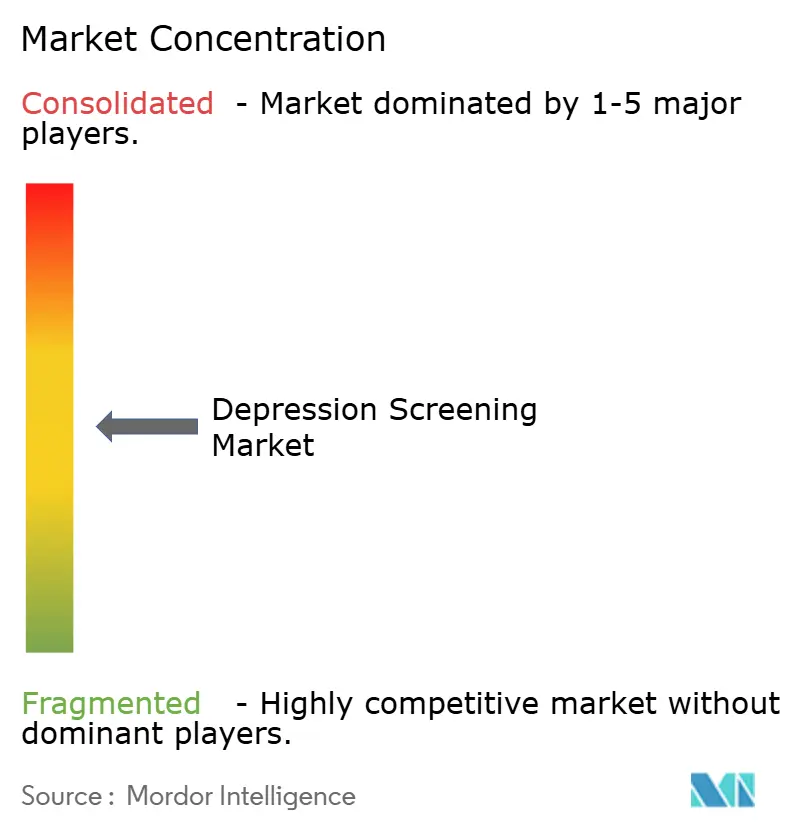
| Market Concentration | Medium |
Major Players *Disclaimer: Major Players sorted in no particular order Image © Mordor Intelligence. Reuse requires attribution under CC BY 4.0. | |
Depression Screening Market Analysis by Mordor Intelligence
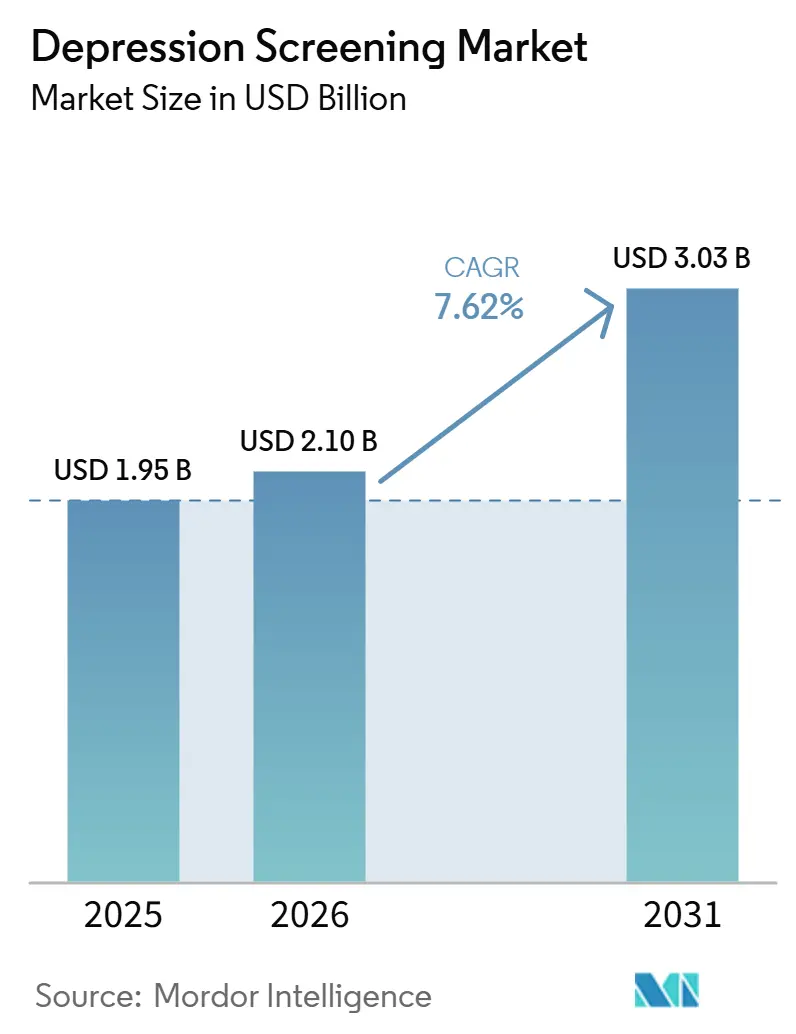
The Depression Screening Market size is expected to increase from USD 1.95 billion in 2025 to USD 2.10 billion in 2026 and reach USD 3.03 billion by 2031, growing at a CAGR of 7.62% over 2026-2031.
The depression screening market is supported by clinical recommendations that make screening a routine part of care for adults, pregnant and postpartum people, and adolescents. Digital delivery is moving screening from separate questionnaires into primary care, telehealth, and specialty workflows. The commercial opportunity increasingly depends on whether providers can connect a positive screen with referral, treatment, and recorded follow-up. AI-based tools can extend questionnaire-led screening through voice, text, facial, and behavioral signals, but privacy rules and reimbursement requirements may slow their use. The depression screening market therefore favors platforms that can combine clinical validation, workflow integration, and sensitive-data controls.
Key Report Takeaways
- By platform and technology, Telehealth and Virtual Care Platforms held 44.31% revenue share in 2025, while AI-Based Screening Tools are forecast to grow at a 10.38% CAGR through 2031.
- By application, Psychological Health Management held 43.44% revenue share in 2025, while Treatment Triage and Referral is forecast to grow at an 11.52% CAGR through 2031.
- By care setting, Hospitals and Clinics held 40.24% revenue share in 2025, while Homecare Settings are forecast to grow at an 11.22% CAGR through 2031.
- By age group, Adults held 41.56% revenue share in 2025, while Adolescents are forecast to grow at a 12.95% CAGR through 2031.
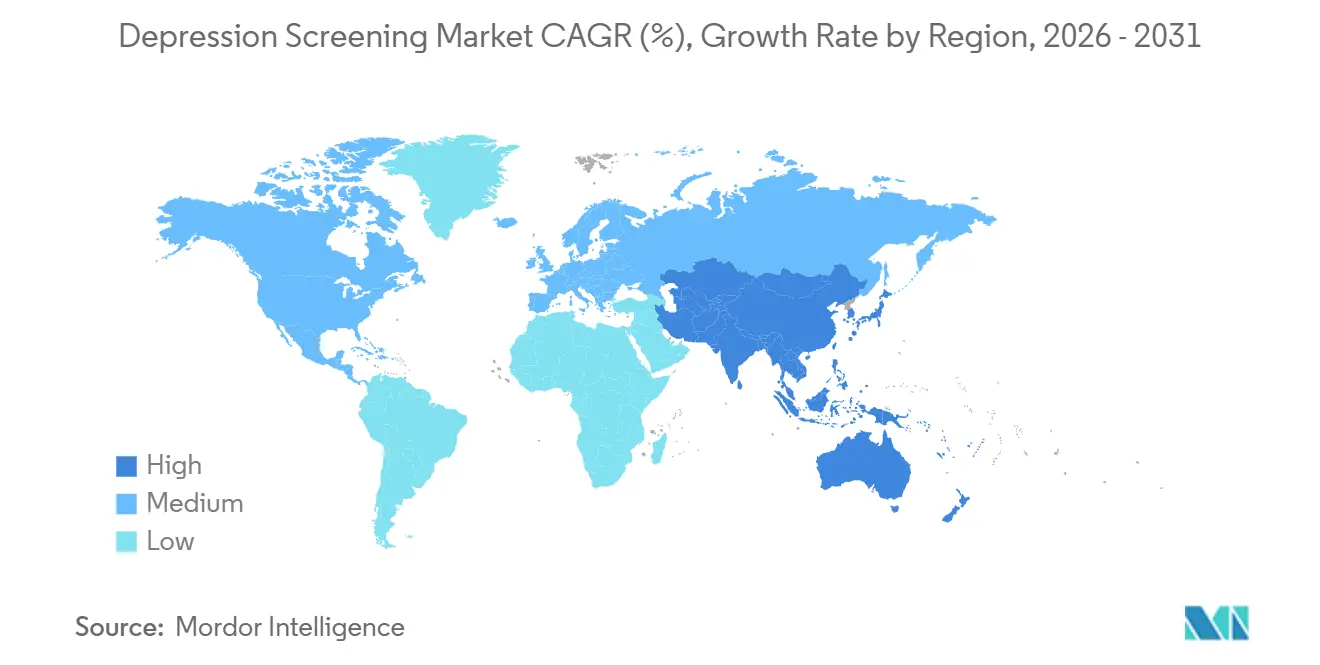
- By geography, North America held 38.61% share in 2025, while Asia-Pacific is expected to record the fastest CAGR of 10.65% through 2031.
Note: Market size and forecast figures in this report are generated using Mordor Intelligence’s proprietary estimation framework, updated with the latest available data and insights as of January 2026.
Market Trends and Insights
Drivers Impact Analysis of Depression Screening Market*
| Driver | (~) % Impact on CAGR Forecast | Geographic Relevance | Impact Timeline |
|---|---|---|---|
| Universal Depression Screening Recommendations | +1.4% | Global, with concentrated near-term impact in North America and Western Europe | Short term (≤ 2 years) |
| Primary and Preventive Care Workflow Integration | +1.2% | North America and Europe, with spillover to Asia-Pacific | Medium term (2-4 years) |
| Digital, Telehealth, and Mobile Screening Expansion | +1.6% | Global, with highest uplift in Asia-Pacific and South America | Medium term (2-4 years) |
| AI Analysis of Voice, Text, Facial, and Behavioral Biomarkers | +1.3% | North America, the European Union, South Korea, and Australia | Long term (≥ 4 years) |
| Closed-Loop Referral and Follow-Up Workflows | +0.9% | North America and the United Kingdom, with spillover to the Middle East and Africa | Medium term (2-4 years) |
| Demand From Underserved, Low-Capacity Populations | +0.8% | South Asia, Sub-Saharan Africa, and rural North America | Long term (≥ 4 years) |
| Source: Mordor Intelligence | |||
Universal Screening Mandates Redefining Baseline Clinical Demand
Clinical recommendations are making depression screening a routine requirement rather than a discretionary service. The U.S. Preventive Services Task Force gave a Grade B recommendation for screening adults, including pregnant and postpartum people, in 2023. The task force also recommended screening adolescents aged 12 to 18. These recommendations support coverage without patient cost sharing under the Affordable Care Act when the service is delivered within the applicable requirements. This expands the billable population and supports use across primary care, telehealth, and specialty settings. The depression screening market benefits because validated tools become part of normal clinical delivery rather than an optional add-on.
CMS has finalized a Depression Screening and Follow-Up measure for Medicare Advantage Star Ratings beginning with the 2027 measurement year[1]. The measure makes documented screening and follow-up more relevant to health plan quality programs. Health plans therefore have a reason to purchase tools that can support implementation and reporting. A questionnaire alone does not meet the full operational need when referral and care follow-up are not visible in the record. The depression screening market can gain from this change as payers look for validated digital systems that fit their quality processes. Providers also need referral capacity before increasing screening volume, which can delay some near-term purchases while supporting longer-term demand for integrated platforms.
EHR-Embedded Screening Accelerates Workflow Conversion Rates
Embedding standardized screening in electronic health records can make it easier to use within primary and preventive care. The PORTAL-Depression project showed how an EHR-integrated, computerized adaptive depression assessment could be implemented in primary care. This approach reduces the separation between completing a screen and recording its result in the clinical workflow. It also gives providers a clearer path to document referrals and treatment after a positive result. Research on adolescent digital screening found that primary care providers identified EHR integration gaps as a key adoption barrier. The depression screening market thus gives an advantage to vendors that support bidirectional data exchange and closed-loop follow-up.
EHR integration matters because the value of screening is measured by what happens after the score is recorded. Systems that link a result with referral coordination can improve the visibility of treatment initiation. This supports provider accountability where screening measures require follow-up. It also reduces the need for staff to move information between separate tools. The Depression screening industry can use this workflow position to compete on care delivery value rather than questionnaire delivery alone. App-only tools remain useful for some patient and employer programs, but they are less suited to clinical settings that require documented coordination.
Telehealth as the Default Screening Infrastructure for Scale
Digital, telehealth, and mobile channels have become important routes for reaching people who may not receive screening in a traditional visit. Teladoc Health reported that nearly half of first-time VirtualCheckup patients were newly assessed with a mental health concern. This points to an identification gap that virtual care can help address. Coordinated mobile technology in primary care was associated with earlier medication optimization and better patient-reported goal achievement for people with major depressive disorder in a 2026 study. The depression screening market can use these channels to bring assessment into the same setting as ongoing care. Their value depends on whether the channel can move a positive result into a suitable care pathway.
Telehealth infrastructure supports standardized use of PHQ-9, GAD-7, and EPDS tools within virtual workflows. It can serve patients across a broad geographic area and can place screening before or during a care interaction. Mobile applications also support consumer-facing and employer-sponsored programs between clinical sessions. The commercial question is increasingly which design captures the downstream referral and follow-up work. Telehealth-native platforms have an established delivery advantage, while EHR-linked platforms have a workflow advantage. The depression screening market has room for both approaches when they meet clinical and privacy requirements.
AI Biomarker Analysis and Access for Underserved Populations
AI analysis of voice, text, facial, and behavioral data can extend screening beyond self-reported questionnaires. A 2025 study of 2,007 clinical case-management calls reported an AUROC of 0.79 to 0.83 for a voice AI approach to real-world depression detection. The study reported consistent performance across people aged 18 to 92 and across gender and socioeconomic groups. A separate study found that large language models achieved AUC above 0.80 for binary depression classification in unseen data without speaker overlap. A 2025 primary-care study also found that a sequential multimodal machine-learning model outperformed PHQ-9 on depression detection and reduced false positives. The depression screening market may gain as these tools add passive and conversational assessment options to telehealth and primary care workflows.
These tools can be particularly relevant where specialist capacity is limited or where conventional self-report tools are less effective. The need is significant in rural North America, South Asia, Sub-Saharan Africa, and other underserved settings. An app-based World Health Organization mental health guide was feasible for depression detection in low-resource settings in Nepal and Nigeria. Digital access does not remove the need for culturally appropriate care or local referral capacity. The Depression screening industry must ensure that models are validated across languages and populations before they are used at scale. This creates a longer adoption path, but it also reinforces the case for tools designed around access and equity.
Restraints Impact Analysis of Depression Screening Market*
| Restraint | (~) % Impact on CAGR Forecast | Geographic Relevance | Impact Timeline |
|---|---|---|---|
| Limited Reimbursement Without Diagnostic and Follow-Up Capacity | -1.2% | North America, with partial reimbursement models in Europe | Short term (≤ 2 years) |
| Privacy, Consent, and Sensitive-Data Governance Requirements | -0.9% | Global, with the highest constraint in the European Union and the United States AI-tools market | Medium term (2-4 years) |
| False Positives, Stigma, and Low Patient Engagement | -0.7% | Global, with the highest impact in Asia-Pacific and the Middle East and Africa | Long term (≥ 4 years) |
| Cultural and Linguistic Bias in AI and Digital Screening Models | -0.5% | Asia-Pacific, the Middle East and Africa, and South America | Long term (≥ 4 years) |
| Source: Mordor Intelligence | |||
Reimbursement Gaps Concentrate Risk at the Diagnostic Follow-Up Stage
Reimbursement is limited when a screening episode does not show diagnostic and follow-up capacity. The practical issue is not only whether a provider can administer a screen. It is whether the provider can document a suitable next step after a positive result. The new Medicare Advantage measure addresses this need, but implementation will take time. Some providers may build referral infrastructure before increasing screening volume. The depression screening market faces slower near-term platform revenue when providers cannot confidently deliver or record follow-up care.
Screening tools that include referral coordination and treatment initiation records have a stronger case with payers. This is because they support the clinical process that follows identification. One-time questionnaires can still be useful, but they face a weaker reimbursement position when they are disconnected from care delivery. Stigma and low patient engagement can further reduce completion and follow-up, particularly in some Asia-Pacific and Middle East and Africa settings. False positives can also strain referral systems when services are scarce. These barriers favor validated, clinically supported tools that can manage the full process from screening through treatment connection.
Sensitive-Data Governance and Model Bias Constrain AI Adoption
AI-native screening tools must operate within HIPAA, GDPR, and evolving state mental health data requirements. The revised 42 CFR Part 2 rule allows a single patient consent for future treatment, payment, and health care operations disclosures, while requiring systems to support new consent and data-tagging processes for relevant information[2]. Voice and facial analysis raise additional consent questions because they process sensitive behavioral signals. GDPR adds requirements for explicit consent when sensitive health data are collected in the European Union. State-level privacy rules can also make compliance more complex for tools deployed across the United States. The depression screening market may therefore favor established platforms with mature data governance programs.
Bias presents a related challenge for tools trained on limited language, cultural, or demographic data. A system that works well for higher-income English-speaking groups may not transfer reliably to linguistically diverse populations. Aiberry reported that its multimodal platform showed no evidence of gender bias across modalities. That type of validation is important but does not remove the need for broader testing. Smaller entrants can face greater legal and product-development costs than companies that already have privacy and compliance frameworks. The depression screening market will continue to require clear consent, transparent use of data, and evidence that tools work across the populations they serve.
*Our forecasts treat driver/restraint impacts as directional, not additive. The impact forecasts reflect baseline growth, mix effects, and variable interactions.
Depression Screening Market Segment Analysis
By Platform and Technology:
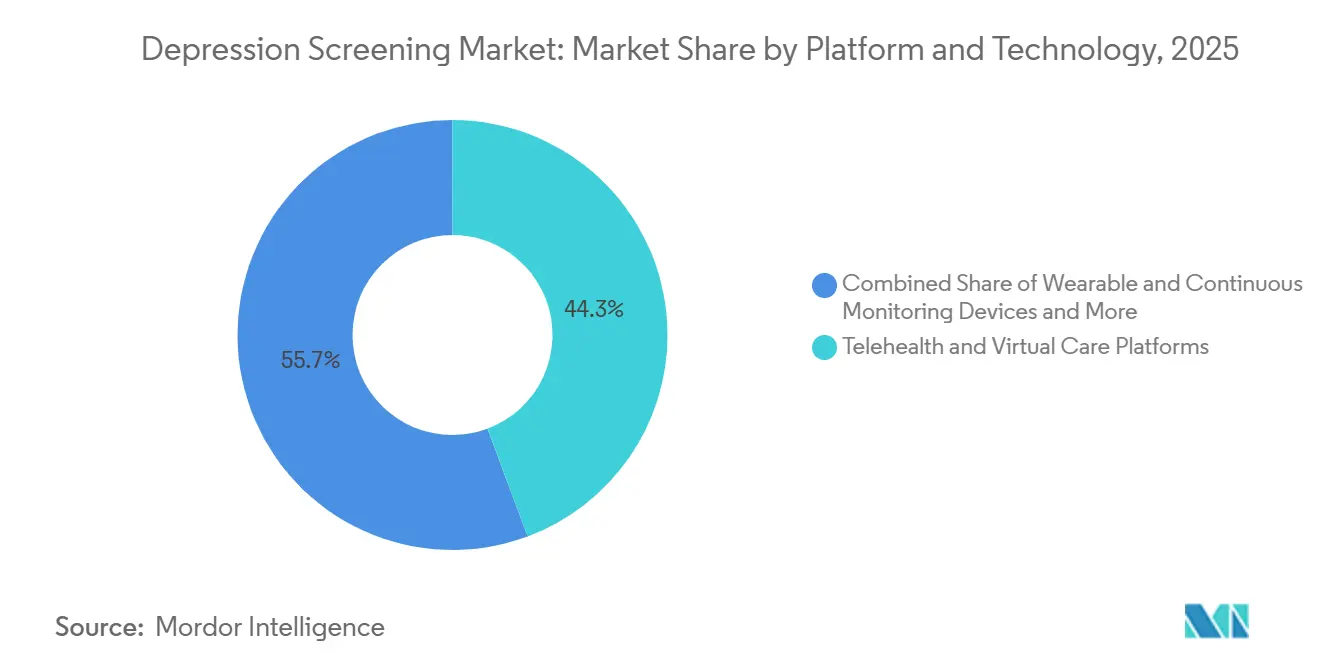
Telehealth Platforms Lead While AI Tools Grow FastestTelehealth and Virtual Care Platforms held 44.31% of the depression screening market share within this segmentation in 2025. Their lead reflects telehealth adoption and the placement of PHQ-9, GAD-7, and EPDS tools into virtual care workflows. These platforms can place screening within an existing interaction and direct results to a clinician or care team without a separate workflow. Teladoc Health disclosed that more than 60 million members had access to its mental health services through health-plan and employer contracts in its 2025 annual report[3]. This scale supports routine screening as a component of preventive virtual care.
Web-based screening platforms remain relevant for institutional programs and employer wellness delivery. Wearable and continuous-monitoring devices are earlier-stage options with limited clinical reimbursement, although they may become more relevant as biomarker evidence develops. AI-Based Screening Tools are forecast to grow at a 10.38% CAGR through 2031, which is the fastest pace in this segmentation. Ellipsis Health announced USD 45 million in funding in July 2025 alongside Sage, an AI care manager built on vocal biomarker technology. SonderMind launched an AI Suite in October 2025, while FDA software-as-a-medical-device pathways will increasingly influence which AI tools can compete for reimbursement.

By Application:
Psychological Health Management Has Scale While Triage Gains ValuePsychological Health Management accounted for 43.44% of the application segmentation in 2025. Its position reflects the broad use of ongoing symptom tracking, outcome measurement, and digital self-management tools. Employer-sponsored employee assistance programs and health-plan benefits commonly support continuous monitoring. These programs have a larger installed base than acute screening alone. Clinical Screening and Diagnosis Support provides the core questionnaire and AI-supported workflows used in care settings in the depression screening market.
Treatment Triage and Referral is forecast to grow at an 11.52% CAGR through 2031. The pace reflects the need to connect an identified concern with a documented care pathway. A 2025 study of a scalable e-mental-health intervention found reductions in depressive symptoms and supported structured care pathways that can prevent progression from subclinical to clinical major depressive disorder. Population and Epidemiological Screening is gaining use in government and institutional programs, including pilots in Japan and Germany. Other Applications include workplace wellness screening and school-based mental health assessment, where value rises when screening is linked to referral completion rather than treated as a one-time assessment.
By Care Setting:
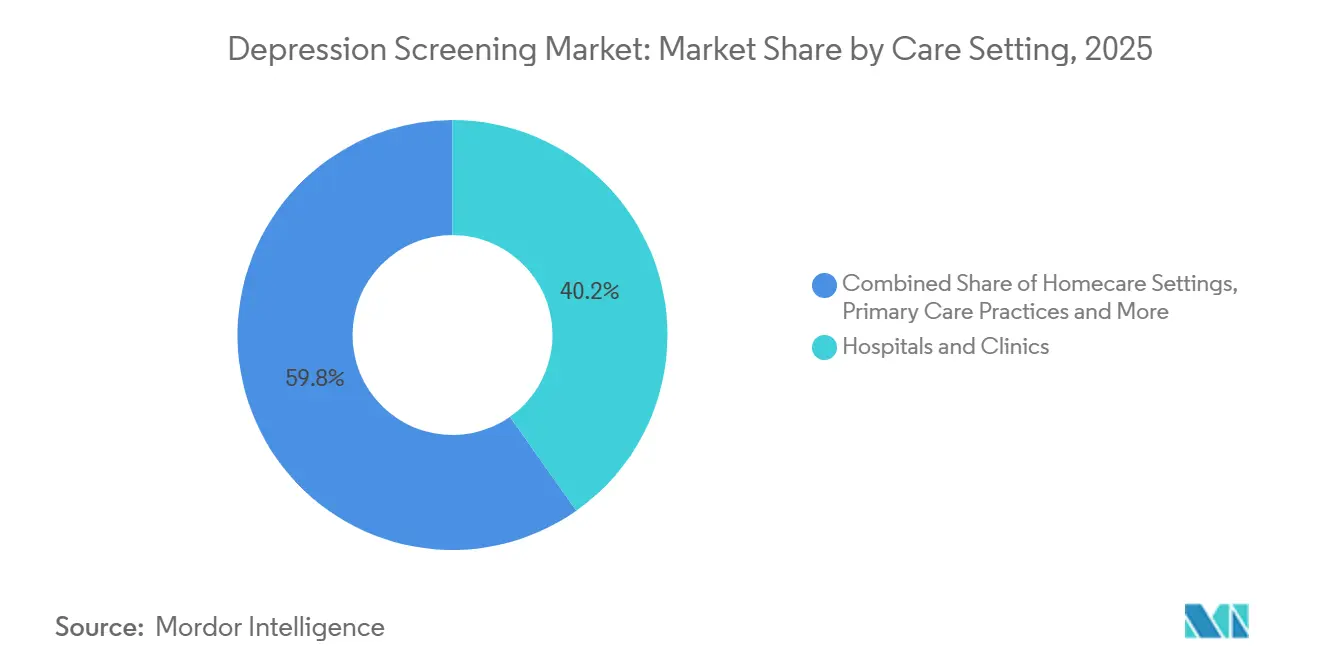
Hospitals and Clinics Lead While Homecare ExpandsHospitals and Clinics commanded 40.24% of the depression screening market size in this care-setting segmentation in 2025. Their lead is supported by established billing processes, deeper EHR integration, and clinician oversight. These settings can connect screening with diagnosis, referral, and treatment in a single care environment. A 2024 pilot across 3 Estonian hospitals used a digital clinical interview tool to standardize psychiatric screening and support care decisions. Primary Care Practices remain an expansion setting in the depression screening market, while Specialty Mental Health Providers are adopting measurement-based platforms that provide continuous outcome scores.
Homecare Settings are forecast to grow at an 11.22% CAGR through 2031, the fastest rate within care settings. Remote monitoring supports voice-based and app-based screening outside clinical facilities. A 2024 study found that app-assisted depression self-management in integrated primary care was feasible and associated with improved patient engagement when behavioral health provider coaching was included. This model shows why home-based tools work best when connected to professional support. Other Care Settings include workplace occupational health programs, especially in Germany and the United Kingdom as employers expand mental health obligations.
By Age Group:
Adults Lead While Adolescents Have the Highest Growth RateAdults held 41.56% of the age-group segmentation in 2025. This lead reflects the established practice of screening working-age adults through primary care and employer benefit channels. The USPSTF recommendation covers adults regardless of risk factors, and payer systems in North America and Western Europe have put this recommendation into practice most extensively. Teladoc Health reported in a 2024 analysis that 60% of members with moderate-to-severe depression achieved remission or a clinically meaningful treatment response within 12 weeks. Outcome data such as this can support payer interest in screening programs tied to care delivery in the depression screening market.
Adolescents are forecast to grow at a 12.95% CAGR through 2031, the highest rate across all subsegments. The rate is linked to screening recommendations and growing institutional programs in pediatric primary care and schools. Lyra Health launched its Center of Excellence for Pediatric and Young Adult Mental Health in May 2026, with more than 15,500 pediatric providers globally and access to an appointment within 1 day, supporting screening-to-care pathways for younger people. Children remain a more limited segment because the USPSTF found insufficient evidence to assess screening for children 11 years and younger. The different recommendation base means age-appropriate tools and referral networks remain important.
Geography Analysis
North America Depression Screening Market
North America held 38.61% of the depression screening market share in 2025. The region combines routine use of USPSTF recommendations, employer-sponsored mental health benefits, and advanced digital mental health infrastructure. CMS is adding Depression Screening and Follow-Up to Medicare Advantage Star Ratings for the 2027 measurement year. This gives health plans a reason to invest in validated screening procurement and vendor relationships. The United States accounts for most regional revenue, while Canada and Mexico are growing through provincial systems and employer wellness programs.
Europe Depression Screening Market
Europe has national health-system integration paths, reimbursement mechanisms for digital health applications, and a more cautious approach to AI under GDPR. Germany’s DiGA framework provides a route for evidence-based digital health applications to be prescribed and reimbursed through statutory health insurance. France 2030 supported clinical validation of EmoCare, a multimodal platform using facial, voice, sleep, and activity data for continuous mood-disorder monitoring. The United Kingdom remains a growth market because of NHS-aligned digital mental health procurement, while Germany, the United Kingdom, and France account for the largest share of European revenue and Italy and Spain are expanding as national digital health plans prioritize mental health.
APAC, MEA and South America Depression Screening Market
Asia-Pacific is forecast to grow at a 10.65% CAGR through 2031, the fastest regional pace in the depression screening market. China, Japan, India, Australia, and South Korea are expanding digital health infrastructure and mental health investment. Shortages of psychiatrists and psychologists, especially in India and Southeast Asia, support digital tools as initial access points rather than only additions to specialist care. South Korea is becoming an innovation center for voice and multimodal biomarker companies seeking clinical use in hospital systems. The Middle East and Africa and South America remain smaller regional opportunities, while GCC health transformation programs and employer-based tools in Brazil and Argentina support growing interest.
Competitive Landscape
The depression screening market is moderately fragmented across telehealth providers, AI-native screening vendors, employer mental health platforms, and clinical workflow software companies. No company holds a dominant position across every segment. Competitive strength is increasingly based on the ability to connect screening with follow-up, insurance reimbursement, and EHR workflows. NeuroFlow acquired Quartet Health in January 2025, adding provider-network and referral-management capability to its AI-powered analytics platform. The transaction reflects the value of a platform that can support payer and health-system value-based care contracts.
PsychPlus acquired Koa Health in June 2026, adding digital patient engagement to in-person care delivery across the United States and the United Kingdom. Patent activity supports differentiation in voice biomarkers and care retention, and Ellipsis Health uses patented vocal biomarker technology in its Empathy Engine. Lyra Health has built specialized pediatric care capacity, addressing a gap in adolescent-to-young-adult screening and referral pathways. These actions show that providers are seeking broader care capabilities rather than screening tools alone.
Underserved rural, low-income, and linguistically diverse populations remain a gap because many tools were trained and validated with higher-income English-speaking data. Aiberry developed a multimodal platform with the University of Texas at Austin, Georgetown University, and the University of Arizona, reporting no evidence of gender bias across modalities. Regulatory requirements for software as a medical device, HIPAA compliance, and state mental health data rules raise barriers for smaller entrants. Woebot Health shut down its consumer chatbot product in June 2025 amid the cost and regulatory complexity associated with FDA authorization for its digital therapeutic. The depression screening market remains open to new entrants, but compliance readiness and care-network depth are important competitive requirements.
Depression Screening Industry Leaders
-
Headspace Inc.
-
Teladoc Health, Inc.
-
SonderMind Inc.
-
Lyra Health, Inc.
-
Proem Behavioral Health
- *Disclaimer: Major Players sorted in no particular order
Depression Screening Market Companies Covered in this Report
- Adaptive Testing Technologies
- Aiberry
- Apple
- Canary Speech, Inc.
- Clarigent Health
- Ellipsis Health, Inc.
- FuturesThrive
- Headspace
- Kintsugi Mindful Wellness, Inc.
- Koa Health
- Koninklijke Philips
- Limbic
- Lyra Health, Inc.
- Moodfit
- Proem Behavioral Health
- Quartet Health, Inc.
- Sonde Health
- SonderMind Inc.
- Teladoc Health
- Thymia Limited
- Woebot Health
- Wysa Ltd
Recent Industry Developments in Depression Screening Market
- July 2026: The Swiss Federal Office of Public Health officially launched and reimbursed Deprexis, a CBT-based digital depression management application, marking the first formal reimbursement of a depression app under the Swiss statutory health system and setting a regulatory precedent for the broader European digital therapeutics market.
- June 2026: Houston-based PsychPlus acquired London-based Koa Health, an NHS-approved digital therapeutic and mental health platform, creating one of the largest technology-enabled mental health companies with combined digital and in-person care capabilities across the United States and the United Kingdom.
Global Depression Screening Market Report Scope
As per the scope of the report, depression screening is a process used to identify individuals who may be experiencing symptoms of depression. It involves the use of standardized questionnaires or tools to evaluate mood, feelings, and behaviors that could indicate depression, often conducted in healthcare settings to facilitate early detection and intervention.
The depression screening market is segmented by platform and technology into mobile health applications, web-based screening platforms, telehealth and virtual care platforms, AI-based screening tools, wearable and continuous monitoring devices, and others; by application into clinical screening and diagnosis support, psychological health management, treatment triage and referral, population and epidemiological screening, and other applications; by care setting into hospitals and clinics, primary care practices, specialty mental health providers, homecare settings, and other care settings; by age group into children, adolescents, and adults; and by geography into North America, Europe, Asia-Pacific, Middle East and Africa, and South America. The market report also covers the estimated market sizes and trends for 17 countries across major regions globally. For each segment, the market size and forecast are provided in terms of value (USD).
Segmentation Overview
| Mobile Health Applications |
| Web-Based Screening Platforms |
| Telehealth and Virtual Care Platforms |
| AI-Based Screening Tools |
| Wearable and Continuous Monitoring Devices |
| Others |
| Clinical Screening and Diagnosis Support |
| Psychological Health Management |
| Treatment Triage and Referral |
| Population and Epidemiological Screening |
| Other Applications |
| Hospitals and Clinics |
| Primary Care Practices |
| Specialty Mental Health Providers |
| Homecare Settings |
| Other Care Settings |
| Children |
| Adolescents |
| Adults |
| North America | United States |
| Canada | |
| Mexico | |
| Europe | Germany |
| United Kingdom | |
| France | |
| Italy | |
| Spain | |
| Rest of Europe | |
| Asia-Pacific | China |
| Japan | |
| India | |
| Australia | |
| South Korea | |
| Rest of Asia-Pacific | |
| Middle East and Africa | GCC |
| South Africa | |
| Rest of Middle East and Africa | |
| South America | Brazil |
| Argentina | |
| Rest of South America |
| By Platform and Technology | Mobile Health Applications | |
| Web-Based Screening Platforms | ||
| Telehealth and Virtual Care Platforms | ||
| AI-Based Screening Tools | ||
| Wearable and Continuous Monitoring Devices | ||
| Others | ||
| By Application | Clinical Screening and Diagnosis Support | |
| Psychological Health Management | ||
| Treatment Triage and Referral | ||
| Population and Epidemiological Screening | ||
| Other Applications | ||
| By Care Setting | Hospitals and Clinics | |
| Primary Care Practices | ||
| Specialty Mental Health Providers | ||
| Homecare Settings | ||
| Other Care Settings | ||
| By Age Group | Children | |
| Adolescents | ||
| Adults | ||
| By Geography | North America | United States |
| Canada | ||
| Mexico | ||
| Europe | Germany | |
| United Kingdom | ||
| France | ||
| Italy | ||
| Spain | ||
| Rest of Europe | ||
| Asia-Pacific | China | |
| Japan | ||
| India | ||
| Australia | ||
| South Korea | ||
| Rest of Asia-Pacific | ||
| Middle East and Africa | GCC | |
| South Africa | ||
| Rest of Middle East and Africa | ||
| South America | Brazil | |
| Argentina | ||
| Rest of South America | ||
Key Questions Answered in the Report
What is the expected value of the depression screening market by 2031?
The depression screening market is projected to reach USD 3.03 billion by 2031, from USD 2.10 billion in 2026.
What is driving adoption of depression screening tools?
USPSTF recommendations, EHR integration, telehealth delivery, and payer attention to documented follow-up are supporting adoption.
Which technology category is growing fastest?
AI-Based Screening Tools are forecast to grow at a 10.38% CAGR through 2031.
Which application is expanding most quickly?
Treatment Triage and Referral is forecast to grow at an 11.52% CAGR through 2031 because screening is increasingly linked to care pathways.
Which care setting has the highest projected growth?
Homecare Settings are forecast to grow at an 11.22% CAGR through 2031 as remote monitoring and app-based tools expand.
Why are privacy rules important for digital depression screening?
Voice, facial, and behavioral data require consent, secure handling, and compliance with HIPAA, GDPR, and state privacy requirements.