
Cranial Orthoses Market Size and Share
Market Overview
| Study Period | 2020 - 2031 |
|---|---|
| Market Size (2026) | USD 0.42 Billion |
| Market Size (2031) | USD 0.66 Billion |
| Growth Rate (2026 - 2031) | 9.53 % |
| Fastest Growing Market | Asia-Pacific |
| Largest Market | North America |
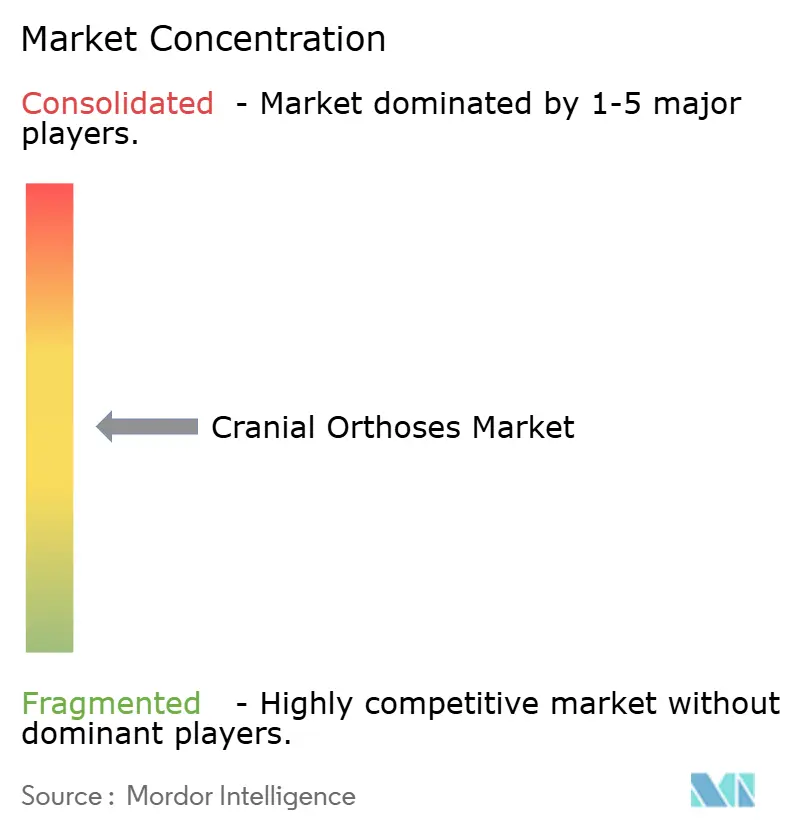
| Market Concentration | Medium |
Major Players *Disclaimer: Major Players sorted in no particular order Image © Mordor Intelligence. Reuse requires attribution under CC BY 4.0. | |
Cranial Orthoses Market Analysis by Mordor Intelligence
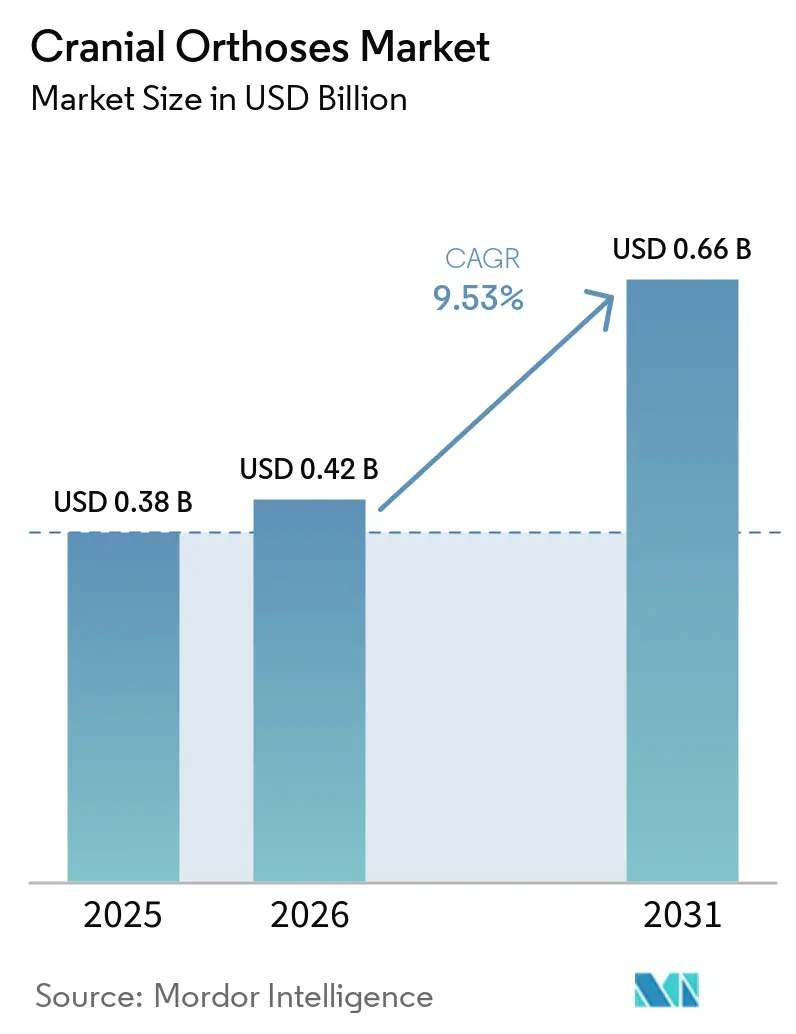
The Cranial Orthoses Market size is projected to expand from USD 0.38 billion in 2025 and USD 0.42 billion in 2026 to USD 0.66 billion by 2031, registering a CAGR of 9.53% between 2026 to 2031.
Demand is supported by the continued incidence of deformational plagiocephaly associated with safe-sleep positioning practices. Families, pediatric providers, and specialist teams increasingly recognize the need for a defined care pathway from screening to fitting and follow-up. Timely fitting is more critical than diagnosis alone, as treatment is most effective when providers refer infants early. Digital scanning, hospital-based programs, and clearer coverage policies are helping providers shorten the care pathway and improve timely patient access. However, clinical debate surrounding moderate cases, uneven insurance coverage, and limited access to pediatric orthotists continue to restrict treatment availability in many areas.
Key Report Takeaways
- By product type, active helmets held 56.45% of revenue in 2025, while passive helmets are projected to grow at a CAGR of 12.87% through 2031.
- By application, plagiocephaly accounted for 54.34% of revenue in 2025, while brachycephaly is projected to grow at a CAGR of 11.56% through 2031.
- By material, polyethylene foam interfaces held 45.88% of revenue in 2025, while thermoplastic outer shells are projected to grow at a CAGR of 10.55% through 2031.
- By patient age, the 7-12 months group held 43.94% of revenue in 2025, while the 3-6 months group is projected to grow at a CAGR of 11.34% through 2031.
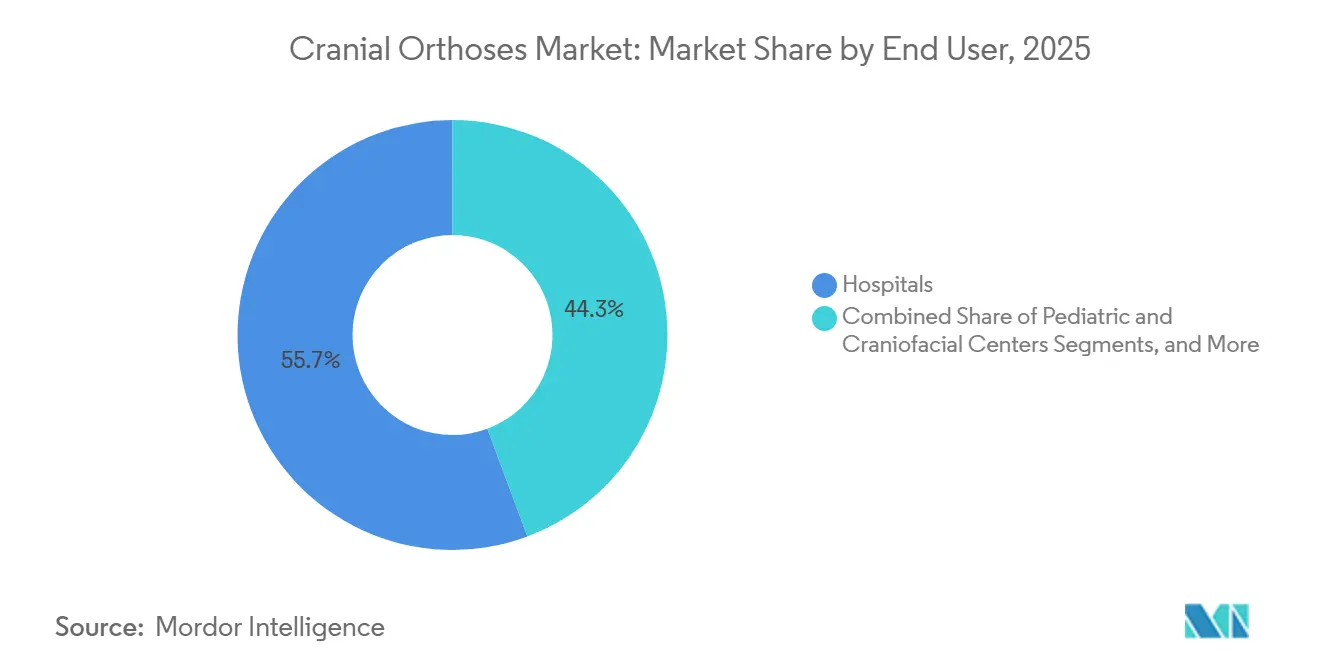
- By end user, hospitals held 55.67% of revenue in 2025, while pediatric and craniofacial centers are projected to grow at a CAGR of 8.45% through 2031.
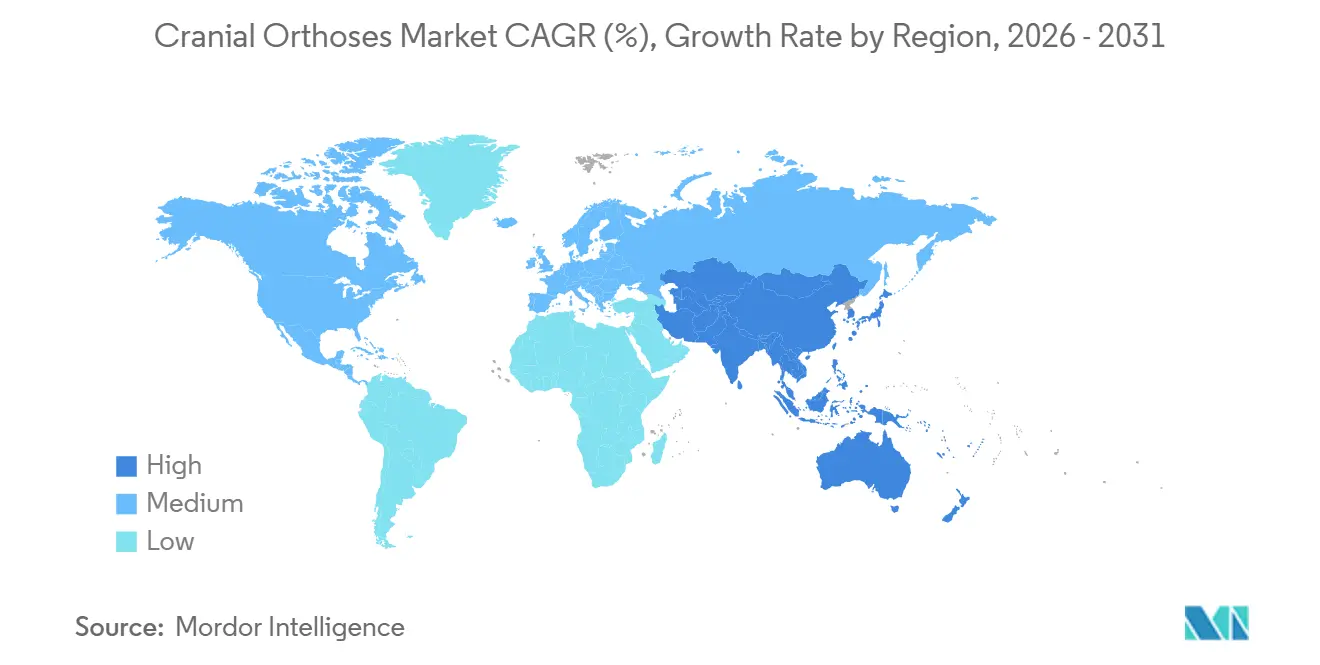
- By geography, North America held 39.56% of revenue in 2025, while Asia-Pacific is projected to grow at a CAGR of 12.98% through 2031.
Note: Market size and forecast figures in this report are generated using Mordor Intelligence’s proprietary estimation framework, updated with the latest available data and insights as of January 2026.
Market Trends and Insights
Drivers Impact Analysis of Cranial Orthoses Market*
| DRIVER | (~) % IMPACT ON CAGR FORECAST | GEOGRAPHIC RELEVANCE | IMPACT TIMELINE |
|---|---|---|---|
| Rising diagnosis of positional plagiocephaly | +2.5% | Global | Short term (≤ 2 years) |
| Growing pediatric referral and early-intervention rates | +1.8% | North America and Europe, with spillover to Asia-Pacific | Medium term (2-4 years) |
| Expansion of 3D scanning and digital customization | +1.8% | Global | Medium term (2-4 years) |
| Improving reimbursement and prior-authorization pathways | +1.5% | Primarily North America | Short term (≤ 2 years) |
| Greater use of mobile scanning and distributed fabrication | +1.2% | Global, strongest in Asia-Pacific and Middle East and Africa | Long term (≥ 4 years) |
| Increasing parent and clinician awareness of early treatment windows | +0.9% | Global | Short term (≤ 2 years) |
| Source: Mordor Intelligence | |||
Rising Diagnosis of Positional Plagiocephaly
Rising diagnoses of plagiocephaly and brachycephaly remain a key driver of the cranial orthoses market, as diagnosis initiates clinical monitoring, referral, fitting, and follow-up. A 2024 population-based study reported incidence rates of 5.8% in term infants and 11.8% in preterm infants, highlighting preterm birth as a significant risk factor. A 2026 study of 2,165 preterm infants in Beijing found postural cranial abnormalities in 81.2% of infants aged 0-2 months, the highest rate among the reviewed age groups.[1] These findings emphasize the need for early head-shape monitoring, conservative repositioning, clinical observation, and timely referral during the preferred 3-8-month treatment window. Effective screening, parent education, clinician awareness, and referral pathways can reduce treatment delays and support market demand.
Growing Pediatric Referral and Early-Intervention Rates
Organized referral pathways are improving treatment access after diagnosis, particularly when assessment and fitting are integrated within the same clinical system. Shriners Children’s New England launched a cranial remolding program in May 2025 that integrated 3D scanning into its orthotics workflow and enabled families to complete scanning and fitting in a single visit. This model reduces handoffs among pediatricians, specialists, orthotists, families, and payers, which can otherwise delay care. Hospital-based services also simplify referrals by providing orthotists and pediatric specialists within the same setting. Greater awareness of early treatment windows supports timely intervention and demand in the cranial orthoses market.
Expansion of 3D Scanning and Digital Customization
Digital scanning and additive manufacturing are improving the design, documentation, and production of cranial orthoses. In February 2024, Invent Medical and SHINING 3D introduced the EinScan H2 into clinical workflows, offering sub-0.05 mm accuracy and a scan time of 30 seconds while eliminating plaster casting. Digital scans create repeatable records for design, fitting, and follow-up assessments. A 2025 study reported mean fabrication costs of USD 150 for 3D-printed helmets, compared with USD 300-500 for traditionally molded helmets, and a reduction in the cranial vault asymmetry index from 7.7% to 3.1% among treated infants. Mobile scanning and distributed fabrication can extend access to patients in locations with limited specialist capacity.[2]
Improving Reimbursement and Prior-Authorization Pathways
Coverage policies are improving access, although payer requirements remain inconsistent and continue to create administrative burdens for providers. Texas enacted HB 426 in June 2025, requiring Medicaid and CHIP coverage for cranial remolding orthoses for infants with plagiocephaly from September 2025. North Carolina Medicaid updated Clinical Coverage Policy 5B in September 2024, separating cranial protection from cranial remolding orthoses and revising medical-necessity criteria. Univera Healthcare’s policy, effective May 2025, required patients aged 3-18 months to meet moderate-to-severe thresholds after conservative treatment failed. Integrated scanning, electronic records, and authorization processes can help practices manage documentation requirements and convert more eligible cases in the cranial orthoses market.
Restraints Impact Analysis of Cranial Orthoses Market*
| RESTRAINT | (~) % IMPACT ON CAGR FORECAST | GEOGRAPHIC RELEVANCE | IMPACT TIMELINE |
|---|---|---|---|
| Clinical debate over incremental benefit in moderate cases | -1.4% | Global | Short term (≤ 2 years) |
| Inconsistent payer coverage and documentation requirements | -1.2% | North America and Europe | Medium term (2-4 years) |
| Limited availability of pediatric orthotists outside major centers | -0.9% | Global, acute in rural North America, Middle East and Africa, and South America | Long term (≥ 4 years) |
| Infant compliance, skin irritation, and caregiver burden | -0.7% | Global | Medium term (2-4 years) |
| Source: Mordor Intelligence | |||
Clinical Debate Over Incremental Benefit in Moderate Cases
Clinical disagreement over moderate plagiocephaly treatment can delay referrals in the cranial orthoses market, particularly when clinicians and payers prioritize conservative management. A systematic review covering January 2015 to January 2025 reported monthly correction rates of 0.66 for helmet-treated infants and 0.64 for conservatively managed infants. While 25% of helmet-treated cases reached severity level 1, compared with 11% of conservatively managed cases, the difference was not statistically significant across the available trial pool. Concerns regarding skin irritation, infant compliance, and caregiver burden further reduce treatment conversion among diagnosed moderate cases, limiting the market’s addressable volume.
Inconsistent Payer Coverage and Documentation Requirements
Varying payer coverage policies continue to limit treatment access and make timing dependent on payer requirements rather than clinical need. Washington State’s July 2025 billing guide stated that initial application before 3 months of age, except for postsurgical cases, was not medically necessary, limiting access for the youngest patient group. Smaller orthotic and prosthetic practices also face higher administrative requirements because insurers apply different eligibility thresholds, documentation standards, and authorization procedures. A 2025 analysis found that more than 40% of U.S. counties lacked an American Cleft Palate and Craniofacial Association-approved craniofacial team within 100 miles, constraining access, particularly in rural areas and smaller provider networks.
*Our forecasts treat driver/restraint impacts as directional, not additive. The impact forecasts reflect baseline growth, mix effects, and variable interactions.
Cranial Orthoses Market Segment Analysis
By Product Type:
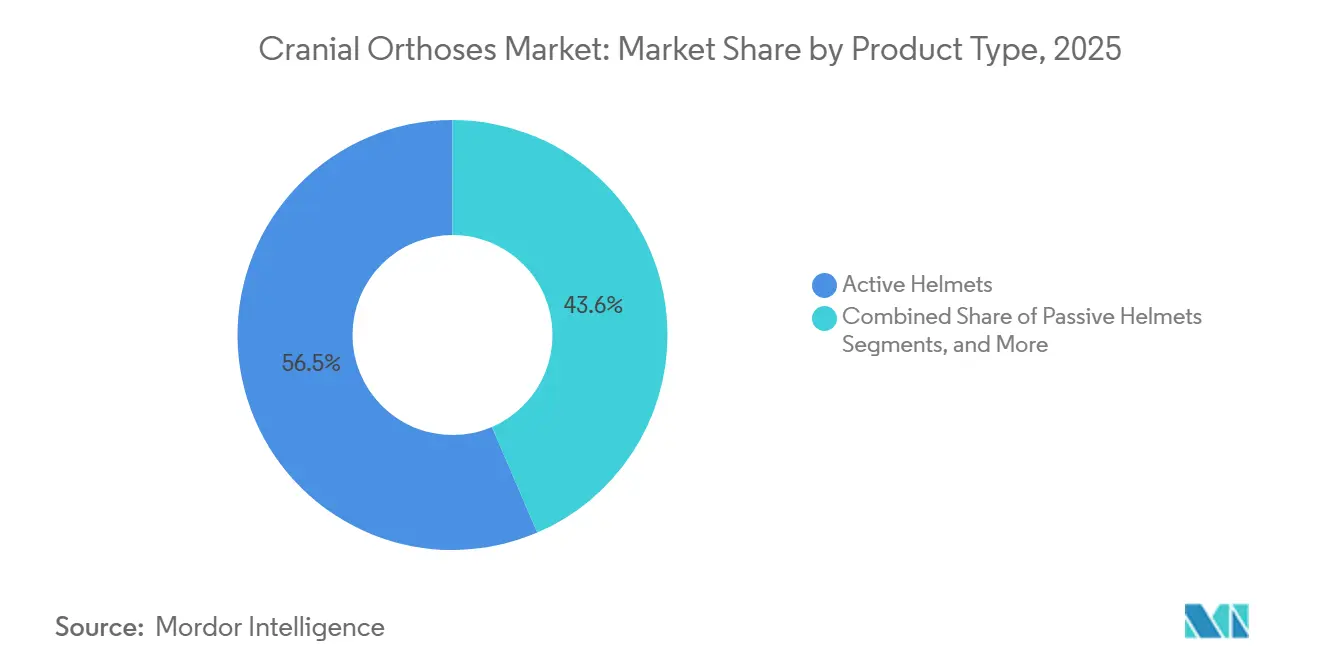
Active Helmets Retain Their Established PositionActive helmets held 56.45% of the cranial orthoses market share in 2025, supported by established clearance histories, long-term clinical use, and proprietary digital scanning systems embedded in treatment networks. Cranial Technologies’ DOC Band uses Digital Surface Imaging to capture a complete 3D head model in less than 1 second and guide growth-room placement within its modified polyethylene foam interior. This workflow supports consistent fitting and follow-up while maintaining the active correction approach. A 10-year review of 27,990 treated infants reported a mean cranial vault asymmetry index reduction of 3.42 percentage points, with 87.6% of patients improving by at least one severity category.
Passive helmets are forecast to grow at a CAGR of 12.87% through 2031 as providers in cost-sensitive and emerging settings adopt thermoplastic designs requiring lower scanning investment and simpler production infrastructure. Active and passive designs address different clinical workflows and provider investment levels. Custom-molded orthoses retain a specialized role after craniosynostosis surgery, where individualized geometry is required. Pre-fabricated protective variants serve areas with limited therapeutic cranial remolding services, enabling the market to address both advanced digital clinics and resource-constrained settings.

By Application:
Brachycephaly Is Growing Faster Than Other IndicationsPlagiocephaly accounted for 54.34% of the cranial orthoses market size in 2025, reflecting its position as the most common treatment indication and sustained diagnostic prevalence after the Back to Sleep campaign. Screening at 2-month and 4-month well-child visits directs a significant share of diagnosed infants into plagiocephaly-specific treatment pathways before age reduces correction potential. Although referral timing and quality vary across healthcare systems, early identification supports predictable patient volumes. Plagiocephaly therefore remains the primary application supporting the cranial orthoses market.
Brachycephaly is forecast to grow at a CAGR of 11.56% through 2031, driven by increased recognition during routine assessments. The 2026 Beijing study found that brachycephaly detection increased from 9.0% in the 3-4 months cohort to 19.8% in the 5-6 months cohort. Scaphocephaly requires specialized postsurgical fitting after premature sagittal suture fusion, and 2025 Hanger Institute research provided standardized craniometric indices for patient assessment. Postsurgical cranial deformity remains lower in volume but higher in value because helmet use is integrated into the surgical care episode and generally receives coverage.
By Material:
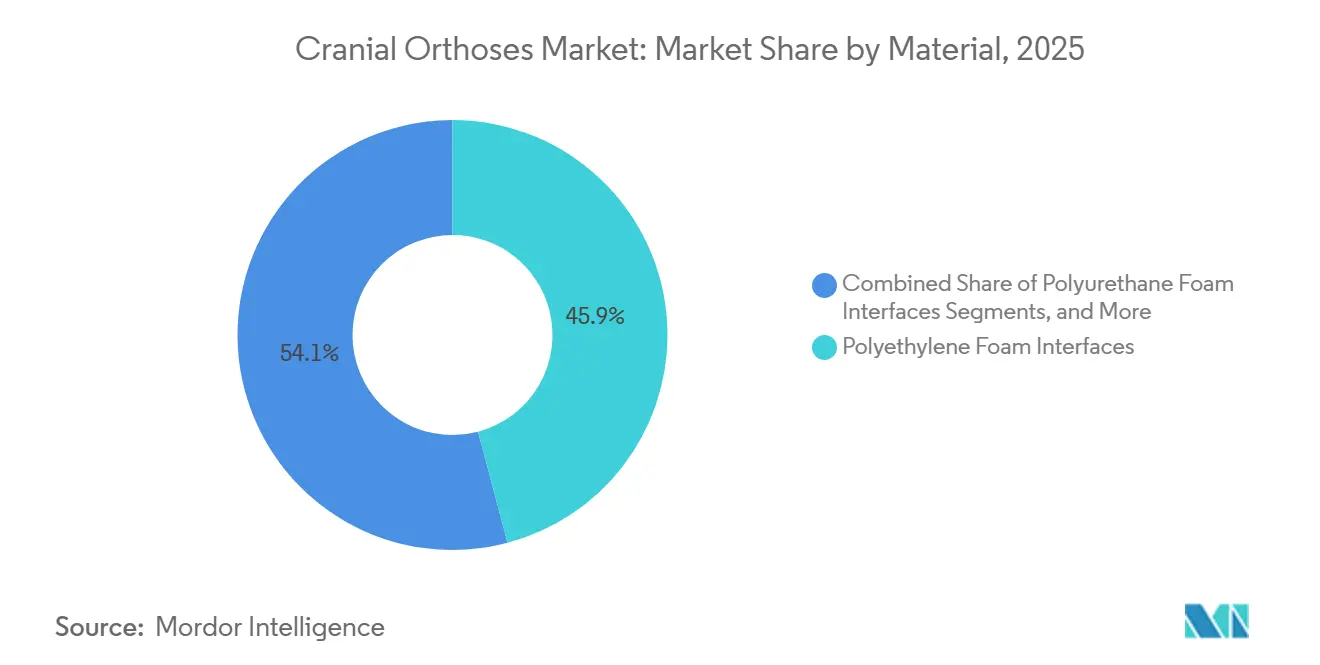
Polyethylene Foam Leads While Thermoplastics Gain GroundPolyethylene foam interfaces held 45.88% of the cranial orthoses market share in 2025, reflecting their long-term use in high-volume active helmet systems and alignment with approved device construction requirements. Manufacturers, orthotists, and payers are familiar with the material, supporting its continued use in established products. Its use in active helmets also aligns with the scanning and design workflows of large clinical networks. Polyethylene foam therefore remains the leading interface material in the cranial orthoses market.
Thermoplastic outer shells are forecast to grow at a CAGR of 10.55% through 2031, as PA11 and PA12 nylon powders used in HP Multi Jet Fusion support scalable 3D-printed shell production with suitable strength and surface finish for pediatric use. Polyurethane foam is gaining traction in pediatric and craniofacial centers, where predictable compression during extended daily wear is important. Copolymers support in-clinic post-fabrication adjustments for custom-molded devices where reprinting access is limited. Silicone and soft interfaces remain focused on postsurgical and skin-sensitive cases, while ISO 10993 biocompatibility assessment standards remain the key compliance requirement.
By Patient Age:
Earlier Fitting Is Shaping Treatment DemandThe 7-12 months group held 43.94% of the cranial orthoses market size in 2025, indicating that many referrals reached treatment services after the earliest clinical window. This pattern reflects delays between detection, specialist assessment, authorization, and final fitting rather than lower need among younger infants. Hospital programs can reduce these delays by integrating assessment and fitting into a single care pathway. Shriners Children’s New England implemented this approach in its 2025 cranial remolding program by integrating scanning into its orthotics workflow and enabling a scan-and-fit visit.
The 3-6 months group is forecast to grow at a CAGR of 11.34% through 2031 because earlier treatment improves outcomes and reduces treatment duration. The 27,990-infant review found that children starting at 3-4 months averaged 10 weeks of treatment, compared with 16 weeks for those starting at 11-18 months. Good or great ratings ranged from 93.7% to 96.6% for early starters and from 48.8% to 77.6% for later starters. The below-3-months cohort remains limited by clinical practice and coverage rules, including Washington State Medicaid’s exclusion of initial application before 3 months except in postsurgical cases.
By End User:
Hospitals Lead, While Specialist Centers ExpandHospitals held 55.67% of end-user revenue in 2025 because they serve as a primary specialist referral point and operate high-throughput scanning services across neonatology, neurosurgery, and related departments. Their credentialing relationships with major payers also support authorization and coordinated follow-up. KKH Singapore opened its PlagioCentre in June 2025 as the country’s first dedicated flat-head syndrome clinic, establishing a hospital-based pathway for assessment and treatment. The hospital reported a 36% increase in cases over two years, from more than 800 in 2022 to more than 1,000 in 2024.
Pediatric and craniofacial centers are forecast to grow at a CAGR of 8.45% through 2031 because their specialized focus can reduce the time from referral to assessment, fitting, and follow-up. Orthotic and prosthetic clinics continue to serve high patient volumes across dispersed populations, although capacity varies by scanner access, specialist credentials, and payer participation. Neurosurgery and craniofacial surgery clinics manage postoperative cranial remolding as part of a broader surgical care episode. Telehealth-enabled monitoring services also support families who travel long distances for initial fitting or specialist review.
Geography Analysis
North America Cranial Orthoses Market
North America held 39.56% of revenue in 2025, supported by a mature pediatric care system, a broad orthotist base, and hospital-embedded 3D scanning services. The United States drove regional demand through established specialist networks and gradually expanding reimbursement access. Texas enacted HB 426 in June 2025, requiring Medicaid and CHIP coverage for cranial remolding orthoses for infants with plagiocephaly from September 2025, while North Carolina Medicaid revised Clinical Coverage Policy 5B in September 2024. More than 40% of US counties lacked access to an American Cleft Palate and Craniofacial Association-approved team within 100 miles, supporting demand for mobile scanning and remote follow-up services. Canada provides coverage in most provinces, while Mexico remains a smaller market due to lower healthcare spending and limited specialist infrastructure.
APAC Cranial Orthoses Market
Asia-Pacific is forecast to grow at a CAGR of 12.98% through 2031, more than 3 percentage points above the global rate, driven by clinical demand and expanding institutional capacity. A Japanese study found positional plagiocephaly in 57.4% of infants aged 2-23 months, while a 2026 Beijing study of 2,165 preterm infants found postural cranial abnormalities in 81.2% of infants aged 0-2 months. KKH Singapore launched the region’s first dedicated PlagioCentre in June 2025 and selected Japan Medical Company’s Qurum Fit helmet through a competitive process.
Europe Cranial Orthoses Market
Europe benefits from established pediatric healthcare systems and an EU MDR documentation framework that increases clinical evidence and recordkeeping requirements for cranial remolding devices. Germany, the United Kingdom, and France are the region’s largest national markets, supported by reimbursement systems with defined medical-necessity criteria. These conditions favor providers with strong documentation capabilities and make it more difficult for low-cost imports to compete solely on price.
Competitive Landscape
The cranial orthoses market is moderately concentrated at the clinical service level and fragmented at the device manufacturing level. Specialized cranial providers compete with larger orthotics groups across many of the same geographies, although their commercial models differ. Cranial Technologies uses a direct-to-family model in the United States centered on the DOC Band and its proprietary imaging approach. Hanger combines a national service platform with more than 925 clinic locations, providing broad access to referrals and follow-up care.
Surestep plans to launch Sprout3D in March 2025, supported by findings from a matched cohort study of 1,140 infants [HANGER]. The study reported a 10-percentage-point greater reduction in the cranial vault asymmetry index compared with thermoformed devices [SURESTEP]. This launch illustrates how companies are increasingly using clinical evidence to differentiate products in the cranial orthoses market. Invent Medical’s Talee helmet supports more than 800 clinics across over 40 countries through a scan-to-print-to-fit model, demonstrating the value of a hardware-agnostic digital platform and extensive distributed network reach [SHINING 3D]. Providers that use these systems can compete on workflow consistency and manufacturing access rather than relying solely on a traditional vertically integrated clinic model.
Ottobock plans to discontinue U.S. sales of its MyCRO Band on June 30, 2026, despite the product being the first FDA-cleared 3D-printed cranial remolding orthosis [OTTOBOCK]. The planned withdrawal indicates that even clinically advanced devices may not be commercially sustainable without sufficient clinic-network density in a mature market. Scanning software, digital design systems, and fitting workflows are becoming important assets because they enable repeatable care, recordkeeping, and outcome tracking. Payer requirements may further favor scaled providers that integrate electronic health records, scanning data, and authorization documentation into a single workflow.
Cranial Orthoses Industry Leaders
-
Orthomerica Products, Inc.
-
Danmar Products, Inc.
-
Hanger, Inc.
-
Cranial Technologies, Inc.
-
Surestep, LLC
- *Disclaimer: Major Players sorted in no particular order
Cranial Orthoses Market Companies Covered in this Report
- Boston Orthotics & Prosthetics
- Cranial Center of Utah
- Cranial Kids
- Cranial Remolding Orthosis, LLC
- Cranial Technologies, Inc.
- Danmar Products, Inc.
- Hanger, Inc.
- Invent Medical Group
- Ktwo Healthcare Pvt. Ltd.
- Level 4 Prosthetics and Orthotics
- Orthomerica Products, Inc.
- Orthotic & Prosthetic Lab, Inc.
- Orthotic Care Services, LLP
- Ottobock
- SHINING 3D
- SPS Co.
- STAR Cranial Center
- Stryker
- Surestep, LLC
- Yakima Orthotics & Prosthetics
Recent Industry Developments in Cranial Orthoses Market
- June 2026: Ottobock ceased U.S. sales of the MyCRO Band, citing an evolving market landscape and the lack of a sustainable commercial pathway.
- June 2025: KKH Singapore launched the country’s first dedicated PlagioCentre and introduced 3D-printed helmets as a standard care option amid a 36% increase in flat-head syndrome cases.
- June 2025: Texas enacted HB 426, mandating full Medicaid and CHIP coverage for cranial remolding orthoses for infants with plagiocephaly, effective September 1, 2025.
Global Cranial Orthoses Market Report Scope
As per the scope of the report, cranial orthoses are custom-made medical helmets or bands used for infants. They gently reshape an abnormal or flat baby's head. They apply light pressure on high spots. They leave open space for flat spots to grow.
The cranial orthoses market is segmented by product type, application, material, patient age, end user, and geography. By product type, the market includes active helmets, passive helmets, custom-molded orthoses, and other product types. By application, the market is segmented into plagiocephaly, brachycephaly, scaphocephaly, and postsurgical cranial deformity. By material, the market is categorized into thermoplastic outer shells, polyethylene foam interfaces, polyurethane foam interfaces, copolymer materials, and silicone and soft-interface materials. By patient age, the market is segmented into below 3 months, 3–6 months, 7–12 months, 13–18 months, and above 18 months. By end user, the market includes hospitals, pediatric and craniofacial centers, orthotic and prosthetic clinics, neurosurgery and craniofacial surgery clinics, and others. By geography, the market is analyzed across North America, Europe, Asia-Pacific, the Middle East and Africa, and South America. The report also covers the estimated market sizes and trends for 17 countries across major regions globally. The report offers market sizes and forecasts in terms of value (USD) for the above segments.
Segmentation Overview
| Active Helmets |
| Passive Helmets |
| Custom-Molded Orthoses |
| Other Product Types |
| Plagiocephaly |
| Brachycephaly |
| Scaphocephaly |
| Postsurgical Cranial Deformity |
| Thermoplastic Outer Shells |
| Polyethylene Foam Interfaces |
| Polyurethane Foam Interfaces |
| Copolymer Materials |
| Silicone and Soft-Interface Materials |
| Below 3 Months |
| 3-6 Months |
| Above 7-12 Months |
| Above 13-18 Months |
| Above 18 Months |
| Hospitals |
| Pediatric and Craniofacial Centers |
| Orthotic and Prosthetic Clinics |
| Neurosurgery and Craniofacial Surgery Clinics |
| Others |
| North America | United States |
| Canada | |
| Mexico | |
| Europe | Germany |
| United Kingdom | |
| France | |
| Italy | |
| Spain | |
| Rest of Europe | |
| Asia-Pacific | China |
| India | |
| Japan | |
| Australia | |
| South Korea | |
| Rest of Asia-Pacific | |
| Middle East and Africa | GCC |
| South Africa | |
| Rest of Middle East and Africa | |
| South America | Brazil |
| Argentina | |
| Rest of South America |
| By Product Type | Active Helmets | |
| Passive Helmets | ||
| Custom-Molded Orthoses | ||
| Other Product Types | ||
| By Application | Plagiocephaly | |
| Brachycephaly | ||
| Scaphocephaly | ||
| Postsurgical Cranial Deformity | ||
| By Material | Thermoplastic Outer Shells | |
| Polyethylene Foam Interfaces | ||
| Polyurethane Foam Interfaces | ||
| Copolymer Materials | ||
| Silicone and Soft-Interface Materials | ||
| By Patient Age | Below 3 Months | |
| 3-6 Months | ||
| Above 7-12 Months | ||
| Above 13-18 Months | ||
| Above 18 Months | ||
| By End User | Hospitals | |
| Pediatric and Craniofacial Centers | ||
| Orthotic and Prosthetic Clinics | ||
| Neurosurgery and Craniofacial Surgery Clinics | ||
| Others | ||
| By Geography | North America | United States |
| Canada | ||
| Mexico | ||
| Europe | Germany | |
| United Kingdom | ||
| France | ||
| Italy | ||
| Spain | ||
| Rest of Europe | ||
| Asia-Pacific | China | |
| India | ||
| Japan | ||
| Australia | ||
| South Korea | ||
| Rest of Asia-Pacific | ||
| Middle East and Africa | GCC | |
| South Africa | ||
| Rest of Middle East and Africa | ||
| South America | Brazil | |
| Argentina | ||
| Rest of South America | ||
Key Questions Answered in the Report
What will be the projected value of cranial orthoses market by 2031?
The cranial orthoses market is projected to reach USD 0.66 billion by 2031, from USD 0.42 billion in 2026, at a 9.53% CAGR. Growth is supported by continued use for inflammatory conditions and adrenal replacement care.
Which product type generated the most revenue in 2025?
Active helmets product type segment accounted for the highest share of 56.45% in 2025 supported by established clearance histories, long-term clinical use, and proprietary digital scanning systems embedded in treatment networks.
Which application segment is growing fastest?
Plagiocephaly application is forecast to grow at an 11.56% CAGR through 2031.
Which material segment is growing fastest?
Polyethylene foam interfaces material segment is forecast to grow at an 45.88% CAGR through 2031.
Which region is expected to grow fastest through 2031?
Asia-Pacific is forecast to grow at an 12.98% CAGR through 2031.
What factors limit long-term cortisone use?
Bone-loss risks, competing glucocorticoids and steroid-sparing therapies, generic price erosion, and concentrated active pharmaceutical ingredient supply can limit long-term use. These factors place greater importance on careful patient selection, supply reliability, and differentiated formulations.