
Cortisone Shots Market Size and Share
Market Overview
| Study Period | 2020 - 2031 |
|---|---|
| Market Size (2026) | USD 1.54 Billion |
| Market Size (2031) | USD 1.99 Billion |
| Growth Rate (2026 - 2031) | 5.23 % |
| Fastest Growing Market | Asia-Pacific |
| Largest Market | North America |
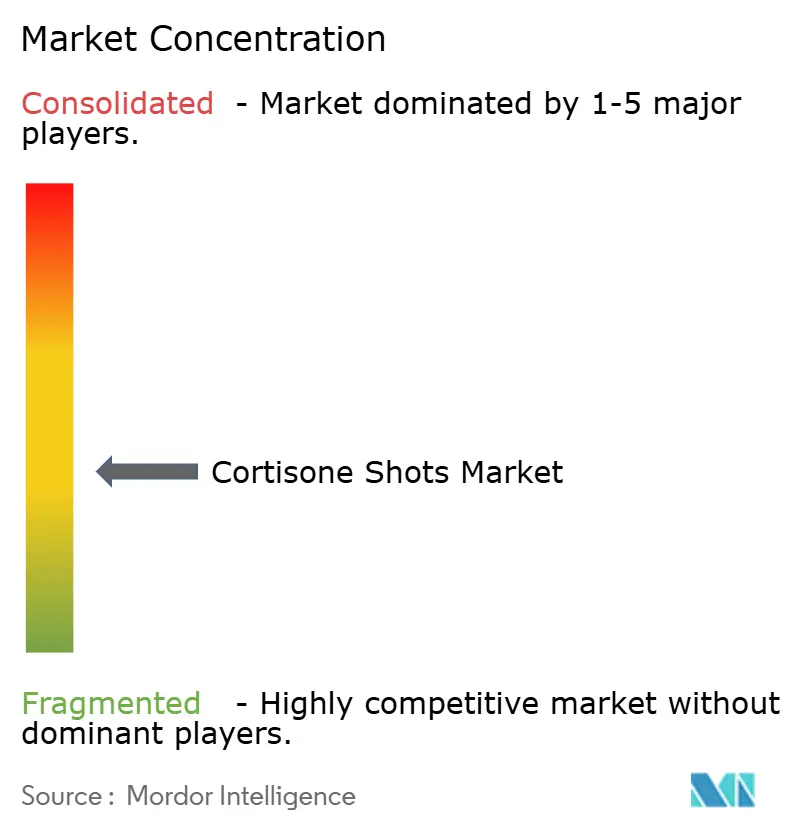
| Market Concentration | Medium |
Major Players *Disclaimer: Major Players sorted in no particular order Image © Mordor Intelligence. Reuse requires attribution under CC BY 4.0. | |
Cortisone Shots Market Analysis by Mordor Intelligence
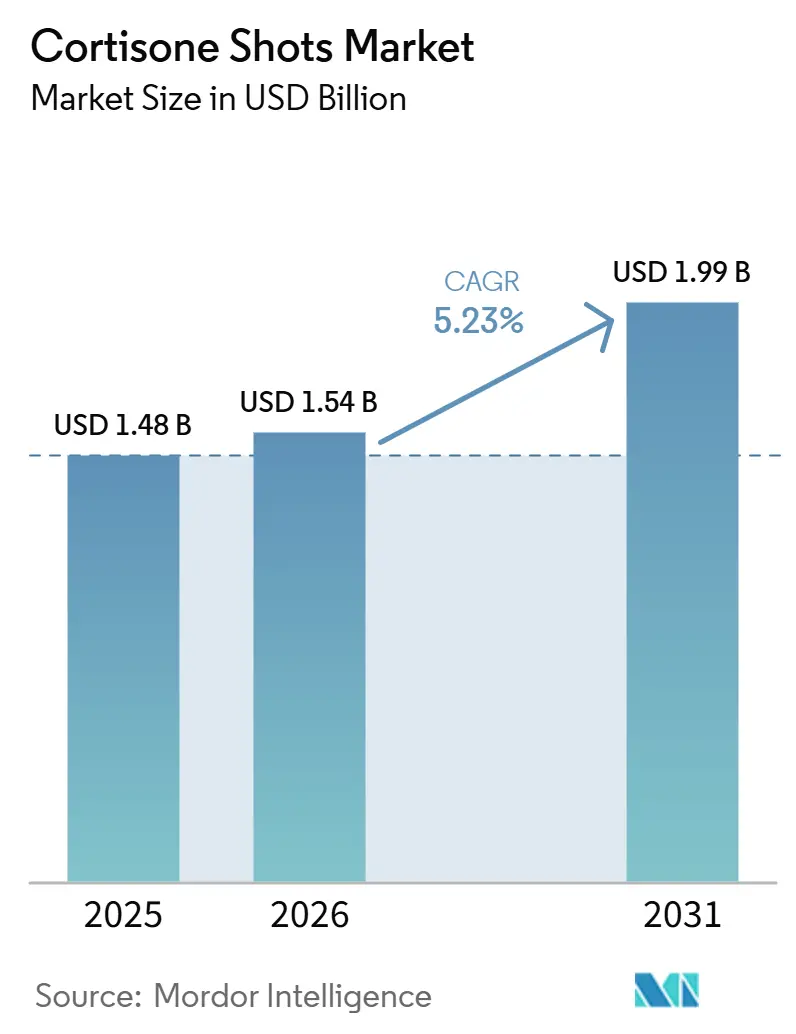
The cortisone shots market is projected to be USD 1.48 billion in 2025, USD 1.54 billion in 2026, and reach USD 1.99 billion by 2031, growing at a CAGR of 5.23% from 2026 to 2031. The cortisone shots market continues to benefit from the rising burden of osteoarthritis and rheumatoid arthritis, with 607 million people living with osteoarthritis globally in 2021 and rheumatoid arthritis affecting 17.9 million people in the same year, which keeps demand for injectable symptom control firm across rheumatology and orthopedic care pathways. The cortisone shots market is also supported by 2025 clinical guidance that continues to place intra articular corticosteroid injections within recommended first line care for several musculoskeletal indications, which helps preserve procedure volumes even as biologic therapies expand in inflammatory disease management. In 2025, North America led revenue generation while Asia-Pacific posted the fastest forecast growth, showing that the cortisone shots market is being shaped by both mature reimbursement systems and faster specialist care expansion in aging Asian populations. Product and care setting patterns remain concentrated around articular injections and hospitals, yet faster growth in epidural procedures and sport medicine centers shows that the cortisone shots market is widening beyond its traditional joint care base into spinal pain and outpatient image guided treatment settings.
Key Report Takeaways
- By product type, articular or joint injections held 46.44% share of the cortisone shots market in 2025, while epidural steroid injections are projected to expand at a 5.66% CAGR through 2031.
- By indication, rheumatoid arthritis held 47.23% of the cortisone shots market share in 2025, while psoriatic arthritis is projected to grow at an 6.13% CAGR through 2031.
- By end-user, hospitals held 46.13% revenue share in 2025, while sport medicine centers are projected to grow at a 6.44% CAGR through 2031.
- By geography, North America held 47.15% revenue share in 2025, while Asia-Pacific is projected to grow at a 7.61% CAGR through 2031.
Note: Market size and forecast figures in this report are generated using Mordor Intelligence’s proprietary estimation framework, updated with the latest available data and insights as of January 2026.
Global Cortisone Shots Market Trends and Insights
Drivers Impact Analysis*
| Driver | (~) % Impact on CAGR Forecast | Geographic Relevance | Impact Timeline |
|---|---|---|---|
| Rising Arthritis and Joint Disorder Burden | +2.4% | Global, concentrated in North America, East Asia, and Western Europe | Long term (≥ 4 years) |
| Aging Population and Degenerative Joint Disease Incidence | +1.6% | Global, highest intensity in Japan, Germany, Italy, and United States | Long term (≥ 4 years) |
| Preference for Non-Surgical Pain Management | +1.3% | North America and EU, growing uptake in urban APAC | Medium term (2-4 years) |
| Expansion of Sports Medicine and Outpatient Injection Pathways | +0.9% | North America, Australia, South Korea, Germany | Medium term (2-4 years) |
| Ultrasound Guided Injection Adoption and Procedure Precision | +0.6% | North America and EU, early gains in East Asia | Medium term (2-4 years) |
| Longer Acting Corticosteroid Formulations and Better Compliance | +0.4% | North America, led by the United States, with spillover to the EU | Short term (≤ 2 years) |
| Source: Mordor Intelligence | |||
Rising Arthritis and Joint Disorder Burden
The cortisone shots market is being lifted by a disease burden that is expanding across osteoarthritis, rheumatoid arthritis, and other inflammatory joint conditions at the same time. Osteoarthritis affected more than 607 million people worldwide in 2021, and the older adult case count rose 148.7% between 1990 and 2021, which points to a very large and persistent patient pool for symptom relieving injections.[1]: Y. Gao et al., “Osteoarthritis in Older Adults: A Global Health Challenge and Future Projections,” PMC, pmc.ncbi.nlm.nih.gov Rheumatoid arthritis recorded 488,269 new incident cases globally in 2021, and its incidence trend continued to rise, which matters because these patients often require localized flare control even when disease modifying medicines are already in use.[2]“Global, Regional and National Burden of Osteoarthritis in 1990–2021: A Systematic Analysis of the Global Burden of Disease Study 2021,” BMC Musculoskeletal Disorders, link.springer.com The cortisone shots market is also seeing a shift in the case mix, because faster growth in conditions such as psoriatic arthritis increases the use of injections as short duration support during treatment changes rather than only as a recurring maintenance option. That pattern raises treatment intensity for many diagnosed patients and helps the cortisone shots market hold value even in settings where prevalence growth itself is no longer moving as quickly.
Aging Population and Degenerative Joint Disease Incidence
The cortisone shots market is also supported by population aging, because older adults account for a large share of degenerative joint disease and are more likely to seek non surgical symptom relief. The World Health Organization states that musculoskeletal conditions remain the leading global cause of years lived with disability, with 149 million YLDs and 17% of all YLDs worldwide, which shows the depth of the clinical burden feeding procedure demand.[3]World Health Organization, “Musculoskeletal Conditions,” WHO Fact Sheet, who.int The World Health Organization also states that 73% of people living with osteoarthritis are older than 55, and women carry a higher burden, which supports sustained treatment need in long living populations with recurrent pain and mobility limits. The cortisone shots market benefits from the fact that aging is happening across Japan, Germany, Italy, South Korea, China, and the United States within the same broad period, which creates demand growth across several large healthcare systems rather than in only one region. In middle income settings where surgery remains less affordable, the cortisone shots market gains further support because injections often become the most accessible specialist intervention available.
Preference for Non-Surgical Pain Management
The cortisone shots market is gaining support from a clear preference for interventions that reduce pain without moving directly to surgery. Multi society guidance published in 2025 by ASRA, AAPM, ASIPP, and IPSIS continues to recommend intra articular corticosteroid injections across several joint conditions, which helps preserve physician confidence and keeps the procedure established in standard care. In many healthcare systems, injections also remain less expensive than surgery for patients with lower functional demands, which helps preserve their role as both a main treatment and a presurgical bridge. The outcome is that the cortisone shots market keeps relevance even when longer term treatment pathways continue to evolve.
Expansion of Sports Medicine and Outpatient Injection Pathways
The cortisone shots market is also being helped by the growth of sport medicine centers and other outpatient settings that can deliver injections quickly and at lower operating cost than hospitals. This channel often treats younger and more active patients who value rapid symptom control and return to movement, which creates a different demand pattern from chronic arthritis care in hospital led settings. A 2025 expert consensus on glucocorticoid injection for knee osteoarthritis supported individualized dosing intervals based on clinical response, which leaves room for flexible treatment planning in active patients with recurring flare patterns. The cortisone shots market benefits further because outpatient facilities can package ultrasound guidance with procedures in a lower cost environment, which encourages volume shifts away from higher overhead hospital departments. As outpatient expertise deepens, the cortisone shots market gains another pathway for procedure growth that is not tied only to inpatient or hospital based care.
Restraints Impact Analysis*
| Restraint | (~) % Impact on CAGR Forecast | Geographic Relevance | Impact Timeline |
|---|---|---|---|
| Injection Frequency Limits Due to Cartilage and Tendon Safety Concerns | -1.5% | Global, most acute in North America and Western Europe where ASRA compliance is highest | Long term (≥ 4 years) |
| Reimbursement Scrutiny for Repeated Injections | -0.9% | North America and EU, particularly U.S. Medicare and NHS frameworks | Medium term (2-4 years) |
| Competition From Hyaluronic Acid, PRP, and Physical Therapy Pathways | -0.7% | North America, Europe, East Asia including Japan and South Korea | Medium term (2-4 years) |
| Sterile Manufacturing and Regulatory Quality Burden for Injectable Products | -0.5% | North America, Europe, and Asia-Pacific | Medium term (2-4 years) |
| Source: Mordor Intelligence | |||
Injection Frequency Limits Due to Cartilage and Tendon Safety Concerns
The cortisone shots market faces an important limit because safety concerns reduce how often some patients can receive repeat injections. A 2 year double blind randomized trial cited in the 2025 ASRA and AAPM guideline found that triamcinolone acetonide 40 mg given every 12 weeks in knee osteoarthritis caused greater cartilage volume loss than saline without a matching improvement in pain benefit. These findings matter because they push physicians toward the lowest effective dose and longer intervals, which directly lowers the number of procedures a single patient may receive over time. The cortisone shots market therefore cannot rely on unlimited repeat use within existing patient pools, even when demand from new patients continues to rise. This is why growth increasingly depends on better patient selection, improved delivery systems, and the movement of injections toward more targeted episodic use.
Reimbursement Scrutiny for Repeated Injections
The cortisone shots market also faces pressure from reimbursement review when repeated injections are proposed within a short period. Updated coding guidance from the American Academy of Family Physicians in 2026 shows that corticosteroid injections remain covered in the United States, yet repeat treatment courses increasingly require authorization and clinical documentation that can slow physician uptake. In the United Kingdom and other publicly funded systems, evidence thresholds and formulary controls create similar friction around repeat use, which keeps utilization more selective. In lower income settings the same effect appears through affordability rather than prior authorization, because out of pocket payment limits how many injections a patient can reasonably continue. The cortisone shots market therefore needs new patient additions, wider geographic access, and some mix improvement from premium formulations to offset a clear ceiling on repeated standard use.
*Our forecasts treat driver/restraint impacts as directional, not additive. The impact forecasts reflect baseline growth, mix effects, and variable interactions.
Segment Analysis
By Product Type: Articular Injections Lead, Epidurals Build Momentum
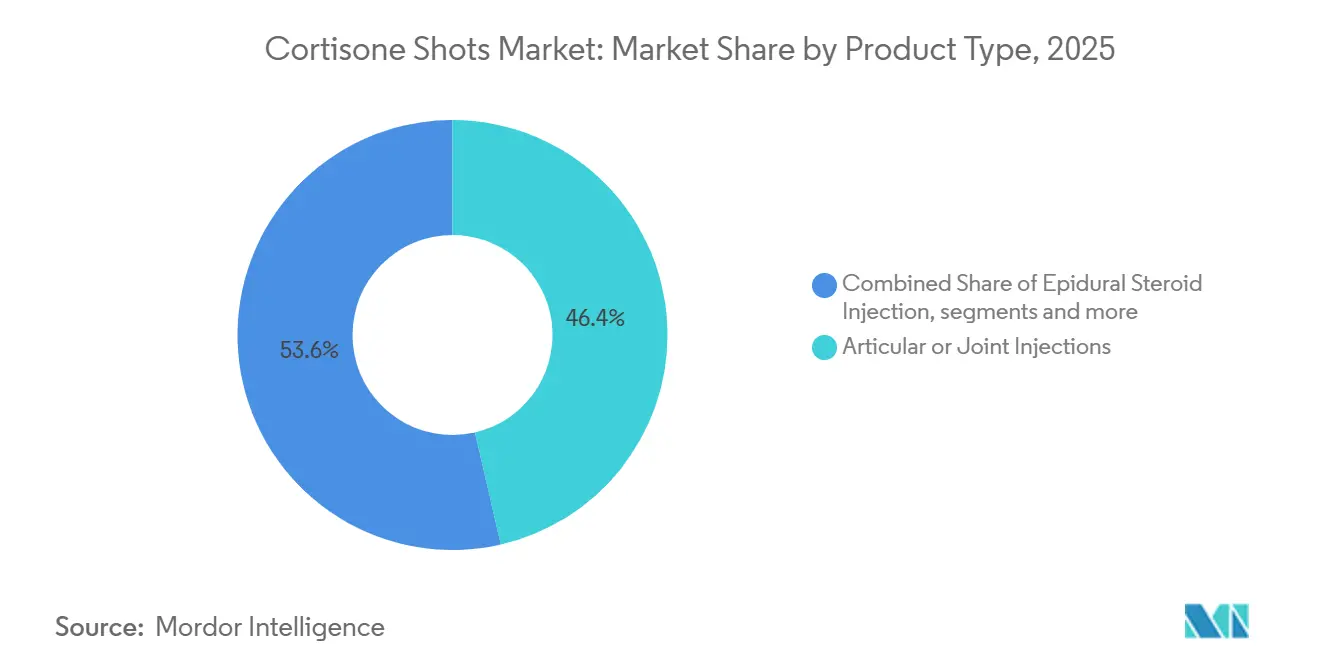
Articular or joint injections held 46.44% of segment revenue in 2025, which made them the largest product type in the cortisone shots market and confirmed the central role of direct intra articular delivery across knee, shoulder, hip, and ankle care. Their lead reflects long standing physician comfort with peripheral joint injection protocols in rheumatology and orthopedics, where localized symptom relief remains an important part of treatment planning for degenerative and inflammatory conditions. Within the broader cortisone shots industry, this segment also benefits from the wide anatomical range of treatable joints and from the steady flow of patients who are not ready for surgery or need temporary relief while other therapies are being adjusted.
Epidural steroid injections are projected to grow at a 5.66% CAGR through 2031, which makes them the fastest advancing product type in the cortisone shots market size by growth rate. Research published in the Journal of Controlled Release in 2026 described long acting triamcinolone acetonide prodrug microcrystals for sustained intra articular treatment, which signals broader formulation progress that may influence spinal delivery development as well. As more controlled release technologies move through validation, product differentiation in the cortisone shots market is likely to extend beyond simple molecule availability and toward duration, delivery profile, and billing support.



By Indication: Rheumatoid Arthritis Anchors Share, Psoriatic Arthritis Expands Faster
Rheumatoid arthritis held 47.23% of indication based revenue in 2025, which made it the largest indication in the cortisone shots market and reflected the scale and clinical complexity of this patient group. In routine care, intra articular corticosteroid injections continue to serve both as short term flare control and as support while disease modifying therapies are being initiated or adjusted, which keeps the indication important even when systemic treatment options expand. Smoking remains the only modifiable risk factor directly attributed in the GBD analysis, with an odds ratio of 13 for disease development, yet that does little to change near term treatment need because the existing patient base is already large and persistent.
Psoriatic arthritis is projected to grow at an 6.13% CAGR through 2031, which makes it the fastest growing indication in the cortisone shots market size by indication growth. Its expansion is tied to rising diagnosis, wider specialist recognition, and the practical role of corticosteroid injections in controlling localized joint flares during biologic initiation, treatment gaps, or changes in therapy, when symptom relief is needed faster than systemic effects can fully develop. Tendinitis and allergic reaction remain among the smaller indication groups, with demand more dispersed across primary care and general outpatient settings and with less predictable repeat use than the rheumatology centered indications. As a result, the cortisone shots market remains anchored by rheumatoid arthritis for scale, while psoriatic arthritis adds a faster growing, episodic, and clinically targeted source of demand.
By End-User: Hospitals Hold Volume Lead, Sport Medicine Centers Grow Fast
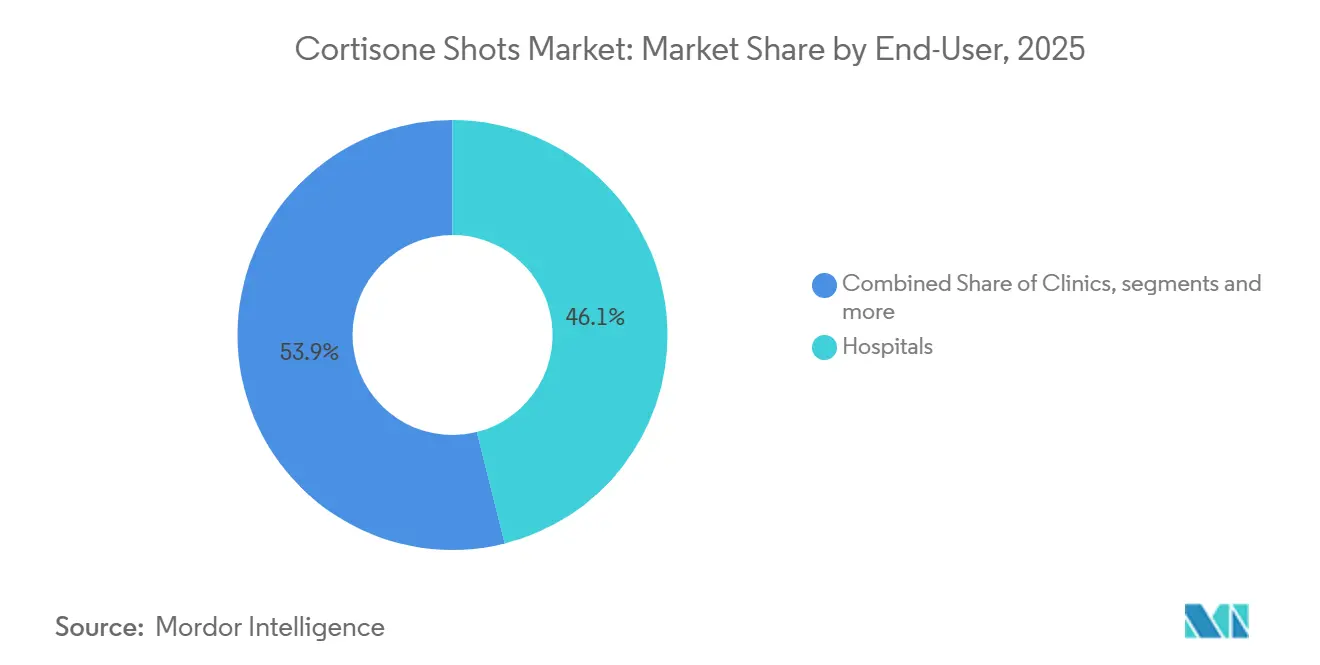
Hospitals held 46.13% of end-user revenue in 2025, which gave them the leading care setting in the cortisone shots market and reflected their role in managing complex, image guided, and specialist administered procedures. Hospitals also remain important because they treat patients with higher clinical complexity, including those who need coordinated rheumatology, orthopedic, pain, and imaging support in the same setting. Clinics formed the second largest channel by providing lower cost, high volume outpatient care for knee, shoulder, and similar musculoskeletal conditions, where procedure scheduling flexibility often improves throughput.
Sport medicine centers are projected to grow at a 6.44% CAGR through 2031, which makes them the fastest expanding end-user segment in the cortisone shots market. Their growth is linked to higher participation in organized sport and fitness activity, broader patient awareness of injectable pain relief, and rising availability of physicians trained in musculoskeletal ultrasound and image guided delivery. Growth is not fully uniform across regions because scope of practice rules in parts of Asia-Pacific and Latin America can limit prescribing authority for corticosteroids outside narrower indications, which keeps uptake stronger in North America and Western Europe. Even with those limits, the cortisone shots market is moving steadily toward outpatient specialization, and sport medicine centers are becoming an important growth outlet rather than a peripheral channel.
Geography Analysis
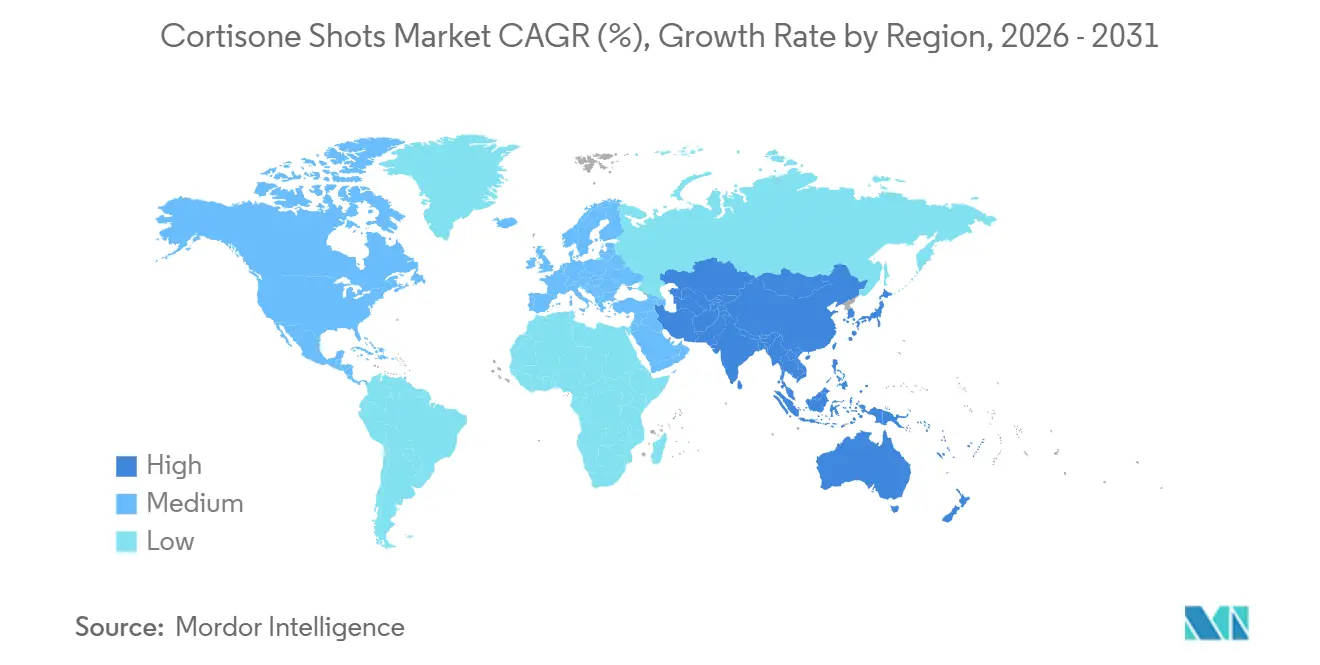
North America held 47.15% of global revenue in 2025, which made it the largest regional contributor in the cortisone shots market and kept it in the lead in 2026. The region benefits from high musculoskeletal disease prevalence, dense specialist networks, advanced imaging capacity, and reimbursement structures that support injectable procedures in both hospital and outpatient settings. The United States accounts for most regional revenue because orthopedic and rheumatology care density remains high, and because bundled coding frameworks support routine use of image guided injections in appropriate cases. Mexico is the fastest growing country within North America, supported by wider access to private urban clinics that serve a working age population with a high musculoskeletal injury burden.
Europe held the second largest regional position in the cortisone shots market, with Germany, the United Kingdom, France, Italy, and Spain forming the core revenue base. Germany supports uptake through strong specialist care access, while the United Kingdom applies tighter evidence-based controls that limit publicly funded repeat treatment and shape procedure frequency. Spain and Italy are seeing broader use in sport medicine and private clinic settings, while their aging populations and hospital centered specialist networks continue to support procedure demand. Eastern Europe also presents room for expansion as specialist access improves and healthcare spending rises across markets such as Poland and the Czech Republic.
Asia-Pacific is projected to grow at a 7.61% CAGR through 2031, which makes it the fastest growing regional part of the cortisone shots market size and reflects both aging and access expansion. Japan remains central because osteoarthritis prevalence is high and the national insurance system supports corticosteroid injections in rheumatology and orthopedic practice, which helps preserve steady treatment volume. China is also expanding quickly as private musculoskeletal clinics and sport medicine centers grow in major cities, and as injections remain a more accessible option than surgery for many working age patients with degenerative joint disease. India, Australia, and urban Southeast Asia add further growth through better specialist access and rising outpatient procedure adoption. South America, the Middle East, and Africa remain smaller in current value, yet Brazil and Gulf Cooperation Council countries offer stronger potential than peers because private orthopedic capacity and health system investment are rising, while South Africa and Argentina continue to face financing and economic constraints that slow near term uptake.

Competitive Landscape
The cortisone shots market remains moderately fragmented in standard generic formulations, while concentration is higher in the specialty extended-release tier. Large pharmaceutical companies, including Pfizer Inc., Sanofi S.A., Novartis AG, Teva Pharmaceutical Industries, and Merck & Co., compete through established methylprednisolone acetate and triamcinolone acetonide lines, where pricing is shaped more by contracts and tenders than by strong brand separation. Generic and specialty generic suppliers such as Hikma Pharmaceuticals, Fresenius Kabi, Amneal Pharmaceuticals, Dr. Reddy’s Laboratories, and Sun Pharmaceutical Industries also compete on supply reliability and hospital channel execution, which keeps pricing pressure active across the commodity end of the market. This structure means that the cortisone shots market is broad at the base, because several companies can supply standard injectable formulations, but it is narrower where formulation technology and reimbursement support create barriers.
Strategic competition in the cortisone shots market is shifting toward proprietary delivery systems, better procedure fit in image guided practice, and product designs that can reduce repeat dosing concerns. Eupraxia Pharmaceuticals is one example, because its EP-104IAR program uses a local sustained release approach aimed at lowering systemic exposure and extending intra articular effect, which places it directly in the next generation formulation race. Another point of competition lies in hip joint care, where the lack of an approved extended release corticosteroid option and the added safety concern around repeated injections leave a clear product gap for companies that can validate more controlled delivery.
Anika Therapeutics added another strategic move in July 2025 with its Hyalofast program update and U.S. pivotal FastTRACK Phase III topline results, which show how adjacent injectable and cartilage repair players are moving into treatment spaces close to corticosteroid based care. The cortisone shots market therefore shows a split competitive pattern, with broad supplier participation in standard injectables and a more selective field where controlled release technology, targeted anatomical use, and reimbursement backed differentiation matter most. That split is likely to remain a defining feature of competition through the forecast period.
Cortisone Shots Industry Leaders
Pfizer Inc.
Sanofi S.A.
Novartis AG
Bristol-Myers Squibb Company
Teva Pharmaceutical Industries Ltd.
- *Disclaimer: Major Players sorted in no particular order

Recent Industry Developments
- May 2026: The United States FDA updated the prescribing information for Aristospan (triamcinolone hexacetonide injectable suspension), reinforcing its use for short-term treatment of inflammatory musculoskeletal conditions such as acute bursitis, rheumatoid arthritis, synovitis of osteoarthritis, and tenosynovitis, while reiterating warnings against epidural administration due to serious neurological risks.
- June 2025: Amneal Pharmaceuticals won FDA approval for prednisolone acetate ophthalmic suspension 1%, referencing Pred Forte, with launch slated for Q3 2025.
- May 2025: Eton Pharmaceuticals secured FDA clearance for Khindivi (hydrocortisone) oral solution for pediatric adrenocortical insufficiency.


Global Cortisone Shots Market Report Scope
According to the report’s scope, the cortisone shots market refers to the global industry focused on the development, manufacturing, and commercialization of injectable corticosteroid therapies used to reduce inflammation and relieve pain associated with conditions such as arthritis, bursitis, tendinitis, and other musculoskeletal and inflammatory disorders.
The cortisone shots market is segmented into product type, indication, end-user, and geography. By product type, the market is segmented into articular or joint injections, epidural steroid injection, and trigger point injection. By indication, the market is segmented into rheumatoid arthritis, psoriatic arthritis, tendinitis, and allergic reaction. By end-user, the market is segmented into hospitals, clinics, sport medicine centers, and other end-users. By geography, the market is segmented into North America, Europe, Asia-Pacific, the Middle East and Africa, and South America. The report also covers the estimated market sizes and trends for 17 countries across major regions globally. The report offers values (USD) for all the above segments.
| Articular or Joint Injections |
| Epidural Steroid Injection |
| Trigger Point Injection |
| Rheumatoid Arthritis |
| Psoriatic Arthritis |
| Tendinitis |
| Allergic Reaction |
| Hospitals |
| Clinics |
| Sport Medicine Centers |
| Other End-Users |
| North America | United States |
| Canada | |
| Mexico | |
| Europe | Germany |
| United Kingdom | |
| France | |
| Italy | |
| Spain | |
| Rest of Europe | |
| Asia-Pacific | China |
| Japan | |
| India | |
| Australia | |
| South Korea | |
| Rest of Asia-Pacific | |
| Middle East and Africa | GCC |
| South Africa | |
| Rest of Middle East and Africa | |
| South America | Brazil |
| Argentina | |
| Rest of South America |
| By Product Type | Articular or Joint Injections | |
| Epidural Steroid Injection | ||
| Trigger Point Injection | ||
| By Indication | Rheumatoid Arthritis | |
| Psoriatic Arthritis | ||
| Tendinitis | ||
| Allergic Reaction | ||
| By End-User | Hospitals | |
| Clinics | ||
| Sport Medicine Centers | ||
| Other End-Users | ||
| By Geography | North America | United States |
| Canada | ||
| Mexico | ||
| Europe | Germany | |
| United Kingdom | ||
| France | ||
| Italy | ||
| Spain | ||
| Rest of Europe | ||
| Asia-Pacific | China | |
| Japan | ||
| India | ||
| Australia | ||
| South Korea | ||
| Rest of Asia-Pacific | ||
| Middle East and Africa | GCC | |
| South Africa | ||
| Rest of Middle East and Africa | ||
| South America | Brazil | |
| Argentina | ||
| Rest of South America | ||


Key Questions Answered in the Report
What is the 2031 outlook for cortisone shots market?
The cortisone shots market is projected to reach USD 1.99 billion by 2031 from USD 1.48 billion in 2025 to USD 1.54 billion in 2026, with a forecasted CAGR of 5.23% over 2026 to 2031.
Which region leads revenue generation for cortisone injections?
North America led with 47.15% of global revenue in 2025, supported by high disease prevalence, specialist density, and reimbursement support for injectable procedures.
Which region is growing the fastest through 2031?
Asia-Pacific is expected to post the fastest growth at a 7.61% CAGR through 2031, driven by aging populations and improving access to specialist outpatient care.
Which product category holds the largest share?
Articular or joint injections led product revenue with a 46.44% share in 2025 because knee, shoulder, hip, and ankle use remains central to rheumatology and orthopedic practice.
Page last updated on:





