
Cortisone Market Size and Share
Market Overview
| Study Period | 2020 - 2031 |
|---|---|
| Market Size (2026) | USD 3.58 Billion |
| Market Size (2031) | USD 4.92 Billion |
| Growth Rate (2026 - 2031) | 6.55 % |
| Fastest Growing Market | Asia-Pacific |
| Largest Market | North America |
| Market Concentration | Medium |
Major Players *Disclaimer: Major Players sorted in no particular order Image © Mordor Intelligence. Reuse requires attribution under CC BY 4.0. | |
Cortisone Market Analysis by Mordor Intelligence
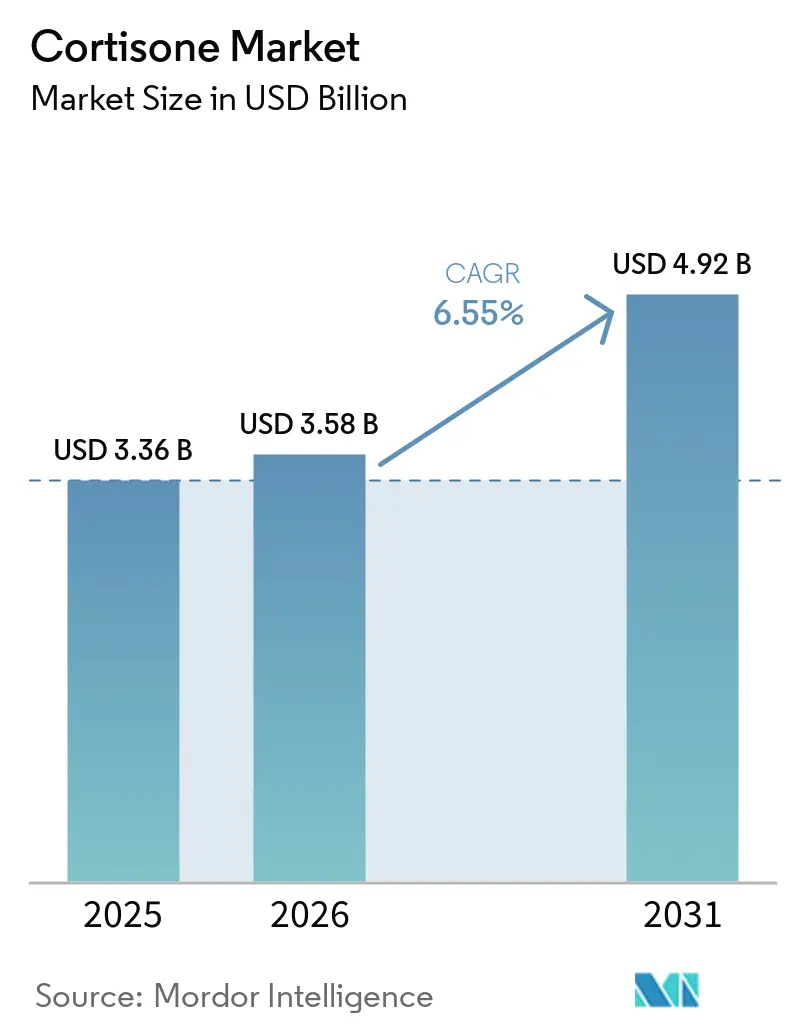
The Cortisone Market size is projected to be USD 3.36 billion in 2025, USD 3.58 billion in 2026, and reach USD 4.92 billion by 2031, growing at a CAGR of 6.55% from 2026 to 2031.
Demand is supported by the ongoing burden of arthritis, autoimmune conditions, and adrenal disorders requiring rapid anti-inflammatory treatment or glucocorticoid replacement. The World Health Organization reported that 18 million people were living with rheumatoid arthritis globally, while the Centers for Disease Control and Prevention reported that 58.5 million U.S. adults had arthritis and 25.7 million had arthritis-attributable activity limitations. Cortisone products remain widely used due to their rapid action and availability in injectable and oral formats, particularly where biologic medicines are costly or unavailable. Suppliers are addressing price pressure in established generic products through easier-to-use injectable formats, soluble formulations, and replacement therapies aligned with patient dosing needs.
Key Report Takeaways
- By product type, cortisone acetate held 56.45% of the Cortisone market share in 2025, while cortisone sodium phosphates is projected to grow at a 9.23% CAGR through 2031.
- By dosage form, injectable preparations accounted for 54.34% of revenue in 2025, while oral tablets are projected to expand at an 8.88% CAGR through 2031.
- By route of administration, intra-articular and local injection held 45.88% of revenue in 2025, while the intramuscular route is expected to advance at a 10.55% CAGR through 2031.
- By therapeutic application, rheumatoid and psoriatic arthritis represented 47.23% of revenue in 2025, while adrenal insufficiency and congenital adrenal hyperplasia are projected to grow at an 11.34% CAGR through 2031.
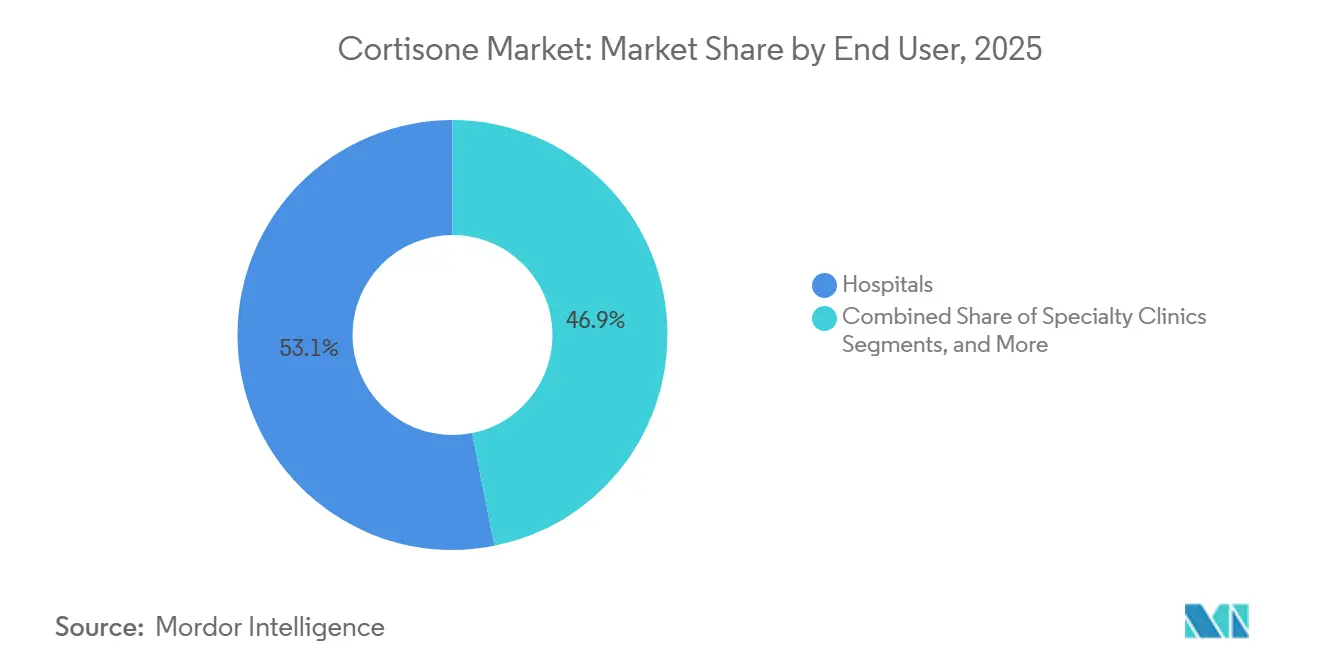
- By end user, hospitals accounted for 53.13% of revenue in 2025, while specialty clinics are projected to grow at an 8.45% CAGR through 2031.
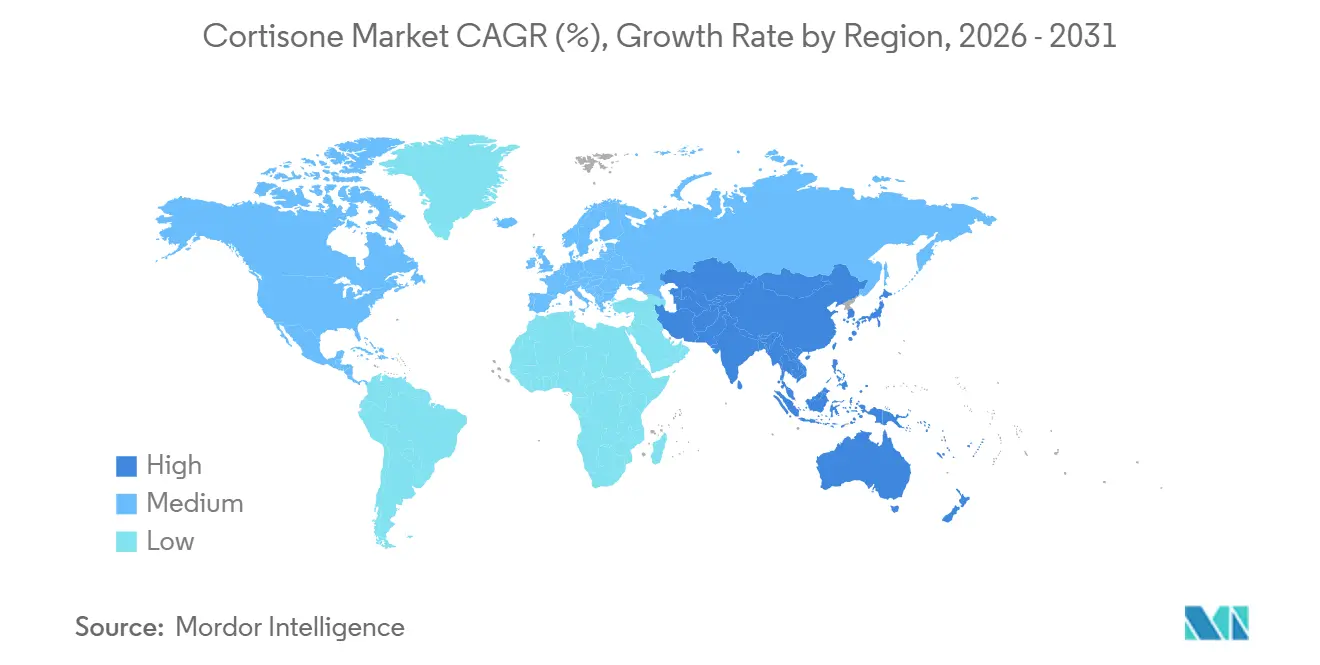
- By geography, North America held 41.66% of revenue in 2025, while Asia-Pacific is projected to grow at a CAGR of 10.65% through 2031.
Note: Market size and forecast figures in this report are generated using Mordor Intelligence’s proprietary estimation framework, updated with the latest available data and insights as of January 2026.
Market Trends and Insights
Drivers Impact Analysis of Cortisone Market*
| DRIVER | (~) % IMPACT ON CAGR FORECAST | GEOGRAPHIC RELEVANCE | IMPACT TIMELINE |
|---|---|---|---|
| Rising burden of osteoarthritis, rheumatoid arthritis and gout | +2.2% | Global, led by North America and Asia-Pacific | Long term (≥ 4 years) |
| Growth in adrenal-insufficiency diagnosis and replacement therapy | +1.4% | North America, Europe, with spill-over to Asia-Pacific | Medium term (2-4 years) |
| Preference for rapid and low-cost anti-inflammatory treatment | +1.0% | Global, strongest in emerging markets | Short term (≤ 2 years) |
| Expansion of outpatient orthopedic and sports-medicine procedures | +0.7% | North America and Europe | Medium term (2-4 years) |
| Underdiagnosed adrenal disease in emerging healthcare systems | +0.6% | Asia-Pacific, Middle East and Africa, and South America | Long term (≥ 4 years) |
| Increasing demand for circadian-matched and dose-optimized replacement | +0.4% | North America and Western Europe | Medium term (2-4 years) |
| Source: Mordor Intelligence | |||
Rising Burden of Osteoarthritis, Rheumatoid Arthritis and Gout
Joint and connective tissue disorders remained a key demand driver for the cortisone market. The CDC reported that 25.7 million of the 58.5 million US adults with arthritis experienced activity limitations due to the condition and projected that 34.6 million adults would have activity-limiting arthritis by 2040. Corticosteroids played a short-term role in controlling disease activity before disease-modifying therapies became fully effective. Acute gout also supported demand when colchicine or nonsteroidal anti-inflammatory drugs were unsuitable.
Growth in Adrenal-Insufficiency Diagnosis and Replacement Therapy
Newborn screening and improved diagnostic practices expanded the treated population for congenital adrenal hyperplasia and adrenal insufficiency. Screening programs used 17-hydroxyprogesterone testing to identify infants with classic congenital adrenal hyperplasia at birth, creating a need for lifelong glucocorticoid replacement. The FDA approved crinecerfont in December 2024 as an adjunct treatment for classic congenital adrenal hyperplasia, to be used alongside glucocorticoid replacement. A 2025 review identified modified-release hydrocortisone and CRF1 antagonists as major developments that reduced steroid exposure while maintaining adrenal control.
Preference for Rapid and Low-Cost Anti-Inflammatory Treatment
Cortisone remained a cost-effective option for rapid anti-inflammatory treatment. Clinicians used it for acute gout, bursitis, severe allergic reactions, perioperative stress dosing, and other corticosteroid-responsive conditions. Demand remained strong in Middle Eastern, African, and South American healthcare settings, where affordability influenced prescribing and reimbursement limited access to higher-cost biologics. Hospital procurement agreements also supported recurring purchases of generic cortisone acetate despite declining unit prices.
Expansion of Outpatient Orthopedic and Sports-Medicine Procedures
Outpatient orthopedic, rheumatology, and sports medicine settings increasingly delivered musculoskeletal care. This shift expanded access to corticosteroid injections for joint and soft-tissue conditions. Ultrasound-guided procedures improved injection accuracy in complex joints, including the hip, shoulder, and sacroiliac region. Growing ambulatory orthopedic activity supported local injection volumes outside inpatient hospital settings, expanding the procedural base for the cortisone market.
Restraints Impact Analysis of Cortisone Market*
| RESTRAINT | (~) % IMPACT ON CAGR FORECAST | GEOGRAPHIC RELEVANCE | IMPACT TIMELINE |
|---|---|---|---|
| Adverse effects associated with cumulative glucocorticoid exposure | -1.8% | Global, strongest in markets with established pharmacovigilance | Long term (≥ 4 years) |
| Competition from hydrocortisone, prednisolone, and steroid-sparing therapies | -1.6% | North America and Europe | Medium term (2-4 years) |
| Generic price erosion and limited differentiation of cortisone acetate | -1.2% | Global, acute in high-generic-penetration markets | Short term (≤ 2 years) |
| Supply vulnerability from low-volume steroid API and manufacturer concentration | -0.8% | Global, with concentration risk in Asia-Pacific supply corridors | Medium term (2-4 years) |
| Source: Mordor Intelligence | |||
Adverse Effects Associated with Cumulative Glucocorticoid Exposure
Safety concerns related to prolonged glucocorticoid use limit cortisone use in chronic care. A 2024 clinical review reported that 30% of long-term users developed secondary osteoporosis, while 30% to 50% of patients receiving extended treatment experienced fractures. Glucocorticoid users also faced a 160% to 185% higher spinal-fracture risk than healthy non-users. European guidelines recommended bone-risk assessments and preventive treatment for patients receiving 7.5 mg per day or more, supporting a shift toward steroid-sparing therapies and reducing the potential for long-term repeat prescribing in the Cortisone market.
Competition, Price Erosion, and Supply Vulnerability
Hydrocortisone, prednisolone, extended-release hydrocortisone, biologics, and JAK inhibitors competed with cortisone across treatment settings. Hydrocortisone remained important for physiologic adrenal replacement, while prednisolone was selected for predictable oral use in inflammatory conditions. The FDA approved KHINDIVI, a hydrocortisone oral solution for pediatric patients aged 5 years and older with adrenocortical insufficiency, in May 2025. Generic competition reduced cortisone acetate revenue per unit, while concentrated low-volume steroid active pharmaceutical ingredient production increased supply vulnerability, favoring suppliers with strong quality, regulatory compliance, and supply capabilities.
*Our forecasts treat driver/restraint impacts as directional, not additive. The impact forecasts reflect baseline growth, mix effects, and variable interactions.
Cortisone Market Segment Analysis
By Product Type:
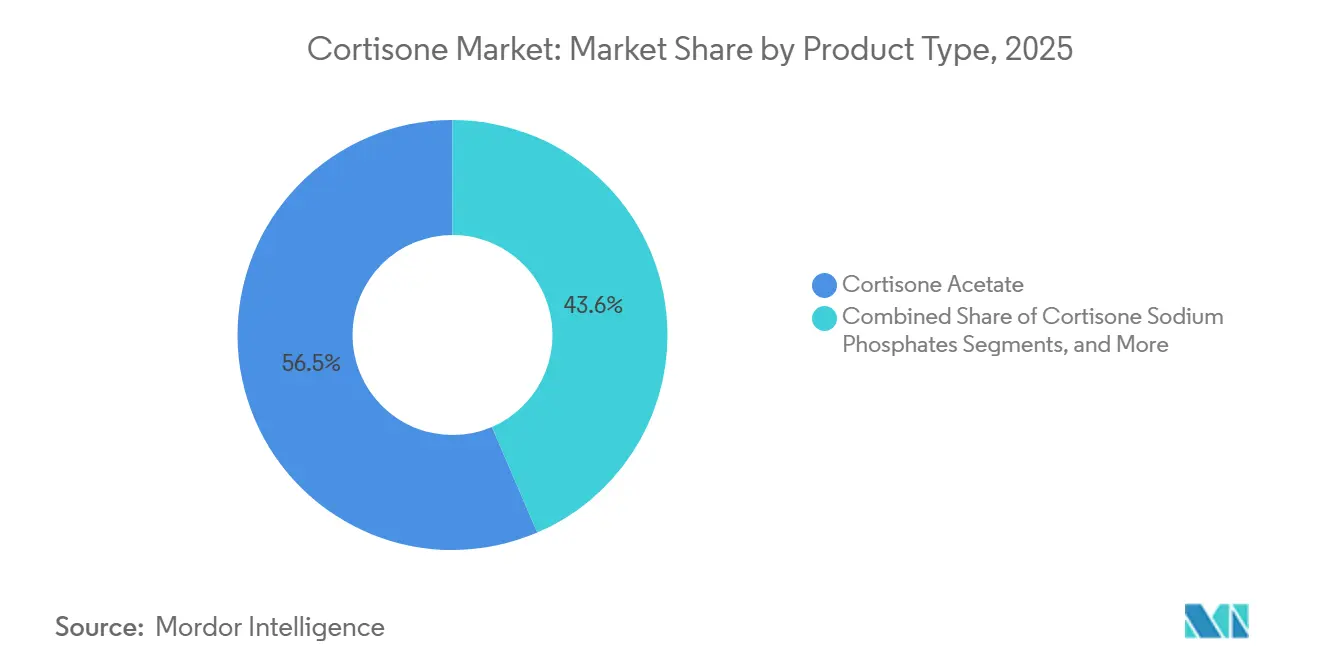
Cortisone Acetate Supports Revenue while Phosphate Salts Lead GrowthCortisone Acetate accounted for 56.45% of product-type revenue in 2025, making it the primary revenue contributor in the cortisone market. Established oral protocols, broad generic formulary inclusion, and continued replacement use support demand. Generic competition has reduced acquisition costs, sustaining volumes despite pressure on manufacturer margins. Familiar dosing and broad availability reinforce its use in treatment pathways that prioritize reliable access.
Cortisone Sodium Phosphates are projected to grow at a CAGR of 9.23% from 2026 to 2031, the highest rate among product types. Water solubility supports intravenous administration in hospital, critical-care, and perioperative settings. Demand for ready-to-use formulations is increasing, particularly for adrenal crisis and severe anaphylaxis protocols. Suspension and compounded products retain smaller roles in dermatological and ophthalmic applications.

By Dosage Form:
Injectable Preparations Lead while Oral Tablets Grow FastestInjectable Preparations accounted for 54.34% of dosage-form revenue in 2025, representing the largest dosage-form segment in the cortisone market. They support intra-articular, intramuscular, and intravenous administration across rheumatology, orthopedics, emergency medicine, and critical care. Recurring hospital and specialty-clinic procurement arrangements help stabilize demand. Injectable products remain important when rapid treatment is required or oral administration is unsuitable.
Oral Tablets are projected to grow at a CAGR of 8.88% from 2026 to 2031, the fastest rate among dosage forms. Growth is driven by outpatient chronic-disease management, dose tapering, and replacement therapy for congenital adrenal hyperplasia and adrenal insufficiency. Modified-release products provide more tailored dosing, although availability varies by country. A 2025 study of 790 patients found that modern glucocorticoid therapies had reached only 5% of the observed congenital adrenal hyperplasia cohort by 2023. Immediate-release tablets remain important as affordable options for outpatient tapering schedules.
By Route of Administration:
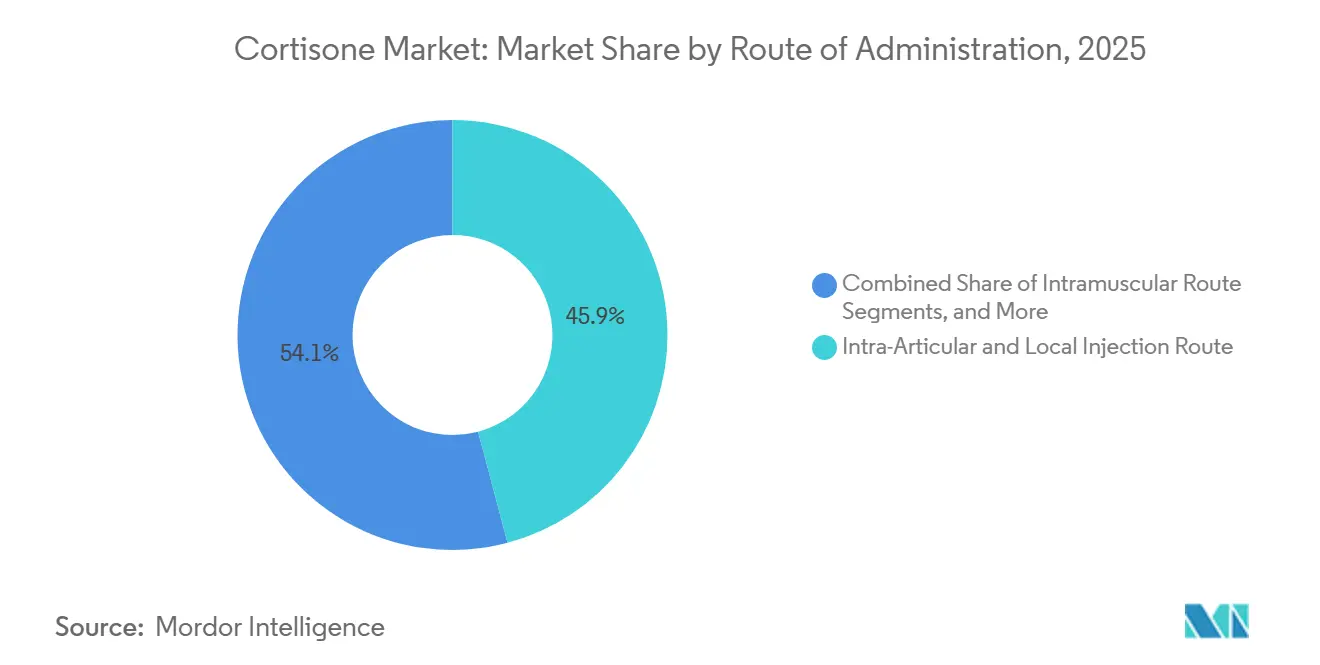
Local Injection Leads while Intramuscular Use Gains MomentumIntra-Articular and Local Injection accounted for 45.88% of route-of-administration revenue in 2025. This route is widely used to treat osteoarthritis, inflammatory arthritis, bursitis, and tendinitis. Ultrasound-guided administration has improved targeting in anatomically complex locations and supports outpatient procedures. Local administration can also limit systemic exposure in patients with focal pain or inflammation.
The Intramuscular Route is projected to grow at a CAGR of 10.55% from 2026 to 2031, the fastest rate among administration routes. Depot injections support single-dose treatment for patients with poor adherence to oral regimens or limited intravenous access. In June 2025, Hikma launched Triamcinolone Acetonide Injectable Suspension, USP, 40 mg/mL, in the United States as its first complex injectable corticosteroid suspension in the country. The product was approved for inflammatory, autoimmune, hormonal, and other corticosteroid-responsive conditions. Clinic-administered depot treatments can reduce adherence challenges associated with repeated oral dosing.
By Therapeutic Application:
Rheumatic Disease Leads while Adrenal Indications Expand FastestRheumatoid and Psoriatic Arthritis accounted for 47.23% of therapeutic-application revenue in 2025. Corticosteroids remain important for short-course disease control while longer-acting disease-modifying therapies take effect. Osteoarthritis, bursitis, and tendinitis form the next major indication group, supported by aging patient populations and greater availability of ambulatory injection procedures. Disease severity, affected joints, prior therapy, and the need for prompt symptom control influence treatment selection.
Adrenal Insufficiency and Congenital Adrenal Hyperplasia are projected to grow at a CAGR of 11.34% through 2031. Newborn screening and improved adult diagnosis are expanding the number of patients receiving long-term replacement therapy. A 2025 Nature Reviews Endocrinology article described combination approaches using CRF1 antagonists and glucocorticoids to reduce steroid doses while maintaining replacement coverage. Dermatological, respiratory, allergic, ophthalmic, hematological, and neoplastic disorders also contribute to demand. Interest in low-dose regimens is increasing to balance clinical control with cumulative glucocorticoid exposure.
By End User:
Hospitals Lead while Specialty Clinics Build Their RoleHospitals accounted for 53.13% of end-user revenue in 2025, giving them the leading position in the cortisone market. They manage acute and complex inflammatory conditions that often require injectable treatments, critical-care protocols, and multidisciplinary support. Formal procurement processes for injectable corticosteroids create predictable volume demand for suppliers with reliable availability. Hospitals remain critical for emergency treatment, including adrenal crisis and severe allergic reactions.
Specialty Clinics are projected to grow at a CAGR of 8.45% from 2026 to 2031, the highest rate among end-user settings. Rheumatology, endocrinology, dermatology, and sports-medicine practices serve concentrated patient populations requiring corticosteroid treatment. Endocrinology clinics are positioned to benefit as screening identifies more congenital adrenal hyperplasia and adrenal insufficiency cases. Homecare, physician offices, primary-care practices, and ambulatory surgical centers continue to expand their role as care shifts toward outpatient settings.
Geography Analysis
North America Cortisone Market
North America held 41.66% of global revenue in 2025 and was the largest regional contributor to the Cortisone market. High diagnosis rates for arthritis and autoimmune diseases, reimbursement support for injectable procedures and oral corticosteroids, and established specialist networks in the United States drove regional demand. Canada added volume through provincial public drug formularies, while Mexico emerged as the fastest-growing national opportunity due to expanding private clinic capacity, a large working-age population, and rising demand for musculoskeletal injury treatment. Suppliers addressed this demand through clinic-focused distribution and affordable injectable offerings.
APAC Cortisone Market
Asia-Pacific was forecast to grow at a CAGR of 11.65% through 2031, the fastest regional growth rate in the Cortisone market. China remained a major corticosteroid active pharmaceutical ingredient production base, while India combined export-oriented manufacturing with growing domestic demand. Japan, South Korea, Vietnam, Indonesia, and Thailand offered growth potential through aging populations, increasing healthcare access, and improving specialist density.
MEA Cortisone Market
The Middle East and Africa remained constrained by affordability, although health infrastructure investment in Saudi Arabia and the United Arab Emirates improved access to essential corticosteroid treatment. Suppliers needed to balance cost-competitive offerings, reliable supply, regulatory compliance, product registrations, distribution capacity, and pricing across varied reimbursement systems. These conditions favored lower-cost generic products in some markets and differentiated formulations in others.
Competitive Landscape
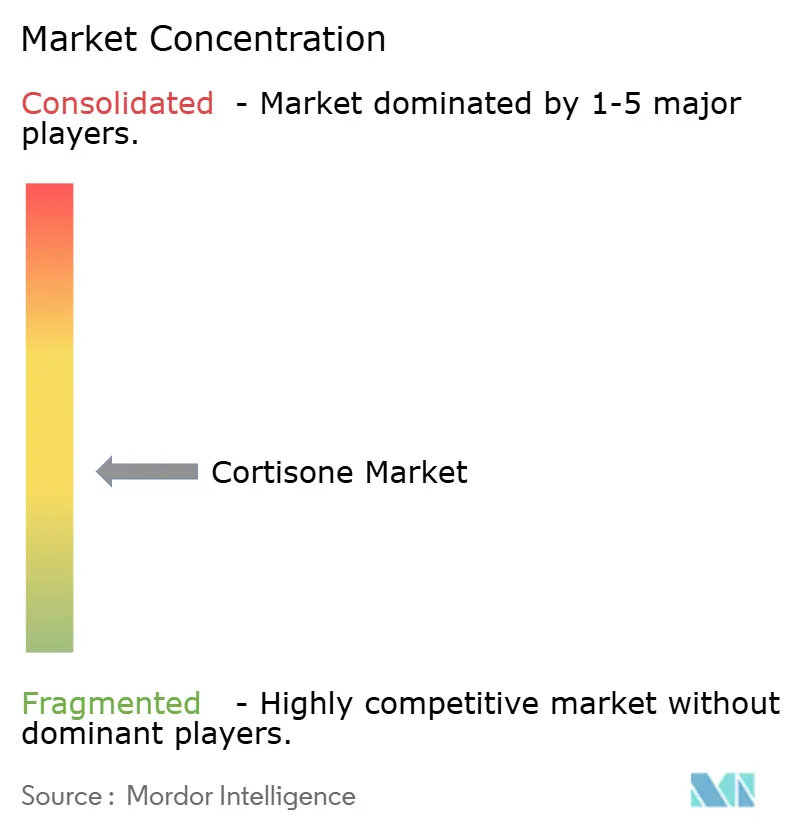
The Cortisone market is moderately fragmented, with global pharmaceutical groups, specialized injectable manufacturers, branded-generic suppliers, and regional active pharmaceutical ingredient producers participating. Pfizer, Sandoz, and Teva compete alongside companies focused on complex injectables and generic medicines. No company holds a decisive revenue majority in the available information. Competition is driven by product portfolio, pricing, hospital formulary access, supply reliability, and capabilities in complex injectable products. Generic competition is most visible in established cortisone acetate products, where broad formulary inclusion supports volume but limits unit pricing.
Hikma expanded its U.S. injectable portfolio in June 2025 with Triamcinolone Acetonide Injectable Suspension, USP, 40 mg/mL. The launch reflected continued interest in technically complex suspension products beyond conventional oral generics. Eton Pharmaceuticals received FDA approval for KHINDIVI in May 2025, providing a hydrocortisone oral-solution option for pediatric patients aged 5 years and older with adrenocortical insufficiency. These developments showed suppliers’ focus on specialized presentations and defined patient populations.
Opportunities remain in formulations that reduce preparation steps, support dose optimization, or improve access for underserved endocrine populations. Extended-release oral therapies and modified-dose pediatric products remain relevant as treatment needs vary by age group and care setting. Quality-compliant Indian and Chinese generic manufacturers may increase competition in Southeast Asia and the Middle East as they pursue injectable-product approvals.
Cortisone Industry Leaders
-
Sanofi
-
Pfizer Inc.
-
Merck & Co., Inc.
-
Novartis AG
-
AstraZeneca PLC
- *Disclaimer: Major Players sorted in no particular order
Cortisone Market Companies Covered in this Report
- Abbvie
- AdvaCare
- Amneal Pharmaceuticals
- ANI Pharmaceuticals
- AstraZeneca
- Bristol-Myers Squibb
- Chartwell RX, LLC
- Cipla
- Dr. Reddy’s Laboratories
- Eurofarma Laboratorios S.A.
- Farmabios S.p.A.
- Hikma Pharmaceuticals
- Merck
- Pfizer
- Pharmascience
- Sandoz Group AG
- Sanofi
- Sun Pharmaceuticals Industries
- Teva Pharmaceutical Industries
- Viatris
Recent Industry Developments in Cortisone Market
- June 2025: Hikma Pharmaceuticals launched Triamcinolone Acetonide Injectable Suspension, USP, 40 mg/mL, its first complex injectable corticosteroid suspension in the United States, targeting corticosteroid-responsive conditions.
- May 2025: Eton Pharmaceuticals received FDA approval for KHINDIVI, the first approved hydrocortisone oral solution for patients aged 5 years and older with adrenocortical insufficiency, expanding access to pediatric corticosteroid replacement therapy.
- March 2025: ANI Pharmaceuticals received FDA approval for prefilled syringe presentations of Purified Cortrophin Gel in 40 USP units/0.5 mL and 80 USP units/mL single-dose options, streamlining administration for eligible patients.
- March 2025: ANI Pharmaceuticals received FDA approval to expand the ILUVIEN label to include chronic non-infectious uveitis affecting the posterior segment, alongside diabetic macular edema, and extended its supply agreement with Siegfried AG through 2029.
Global Cortisone Market Report Scope
As per the scope of the report, cortisone is a steroid hormone and powerful anti-inflammatory medication that mimics cortisol, a natural hormone produced by the adrenal glands. It is manufactured in laboratories to calm an overactive immune system, reduce swelling, and relieve chronic pain.
The cortisone market is segmented by product type, dosage form, route of administration, therapeutic application, end user, and geography. By product type, the market includes cortisone acetate, cortisone sodium phosphates, and others. By dosage form, the market is segmented into oral tablets, injectable preparations, topical preparations, and other dosage forms. By route of administration, the market is categorized into oral, intra-articular and local injection, intramuscular, topical, and other routes of administration. By therapeutic application, the market includes adrenal insufficiency and congenital adrenal hyperplasia; rheumatoid and psoriatic arthritis; osteoarthritis, bursitis, and tendinitis; dermatological disorders; respiratory and allergic disorders; ophthalmic inflammatory disorders; hematological and neoplastic disorders; and other therapeutic applications. By end user, the market is segmented into hospitals, specialty clinics, physician offices and primary care practices, ambulatory surgical centers, home care settings, and others. By geography, the market is analyzed across North America, Europe, Asia-Pacific, the Middle East and Africa, and South America. The report also covers estimated market sizes and trends for 17 countries across major regions globally. The report offers market sizes and forecasts in terms of value (USD) for the above segments.
Segmentation Overview
| Cortisone Acetate |
| Cortisone Sodium Phosphates |
| Others |
| Oral Tablets |
| Injectable Preparations |
| Topical Preparations |
| Other Dosage Forms |
| Oral Route |
| Intra-Articular and Local Injection Route |
| Intramuscular Route |
| Topical Route |
| Other Administration Routes |
| Adrenal Insufficiency and Congenital Adrenal Hyperplasia |
| Rheumatoid and Psoriatic Arthritis |
| Osteoarthritis, Bursitis and Tendinitis |
| Dermatological Disorders |
| Respiratory and Allergic Disorders |
| Ophthalmic Inflammatory Disorders |
| Hematological and Neoplastic Disorders |
| Other Therapeutic Application |
| Hospitals |
| Specialty Clinics |
| Physician Offices and Primary-Care Practices |
| Ambulatory Surgical Centers |
| Homecare Settings |
| Others |
| North America | United States |
| Canada | |
| Mexico | |
| Europe | Germany |
| United Kingdom | |
| France | |
| Italy | |
| Spain | |
| Rest of Europe | |
| Asia-Pacific | China |
| India | |
| Japan | |
| Australia | |
| South Korea | |
| Rest of Asia-Pacific | |
| Middle East and Africa | GCC |
| South Africa | |
| Rest of Middle East and Africa | |
| South America | Brazil |
| Argentina | |
| Rest of South America |
| By Product Type | Cortisone Acetate | |
| Cortisone Sodium Phosphates | ||
| Others | ||
| By Dosage Form | Oral Tablets | |
| Injectable Preparations | ||
| Topical Preparations | ||
| Other Dosage Forms | ||
| By Route of Administration | Oral Route | |
| Intra-Articular and Local Injection Route | ||
| Intramuscular Route | ||
| Topical Route | ||
| Other Administration Routes | ||
| By Therapeutic Application | Adrenal Insufficiency and Congenital Adrenal Hyperplasia | |
| Rheumatoid and Psoriatic Arthritis | ||
| Osteoarthritis, Bursitis and Tendinitis | ||
| Dermatological Disorders | ||
| Respiratory and Allergic Disorders | ||
| Ophthalmic Inflammatory Disorders | ||
| Hematological and Neoplastic Disorders | ||
| Other Therapeutic Application | ||
| By End User | Hospitals | |
| Specialty Clinics | ||
| Physician Offices and Primary-Care Practices | ||
| Ambulatory Surgical Centers | ||
| Homecare Settings | ||
| Others | ||
| By Geography | North America | United States |
| Canada | ||
| Mexico | ||
| Europe | Germany | |
| United Kingdom | ||
| France | ||
| Italy | ||
| Spain | ||
| Rest of Europe | ||
| Asia-Pacific | China | |
| India | ||
| Japan | ||
| Australia | ||
| South Korea | ||
| Rest of Asia-Pacific | ||
| Middle East and Africa | GCC | |
| South Africa | ||
| Rest of Middle East and Africa | ||
| South America | Brazil | |
| Argentina | ||
| Rest of South America | ||
Key Questions Answered in the Report
What is the projected value of the Cortisone market by 2031?
The Cortisone market is projected to reach USD 4.92 billion by 2031, from USD 3.98 billion in 2026, at a 6.55% CAGR. Growth is supported by continued use for inflammatory conditions and adrenal replacement care.
Which product type generated the most revenue in 2025?
Cortisone Acetate led product-type revenue with a 56.45% share in 2025. Its position reflects broad generic availability, established protocols, and formulary inclusion where newer formulations have limited reimbursement.
Which therapeutic application is growing fastest?
Adrenal Insufficiency and Congenital Adrenal Hyperplasia is forecast to grow at an 11.34% CAGR through 2031. Screening programs and improved adult diagnosis are increasing the number of patients who need continuing glucocorticoid replacement.
Why are injectable corticosteroids important in clinical care?
Injectables held 54.34% of dosage-form revenue in 2025 because they are used across rheumatology, orthopedics, emergency medicine, and critical care. They are valuable when rapid action, local delivery, or treatment without oral administration is required.
Which region is expected to grow fastest through 2031?
Asia-Pacific is forecast to grow at an 11.65% CAGR through 2031, supported by manufacturing capacity and improving healthcare access. China and India combine pharmaceutical production with growing domestic demand, while Southeast Asian countries are expanding specialist care.
What factors limit long-term cortisone use?
Bone-loss risks, competing glucocorticoids and steroid-sparing therapies, generic price erosion, and concentrated active pharmaceutical ingredient supply can limit long-term use. These factors place greater importance on careful patient selection, supply reliability, and differentiated formulations.