
Cocoa Based Polyphenols Market Size and Share
Market Overview
| Study Period | 2021 - 2031 |
|---|---|
| Market Size (2026) | USD 110.78 Million |
| Market Size (2031) | USD 147.38 Million |
| Growth Rate (2026 - 2031) | 5.88 % |
| Fastest Growing Market | Asia-Pacific |
| Largest Market | North America |
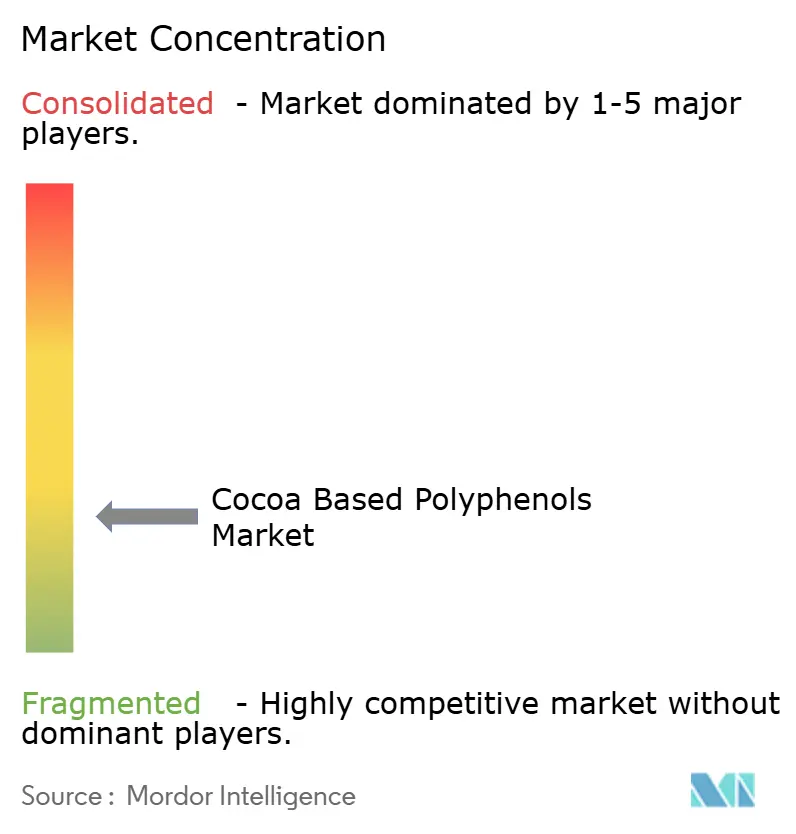
| Market Concentration | Low |
Major Players
*Disclaimer: Major Players sorted in no particular order Image © Mordor Intelligence. Reuse requires attribution under CC BY 4.0. |
|
Cocoa Based Polyphenols Market Analysis by Mordor Intelligence
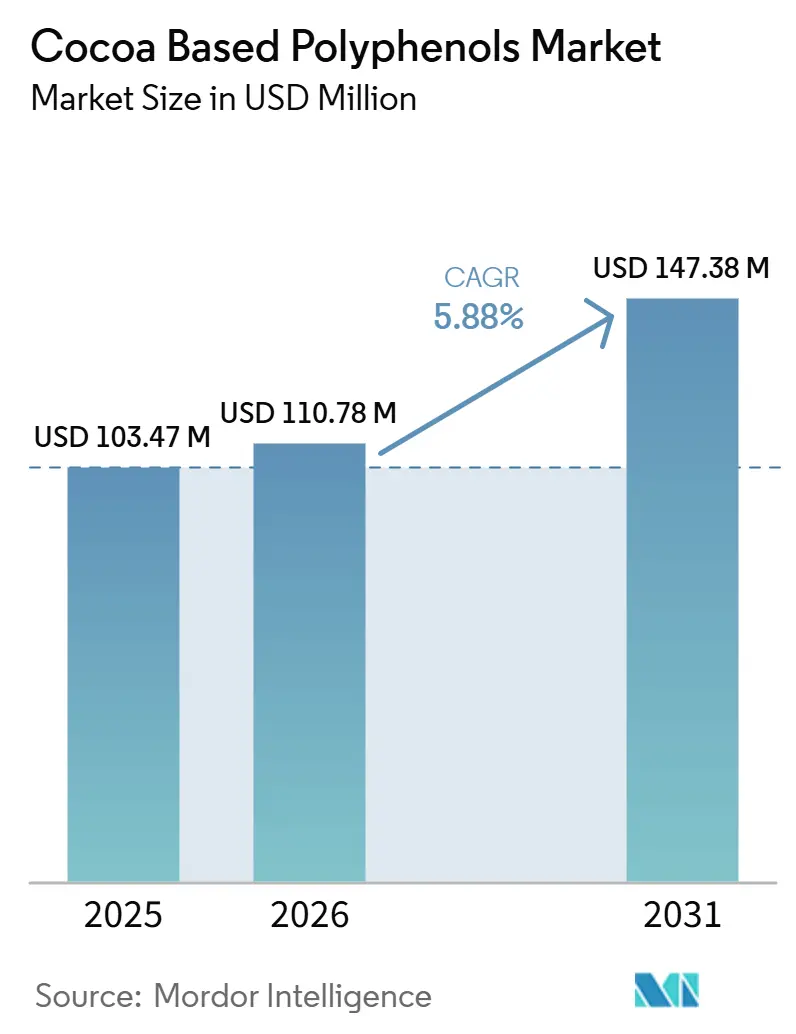
The cocoa-based polyphenols market size was valued at USD 103.47 million in 2025 and is estimated to grow from USD 110.78 million in 2026 to USD 147.38 million by 2031, at a CAGR of 5.88% during the forecast period (2026-2031). Demand is shifting cocoa derivatives beyond their traditional role as flavor ingredients toward standardized bioactive ingredients for supplements, food, pharmaceutical, and cosmetic products, where customers require defined dosages, consistent quality, and support for product claims. Clinical research is strengthening the case for products that support cardiovascular and cognitive health claims, while also helping brands differentiate clinically documented extracts from broad antioxidant offerings. Producers are seeking value from cocoa shells and pod husks, which can expand feedstock availability, support traceable sourcing programs, and create product options for applications with different cost and concentration requirements. Supply volatility remains a key concern, as bean costs and low inventories can affect extraction margins, retail pricing, purchasing decisions, and investments in cocoa alternatives. Companies with documented extraction methods, quality controls, clinical support, and transparent sourcing practices are better positioned to serve premium applications in the cocoa-based polyphenols market.
Key Report Takeaways
- By source, cocoa beans held 55.28% of the cocoa based polyphenols market share in 2025, while cocoa shell is forecast to grow at a 7.89% CAGR through 2031.
- By form, powder held 56.39% of the cocoa based polyphenols market share in 2025, while liquid is forecast to grow at a 7.17% CAGR through 2031.
- By flavanol concentration, medium-concentration material held 47.49% share in 2025, while high-concentration material is forecast to grow at a 6.38% CAGR through 2031.
- By application, foods and beverages held 33.49% share in 2025, while dietary supplements are forecast to grow at a 5.69% CAGR through 2031.
- By geography, North America held 35.38% of the cocoa based polyphenols market share in 2025, while Asia-Pacific is forecast to grow at a 5.84% CAGR through 2031.
Note: Market size and forecast figures in this report are generated using Mordor Intelligence’s proprietary estimation framework, updated with the latest available data and insights as of January 2026.
Market Trends and Insights
Drivers Impact Analysis of Cocoa Based Polyphenols Market*
| DRIVERS | (~) % IMPACT ON CAGR FORECAST | GEOGRAPHIC RELEVANCE | IMPACT TIMELINE |
|---|---|---|---|
| Clinically substantiated cardiovascular and cognitive health positioning | +1.4% | Global, led by North America and Europe | Medium term (2-4 years) |
| Clean-label demand for plant-derived antioxidants | +1.1% | Global, concentrated in North America and Western Europe | Short term (≤ 2 years) |
| Microbiome and beauty-from-within product innovation | +0.9% | North America, Europe, and Asia-Pacific core | Medium term (2-4 years) |
| Flavanol retention as a differentiation lever in low-heat processing | +0.7% | Global, with early adoption in the European Union, North America, and Latin America | Long term (≥ 4 years) |
| Cocoa side-stream valorization and traceable upcycling | +0.8% | Global, with strongest momentum in Europe, North America, and Latin America | Long term (≥ 4 years) |
| Amplifying demand for natural and organic ingredients | +1.3% | Global, led by North America | Medium term (2-4 years) |
| Source: Mordor Intelligence | |||
Clinically Substantiated Cardiovascular and Cognitive Health Positioning
Clinically substantiated cardiovascular and cognitive benefits remain among the strongest and most credible growth drivers for the global cocoa-based polyphenols market. Extensive clinical research, including large-scale randomized trials such as the COSMOS study, shows that cocoa flavanols support cardiovascular health by improving endothelial function, enhancing nitric oxide bioavailability, promoting healthy blood flow, and helping maintain blood pressure within a normal range. A 2025 randomized study found that 500 mg of daily cocoa flavanols reduced left atrial volume and systolic blood pressure in healthy older adults after 30 days[1]Source: Royal Society of Chemistry, "Cocoa flavanols alleviate early diastolic dysfunction by decreasing left atrial volume in a randomized double blinded trial in healthy older individuals", pubs.rsc.org. This dual positioning, covering heart health and brain health, closely aligns with rising consumer demand for natural, preventive solutions that address aging-related concerns. Because peer-reviewed evidence and, in some markets, qualified health claims support these benefits, manufacturers can communicate them with greater confidence. This scientific credibility differentiates high-quality cocoa polyphenol ingredients from conventional cocoa products, supports premium pricing, and accelerates their incorporation into functional foods, beverages, and dietary supplements. As a result, clinically substantiated cardiovascular and cognitive claims continue to expand consumer acceptance and commercial opportunities across developed and emerging markets.
Clean-label Demand for Plant-derived Antioxidants and Organic Ingredients
Food, beverage, cosmetic, and pharmaceutical formulators are seeking recognizable, plant-derived alternatives to synthetic antioxidant systems. Cocoa-derived ingredients meet this requirement because consumers are familiar with their origin, and these ingredients can deliver antioxidant and flavor-related benefits within the same formulation, reducing the need for separate flavor and antioxidant inputs. This demand also supports the use of organic and traceable cocoa extracts in premium natural cosmetics and specialty food products, where provenance can influence supplier selection. Organic cosmetic ingredients are regulated under the USDA's National Organic Program, while cosmetics remain subject to the FDA's safety and labeling requirements[2]Source: United States Food and Drug Administration, "Örganic Cosmetics", fda.gov. Producers that use solvent-free extraction and maintain batch-level documentation can more effectively address buyer requirements for ingredient transparency and consistent product specifications. This shift can expand applications beyond food-grade products into personal care, as brands evaluate botanical antioxidant systems and recognizable ingredient lists. These factors create additional demand in the cocoa-based polyphenols market while maintaining the importance of quality and sensory performance.
Microbiome and Beauty-From-Within Product Innovation
Research continues to expand the role of cocoa polyphenols beyond traditional cardiovascular applications into gut microbiome modulation and skin health. Clinical and preclinical studies indicate that cocoa polyphenols can act as prebiotics, increasing microbial species richness and favorably altering taxonomic composition. Specifically, they tend to support beneficial populations, such as Bifidobacterium and Lactobacillus, while helping reduce levels of certain pathogenic Clostridium species. These microbiome effects create new formulation pathways for digestive wellness products and position cocoa polyphenols as multifunctional ingredients with systemic benefits. This scientific progress strongly supports the beauty-from-within trend, in which consumers seek ingestible solutions that improve skin appearance and condition from within. The European Union regulates nutrition and health claims for foods, including beauty-related claims, highlighting the growing regulatory focus on ingestible health products[3]Source: European Commission, "Nutrition and Health Claims", food.ec.europa.eu. Markets such as Japan, where ingestible beauty products already have strong consumer acceptance and premium pricing, provide a particularly favorable environment for commercialization. In 2024, Meiji introduced cacao ceramide as a cacao-derived beauty-support ingredient, illustrating how companies can successfully position cocoa bioactives for skin and appearance claims and encouraging broader industry investment in similar concepts.
Flavanol Retention, Side-Stream Valorization, and Traceable Upcycling
Flavanol retention has become a critical technical and commercial priority in the cocoa-based polyphenols market. Conventional processing steps, including fermentation, drying, roasting, and alkalization, can significantly degrade flavanols and the overall polyphenol content. Manufacturers that optimize mild processing conditions, control pH, or apply specialized extraction and stabilization techniques can preserve higher levels of bioactive compounds. This capability supports the production of standardized, high-potency ingredients that meet the efficacy expectations of end-use applications. Side-stream valorization is also expanding the raw material base and strengthening sustainability credentials. Cocoa pod husks, bean shells, and other processing residues, which were once treated largely as waste, are rich in residual polyphenols and other bioactives. Traceable upcycling further supports market momentum by linking sustainability claims to verified supply chain transparency. Leading companies are investing in farm-to-product traceability systems that document origin, processing methods, and polyphenol preservation. This transparency addresses increasing regulatory and consumer demand for ethical sourcing, deforestation-free cocoa, and authentic functional benefits.
Restraints Impact Analysis of Cocoa Based Polyphenols Market*
| RESTRAINTS | (~) % IMPACT ON CAGR FORECAST | GEOGRAPHIC RELEVANCE | IMPACT TIMELINE |
|---|---|---|---|
| Cocoa bean price and supply volatility | -0.9% | Global, with West Africa supply chain dependency | Short term (≤ 2 years) |
| Health-claim and safety-substantiation requirements | -0.6% | North America, Europe, and research and development-intensive markets | Medium term (2-4 years) |
| Processing-induced flavanol degradation and sensory penalties | -0.7% | Global, particularly in North America, Europe, and technologically advanced processing markets | Medium term (2–4 years) |
| Higher production and retail cost of functional products | -0.1% | Global, with greater impact in price-sensitive markets across Asia-Pacific, Latin America, and the Middle East & Africa | Short to Medium term (≤ 4 years) |
| Source: Mordor Intelligence | |||
Cocoa Bean Price, Supply Volatility, and Functional Product Cost
Cocoa bean price volatility and recurring supply constraints remain significant restraints for the global cocoa-based polyphenols market. West Africa, which accounts for most global cocoa production, continues to face successive harvest shortfalls due to adverse weather, crop diseases, aging trees, and underinvestment. Higher, unstable bean costs directly increase the production costs of polyphenol-rich extracts, powders, and concentrates. Functional-grade ingredients that require careful processing to retain high flavanol levels are particularly sensitive to raw material price fluctuations, as preservation techniques and quality controls already add costs. When bean prices rise, manufacturers face margin pressure and may need to raise prices on finished products, potentially slowing adoption in cost-sensitive applications such as mainstream dietary supplements and functional foods. Overall, elevated and volatile cocoa bean prices, combined with supply insecurity, increase the cost base of cocoa-based polyphenol products and can temper market growth.
Health-Claim, Safety Requirements, and Processing-Related Flavanol Loss
Regulatory constraints on health claims and stringent safety requirements notably restrain the global cocoa-based polyphenols market. Authorities such as the European Food Safety Authority have authorized specific claims that link cocoa flavanols to the maintenance of normal endothelium-dependent vasodilation and blood flow. However, the United States Food and Drug Administration (US FDA) permits only carefully worded qualified health claims based on “very limited” scientific evidence. These claims apply only to high-flavanol cocoa powder that meets defined concentration thresholds and cannot be freely extended to chocolate or other formats. The need for precise wording, supporting documentation, and ongoing compliance increases marketing and regulatory costs, limiting how aggressively manufacturers can promote cardiovascular and other benefits. Safety and quality standards further increase operational complexity. Products intended for functional foods, dietary supplements, or personal care must meet rigorous purity, contaminant, and labeling requirements across different jurisdictions. These compliance burdens disproportionately affect smaller producers and can slow the introduction of new high-potency ingredients or novel-format ingredients.
*Our forecasts treat driver/restraint impacts as directional, not additive. The impact forecasts reflect baseline growth, mix effects, and variable interactions.
Cocoa Based Polyphenols Market Segment Analysis
By Source:
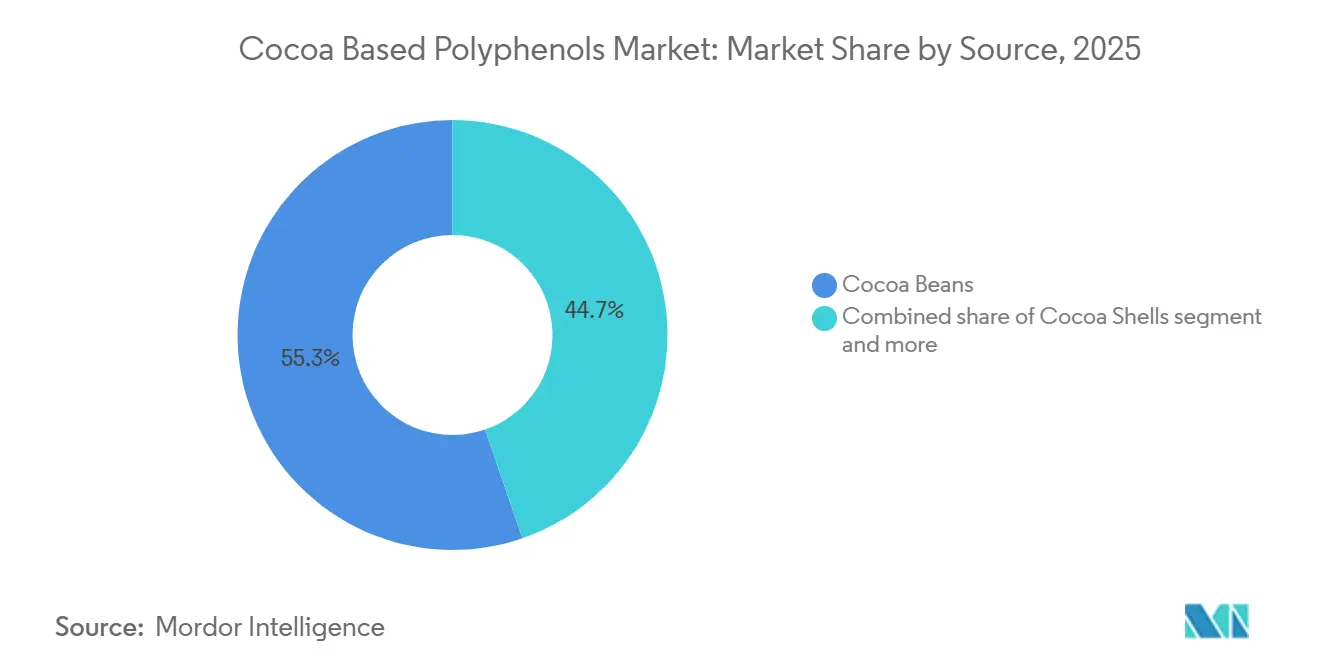
Cocoa Beans Retain Scale While Cocoa Shell ExpandsCocoa beans account for the largest share of the global cocoa-based polyphenols market, at 55.28%, as they remain the primary and most established raw material. They contain high concentrations of flavanols and other polyphenols, benefit from well-developed extraction and processing infrastructure, and supply most ingredients used in functional foods, beverages, dietary supplements, and chocolate products. Their long-standing commercial availability and consistent quality make them the dominant source by volume and value.
Cocoa shell is the fastest-growing segment, registering a CAGR of 7.89% through 2031, as industry focus shifts toward side-stream valorization and sustainability. Companies increasingly process cocoa shells and related pod husks, once treated largely as waste, to recover residual polyphenols. This upcycling approach lowers raw material costs, improves resource efficiency, supports circular economy claims, and meets rising demand for eco-friendly and traceable ingredients, driving rapid adoption in nutritional and cosmetic applications.



By Form:
Powder Leads, While Liquid Extracts Gain Use CasesPowder accounts for the largest share of the global cocoa-based polyphenols market at 56.39%, supported by its versatility, stability, and ease of handling. It offers a long shelf life, straightforward incorporation into a wide range of applications, including functional foods, beverages, dietary supplements, bakery products, and confectionery, and cost-effective storage and transportation. These practical advantages, along with established manufacturing and supply chains, make powder the preferred and dominant delivery form by volume and value.
Liquid extracts represent the fastest-growing segment, registering a CAGR of 7.17%, as demand increases for high-bioavailability and convenient formats. Liquid forms support easier dosing, better dispersion in beverages and ready-to-drink products, and improved absorption in certain supplement and functional applications. Growing interest in concentrated, ready-to-use ingredients for personalized nutrition, functional drinks, and beauty-from-within formulations is accelerating adoption and driving above-average growth for liquid extracts.
By Flavanol Concentration:
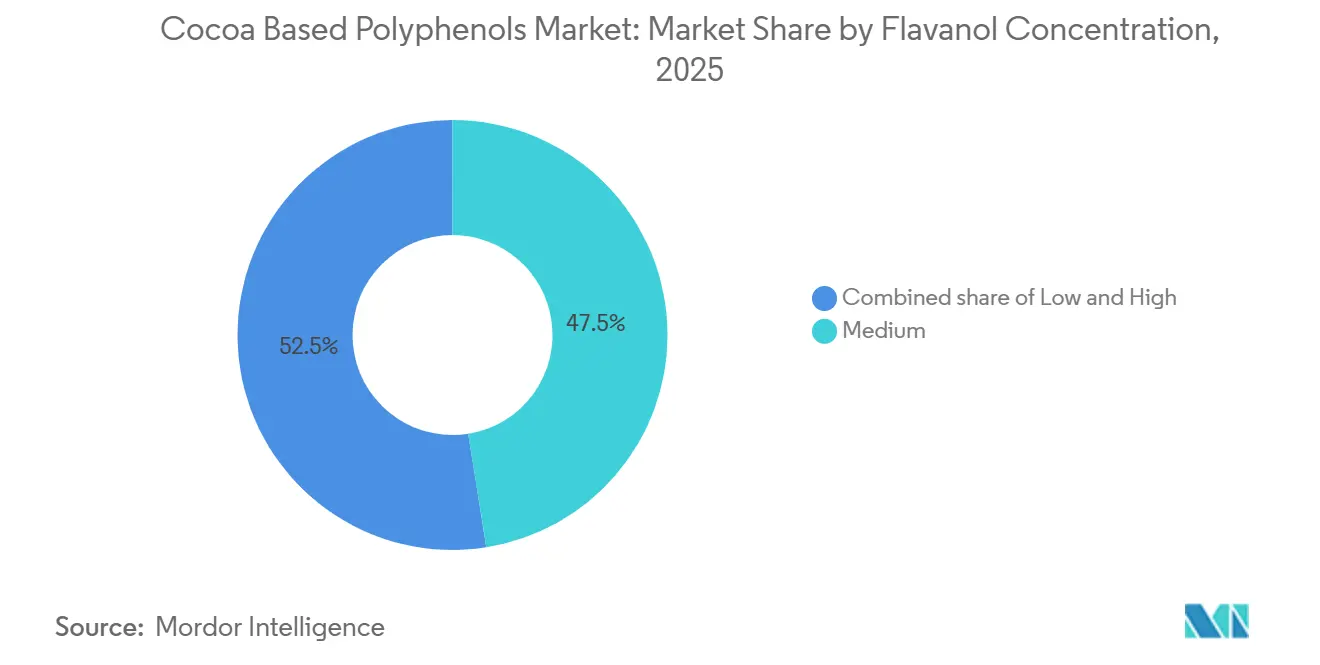
High-Concentration Material Builds a Premium TierMedium-concentration material holds the largest share, at 47.49%, because it balances health benefits, a manageable taste profile, and cost efficiency. These grades provide meaningful antioxidant and functional properties without the pronounced bitterness or higher production costs associated with very high concentrations, making them suitable for broad use in functional foods, beverages, and mainstream dietary supplements. Their versatility and established supply support the highest volume and value contribution.
High-concentration material is the fastest-growing segment, with a CAGR of 6.38%, as demand increases for premium, clinically oriented ingredients. Consumers and formulators increasingly seek maximized flavanol doses to support targeted cardiovascular, cognitive, and wellness claims. Advances in mild processing and specialized extraction enable manufacturers to deliver these elevated levels reliably, allowing high-concentration products to command premium pricing and capture a larger share of high-value supplement and functional applications.
By Application:
Foods and Beverages Provide Breadth, Supplements Lead GrowthFoods and beverages hold the largest share, at 33.49%, as they represent the broadest and most established route for incorporating cocoa-based polyphenols into daily consumption. Manufacturers can readily integrate cocoa polyphenols into chocolate products, functional drinks, bakery items, snacks, and fortified foods, leveraging existing consumer familiarity with cocoa flavors while delivering antioxidant and wellness benefits. This broad applicability across high-volume categories supports the segment’s leading position in terms of both volume and value.
Dietary supplements constitute the fastest-growing segment, registering a CAGR of 5.69%, driven by rising demand for concentrated, convenient, and clinically oriented delivery formats. Consumers increasingly seek targeted health solutions for cardiovascular support, cognitive function, and overall wellness, favoring capsules, powders, and extracts that provide standardized high-flavanol doses. Growing health consciousness, preventive nutrition trends, and the ability to make more precise functional claims are accelerating adoption and fueling above-average growth in the supplements category.
Geography Analysis
North America Cocoa Based Polyphenols Market
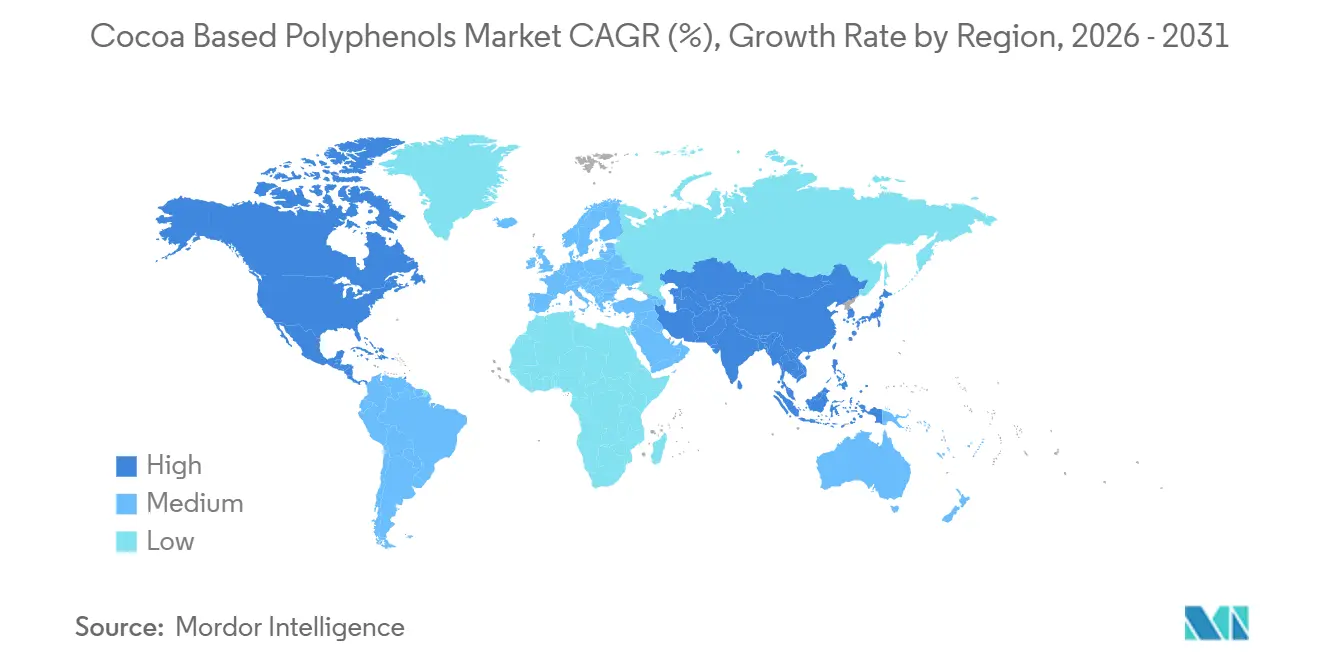
North America is expected to account for 35.38% of the global cocoa-based polyphenols market size in 2025. The region benefits from established supplement distribution, strong consumer interest in ingredients supported by health claims, and the FDA’s qualified claim for high-flavanol cocoa powder. The United States serves as the primary regional demand center, while Canada offers a secondary growth path through its natural health product framework. Mexico has a developing premium functional food segment, although clinical nutrition formats are likely to see lower near-term adoption. Domestic extraction and formulation capabilities from companies such as ADM, Cargill, and Kemin support supply continuity for regional buyers.
APAC Cocoa Based Polyphenols Market
Asia-Pacific is forecast to grow at a CAGR of 5.84% through 2031, making it the fastest-growing region. Japan’s aging population and established Foods for Specified Health Uses and Foods with Function Claims pathways make the country an important market for clinically supported cocoa polyphenol products. Meiji’s cacao ceramide development highlights Japan’s role in ingestible beauty innovation. China and India offer larger volume opportunities as supplement use expands among urban consumers. Demand in these countries is likely to be strongest for accessible products that combine familiar cocoa ingredients with clear health positioning.
EMEA and South America Cocoa Based Polyphenols Market
Europe is the second-largest regional contributor and has a significant influence on ingredient quality and sourcing requirements. Germany’s processing base and the Netherlands’ cocoa trading infrastructure support this position. The European Union (EU) Deforestation Regulation requires due diligence and traceability across cocoa supply chains, which can benefit suppliers with integrated documentation systems. South America remains primarily a cocoa raw material supply region, although Brazil and Colombia show emerging domestic demand for functional cocoa products. The Middle East and Africa remain early-stage demand areas, with the United Arab Emirates and South Africa serving as import and distribution hubs for premium functional ingredients. These regional differences require the cocoa-based polyphenols market to balance clinical positioning, accessible formats, and traceable sourcing.

Competitive Landscape
The cocoa-based polyphenols market is fragmented across upstream cocoa processors and specialist extractors. ADM, Barry Callebaut, and Cargill compete through feedstock access, cocoa sourcing capabilities, and processing scale. Polyphenols AS, Clover Origins, and Groupe Berkem compete through extract standardization, technical documentation, and depth of evidence. Barry Callebaut uses integrated sourcing and processing to support a consistent supply of flavanol-rich feedstock. Cargill emphasizes documented fermentation and processing controls that can help preserve polyphenol retention. Mars leverages more than 30 years of cocoa flavanol research and the COSMOS trial to support the clinical positioning of CocoaVia and CocoaPro products.
Competitive opportunities are concentrated in pharmaceutical-grade, high-concentration extracts with validated DP1-DP7 profiles. Only a limited number of suppliers can provide the analytical evidence required by buyers of clinically positioned products. Cocoa shells and pod husks present another opportunity, as large-scale commercialization remains limited despite strong research interest. Smaller extractors are using cold extraction and membrane separation to preserve flavanol integrity. Oro de Cacao’s industrial cold aqueous extraction system, demonstrates how process intellectual property can support differentiation. These capabilities can help smaller companies compete on quality, even when they cannot match the feedstock scale of larger cocoa processors.
Process optimization is becoming another competitive factor in the cocoa-based polyphenols market. For example, Mars reformulated of CocoaVia 500 mg Cocoa Flavanols Powder with carob powder in June 2026, to further reduce heavy metal content. These developments indicate that clinical positioning, extraction control, and purity verification all shape competitive credibility.
Cocoa Based Polyphenols Industry Leaders
-
Barry Callebaut AG
-
Archer Daniels Midland Company (ADM)
-
Cargill, Incorporated
-
Mars, Incorporated
-
Kemin Industries, Inc.
- *Disclaimer: Major Players sorted in no particular order
Cocoa Based Polyphenols Market Companies Covered in this Report
- Archer Daniels Midland Company
- Barry Callebaut AG
- Givaudan SA
- Kemin Industries, Inc.
- Meiji Holdings Co., Ltd.
- Cyvex Nutrition, Inc.
- Mars, Incorporated
- Cargill, Incorporated
- Ajinomoto Natural Specialties
- Groupe Berkem
- Sabinsa Corporation
- Diana Food SAS
- Nutra Ingredients Limited
- Polyphenols AS
- The Green Labs LLC
- World-Way Biotech Inc.
- Clover Origins
- Cambridge Commodities Limited
- Greenherb Biological Technology Co., Ltd.
- Kerry Group PLC

Recent Industry Developments in Cocoa Based Polyphenols Market
- June 2026: Mars Food & Nutrition announced that its CocoaVia™ brand received the Clean Label Project™ Purity Award, making it the first cocoa flavanol supplement to earn this third-party contaminant certification. The certification covers 500-750 mg flavanol formats. This recognition strengthens CocoaVia’s positioning in premium dietary supplement retail and adds a product integrity credential to its existing clinical evidence base from the COSMOS trial.
- April 2026: Groupe Berkem launched Cocoamind, a nutraceutical active ingredient derived from non-fermented, non-roasted cocoa beans. A 105-participant human pilot study conducted over two months validated the ingredient. Cocoamind targets cognitive performance and emotional balance, including concentration, memory, mood, and well-being, expanding the application of cocoa-derived bioactives in mental wellness beyond their traditional cardiovascular positioning.
- August 2025: Kerry Group launched Cocoa Booster within its Cocoa Taste Solutions platform, enabling bakery and confectionery manufacturers to reduce cocoa powder usage by up to 50% while maintaining authentic flavor profiles. The technology platform combines natural extraction, fermentation, and reaction chemistry, directly addressing input cost pressures driven by the record cocoa price surge in 2024.
- January 2025: Meiji Group announced the successful development of cacao ceramide, which it described as the world’s first cacao-derived beauty-support ingredient. The development validates cacao bioactives as a distinct cosmeceutical category and opens a new commercialization track for Japanese functional ingredient innovation in the global beauty-from-within category.


Global Cocoa Based Polyphenols Market Report Scope
| Cocoa Beans |
| Cocoa Shell |
| Others |
| Powder |
| Liquid |
| Granules |
| Low |
| Medium |
| High |
| Food and Beverage |
| Dietary Supplements |
| Pharmaceuticals |
| Cosmetics and Personal Care |
| Other Applications |
| North America | United States |
| Canada | |
| Mexico | |
| Rest of North America | |
| Europe | Germany |
| France | |
| United Kingdom | |
| Italy | |
| Spain | |
| Russia | |
| Netherlands | |
| Sweden | |
| Rest of Europe | |
| Asia-Pacific | China |
| Japan | |
| India | |
| Australia | |
| Rest of Asia-Pacific | |
| South America | Brazil |
| Argentina | |
| Chile | |
| Colombia | |
| Peru | |
| Rest of South America | |
| Middle East and Africa | United Arab Emirates |
| South Africa | |
| Nigeria | |
| Saudi Arabia | |
| Egypt | |
| Morocco | |
| Turkey | |
| Rest of Middle East and Africa |
| By Source | Cocoa Beans | |
| Cocoa Shell | ||
| Others | ||
| By Form | Powder | |
| Liquid | ||
| Granules | ||
| By Flavanol Concentration | Low | |
| Medium | ||
| High | ||
| By Application | Food and Beverage | |
| Dietary Supplements | ||
| Pharmaceuticals | ||
| Cosmetics and Personal Care | ||
| Other Applications | ||
| By Geography | North America | United States |
| Canada | ||
| Mexico | ||
| Rest of North America | ||
| Europe | Germany | |
| France | ||
| United Kingdom | ||
| Italy | ||
| Spain | ||
| Russia | ||
| Netherlands | ||
| Sweden | ||
| Rest of Europe | ||
| Asia-Pacific | China | |
| Japan | ||
| India | ||
| Australia | ||
| Rest of Asia-Pacific | ||
| South America | Brazil | |
| Argentina | ||
| Chile | ||
| Colombia | ||
| Peru | ||
| Rest of South America | ||
| Middle East and Africa | United Arab Emirates | |
| South Africa | ||
| Nigeria | ||
| Saudi Arabia | ||
| Egypt | ||
| Morocco | ||
| Turkey | ||
| Rest of Middle East and Africa | ||


Key Questions Answered in the Report
What is the forecast for cocoa based polyphenols through 2031?
The Cocoa based polyphenols market is forecast to reach USD 147.38 million by 2031, expanding at a 5.88% CAGR from 2026, as demand increases for standardized functional ingredients in supplements, foods, and personal care products.
Which source leads cocoa based polyphenol production?
Cocoa beans led with 55.28% share in 2025 because they remain the best-established source for standardized flavanol extracts used by buyers that need clinical evidence and reliable quality documentation.
Which application is growing fastest?
Dietary supplements are forecast to grow at a 5.69% CAGR through 2031, supported by clinical evidence, defined daily doses, and demand for purity and contaminant verification.
Which region offers the fastest growth?
Asia-Pacific is forecast to grow at a 5.84% CAGR through 2031, led by demand in Japan, China, and India, where consumers are adopting functional nutrition and ingestible beauty products.
Page last updated on:





