
Chiral Racemization Inhibitors Market Size and Share
Market Overview
| Study Period | 2021 - 2031 |
|---|---|
| Market Size (2026) | USD 451.18 Million |
| Market Size (2031) | USD 651.65 Million |
| Growth Rate (2026 - 2031) | 7.63 % |
| Fastest Growing Market | Asia-Pacific |
| Largest Market | North America |
| Market Concentration | Medium |
Major Players *Disclaimer: Major Players sorted in no particular order Image © Mordor Intelligence. Reuse requires attribution under CC BY 4.0. | |
Chiral Racemization Inhibitors Market Analysis by Mordor Intelligence
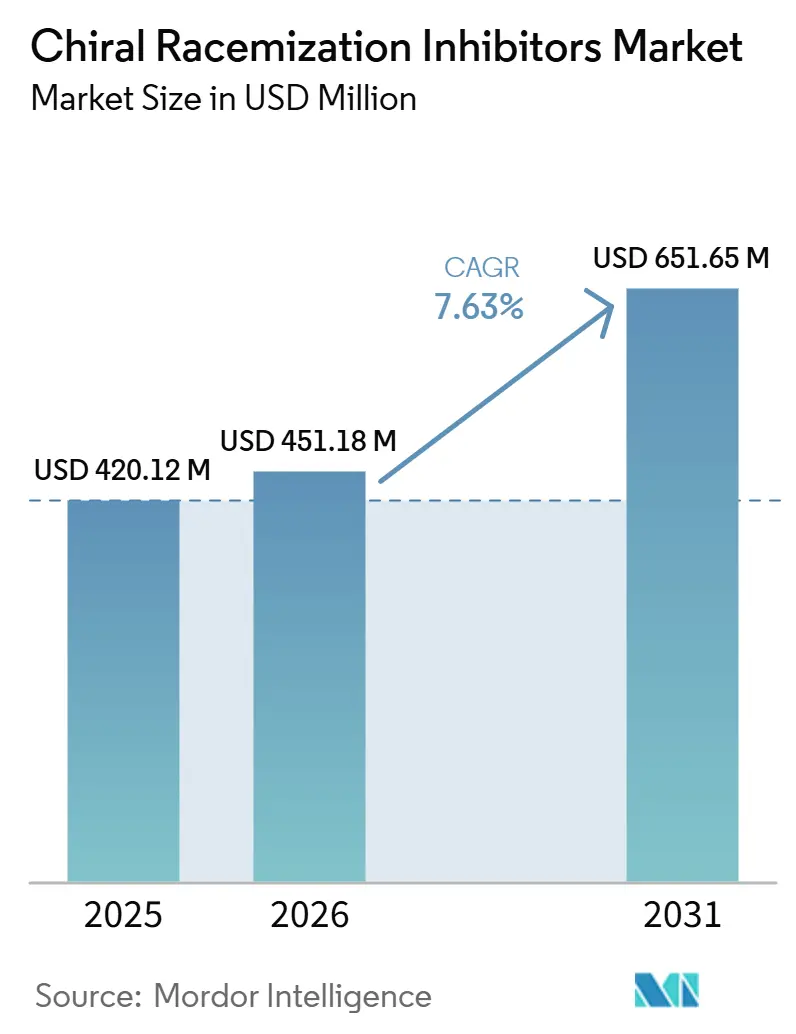
The Chiral Racemization Inhibitors Market size is expected to increase from USD 420.12 million in 2025 to USD 451.18 million in 2026 and reach USD 651.65 million by 2031, and is expected to grow at a CAGR of 7.63% over 2026-2031. The chiral racemization inhibitors market is transitioning from a lab-led specialty category to a compliance-linked input for regulated drug manufacturing, as stereochemical control is now closely tied to drug substance development standards under the International Council for Harmonization (ICH) Q11. Market growth is driven by rising peptide production, expanding oligonucleotide work, and the wider use of complex synthetic routes that do not compromise chiral integrity during repeated coupling cycles. The market is also being reshaped by a shift away from explosive benzotriazole-class additives toward safer Oxyma-based systems that reduce freight, storage, and plant-handling constraints. At the same time, bundled reagent systems are reducing some standalone demand, pushing suppliers to compete on documentation quality, application support, and integrated synthesis know-how. Cost pressure remains evident in less-regulated regions, and opportunities exist for suppliers that can serve high-value peptide and oligonucleotide workflows under strict Good Manufacturing Practice (GMP) requirements.
Key Report Takeaways
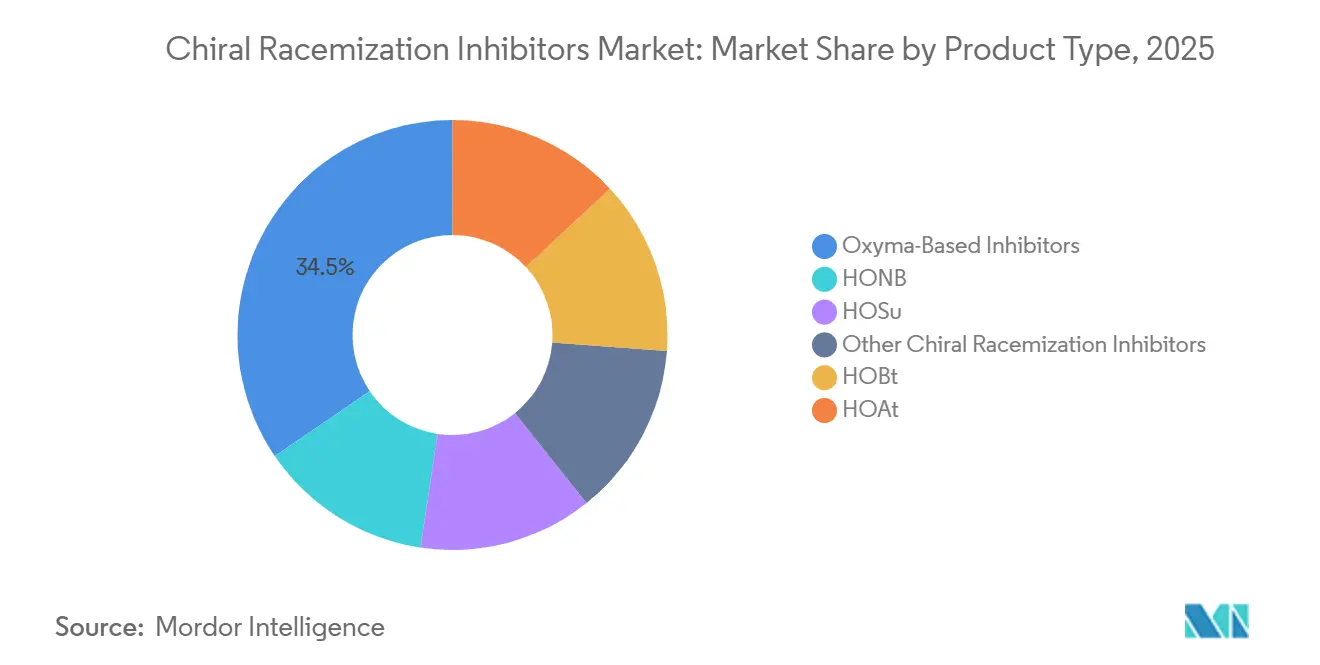
- By product type, Oxyma-based inhibitors led with 34.52% revenue share in 2025, and the same segment is forecast to grow at the fastest 8.41% CAGR through 2031.
- By form, powder held 64.71% share in 2025, while solution is projected to expand at the fastest 8.12% CAGR through 2031.
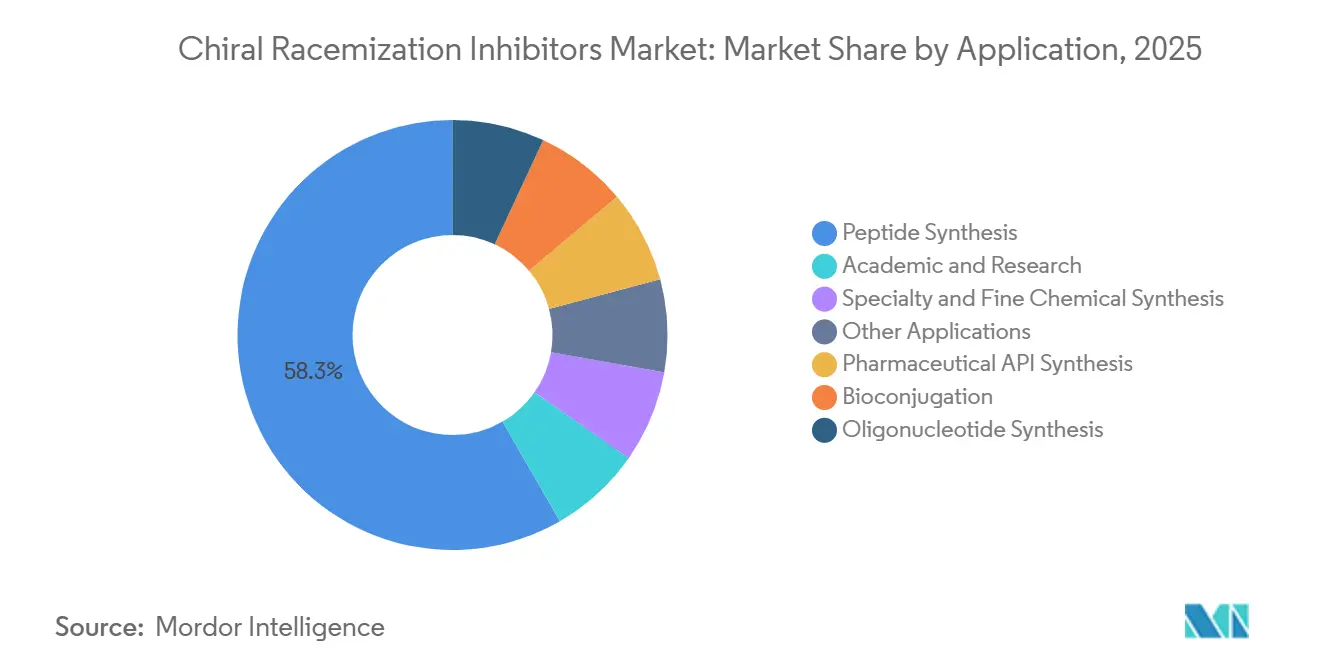
- By application, peptide synthesis accounted for 58.33% share in 2025, while oligonucleotide synthesis is projected to record the fastest 9.04% CAGR through 2031.
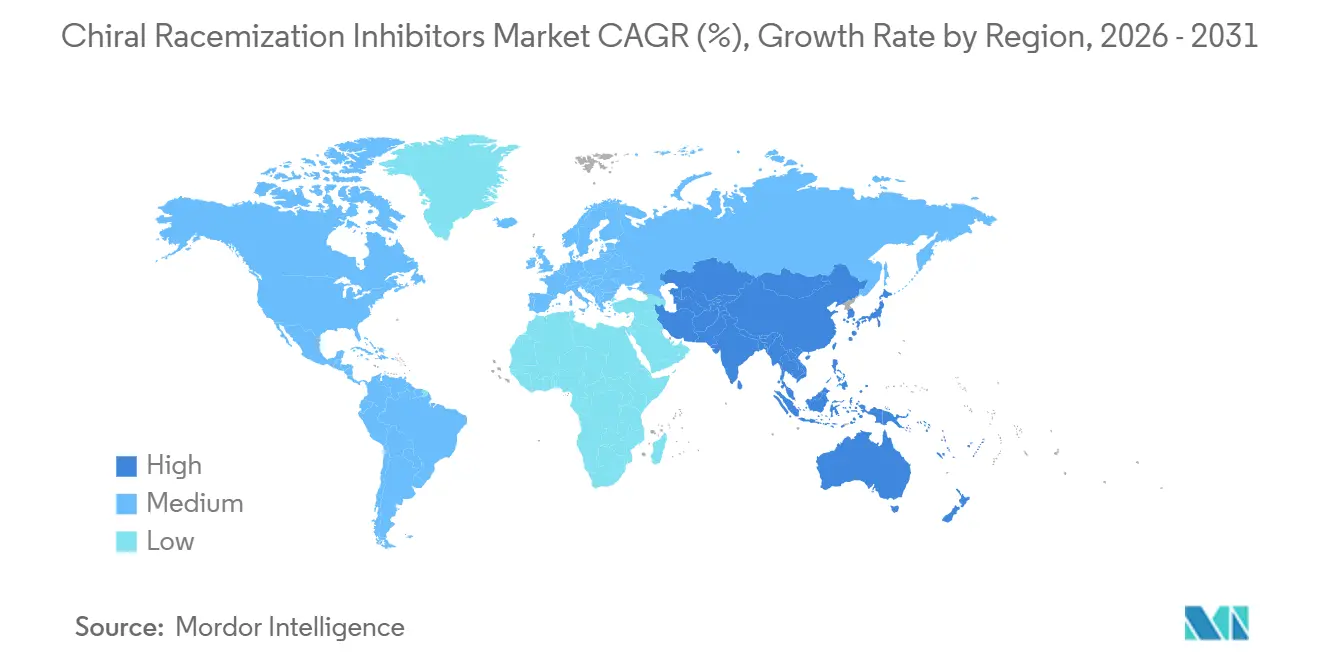
- By geography, North America held 38.62% share in 2025, while Asia-Pacific is forecast to grow at the fastest 8.33% CAGR through 2031.
Note: Market size and forecast figures in this report are generated using Mordor Intelligence’s proprietary estimation framework, updated with the latest available data and insights as of January 2026.
Market Trends and Insights
Drivers Impact Analysis of Chiral Racemization Inhibitors Market*
| Drivers | (~) % Impact on CAGR Forecast | Geographic Relevance | Impact Timeline |
|---|---|---|---|
| Rising Demand for High-Purity Chiral Compounds in Pharmaceutical API Synthesis | +2.3% | Global, strongest in North America and Europe | Medium term (2-4 years) |
| Increasing Adoption of Peptide-Based Therapeutics, Led by GLP-1 Receptor Agonists | +1.8% | Global, with production hubs in North America, Europe, and APAC | Short term (≤ 2 years) |
| Shift Toward Safer, Non-Explosive Coupling Chemistry Replacing HOBt and HOAt | +1.2% | Global, early transition in regulated North American and EU markets | Medium term (2-4 years) |
| Expansion of Peptide Drug Pipelines and Clinical Trial Activity | +0.9% | North America, Europe, APAC core | Long term (≥ 4 years) |
| Growing Use of Racemization Inhibitors in Oligonucleotide and Bioconjugation Synthesis | +0.7% | North America, Europe | Medium term (2-4 years) |
| Source: Mordor Intelligence | |||
Rising Demand for High-Purity Chiral Compounds in Pharmaceutical API Synthesis
The chiral racemization inhibitors market is gaining steady support from tighter control of chiral impurities in pharmaceutical API manufacturing. FDA guidance, aligned with ICH drug substance expectations, requires companies to characterize and control stereochemical risk across synthesis steps that may affect product quality[1]U.S. Food and Drug Administration, “Drug Substance Chemistry, Manufacturing, and Controls Information,” U.S. Food and Drug Administration, fda.gov. This has made racemization inhibitors a standard cost line in many regulated peptide and API workflows, rather than an optional research purchase. The burden increases further as peptide chains grow longer, because each additional amino acid introduces another point at which racemization must be controlled. The commercial impact is evident in the chiral racemization inhibitors market, as demand can grow faster than the number of active development programs when synthesis complexity increases. Compliance with ICH Q11 keeps this requirement embedded in manufacturing practice across major regulated regions.
Increasing Adoption of Peptide-Based Therapeutics, Led by GLP-1 Receptor Agonists
The chiral racemization inhibitors market is also benefiting from strong commercial and development activity in peptide therapeutics, especially glucagon-like peptide-1 (GLP-1) receptor agonists. Large-scale peptide manufacturing is not driven solely by reactor capacity, as purity control remains central at every scale-up stage. A validated inhibitor system helps suppress the cumulative racemization risk that can build during repeated coupling cycles in complex peptide synthesis. As scientific and commercial activity in peptide manufacturing continues to expand, suppliers serving this field are broadening their qualified reagent portfolios to meet development and clinical needs. Bachem reported 29.7% growth in clinical development revenues in local currencies for fiscal year (FY) 2025, supporting the view that development-stage peptide work continues to feed future demand in the chiral racemization inhibitors market.
Shift Toward Safer, Non-Explosive Coupling Chemistry Replacing HOBt and HOAt
The chiral racemization inhibitors market is being reshaped by a practical shift toward safer additive chemistry. 1-Hydroxybenzotriazole (HOBt) in anhydrous form carries explosive classification and air transport restrictions, which limit its use in global Good Manufacturing Practice (GMP) supply chains even when its chemistry performance remains acceptable. OxymaPure has become a preferred alternative, offering comparable or better epimerization control in many peptide systems without the same logistics burden. The American Chemical Society (ACS) Green Chemistry Institute Pharmaceutical Roundtable has identified OxymaPure and COMU as greener options for peptide synthesis, providing institutional support for procurement decisions in regulated settings. In practice, the chiral racemization inhibitors market responds less to theoretical chemistry debates and more to the realities of storage, freight, worker safety, and plant qualification.
Expansion of Peptide Drug Pipelines and Clinical Trial Activity
The chiral racemization inhibitors market continues to expand alongside the broader peptide drug development pipeline. New therapeutic work in oncology, autoimmune conditions, metabolic disorders, and dermatology is sustaining peptide synthesis activity across research, clinical, and commercial settings. Demand no longer depends solely on a few approved products; instead, it is generated across multiple intake points that develop simultaneously. Research-grade procurement supports early-stage work, while later-stage work shifts demand toward GMP-grade inhibitors with higher quality requirements. The market also benefits from technically challenging peptide classes, including N-alkyl-rich structures, which are more prone to epimerization and therefore require stronger suppression strategies during fragment coupling. Pipeline complexity supports tighter product specifications, providing a stable foundation for the chiral racemization inhibitors market.
Restraints Impact Analysis of Chiral Racemization Inhibitors Market*
| Restraints | (~) % Impact on CAGR Forecast | Geographic Relevance | Impact Timeline |
|---|---|---|---|
| High Cost of Specialty Chiral Reagents Limiting Adoption in Cost-Sensitive Markets | -0.8% | South America, Middle-East and Africa (MEA), cost-sensitive Asia-Pacific (APAC) Contract Development and Manufacturing Organizations (CDMOs) | Medium term (2-4 years) |
| Availability of Integrated Coupling Reagent Packages Reducing Standalone Inhibitor Procurement | -0.5% | Global | Short term (≤ 2 years) |
| Safety and Regulatory Challenges for Benzotriazole-Class Inhibitors Restricting Logistics | -0.3% | Global, particularly air freight-dependent markets | Medium term (2-4 years) |
| Source: Mordor Intelligence | |||
High Cost of Specialty Chiral Reagents
The chiral racemization inhibitors market faces a price barrier in cost-sensitive manufacturing environments. High-purity OxymaPure and related next-generation products command premiums over simpler coupling inputs, making qualification and inventory planning more difficult for smaller CDMOs. Iris Biotech lists OxymaPure at research-scale pricing, illustrating this premium positioning[2]Iris Biotech GmbH, “OxymaPure (RL-1180) Product Page,” Iris Biotech, iris-biotech.de. Larger API producers can more easily absorb the additional cost, treating it as part of compliance and batch release protection. Smaller regional manufacturers often weigh the cost against customer budgets, which slows broader adoption outside the most heavily regulated markets. The chiral racemization inhibitors market, therefore, expands fastest where purity risk carries high commercial consequences and where end users can justify premium reagent economics.
Availability of Integrated Coupling Reagent Packages
The chiral racemization inhibitors market also faces pressure from integrated reagent packages that reduce the need for separate purchases of standalone inhibitors. Thermo Fisher Scientific and other suppliers offer peptide synthesis systems that bundle additive chemistry into broader workflow products. This simplifies procurement for end users and reduces the number of stock-keeping units that must be qualified and managed. The pressure falls hardest on specialist suppliers that depend heavily on a narrow inhibitor range, while diversified companies can still capture value through the full bundled platform. As a result, the chiral racemization inhibitors market is shaped not only by end demand but also by changes in formulation ownership, which shift supplier leverage within the procurement chain.
*Our forecasts treat driver/restraint impacts as directional, not additive. The impact forecasts reflect baseline growth, mix effects, and variable interactions.
Chiral Racemization Inhibitors Market Segment Analysis
By Product Type:
Oxyma-Based Inhibitors Consolidate Leadership on Safety and PerformanceOxyma-based inhibitors accounted for 34.52% of the product type mix in 2025, and this segment of the chiral racemization inhibitors market is projected to grow at a CAGR of 8.41% through 2031. Their share reflects an alignment of safety, ease of handling, and performance across regulated synthesis settings. Iris Biotech GmbH positions OxymaPure as a direct replacement for discontinued HOBt and 1-Hydroxy-7-azabenzotriazole (HOAt) formulations, with performance that supports lower epimerization while avoiding the explosive classification burden associated with those compounds. This positioning matters in the chiral racemization inhibitors industry because procurement teams weigh freight, worker safety, and plant qualification alongside reaction efficiency. The result is a product class that fits both research and manufacturing scale without the logistics friction associated with older benzotriazole additives.
HOBt remains in use for solution-phase synthesis and carbodiimide-mediated workflows, where established methods, existing validation, and price sensitivity keep older systems in place. HOAt, HONB, and HOSu continue to serve narrower use cases that require specific activation behavior or pKa characteristics for difficult residues. The American Chemical Society (ACS) Green Chemistry Institute Pharmaceutical Roundtable has reinforced this shift by identifying OxymaPure-derived reagents among greener options for peptide synthesis. Bachem AG also positions COMU and PyOxim as part of a broader move away from the benzotriazole family, indicating that substitution is extending to the reagent platform rather than remaining limited to single additives. This gives Oxyma-based chemistry a wider growth runway in the chiral racemization inhibitors market than a simple additive-level view would suggest.



By Form:
Powder Dominates; Solution Gains Ground in Automated PlatformsPowder accounted for 64.71% of the form segment in 2025 and held the largest share of the chiral racemization inhibitors market, as many research and batch manufacturing workflows continue to center on solid reagent handling. The format remains attractive because it supports flexible batch sizing and stronger shelf stability for temperature-sensitive products. Iris Biotech notes that OxymaPure storage conditions align with this stability advantage in solid form. Powder also aligns with the operating practices of laboratories and plants that validate weighing and dissolution as part of standard synthesis work. The installed base continues to give powder a broad practical advantage in the chiral racemization inhibitors market.
The solution form is forecast to expand at a CAGR of 8.12% through 2031 as automated Solid-Phase Peptide Synthesis (SPPS) platforms continue to spread. This growth is tied to workflow control as much as convenience, since pre-dissolved systems remove one source of variability during high-throughput dosing. End users value shorter cycle times and more consistent reagent delivery as peptide synthesis moves into larger or more repetitive production runs. This shift also aligns with broader efforts in the chiral racemization inhibitors market to reduce manual intervention and improve batch repeatability in automated environments. Other forms, including polymer-supported and specialized variants, remain smaller but serve a purpose when standard formats do not meet experimental or process design requirements.
By Application:
Peptide Synthesis Anchors Demand; Oligonucleotide Synthesis AcceleratesPeptide synthesis accounted for 58.33% of 2025 revenue and remained the largest application in the chiral racemization inhibitors market, as Glucagon-Like Peptide-1 (GLP-1) and other peptide programs continue to drive the heaviest reagent use. This dominance reflects both commercial peptide production and widespread development activity across oncology, antimicrobial, and rare disease programs. The need for chiral control increases with successive coupling steps, underscoring the importance of inhibitors in process design. Pharmaceutical Active Pharmaceutical Ingredient (API) synthesis adds further value because Good Manufacturing Practice (GMP)-grade products require traceability, documentation, and validated raw material status that support premium pricing. These factors continue to anchor the chiral racemization inhibitors market in peptide-led manufacturing economics.
Oligonucleotide synthesis is projected to grow at a CAGR of 9.04% through 2031, making it the clearest expansion area beyond traditional peptide chemistry. Work on phosphorothioate-modified and stereodefined oligonucleotides demands tighter control at each phosphorus linkage, which changes both analytical expectations and synthesis requirements. A 2026 study in Analytical Chemistry demonstrated progress in resolving oligonucleotide stereochemistry at the intact-sequence level, supporting more exacting quality-control standards upstream in synthesis. Bioconjugation is also becoming increasingly relevant as Antibody-Drug Conjugate (ADC)-related manufacturing grows and site-specific coupling quality gains greater commercial weight. Lonza's 2025 annual report highlighted strong commercial demand for bioconjugate offerings, underscoring the widening application base in the chiral racemization inhibitor market.
Geography Analysis
North America Chiral Racemization Inhibitors Market
North America accounted for 38.62% of revenue in 2025 and held the largest regional share of the chiral racemization inhibitors market. The region brings together peptide developers, CDMOs, and stringent quality systems under a single procurement base. The United States remains the center of this position, with FDA oversight and International Council for Harmonization (ICH)-aligned expectations making chiral impurity control a routine requirement in drug substance work. This keeps regional demand focused on validated products, documentation quality, and dependable supply rather than unit price alone. Canada adds research and development demand, while Mexico contributes through generics-linked API activity and a smaller manufacturing footprint. Across the regional mix, the chiral racemization inhibitors market remains strongest where peptide scale-up, regulatory compliance, and procurement discipline converge.
APAC Chiral Racemization Inhibitors Market
Asia-Pacific is projected to grow at the fastest CAGR of 8.33% through 2031. Growth in this part of the chiral racemization inhibitors market is driven by China's CDMO scale, India's pharmaceutical manufacturing expansion, and South Korea's interest in peptide capacity. China plays a central role in the regional supply picture, as local producers serve both domestic demand and export channels for inhibitor and additive chemistry. Suzhou Highfine Biotech reported FY2025 revenue of CNY 602.3 million (USD 83 million), with growth linked to GLP-1 intermediates and small nucleic acid reagents.
EMEA and South America Chiral Racemization Inhibitors Market
Europe remained the third-largest geography in 2025 and continues to play an important role in the chiral racemization inhibitors market, as several advanced reagent and peptide specialists are based there. Bachem reported CHF 695.1 million (USD 779 million) in 2025 sales, and its clinical development revenues rose 29.7% in local currencies, reflecting continued strength in peptide-related procurement. Germany also hosts Iris Biotech, which introduced the Cyclover-Amine platform for dimethylformamide (DMF)-free peptide and oligonucleotide synthesis in 2024, demonstrating how green chemistry considerations are entering workflow design. South America, the Middle-East, and Africa remain smaller in commercial weight, as adoption in these regions is still centered more on research institutions and regional generic manufacturing than on large peptide API production.

Competitive Landscape
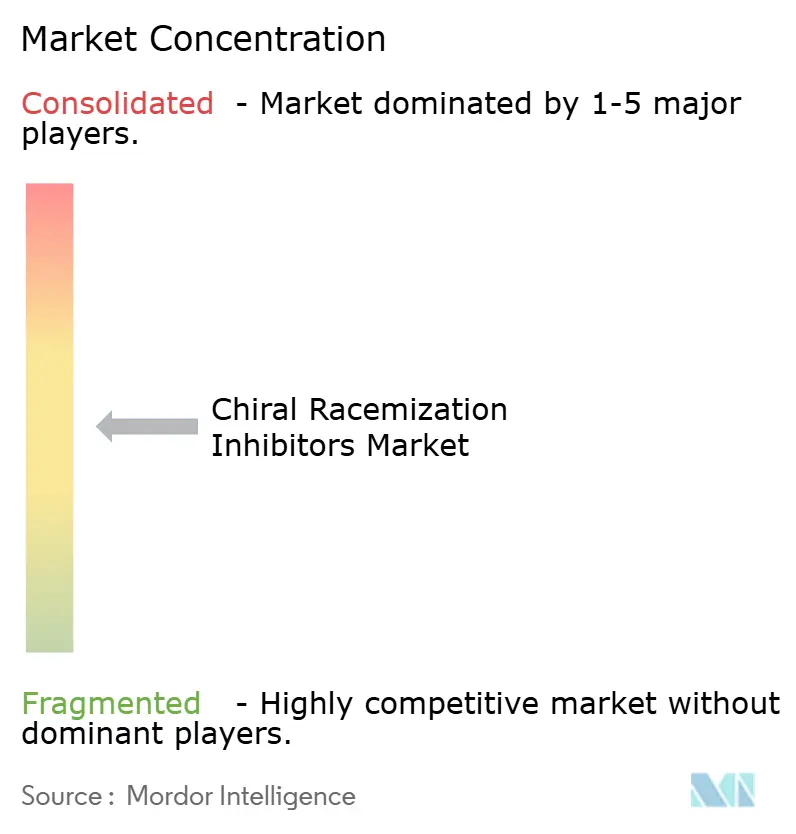
The chiral racemization inhibitors market is moderately fragmented, with Merck KGaA, Iris Biotech GmbH, Bachem Inc., and Thermo Fisher Scientific holding established positions supported by broad portfolios and technical validation capabilities. Their advantage extends beyond catalog breadth, as regulated buyers require quality documentation, batch consistency, and supplier credibility during audits and process transfers. This makes application expertise and compliance support as important as pricing in the upper tier of the market. Bachem supports customers through both reagent supply and GMP peptide manufacturing relationships. This type of integrated relationship raises switching costs and makes supplier changes difficult to reverse once a process is qualified.
Merck KGaA's announced USD 11.3 billion acquisition of Bio-Techne represents another approach to strengthening its position in the chiral racemization inhibitors market, with a strategy focused on expanding into higher-value reagents, analytics, and related workflows. Iris Biotech has reinforced its standing by advancing OxymaPure-based chemistry and aligning its portfolio with safer, greener synthesis approaches. Bachem has further promoted substitution by positioning COMU and PyOxim as practical replacements for older benzotriazole-based systems. Collectively, these developments indicate that competition is shifting toward platform depth, safety positioning, and workflow integration rather than commodity supply.
Chinese suppliers such as Suzhou Highfine Biotech, GL Biochem, and BLD Pharmatech continue to shape this market tier through price-competitive offerings and broader downstream ambitions. Suzhou Highfine's acquisition of an 85% stake in Hangzhou Foster in July 2025 marked an expansion into downstream API and intermediate capabilities. This reflects the vertical integration approach adopted by established Western suppliers, though the typical starting point remains the supply of cost-competitive intermediates and additives. A gap persists in GMP-validated green inhibitor systems for commercial-scale continuous or lower-solvent synthesis, where no single supplier currently offers a fully unified solution across performance, compliance, and sustainability requirements.
Chiral Racemization Inhibitors Industry Leaders
Merck KGaA
Thermo Fisher Scientific Inc.
Bachem Inc.
GL Biochem (Shanghai) Ltd.
Fluorochem Limited
- *Disclaimer: Major Players sorted in no particular order
Chiral Racemization Inhibitors Market Companies Covered in this Report
- AAPPTec
- AnaSpec, Inc.
- Bachem Inc.
- Biosolve Chimie
- Biosynth
- BLD Pharmatech Ltd.
- Carl Roth GmbH + Co. KG
- CEM Corporation
- Chem-Impex International
- CS Bio Co.
- Enamine Ltd.
- Fluorochem Limited
- FUJIFILM Wako Pure Chemical Corporation
- GL Biochem (Shanghai) Ltd.
- Iris Biotech GmbH
- Merck KGaA
- Santa Cruz Biotechnology, Inc.
- Suzhou Highfine Biotech Co., Ltd.
- Thermo Fisher Scientific Inc.
- Tokyo Chemical Industry Co., Ltd.

Recent Industry Developments in Chiral Racemization Inhibitors Market
- June 2026: Merck KGaA announced an agreement to acquire Bio-Techne Corporation for an enterprise value of approximately USD 11.3 billion. The transaction is expected to expand Merck KGaA's Process Solutions business into higher-value reagents, analytics, and cell and gene therapy workflows. Closing is anticipated by late 2026 or early 2027, subject to regulatory approvals.
- July 2025: Suzhou Highfine Biotech acquired an 85% equity stake in Hangzhou Foster, a pharmaceutical API and intermediate manufacturer. The acquisition represented the company's first downstream vertical integration step and positioned it to serve CRO and CDMO clients across a broader product range.


Global Chiral Racemization Inhibitors Market Report Scope
Chiral racemization inhibitors are chemical additives used in asymmetric synthesis and peptide manufacturing to prevent the loss of optical purity in target molecules. They prevent the conversion of the desired enantiomer into its inactive mirror image, ensuring high enantiomeric excess and structural integrity.
The chiral racemization inhibitors market is segmented by product type, form, application, and geography. By product type, the market is segmented into oxyma-based inhibitors, HOBt, HOAt, HONB, HOSu, and other chiral racemization inhibitors. By form, the market is segmented into powder, solution, and other forms. By application, the market is segmented into peptide synthesis, pharmaceutical API synthesis, bioconjugation, oligonucleotide synthesis, academic and research, specialty and fine chemical synthesis, and other applications. The report also covers market size and forecasts for chiral racemization inhibitors across 16 countries in major regions. The market sizes and forecasts are provided in terms of value (USD).
| Oxyma-Based Inhibitors |
| HOBt |
| HOAt |
| HONB |
| HOSu |
| Other Chiral Racemization Inhibitors |
| Powder |
| Solution |
| Other Forms |
| Peptide Synthesis |
| Pharmaceutical API Synthesis |
| Bioconjugation |
| Oligonucleotide Synthesis |
| Academic and Research |
| Specialty and Fine Chemical Synthesis |
| Other Applications |
| Asia-Pacific | China |
| India | |
| Japan | |
| South Korea | |
| Rest of Asia-Pacific | |
| North America | United States |
| Canada | |
| Mexico | |
| Europe | Germany |
| United Kingdom | |
| France | |
| Italy | |
| Russia | |
| Rest of Europe | |
| South America | Brazil |
| Argentina | |
| Rest of South America | |
| Middle-East and Africa | Saudi Arabia |
| South Africa | |
| Rest of Middle-East and Africa |
| By Product Type | Oxyma-Based Inhibitors | |
| HOBt | ||
| HOAt | ||
| HONB | ||
| HOSu | ||
| Other Chiral Racemization Inhibitors | ||
| By Form | Powder | |
| Solution | ||
| Other Forms | ||
| By Application | Peptide Synthesis | |
| Pharmaceutical API Synthesis | ||
| Bioconjugation | ||
| Oligonucleotide Synthesis | ||
| Academic and Research | ||
| Specialty and Fine Chemical Synthesis | ||
| Other Applications | ||
| By Geography | Asia-Pacific | China |
| India | ||
| Japan | ||
| South Korea | ||
| Rest of Asia-Pacific | ||
| North America | United States | |
| Canada | ||
| Mexico | ||
| Europe | Germany | |
| United Kingdom | ||
| France | ||
| Italy | ||
| Russia | ||
| Rest of Europe | ||
| South America | Brazil | |
| Argentina | ||
| Rest of South America | ||
| Middle-East and Africa | Saudi Arabia | |
| South Africa | ||
| Rest of Middle-East and Africa | ||


Key Questions Answered in the Report
What is current market size of Chiral Racemization Inhibitors Market?
The Chiral Racemization Inhibitors Market size is expected to increase from USD 420.12 million in 2025 to USD 451.18 million in 2026 and reach USD 651.65 million by 2031, and is expected to grow at a CAGR of 7.63% over 2026-2031.
Which product type leads this space today?
Oxyma-based inhibitors led product type demand with 34.52% share in 2025 and are also the fastest-growing product group through 2031.
Why are Oxyma-based systems replacing HOBt and HOAt?
The shift is driven by safer handling, easier logistics, and stronger epimerization control, while HOBt and HOAt face stricter storage and transport constraints.
Which application is growing the fastest?
Oligonucleotide synthesis is projected to expand at 9.04% CAGR through 2031, even though peptide synthesis remained the largest application in 2025 with 58.33% share.
Page last updated on:





