
Children's Dietary Supplements Market Size and Share
Market Overview
| Study Period | 2021 - 2031 |
|---|---|
| Market Size (2026) | USD 27.30 Billion |
| Market Size (2031) | USD 35.19 Billion |
| Growth Rate (2026 - 2031) | 5.21 % |
| Fastest Growing Market | Middle East and Africa |
| Largest Market | Asia-Pacific |
| Market Concentration | Medium |
Major Players
*Disclaimer: Major Players sorted in no particular order Image © Mordor Intelligence. Reuse requires attribution under CC BY 4.0. |
|
Children's Dietary Supplements Market Analysis by Mordor Intelligence
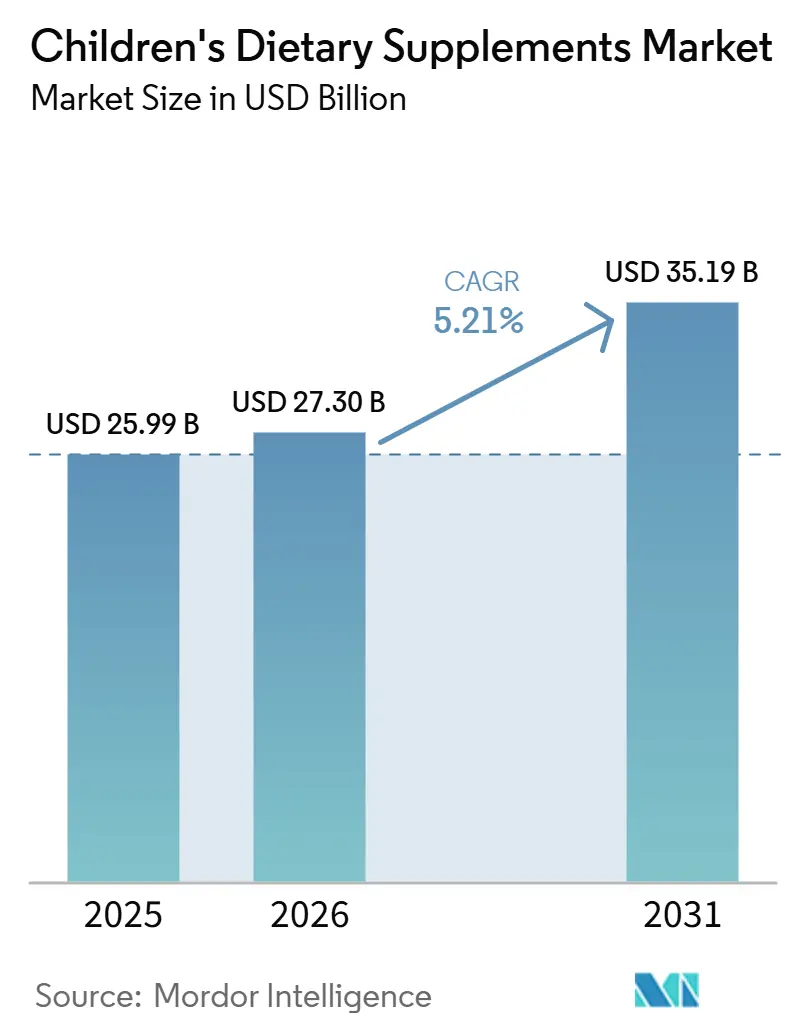
The children's dietary supplements market size is expected to grow from USD 25.99 billion in 2025 to USD 27.30 billion in 2026 and is forecast to reach USD 35.19 billion by 2031 at a 5.21% CAGR over 2026-2031. The children's dietary supplements market is growing steadily, driven by increasing parental focus on preventive pediatric nutrition and rising awareness of micronutrient deficiencies among children. Demand for nutritional solutions targeting immunity, bone health, cognitive development, and overall growth continues to drive adoption of pediatric dietary supplements across various age groups. Consumer preference is shifting toward clean-label, allergen-free, and reduced-sugar formulations, while child-friendly formats such as gummies and liquids are improving product acceptance and compliance. The expansion of e-commerce and digital health platforms has further improved consumer access to children's dietary supplements, supported product discovery, and contributed to market growth.
Key Report Takeaways
- By product type, vitamins held the largest 2025 share at 27.19%, while prebiotic/probiotic supplements are projected to record the fastest 2026-2031 CAGR at 9.62% in the children's dietary supplements market.
- By form, capsules/softgels led with a 40.01% share in 2025, while gummies are forecast to expand at the fastest 12.11% CAGR through 2031 in the market.
- By age group, children (6–12 years) accounted for the largest 2025 share at 36.08%, while adolescents (13–18 years) are expected to post the fastest 2026-2031 CAGR at 8.14% in the children's dietary supplements market.
- By distribution channel, online retail channels captured the largest 2025 share at 25.48% and are also projected to register the fastest 2026-2031 CAGR at 13.04% .
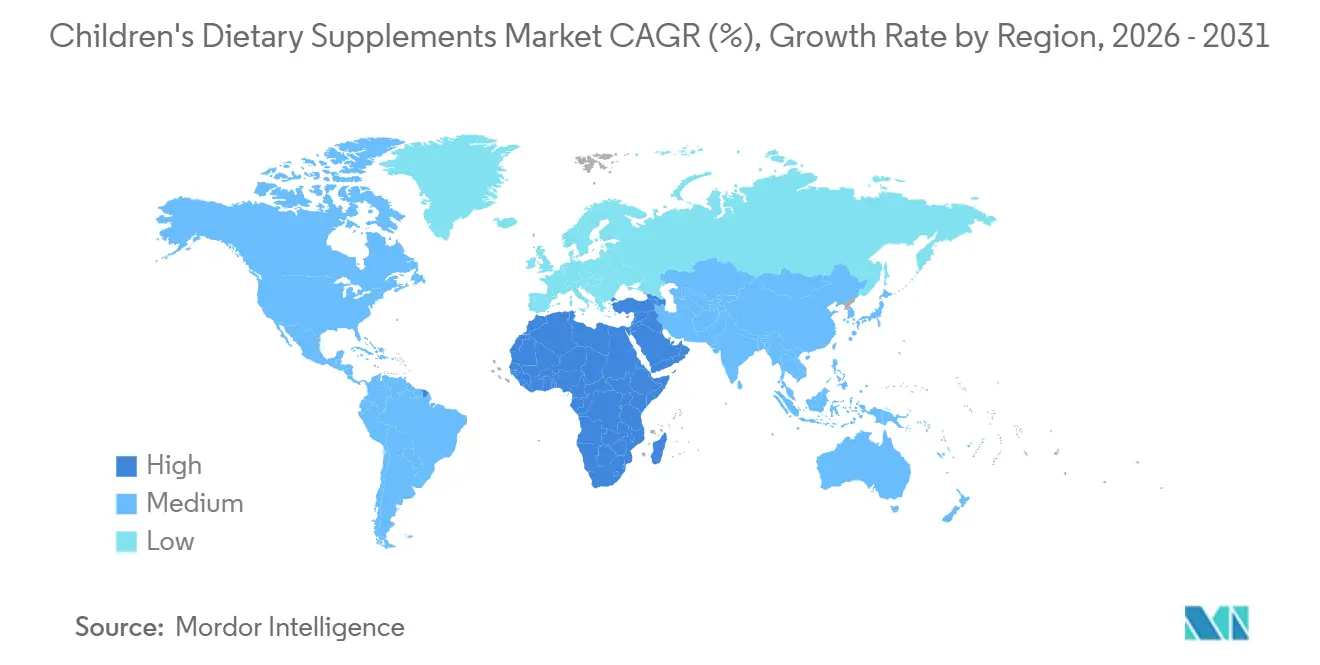
- By geography, Asia-Pacific held the largest 2025 share at 50.02%, while the Middle East and Africa is forecast to grow at the fastest 7.86% CAGR during 2026-2031 in the market.
Note: Market size and forecast figures in this report are generated using Mordor Intelligence’s proprietary estimation framework, updated with the latest available data and insights as of January 2026.
Global Children's Dietary Supplements Market Trends and Insights
Drivers Impact Analysis*
| Driver | (~) % Impact on CAGR Forecast | Geographic Relevance | Impact Timeline |
|---|---|---|---|
| Heightened parental focus on preventive pediatric nutrition | +0.8% | Global; highest in North America, Europe, and urban East Asia | Medium term (2–4 years) |
| Greater awareness of micronutrient deficiencies among children | +1.1% | Global; concentrated in South Asia, Sub-Saharan Africa, and East Asia and Pacific | Long term (≥ 4 years) |
| Growing demand for targeted nutritional solutions supporting immunity, bone health, and cognitive development | +0.9% | North America, Europe, China, South Korea, Japan | Medium term (2–4 years) |
| Rising preference for clean-label, allergen-free, and reduced-sugar formulations | +0.7% | North America, Western Europe, Australia | Short term (≤ 2 years) |
| Expansion of e-commerce and digital-first health product discovery | +1.0% | Global; Asia-Pacific core (China, India), spill-over to Middle East and Africa and South America | Short term (≤ 2 years) |
| Stronger emphasis on early childhood nutrition and healthy development | +0.6% | Global; Southeast Asia, Middle East and Africa accelerating | Long term (≥ 4 years) |
| Source: Mordor Intelligence | |||
Heightened parental focus on preventive pediatric nutrition
Growing parental focus on preventive pediatric nutrition is driving growth in the children's dietary supplements market, as families increasingly prioritize long-term health and wellness from an early age. Rising awareness of the role of essential vitamins and minerals in supporting immunity, cognitive development, and healthy growth is encouraging the routine use of dietary supplements alongside balanced diets. Pediatric healthcare professionals are also placing greater emphasis on preventive nutrition to address potential nutrient gaps before deficiencies develop. This shift toward proactive health management is supporting sustained demand for age-specific, scientifically formulated children's dietary supplements.
Greater awareness of micronutrient deficiencies among children
Growing awareness of micronutrient deficiencies in children is driving demand for dietary supplements, as governments and healthcare organizations expand nutrition interventions worldwide. According to UNICEF, 21.13 million children aged 6–59 months received multiple micronutrient powders globally in 2024, reflecting the increasing scale of supplementation programs[1]Source: United Nations Children's Fund, "CHILD NUTRITION REPORT 2025 ", unicef.org. East Asia and the Pacific and South Asia each reached more than 5.3 million children, while Sub-Saharan Africa provided supplementation to over 4.16 million children during the year[2]Source: United Nations Children's Fund, "CHILD NUTRITION REPORT 2025 ", unicef.org. In addition, 2.63 million children in the Middle East and North Africa, 2.06 million in Latin America and the Caribbean, and 1.64 million in Eastern Europe and Central Asia received multiple micronutrient powders in 2024[3]Source: United Nations Children's Fund, "CHILD NUTRITION REPORT 2025 ", unicef.org. The expanding coverage of these programs is increasing awareness of childhood nutritional needs and supporting sustained demand for children's dietary supplements.
Growing demand for targeted nutritional solutions supporting immunity, bone health, and cognitive development
The children's dietary supplements market is experiencing growing demand for targeted formulations that address specific developmental and health needs beyond traditional multivitamin products. Supplements containing ingredients such as vitamin D, calcium, iron, omega-3 fatty acids, and probiotics are gaining traction due to their role in supporting immunity, bone development, digestive health, and cognitive function. Advances in pediatric nutrition science and increasing availability of evidence-backed formulations are encouraging manufacturers to develop age-specific and function-oriented products. Additionally, innovations in convenient formats such as gummies, liquids, and chewables are improving product acceptance and expanding the adoption of specialized children's dietary supplements.
Rising preference for clean-label, allergen-free, and reduced-sugar formulations
The children's dietary supplements market is experiencing increased demand for products with simpler ingredient profiles, fewer artificial additives, and greater nutritional transparency. The growing preference for clean-label formulations is encouraging manufacturers to reduce the use of artificial colors, flavors, preservatives, and unnecessary ingredients, while also developing allergen-free options for children with specific dietary sensitivities. Rising concerns around sugar intake are driving innovation in popular formats such as gummies and chewables, with manufacturers exploring alternative sweeteners, natural flavors, and functional ingredients. These formulation changes are expanding product choices for families seeking safer and more balanced dietary supplement options for children.
Restraints Impact Analysis*
| Restraint | (~) % Impact on CAGR Forecast | Geographic Relevance | Impact Timeline |
|---|---|---|---|
| Tightening pediatric health claim regulations and label compliance requirements | -0.7% | North America, European Union; spill-over to Asia-Pacific through import standards | Medium term (2–4 years) |
| High price sensitivity among value-oriented households | -0.5% | South Asia, Sub-Saharan Africa, Southeast Asia, South America | Long term (≥ 4 years) |
| Pediatric safety concerns and risks of overconsumption | -0.4% | Global; most acute in North America and Europe where supplement density is highest | Medium term (2–4 years) |
| Growing preference for food-based nutrition over dietary supplements | -0.3% | Western Europe, North America, Australia | Short term (≤ 2 years) |
| Source: Mordor Intelligence | |||
Tightening pediatric health claim regulations and label compliance requirements
Increasing regulatory scrutiny of pediatric dietary supplements is creating compliance challenges for manufacturers, particularly regarding health claims, ingredient safety, and product labeling requirements. Regulatory authorities are placing greater emphasis on ensuring that claims related to immunity, growth, cognitive development, and other health benefits are supported by scientific evidence, increasing the resources required for product development and validation. Evolving standards for ingredient disclosure, dosage recommendations, and labeling transparency are also raising compliance costs and operational complexity across major markets. These requirements may slow product launches, limit marketing flexibility, and create additional barriers for companies operating in the children's dietary supplements market.
High price sensitivity among value-oriented households
The relatively higher cost of children's dietary supplements compared with conventional food products can limit adoption among price-sensitive households, particularly in markets where supplements are viewed as discretionary purchases. Premium ingredients, specialized formulations, and child-friendly delivery formats such as gummies, liquids, and chewables often increase product prices, leading some consumers to opt for basic nutritional products or lower-cost alternatives. Rising household expenses and shifting spending priorities are further increasing price sensitivity, creating pressure on manufacturers to balance product quality, nutritional value, and affordability. These cost challenges may constrain market penetration and limit adoption of premium pediatric supplements, particularly among value-oriented consumer segments.
*Our forecasts treat driver/restraint impacts as directional, not additive. The impact forecasts reflect baseline growth, mix effects, and variable interactions.
Segment Analysis
By Product Type: Vitamins Lead, but Prebiotic/Probiotic Supplements Are Redefining Value
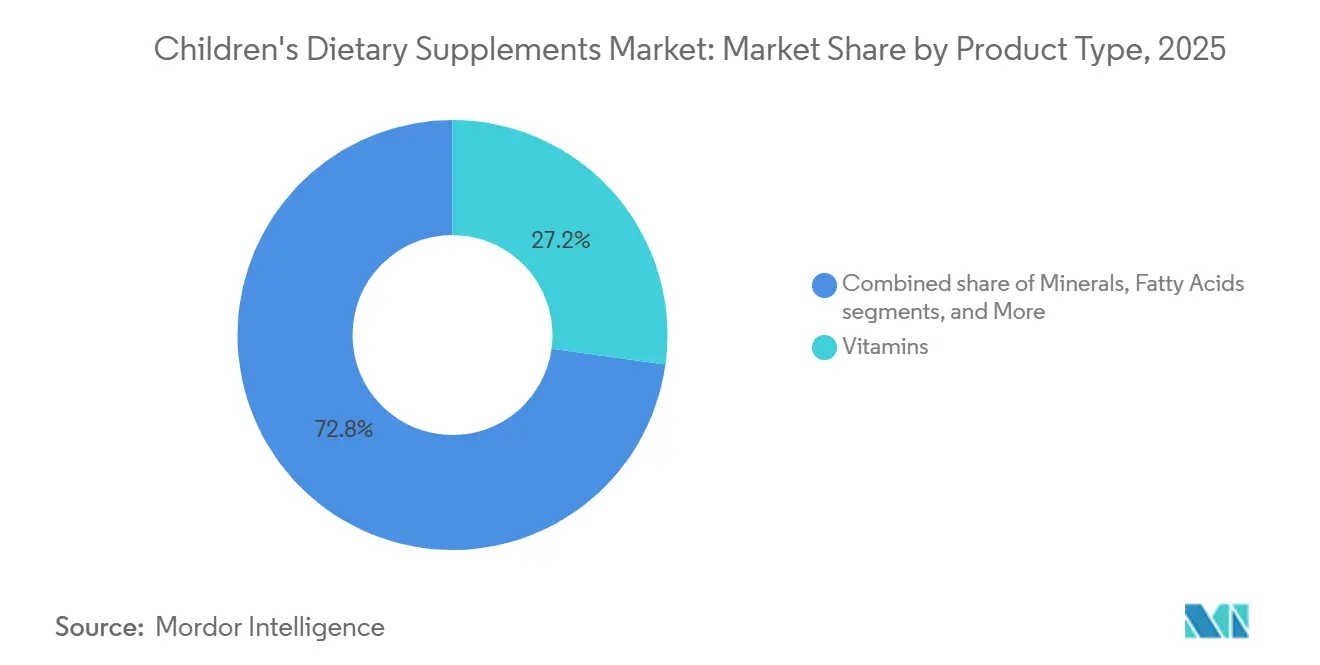
Vitamins accounted for the largest share of the children's dietary supplements market by product type, holding 27.19% of the market in 2025. The segment benefits from long-standing consumer familiarity, widespread pediatric use, and established demand for essential nutrients such as vitamin D, vitamin C, and B-complex vitamins that support children's growth, immunity, and overall health. The availability of vitamin-based supplements across pharmacies, supermarkets, and online channels further supports their dominant position in the market.
Prebiotic/Probiotic supplements are projected to be the fastest-growing product category, expanding at a CAGR of 9.62% during 2026–2031. Growth is driven by increasing interest in gut health-focused nutrition and the expanding use of microbiome-based formulations in pediatric wellness products. The introduction of child-friendly probiotic formats, including gummies, liquids, and chewables, is improving product acceptance and supporting broader adoption among children.



By Form: Gummies Reshapes the Delivery Landscape
Capsules/Softgels accounted for the largest share of the children's dietary supplements market by form, representing 40.01% of the market in 2025. This segment benefits from established consumer acceptance, accurate dosing, and suitability for older children and adolescents who can consume conventional supplement formats. Their widespread availability across pharmacies and retail channels supports continued demand, particularly for products targeting specific nutritional needs.
Gummies are projected to be the fastest-growing format, expanding at a CAGR of 12.11% during 2026–2031. Growth is driven by their palatability, ease of consumption, and ability to address compliance challenges associated with traditional supplement formats among children. Manufacturers are increasingly developing gummy-based formulations with functional ingredients such as vitamins, minerals, and probiotics, while focusing on reduced-sugar and clean-label formulations to align with evolving consumer preferences. Liquid supplements also remain relevant among younger children who may have difficulty consuming solid dosage forms.
By Age Group: School-Age Stability Meets Adolescent Emergence
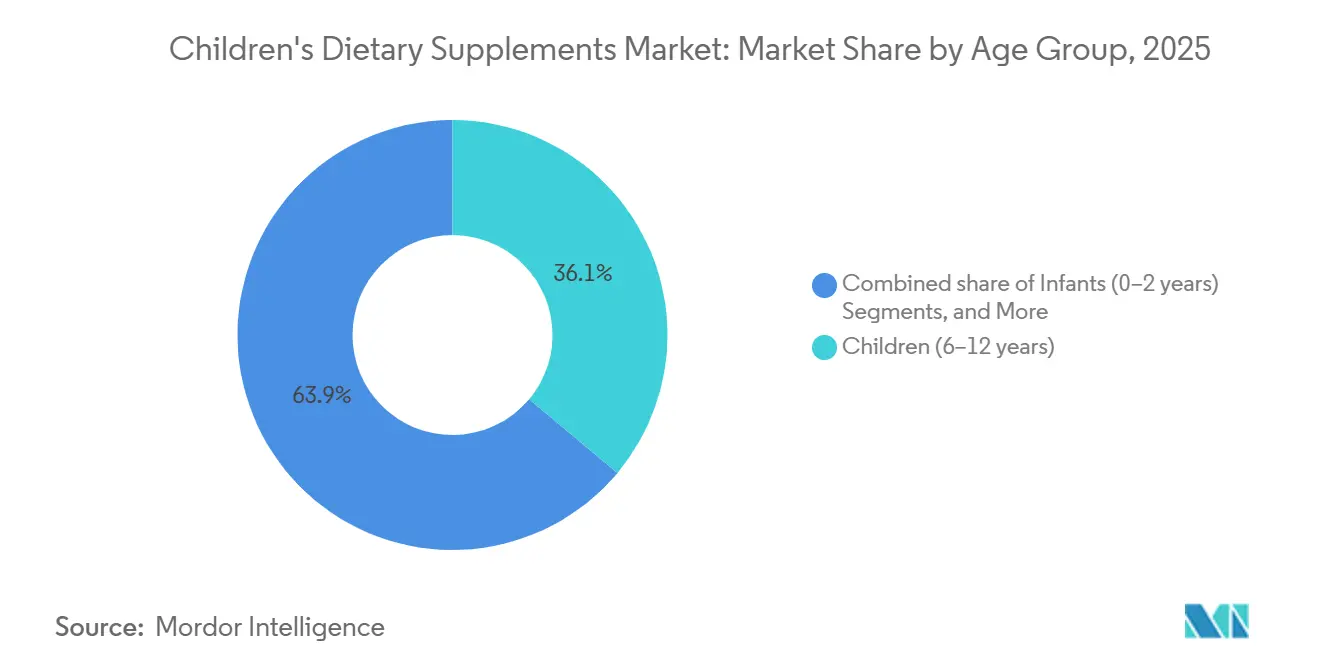
Children aged 6–12 years accounted for the largest share of the children's dietary supplements market by age group, representing 36.08% of the market in 2025. This segment benefits from broad product availability, as school-age children consume a wide range of supplements targeting immunity, growth, bone health, and general wellness. Strong parent-led purchasing behavior and sustained demand for age-specific nutritional products further support the segment's dominant position. Toddlers (2–5 years) and infants (0–2 years) also represent significant segments, driven by demand for specialized formulations such as probiotics, vitamin D supplements, and early-life nutrition products.
Adolescents aged 13–18 years are projected to be the fastest-growing age group, expanding at a CAGR of 8.14% during 2026–2031. Growth is driven by increasing demand for supplements addressing adolescent-specific nutritional needs, including bone development, cognitive support, energy, and active lifestyles. The segment is also benefiting from the expansion of products designed specifically for teenagers, as manufacturers increasingly introduce age-appropriate formulations that bridge the gap between children's and adult supplement categories.
By Distribution Channel: Online Retail Channels Drive Structural Shift in Category Economics
Online retail channels accounted for the largest share of the children's dietary supplements market by distribution channel, representing 25.48% of the market in 2025. This channel is also projected to be the fastest-growing, expanding at a CAGR of 13.04% during 2026–2031. Growth in this segment is driven by increasing consumer preference for convenient purchasing, wider product availability, and growing adoption of direct-to-consumer and subscription-based supplement models. Digital platforms also enable easier product discovery, ingredient comparison, and access to specialized pediatric supplement brands, supporting continued expansion of online sales.
Supermarkets and hypermarkets remain important distribution channels due to their broad consumer reach, accessibility, and established presence for commonly purchased products such as multivitamins and vitamin supplements. Specialty stores continue to attract consumers seeking premium, clean-label, and specialized pediatric formulations, while direct selling maintains relevance in markets with strong network-based health product distribution. Other channels, including pharmacies, healthcare outlets, and specialty pediatric nutrition stores, support purchases of targeted supplements recommended by healthcare professionals.
Geography Analysis
Asia-Pacific accounted for the largest share of the global children's dietary supplements market, representing 50.02% of the market in 2025. The region's position is supported by its large child population, rising healthcare expenditure, increasing urbanization, and growing adoption of preventive nutrition products. China remains a key contributor due to strong demand for premium pediatric nutrition products and expanding e-commerce penetration, while India and Southeast Asian markets are witnessing increased adoption driven by rising disposable incomes, improving retail infrastructure, and greater availability of child-focused supplement brands.
The Middle East and Africa is projected to be the fastest-growing region, expanding at a CAGR of 7.86% during 2026–2031. Growth is driven by increasing healthcare awareness, improving access to nutritional products, rising disposable incomes, and government initiatives focused on child health and nutrition. Gulf countries such as Saudi Arabia are witnessing rising demand for premium pediatric supplements, while developing African markets are benefiting from expanding retail networks and improving availability of nutritional products.
North America and Europe represent mature but significant markets for children's dietary supplements, supported by established supplement consumption patterns, strong healthcare infrastructure, and broad availability of pediatric nutritional products. North America benefits from high adoption of multivitamins, gummies, and specialized formulations through pharmacies, supermarkets, and online platforms, while Europe demonstrates strong demand for clean-label and evidence-backed supplements across markets such as Germany, the United Kingdom, France, and Italy. South America, led by Brazil, Argentina, and Colombia, continues to present growth opportunities supported by urbanization, increasing health awareness, and expanding access to preventive nutrition products.

Competitive Landscape
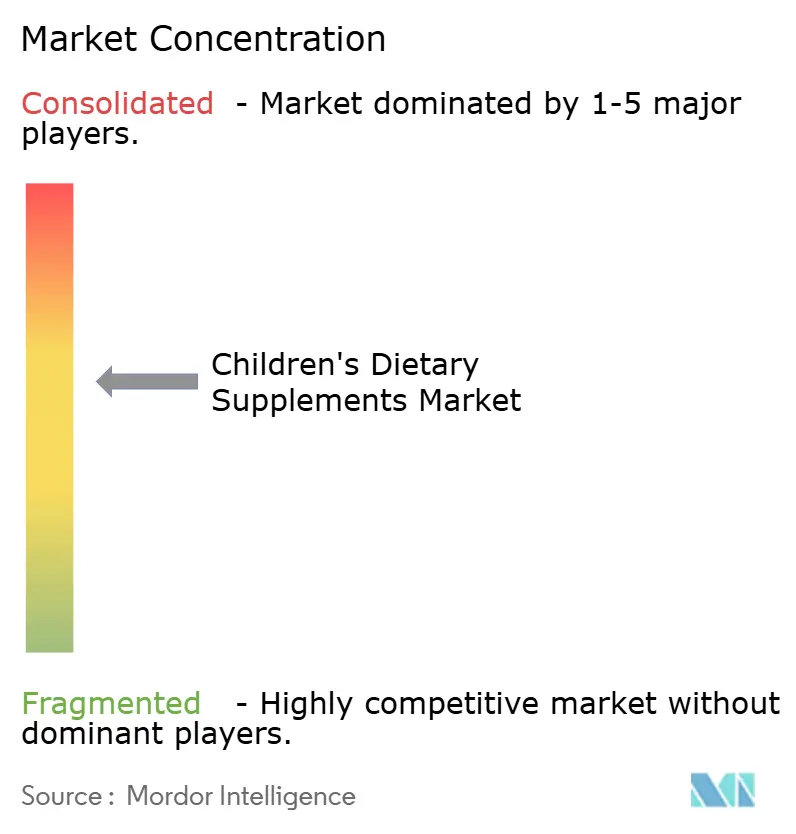
The children's dietary supplements market is moderately concentrated, with established consumer healthcare and nutrition companies holding significant market presence through strong brand recognition, extensive distribution networks, and broad pediatric product portfolios. Key players include Abbott Laboratories, Nestlé S.A., Haleon plc, Bayer AG, and Reckitt Benckiser Group plc, which compete across categories such as vitamins, minerals, probiotics, immunity support, and child-focused nutritional formulations. These companies leverage scientific expertise, relationships with healthcare professionals, and global retail reach to maintain strong positions in the market.
Major players are increasingly focusing on product innovation, premium formulations, and expanding access through digital and retail channels to strengthen their competitive positions. Abbott continues to build its pediatric nutrition portfolio through brands such as PediaSure, while Nestlé focuses on specialized child nutrition solutions through Nestlé Health Science. Haleon, Bayer, and Reckitt Benckiser continue to expand their consumer healthcare portfolios with children's vitamins, gummies, and wellness products, targeting growing demand for convenient and functional supplement formats.
Competition is also being shaped by emerging consumer preferences for clean-label formulations, personalized nutrition, and child-friendly delivery formats. Smaller direct-to-consumer brands and specialty supplement companies are gaining traction by focusing on transparent ingredient sourcing, subscription-based purchasing models, and targeted nutritional benefits. As regulatory requirements for pediatric claims and ingredient safety continue to evolve, companies with strong scientific validation, regulatory capabilities, and differentiated product offerings are expected to maintain a competitive advantage in the market.
Children's Dietary Supplements Industry Leaders
-
Abbott Laboratories
-
Nestlé S.A.
-
Haleon plc
-
Bayer AG
-
Reckitt Benckiser Group plc
- *Disclaimer: Major Players sorted in no particular order

Recent Industry Developments
- May 2026: BioGaia AB introduced BioGaia® Protectis® Plus, a dual-strain probiotic drop formulation for infants targeting digestive comfort and colic-related concerns. The product combines Limosilactobacillus reuteri Protectis® with the patented L. reuteri BG-R46® strain and was initially launched in the United Kingdom. The development highlights continued innovation in specialized probiotic solutions within the children's dietary supplements market.
- March 2026: Nestlé S.A. introduced Compleat Paediatric Oral Blends, an oral nutritional supplement designed for children with special medical nutrition needs. The product contains a blend of fruits, plant-based proteins, vitamins, and minerals and was initially launched in select European markets. The launch reflects ongoing product development in specialized pediatric nutrition formulations.
- July 2025: Bayer AG launched One A Day® Kids Multi with Iron, a gummy multivitamin formulated with iron and other essential nutrients for children. The product was introduced as part of the company's expanded children's supplement line, which also includes probiotic and multivitamin gummy formulations. The launch reflects continued product development toward functional, child-friendly supplement formats addressing specific nutritional needs.


Global Children's Dietary Supplements Market Report Scope
The children's dietary supplements market covers products formulated to support the nutritional needs, growth, and overall health of children through essential vitamins, minerals, and other bioactive ingredients. The market includes supplements designed for different age groups and delivered through various product formats and distribution channels. The market is segmented by product type, including vitamins, minerals, fatty acids, and other products; form, comprising tablets, capsules/softgels, and other formats; age group, covering infants, toddlers, and other age categories; distribution channel, including supermarkets/hypermarkets, specialty stores, and other channels; and geography, including North America, Europe, Asia-Pacific, South America, and Middle East and Africa.
| Vitamins | Vitamin A |
| Vitamin C | |
| Vitamin D | |
| Vitamin B | |
| Other Vitamin Supplements | |
| Multivitamin Supplements | |
| Minerals | Iron Supplements |
| Calcium Supplements | |
| Magnesium/Zinc Supplements | |
| Multi-Mineral Supplements | |
| Other Minerals | |
| Fatty Acids | |
| Protein/Amino Acids | |
| Prebiotic/Probiotic Supplements | |
| Herbal Supplements | |
| Enzymes | |
| Blended Supplements | |
| Others |
| Tablets |
| Capsules/Softgels |
| Powders |
| Gummies |
| Liquids |
| Others |
| Infants (0-2 years) |
| Toddlers (2-5 years) |
| Children (6-12 years) |
| Adolescents (13-18 years) |
| Supermarkets/Hypermarkets |
| Specialty Stores |
| Online Retail Channels |
| Direct Selling |
| Other Distribution Channels |
| North America | United States |
| Canada | |
| Mexico | |
| Rest of North America | |
| Europe | Germany |
| United Kingdom | |
| Italy | |
| France | |
| Spain | |
| Netherlands | |
| Poland | |
| Belgium | |
| Sweden | |
| Rest of Europe | |
| Asia-Pacific | China |
| India | |
| Japan | |
| Australia | |
| Indonesia | |
| South Korea | |
| Thailand | |
| Singapore | |
| Rest of Asia-Pacific | |
| South America | Brazil |
| Argentina | |
| Colombia | |
| Chile | |
| Peru | |
| Rest of South America | |
| Middle East and Africa | South Africa |
| Saudi Arabia | |
| United Arab Emirates | |
| Nigeria | |
| Egypt | |
| Morocco | |
| Turkey | |
| Rest of Middle East and Africa |
| By Product Type | Vitamins | Vitamin A |
| Vitamin C | ||
| Vitamin D | ||
| Vitamin B | ||
| Other Vitamin Supplements | ||
| Multivitamin Supplements | ||
| Minerals | Iron Supplements | |
| Calcium Supplements | ||
| Magnesium/Zinc Supplements | ||
| Multi-Mineral Supplements | ||
| Other Minerals | ||
| Fatty Acids | ||
| Protein/Amino Acids | ||
| Prebiotic/Probiotic Supplements | ||
| Herbal Supplements | ||
| Enzymes | ||
| Blended Supplements | ||
| Others | ||
| By Form | Tablets | |
| Capsules/Softgels | ||
| Powders | ||
| Gummies | ||
| Liquids | ||
| Others | ||
| By Age Group | Infants (0-2 years) | |
| Toddlers (2-5 years) | ||
| Children (6-12 years) | ||
| Adolescents (13-18 years) | ||
| By Distribution Channel | Supermarkets/Hypermarkets | |
| Specialty Stores | ||
| Online Retail Channels | ||
| Direct Selling | ||
| Other Distribution Channels | ||
| By Geography | North America | United States |
| Canada | ||
| Mexico | ||
| Rest of North America | ||
| Europe | Germany | |
| United Kingdom | ||
| Italy | ||
| France | ||
| Spain | ||
| Netherlands | ||
| Poland | ||
| Belgium | ||
| Sweden | ||
| Rest of Europe | ||
| Asia-Pacific | China | |
| India | ||
| Japan | ||
| Australia | ||
| Indonesia | ||
| South Korea | ||
| Thailand | ||
| Singapore | ||
| Rest of Asia-Pacific | ||
| South America | Brazil | |
| Argentina | ||
| Colombia | ||
| Chile | ||
| Peru | ||
| Rest of South America | ||
| Middle East and Africa | South Africa | |
| Saudi Arabia | ||
| United Arab Emirates | ||
| Nigeria | ||
| Egypt | ||
| Morocco | ||
| Turkey | ||
| Rest of Middle East and Africa | ||


Key Questions Answered in the Report
How large is the children's dietary supplements space in 2031?
The children's dietary supplements market is projected to reach USD 35.19 billion by 2031, rising from USD 25.99 billion in 2025 at a 5.21% CAGR over 2026-2031.
Which product type leads children's dietary supplements demand today?
Vitamins remain the largest product category, holding 27.19% of 2025 demand, supported by broad consumer familiarity and routine pediatric use.
Why are gummies gaining share so quickly among children?
Gummies are projected to expand at a 12.11% CAGR because they improve taste and ease of use, which matters strongly in pediatric nutrition.
Which region leads global demand for children's supplements?
Asia-Pacific led with 50.02% share in 2025, driven by China, India, and Southeast Asia, while the Middle East and Africa is set to grow the fastest at 7.86% CAGR.
Page last updated on:





