
Cardiometabolic Drugs Market Size and Share
Market Overview
| Study Period | 2020 - 2031 |
|---|---|
| Market Size (2026) | USD 356.75 Billion |
| Market Size (2031) | USD 621.60 Billion |
| Growth Rate (2026 - 2031) | 11.75 % |
| Fastest Growing Market | Asia-Pacific |
| Largest Market | North America |
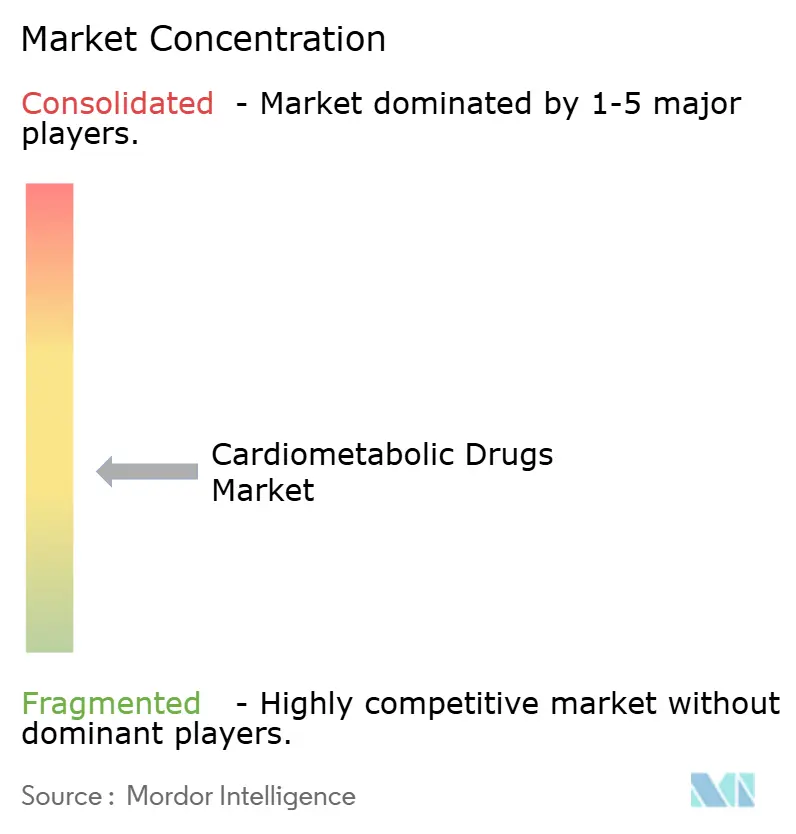
| Market Concentration | Medium |
Major Players *Disclaimer: Major Players sorted in no particular order Image © Mordor Intelligence. Reuse requires attribution under CC BY 4.0. | |
Cardiometabolic Drugs Market Analysis by Mordor Intelligence
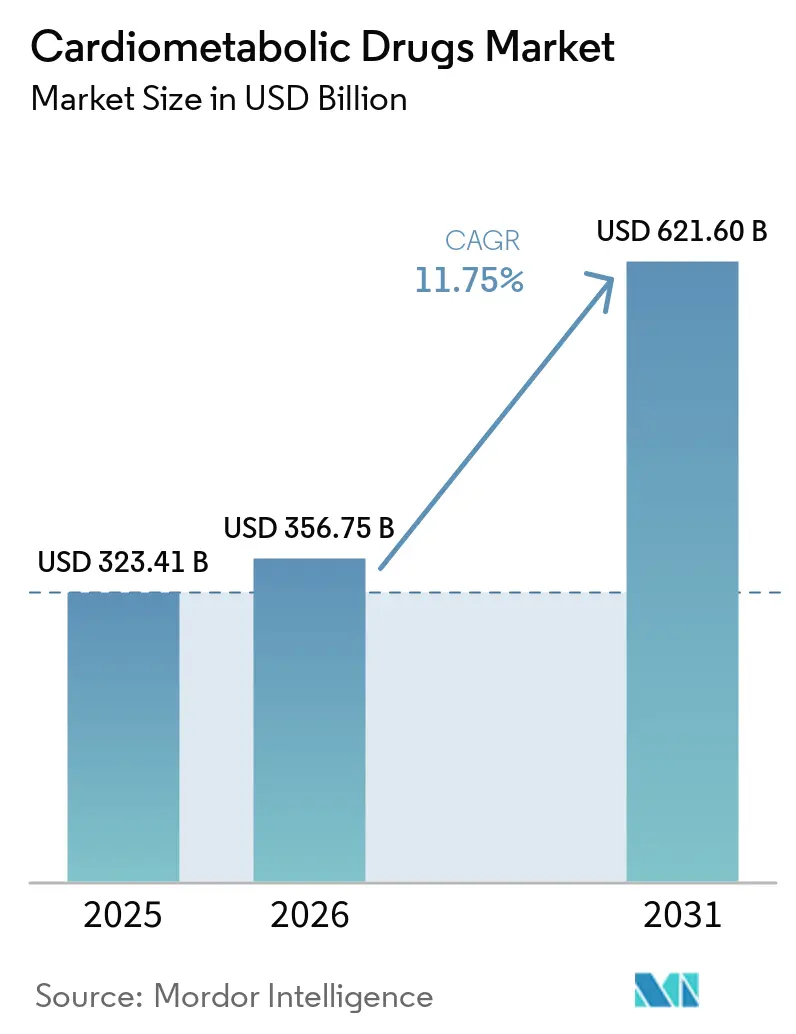
The Cardiometabolic Drugs Market size is projected to be USD 323.41 billion in 2025, USD 356.75 billion in 2026, and reach USD 621.60 billion by 2031, growing at a CAGR of 11.75% from 2026 to 2031.
Diabetes continues to provide the largest established treatment base, while obesity treatment is changing prescribing patterns and treatment pathways. Rising diabetes prevalence also increases demand for therapies that address cardiovascular, kidney, and liver complications. New labels for incretin and SGLT2 therapies allow manufacturers to serve more prescribers and patient groups. Access, reimbursement, and manufacturing capacity will shape which products gain broad use. The cardiometabolic drugs market is therefore expanding through both higher patient need and broader use of existing drug classes. Companies must also coordinate clinical development, device supply, market access, and patient services as treatment pathways become more connected. This requires companies to align medical evidence and commercial planning with local coverage rules and patient needs.
Key Report Takeaways
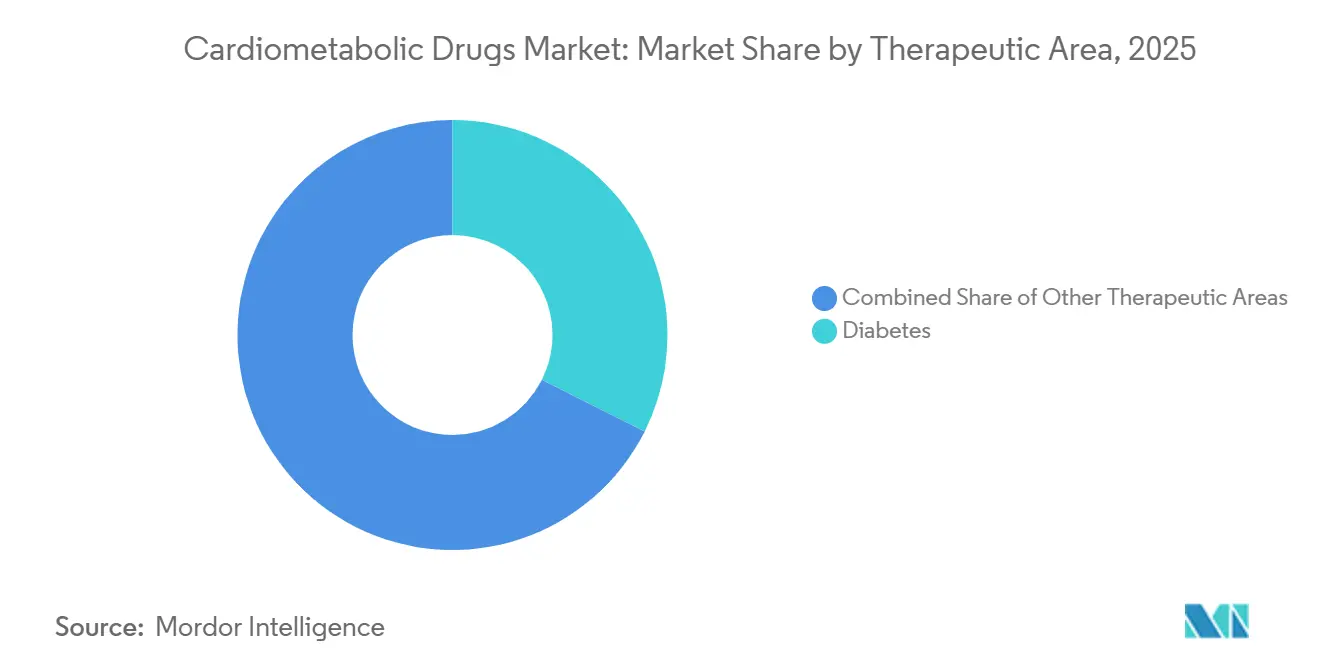
By therapeutic area, diabetes held 32.4% of the cardiometabolic drugs market share in 2025, while obesity and weight management is forecast to grow at a 12.5% CAGR through 2031.
By drug class, lipid-lowering drugs accounted for 24.3% of the cardiometabolic drugs market size in 2025, while GLP-1 and incretin-based therapies are forecast to grow at a 12.5% CAGR through 2031.
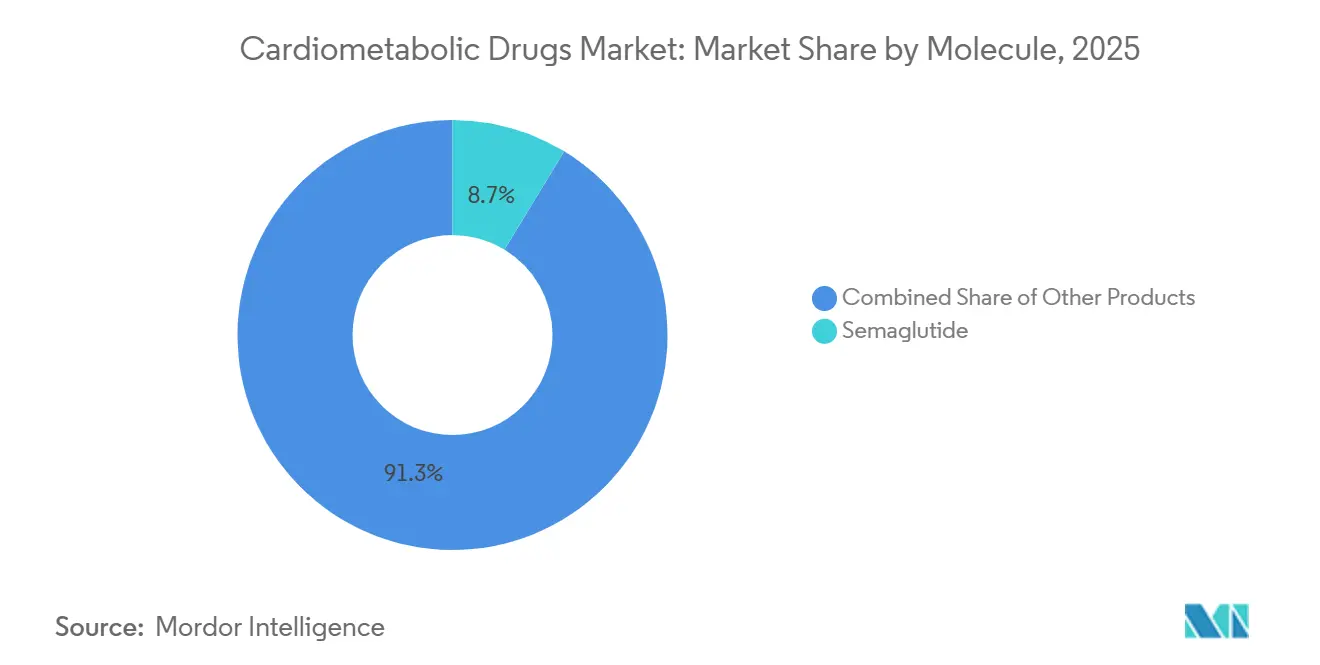
By molecule or product, semaglutide held 8.7% of revenue in 2025, while tirzepatide is forecast to expand at a 12.1% CAGR through 2031.
By route of administration, oral formulations held 62.4% of revenue in 2025, while injectable administration is forecast to grow at a 12.5% CAGR through 2031.
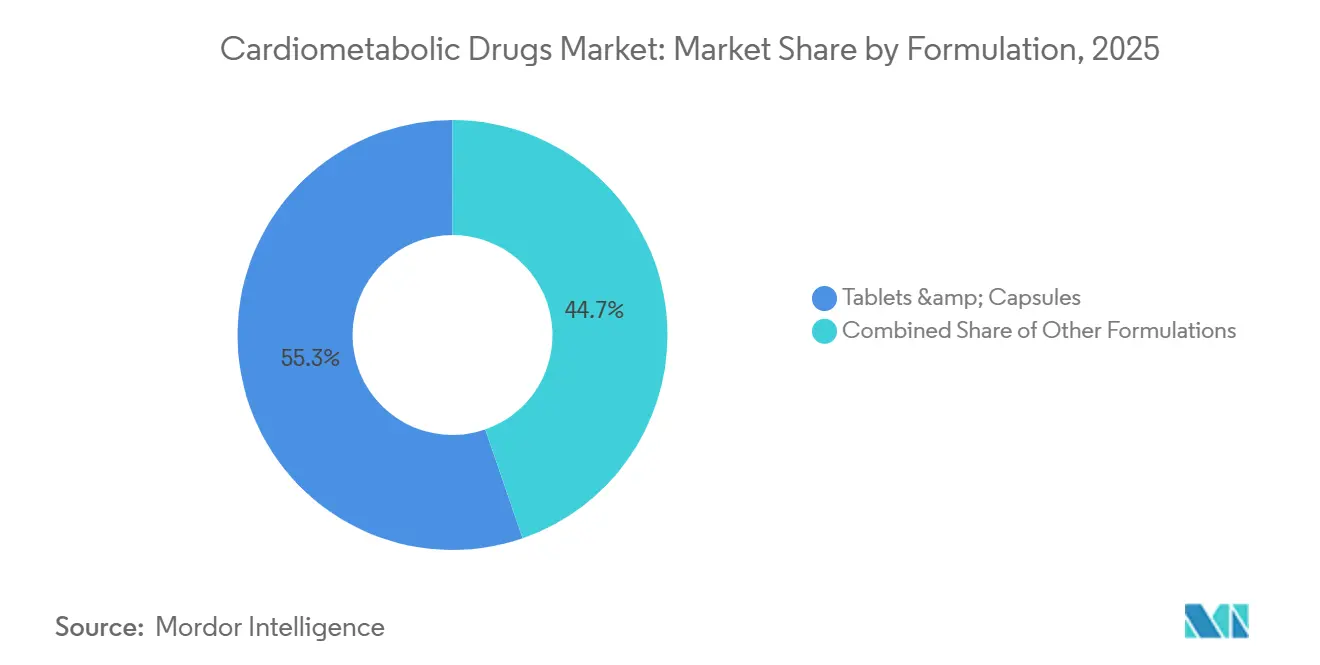
By formulation and dosing frequency, tablets and capsules held 55.3% of revenue in 2025, while prefilled pens and autoinjectors are forecast to grow at a 12.7% CAGR through 2031.
By patient type, diabetes patients accounted for 40.2% of revenue in 2025, while obesity patients are forecast to grow at a 12.5% CAGR through 2031.
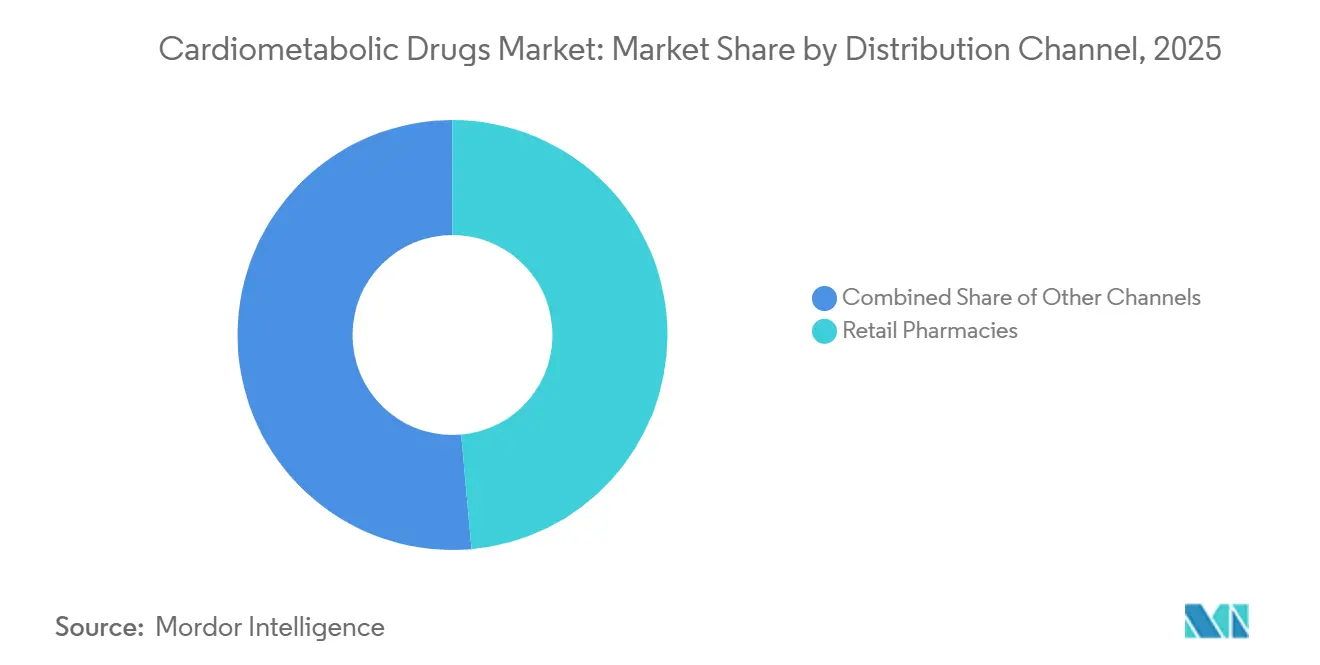
By distribution channel, retail pharmacies held 48.6% of revenue in 2025, while online pharmacies are forecast to grow at a 12.7% CAGR through 2031.
By geography, North America held 41.3% of revenue in 2025, while Asia-Pacific is forecast to expand at a 12.2% CAGR through 2031.
Note: Market size and forecast figures in this report are generated using Mordor Intelligence’s proprietary estimation framework, updated with the latest available data and insights as of January 2026.
Market Trends and Insights
Drivers Impact Analysis of Cardiometabolic Drugs Market*
| Driver | (~) % Impact on CAGR Forecast | Geographic Relevance | Impact Timeline |
|---|---|---|---|
| Rising Cardiometabolic Disease Burden and Treatment Gaps | +3.0% | Global | Long term (≥ 4 years) |
| Multi-Indication Expansion of Incretin and SGLT2 Therapies | +2.8% | Global, premium intensity in North America and Western Europe | Medium term (2-4 years) |
| Earlier Risk-Reduction Treatment Enabled by Outcome Trials and Guidelines | +1.5% | North America and EU | Medium term (2-4 years) |
| Emerging-Market Diagnosis and Treatment-Coverage Expansion | +1.3% | APAC core, spill-over to MEA and South America | Long term (≥ 4 years) |
| Oral and Long-Acting Formats Reducing Administration Friction | +1.5% | Global | Short term (≤ 2 years) |
| Comorbidity-Linked Reimbursement and Real-World Evidence | +0.8% | North America and EU | Medium term (2-4 years) |
| Source: Mordor Intelligence | |||
Rising Cardiometabolic Disease Burden and Treatment Gaps
The cardiometabolic drugs market is supported by a large and growing pool of untreated patients. The International Diabetes Federation[1] reported 589 million adults with diabetes in 2024, including 251.7 million undiagnosed adults. Low- and middle-income countries accounted for 86.9% of undiagnosed cases, which limits early treatment and increases later complications. Cardiovascular disability and mortality increasingly reflect metabolic risks, including high fasting plasma glucose and high body mass index. Diabetes can progress into cardiovascular disease, kidney decline, and metabolic liver disease when treatment is delayed. These linked conditions sustain prescription demand even when pricing pressure affects individual medicines.
Multi-Indication Expansion of Incretin, SGLT2, and Risk-Reduction Therapies
Incretin therapies now reach beyond their original diabetes use and serve wider cardiometabolic care needs. Wegovy[2] received FDA approval for adults with noncirrhotic MASH and moderate-to-advanced liver fibrosis in August 2025. This development brought hepatology into a treatment pathway previously centered on endocrinology and obesity care. SGLT2 inhibitors also remain relevant across type 2 diabetes, heart failure, and chronic kidney disease. Clinical and regulatory developments can expand the number of eligible patients without requiring a new molecular class. Earlier risk reduction may also bring cardiologists and nephrologists into treatment decisions sooner. The cardiometabolic drugs market benefits when evidence and labeling support integrated care across related conditions.
Oral and Long-Acting Formats Reducing Administration Friction
Convenient delivery formats can reduce a practical barrier for patients who avoid injections. Eli Lilly launched Foundayo, an oral non-peptide GLP-1 receptor agonist for obesity, in April 2026. The product was available through LillyDirect, Amazon Pharmacy, and retail pharmacies at launch. Oral options can help manufacturers reach patients who prefer conventional tablet-based treatment. Longer-acting injectables could also support persistence if they reduce dosing frequency. Delivery technology, therefore, affects both patient acceptance and formulary competition in the cardiometabolic drugs market.
Emerging-Market Diagnosis, Coverage, and Reimbursement Expansion
Emerging markets offer a large treatment opportunity because diagnosis and coverage remain incomplete. The WHO identified health-system capacity as an important constraint on noncommunicable disease responses in many countries. Abbott and Novo Nordisk began a collaboration in India in February 2026 to commercialize Extensior. The partnership uses Abbott's distribution network to widen access beyond Novo Nordisk's direct reach. Broader diagnosis, local distribution, and reimbursement pathways can increase volumes in China, India, and other developing health systems. These changes also require companies to balance access initiatives with lower unit prices. Local partnerships, health-professional education, diagnostic availability, and dependable supply will determine whether eligible patients can begin and remain on treatment.
Restraints Impact Analysis of Cardiometabolic Drugs Market*
| Restraint | (~) % Impact on CAGR Forecast | Geographic Relevance | Impact Timeline |
|---|---|---|---|
| High Out-of-Pocket Costs and Payer Utilization Controls | -1.2% | North America | Short term (≤ 2 years) |
| Generic Erosion and Therapeutic Price Compression | -0.9% | Global | Medium term (2-4 years) |
| Treatment Discontinuation from Tolerability and Persistence Friction | -0.5% | Global | Short term (≤ 2 years) |
| Counterfeit, Compounded and Gray-Market Product Risk | -0.3% | APAC, MEA, and South America | Short term (≤ 2 years) |
| Source: Mordor Intelligence | |||
High Out-of-Pocket Costs, Payer Controls, and Persistence Friction
Affordability remains a major limitation for high-cost cardiometabolic treatments, especially for obesity care. Utilization management affected 70% of U.S. exchange-plan drug coverage in 2025. Prior authorization and step therapy can delay treatment starts for eligible patients. Coverage is often more difficult for obesity patients without documented diabetes or cardiovascular disease. Treatment persistence also affects realized demand after a prescription begins. Companies need patient support, clear clinical follow-up, and suitable pricing arrangements to limit early discontinuation. These access constraints can reduce treated volumes despite high underlying clinical need.
Generic Erosion, Price Compression, and Product-Security Risk
Generic competition restrains revenue in established oral drug classes and will affect later product cycles. PhRMA reported 611 medicines excluded by major pharmacy benefit managers during 2025. Multi-source competition keeps dispensing volumes high but lowers branded revenue after exclusivity ends. This pressure is visible in anticoagulants, insulin, statins, and eventually selected incretin products. Counterfeit, compounded, and gray-market products can add patient-safety concerns where authorized supply is limited. Manufacturers must protect supply chains while preparing for price competition in the cardiometabolic drugs market.
*Our forecasts treat driver/restraint impacts as directional, not additive. The impact forecasts reflect baseline growth, mix effects, and variable interactions.
Cardiometabolic Drugs Market Segment Analysis
By Therapeutic Area:
Obesity Broadens the Treated PopulationDiabetes held 32.4% of the cardiometabolic drugs market share in 2025, supported by a deep prescription base. Insulin, DPP-4 inhibitors, SGLT2 inhibitors, and GLP-1 agonists remain central to diabetes care. Obesity and weight management is forecast to grow at a 12.5% CAGR through 2031. New incretin labels and broader treatment pathways are bringing obesity care into endocrinology, cardiology, and primary care settings. Incretin therapies have expanded the treatment discussion beyond blood glucose management. Cardiovascular risk reduction and liver disease labels support care across multiple specialties. Cardiovascular diseases remain a large treatment cluster because hypertension and dyslipidemia require sustained medication use. Heart failure and cardiorenal disease are also growing treatment areas because SGLT2 inhibitors serve several related conditions. The cardiometabolic drugs market increasingly reflects overlapping patient needs rather than separate disease categories.
Metabolic liver disease is a smaller commercial area, but recent approvals have increased its relevance. Rezdiffra received conditional authorization in the European Union during August 2025. The UK authorized Rezdiffra for adults with MASH in June 2026. Wegovy also received FDA approval for noncirrhotic MASH during 2025. These events provide 2 approved treatment approaches for MASH. They also bring liver specialists into broader cardiometabolic treatment pathways. Companies with obesity, diabetes, and liver disease programs can use common patient-risk factors across their portfolios. This makes therapeutic-area boundaries less distinct over the forecast period.

By Drug Class:
Lipid-Lowering Drugs Retain Scale While Incretins GrowLipid-lowering drugs accounted for 24.3% of the cardiometabolic drugs market size in 2025. Statins retain broad use because they are established, accessible, and used across many health systems. PCSK9 inhibitors and siRNA-based agents support patients with established ASCVD or statin intolerance. GLP-1 and incretin-based therapies are forecast to grow at a 12.5% CAGR through 2031. Their clinical reach now includes obesity, diabetes, cardiovascular risk, and MASH. SGLT2 inhibitors retain a strong role in type 2 diabetes, heart failure, and chronic kidney disease. Insulin and traditional antidiabetic drugs remain important in cost-sensitive markets. Antihypertensives continue to provide high prescription volumes with limited branded pricing power.
Anticoagulants and antiplatelet medicines have different regional revenue paths. Branded apixaban and rivaroxaban face generic pressure in Europe. Their U.S. position remains supported by branded treatment use and broader reimbursement. Drug classes may also compete indirectly when a single medicine addresses several cardiometabolic risk factors. The Lancet[3] described the expanding role of GLP-1 receptor agonists and next-generation incretin therapies in cardiometabolic care. Broader incretin labels could change payer decisions around separate lipid and cardiovascular therapies. This shifts competition from a single-target model toward a wider clinical-value model. The cardiometabolic drugs industry must therefore manage both generic pressure and cross-class competition.
By Molecule:
Semaglutide and Tirzepatide Shape Revenue GrowthSemaglutide held 8.7% of revenue in 2025, giving it a substantial position among individual molecules. Its use spans injectable and oral formats, type 2 diabetes, obesity, cardiovascular risk reduction, kidney disease, and MASH. Tirzepatide is forecast to grow at a 12.1% CAGR through 2031. Its dual GIP and GLP-1 mechanism supports a distinct clinical position in obesity and diabetes treatment. Empagliflozin and dapagliflozin remain important for heart failure and chronic kidney disease care. Atorvastatin and rosuvastatin continue to contribute high generic volumes. Apixaban and rivaroxaban face price pressure as generic alternatives become available. Molecule-level growth is therefore concentrated in newer therapies while mature molecules sustain broad access.
This concentration increases the importance of manufacturing and product availability. Injectable peptide production requires specialized fill-finish capacity and device assembly. New indication approvals can create demand faster than the supply capacity expands. Companies must invest before a therapy achieves its full commercial scale. Oral small-molecule therapies may use more conventional manufacturing infrastructure. That difference could influence the nature of competition after patent expiry. Product success will depend on clinical evidence, supply reliability, delivery format, and reimbursement. The cardiometabolic drugs market is exposed when a small number of platform molecules carry a large share of new value.
By Route of Administration:
Oral Medicines Lead While Injectables AccelerateOral formulations held 62.4% of revenue in 2025, making them the leading route of administration. Tablets support high-volume treatment with statins, antihypertensives, metformin, and other established therapies. Injectable administration is forecast to grow at a 12.5% CAGR through 2031. Once-weekly GLP-1 and incretin products are the main source of this growth. Prefilled delivery devices allow patients to use many injectable treatments outside clinical settings. Injectable use is expanding because it supports newer, higher-value therapy classes. Oral treatment remains important because many patients prefer familiar medicine formats. Other routes, including nasal and sublingual insulin approaches, remain under development.
The introduction of oral GLP-1 treatments adds another competitive path. Foundayo is an oral non-peptide GLP-1 receptor agonist that does not require food or water restrictions. Oral formats can broaden access among patients who prefer not to use injections. They can also align with existing pharmacy dispensing and tablet manufacturing systems. Injectable products retain an advantage where clinical outcomes and dosing frequency support their use. Manufacturers will choose oral or injectable strategies based on patient preference, formulary terms, and supply capability. The route of administration will remain a direct commercial choice, not only a technical formulation decision. This creates room for different product positions within the cardiometabolic drugs market.
By Formulation & Dosing Frequency:
Devices Support Weekly Treatment GrowthTablets and capsules held 55.3% of revenue in 2025 because established oral medicines remain widely prescribed. Prefilled pens and autoinjectors are forecast to grow at a 12.7% CAGR through 2031. Weekly GLP-1 treatments are driving demand for these devices. Novo Nordisk received FDA approval for Wegovy HD in March 2026. The company reported mean weight loss of 19% at 72 weeks in the STEP UP trial. Vials and cartridges retain a role in insulin delivery, particularly in emerging markets. Long-acting depot injections remain an emerging premium treatment format.
Device capacity is becoming a relevant competitive factor for injectable treatments. Reliable autoinjector assembly supports supply continuity for fast-growing therapies. Companies with device, fill-finish, and distribution capacity can respond more effectively to demand changes. Manufacturers that only supply active ingredients face a more limited role in this part of the value chain. Daily oral therapies remain suited to large-volume, lower-cost treatment settings. Monthly or quarterly dosing could improve persistence where weekly injections create treatment burden. This makes formulation choice important for both patient experience and commercial execution. The cardiometabolic drugs market will continue to require parallel investment in oral and injectable supply systems.
By Patient Type:
Obesity Treatment Has the Fastest Patient ExpansionDiabetes patients accounted for 40.2% of revenue in 2025, reflecting decades of established treatment use. Obesity patients are forecast to expand at a 12.5% CAGR through 2031. The obesity population has lower treatment penetration than the diabetes population. GLP-1 therapies have changed the potential treatment pathway for these patients. Direct-to-consumer pharmacy models can shorten the time between prescription and first fill. Cardiovascular and cardiorenal patients also overlap increasingly with diabetes care. Older adults form a large and growing diabetes population. The International Diabetes Federation estimated 158.3 million people aged 65 to 99 had diabetes in 2024.
Pediatric and geriatric care remains less fully served than adult treatment. Wegovy has a pediatric obesity label for patients aged 12 and above. Patient persistence is important because long-term medicine use determines realized revenue. Tolerability, dosing burden, price, and coverage can lead patients to discontinue treatment. Monthly dosing, patient support, and flexible payment programs may reduce this friction. Manufacturers that address persistence can sustain value beyond the first prescription. Patient types increasingly overlap as providers manage obesity, diabetes, heart disease, kidney disease, and liver disease together. This overlap is a central feature of the cardiometabolic drugs market. It also changes the role of clinical specialists, because patients can move between primary care, endocrinology, cardiology, nephrology, and hepatology services. Drug developers can address this complexity through evidence that reflects outcomes across several diseases. Payers, however, will continue to examine whether broader labels provide value across these linked conditions. These treatment relationships support demand but make access decisions more important for high-cost therapies.
By Distribution Channel:
Online Pharmacy Expands First-Fill AccessRetail pharmacies held 48.6% of distribution revenue in 2025. Their position reflects the large volume of generic oral cardiometabolic medicines. Online pharmacies are forecast to grow at a 12.7% CAGR through 2031. Digital channels can make first-fill access easier for eligible patients. Eli Lilly made Foundayo available through LillyDirect and Amazon Pharmacy at launch. Hospital pharmacies remain important for specialty therapies started through inpatient or specialist care. Institutional and direct channels are growing as manufacturers establish patient-support services. Retail remains necessary for patients using chronic oral medicines.
Channel choice also has regulatory and supply implications. Compounded GLP-1 demand declined after FDA shortage designations expired. Authorized manufacturers and pharmacies then regained a larger role in the supply chain. Online dispensing can improve convenience but requires secure fulfillment and clinical safeguards. Traditional retail pharmacies retain broad geographic access and established patient relationships. Hospitals remain central for complex patients and injectable treatment initiation. The channel landscape will differ by product route, payer terms, and local pharmacy regulation. Distribution is therefore becoming a more active part of competition in the cardiometabolic drugs market.
Geography Analysis
North America Cardiometabolic Drugs Market
North America held 41.3% of the cardiometabolic drugs market share in 2025. The United States combines high medicine prices, broad guideline use, and strong uptake of evidence-based therapies. GLP-1 and SGLT2 medicines benefit from established specialist networks and payer coverage for qualifying patients. Canada uses provincial formulary processes and health technology assessments to manage access. Mexico has a growing private-pay obesity treatment channel as distribution networks develop. U.S. payer management remains a restraint for high-cost medicines. The Inflation Reduction Act also creates a pricing consideration for Medicare and commercial plan benchmarks. North America remains important for branded revenue, even as access controls become stricter.
Europe Cardiometabolic Drugs Market
Europe is the second-largest geographic area for the cardiometabolic drugs market. Germany, the United Kingdom, France, Italy, and Spain account for much of the regional demand. Europe has a large disease burden but lower branded prices than North America. Reimbursement decisions commonly require health technology assessments and evidence of outcomes. Rezdiffra's European[4] authorization in 2025 and UK authorization in 2026 expanded treatment options for MASH. Generic competition is also expected to place pressure on anticoagulant and SGLT2 inhibitor revenue. The region rewards clinical evidence but limits revenue through structured pricing and reimbursement processes.
APAC, MEA and South America Cardiometabolic Drugs Market
Asia-Pacific is forecast to grow at a 12.2% CAGR through 2031, the highest geographic rate. China and India provide large diabetes populations and expanding pathways for new treatments. India's Abbott and Novo Nordisk collaboration illustrates the need for broad distribution systems. Japan combines extensive coverage with periodic pricing revisions. Middle East, Africa, and South America remain smaller but expanding areas. Urbanization and dietary change are increasing cardiometabolic risk across Saudi Arabia, South Africa, Brazil, and Argentina. High out-of-pocket costs and cold-chain requirements restrict injectable access outside major urban centers. These areas offer volume potential, but affordability and health-system capacity remain decisive.
Competitive Landscape
The cardiometabolic drugs market has concentrated branded innovation and fragmented generic competition. Eli Lilly and Novo Nordisk lead the incretin segment through their obesity and diabetes franchises. Their positions stem from clinical evidence, manufacturing scale, delivery formats, and broad commercial reach. AstraZeneca, Boehringer Ingelheim, Bayer, Bristol-Myers Squibb, and Novartis retain positions in established cardiometabolic drug classes. These companies serve SGLT2 inhibitor, anticoagulant, lipid-lowering, and cardiorenal treatment needs. Generic and biosimilar suppliers compete mainly through price and local distribution. This creates different competitive conditions for new branded therapies and mature oral medicines. The cardiometabolic drugs industry, therefore, contains both high-value innovation segments and price-led volume segments.
Eli Lilly launched Foundayo in April 2026, adding an oral obesity treatment to its commercial portfolio. Novo Nordisk received FDA approval for Wegovy HD in March 2026, strengthening its injectable obesity offering. Abbott partnered with Novo Nordisk in India to commercialize Extensior in February 2026. These moves show that product format and distribution partnerships are important competitive tools. Companies are also building pipelines for obesity, diabetes, and metabolic liver disease. Licensing, acquisitions, and collaborations support entry into therapies with growing patient populations. Manufacturers must protect supply capacity as new labels and products increase demand.
The major white spaces remain in cardiorenal overlap and treatment persistence. Patients with heart failure and chronic kidney disease may benefit from integrated treatment approaches. Long-term adherence remains difficult for patients using high-cost or injectable therapies. Digital support, lower dosing frequency, and patient services can improve the treatment experience. Manufacturing requirements create a high barrier for new injectable GLP-1 entrants. Strong quality systems are needed for combination products and sterile processing. Biocon and Cipla compete on access and price in emerging markets through biosimilar insulin and generic cardiovascular medicines. The branded incretin leaders are influential, while generic and biosimilar competition keeps the wider field diverse.
Cardiometabolic Drugs Industry Leaders
-
Bayer AG
-
Pfizer Inc.
-
F. Hoffmann-La Roche Ltd
-
Merck & Co., Inc.
-
Johnson & Johnson
- *Disclaimer: Major Players sorted in no particular order
Cardiometabolic Drugs Market Companies Covered in this Report
- Novo Nordisk
- Eli Lilly and Company
- Sanofi
- AstraZeneca
- Boehringer Ingelheim
- Merck
- Bristol-Myers Squibb
- Pfizer
- Novartis
- Bayer
- Amgen
- Abbvie
- Roche
- Gilead Sciences
- Takeda Pharmaceuticals
- Biocon
- Biomarin Pharmaceutical
- Cipla
- Glenmark Pharmaceuticals
Recent Industry Developments in Cardiometabolic Drugs Market
- June 2026: Eli Lilly and Camurus signed a global collaboration using Camurus' FluidCrystal depot technology to develop long-acting incretin-based therapies for cardiometabolic diseases, targeting monthly subcutaneous dosing formats to extend the clinical and commercial franchise.
- May 2026: Novo Nordisk launched Ozempic pill, semaglutide tablets in 1.5 mg, 4 mg, and 9 mg doses, in the United States, the first FDA-approved oral peptide GLP-1 medication for T2D with cardiovascular risk reduction labeling.
- April 2026: Eli Lilly launched Foundayo, orforglipron, the first small-molecule non-peptide oral GLP-1 receptor agonist for obesity, available via LillyDirect, Amazon Pharmacy, and U.S. retail pharmacies on day 1, with no food or water intake restrictions required.
- March 2026: FDA approved Wegovy HD, semaglutide 7.2 mg, for chronic weight management in adults with obesity, achieving 19% mean weight loss at 72 weeks in the STEP UP trial and narrowing the efficacy differential with tirzepatide.
Global Cardiometabolic Drugs Market Report Scope
Segmentation Overview
| Diabetes |
| Obesity & Weight Management |
| Cardiovascular Diseases (Hypertension, Dyslipidemia, ASCVD, Stroke) |
| Heart Failure & Cardiorenal Diseases |
| Metabolic Liver Diseases (MASH/MASLD) |
| GLP-1 & Incretin-Based Therapies |
| SGLT2 Inhibitors |
| Insulin & Traditional Antidiabetic Drugs |
| Antihypertensive Drugs |
| Lipid-Lowering Drugs |
| Anticoagulants & Antiplatelet Drugs |
| Other Cardiometabolic Drugs |
| Semaglutide |
| Tirzepatide |
| Empagliflozin |
| Dapagliflozin |
| Atorvastatin/Rosuvastatin |
| Apixaban/Rivaroxaban |
| Other Products |
| Oral |
| Injectable |
| Other Routes |
| Tablets & Capsules |
| Prefilled Pens & Autoinjectors |
| Vials & Cartridges |
| Long-Acting Formulations |
| Diabetes Patients |
| Obesity Patients |
| Cardiovascular Disease Patients |
| Cardiorenal Disease Patients |
| Metabolic Liver Disease Patients |
| Pediatric & Geriatric Patients |
| Hospital Pharmacies |
| Retail Pharmacies |
| Online Pharmacies |
| Institutional & Direct Channels |
| North America | United States |
| Canada | |
| Mexico | |
| Europe | Germany |
| United Kingdom | |
| France | |
| Italy | |
| Spain | |
| Rest of Europe | |
| Asia-Pacific | China |
| Japan | |
| India | |
| South Korea | |
| Australia | |
| Rest of Asia-Pacific | |
| Middle East and Africa | GCC |
| South Africa | |
| Rest of Middle East and Africa | |
| South America | Brazil |
| Argentina | |
| Rest of South America |
| By Therapeutic Area | Diabetes | |
| Obesity & Weight Management | ||
| Cardiovascular Diseases (Hypertension, Dyslipidemia, ASCVD, Stroke) | ||
| Heart Failure & Cardiorenal Diseases | ||
| Metabolic Liver Diseases (MASH/MASLD) | ||
| By Drug Class | GLP-1 & Incretin-Based Therapies | |
| SGLT2 Inhibitors | ||
| Insulin & Traditional Antidiabetic Drugs | ||
| Antihypertensive Drugs | ||
| Lipid-Lowering Drugs | ||
| Anticoagulants & Antiplatelet Drugs | ||
| Other Cardiometabolic Drugs | ||
| By Molecule / Product | Semaglutide | |
| Tirzepatide | ||
| Empagliflozin | ||
| Dapagliflozin | ||
| Atorvastatin/Rosuvastatin | ||
| Apixaban/Rivaroxaban | ||
| Other Products | ||
| By Route of Administration | Oral | |
| Injectable | ||
| Other Routes | ||
| By Formulation and Dosing Frequency | Tablets & Capsules | |
| Prefilled Pens & Autoinjectors | ||
| Vials & Cartridges | ||
| Long-Acting Formulations | ||
| By Patient Type | Diabetes Patients | |
| Obesity Patients | ||
| Cardiovascular Disease Patients | ||
| Cardiorenal Disease Patients | ||
| Metabolic Liver Disease Patients | ||
| Pediatric & Geriatric Patients | ||
| By Distribution Channel | Hospital Pharmacies | |
| Retail Pharmacies | ||
| Online Pharmacies | ||
| Institutional & Direct Channels | ||
| By Geography | North America | United States |
| Canada | ||
| Mexico | ||
| Europe | Germany | |
| United Kingdom | ||
| France | ||
| Italy | ||
| Spain | ||
| Rest of Europe | ||
| Asia-Pacific | China | |
| Japan | ||
| India | ||
| South Korea | ||
| Australia | ||
| Rest of Asia-Pacific | ||
| Middle East and Africa | GCC | |
| South Africa | ||
| Rest of Middle East and Africa | ||
| South America | Brazil | |
| Argentina | ||
| Rest of South America | ||
Key Questions Answered in the Report
What is driving demand for cardiometabolic drugs?
Rising diabetes prevalence, obesity treatment demand, and the overlap with cardiovascular, kidney, and liver disease are expanding treatment needs. The large number of undiagnosed diabetes cases also means that treatment demand can rise as testing and health-system access improve.
Which therapeutic area is growing fastest?
Obesity and weight management is forecast to grow at a 12.5% CAGR through 2031. New incretin labels and broader treatment pathways are bringing obesity care into endocrinology, cardiology, and primary care settings.
Which drug class held the largest revenue share in 2025?
Lipid-lowering drugs held 24.3% of revenue in 2025, supported by broad statin use and newer lipid therapies. Their scale reflects long-standing use for cholesterol control and cardiovascular risk reduction in many countries.
Why are GLP-1 therapies important in cardiometabolic care?
GLP-1 therapies serve diabetes and obesity care and now have roles in cardiovascular risk reduction and MASH treatment pathways. Oral and higher-dose injectable formats are also broadening choices for prescribers and patients.
Which region has the largest revenue base?
North America held 41.3% of revenue in 2025, supported by premium pricing and high adoption of outcome-proven treatments. Prior authorization and affordability pressures still limit use for many patients, particularly in obesity treatment.
What limits broader access to obesity medicines?
Out-of-pocket costs, prior authorization, step therapy, supply constraints, and treatment discontinuation limit access for many eligible patients. These factors can delay therapy initiation and lower long-term treatment persistence after the first prescription.