
Cardiac Imaging Software Market Size and Share
Market Overview
| Study Period | 2020 - 2031 |
|---|---|
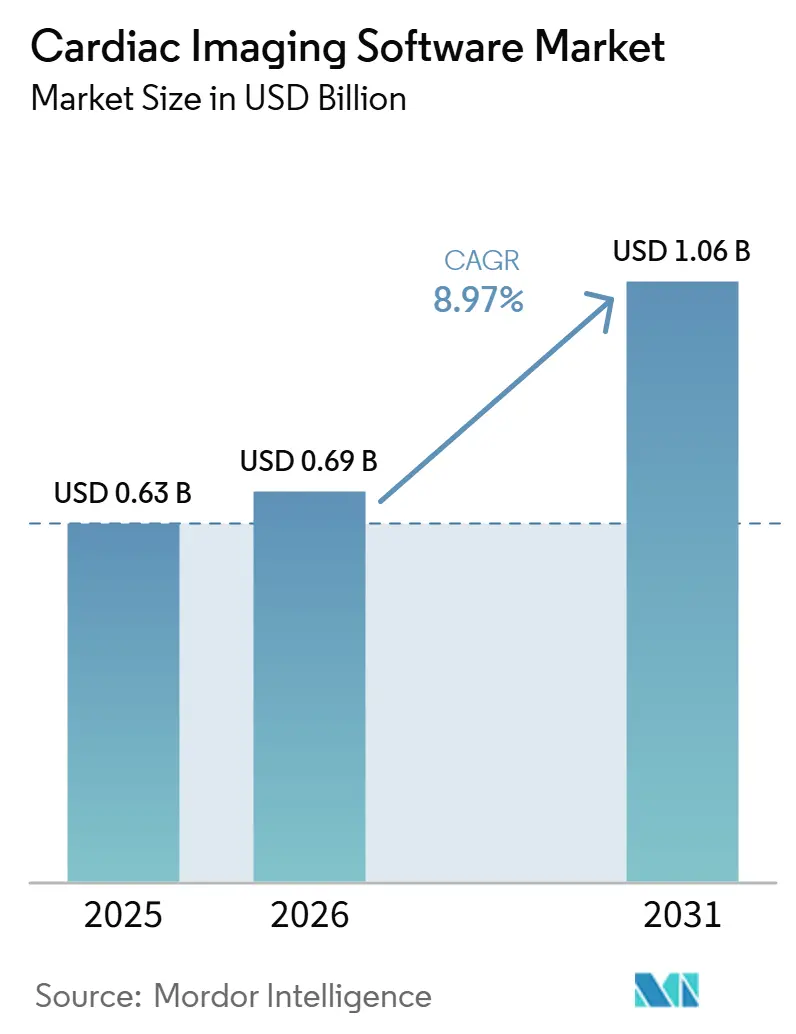
| Market Size (2026) | USD 0.69 Billion |
| Market Size (2031) | USD 1.06 Billion |
| Growth Rate (2026 - 2031) | 8.97 % |
| Fastest Growing Market | Asia-Pacific |
| Largest Market | North America |
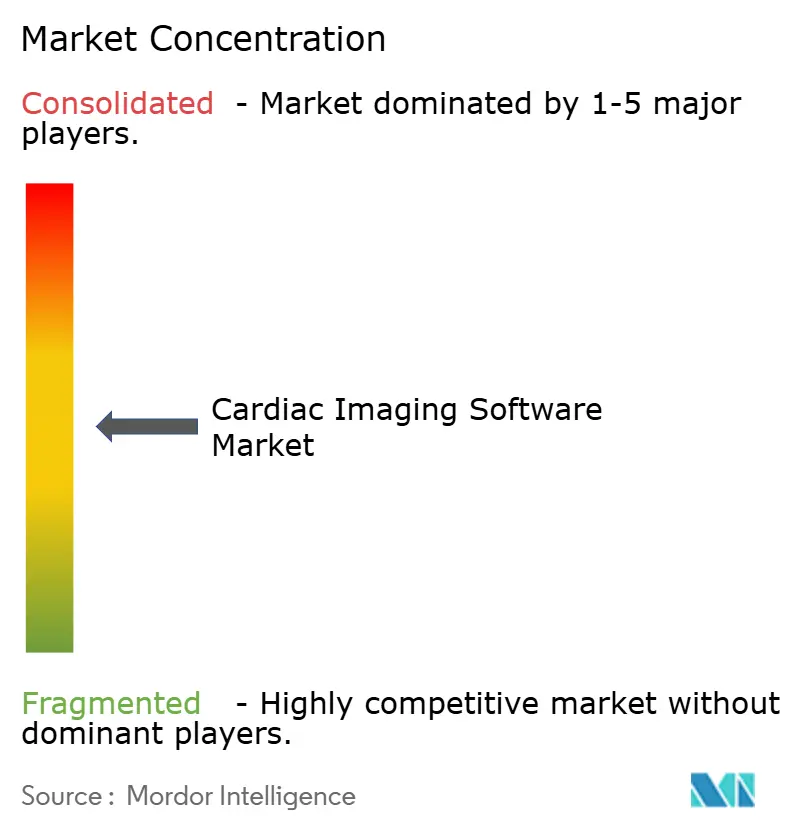
| Market Concentration | Medium |
Major Players *Disclaimer: Major Players sorted in no particular order Image © Mordor Intelligence. Reuse requires attribution under CC BY 4.0. | |
Cardiac Imaging Software Market Analysis by Mordor Intelligence
The Cardiac Imaging Software Market size is expected to grow from USD 0.63 billion in 2025 to USD 0.69 billion in 2026 and is forecast to reach USD 1.06 billion by 2031 at 8.97% CAGR over 2026-2031.
The cardiac imaging software market is supported by rising demand for cardiac assessment and by pressure on cardiology teams to process studies more efficiently. Providers are directing spending toward tools that automate measurements, organize worklists, and support structured reporting. The growing use of CT, MR, and image-guided procedures is also increasing the need for advanced analysis and post-processing capabilities. Enterprise vendors can build on installed imaging and information systems, while specialist developers compete through clinical validation and focused workflow tools. Long implementation cycles, data protection requirements, and the need for regulatory support will continue to shape purchasing decisions in the cardiac imaging software market.
Key Report Takeaways
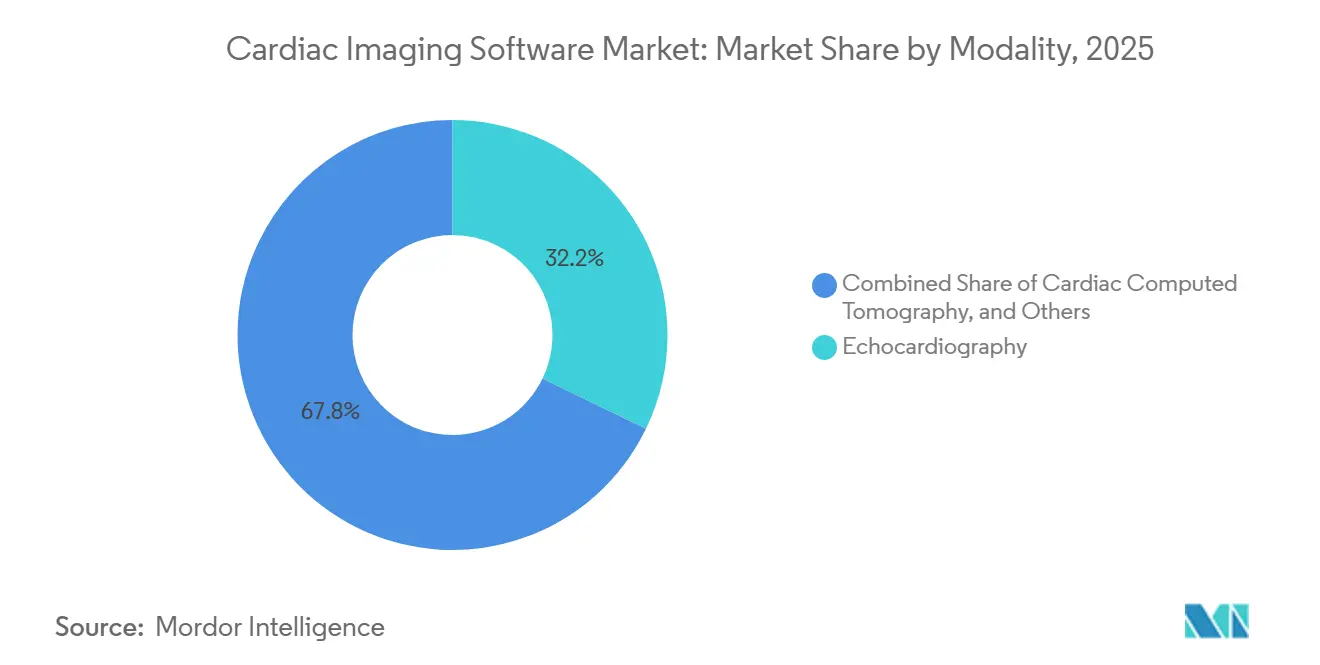
- By modality, echocardiography held 32.18% of the cardiac imaging software market share in 2025, while combined and multimodality imaging platforms are forecast to grow at a 15.27% CAGR through 2031.
- By application, coronary artery disease accounted for 33.35% of the cardiac imaging software market size in 2025, while structural heart disease is projected to expand at a 17.12% CAGR through 2031.
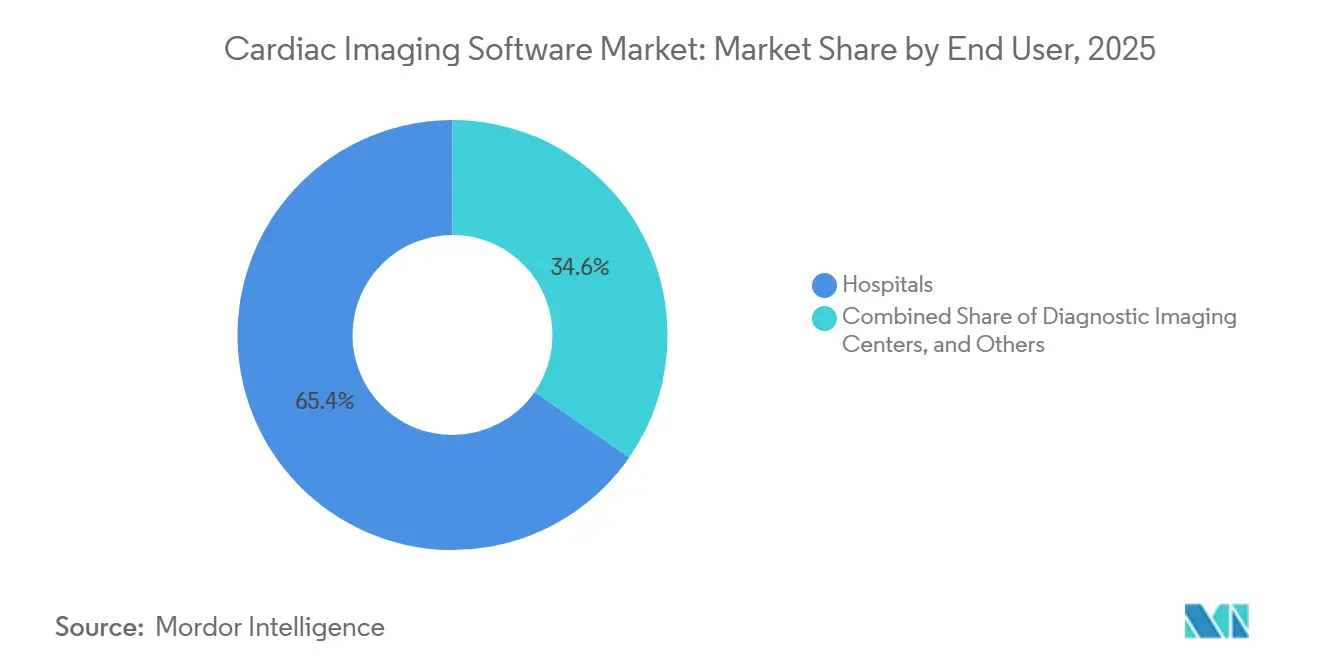
- By end user, hospitals held 65.36% of revenue in 2025, while ambulatory surgical centers are forecast to grow at a 14.36% CAGR through 2031.
- By deployment, on-premises systems represented 68.18% of revenue in 2025, while cloud-based and SaaS deployments are projected to grow at a 19.21% CAGR through 2031.
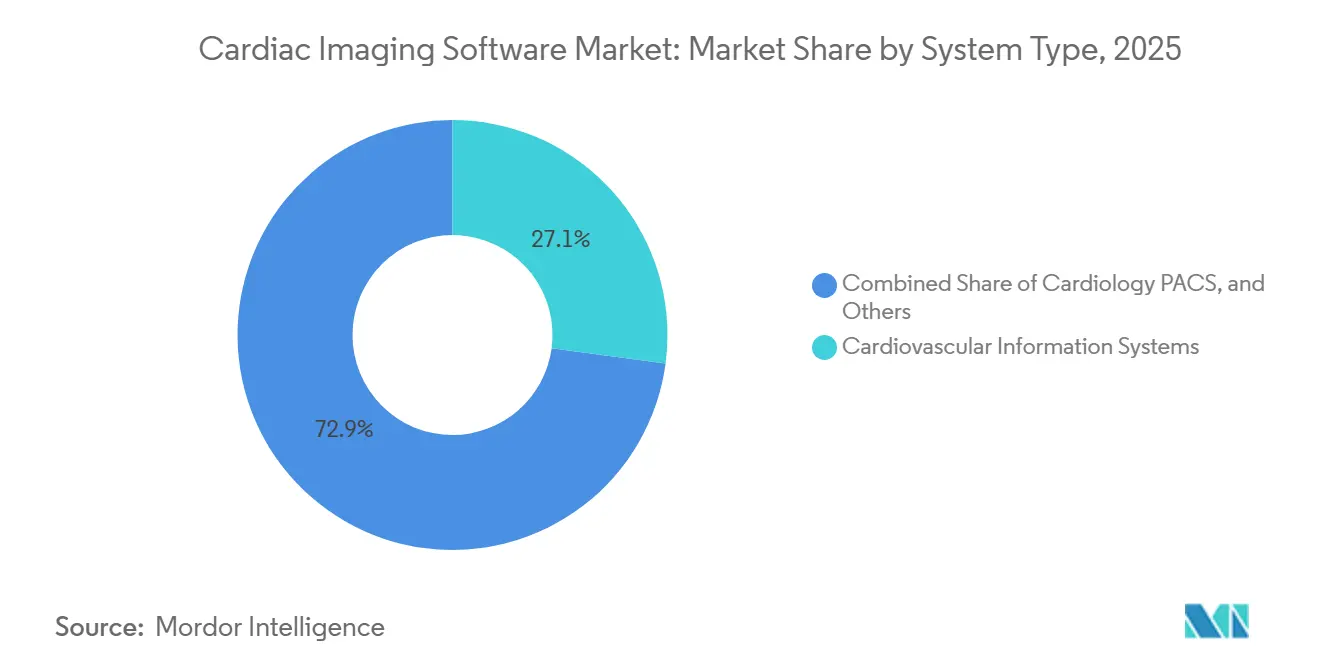
- By system type, cardiovascular information systems held 27.12% of revenue in 2025, while artificial intelligence analysis platforms are forecast to grow at a 21.63% CAGR through 2031.
- By component, software accounted for 72.13% of revenue in 2025, while hardware-enabled software solutions are projected to grow at an 11.14% CAGR through 2031.
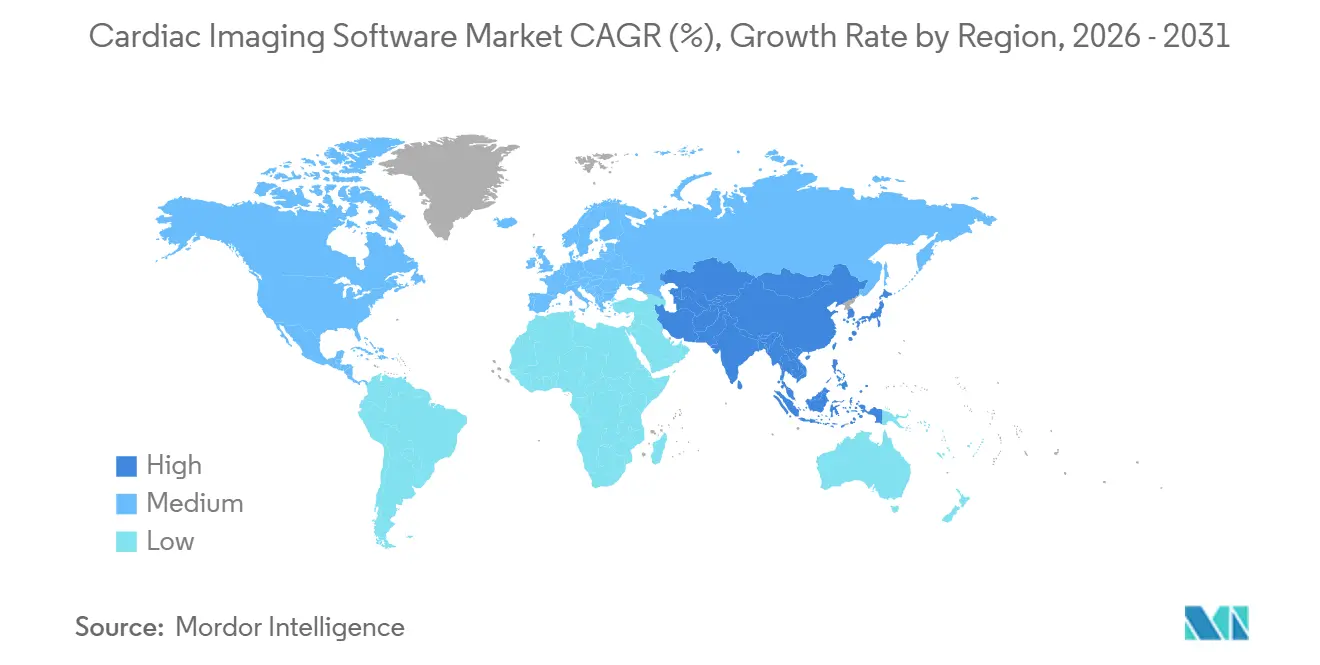
- By geography, North America accounted for 42.17% of revenue in 2025, while Asia-Pacific region are projected to grow at an 13.34% CAGR through 2031.
Note: Market size and forecast figures in this report are generated using Mordor Intelligence’s proprietary estimation framework, updated with the latest available data and insights as of January 2026.
Market Trends and Insights
Drivers Impact Analysis of Cardiac Imaging Software Market*
| Driver | (~) % Impact on CAGR Forecast | Geographic Relevance | Impact Timeline |
|---|---|---|---|
| Rising Cardiovascular Disease Imaging Workloads | +2.15% | Global, highest intensity in North America and Asia-Pacific | Short term (≤ 2 years) |
| AI-Assisted Interpretation and Measurement Automation | +2.45% | Global, early gains in North America and Western Europe | Medium term (2-4 years) |
| Cloud-Based Multi-Site Cardiology Operations | +1.52% | North America and Europe, with spillover to GCC and ANZ | Medium term (2-4 years) |
| Expansion of Ambulatory and Distributed Cardiac Care | +1.38% | North America, followed by Western Europe and ANZ | Short term (≤ 2 years) |
| Opportunistic Cardiac Findings From Existing CT Scans | +0.87% | North America, with early gains in Germany and Japan | Long term (≥ 4 years) |
| Reimbursement Expansion for Software-Derived Cardiac Measurements | +1.24% | Primarily North America, with progressive European adoption | Medium term (2-4 years) |
| Source: Mordor Intelligence | |||
Rising Cardiovascular Disease Imaging Workloads
Cardiovascular disease continues to create sustained demand for timely imaging and clinical interpretation across care settings. This demand places greater pressure on providers to complete routine analysis and reporting without expanding specialist teams at the same pace. The cardiac imaging software market benefits when organizations use automation to handle measurements, workflow prioritization, and report preparation. CT and MR studies require substantial image review and post-processing, which supports demand for advanced visualization and quantification software. The cardiac imaging software market also benefits when providers replace fragmented tools with platforms that support several imaging pathways. Hospitals that delayed software upgrades may prioritize implementation as reading workloads and procedural imaging needs rise[1]Centers for Medicare and Medicaid Services, “Ambulatory Surgical Center,” Centers for Medicare and Medicaid Services, cms.gov.
AI-Assisted Interpretation and Measurement Automation
AI-assisted tools are changing how cardiac imaging teams complete repetitive analysis tasks and organize clinical work. The FDA cleared 92 AI and machine learning-related cardiology submissions in 2025, compared with 62 in 2024. Plaque analysis, calcium scoring, and CT-derived fractional flow reserve were among the leading product categories in the 2025 clearance group. The 2026 CPT updates added Category I codes for CT-derived fractional flow reserve and CT perfusion, which widened the reimbursable measurement categories. Philips received FDA clearance for SmartHeart in 2026, and the software automates cardiac MR scan planning in under 30 seconds. These developments favor subscription models that allow customers to receive cleared updates over time rather than rely on fixed software versions.
Cloud-Based Multi-Site Cardiology Operations
Cloud and SaaS models give health systems a way to consolidate cardiac reading and reporting across several locations. Philips received FDA clearance for Cardiovascular Workspace on HealthSuite, a cloud-hosted cardiovascular information system that supports distributed care networks. ScImage announced a five-year, USD 25 million enterprise cardiology contract for its cloud-native PICOM365 platform in March 2026. The arrangement covered imaging infrastructure, workflow coordination, structured reporting, and multisite connectivity. For large delivery networks, a common platform can support cross-site reporting standards and shared operational data. The cardiac imaging software market faces a more complex cloud rollout outside the United States because privacy rules and data localization requirements can require region-specific infrastructure
Expansion of Ambulatory And Distributed Cardiac Care
Cardiac procedures are moving into ambulatory settings, which creates a different technology requirement from that of large academic hospitals. The 2026 CMS final rule added cardiac catheter ablation procedures to the ambulatory surgical center covered procedures list. These sites need reporting, image access, and clinical integration suited to lower-volume but high-acuity work. Many ambulatory centers do not have the staff or infrastructure needed for a full enterprise CVIS implementation. This creates a role for web-based and preconfigured tools that can be deployed more quickly. The cardiac imaging software market can gain from products that align with the clinical and technical limits of distributed cardiac care.
Restraints Impact Analysis of Cardiac Imaging Software Market*
| Restraint | (~) % Impact on CAGR Forecast | Geographic Relevance | Impact Timeline |
|---|---|---|---|
| High Integration and Implementation Costs | -0.92% | Global, most acute in community hospitals in North America and Europe | Short term (≤ 2 years) |
| Cybersecurity, Privacy and Data-Sovereignty Requirements | -0.68% | Europe, United States, GCC, and tightening standards globally | Medium term (2-4 years) |
| Shortage of Cardiology Informatics Specialists | -0.55% | Global, most severe in Asia-Pacific and South America | Medium term (2-4 years) |
| Evidence, Validation and Reimbursement Uncertainty for AI Software | -0.47% | Global, most significant in non-United States markets | Long term (≥ 4 years) |
| Source: Mordor Intelligence | |||
High Integration And Implementation Costs
Full CVIS replacement programs can require 18 to 36 months for configuration, interfaces, and clinical validation before go-live. This duration can extend beyond an annual finance planning cycle and delay procurement decisions in the cardiac imaging software market. Community hospitals may find that enterprise platforms are difficult to justify against smaller study volumes. Migration from legacy systems also requires careful handling of echo loops, catheterization studies, and structured reports. Data migration risks can raise the scope and cost of implementation beyond the initial software purchase. Vendors that simplify interface development and conversion work can better address this barrier.
Cybersecurity, Privacy, And Data-Sovereignty Requirements
Privacy and cybersecurity rules affect the architecture and rollout of cloud cardiac imaging systems. The General Data Protection Regulation requires safeguards when personal data moves across jurisdictions, which can require vendors to use regional hosting arrangements. The European Medical Device Regulation also requires a formal conformity assessment route for applicable medical devices. These requirements can lengthen market entry for AI-enabled software and increase documentation needs. India and Saudi Arabia have also established personal data protection requirements that add jurisdiction-specific compliance work. Larger vendors may have an advantage because they can support legal, security, and regulatory work across several markets
*Our forecasts treat driver/restraint impacts as directional, not additive. The impact forecasts reflect baseline growth, mix effects, and variable interactions.
Cardiac Imaging Software Market Segment Analysis
By Modality:
Echocardiography Holds The Largest Revenue Position While Multimodality Platforms AdvanceEchocardiography held 32.18% of revenue in 2025, giving it the largest position in the modality analysis. Its wide use across hospitals, ambulatory surgical centers, and outpatient clinics supports steady demand for cardiac imaging software. Leading echo platforms increasingly include AI-guided acquisition, automated left ventricular ejection fraction measurement, and strain quantification. These functions can improve the consistency of routine workflows and structured reports. Cardiac CT and cardiac MR are expanding the need for post-processing and quantitative analysis, while nuclear workflow tools face a more limited role in some indications. EchoNext received FDA clearance in 2025 to identify patients who may need echocardiography for structural heart disease from standard 12-lead ECG information.
Combined and multimodality imaging platforms are forecast to grow at a 15.27% CAGR through 2031. Structural heart disease, cardiomyopathy, and congenital conditions can require CT, MR, and echocardiography findings to be considered together. A unified reading environment can reduce the need to move between separate applications during review. It can also support multidisciplinary discussion by bringing anatomical, tissue, and functional data into a common workflow. Broader platform coverage can make enterprise contracts more valuable than a single-modality purchase.. Integration with AI post-processing will remain important as providers seek consistent data exchange and reporting.



By Application:
Coronary Artery Disease Leads While Structural Heart Disease Grows FastestCoronary artery disease applications accounted for 33.35% of revenue in 2025. This application includes CCTA post-processing, CT-derived fractional flow reserve, plaque quantification, and calcium scoring. CMS increased hospital reimbursement for CCTA to USD 357 in 2025 and established USD 950 reimbursement for AI plaque analysis. These changes improved the economic case for cardiac software that provides measurable clinical outputs. HeartFlow received FDA clearance for its next-generation Plaque Analysis algorithm in September 2025, and Cigna began coverage for the service in October 2025. This development supports a shift from one-time reporting toward ongoing risk assessment in the cardiac imaging software market.
Structural heart disease is forecast to grow at a 17.12% CAGR through 2031. Transcatheter aortic valve implantation, mitral valve repair, and left atrial appendage closure require detailed anatomical planning and intra-procedural imaging support. Philips received FDA clearance for EchoNavigator R5.0 with DeviceGuide in 2026 for AI-powered guidance during mitral valve repair. The approval extends software use into the catheterization laboratory as a procedural support tool. Heart failure, arrhythmia, valvular disease, congenital disease, pulmonary hypertension, and cardiomyopathy also require specialized workflows. Preventive screening is widening as software identifies cardiovascular findings in CT studies completed for other clinical reasons
By End User:
Hospitals Retain The Largest Base While Ambulatory Centers ExpandHospitals represented 65.36% of end-user revenue in 2025. Academic medical centers use multimodality platforms, AI post-processing, and research-focused analytics more often than smaller facilities. Community hospitals focus more heavily on core CVIS and echocardiography reporting needs. Integrated delivery networks use enterprise licensing to standardize cardiac imaging workflows across sites. Diagnostic imaging centers and cardiovascular clinics prioritize efficient reporting and interoperability with referring providers. Laboratories, research organizations, and pharmaceutical organizations represent smaller groups with distinct clinical and data requirements.
Ambulatory surgical centers are forecast to grow at a 14.36% CAGR through 2031. CMS expanded the covered procedures list in its 2026 final rule to include cardiac catheter ablation procedures. This policy change increases the need for imaging and reporting systems suitable for procedural cardiac care outside hospitals. These facilities need fast deployment and reliable access to images, reports, and electronic health record data. Large enterprise platforms may be harder to implement when an organization has limited IT capacity and a smaller imaging volume. Vendors that offer lighter, preconfigured solutions can address this operational gap in the cardiac imaging software market[2]American Society of Echocardiography, “American Society of Echocardiography,” American Society of Echocardiography, asecho.org.
By Deployment:
On-Premises Systems Lead While Cloud And SaaS Grow RapidlyOn-premises deployment accounted for 68.18% of revenue in 2025. The large installed base of CVIS and PACS systems helps sustain this position. Replacing an on-premises platform often requires a multiyear conversion, including data migration and interface testing. Web-based deployment supports remote reading and multisite interpretation without a local workstation installation. Hybrid and edge models can support ambulatory or rural settings where stable connectivity is not assured. Embedded OEM software remains another deployment approach because vendors can bundle it with imaging hardware and service agreements.
Cloud-based and SaaS deployment is forecast to grow at a 19.21% CAGR through 2031. Health systems use cloud models to reduce server maintenance and receive software updates without a local patching process. Philips Cardiovascular Workspace on HealthSuite received FDA clearance as a cloud-hosted CVIS solution. ScImage's March 2026 USD 25 million agreement also showed enterprise demand for cloud-native cardiology infrastructure. European deployment requires attention to GDPR and MDR obligations, which can influence where data is stored and processed. Vendors that meet these requirements can support a gradual shift in the cardiac imaging software market toward centralized access and continuous updates.
By System Type:
CVIS Leads Revenue While AI Analysis Platforms AccelerateCardiovascular information systems held 27.12% of system-type revenue in 2025. CVIS platforms consolidate echo loops, catheterization data, nuclear studies, and ECG information into a longitudinal record. They also provide structured reporting and a base for downstream analytics. Advanced visualization, AI tools, and workflow modules are increasingly delivered as additions to these systems. Cardiology PACS supports image archive and retrieval across the broader imaging enterprise. Integrated CVIS-PACS products can reduce the number of platforms that an IT team must manage.
Artificial intelligence analysis platforms are forecast to grow at a 21.63% CAGR through 2031. FDA clearances, clinical validation, and reimbursement mechanisms are supporting the adoption of AI-derived measurements. The 2025 FDA clearance cohort included 9 coronary CT plaque analysis tools. This breadth of product activity makes clinical performance, workflow fit, and integration more important competitive factors. AI analysis platforms must also work with the underlying CVIS and PACS environment used by the provider. The cardiac imaging software market will reward vendors that combine validated analytics with practical reporting workflows.
By Component:
Software Provides Most Revenue While Hardware-Enabled Tools Gain UseSoftware accounted for 72.13% of revenue in 2025. This category includes CVIS applications, AI algorithms, post-processing tools, and structured reporting modules. Subscription and SaaS delivery are making recurring software revenue more important across the cardiac imaging software industry. Services cover implementation, integration, training, support, and managed professional work. Enterprise deployments can require extensive HL7 and DICOM interface development. Training remains important because updated AI tools can change established imaging and reporting practices.
Hardware-enabled software solutions are forecast to grow at an 11.14% CAGR through 2031. These products combine software with cardiac workstations, AI accelerator appliances, or point-of-care imaging platforms. Abbott received FDA clearance and CE Mark for Ultreon 3.0 in April 2026. The platform combines intravascular imaging and AI-based analysis in one procedural system. This arrangement can be useful in settings where simple device operation is more practical than a separate software infrastructure. HeartLung received FDA clearance for AI-CVD in January 2026 to provide cardiovascular quantification from existing chest CT studies without additional scan time.
Geography Analysis
North America Cardiac Imaging Software Market
North America held 42.17% of global revenue in 2025, which gave the region the largest position in the cardiac imaging software market. CMS reimbursement pathways for software-derived measurements and broad CVIS use at integrated delivery networks support demand. In 2025, CMS set CCTA hospital reimbursement at USD 357, CT-derived fractional flow reserve reimbursement at USD 1,017, and AI coronary plaque analysis reimbursement at USD 950. The United States leads regional spending, while Canada is progressing through CVIS consolidation at provincial health systems. Mexico's private hospital sector provides another adoption route outside public reimbursement programs.
Europe and South America Cardiac Imaging Software Market
Europe has substantial demand, but adoption varies by country and by the ability of vendors to meet GDPR and MDR requirements. Germany, the United Kingdom, France, Italy, and Spain anchor regional demand through university hospitals and digital imaging programs. Goethe University Frankfurt is developing the LIDIA-Hessen project to automate cardiac MR workflows from acquisition to structured reporting. Spain and Italy are pursuing PACS and CVIS upgrades through digital health programs. Scandinavian systems can support cloud CVIS adoption because centralized governance can simplify implementation decisions. South America remains at an earlier stage, with Brazil and Argentina building digital imaging capability in private hospital and diagnostic networks[3]Centers for Disease Control and Prevention, “About Heart Disease,” Centers for Disease Control and Prevention, cdc.gov.
APAC and MEA Cardiac Imaging Software Market
Asia-Pacific is forecast to grow at a 13.34% CAGR through 2031, the fastest regional rate in the cardiac imaging software market. Aging populations, cardiovascular disease prevalence, and public investment in health AI support this expansion. Japan, China, South Korea, and India are the central growth areas. ElPixel partnered with Clairvo Technologies in June 2025 to commercialize the CoronaryDoc cardiac CT analysis platform in Japan. The Middle East and Africa are developing from a smaller base, with GCC health infrastructure investment and private hospital demand in South Africa supporting PACS and CVIS deployment.

Competitive Landscape
The cardiac imaging software market is moderately consolidated at the enterprise platform level and more fragmented among AI and specialty application developers. Siemens Healthineers, Philips, GE HealthCare, FUJIFILM, and Canon Medical Systems use imaging hardware and information system relationships to support long-term service agreements. These agreements can extend replacement cycles because customers must coordinate software, imaging devices, interfaces, and clinical validation. Specialist companies compete by showing that their algorithms improve diagnostic precision, clinical planning, or reporting efficiency. HeartFlow stated that its Plaque Staging tool was the only CAD staging tool based on total plaque volume integrated within a commercially available platform as of July 2026. Cleerly reported 94.4% agreement between AI-QCT and invasive IVUS in its INVICTUS registry analysis in March 2026.
Regulatory capability is becoming a competitive requirement in the cardiac imaging software market. The FDA PCCP pathway can allow pre-authorized updates when a company has defined the planned modifications and validation approach. Siemens Healthineers received FDA clearance for syngo.CT Coronary Cockpit under this pathway in June 2026. DESKi received FDA clearance for HeartFocus in April 2025, with a PCCP supporting expanded device compatibility and future updates. Companies with established regulatory and clinical resources may be better positioned to maintain updates across several markets. This creates a higher barrier for small developers that lack specialist compliance teams.
Community hospitals and ambulatory providers remain an important opening because large CVIS products can exceed their budgets and implementation capacity. DESKi's HeartFocus is designed to enable clinical-quality cardiac ultrasound by non-specialist operators after minimal training. HeartLung's AI-CVD extends automated cardiovascular screening to existing chest CT studies, including low-dose lung cancer screening studies. ScImage, INFINITT Healthcare, and Intelerad offer cloud-focused or vendor-neutral alternatives for cardiology imaging workflows. Faster implementation, usage-based pricing, and multi-vendor connectivity can help these companies compete in the mid-market. No combined top-player share is provided, so a concentration score cannot be assigned using the required market-share method.
Cardiac Imaging Software Industry Leaders
GE HealthCare Technologies Inc.
Koninklijke Philips N.V.
Siemens Healthineers AG
FUJIFILM Holdings Corporation
Canon Medical Systems Corporation
- *Disclaimer: Major Players sorted in no particular order
Cardiac Imaging Software Market Companies Covered in this Report
- Agfa-Gevaert
- Artrya Limited
- Canon
- Circle Cardiovascular Imaging Inc.
- Cleerly, Inc.
- DESKi
- DiA Imaging Analysis Ltd.
- Digisonics, Inc.
- Esaote S.p.A.
- FUJIFILM
- GE HealthCare Technologies Inc.
- HeartFlow, Inc.
- HeartLung Corporation
- INFINITT Healthcare Co., Ltd.
- Intelerad Medical Systems
- Koninklijke Philips
- Medis Medical Imaging Systems
- Merative
- NeoSoft LLC
- Pie Medical Imaging
- Ram Soft
- ScImage, Inc.
- Sectra
- Shimadzu
- Siemens Healthineers
- Tempus AI, Inc.
- TomTec Imaging Systems GmbH
- Ventripoint Diagnostics Ltd.
- Viz.ai

Recent Industry Developments in Cardiac Imaging Software Market
- July 2026: HeartFlow launched Heartflow Plaque Staging at SCCT 2026, the only CAD staging tool based on total plaque volume integrated within a commercially available platform, backed by up to 16 years of outcomes follow-up and demonstrating a 2.5x increase in cardiovascular events or deaths in high-risk patients at 7 years. The tool generates automatically within the Heartflow One platform UI and structured report, enabling risk stratification without delaying clinical workflow.
- June 2026: Siemens Healthineers received FDA 510(k) clearance for syngo.CT Coronary Cockpit under the Predetermined Change Control Plan, pre-authorizing future algorithm modifications without individual resubmissions. This clearance consolidates Siemens' CT cardiac analysis position and sets a regulatory architecture template for continuous AI improvement within a single cleared software product across the coronary CT workflow.
- April 2026: Abbott received FDA clearance and CE Mark for Ultreon 3.0, its next-generation coronary imaging and AI-automated analysis platform integrating intravascular imaging with automated AI insights within a single system. The clearance supports coronary imaging across multiple catheterization laboratory environments and positions Abbott's software as a procedural guidance tool.


Global Cardiac Imaging Software Market Report Scope
As per the scope of the report, cardiac imaging software comprises software platforms, analytical tools, visualization applications, artificial intelligence (AI) solutions, reporting systems, and informatics platforms used to acquire, process, analyze, interpret, manage, store, and report cardiovascular imaging data. These solutions support the diagnosis, treatment planning, procedural guidance, workflow optimization, and longitudinal monitoring of cardiovascular diseases across multiple imaging modalities.
The cardiac imaging software market is segmented by modality into Cardiac Computed Tomography, Cardiac Magnetic Resonance Imaging, Echocardiography, Nuclear Cardiology, X-Ray and Fluoroscopy, and Combined and Multimodality Imaging; by application into Coronary Artery Disease, Structural Heart Disease, Heart Failure, Arrhythmia and Electrophysiology, Valvular Heart Disease, Congenital Heart Disease, Pulmonary Hypertension, Cardiomyopathy, Preventive and Opportunistic Cardiac Screening, Image-Guided Treatment Planning, Procedure Monitoring and Post-Treatment Assessment, and Others; by end user into Hospitals, Diagnostic Imaging Centers, Cardiovascular Clinics, Ambulatory Surgical Centers, Research and Pharmaceutical Organizations, and Others; by deployment into On-Premises, Cloud-Based and Software as a Service, Web-Based, Hybrid and Edge Deployment, and Others; by system type into Cardiovascular Information Systems, Cardiology Picture Archiving and Communication Systems, Integrated Cardiovascular Information System and Cardiology PACS Platforms, Advanced Visualization and Post-Processing Platforms, Artificial Intelligence Analysis Platforms, Structured Reporting and Workflow Platforms, and Others; by component into Software, Services, and Hardware-Enabled Software Solutions; and by geography into North America, Europe, Asia-Pacific, Middle East and Africa, and South America. The market report also covers the estimated market sizes and trends for 17 countries across major regions globally. For each segment, the market size and forecast are provided in terms of value (USD).
| Cardiac Computed Tomography | Coronary CT Angiography |
| Coronary Artery Calcium Scoring | |
| CT-Derived Fractional Flow Reserve | |
| Plaque Quantification and Characterization | |
| Others | |
| Cardiac Magnetic Resonance Imaging | Ventricular Function Analysis |
| T1 and T2 Mapping | |
| Tissue Characterization | |
| Flow and Perfusion Analysis | |
| Others | |
| Echocardiography | Transthoracic Echocardiography |
| Transesophageal Echocardiography | |
| Three-Dimensional Echocardiography | |
| Strain and Deformation Imaging | |
| AI-Guided Image Acquisition | |
| Others | |
| Nuclear Cardiology | SPECT |
| PET | |
| Myocardial Perfusion Analysis | |
| Others | |
| X-Ray and Fluoroscopy | Cath Lab Imaging |
| Angiography and Fluoroscopy | |
| Others | |
| Combined and Multimodality Imaging |
| Coronary Artery Disease |
| Structural Heart Disease |
| Heart Failure |
| Arrhythmia and Electrophysiology |
| Valvular Heart Disease |
| Congenital Heart Disease |
| Pulmonary Hypertension |
| Cardiomyopathy |
| Preventive and Opportunistic Cardiac Screening |
| Image-Guided Treatment Planning |
| Procedure Monitoring and Post-Treatment Assessment |
| Others |
| Hospitals | Academic Medical Centers |
| Community Hospitals | |
| Integrated Delivery Networks | |
| Diagnostic Imaging Centers | |
| Cardiovascular Clinics | |
| Ambulatory Surgical Centers | |
| Research and Pharmaceutical Organizations | |
| Others |
| On-Premises |
| Cloud-Based and Software as a Service |
| Web-Based |
| Hybrid and Edge Deployment |
| Others |
| Cardiovascular Information Systems |
| Cardiology Picture Archiving and Communication Systems |
| Integrated Cardiovascular Information System and Cardiology PACS Platforms |
| Advanced Visualization and Post-Processing Platforms |
| Artificial Intelligence Analysis Platforms |
| Structured Reporting and Workflow Platforms |
| Others |
| Software | |
| Services | Implementation and Integration Services |
| Training and Support Services | |
| Managed and Professional Services | |
| Hardware-Enabled Software Solutions |
| North America | United States |
| Canada | |
| Mexico | |
| Europe | Germany |
| United Kingdom | |
| France | |
| Italy | |
| Spain | |
| Rest of Europe | |
| Asia-Pacific | China |
| Japan | |
| India | |
| Australia | |
| South Korea | |
| Rest of Asia-Pacific | |
| Middle East and Africa | GCC |
| South Africa | |
| Rest of Middle East and Africa | |
| South America | Brazil |
| Argentina | |
| Rest of South America |
| By Modality | Cardiac Computed Tomography | Coronary CT Angiography |
| Coronary Artery Calcium Scoring | ||
| CT-Derived Fractional Flow Reserve | ||
| Plaque Quantification and Characterization | ||
| Others | ||
| Cardiac Magnetic Resonance Imaging | Ventricular Function Analysis | |
| T1 and T2 Mapping | ||
| Tissue Characterization | ||
| Flow and Perfusion Analysis | ||
| Others | ||
| Echocardiography | Transthoracic Echocardiography | |
| Transesophageal Echocardiography | ||
| Three-Dimensional Echocardiography | ||
| Strain and Deformation Imaging | ||
| AI-Guided Image Acquisition | ||
| Others | ||
| Nuclear Cardiology | SPECT | |
| PET | ||
| Myocardial Perfusion Analysis | ||
| Others | ||
| X-Ray and Fluoroscopy | Cath Lab Imaging | |
| Angiography and Fluoroscopy | ||
| Others | ||
| Combined and Multimodality Imaging | ||
| By Application | Coronary Artery Disease | |
| Structural Heart Disease | ||
| Heart Failure | ||
| Arrhythmia and Electrophysiology | ||
| Valvular Heart Disease | ||
| Congenital Heart Disease | ||
| Pulmonary Hypertension | ||
| Cardiomyopathy | ||
| Preventive and Opportunistic Cardiac Screening | ||
| Image-Guided Treatment Planning | ||
| Procedure Monitoring and Post-Treatment Assessment | ||
| Others | ||
| By End User | Hospitals | Academic Medical Centers |
| Community Hospitals | ||
| Integrated Delivery Networks | ||
| Diagnostic Imaging Centers | ||
| Cardiovascular Clinics | ||
| Ambulatory Surgical Centers | ||
| Research and Pharmaceutical Organizations | ||
| Others | ||
| By Deployment | On-Premises | |
| Cloud-Based and Software as a Service | ||
| Web-Based | ||
| Hybrid and Edge Deployment | ||
| Others | ||
| By System Type | Cardiovascular Information Systems | |
| Cardiology Picture Archiving and Communication Systems | ||
| Integrated Cardiovascular Information System and Cardiology PACS Platforms | ||
| Advanced Visualization and Post-Processing Platforms | ||
| Artificial Intelligence Analysis Platforms | ||
| Structured Reporting and Workflow Platforms | ||
| Others | ||
| By Component | Software | |
| Services | Implementation and Integration Services | |
| Training and Support Services | ||
| Managed and Professional Services | ||
| Hardware-Enabled Software Solutions | ||
| By Geography | North America | United States |
| Canada | ||
| Mexico | ||
| Europe | Germany | |
| United Kingdom | ||
| France | ||
| Italy | ||
| Spain | ||
| Rest of Europe | ||
| Asia-Pacific | China | |
| Japan | ||
| India | ||
| Australia | ||
| South Korea | ||
| Rest of Asia-Pacific | ||
| Middle East and Africa | GCC | |
| South Africa | ||
| Rest of Middle East and Africa | ||
| South America | Brazil | |
| Argentina | ||
| Rest of South America | ||


Key Questions Answered in the Report
What is the projected value of cardiac imaging software by 2031?
The cardiac imaging software market is projected to reach USD 1.06 billion by 2031, growing at an 8.97% CAGR from 2026.
Which modality had the largest revenue share in 2025?
Echocardiography led the modality analysis with a 32.18% share in 2025.
Which application is growing fastest through 2031?
Structural heart disease is forecast to grow at a 17.12% CAGR through 2031.
Why are cloud-based cardiology platforms gaining adoption?
Cloud systems can centralize multisite reading, reduce local server work, and support continuous updates, while data protection requirements remain important.
Which end-user setting is expanding most quickly?
Ambulatory surgical centers are projected to grow at a 14.36% CAGR through 2031, supported by broader procedure coverage.
How is AI affecting cardiac imaging workflows?
AI tools support automated measurement, scan planning, analysis, and reporting, with 92 related cardiology clearances reported by the FDA in 2025.
Page last updated on:





