
Canoeing and Kayaking Equipment Market Size and Share
Market Overview
| Study Period | 2022 - 2032 |
|---|---|
| Market Size (2027) | USD 2.25 Billion |
| Market Size (2032) | USD 3.12 Billion |
| Growth Rate (2027 - 2032) | 6.75 % |
| Fastest Growing Market | Asia-Pacific |
| Largest Market | North America |
| Market Concentration | Low |
Major Players *Disclaimer: Major Players sorted in no particular order Image © Mordor Intelligence. Reuse requires attribution under CC BY 4.0. | |
Canoeing and Kayaking Equipment Market Analysis by Mordor Intelligence
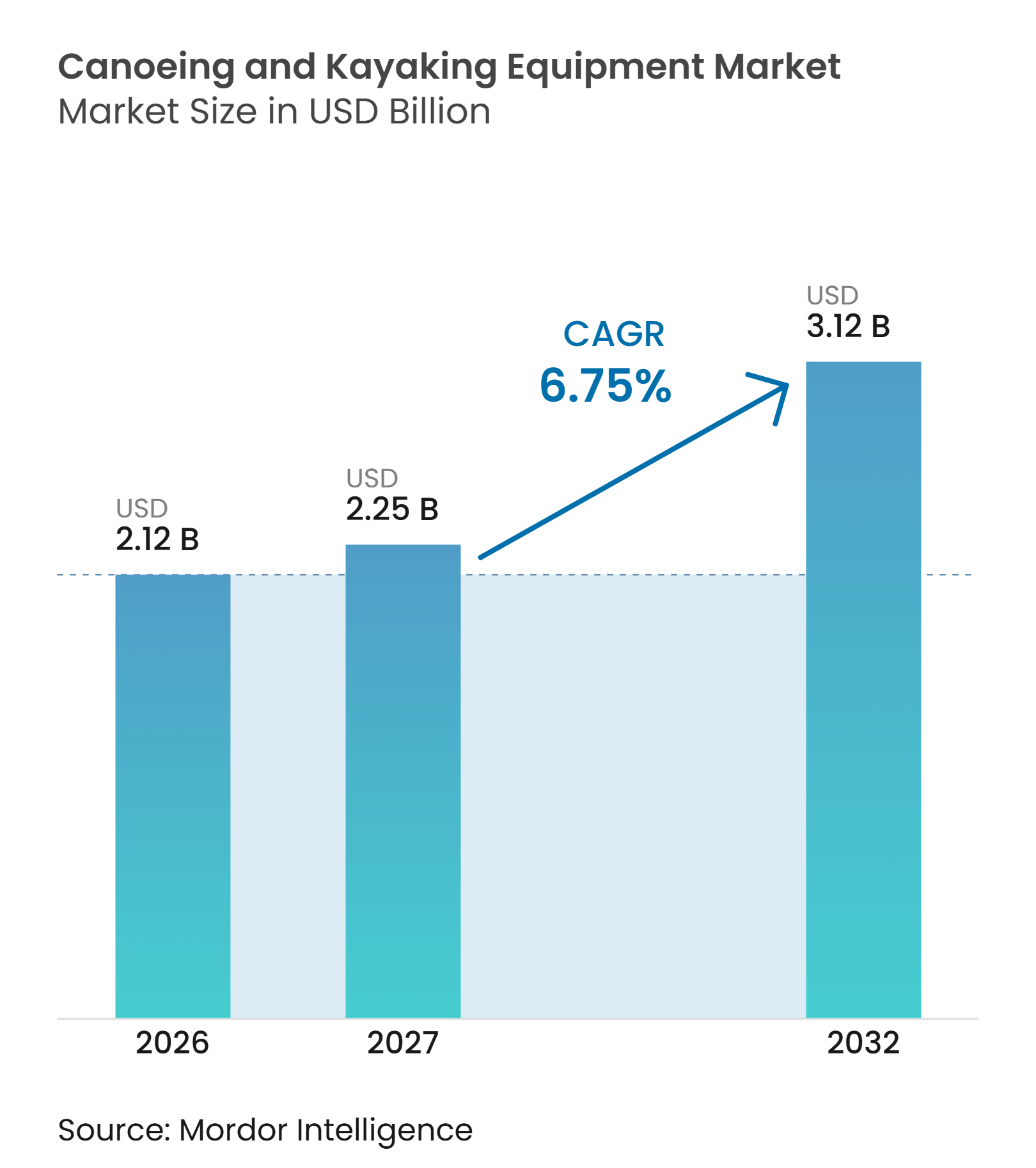
The canoeing and kayaking equipment market size was valued at USD 2.12 billion in 2026 and is estimated to grow from USD 2.25 billion in 2027 to reach USD 3.12 billion by 2032, at a CAGR of 6.75% during the forecast period (2027-2032). Broader participation is expanding the addressable customer base; however, many participants paddle infrequently and prioritize accessible products over premium touring equipment. This trend supports demand for entry-level, inflatable, folding, and rental-grade products in the canoeing and kayaking equipment market. Safety regulations are also driving replacement demand for personal flotation devices, while tourism investments are increasing commercial fleet purchases. However, weather exposure, limited instructor availability in emerging locations, and competition from other leisure activities continue to constrain equipment usage frequency.
Key Report Takeaways
- By product type, kayaks led the canoeing and kayaking equipment market with a share of 37.53% in 2026, while safety equipment is forecast to grow at a CAGR of 7.85% during 2027-2032.
- By end user, individual consumers dominated the market with a share of 53.32% in 2026, while commercial and rental operators are forecast to grow at a CAGR of 7.92% during 2027-2032.
- By distribution channel, offline channels led the market with a share of 66.91% in 2026, while online channels are forecast to grow at a CAGR of 8.11% during 2027-2032.
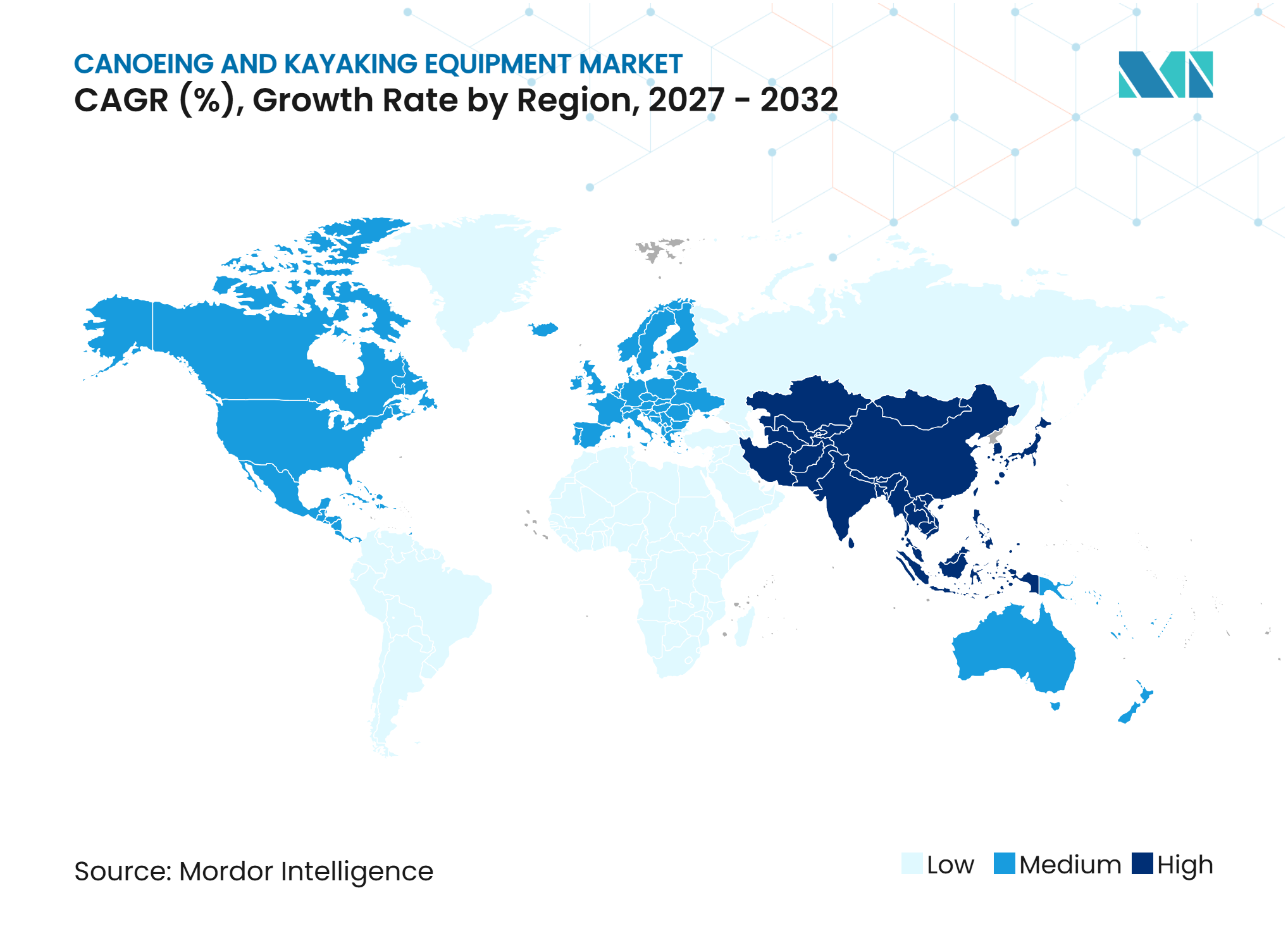
- By geography, North America dominated the canoeing and kayaking equipment market with a share of 39.68% in 2026, while Asia-Pacific is forecast to grow at a CAGR of 8.32% during 2027-2032.
Note: Market numbers in this report are based on Mordor Intelligence's proprietary estimation framework, which combines nine months of actuals with Q4 projections for base year 2026.
Market Trends and Insights
Drivers Impact Analysis of Canoeing and Kayaking Equipment Market*
| Driver | (~) % Impact on CAGR Forecast | Geographic Relevance | Impact Timeline |
|---|---|---|---|
| Rising participation in recreational canoeing and kayaking | +1.8% | Global, with highest intensity in North America and Western Europe | Long term (≥ 4 years) |
| Expansion of adventure and water-based tourism | +1.3% | Asia-Pacific core, spillover to the Middle East and Africa and South America | Medium term (2-4 years) |
| Increasing consumer preference for outdoor fitness and wellness activities | +1.0% | North America, Europe, and Asia-Pacific urban centers | Long term (≥ 4 years) |
| Increasing emphasis on water safety and protective equipment | +0.8% | Europe and North America, with fastest incremental growth in Asia-Pacific | Medium term (2-4 years) |
| Product innovation in lightweight and high-performance materials | +0.7% | Global, led by North America and Europe | Short term (≤ 2 years) |
| Expansion of canoe and kayak rental services | +0.6% | North America and Europe, with early traction in Asia-Pacific | Medium term (2-4 years) |
| Source: Mordor Intelligence | |||
Rising Participation in Recreational Canoeing and Kayaking
Participation has progressed beyond its post-pandemic recovery phase and is now a more established component of outdoor recreation. In July 2026, an article by the Outdoor Industry Association stated that the United States had 34.4 million paddlers in 2025, representing an increase of 446,000 participants from the previous year and more than 10 million above the 2019 level[1]. Recreational kayaking accounted for 15.3 million participants, providing the canoeing and kayaking equipment market with a broad customer base. This expanding participant base supports demand for recreational kayaks, canoes, paddles, personal flotation devices, and related accessories. Additionally, the growing adoption of paddling for leisure, fitness, and family-oriented outdoor activities encourages first-time equipment purchases and repeat spending among existing participants.
Expansion of Adventure and Water-Based Tourism
The expansion of international adventure tourism and water-based recreational activities is increasing demand for canoeing and kayaking equipment across coastal destinations, rivers, and inland waterways. In January 2026, the United Nations Tourism reported in their article that international tourist arrivals increased by 4% in 2025, indicating sustained global travel activity and supporting demand for diverse tourism experiences[2]. The growing popularity of nature-based tourism, guided water excursions, and outdoor adventure activities is prompting tourism operators and recreational facilities to include canoeing and kayaking in their offerings. Furthermore, the development of organized water-based tourism experiences is creating opportunities for equipment rental businesses and adventure activity providers. This trend is strengthening demand for durable, easy-to-maintain, and high-capacity paddling equipment.
Increasing Consumer Preference for Outdoor Fitness and Wellness Activities
Canoeing and kayaking are increasingly used for fitness, outdoor recreation, and stress relief. In July 2026, Paddle UK found that 82% of United Kingdom adults aged 16-34 participated in watersports or coastal activities, citing relaxation, connection with nature, and socializing as key motivations[3]. These factors can encourage repeat participation, even when household discretionary spending is constrained. Therefore, the canoeing and kayaking equipment market can benefit from messaging that emphasizes comfort, ergonomic design, and low-impact activity. Products positioned solely around high-intensity adventure may not appeal to this broader user group. Manufacturers can capitalize on this preference by introducing beginner-friendly kayaks, lightweight paddles and comfortable seating systems that make regular recreational participation more accessible.
Increasing Emphasis on Water Safety and Protective Equipment
Growing awareness of water-related risks and the importance of personal safety is driving demand for protective equipment in canoeing and kayaking activities. Paddlers increasingly prioritize personal flotation devices (PFDs), helmets, rescue throw bags, spray skirts, and other safety accessories to mitigate risks associated with capsizing, strong currents, and unpredictable water conditions. This focus is particularly important among beginners, families, commercial rental operators, and adventure tourism providers, for whom appropriate protective equipment is essential to enable safer participation. Furthermore, the growing adoption of organized paddling activities and guided water excursions encourages equipment operators to maintain adequate safety inventories and replace worn protective products.
Restraints Impact Analysis of Canoeing and Kayaking Equipment Market*
| Restraint | (~) % Impact on CAGR Forecast | Geographic Relevance | Impact Timeline |
|---|---|---|---|
| Shortage of skilled instructors in emerging markets | -0.3% | Asia-Pacific, South America, and the Middle East and Africa | Long term (≥ 4 years) |
| Seasonal dependence and weather-related limitations | -0.2% | North America, Northern Europe, and Central Europe | Long term (≥ 4 years) |
| Safety risks and limited consumer awareness | -0.1% | Global, with higher sensitivity in emerging markets | Medium term (2-4 years) |
| Competition from alternative outdoor and water-based activities | -0.1% | Global | Long term (≥ 4 years) |
| Source: Mordor Intelligence | |||
Shortage of Skilled Instructors in Emerging Markets
A shortage of trained instructors limits the number of people who can safely participate in paddlesports, particularly in emerging paddlesport locations. In October 2025, the American Canoe Association hosted more than 120 instructor and instructor-trainer update participants at PaddleFest 2025, highlighting the scale of professional development required to ensure safe participant onboarding. Similar professional networks remain less established in India, Indonesia, Vietnam, Colombia, and Peru. In these markets, equipment availability alone cannot address the need for qualified guides and consistent safety practices. This gap reduces the conversion of first-time rental users into equipment owners and constrains water-tourism operators.
Seasonal Dependence and Weather-Related Limitations
The canoeing and kayaking equipment market experiences seasonal demand fluctuations due to its reliance on favorable weather conditions and water accessibility. Extreme temperatures, heavy rainfall, storms, strong winds, flooding, and frozen waterways can limit paddling activities, rendering certain destinations unsuitable or unsafe during specific periods. In colder regions, participation typically concentrates in spring and summer, leading to lower equipment utilization and reduced purchasing activity during the off-season. These seasonal variations challenge manufacturers and retailers in managing inventory, production schedules, and distribution planning. Additionally, unpredictable weather conditions can disrupt adventure tourism activities and rental operations, affecting equipment procurement and replacement cycles.
*Our forecasts treat driver/restraint impacts as directional, not additive. The impact forecasts reflect baseline growth, mix effects, and variable interactions.
Canoeing and Kayaking Equipment Market Segment Analysis
By Product Type:
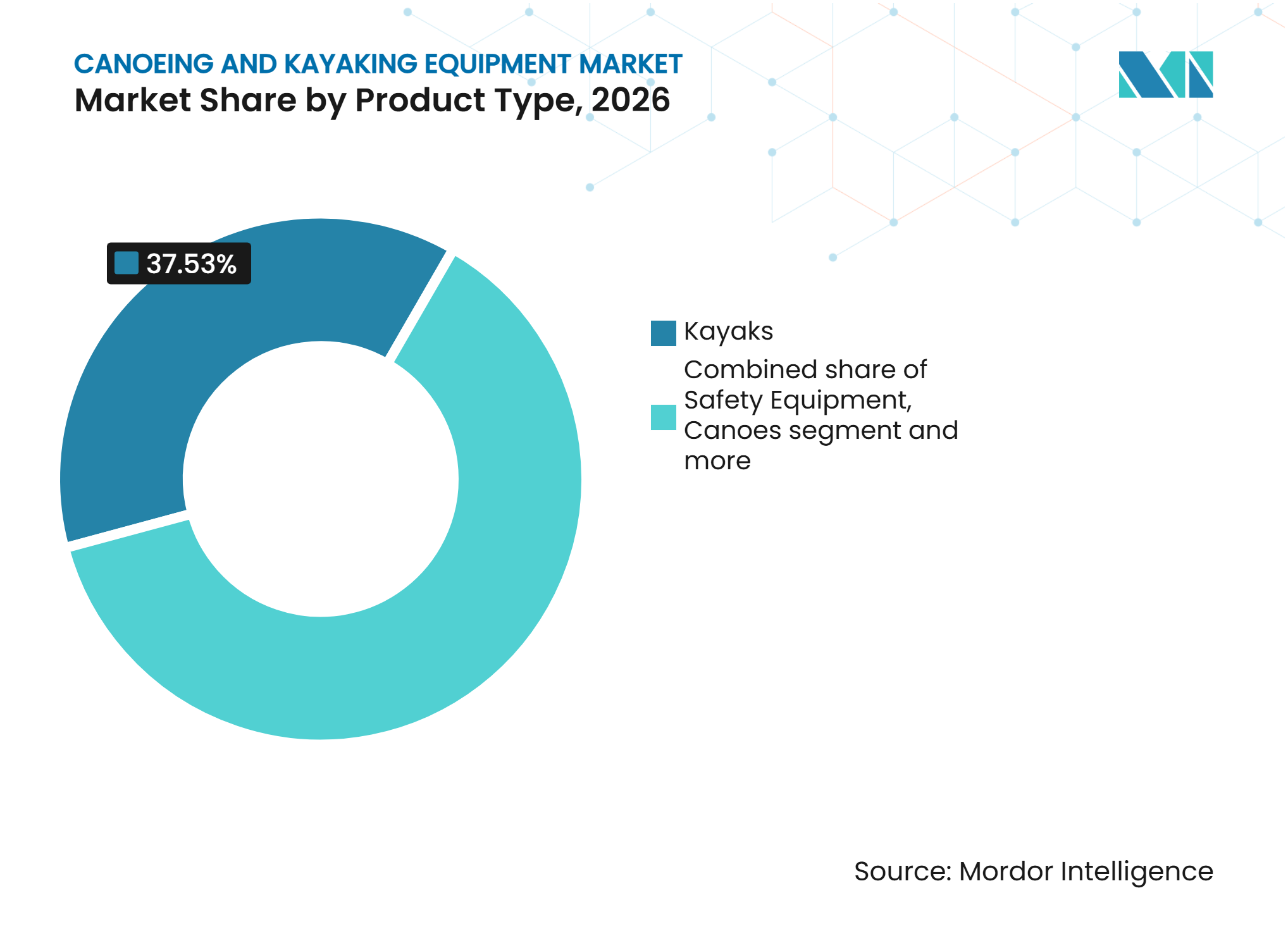
Safety Equipment Momentum Signals Repositioning Within the CategoryKayaks accounted for 37.53% of the market share in 2026, driven by the availability of recreational, fishing, touring, whitewater, and inflatable models. This broad product range serves beginners, enthusiasts, and commercial operators with varying skill levels and ownership requirements, while canoes continue to cater to expedition and flatwater applications. Demand for paddles and accessories remains stable, with accessory sales increasing as casual users purchase storage and protective equipment. The versatility of kayaks across different water conditions and recreational applications further strengthens their position as the leading product category in the market.
Safety equipment is projected to grow at a CAGR of 7.85% through 2032, the highest growth rate among product types. Safety standards and rising awareness are driving demand for personal flotation device replacements among households, rental fleets, and clubs. This demand is likely to remain more resilient than demand for optional upgrades. Material innovation is also reshaping product development across the canoeing and kayaking equipment market. Manufacturers are increasingly focusing on lightweight, durable, and comfortable protective products to address the safety requirements of recreational paddlers and professional users.



By End User:
Rental Operators Outgrow Individual Segment as Platforms MatureIndividual consumers accounted for 53.32% of the market in 2026, driven by demand for recreational paddling, fishing, touring, fitness, and leisure activities. This customer group purchases a broad range of equipment, including recreational kayaks, canoes, paddles, personal flotation devices, and related accessories, according to individual preferences and skill levels. Rising participation in outdoor recreation, along with the availability of entry-level, inflatable, and portable watercraft, further supports individual ownership. The diversity of recreational applications and the growing availability of products across different price ranges continue to strengthen individual consumers' contribution to overall equipment demand.
Commercial and rental operators are projected to record the fastest growth, with a CAGR of 7.92% during 2027-2032. The expansion of adventure tourism, guided paddling experiences, waterfront recreation facilities, and kayak rental services is driving commercial operators to procure canoes, kayaks, paddles, and safety equipment. Unlike individual buyers, these businesses typically require multiple units to accommodate visitors, maintain rental fleets, and replace equipment subject to frequent use. The need for durable, easy-to-maintain equipment and regular fleet replenishment is expected to support recurring purchases from commercial and rental operators through the forecast period.
By Distribution Channel:
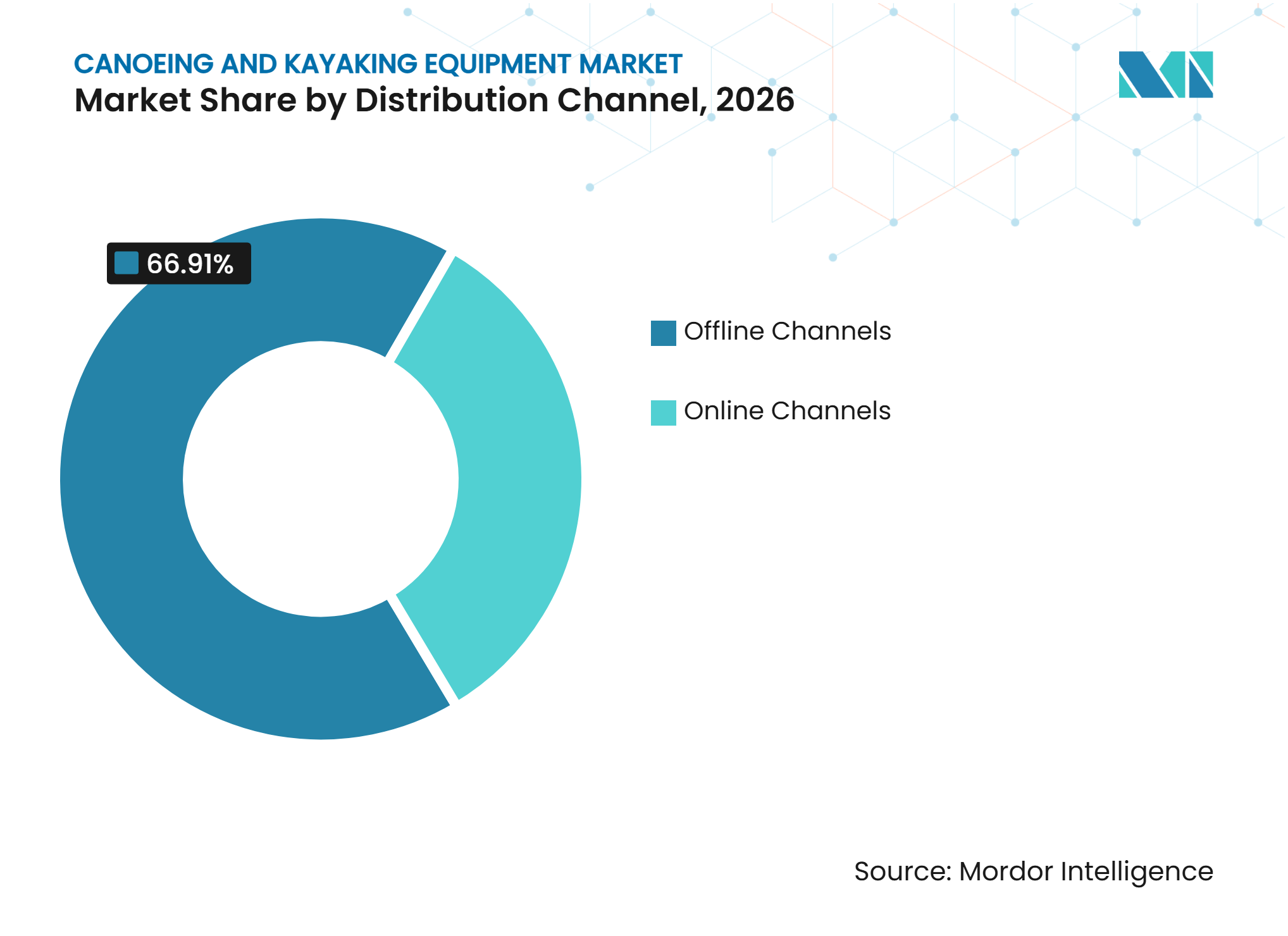
Digital-First Models Erode Offline’s Share Without Matching Its ReachOffline channels accounted for 66.91% of the market in 2026, driven by consumers’ preference to physically inspect watercraft and related equipment before purchase. Canoes and kayaks require evaluation of dimensions, weight, material quality, stability, seating comfort, and storage capacity. Moreover, specialized sporting goods stores and outdoor equipment retailers remain important destinations for purchasing. These outlets offer product demonstrations, technical guidance, fitting assistance, and access to complementary accessories, including paddles, personal flotation devices, and transport equipment. Specialized product knowledge and after-sales support further strengthen the position of offline retailers, particularly among first-time buyers and consumers purchasing premium watercraft.
Online channels are projected to register the fastest growth, at a CAGR of 8.11% during 2027-2032. The increasing adoption of e-commerce platforms and direct-to-consumer sales is expanding access to a broader range of canoeing and kayaking equipment across product categories and price points. Online platforms enable consumers to compare product specifications, materials, prices, customer reviews, and brand offerings before making purchase decisions. They also provide convenient access to lightweight paddles, personal flotation devices, dry bags, repair kits, and other accessories that are easier to ship than full-sized watercraft.

Geography Analysis
North America
North America held 39.68% of the canoeing and kayaking equipment market in 2026. Rising participation among Hispanic consumers, adults aged 65 and older, and women continues to expand the user base. In July 2026, Statistics Canada reported that nearly one in ten Canadian households participated in paddlesports, with the highest participation rates recorded in coastal provinces. The region also benefits from well-established outdoor recreation infrastructure, accessible lakes and coastal waterways, and an extensive network of specialty sporting goods retailers and equipment rental operators. These factors support consistent demand for canoes, kayaks, paddles, and safety accessories.
Asia-Pacific
Asia-Pacific is projected to register the fastest growth in the canoeing and kayaking equipment market, with a CAGR of 8.32% during 2027-2032. The region's extensive network of rivers, lakes, and coastal destinations, along with growing interest in outdoor adventure tourism across China, Australia, Japan, India, and Thailand, supports this demand. Furthermore, rising disposable incomes, expanding middle-class populations, and increasing consumer interest in fitness and nature-based experiences are encouraging participation in organized and independent paddling activities. The development of adventure tourism facilities and wider availability of entry-level and inflatable kayaks are also expected to improve equipment accessibility and support market penetration across emerging Asia-Pacific economies.
Europe, South America, and the Middle East and Africa
Europe is an established market for canoeing and kayaking equipment, driven by recreational paddling, competitive water sports, and adventure tourism in countries such as Germany, France, the United Kingdom, and Sweden. South America presents expansion opportunities due to its extensive river systems, freshwater resources, and coastal tourism destinations. Brazil, Argentina, and Chile support recreational paddling, fishing, and adventure tourism activities. The Middle East and Africa market benefits from coastal tourism development, investments in water-based recreational facilities, and growing interest in adventure tourism. Destinations in the United Arab Emirates, Saudi Arabia, South Africa, and Egypt offer opportunities for kayaking and canoeing through coastal excursions, lakeside recreation, and organized outdoor activities.
Competitive Landscape
Market Concentration
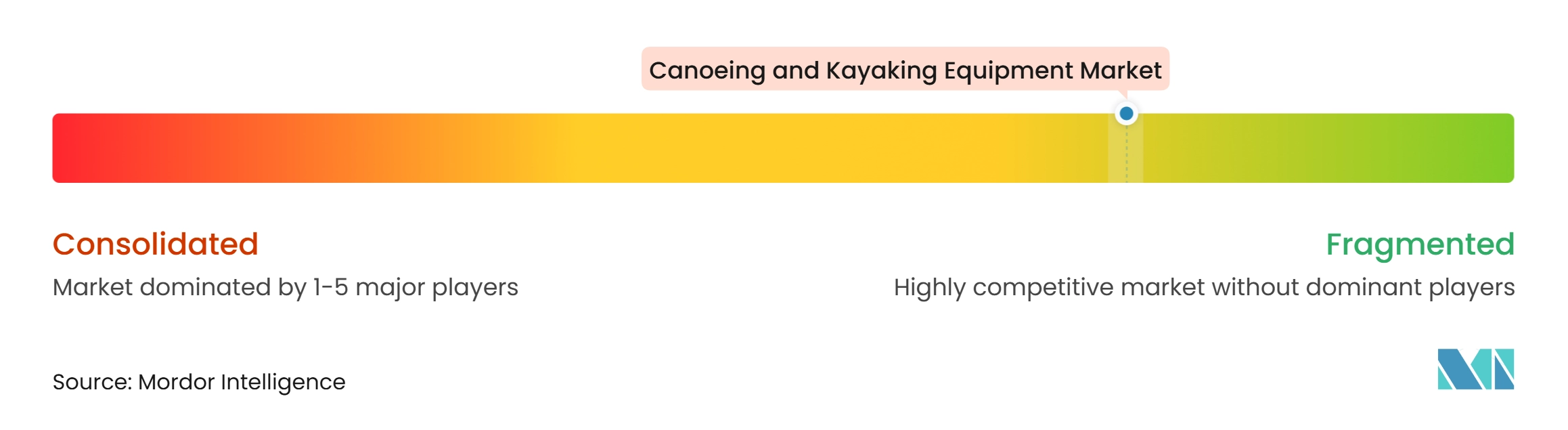
The canoeing and kayaking equipment market is fragmented, with several established manufacturers competing across recreational, touring, fishing, and competitive paddling categories. Key players include Johnson Outdoors Inc., Pelican, Hobie Cat Company, Confluence Outdoor, and Jackson Kayak Inc. These companies compete based on product innovation, brand recognition, material quality, manufacturing capabilities, and distribution networks. Product specialization further shapes competition, as manufacturers differentiate their offerings through lightweight construction, advanced hull designs, portability, durability, and integrated accessories.
Product innovation and portfolio diversification remain key competitive strategies among manufacturers. Johnson Outdoors Inc. strengthens its market position through its Old Town brand, which offers recreational, fishing, and performance kayaks and canoes. Pelican focuses on recreational watercraft, lightweight construction, and accessible product designs. Hobie Cat Company differentiates itself through pedal-driven kayaks and specialized fishing watercraft. These strategies enable manufacturers to address diverse paddling applications while strengthening brand differentiation across the market.
Confluence Outdoor further intensifies competition through its portfolio of paddlesports brands and products, including kayaks and related equipment. Market participants also compete through dealer relationships, specialty retail distribution, e-commerce availability, and partnerships with commercial rental operators. Established manufacturers benefit from strong brand recognition and product development capabilities, while smaller and specialized brands compete through niche product designs and application-specific innovations.
Canoeing and Kayaking Equipment Industry Leaders
-
Johnson Outdoors Inc.
-
Hobie Cat Company
-
Confluence Outdoor
-
Jackson Kayak Inc.
-
Pelican
- *Disclaimer: Major Players sorted in no particular order
Canoeing and Kayaking Equipment Market Companies Covered in this Report
- Johnson Outdoors Inc.
- Pelican
- Hobie Cat Company
- Confluence Outdoor
- Jackson Kayak Inc.
- Sea Eagle Boats Inc.
- Tahe Outdoors
- Lifetime Products Inc.
- Feelfree Kayaks
- Oru Kayak Inc.
- Aqua Marina
- AIRE Inc.
- NRS Inc.
- Werner Paddles
- Bending Branches
- Point 65 Sweden AB
- Riot Kayaks
- Gumotex
- Native Watercraft
- Wilderness Systems
Recent Industry Developments in Canoeing and Kayaking Equipment Market
- March 2026: Feelfree Kayaks launched the Superfish 108, its first dedicated motor-ready kayak. The model featured integrated motor-mounting provisions, accessory rails, a reinforced standing platform, and a stability-focused hull.
- January 2026: BOTE launched the Koda Aero inflatable kayak in 12-foot solo and 14-foot tandem models.
- September 2025: Jackson Kayak launched the Antix 3.0 whitewater kayak, featuring a wider body to retain speed over river features and the Rockstar V double-rail system to enhance surfing performance.
Global Canoeing and Kayaking Equipment Market Report Scope
Canoeing and kayaking equipment includes watercraft, paddles, safety gear, and accessories designed for recreational, fishing, touring, whitewater, and competitive paddling activities. The canoeing and kayaking equipment market is segmented by product type, end user, distribution channel, and geography. By product type, the market is segmented into canoes, kayaks, paddles, safety equipment, and accessories and other equipment. By end user, the market is segmented into individual consumers and commercial and rental operators. By distribution channel, the market is segmented into offline channels and online channels. Based on geography, the market is classified into North America, Europe, Asia-Pacific, South America, and the Middle East and Africa. The market forecasts are provided in terms of value (USD).
Segmentation Overview
| Canoes |
| Kayaks |
| Paddles |
| Safety Equipment |
| Accessories and Other Equipment |
| Individual Consumers |
| Commercial and Rental Operators |
| Offline Channels |
| Online Channels |
| North America | United States |
| Canada | |
| Mexico | |
| Rest of North America | |
| Europe | Germany |
| United Kingdom | |
| Italy | |
| France | |
| Spain | |
| Poland | |
| Belgium | |
| Netherlands | |
| Rest of Europe | |
| Asia-Pacific | China |
| India | |
| Japan | |
| Australia | |
| Indonesia | |
| Thailand | |
| Singapore | |
| Rest of Asia-Pacific | |
| South America | Brazil |
| Argentina | |
| Peru | |
| Colombia | |
| Rest of South America | |
| Middle East and Africa | South Africa |
| Saudi Arabia | |
| United Arab Emirates | |
| Egypt | |
| Turkey | |
| Rest of Middle East and Africa |
| By Product Type | Canoes | |
| Kayaks | ||
| Paddles | ||
| Safety Equipment | ||
| Accessories and Other Equipment | ||
| By End User | Individual Consumers | |
| Commercial and Rental Operators | ||
| By Distribution Channel | Offline Channels | |
| Online Channels | ||
| By Geography | North America | United States |
| Canada | ||
| Mexico | ||
| Rest of North America | ||
| Europe | Germany | |
| United Kingdom | ||
| Italy | ||
| France | ||
| Spain | ||
| Poland | ||
| Belgium | ||
| Netherlands | ||
| Rest of Europe | ||
| Asia-Pacific | China | |
| India | ||
| Japan | ||
| Australia | ||
| Indonesia | ||
| Thailand | ||
| Singapore | ||
| Rest of Asia-Pacific | ||
| South America | Brazil | |
| Argentina | ||
| Peru | ||
| Colombia | ||
| Rest of South America | ||
| Middle East and Africa | South Africa | |
| Saudi Arabia | ||
| United Arab Emirates | ||
| Egypt | ||
| Turkey | ||
| Rest of Middle East and Africa | ||
Key Questions Answered in the Report
What is the current size and future growth outlook of the canoeing and kayaking equipment market?
The canoeing and kayaking equipment market was valued at USD 2.12 billion in 2026 and is estimated to reach USD 2.25 billion in 2027. The market is projected to grow to USD 3.12 billion by 2032, growing at a CAGR of 6.75% during 2027-2032.
Which product type held the largest share of the canoeing and kayaking equipment market in 2026?
Kayaks were the largest product type segment in 2026, accounting for 37.53% of the canoeing and kayaking equipment market.
Which end-user segment dominated the canoeing and kayaking equipment market in 2026?
Individual consumers dominated the market in 2026, accounting for 53.32% of the total market share.
Which distribution channel held the largest share in 2026?
Offline channels dominated the distribution channel in 2026, accounting for 66.91% of the market.