
Cancer Insurance Market Size and Share
Market Overview
| Study Period | 2021 - 2032 |
|---|---|
| Market Size (2027) | USD 24.20 Billion |
| Market Size (2032) | USD 29.70 Billion |
| Growth Rate (2027 - 2032) | 4.20 % |
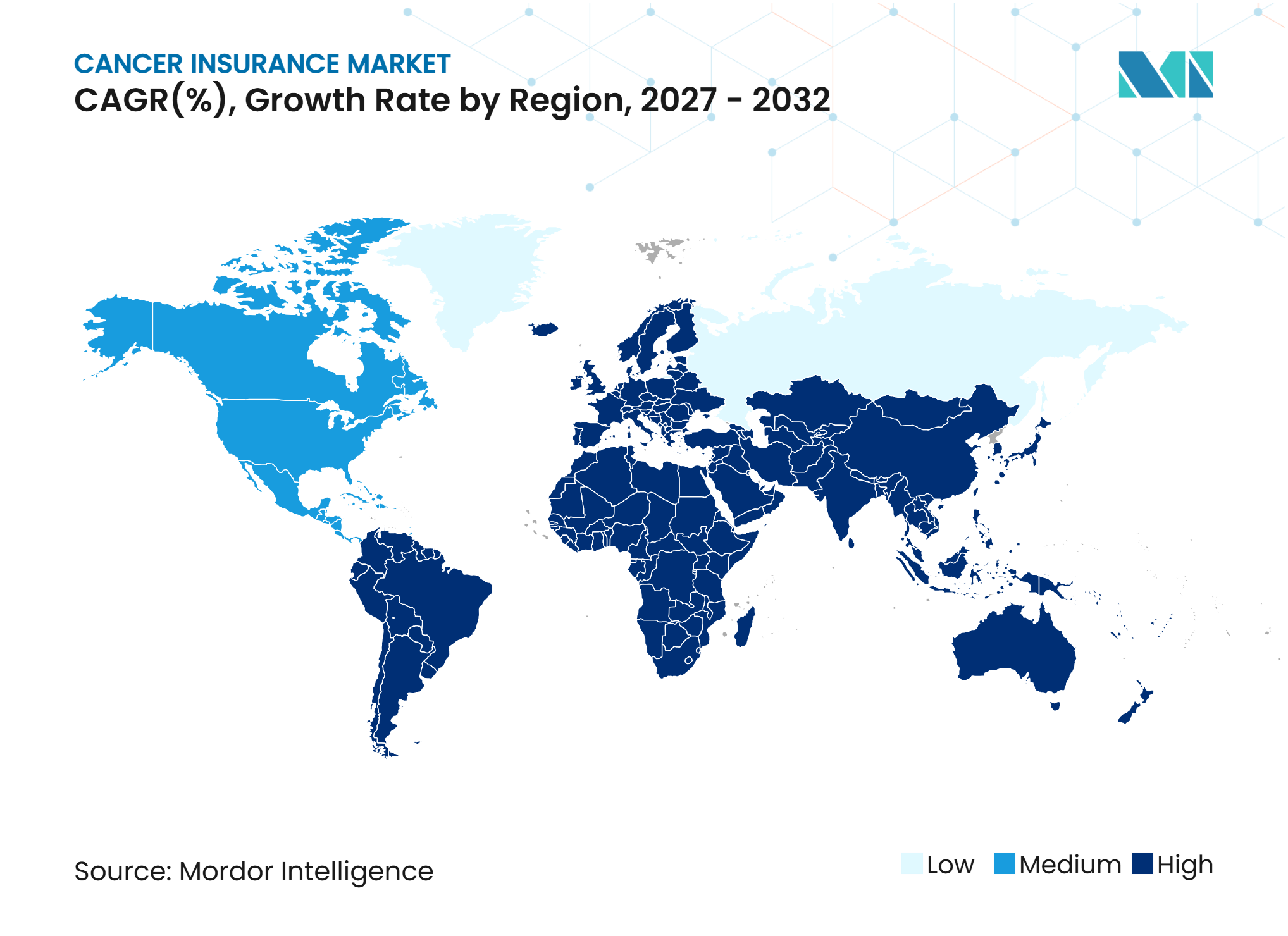
| Fastest Growing Market | Middle East and Africa |
| Largest Market | Asia-Pacific |
| Market Concentration | Low |
Major Players *Disclaimer: Major Players sorted in no particular order Image © Mordor Intelligence. Reuse requires attribution under CC BY 4.0. | |
Cancer Insurance Market Analysis by Mordor Intelligence
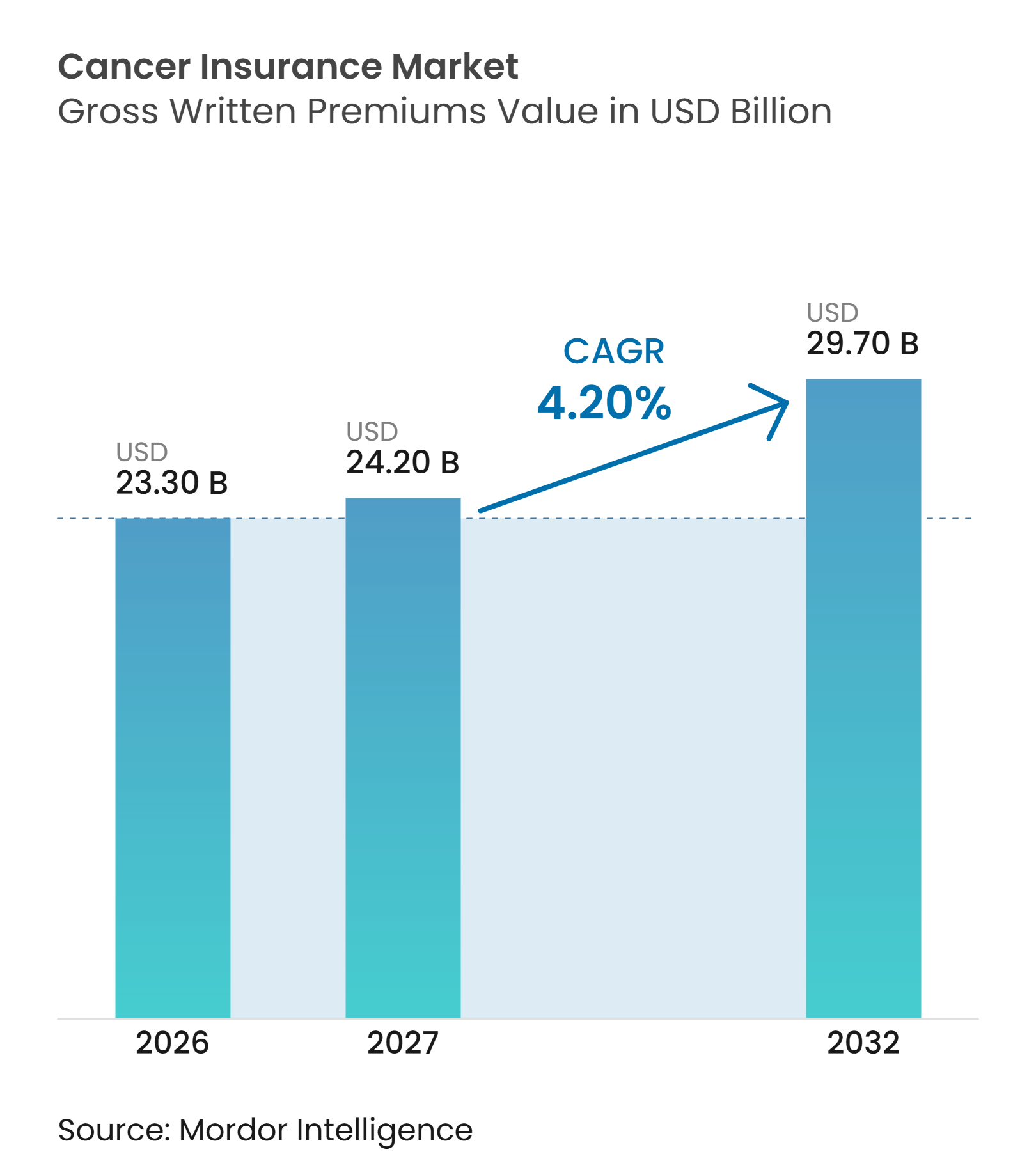
The Cancer Insurance Market size in terms of gross written premiums value is expected to grow from USD 23.30 billion in 2026 to USD 24.20 billion in 2027 and is forecast to reach USD 29.70 billion by 2032 at 4.20% CAGR over 2027-2032.
Cancer incidence and longer survival periods are increasing the financial exposure that cancer insurance is intended to address. The American Cancer Society projects 2,114,850 new invasive cancer diagnoses in the United States in 2026, which sustains demand for supplemental financial protection. Insurers are responding with products that combine diagnosis payments, care navigation, and support through treatment and recovery. Employer purchasers are also placing greater attention on cancer benefits as cancer care costs remain a leading concern in health plan design. The cancer insurance industry is shaped by strong demand in Asia Pacific, established employer and individual channels in North America and Europe, and the need for more affordable coverage in lower-income markets.
Key Report Takeaways
- By product form, standalone cancer and specified-disease policies captured 70.3% of the cancer insurance market share in 2026, while cancer-specific riders are projected to grow at a 5.8% CAGR through 2032.
- By contract type, individual contracts accounted for 80.1% of the cancer insurance market share in 2026, while group and employer-sponsored contracts are projected to grow at a 6.5% CAGR through 2032.
- By primary benefit design, lump-sum on-diagnosis policies held a 64.8% of the cancer insurance market size in 2026, while hybrid structures are projected to grow at a 7.2% CAGR through 2032.
- By distribution channel, agents and brokers held a 55.3% of the cancer insurance market size in 2026, while the group, affinity, and employer channels are projected to grow at a 6.5% CAGR through 2032.
- By geography, Asia Pacific captured 65.4% of the cancer insurance market share in 2026, while the Middle East and Africa is projected to grow at a 7.5% CAGR through 2032.
Note: Market numbers in this report are based on Mordor Intelligence's proprietary estimation framework, which combines nine months of actuals with Q4 projections for base year 2026.
Market Trends and Insights
Drivers Impact Analysis of Cancer Insurance Market*
| Driver | (~) % Impact on CAGR Forecast | Geographic Relevance | Impact Timeline |
|---|---|---|---|
| Rising Global Cancer Incidence and Growing Survivorship Population | +0.9% | Global, most acute in Asia-Pacific and North America | Long term (≥ 4 years) |
| Increasing Out-of-Pocket Cancer Treatment Costs | +0.7% | Global, highest urgency in North America and Asia-Pacific | Medium term (2-4 years) |
| Growing Adoption of Employer-Sponsored Cancer Insurance | +0.7% | North America is dominant, expanding to Asia-Pacific and the Middle East and Africa | Medium term (2-4 years) |
| Increasing Demand for Lump-Sum Cancer Benefits | +0.5% | Global, strongest in Asia-Pacific and Europe | Medium term (2-4 years) |
| Expansion of Cancer Insurance Distribution Channels | +0.5% | Global, digital-first gains in the Association of Southeast Asian Nations, India, and the Middle East and Africa | Short term (≤ 2 years) |
| Growing Demand for Flexible Cancer Insurance Coverage | +0.4% | Global, highest penetration in North America and Western Europe | Medium term (2-4 years) |
| Source: Mordor Intelligence | |||
Rising Global Cancer Incidence and Growing Survivorship Population
Cancer incidence is increasing the need for protection against expenses that continue beyond initial treatment. The American Cancer Society estimates 2,114,850 new invasive cancer diagnoses in the United States during 2026, with lung, colorectal, breast, and prostate cancers among the leading contributors[1]. The broader survivor population also needs financial support after the acute treatment period has ended. This has increased the relevance of plans that offer income replacement, recurring benefits, or care support after diagnosis. Insurers therefore have an incentive to design coverage for a longer patient journey rather than for an initial diagnosis alone. The cancer insurance industry benefits when these needs are recognized by households, employers, and distribution partners.
Increasing Out-of-Pocket Cancer Treatment Costs
High out-of-pocket treatment costs can create financial pressure for cancer patients and their households, supporting demand for supplemental cancer insurance. A 2025 study of traditional Medicare beneficiaries found that average annual out-of-pocket spending in 2023 was USD 4,800 for beneficiaries with cancer, compared with USD 2,364 for those without cancer. Costs were particularly high for patients with multiple myeloma, at USD 14,400 annually, and acute leukemia, at USD 10,498[2]. Prescription medicines accounted for 19.8% of out-of-pocket costs for multiple myeloma patients and 21.5% for acute leukemia patients. Beyond direct medical expenses, patients may also face transportation costs, caregiving expenses, and lost earnings. Lump-sum cancer insurance benefits can help policyholders manage eligible expenses not covered by their health insurance, although benefits depend on policy terms. These financial pressures support the need for supplementary financial protection during cancer treatment.
Growing Adoption of Employer-Sponsored Cancer Insurance
Cancer-related health care costs are encouraging employers to strengthen cancer prevention, treatment access, and employee benefits. Business Group on Health reported that cancer was the leading driver of employer health care costs in the United States for the fourth consecutive year in 2025, with 88% of surveyed employers identifying it as one of their top three cost drivers. About half of the surveyed employers planned to offer cancer centers of excellence during 2026, reflecting greater attention to specialized cancer care. In India, AstraZeneca Pharma India introduced a dedicated INR 2.5 million (USD 30,100) cancer-care insurance layer for employees and eligible dependents, effective July 1, 2026, above its existing INR 500,000 (USD 6,000) group medical cover[3]. The example illustrates how employers can supplement general medical coverage with cancer-specific financial protection.
Increasing Demand for Lump-Sum Cancer Benefits
Lump-sum benefits give policyholders immediate access to funds when a covered cancer diagnosis occurs. This design can be used for medical and non-medical expenses without requiring each cost to meet a reimbursement rule. It is particularly relevant where household finances are affected by treatment-related travel, unpaid leave, or caregiving demands. The product format also gives insurers a simple benefit structure that can be explained through agents, employers, and bank partners. In the United States, reported medical debt among insured cancer patients shows why a payment that is not limited to a hospital bill can retain value for households. Demand for this flexibility supports the cancer insurance industry, while hybrid plans add further support across the treatment period.
Restraints Impact Analysis of Cancer Insurance Market*
| Restraint | (~) % Impact on CAGR Forecast | Geographic Relevance | Impact Timeline |
|---|---|---|---|
| High Premiums and Affordability Constraints | -0.5% | Global, most acute in South Asia, Middle East & Africa, and Latin America | Medium term (2–4 years) |
| Complex Cancer Risk Underwriting and Adverse Selection | -0.4% | Global, particularly North America, Europe, and Asia-Pacific, where underwriting complexity and high-risk applicant selection affect insurers | Medium to long term (3–5 years) |
| Policy Exclusions and Limitations on Eligible Cancer Conditions | -0.3% | Global, particularly Asia-Pacific, South Asia, and emerging insurance markets where coverage definitions and exclusions can limit policy attractiveness | Medium term (2–4 years) |
| Regulatory Restrictions on Historical Cancer Data | -0.3% | Europe (EU member states), with emerging regulatory considerations in Asia-Pacific and other jurisdictions adopting stronger health-data privacy frameworks | Long term (≥4 years) |
| Source: Mordor Intelligence | |||
High Premiums and Affordability Constraints
Premium affordability limits access to standalone cancer plans in lower-income markets. Households often prioritize base medical insurance where budgets do not accommodate both core and supplemental coverage. Britam introduced Malkia Hospicash in Kenya in May 2025 at a premium of KES 130 (USD 1) per month, offering a KES 200,000 (USD 1,550) cancer cash benefit. The product was distributed through more than 3,000 community health entrepreneurs and targeted 300,000 households in its first year. This model demonstrates the value of lower-cost formats, but maintaining adequate coverage while achieving sustainable economics remains difficult. Affordability therefore remains a constraint on the cancer insurance market in South Asia, Latin America, and the Middle East and Africa.
Regulatory Restrictions on Historical Cancer Data
Right-to-be-forgotten regulations are reshaping underwriting for cancer survivors across Europe. France, Belgium, and Spain generally apply a 5-year remission period. The Netherlands, Portugal, and Cyprus apply a 10-year period. Ireland introduced a 5-year protection period in October 2026 for eligible mortgage-protection applicants, subject to coverage and residency conditions. Italy’s IVASS Regulatory Order No. 169/2026 prohibits insurers from requesting or using qualifying historical cancer information for underwriting or premium setting after the applicable remission period. It also requires insurers to delete previously collected information within 30 days of receiving the required certification. Malta applies a 10-year period for adults and 5 years for diagnoses before age 21, effective January 2027. Greece adopted Law 5317/2026 in July 2026, providing protection for cancer survivors in consumer credit-linked insurance after 5 years. These regulations improve financial access for cancer survivors but reduce the historical health data available for risk assessment. Insurers may need to update underwriting models, eligibility criteria, and pricing practices, increasing operational complexity in the cancer insurance market.
*Our forecasts treat driver/restraint impacts as directional, not additive. The impact forecasts reflect baseline growth, mix effects, and variable interactions.
Cancer Insurance Market Segment Analysis
By Product Form:
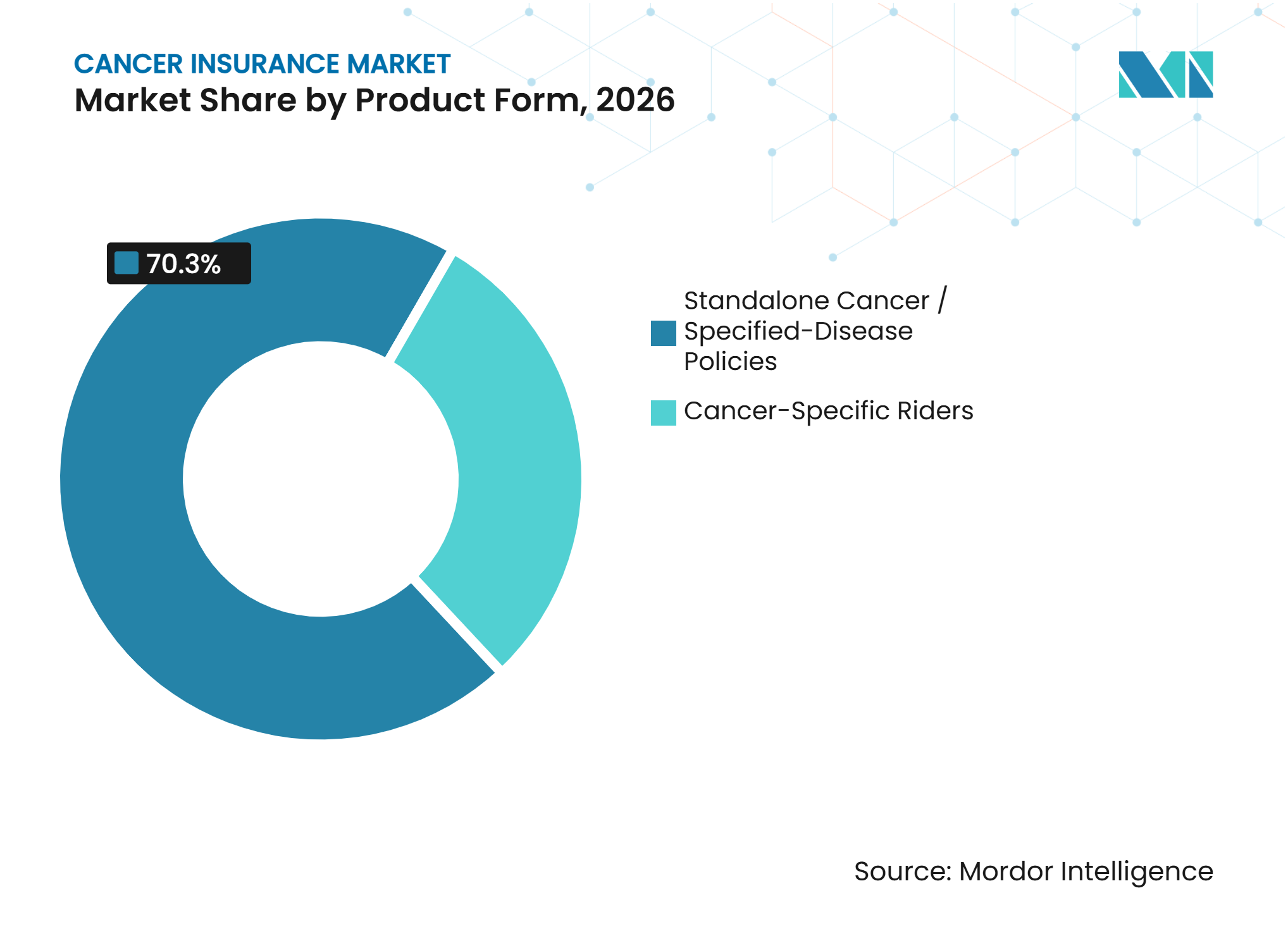
Riders Are Expanding Access Through Modular CoverageStandalone cancer and specified-disease policies held 70.3% of the cancer insurance market in 2026. Their position reflects established consumer preference for defined cancer benefits, dedicated claims protection, and distribution through established insurance agency networks. Japan provides evidence of continued demand for dedicated cancer coverage. Aflac Japan launched Miraito in March 2025, offering flexible coverage options and integrated cancer consultation support. In 2025, Aflac Japan's new annualized premium sales increased 16.0% in yen terms, with cancer products contributing 67.2% of total new annualized premium sales, compared with 57.5% in 2024. Premium persistency stood at 93.1% at year-end 2025, against 93.4% in 2024. This performance demonstrates the continued importance of dedicated cancer protection and product innovation in mature insurance markets.
Cancer-specific riders are projected to grow at a 5.8% CAGR through 2032. Riders provide insurers with an opportunity to extend cancer protection through existing life and health insurance relationships, allowing customers to customize coverage without purchasing an entirely separate policy. AIA Life China introduced its Ying Ru Yi series in September 2025, combining participating whole-life insurance with an additional critical illness insurance rider. The product covers 120 specified serious illnesses and offers optional benefits for multiple cancer claims, multiple serious illness claims, and premium waivers. AIA also upgraded its health-management services to include medical assistance, psychological counselling, and rehabilitation support, with up to 12 months of dedicated case-management assistance following diagnosis. This product structure demonstrates how insurers are combining modular protection with ongoing healthcare support to broaden access to specialized illness coverage.


By Contract Type:
Group Coverage Is Challenging Individual Contract DominanceIndividual contracts accounted for 80.1% of the cancer insurance market in 2026. Their dominance reflects consumer preference for personally owned protection that remains independent of employment status. Individual policies allow households to maintain coverage when changing employers or entering retirement, while providing flexibility in selecting benefit amounts, policy terms, and additional cancer-related protection. Established agent networks, bancassurance partnerships, and direct-to-consumer distribution further support individual policy adoption. However, the segment's high market share also reflects the established distribution infrastructure and long-standing consumer familiarity with individually purchased insurance products.
Group and employer-sponsored contracts are projected to grow at a 6.5% CAGR through 2032. Employers are increasingly extending conventional group medical and critical illness benefits with specialized cancer protection and access to oncology care navigation. MetLife introduced its Cancer Support benefit in September 2025 through a partnership with Private Health Management, expanding its Critical Illness Insurance offering with access to oncology specialists, expert-led care coordination, and personalized patient counselling. The benefit became available to eligible insured members from January 2026. Employers that had previously deployed Private Health Management services reported a 20% reduction in average cost per managed case and a 30% rate of diagnosis redefinition, demonstrating the potential value of integrated cancer-care support. In India, AstraZeneca Pharma India introduced a dedicated INR 2.5 million (USD 30,000) cancer-care cover for employees and eligible dependents, effective July 2026, as an additional layer above its existing INR 0.5 million (USD 6,000) group medical insurance. The cover extends to spouses, dependent children, and parents, demonstrating how employers are introducing disease-specific protection beyond conventional group medical benefits
By Primary Benefit Design:
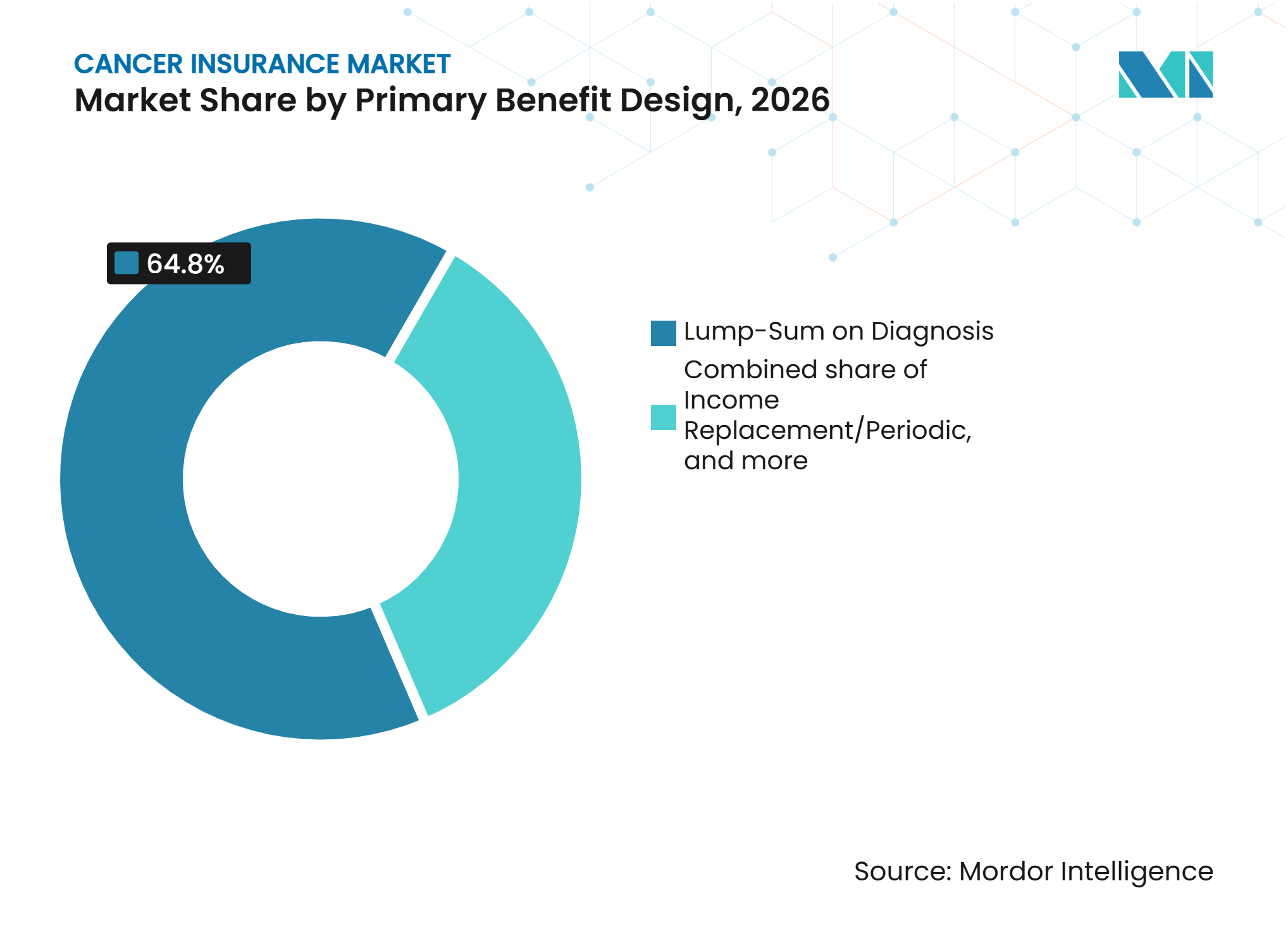
Hybrid Plans Are Broadening Financial ProtectionLump-sum-on-diagnosis policies accounted for 64.8% of the cancer insurance market in 2026. Their leading position reflects demand for immediate financial support following a confirmed cancer diagnosis, without restricting the payout to eligible medical expenses. Policyholders can use the proceeds for treatment-related travel, household expenses, insurance deductibles, lost income, and other non-medical costs. The fixed-benefit structure also simplifies claims assessment because payment is linked to the qualifying diagnosis and policy conditions rather than reimbursement of individual treatment bills. This makes lump-sum policies particularly relevant for households seeking immediate liquidity during the initial stages of cancer treatment.
Hybrid benefit designs are projected to grow at a 7.2% CAGR through 2032. These products combine diagnosis-linked cash payments with treatment reimbursement, recurring income benefits, or additional healthcare services, addressing financial requirements beyond the initial diagnosis. HDFC ERGO's iCan Cancer Insurance provides an example of this approach by combining cashless hospitalisation and reimbursement of eligible treatment expenses with additional lump-sum benefits. Its enhanced coverage includes a 60% additional sum-insured payout for specified cancer severity, a further 100% lump-sum benefit for Stage IV cancer or recurrence, second medical opinions, and post-treatment follow-up support. This combination of medical expense coverage and unrestricted cash benefits demonstrates how insurers are extending protection across treatment and recovery rather than limiting assistance to the initial diagnosis

By Distribution Channel:
Employer and Digital Channels Are Extending ReachAgents and brokers held 55.3% of the cancer insurance distribution share in 2026. Their prominence reflects the need for advice on waiting periods, exclusions, survival periods, staged payouts, and medical underwriting. Intermediaries help customers compare policies and select coverage that complements existing health and life insurance. In India, individual agents generated 49.44% of individual life new-business premiums in FY2024–25, while corporate agents contributed 34.69%. This advisory infrastructure supports agent-led acquisition for specialized protection products.
The group, affinity, and employer-linked channel is projected to grow at a 6.5% CAGR through 2032. Insurers are partnering with banks, financial institutions, and digital platforms to expand access. In November 2025, AIA Cambodia formed a 10-year bancassurance partnership with KB PRASAC Bank, initially covering 50 branches and expanding to 187 branches by the second quarter of 2026. Zurich Insurance Indonesia partnered with PT Bank Neo Commerce in December 2025 to distribute Critical Illness Optimal Protection, which covers 34 critical illnesses and provides benefits of up to IDR 1 billion (USD 59,000). In September 2025, MoMo partnered with Chubb Life Vietnam to launch Critical Illness Insurance+ through its mobile application. The product covers 37 critical illnesses, including cancer, and provides annual medical expense benefits of up to VND 5 billion (USD 190,000), with two health declaration questions and no medical examination. These partnerships simplify access and enrolment, particularly for younger consumers and first-time buyers.
Geography Analysis
Asia-Pacific captured 65.4% of the cancer insurance market in 2026. Japan supports this leadership through its established standalone cancer insurance culture, while China is expanding coverage for oncology drugs and advanced cancer treatments. Aflac Japan launched Miraito in March 2025, strengthening its dedicated cancer insurance portfolio through flexible protection and cancer consultation services. Aflac Japan's total sales increased 16.0% in 2025, while premium persistency reached 93.1%. Ping An Health Insurance expanded its e-Life Protection 2026 Flagship Version to cover 298 oncology specialty drugs and seven CAR-T therapies, with a maximum entry age of 70. Manulife's March 2026 partnership with Guardant Health introduced the Shield blood test, screening for 10 common cancers, to eligible customers in the Philippines and other Asian markets.
North America and Europe remain mature markets, with demand supported by cancer incidence, employer healthcare expenditure, and evolving survivor-protection regulations. The United States is projected to record 2,114,850 new cancer diagnoses in 2026, sustaining demand for supplemental financial protection beyond conventional medical insurance. Cancer remained the leading employer healthcare cost concern in the United States in 2026, encouraging companies to expand specialist care and cancer centres of excellence. Although Medicare Part D introduced a USD 2,000 annual out-of-pocket prescription drug cap in 2025, commercially insured working-age patients remain outside this specific protection. In Europe, Right to Be Forgotten legislation is improving access to financial services for eligible cancer survivors by limiting the use of historical cancer diagnoses in insurance underwriting.
The Middle East and Africa is projected to grow at a 7.5% CAGR through 2032, while South America offers opportunities for expansion through affordable protection products and alternative distribution networks. In Kenya, Britam launched Malkia Hospicash in May 2025, combining hospital cash benefits, cancer protection, funeral cover, and teleconsultation services at an entry premium of KES 130 (USD 1). Distribution through more than 3,000 Community Health Entrepreneurs targets underserved women and households, demonstrating how community-based networks can extend cancer-related financial protection. In South America, affordability constraints and uneven insurance penetration continue to influence adoption, creating opportunities for lower-premium policies, simplified underwriting, digital enrolment, and bancassurance partnerships. Chile's Right to Be Forgotten framework also improves access to financial services for eligible cancer survivors by limiting the use of historical cancer diagnoses after the prescribed remission period.
Competitive Landscape
Market Concentration
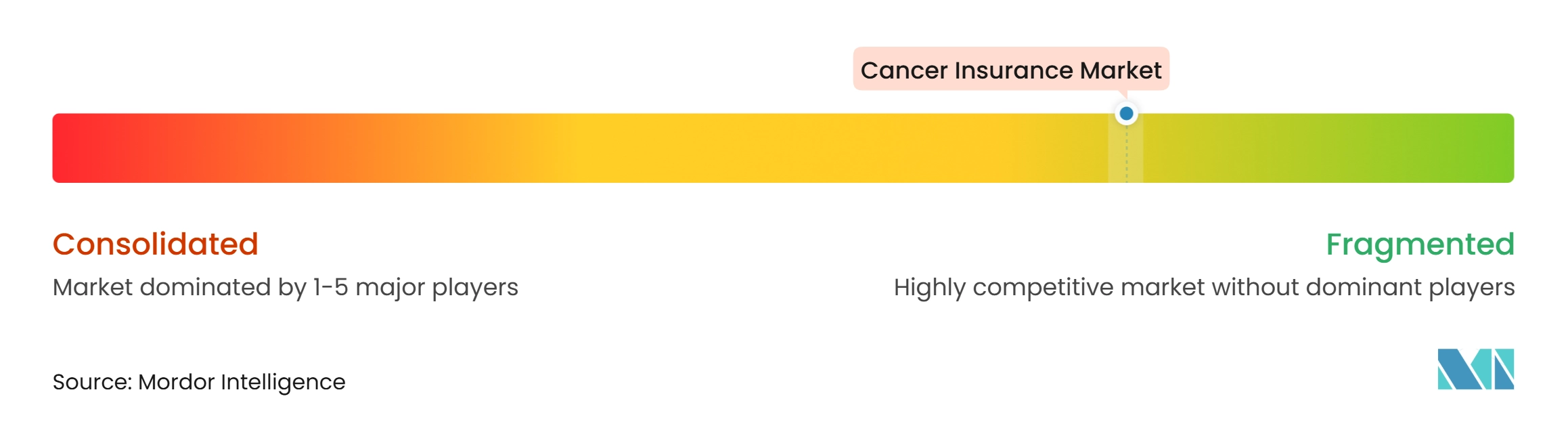
The cancer insurance market is fragmented, with competition distributed across specialist cancer insurers, multinational life insurers, regional insurance groups, and health-focused providers. Aflac maintains a strong standalone cancer insurance franchise in the United States and Japan, while Ping An, China Life and AIA compete through extensive distribution networks and integrated health insurance ecosystems across Asia-Pacific. MetLife, Allstate Benefits, Colonial Life and Mutual of Omaha strengthen competition in the United States, while Allianz and AXA participate through broader life, health and critical illness portfolios in Europe. Aflac's 2025 annual report highlights increasing competition in Japan following the expansion of standalone cancer and medical insurance providers, reflecting the presence of multiple established and emerging competitors.
Several companies are strengthening their competitive positions through partnerships, product enhancements and integrated cancer-care services. MetLife launched Cancer Support with Private Health Management in September 2025, adding oncology specialist access, technology-enabled care coordination and personalized patient counselling to its Critical Illness Insurance offering. Employers using Private Health Management services reported a 20% reduction in average cost per managed case and a 30% rate of diagnosis redefinition. Manulife partnered with Guardant Health in March 2026 to provide eligible customers in the Philippines, Hong Kong and Singapore access to the Shield multi-cancer detection blood test, which screens for 10 cancer types.
Technology is becoming an additional competitive differentiator, particularly in claims assessment, disease management and policyholder support. Ping An unveiled its disease-specific artificial intelligence product portfolio at the World Artificial Intelligence Conference in July 2026, combining disease-risk prediction, insurance protection and the Peking University Healthcare AI Disease Manager for cancer and other critical illnesses. Its healthcare ecosystem connects patients with physicians, hospitals, and rehabilitation resources, extending insurer involvement beyond policy issuance and claims settlement. Opportunities remain for fragmented-market participants to differentiate through employer-sponsored cancer protection, post-remission coverage, advanced screening partnerships, and affordable products for South Asia and sub-Saharan Africa. These specialized offerings allow regional insurers and smaller providers to compete alongside multinational companies without relying solely on premium pricing.
Cancer Insurance Industry Leaders
-
Aflac Incorporated
-
MetLife, Inc.
-
Allianz SE
-
Ping An Insurance Group
-
CNO Financial Group, Inc.
- *Disclaimer: Major Players sorted in no particular order
Cancer Insurance Market Companies Covered in this Report
- Aflac Incorporated
- MetLife, Inc.
- CNO Financial Group, Inc.
- Guardian Life Insurance Company of America
- Allianz SE
- Mutual of Omaha Insurance Company
- Ping An Insurance Group
- China Life Insurance Company Limited
- Care Health Insurance
- Prudential Financial, Inc.
- Life Insurance Corporation of India
- AXA SA
- HDFC ERGO General Insurance
- Dai-ichi Life Holdings, Inc.
- The Cigna Group
- AIA Group Limited
- Manulife Financial Corporation
- Sun Life Financial Inc.
- Unum Group
- Northwestern Mutual
Recent Industry Developments in Cancer Insurance Market
- October 2026: Ping An Life Insurance launched the Bei You Fu critical illness product covering 180 diseases, including 120 high-prevalence critical illnesses, with dividend-linked benefit growth and modular cancer multiple-claim rider options for policyholders up to age 55 with payment periods from 8 to 30 years.
- July 2026: Ping An Insurance Group introduced its disease-specific artificial intelligence portfolio at WAIC 2026 in Shanghai, including cancer insurance and the Peking University Healthcare AI Disease Manager for oncology care management, supporting 120,000 tumor-related claims customers annually.
- July 2026: Manulife China Bank Life expanded its ManulifeMOVE Cancer Care program in the Philippines to include Guardant Health’s Shield multi-cancer detection blood test for 10 common cancers.
- July 2026: AstraZeneca Pharma India introduced a dedicated employer group cancer care policy providing INR 2.5 million (USD 29,900) in cancer-specific cover above an INR 500,000 (USD 6,000) group medical plan for 25,000 employees and dependents, including pre-existing disease coverage.
Global Cancer Insurance Market Report Scope
Segmentation Overview
| Standalone Cancer / Specified-Disease Policies |
| Cancer-Specific Riders |
| Individual |
| Group / Employer-Sponsored |
| Lump-Sum on Diagnosis |
| Indemnity / Expense Reimbursement |
| Income Replacement / Periodic |
| Hybrid |
| Agents & Brokers |
| Bancassurance |
| Direct Insurer Sales |
| Group / Affinity / Employer |
| North America | United States |
| Canada | |
| Mexico | |
| South America | Brazil |
| Argentina | |
| Rest of South America | |
| Europe | United Kingdom |
| Germany | |
| France | |
| Italy | |
| Spain | |
| Rest of Europe | |
| Asia-Pacific | China |
| Japan | |
| India | |
| South Korea | |
| Australia | |
| Indonesia | |
| Thailand | |
| Malaysia | |
| Singapore | |
| Vietnam | |
| Rest of Asia-Pacific | |
| Middle East and Africa | Saudi Arabia |
| United Arab Emirates | |
| Turkey | |
| South Africa | |
| Egypt | |
| Rest of Middle East and Africa |
| By Product Form | Standalone Cancer / Specified-Disease Policies | |
| Cancer-Specific Riders | ||
| By Contract Type | Individual | |
| Group / Employer-Sponsored | ||
| By Primary Benefit Design | Lump-Sum on Diagnosis | |
| Indemnity / Expense Reimbursement | ||
| Income Replacement / Periodic | ||
| Hybrid | ||
| By Distribution Channel | Agents & Brokers | |
| Bancassurance | ||
| Direct Insurer Sales | ||
| Group / Affinity / Employer | ||
| By Geography | North America | United States |
| Canada | ||
| Mexico | ||
| South America | Brazil | |
| Argentina | ||
| Rest of South America | ||
| Europe | United Kingdom | |
| Germany | ||
| France | ||
| Italy | ||
| Spain | ||
| Rest of Europe | ||
| Asia-Pacific | China | |
| Japan | ||
| India | ||
| South Korea | ||
| Australia | ||
| Indonesia | ||
| Thailand | ||
| Malaysia | ||
| Singapore | ||
| Vietnam | ||
| Rest of Asia-Pacific | ||
| Middle East and Africa | Saudi Arabia | |
| United Arab Emirates | ||
| Turkey | ||
| South Africa | ||
| Egypt | ||
| Rest of Middle East and Africa | ||
Key Questions Answered in the Report
What is the projected value of the cancer insurance sector by 2032?
The cancer insurance market is projected to reach USD 29.7 billion by 2032, rising from USD 24.2 billion in 2027 at a 4.2% CAGR.
Which product format holds the largest position in cancer insurance?
Standalone cancer and specified-disease policies held 70.3% share in 2026, while cancer-specific riders are the faster-growing product form at a 5.8% CAGR through 2032.
Why are employers adding cancer insurance benefits?
Cancer was the leading United States employer health care cost concern for the 4th consecutive year in 2025, and 86% of employers reported higher cancer care spending.
Which geography leads cancer insurance demand?
Asia Pacific held 65.4% share in 2026, supported by Japan’s established cancer insurance culture and China’s expanding critical illness ecosystem.
Which geography is expected to grow the fastest through 2032?
The Middle East and Africa is projected to grow at a 7.5% CAGR through 2032, supported by emerging employer coverage and lower-cost insurance formats.
How are hybrid cancer insurance plans different from lump-sum policies?
Hybrid plans combine an initial diagnosis payment with reimbursement, income support, or care services, and they are projected to grow at a 7.2% CAGR through 2032.