
Cage-Free Eggs Market Size and Share
Market Overview
| Study Period | 2022 - 2032 |
|---|---|
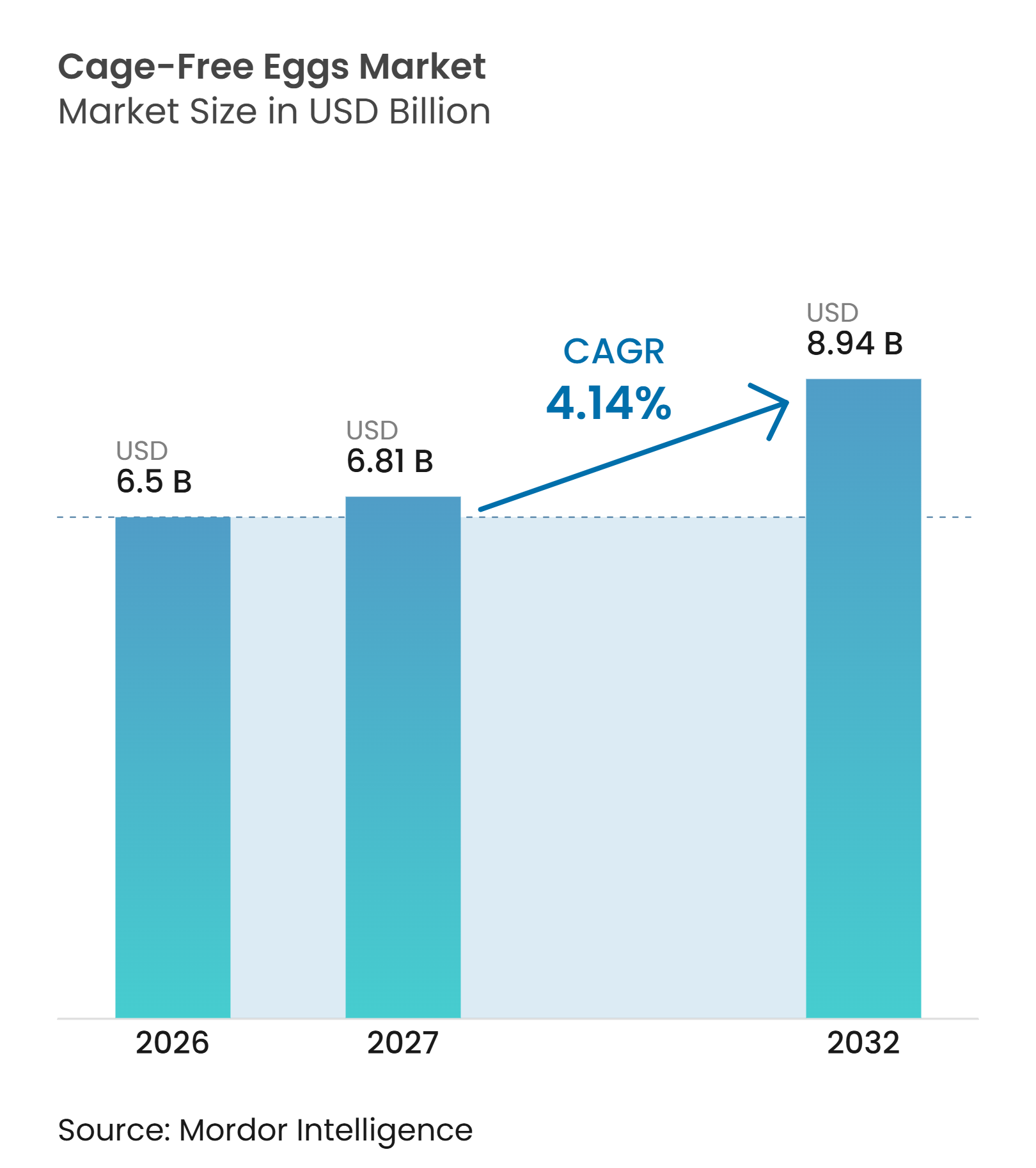
| Market Size (2027) | USD 6.81 Billion |
| Market Size (2032) | USD 8.94 Billion |
| Growth Rate (2027 - 2032) | 4.14 % |
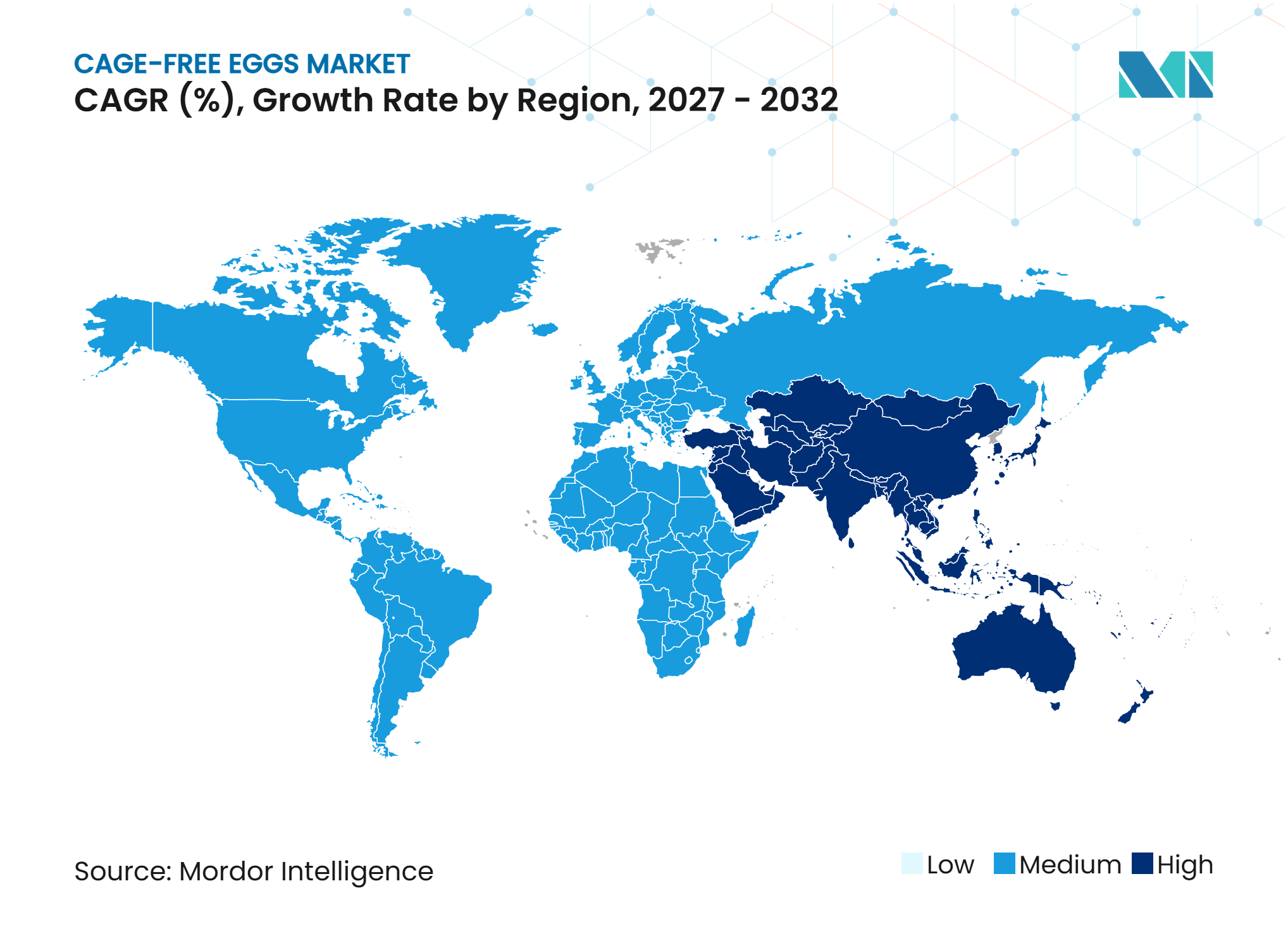
| Fastest Growing Market | Asia-Pacific |
| Largest Market | North America |
| Market Concentration | Low |
Major Players *Disclaimer: Major Players sorted in no particular order Image © Mordor Intelligence. Reuse requires attribution under CC BY 4.0. | |
Cage-Free Eggs Market Analysis by Mordor Intelligence
The cage-free eggs market size is projected to expand from USD 6.5 billion in 2026 to USD 8.34 billion by 2032, registering a CAGR of 4.1% between 2027 and 2032. Regulations and retailer commitments are shifting procurement away from caged supply, especially where producers serve several jurisdictions. Consumer demand for welfare-focused and specialty eggs is supporting higher-value product offerings, even when egg prices remain elevated. Foodservice buyers are also increasing demand for processed formats that improve consistency, handling, and food safety. Producers with laying, breaking, processing, and distribution assets can serve these requirements more effectively than shell-egg-only operators. Recurring avian influenza losses and the higher cost of cage-free housing remain material constraints on supply planning across the cage-free eggs market.
Key Report Takeaways
-
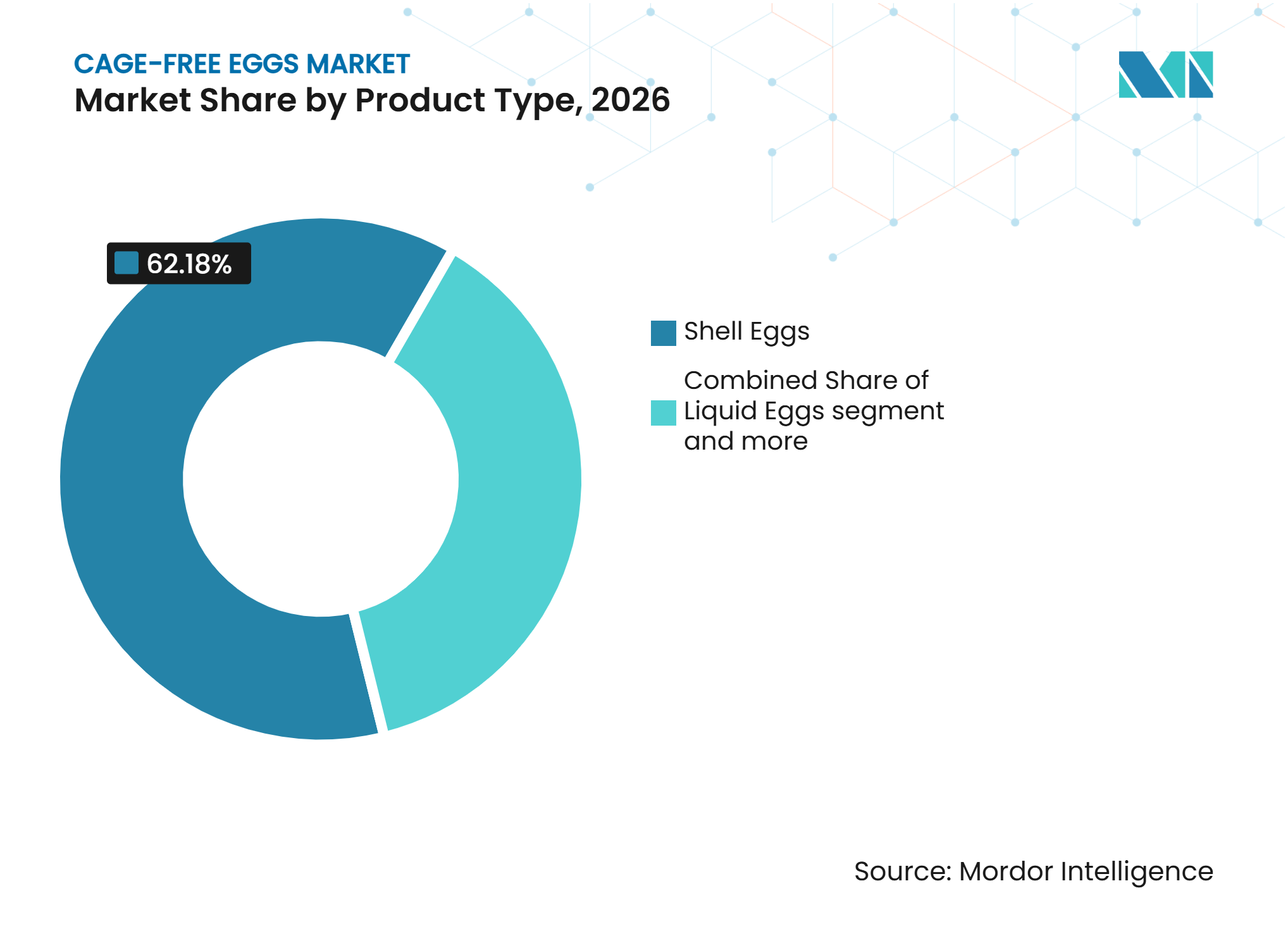
By product type, shell eggs accounted for the largest share of the cage-free eggs market, at 62.18% in 2026, while liquid eggs are projected to grow at the fastest CAGR of 4.65% during 2027-2032.
-
By color, brown eggs accounted for the largest share, at 72.57% in 2026, while white eggs are projected to grow at the fastest CAGR of 4.36% during 2027-2032.
-
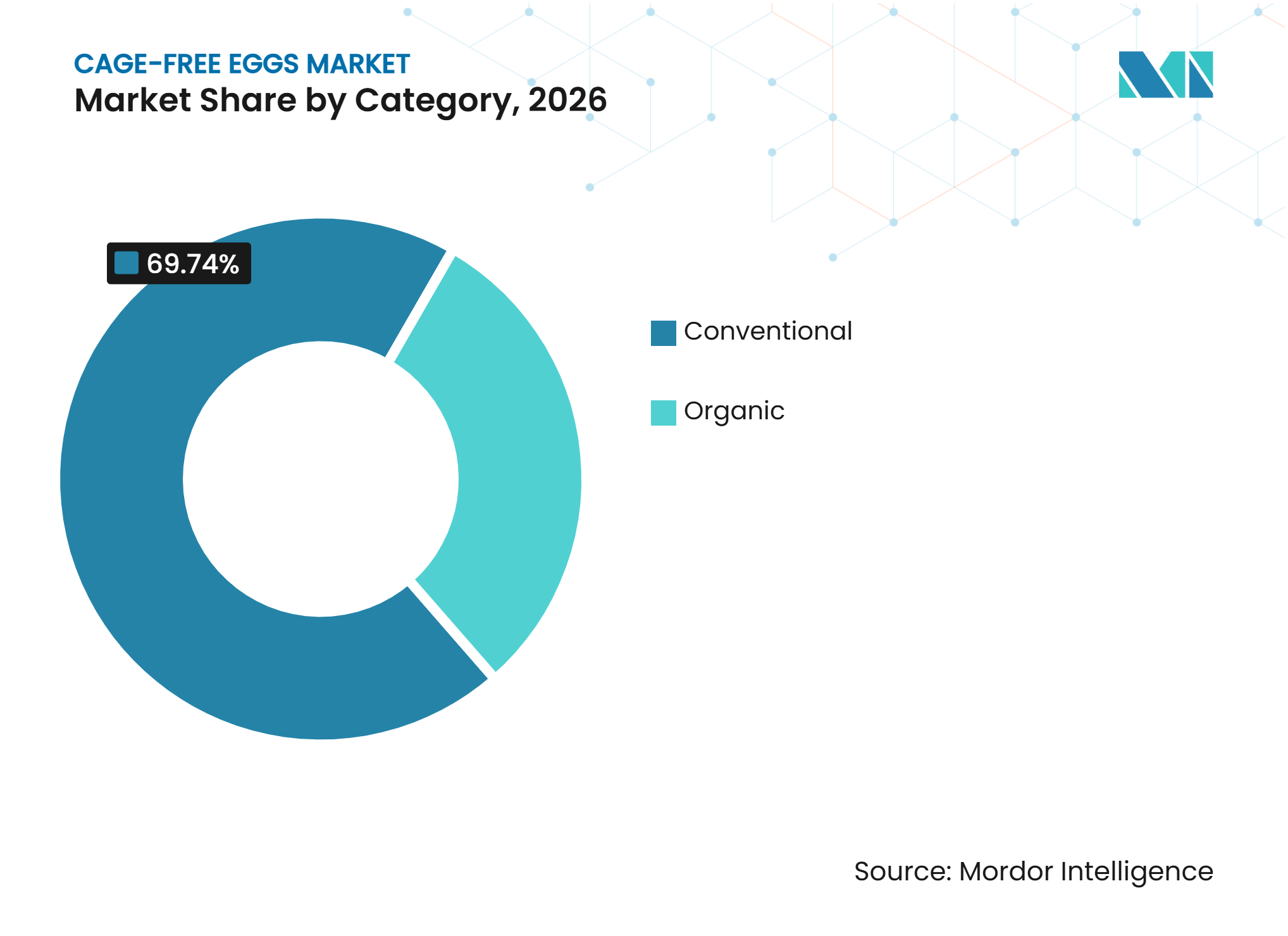
By category, conventional cage-free eggs represented the dominant volume tier in 2026, while the source material does not quantify a 2027-2032 CAGR for either conventional or organic products.
-
By distribution channel, off-trade accounted for the largest share, at 64.45% in 2026, while on-trade is projected to grow at the fastest CAGR of 7.32% during 2027-2032.
-
By geography, North America accounted for the largest share of the cage-free eggs market, at 39.15% in 2026, while Asia-Pacific is projected to grow at the fastest CAGR of 6.12% during 2027-2032.
Note: Market numbers in this report are based on Mordor Intelligence's proprietary estimation framework, which combines nine months of actuals with Q4 projections for base year 2026.
Market Trends and Insights
Drivers Impact Analysis of Cage-Free Eggs Market*
| Driver | (~) % Impact on CAGR Forecast | Geographic Relevance | Impact Timeline |
|---|---|---|---|
| Animal Welfare Regulation and Retail Commitments | +1.2% | Global, with concentrated near-term effect in North America and Europe | Short term (≤ 2 years) |
| Premiumization of Specialty Eggs | +0.8% | North America and Europe, with spillover to Asia-Pacific urban markets | Medium term (2-4 years) |
| Expansion of Foodservice and Processed Egg Demand | +0.6% | Global, with fastest adoption in North America and Asia-Pacific | Medium term (2-4 years) |
| Retail and E-Commerce Availability | +0.4% | Asia-Pacific, with North America and Europe as supplementary markets | Long term (≥ 4 years) |
| Corporate Procurement Traceability and Transparency | +0.4% | Global | Long term (≥ 4 years) |
| Conversion of Large-Scale Layer Capacity | +0.5% | North America and Europe, with early gains in China, Malaysia, and Vietnam | Medium term (2-4 years) |
| Source: Mordor Intelligence | |||
Animal Welfare Regulation and Retail Commitments
Regulation and retailer commitments are moving cage-free procurement from a niche purchasing decision toward a formal supply requirement. In 2025, 10 U.S. states, including California, Michigan, Colorado, and Oregon, required eggs sold within their borders to come from cage-free hens. The European Commission also gathered evidence in 2025 for changes to animal welfare legislation connected with the End the Cage Age initiative[1]. Retailers operating nationally can avoid managing parallel inventory by applying a common sourcing standard across stores. This approach strengthens demand visibility for producers that can document housing practices and flock management. Legal disputes and varied implementation dates can still affect the timing of conversion decisions in the cage-free eggs market.
Premiumization of Specialty Eggs
Specialty eggs enable producers to recover a portion of the additional costs associated with cage-free production, including investments in housing systems, welfare compliance, certification, and supply chain management. The price differential supports product ladders that differentiate cage-free, organic, and other verified claims, allowing producers and retailers to serve consumers with varying preferences and willingness to pay. Cal-Maine reported specialty egg sales volume of 121.8 million dozen in the fourth quarter of fiscal 2025, representing 39.1% of its total dozen sales. Producers can leverage verified welfare and traceability claims, supported by transparent labeling and third-party certifications, to encourage repeat purchases among consumers who value production standards. Therefore, the cage-free eggs market rewards suppliers that maintain credible certifications, consistent quality, reliable supply, and clear labeling.
Expansion of Foodservice and Processed-Egg Demand
Foodservice demand is expanding the role of liquid and processed eggs in the cage-free eggs market. Liquid eggs give kitchens a pasteurized input that supports portion control and reduces cracking and preparation time. Cal-Maine committed USD 15 million to expand its liquid egg processing facility in Blackshear, Georgia, with a focus on extended shelf-life products for foodservice customers. This investment shows that value is moving beyond shell-egg production toward processing capability. Operators with breaking plants and reliable cold-chain distribution can better address institutional requirements. The shift also raises the cost of competing for producers that do not have downstream assets.
Retail and E-Commerce Availability
Greater retail availability gives consumers more opportunities to choose cage-free products during routine grocery purchases. Supermarkets use carton labels and third-party claims to explain welfare and sourcing attributes at the shelf. Online sales can add farm information, subscription options, and repeat delivery models that are harder to present in a physical store. These channels can be relevant in urban Asia-Pacific markets where specialty food purchasing is becoming more visible. Wider availability does not remove the price challenge for shoppers in cost-sensitive markets. It does, however, allow the cage-free eggs market to reach buyers who may not encounter these products through traditional foodservice channels.
Restraints Impact Analysis of Cage-Free Eggs Market*
| Restraint | (~) % Impact on CAGR Forecast | Geographic Relevance | Impact Timeline |
|---|---|---|---|
| Higher Housing, Labor, and Operating Costs | -0.9% | Global, most acute in transition markets in Asia-Pacific and South America | Short term (≤ 2 years) |
| Avian Influenza and Supply Disruptions | -0.7% | North America and Asia-Pacific | Short term (≤ 2 years) |
| Lower Housing Density and Conversion Lead Times | -0.5% | Global, most acute in emerging cage-free markets | Medium term (2-4 years) |
| Fragmented Definitions and Inconsistent Welfare Claims | -0.3% | Global, with greater significance in Asia-Pacific markets | Long term (≥ 4 years) |
| Source: Mordor Intelligence | |||
Higher Housing, Labor, and Operating Costs
Cage-free systems require more space, labor, and management than conventional cages, resulting in higher operating costs. Producers must invest in larger housing facilities, enriched environments, egg collection systems, and additional biosecurity and flock-monitoring measures. Feed remains a significant expense, as hens in cage-free systems expend more energy through increased movement, which can raise feed consumption per egg produced. These cost dynamics make conversion challenging for small-scale producers and in regions where consumers have limited willingness or ability to pay a premium. Retailers may also resist price increases in basic egg categories, particularly when price-sensitive consumers prioritize affordability over production attributes. Consequently, cost discipline, including the ability to manage feed, labor, and capital expenses, will continue to influence the pace of cage-free egg market adoption.
Avian Influenza and Supply Disruptions
Highly pathogenic avian influenza can remove supply quickly and disrupt both pricing and contract planning. United States Department of Agriculture (USDA) Agricultural Marketing Service data showed 30.6 million birds lost in the United States through April 2025, including 11 million birds from cage-free systems. The losses show that cage-free houses retain significant disease exposure despite their different housing model. Producers must therefore invest in biosecurity, surveillance, replacement flocks, and continuity planning. Supply disruptions can make buyers reconsider how quickly they can shift procurement to cage-free volumes. They also make it harder to keep pricing stable across the cage-free eggs market.
*Our forecasts treat driver/restraint impacts as directional, not additive. The impact forecasts reflect baseline growth, mix effects, and variable interactions.
Cage-Free Eggs Market Segment Analysis
By Product Type:
Shell Eggs Lead While Liquid Eggs Gain Foodservice DemandShell eggs held 62.18% of market value in 2026, supported by established household purchasing patterns and broad retail distribution. They remain the default product format for consumers who cook at home and want visible freshness cues. Their role is strongest in supermarkets, hypermarkets, convenience stores, and local retail outlets. Producers can use cartons, certifications, and farm-level claims to make cage-free attributes visible at purchase. Shell eggs also provide the main volume base that supports larger flock conversion investments. These characteristics sustain their position within the cage-free eggs market even as buyers explore other formats.
The liquid eggs segment is projected to grow at a CAGR of 4.65% from 2027 to 2032, driven by demand from restaurants, caterers, food processors, and institutional kitchens that require efficient, consistent, and ready-to-use egg products. Pasteurized liquid egg products improve portion control, support product consistency, and reduce the labor required to crack, separate, and handle shell eggs. These formats can also help buyers meet food safety documentation requirements by providing pasteurized products with more standardized handling processes. Integrated processors are better positioned to capture this value by supplying liquid egg products alongside shell eggs, while suppliers that sell only shell eggs may have more limited value-capture opportunities. Powdered egg products remain relevant for ingredient applications, food manufacturing, and use cases requiring a longer shelf life; however, the source material does not provide their market share or forecast growth.



By Color:
Brown Eggs Retain Preference While White Eggs Improve Value PositioningBrown eggs accounted for 72.57% of the cage-free eggs market share in 2026, reflecting strong consumer associations with farm-style and specialty production. In North America and Europe, these associations often complement the welfare and provenance messages used on cage-free packaging. The color itself does not indicate a difference in welfare performance. It nevertheless remains a useful commercial signal in markets where consumers associate brown shells with natural production. Producers with brown-egg supply can pair this preference with credible welfare verification. This supports continued brown-egg leadership in the cage-free eggs market.
The white eggs segment is projected to grow at a 4.36% CAGR from 2027 to 2032. Their lower production cost can help producers narrow the price difference between cage-free and conventional offerings in price-sensitive retail settings. In several Asia-Pacific markets, consumers perceive white eggs as equally or more hygienic than brown eggs, supporting their acceptance across different retail formats. Producers offering both egg colors under the same welfare standards can tailor their product assortments to regional preferences while maintaining consistent quality and production practices. This flexibility helps retail buyers serve diverse consumer segments, balance price and preference considerations, and optimize shelf assortments across markets.
By Category:
Conventional Cage-Free Products Carry Volume While Organic Products Command Premium ValueConventional cage-free eggs accounted for 69.74% of the cage-free eggs market share in 2026. Retail and foodservice commitments usually specify cage-free housing without requiring organic certification. This makes conventional products the primary supply base for large procurement programs. Their lower cost relative to organic products also makes them more accessible to a wider group of shoppers. The Open Wing Alliance reported fulfillment of 92% of corporate commitments due by 2024 or earlier, showing the scale of demand for verified cage-free supply[2]. Conventional supply will remain central to the cage-free eggs market because it connects welfare requirements with mainstream purchasing budgets.
The organic cage-free segment is projected to grow at a 5.21% CAGR from 2027 to 2032. This category requires cage-free housing, organic feed, and controls on synthetic pesticides and antibiotics. It therefore carries a more complex operating and certification requirement than conventional cage-free production. The added requirements create a premium position for buyers seeking combined welfare and environmental claims. They also expose suppliers to feed cost volatility and longer audited supply chains. The category offers margin potential, but it is unlikely to replace conventional cage-free products as the core volume tier.

By Distribution Channel:
Off-Trade Remains the Volume Base While On-Trade ExpandsOff-trade channels held 64.45% of the cage-free eggs market in 2026, led by supermarkets, hypermarkets, convenience stores, and online retailers. Household purchases favor these channels because cartons, labels, and certifications are readily visible. Retailers can use shelf placement and product information to distinguish cage-free products from conventional alternatives. Supermarkets and hypermarkets continue to provide the largest routine shopping base. Online retail can add subscription models and detailed producer information. Together, these formats preserve off-trade leadership in the cage-free eggs market.
On-trade channels are forecast to grow at a 7.32% CAGR from 2027 to 2032. Restaurants, hotels, caterers, healthcare operators, and university food services need consistent volumes and reliable food safety documentation. These buyers are increasingly working through corporate commitments with fixed implementation schedules. Large foodservice groups can favor suppliers with processing capability and dependable delivery coverage. The Open Wing Alliance identified Compass Group as a Spotlight Leader in its 2025 assessment, which illustrates the organized nature of this procurement transition. The channel’s growth will support suppliers that can combine cage-free output with processing and logistics capabilities.
Geography Analysis
North America: Large-Scale Conversion Supports Regional Leadership
North America accounted for 39.15% of the cage-free eggs market share in 2026, with the United States serving as the regional center of production and investment. State regulations and national retailer sourcing programs are prompting suppliers to transition production facilities and expand cage-free housing capacity ahead of compliance deadlines. USDA and APHIS oversight supports flock reporting, disease monitoring, and biosecurity requirements, which remain critical as producers scale operations. Canada and Mexico are also contributing to regional demand through food safety regulations, growing consumer interest in animal welfare, and the development of emerging cage-free production lines. The region’s key challenge will be protecting new capacity from avian influenza outbreaks while maintaining an affordable and consistent supply for retailers, foodservice operators, and consumers.
Asia-Pacific: Faster Growth Follows Investment and Corporate Procurement
Asia-Pacific is projected to grow at a 6.12% CAGR from 2027 to 2032, the fastest regional rate in the source material. Urban consumer awareness and multinational foodservice purchasing are expanding the customer base for verified cage-free products. The study also showed a meaningful price premium for cage-free eggs, which indicates room for specialty products where supply remains limited. Malaysia is building regional capacity, while India is developing farm-to-restaurant and cooperative supply models. China’s large producers are adding processing as well as laying capacity, which can help them supply retail and foodservice customers. Growth will remain uneven because standards, consumer purchasing power, and production infrastructure vary widely across the region.
Europe, South America, and Middle East and Africa: Regulation, Commitment Fulfillment, and Early Supply Development
Europe is advancing through animal welfare legislation, established certification systems, and investment in alternative housing. The European Commission’s 2025 policy work keeps a cage phase-out under active consideration[3]. Balticovo’s InvestEU-supported project shows that financing institutions are supporting capacity conversion, sorting, and modernization. In South America, corporate commitment fulfillment is strengthening demand, but producers still need reliable processing and logistics systems. Middle East and Africa markets remain at an earlier stage, with supply growing in response to corporate foodservice procurement. Across these regions, compliance factors increasingly affect access to multinational buyers. The cage-free eggs market will develop at different speeds, but traceable production and scalable supply are common requirements.
Competitive Landscape
Market Concentration
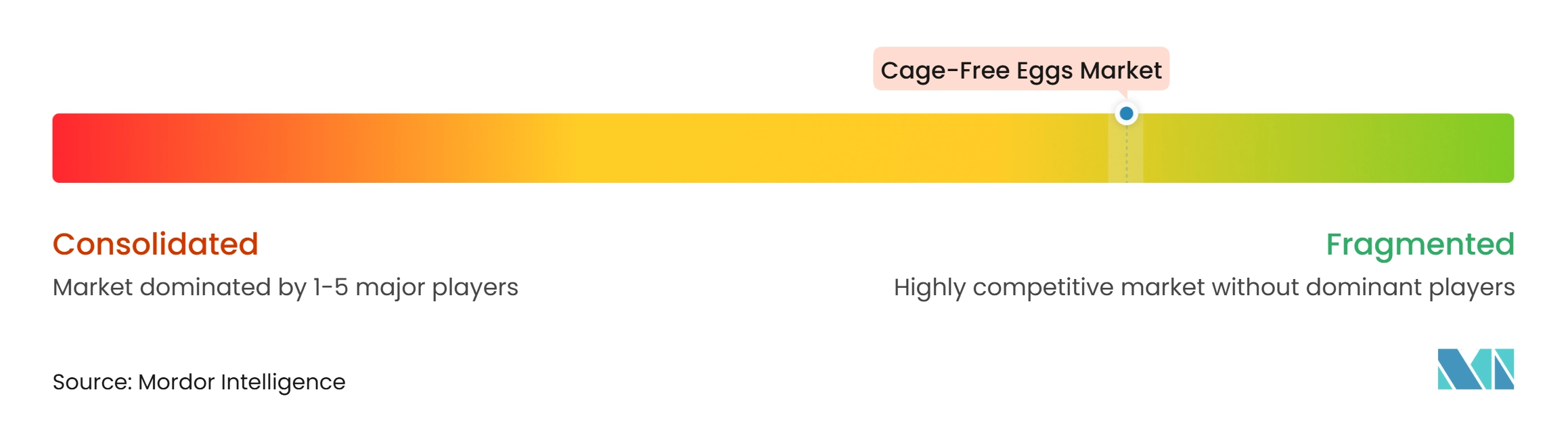
The cage-free eggs market includes large integrated producers and a broad group of regional suppliers. Major producers compete through flock scale, pullet supply, processing capacity, and distribution reach. Cal-Maine’s ongoing USD 60 million cage-free expansion projects are expected to add 1.1 million cage-free hens and 250,000 pullets, adding scale in an environment where retailers and foodservice buyers need dependable long-term supply. The company also expanded its downstream position through the 2025 acquisition of Echo Lake Foods, linking its egg business more closely with prepared foods. Smaller producers can compete where they offer verified welfare practices, local delivery, specialized formats, or customer relationships that national suppliers cannot easily replicate.
Processing is becoming a central competitive factor because foodservice demand favors dependable liquid and extended shelf-life products. Cal-Maine’s Blackshear facility investment is one example of a producer building capacity for this part of the value chain. Balticovo’s 2025 program combines aviary housing with a new sorting line, which expands compliant output while improving the ability to handle larger customer orders. These investments can raise the investment threshold for new entrants and can make it easier for established producers to serve large retail and institutional contracts.
Regional entrants in Asia and Europe are using aviary capacity and welfare programs to compete for multinational contracts. Buyers increasingly assess supply partners on reporting, certification, biosecurity, delivery consistency, and their ability to respond when disease events interrupt normal supply. The Open Wing Alliance’s fulfillment data shows why corporate buyers need suppliers that can substantiate progress against public commitments. Technology that improves environmental control and flock monitoring can help meet these requirements when it is paired with sound farm management. Competitive advantage is tied to operational reliability as much as output volume, which leaves space for regional specialists while favoring integrated suppliers in large foodservice and retail accounts.
Cage-Free Eggs Industry Leaders
-
Cal-Maine Foods, Inc.
-
Rose Acre Farms
-
Daybreak Foods, Inc.
-
Hillandale Farms
-
Versova Holdings LLP
- *Disclaimer: Major Players sorted in no particular order
Cage-Free Eggs Market Companies Covered in this Report
- Cal-Maine Foods, Inc.
- Rose Acre Farms
- Daybreak Foods, Inc.
- Hillandale Farms
- Versova Holdings LLP
- MPS Egg Farms
- Center Fresh Group
- Mid-States Specialty Eggs
- Michael Foods, Inc.
- Herbruck's Poultry Ranch
- Gemperle Family Farms
- Prairie Star Farms
- Sauder's Eggs
- Kreider Farms
- Opal Foods
- Hickman's Egg Ranch
- Cooper Farms
- Hidden Villa Ranch
- ISE America, Inc.
- Wabash Valley Produce
Recent Industry Developments in Cage-Free Eggs Market
- June 2026: Abhi Eggs expanded its premium nutrition portfolio with new Cage-Free and Free-Range egg variants. The company said the launch responds to rising demand for ethically sourced, nutrition-focused eggs and broadens choice in its premium range.
- April 2026: Michael Foods launched three Spring 2026 breakfast innovations, including a cage-free egg white bite under its foodservice portfolio. The products were designed for portable, protein-forward menus and became available through distribution during the season.
- September 2025: Jaya Grocer introduced JS Eggs, its house-brand cage-free eggs, at its 1 Utama store in Petaling Jaya. It was described as the first major Malaysian retailer to launch a cage-free egg house brand, with a nationwide rollout planned.
- June 2025: Herbruck launched ethically raised Outdoor Cage-Free eggs under its Love Your Eggs brand. The eggs were initially available through retailers in Michigan, Wisconsin, and Illinois, including Meijer, Piggly Wiggly, and Woodman’s Markets.
Global Cage-Free Eggs Market Report Scope
Segmentation Overview
| Shell Eggs |
| Liquid Eggs |
| Other Product Types |
| White Eggs |
| Brown Eggs |
| Conventional |
| Organic |
| On-Trade | |
| Off-Trade | Convenience Stores |
| Supermarkets/Hypermarkets | |
| Online Retail Stores | |
| Other Off-Trade Channels |
| North America | United States |
| Canada | |
| Mexico | |
| Rest of North America | |
| South America | Brazil |
| Argentina | |
| Colombia | |
| Chile | |
| Peru | |
| Rest of South America | |
| Europe | Germany |
| United Kingdom | |
| France | |
| Italy | |
| Spain | |
| Netherlands | |
| Poland | |
| Belgium | |
| Sweden | |
| Rest of Europe | |
| Asia-Pacific | China |
| India | |
| Japan | |
| Australia | |
| Indonesia | |
| Thailand | |
| Malaysia | |
| Singapore | |
| Rest of Asia-Pacific | |
| Middle East and Africa | Saudi Arabia |
| United Arab Emirates | |
| Turkey | |
| South Africa | |
| Egypt | |
| Nigeria | |
| Morocco | |
| Rest of Middle East and Africa |
| By Product Type | Shell Eggs | |
| Liquid Eggs | ||
| Other Product Types | ||
| By Color | White Eggs | |
| Brown Eggs | ||
| By Category | Conventional | |
| Organic | ||
| By Distribution Channel | On-Trade | |
| Off-Trade | Convenience Stores | |
| Supermarkets/Hypermarkets | ||
| Online Retail Stores | ||
| Other Off-Trade Channels | ||
| By Geography | North America | United States |
| Canada | ||
| Mexico | ||
| Rest of North America | ||
| South America | Brazil | |
| Argentina | ||
| Colombia | ||
| Chile | ||
| Peru | ||
| Rest of South America | ||
| Europe | Germany | |
| United Kingdom | ||
| France | ||
| Italy | ||
| Spain | ||
| Netherlands | ||
| Poland | ||
| Belgium | ||
| Sweden | ||
| Rest of Europe | ||
| Asia-Pacific | China | |
| India | ||
| Japan | ||
| Australia | ||
| Indonesia | ||
| Thailand | ||
| Malaysia | ||
| Singapore | ||
| Rest of Asia-Pacific | ||
| Middle East and Africa | Saudi Arabia | |
| United Arab Emirates | ||
| Turkey | ||
| South Africa | ||
| Egypt | ||
| Nigeria | ||
| Morocco | ||
| Rest of Middle East and Africa | ||
Key Questions Answered in the Report
What is the projected growth rate for cage-free eggs?
The cage-free eggs market is projected to grow at a 4.1% CAGR from 2027 to 2032, increasing from USD 6.5 billion in 2026 to USD 8.34 billion by 2032. Regulation, retailer procurement programs, and demand for verified specialty products support this expansion.
Which product format has the largest share of cage-free eggs?
Shell eggs held 62.18% of value in 2026, supported by routine household use and widespread retail availability. Their established presence gives producers a large volume base for housing conversion and branded welfare claims.
Which cage-free egg format is growing fastest?
Liquid eggs are projected to grow at a 4.65% CAGR from 2027 to 2032 as foodservice buyers seek pasteurized, portion-controlled products. Processing capacity and dependable refrigerated distribution will remain important for suppliers pursuing this demand.
Which region leads cage-free egg sales?
North America led with a 39.15% share in 2026, supported by U.S. state requirements, retailer commitments, and producer investment. The region also has large integrated suppliers that can combine laying capacity, processing, and national distribution.