
CA 125 Test Market Size and Share
Market Overview
| Study Period | 2020 - 2031 |
|---|---|
| Market Size (2026) | USD 1.02 Billion |
| Market Size (2031) | USD 1.37 Billion |
| Growth Rate (2026 - 2031) | 6.12 % |
| Fastest Growing Market | Asia-Pacific |
| Largest Market | North America |
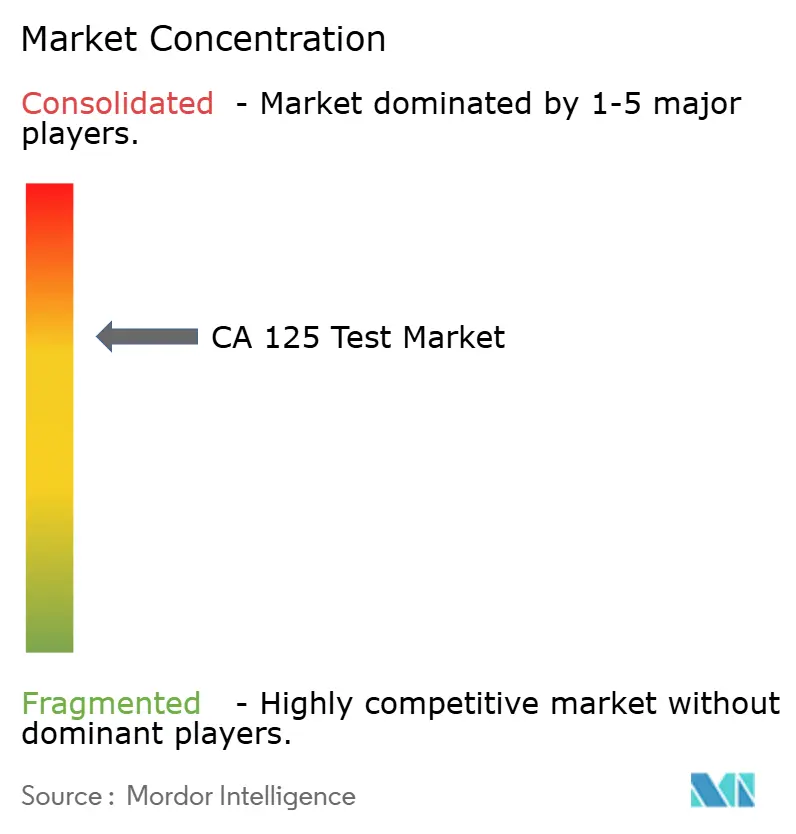
| Market Concentration | Medium |
Major Players *Disclaimer: Major Players sorted in no particular order Image © Mordor Intelligence. Reuse requires attribution under CC BY 4.0. | |
CA 125 Test Market Analysis by Mordor Intelligence
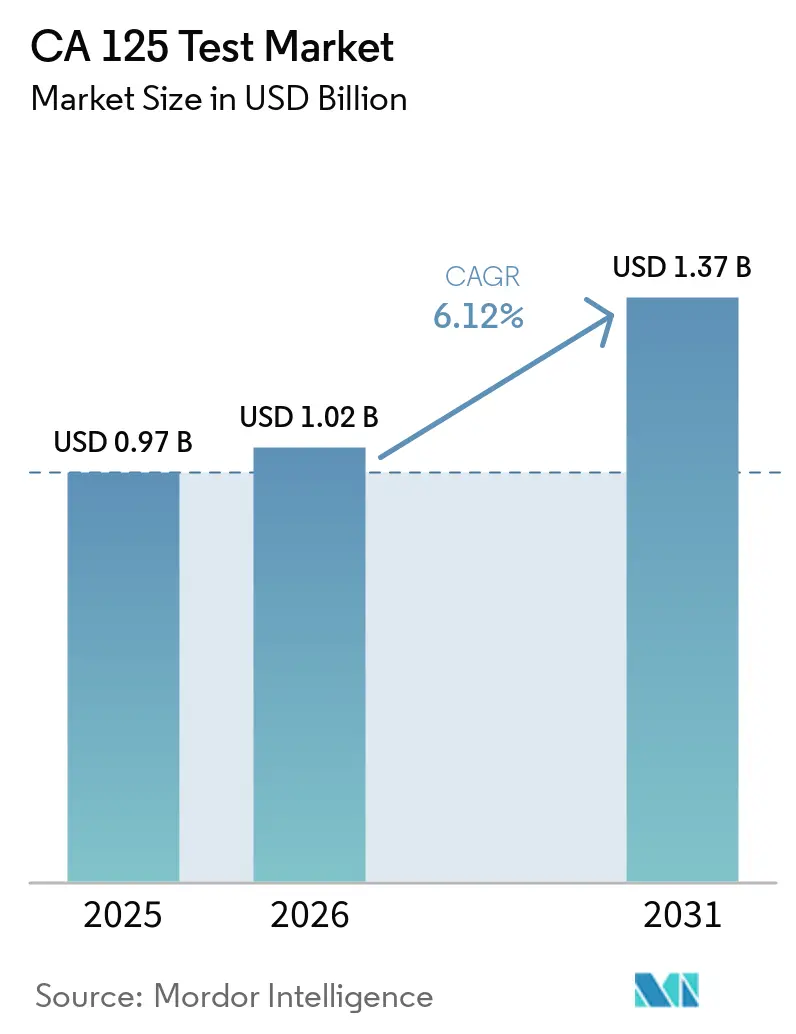
The CA 125 testing market is projected to be USD 0.97 billion in 2025, USD 1.02 billion in 2026, and reach USD 1.37 billion by 2031, growing at a CAGR of 6.12% from 2026 to 2031. CA 125 testing remains closely linked to ovarian carcinoma follow-up, where the test supports post-treatment surveillance and treatment-response assessment. The CA 125 testing market also benefits from its growing use alongside other biomarkers in gynecologic diagnostic panels. Global ovarian cancer incidence creates a durable need for surveillance, with 330,731 new cases recorded in 2024 and annual cases projected to reach 477,000 by 2050. Reimbursement rules, installed immunoassay systems, and the use of CA 125 in multi-marker workflows support recurring test demand. These conditions give established platform suppliers an advantage because laboratories commonly add CA 125 to existing analyzer menus rather than procure a separate system.
Key Report Takeaways
- By product type, analyzers and instruments held 52.42% of the CA 125 testing market share in 2025, while reagents and kits are forecasted to grow at a 6.47% CAGR through 2031.
- By technology, automated immunoassay systems accounted for 43.53% of the CA 125 testing market share in 2025, while semi-automated immunoassay systems are projected to advance at a 7.23% CAGR through 2031.
- By indication, cancer represented 40.16% of the CA 125 testing market in 2025, while endometriosis is expected to expand at a 6.72% CAGR through 2031.
- By end-user, hospitals accounted for 42.34% of the CA 125 testing market share in 2025, while clinical laboratories are forecasted to record the highest CAGR of 7.63% through 2031.
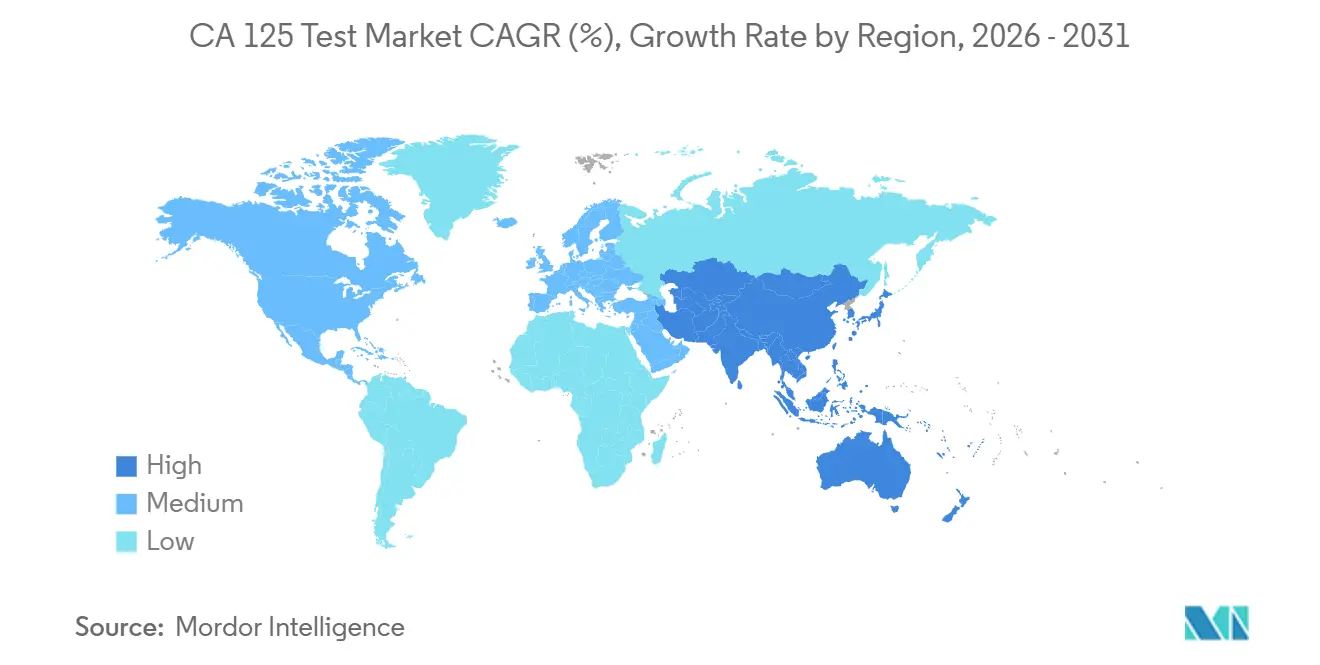
- By geography, North America held 47.33% of revenue in 2025, while Asia-Pacific is forecasted to grow at an 8.24% CAGR through 2031.
Note: Market size and forecast figures in this report are generated using Mordor Intelligence’s proprietary estimation framework, updated with the latest available data and insights as of January 2026.
Market Trends and Insights
Drivers Impact Analysis of CA 125 Test Market*
| Driver | (~) % Impact on CAGR Forecast | Geographic Relevance | Impact Timeline |
|---|---|---|---|
| Rising Ovarian Cancer Surveillance Demand | +1.6% | Global | Medium term (2-4 years) |
| Expansion of Automated Immunoassay Menus in Core Laboratories | +1.3% | North America, Europe, East Asia | Medium term (2-4 years) |
| Bundling of CA 125 With HE4 and ROMA Workflows | +1.1% | North America and Europe | Medium term (2-4 years) |
| Reimbursement Pressure Favoring Earlier Risk Stratification | +0.7% | North America | Short term (≤ 2 years) |
| Self-Collection and Decentralized Sample Logistics | +0.5% | APAC, MEA | Long term (≥ 4 years) |
| AI-Enabled Reflex Testing and Result Triage | +0.6% | North America, Europe, and Asia-Pacific | Long term (≥ 4 years) |
| Source: Mordor Intelligence | |||
Rising Ovarian Cancer Surveillance Demand
The 330,731 ovarian cancer cases recorded globally in 2024 provide a large base for ongoing clinical monitoring.[1] A 2026 projection estimated that annual global cases could reach 477,000 by 2050.[2] In the United States, Medicare coverage recognizes CA 125 for specified ovarian and primary peritoneal carcinoma indications. The coverage framework supports repeat testing after therapy, which makes demand less dependent on a single clinical visit. The CA 125 testing market, therefore, relies on established care pathways as well as new diagnostic demand. Rising patient numbers could increase the number of patients who enter these follow-up pathways across high-income and emerging health systems.
Expansion of Automated Immunoassay Menus in Core Laboratories
Automated platforms allow laboratories to run CA 125 within wider tumor-marker menus from a single blood sample. Siemens Healthineers offers CA 125 testing on its Atellica platform, and Roche offers the Elecsys CA 125 II assay within its laboratory diagnostics portfolio.[3]This model reduces the operational burden of adding a test once an analyzer has already been installed. It can also make CA 125 easier to order with other tumor markers when clinicians require a broader laboratory assessment. Japan’s health ministry sets reimbursement and laboratory diagnostics policies that shape the adoption environment for automated testing. The CA 125 testing market is supported when laboratories replace smaller systems with high-throughput analyzers that have established tumor-marker menus.
Bundling of CA 125 With HE4 and ROMA Workflows
CA 125 is increasingly used with HE4 in the Risk of Ovarian Malignancy Algorithm, or ROMA, for women with an adnexal mass. Abbott describes its ovarian cancer biomarker offering as incorporating CA 125, HE4, and ROMA. Medicare’s local coverage policy addresses multimarker serum tests related to ovarian cancer testing. The paired workflow increases the value of a system that can run both assays on the same platform. It also favors suppliers with a broad oncology menu during laboratory procurement. The CA 125 testing market gains volume when the marker is ordered as part of a defined clinical workflow rather than as an isolated test. Changes in clinical thresholds or guidelines could still affect how CA 125 is weighted within a multi-marker assessment.
AI-Enabled Reflex Testing and Result Triage
A 2025 study of 9,799 patients with adnexal masses found that a LightGBM model using CA 125, age, and ROMA achieved an AUC of 0.9675. The study reported that the model could predict ovarian cancer 17 days earlier than conventional pathological assessment. A separate 2026 multicenter study across 11 centers in 6 countries reported an AUC of 0.930 for a deep-learning system that included CA 125 as an optional predictor. These findings position the test as a useful data input for clinical decision support rather than only a standalone result. Laboratory information systems could use structured risk outputs to support reflex testing workflows where they are clinically and operationally appropriate. Such use could improve the practical value of results without changing the underlying assay.
Restraints Impact Analysis of CA 125 Test Market*
| Restraint | (~) % Impact on CAGR Forecast | Geographic Relevance | Impact Timeline |
|---|---|---|---|
| Limited Test Specificity in Benign Gynecologic Conditions | -0.9% | Global, especially premenopausal populations | Medium term (2-4 years) |
| Clinical Preference for Multi-Marker Panels Over CA 125 Alone | -0.7% | North America & EU | Medium term (2–4 years) |
| Budget Constraints in Low-Resource Laboratory Networks | -0.5% | MEA, South America, Southeast Asia | Long term (≥ 4 years) |
| Low Sensitivity for Early-Stage Ovarian Cancer Detection | -0.6% | Global | Long term (≥ 4 years) |
| Source: Mordor Intelligence | |||
Limited Test Specificity in Benign Gynecologic Conditions
CA 125 levels can be elevated in benign conditions, including endometriosis, fibroids, and pelvic inflammatory disease. This limits the test’s diagnostic specificity, particularly for premenopausal women. A 2025 external validation study examined CA 125 and age-based models in 342,278 women tested in English primary care. Age-adjusted thresholds improved specificity compared with a fixed 35 U/mL cutoff, but performance remained lower in women under 50. False-positive results can lead to additional imaging, specialist referrals, and sometimes laparoscopy. This may limit clinician confidence in standalone CA 125 testing for lower-risk patients and supports the move toward panel-based assessment.
Low Sensitivity for Early-Stage Ovarian Cancer Detection
CA 125 is elevated in only 50% of Stage I ovarian cancer cases, which limits its use as a standalone population-screening test. This limitation restricts the range of settings in which the assay can serve as the primary diagnostic tool. Newer diagnostic approaches are evaluating CA 125 with other biomarkers and clinical information. A 2026 study in endometriosis showed that combining CA 125 with CXCL12 and VEGF improved the diagnostic AUC from 0.6260 for CA 125 alone to 0.8823 for the combined panel. This evidence supports the marker’s role as one component of a broader diagnostic approach. It also places pressure on suppliers that only offer a single assay and do not support multi-marker workflows.
*Our forecasts treat driver/restraint impacts as directional, not additive. The impact forecasts reflect baseline growth, mix effects, and variable interactions.
CA 125 Test Market Segment Analysis
By Product Type:
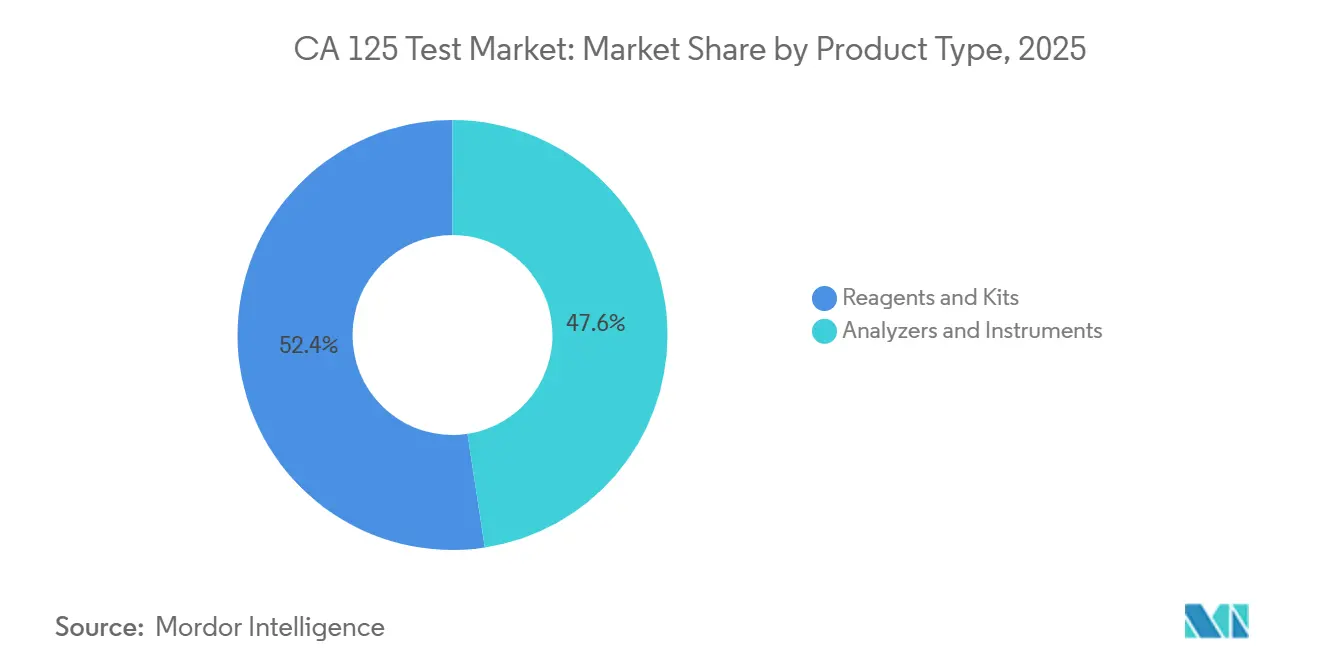
Instruments Lead Revenue While Reagents Support GrowthAnalyzers and instruments accounted for 52.42% of the CA 125 testing market size in 2025. This position reflects the cost of high-throughput and semi-automated immunoassay equipment used by laboratories. An installed analyzer can create ongoing demand for compatible reagents and consumables. That relationship gives established platform suppliers recurring revenue from their existing laboratory base.
Reagents and kits are forecasted to grow at a 6.47% CAGR through 2031, the fastest rate among product categories. The growth outlook reflects the expansion of CA 125 menus on installed systems and more frequent testing within multi-marker pathways. European in vitro diagnostic rules also increase documentation demands for suppliers that seek to register relevant products in the region.
By Technology:
Automated Systems Retain Scale While Semi-Automated Immunoassay Systems ExpandAutomated immunoassay systems held 43.53% of the CA 125 testing market share in 2025. These systems are used in laboratories that process many analytes and require standardized workflows. CA 125 can be run with other tumor markers on the same platform, which supports routine laboratory use.
Semi-automated immunoassay systems are forecasted to grow at a CAGR of 7.23% through 2031. Their expansion is driven by the increasing demand for cost-effective and rapid CA 125 testing in community hospitals, diagnostic centers, and decentralized laboratory settings. These systems offer a practical balance between automation and affordability, making them attractive for routine ovarian cancer monitoring and follow-up testing. Growth is particularly strong in emerging healthcare markets, although fully automated platforms remain the preferred choice in large reference laboratories due to their higher throughput and workflow efficiency.
By Indication:
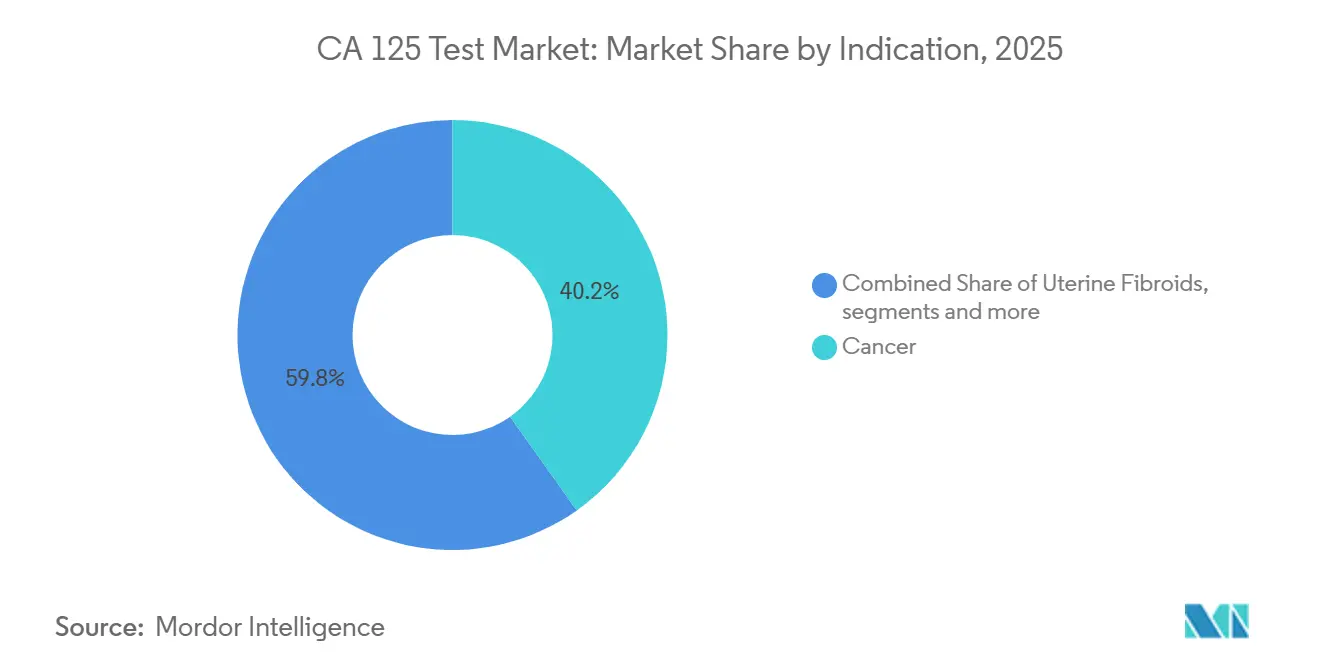
Cancer Remains the Core Use, While Endometriosis Gains AttentionCancer accounted for 40.16% of the CA 125 testing market in 2025. CA 125 is established in the monitoring of epithelial ovarian carcinoma, and it is elevated in 80% of patients with that disease type. Its use in treatment follow-up provides a stable clinical base for testing. Uterine fibroids and liver disease provide smaller indication areas, but their clinical use is not as consistently defined by formal protocols.
Endometriosis is forecasted to grow at a 6.72% CAGR through 2031. The growth outlook reflects interest in non-surgical diagnostic pathways and the use of CA 125 within multi-biomarker panels. In a 2026 prospective study of 188 patients in China, the CA 125, CXCL12, and VEGF panel reached an AUC of 0.8823, compared with 0.6260 for CA 125 alone. These activities support the use of CA 125 as part of a combined assessment rather than as a definitive test by itself.

By End-User:
Hospitals Provide the Largest Base While Clinical Laboratories Gain VolumeHospitals accounted for 42.34% of revenue in 2025. They remain important for baseline testing after surgery, monitoring during chemotherapy, and pelvic-mass workups that require CA 125 and HE4. Their laboratories also manage patients who need fast access to oncology teams and specialist services. This supports a reliable role for hospital-based testing even as work shifts to other settings.
Clinical laboratories are forecasted to grow at a 7.63% CAGR through 2031. Oncology monitoring is moving toward outpatient and reference laboratory networks with high-throughput automation and bulk reagent purchasing. Diagnostic centers also support periodic monitoring outside active hospital treatment. Academic and research organizations have a smaller revenue role, but they remain important because many multi-marker and AI-enabled approaches begin in clinical research.
Geography Analysis
North America CA 125 Test Market
North America held 47.33% of the CA 125 testing market share in 2025. Medicare coverage and local policy for ovarian cancer-related multimarker tests create a structured basis for testing in the United States. This framework supports repeat testing after therapy and helps laboratories plan for consistent volumes. Canada contributes through provincial oncology programs, while private hospitals in Mexico add demand for immunoassay platforms.
Europe and APAC CA 125 Test Market
Europe was the second-largest regional market in 2025, with Germany and the United Kingdom holding the largest national shares. France, Italy, and Spain contribute through public hospital procurement and centralized laboratory contracts. The European Union’s in vitro diagnostic regulation raises technical documentation and conformity assessment requirements for relevant immunoassay platforms. This favors suppliers that can maintain compliant portfolios and support customers through regulatory changes. Asia-Pacific is forecasted to grow at an 8.24% CAGR through 2031, supported by China’s oncology patient base, South Korean automation investment, India’s diagnostic networks, and Japan’s reimbursement environment.
MEA and South America CA 125 Test Market
The Middle East, Africa, and South America remain earlier-stage regions for CA 125 testing. Their growth depends on laboratory infrastructure, procurement capacity, and access to automated immunoassay systems. Private hospitals in Saudi Arabia and the United Arab Emirates are expanding oncology-testing capabilities, while South Africa has established academic hospital networks using major platforms. Brazil leads South American revenue through its private diagnostic laboratories and public oncology programs, while quantitative lateral-flow kits offer an accessible option for laboratories without full automation.
Competitive Landscape
The CA 125 testing market is moderately consolidated among major platform suppliers. Roche Diagnostics, Abbott Laboratories, and Siemens Healthineers have established installed bases in high-volume hospitals and reference laboratories. Their systems can run CA 125 with HE4, CA 19-9, CEA, and other tumor markers, which is important in procurement decisions. Abbott supports a biomarker approach that incorporates CA 125, HE4, and ROMA.
Fujirebio has a distinctive position because its OC 125 and M11 antibodies are used in CA 125 II assays across multiple major platforms. Siemens identifies the OC 125 antibody in its Atellica IM CA 125II method documentation. This gives Fujirebio exposure to assay activity beyond its own analyzer portfolio. DiaSorin, Tosoh, and Fujirebio offer alternatives where laboratories do not use the largest incumbent platforms. Competition centers on analyzer footprint, menu breadth, workflow fit, service support, and regulatory readiness.
Suppliers from China are gaining ground in price-sensitive settings with chemiluminescent platforms and multi-marker panels. Larger companies respond through broader menus, established service networks, and laboratory information system integration. AI-linked risk scoring could become another point of platform differentiation where laboratories use structured data for reflex workflows.
CA 125 Test Industry Leaders
-
F. Hoffmann-La Roche Ltd.
-
Abbott Laboratories
-
Siemens Healthineers AG
-
Danaher Corporation
-
Fujirebio Holdings, Inc.
- *Disclaimer: Major Players sorted in no particular order
CA 125 Test Market Companies Covered in this Report
- Abbott Laboratories
- Beckton Dickinson
- bioMérieux
- Bio-Rad Laboratories
- Danaher
- DiaSorin
- Roche
- Fujirebio Holdings, Inc.
- Hologic
- Ortho Clinical Diagnostics Holdings plc
- QIAGEN
- Quest Diagnostics
- Randox Laboratories
- Sekisui Diagnostics
- Shenzhen New Industries Biomedical Engineering
- Siemens Healthineers
- Sysmex
- Thermo Fisher Scientific
- Tosoh
- Werfen S.A.
Recent Industry Developments in CA 125 Test Market
- March 2026: Fujirebio Holdings, SRL Inc., and Shizuoka Cancer Center received manufacturing and marketing authorization from Japan’s Ministry of Health, Labor and Welfare for the “Fujinokuni HOPE Onco Panel,” a comprehensive genomic profiling system and the first Software as a Medical Device product in the H.U. Group to obtain MHLW authorization. The system integrates molecular and biomarker-based oncology diagnostics within a single platform, reinforcing Fujirebio’s expanding role at the intersection of genomic and immunoassay-based cancer testing in the Japanese market.
- September 2025: Researchers from Queen Mary University of London reported validation of Ovatools, a risk assessment model that combines CA125 levels with patient age to improve ovarian cancer detection. Studies involving more than 340,000 women showed that the approach could identify high-risk patients more effectively than the conventional fixed-threshold CA125 strategy, supporting broader adoption of personalized diagnostic algorithms.
- March 2025: DiaSorin launched the Simplexa C. Auris Direct Assay on the LIAISON MDX instrument in countries accepting the CE Mark. The launch demonstrates the platform’s expansion into infectious-disease diagnostics alongside its immunoassay menu and supports LIAISON’s multi-disciplinary laboratory positioning.
Global CA 125 Test Market Report Scope
According to the report’s scope, the CA 125 test market refers to the segment of diagnostic testing focused on measuring cancer antigen 125 levels in blood, primarily used as a biomarker for ovarian cancer detection and monitoring. This market encompasses test kits, reagents, and laboratory services that support early diagnosis, treatment monitoring, and recurrence tracking in oncology, with applications across hospitals, diagnostic laboratories, and research institutions.
The CA 125 test market is segmented into product type, technology, indication, end-user, and geography. By product type, the market is segmented into reagents and kits and analyzers and instruments. By technology, the market is segmented into automated immunoassay systems and semi-automated immunoassay systems. By indication, the market is segmented into cancer, uterine fibroids, endometriosis, liver disease, and other indications. By end-user, the market is segmented into hospitals, clinical laboratories, diagnostic centers, and academic and research organizations. By geography, the market is segmented into North America, Europe, Asia-Pacific, the Middle East and Africa, and South America. The report also covers the estimated market sizes and trends for 17 countries across major regions globally. The report offers values (USD) for all the above segments.
Segmentation Overview
| Reagents and Kits |
| Analyzers and Instruments |
| Automated Immunoassay Systems |
| Semi-Automated Immunoassay Systems |
| Cancer |
| Uterine Fibroids |
| Endometriosis |
| Liver Disease |
| Other Indications |
| Hospitals |
| Clinical Laboratories |
| Diagnostic Centers |
| Academic and Research Organizations |
| North America | United States |
| Canada | |
| Mexico | |
| Europe | Germany |
| United Kingdom | |
| France | |
| Italy | |
| Spain | |
| Rest of Europe | |
| Asia-Pacific | China |
| Japan | |
| India | |
| Australia | |
| South Korea | |
| Rest of Asia-Pacific | |
| Middle East and Africa | GCC |
| South Africa | |
| Rest of Middle East and Africa | |
| South America | Brazil |
| Argentina | |
| Rest of South America |
| By Product Type | Reagents and Kits | |
| Analyzers and Instruments | ||
| By Technology | Automated Immunoassay Systems | |
| Semi-Automated Immunoassay Systems | ||
| By Indication | Cancer | |
| Uterine Fibroids | ||
| Endometriosis | ||
| Liver Disease | ||
| Other Indications | ||
| By End-User | Hospitals | |
| Clinical Laboratories | ||
| Diagnostic Centers | ||
| Academic and Research Organizations | ||
| By Geography | North America | United States |
| Canada | ||
| Mexico | ||
| Europe | Germany | |
| United Kingdom | ||
| France | ||
| Italy | ||
| Spain | ||
| Rest of Europe | ||
| Asia-Pacific | China | |
| Japan | ||
| India | ||
| Australia | ||
| South Korea | ||
| Rest of Asia-Pacific | ||
| Middle East and Africa | GCC | |
| South Africa | ||
| Rest of Middle East and Africa | ||
| South America | Brazil | |
| Argentina | ||
| Rest of South America | ||
Key Questions Answered in the Report
What is the projected value of the CA 125 test market by 2031?
The CA 125 test market is projected to reach USD 1.37 billion by 2031, expanding at a 6.12% CAGR from 2026. Its value is USD 1.02 billion in 2026, compared with USD 0.97 billion in 2025.
Which product category leads CA 125 testing revenue?
Analyzers and instruments led with 52.42% of revenue in 2025, while reagents and kits are forecasted to grow fastest at a 6.47% CAGR through 2031.
Which end-user is growing fastest for CA 125 testing?
Clinical laboratories are forecasted to grow at a 7.63% CAGR through 2031 as monitoring moves toward high-throughput outpatient and reference settings.
Which region has the highest growth outlook for CA 125 testing?
Asia-Pacific is projected to grow at an 8.24% CAGR through 2031, supported by laboratory automation and expanding diagnostic capacity.