
Broccoli Extract Market Size and Share
Market Overview
| Study Period | 2022 - 2032 |
|---|---|
| Market Size (2027) | USD 0.14 Billion |
| Market Size (2032) | USD 0.19 Billion |
| Growth Rate (2027 - 2032) | 8.70 % |
| Fastest Growing Market | Asia-Pacific |
| Largest Market | North America |
| Market Concentration | Medium |
Major Players *Disclaimer: Major Players sorted in no particular order Image © Mordor Intelligence. Reuse requires attribution under CC BY 4.0. | |
Broccoli Extract Market Analysis by Mordor Intelligence
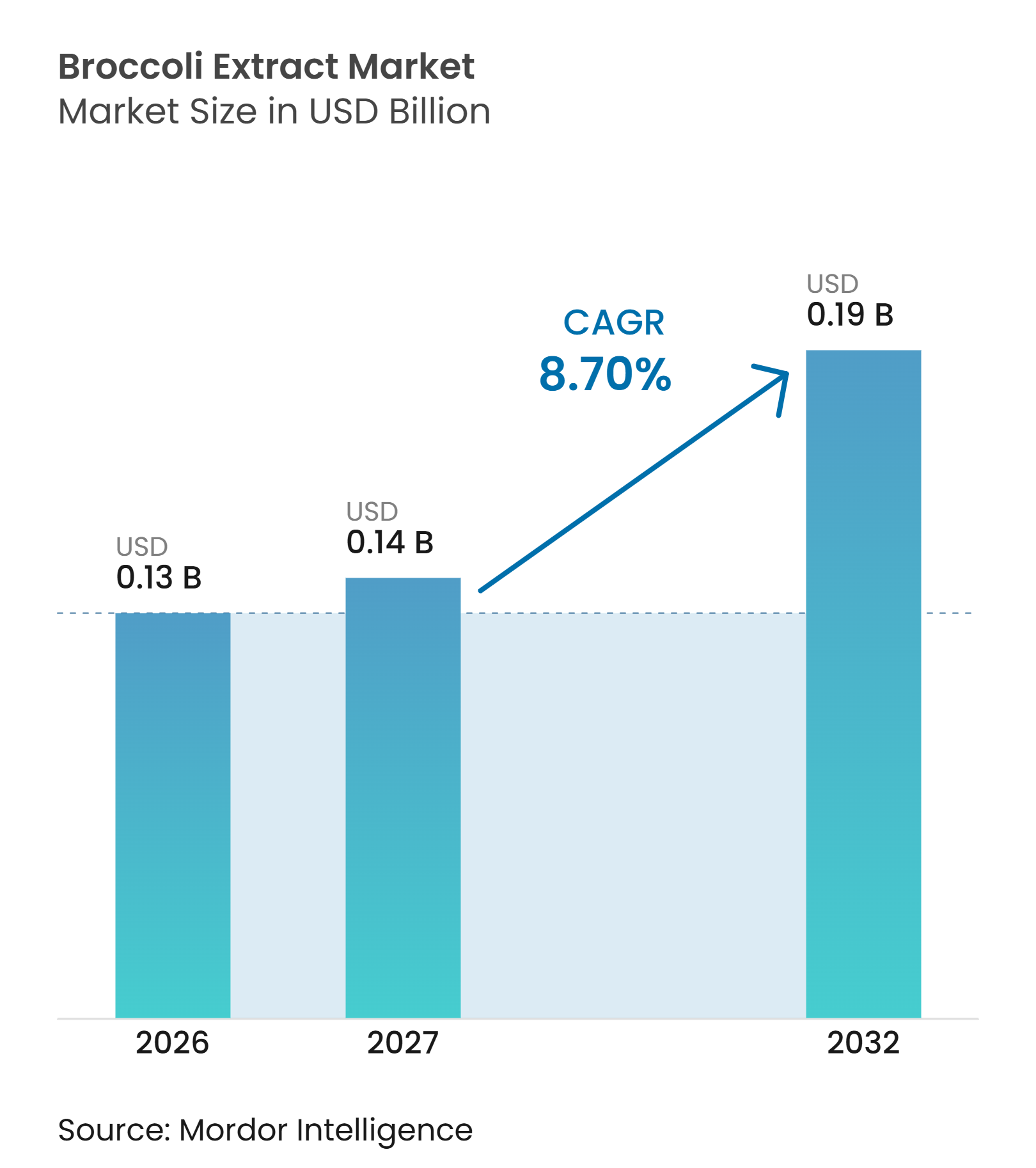
The broccoli extract market size is expected to grow from USD 0.13 billion in 2026 to USD 0.14 billion in 2027 and is forecast to reach USD 0.19 billion by 2032 at a CAGR of 8.70% over 2027-2032. Demand is expanding beyond conventional antioxidant supplements as manufacturers increasingly explore the broader health applications of broccoli-derived compounds. Growing scientific interest in cellular health, metabolic wellness, neuroprotection, and skin health is creating opportunities for broccoli extract across diverse product formulations. Clinical research, ingredient standardization, and active-compound stability are becoming increasingly important for product development and premium positioning. Advances in stabilization and delivery technologies are also supporting the incorporation of broccoli extract into a wider range of supplement, food, beverage, and topical applications.
Key Report Takeaways
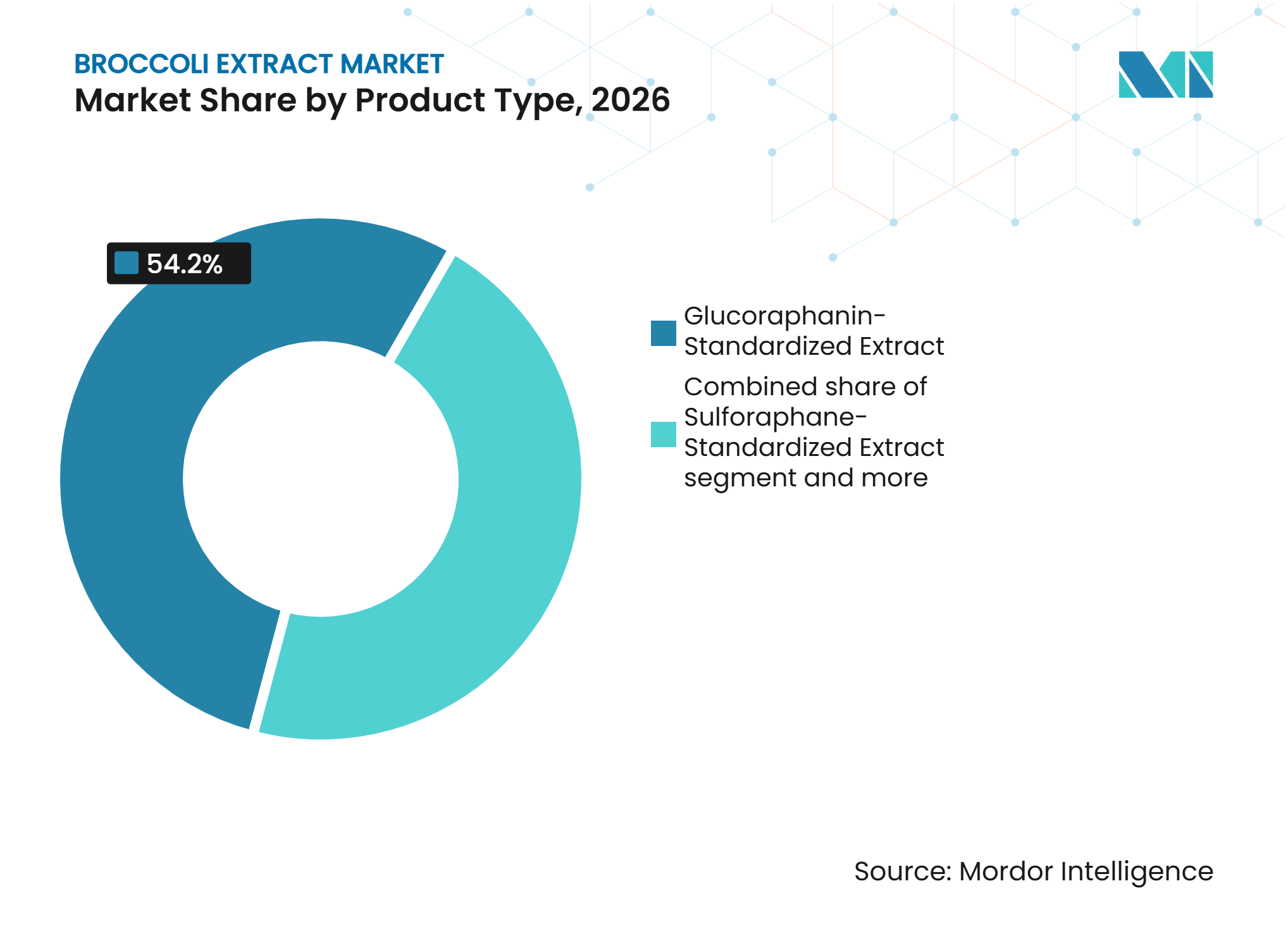
• By product type, glucoraphanin-standardized extract held 54.21% of the broccoli extract market share in 2026, while sulforaphane-standardized extract is forecast to expand at a CAGR of 10.21% through 2032.
• By form, powder held 40.22% of the broccoli extract market share in 2026, while liquid/concentrate is forecast to expand at a CAGR of 10.22% through 2032.
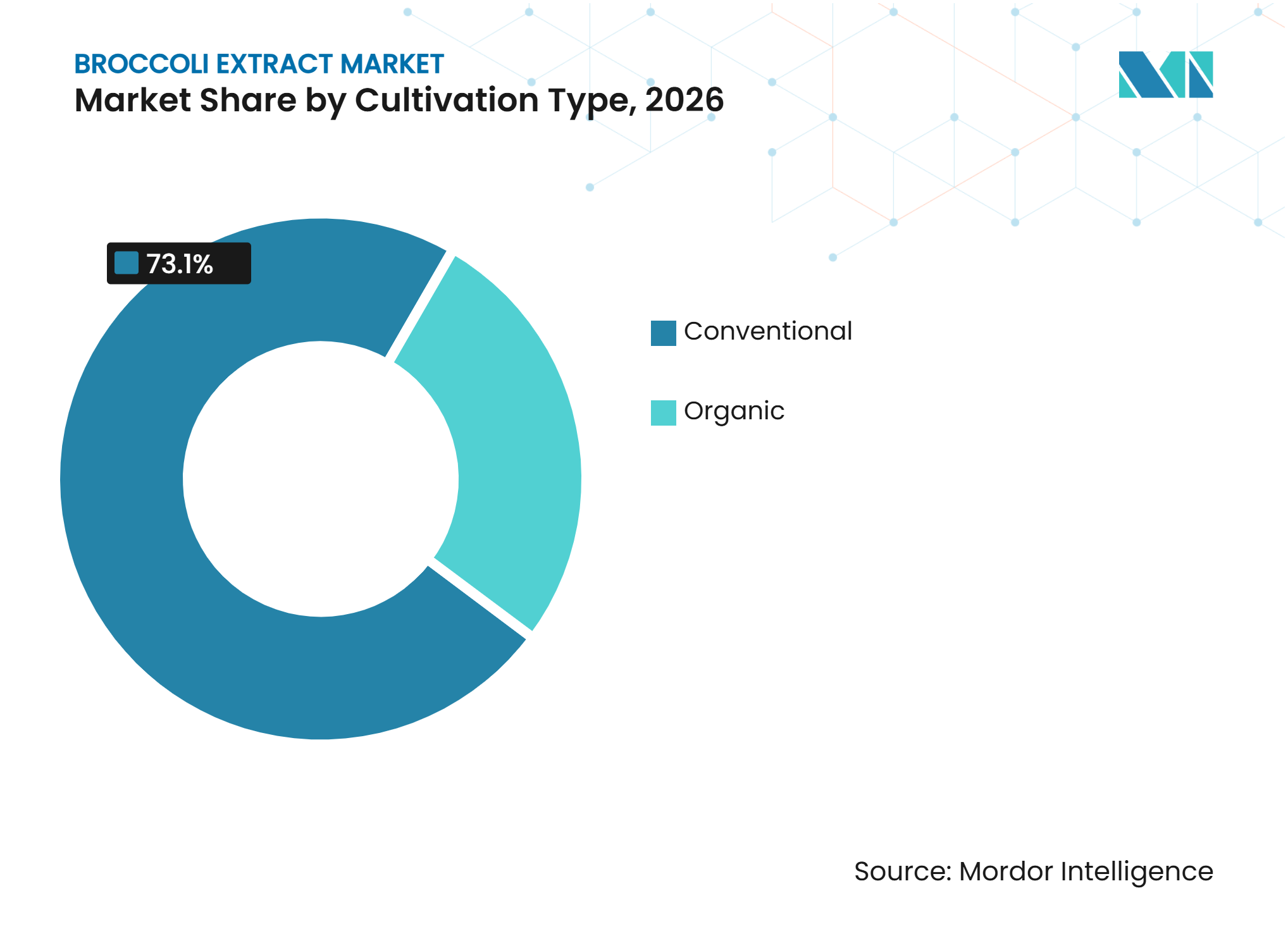
• By cultivation type, conventional held 73.12% of the broccoli extract market share in 2026, while organic is forecast to expand at a CAGR of 9.43% through 2032.
• By application, dietary supplements held 62.81% of the broccoli extract market share in 2026, while functional foods and beverages are forecast to expand at a CAGR of 10.24% through 2032.
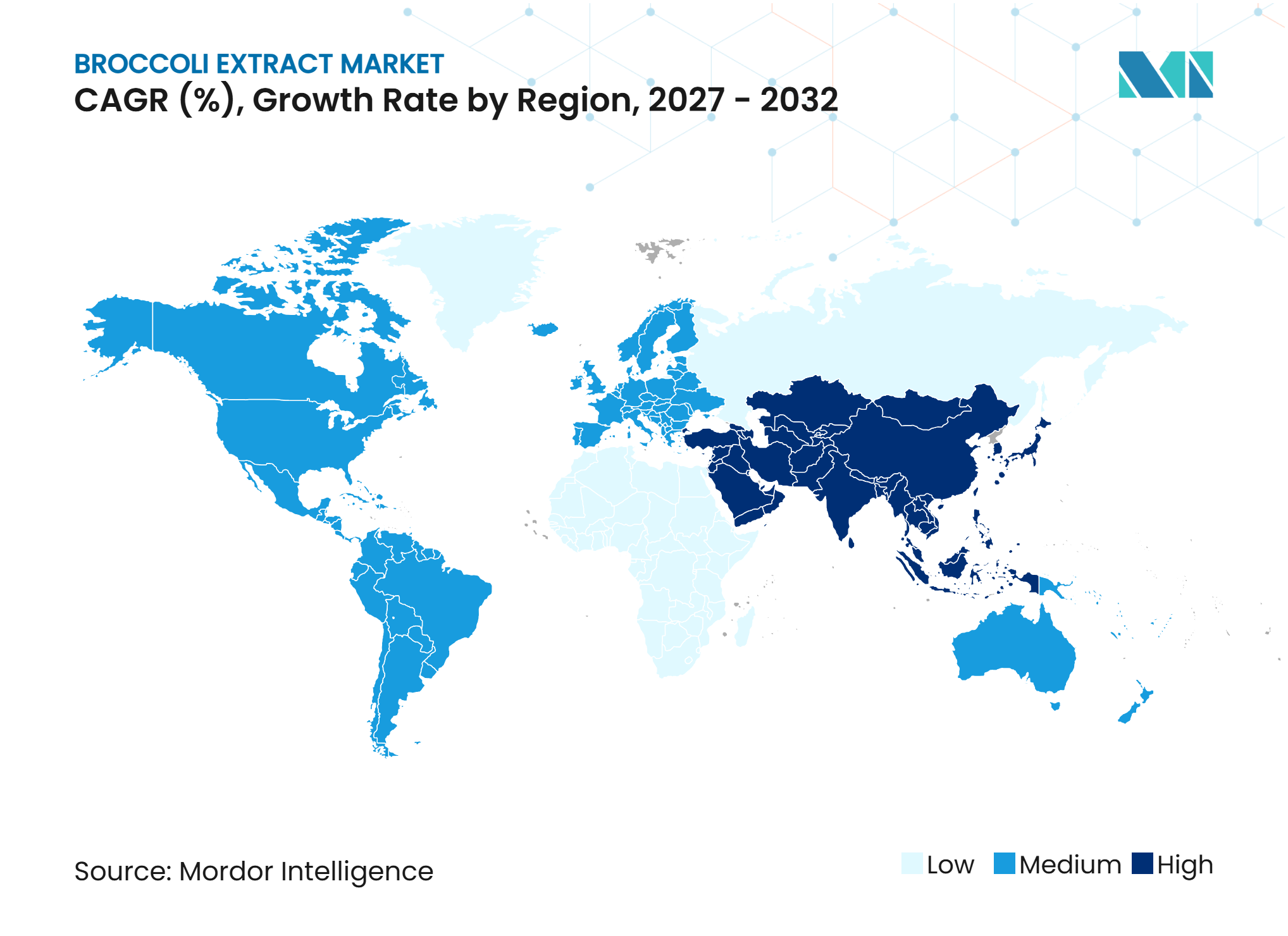
• By geography, North America held 39.91% of the broccoli market share in 2026, while Asia-Pacific is forecast to expand at a CAGR of 9.81% through 2032.
Note: Market numbers in this report are based on Mordor Intelligence's proprietary estimation framework, which combines nine months of actuals with Q4 projections for base year 2026.
Market Trends and Insights
Drivers Impact Analysis of Broccoli Extract Market*
| Driver | (~) % Impact on CAGR Forecast | Geographic Relevance | Impact Timeline |
|---|---|---|---|
| Increasing demand for preventive-health and cellular-health supplements | +2.5% | Global, with intensity in North America, Europe, and East Asia | Long term (≥ 4 years) |
| Growing preference for standardized glucoraphanin and sulforaphane ingredients | +1.8% | North America and EU, with growing demand in APAC | Medium term (2-4 years) |
| Rising adoption of plant-based and organic botanical ingredients | +1.2% | North America, Western Europe, and Australia | Medium term (2-4 years) |
| Expansion of functional food, beverage and beauty-from-within formulations | +1.1% | APAC, with spillover to North America | Long term (≥ 4 years) |
| Technological advancements in sulforaphane stabilization and bioavailability enhancement | +0.9% | Global, led by U.S. and EU innovation hubs | Short term (≤ 2 years) |
| Increasing clinical and academic research on broccoli-derived isothiocyanates | +0.8% | Global | Medium term (2-4 years) |
| Source: Mordor Intelligence | |||
Increasing Demand for Preventive-Health and Cellular-Health Supplements
Growing consumer interest in preventive healthcare is supporting demand for dietary supplements formulated with functional botanical ingredients. For instance, in October 2026, according to the Council for Responsible Nutrition, 75% of United States adults currently use dietary supplements, and 76% stated that mandatory Food and Drug Administration listing of supplements would increase their confidence in these products [1]. This growing emphasis on supplement quality and consumer confidence is encouraging manufacturers to develop differentiated formulations using recognizable, science-backed ingredients. For instance, in January 2025, NeuroBrocc launched broccoli-based gummies containing sulforaphane, broccoli seed extract, and white mustard seed extract, targeting brain health, detoxification, and protection against oxidative stress.
Growing Preference for Standardized Glucoraphanin and Sulforaphane Ingredients
Growing emphasis on ingredient quality, active-compound consistency, and bioavailability is encouraging manufacturers to prioritize standardized botanical extracts. For instance, in February 2026, according to a published report from the National Library of Medicine, broccoli seed extract standardized to at least 13% glucoraphanin was evaluated, and it was found that combining it with mustard seed-derived myrosinase increased sulforaphane bioavailability from 18.6% to 39.8% [2]. This highlights the importance of maintaining consistent glucoraphanin concentrations and improving its conversion into sulforaphane. Furthermore, in January 2026, an American Chemical Society publication emphasized the importance of botanical identity verification, chemical characterization, and validated analytical methods to ensure consistent ingredient quality.
Rising Adoption of Plant-based and Organic Botanical Ingredients
Growing consumer interest in organic products and naturally sourced ingredients is encouraging manufacturers to incorporate certified botanical extracts into dietary supplements and wellness formulations. For instance, in March 2026, according to the Organic Trade Association (OTA), the United States organic supplement market increased by 8.7% in 2025, reflecting growing demand for organic health and wellness products [3]. This is also encouraging ingredient manufacturers to expand their certified botanical portfolios. For instance, in October 2026, BioVivo Science announced the organic certification of its broccoli seed ingredient, BrocoVio O, which contains naturally high levels of glucoraphanin and serves as a source of the precursor used in sulforaphane formation.
Expansion of Functional Food, Beverage and Beauty-from-Within Formulations
The expansion of functional food, beverage, and beauty-from-within formulations is creating opportunities for broccoli extract as a functional botanical ingredient. Its bioactive compounds, particularly glucoraphanin and sulforaphane, are gaining attention for their antioxidant and cellular health properties. This is encouraging manufacturers to incorporate broccoli-derived ingredients into dietary supplements, functional beverages, nutritional products, and beauty-from-within formulations. Growing interest in multifunctional ingredients that support overall wellness, skin health, and nutritional benefits is further expanding the potential applications of broccoli extract across food, beverage, and nutraceutical categories.
Restraints Impact Analysis of Broccoli Extract Market*
| Restraint | (~) % Impact on CAGR Forecast | Geographic Relevance | Impact Timeline |
|---|---|---|---|
| Sulforaphane instability and potency loss during processing and storage | -1.1% | Global, most acute in liquid, concentrate, and functional food formats | Medium term (2-4 years) |
| Regulatory limitations on disease-related health claims | -1.0% | EU and U.S., with secondary impact in APAC | Long term (≥ 4 years) |
| Variability in glucosinolate content across cultivars, plant parts and harvests | -0.6% | Global, concentrated among non-proprietary cultivar users | Medium term (2-4 years) |
| High costs associated with extraction, standardization and quality control | -0.7% | Emerging markets in South America, Middle East, and Africa | Long term (≥ 4 years) |
| Source: Mordor Intelligence | |||
Sulforaphane Instability and Potency Loss During Processing and Storage
Sulforaphane instability during processing and storage presents a key challenge for the broccoli extract market. The compound is sensitive to factors such as heat, moisture, oxidation and pH changes, which can reduce its concentration and biological activity. Processing conditions, prolonged storage and unsuitable formulation methods may therefore lead to potency loss, making it difficult for manufacturers to maintain consistent sulforaphane levels and product quality. Addressing this challenge requires specialized stabilization, formulation and packaging technologies, which can increase production complexity and costs while limiting the shelf life and application flexibility of broccoli extract products.
Regulatory Limitations on Disease-related Health Claims
Regulatory limitations on disease-related health claims pose a challenge to the broccoli extract market, particularly for products containing bioactive compounds such as sulforaphane and glucoraphanin. Manufacturers face restrictions on claiming that these ingredients can prevent, treat, or cure specific diseases without meeting applicable regulatory requirements and scientific substantiation standards. This limits how companies can communicate the potential health benefits of broccoli extract in product labeling, advertising, and promotional activities. Differences in regulatory frameworks across countries further complicate product positioning and market entry, increasing compliance requirements and making it difficult for manufacturers to differentiate their products through health-related claims.
*Our forecasts treat driver/restraint impacts as directional, not additive. The impact forecasts reflect baseline growth, mix effects, and variable interactions.
Broccoli Extract Market Segment Analysis
By Product Type:
Clinical Footprint Supports Glucoraphanin’s LeadGlucoraphanin-standardized extract held 54.21% of the broccoli extract market share in 2026. Glucoraphanin leads the broccoli extract market by ingredient type due to its relatively high stability and suitability for maintaining defined precursor concentrations in finished products. Its compatibility with myrosinase-based and gut-mediated conversion approaches further enhances its application across dietary supplements and functional products. Broccoli sprout extract also maintains a strong position, supported by its broader phytochemical profile and suitability for whole-food ingredient formulations. The growing emphasis on consistent ingredient quality is encouraging suppliers to adopt reliable sourcing, batch-level testing, and standardized specifications, thereby supporting the wider use of broccoli-derived ingredients across applications.
The sulforaphane-standardized extract is forecast to grow at a CAGR of 10.21% through 2032. Pre-formed sulforaphane is gaining traction for its ability to deliver the active compound directly, reducing reliance on gut-microbiome conversion. Its suitability for formulations that require consistent active-compound delivery supports its adoption in dietary supplements and functional wellness products. Advances in stabilization and encapsulation technologies are further improving its formulation potential by helping preserve potency during processing, storage, and digestion. Growing demand for reliable ingredient performance and consistent product quality is encouraging manufacturers to incorporate pre-formed sulforaphane into specialized broccoli extract formulations.



By Form:
Powder Retains Processing Advantages While Liquids Gain Use CasesPowder held 40.22% of the broccoli extract market share in 2026. Powder holds a leading position in the broccoli extract market by form due to its suitability for capsules, tablets, and established supplement manufacturing processes. It offers convenient handling, supports standardized glucoraphanin concentrations, and allows formulators to keep the active precursor and enzyme separate until use. Its concentrated nature also supports accurate dosage formulation and efficient ingredient incorporation. These advantages, combined with storage convenience and supply-chain flexibility, make powder a preferred format for manufacturers seeking consistent quality and ease of production across supplement applications.
Liquid/concentrate is forecast to expand at a CAGR of 10.22% through 2032. Liquid holds growing potential in the broccoli extract market due to its suitability for functional beverages, wellness shots, and other convenient, ready-to-consume products. Its ease of use and compatibility with beverage formulations support its adoption among manufacturers targeting clean-label and plant-based product offerings. Advances in stabilization and delivery technologies are further improving the potential of liquid broccoli extract by supporting active-compound retention and consistent product quality. These advantages are creating opportunities for liquid formats across emerging food, beverage, and wellness applications.
By Cultivation Type:
Conventional Supply Scale and Organic Positioning Advance TogetherConventional accounted for 73.12% of the broccoli extract market share in 2026. Conventional broccoli extract holds a leading position by source due to its established agricultural supply chain, large-scale production capabilities, and cost-effectiveness. Reliable access to raw materials, supported by cultivar selection and harvest management, enables manufacturers to maintain consistent glucosinolate specifications and meet commercial production requirements. Its scalability also supports bulk ingredient supply for mainstream dietary supplement manufacturers. These advantages make conventional broccoli extract a preferred choice for manufacturers seeking consistent quality, production efficiency, and competitive pricing across a wide range of applications.
Organic is forecast to expand at a CAGR of 9.43% through 2032. Organic broccoli extract is gaining traction due to growing demand for clean-label, plant-based, and naturally sourced ingredients. Recognized organic certification strengthens product positioning and appeals to consumers seeking organic and non-GMO options. The availability of high-glucoraphanin cultivars and reliable quality-testing practices further supports the development of organic extracts with consistent active-compound specifications. These factors are creating opportunities for manufacturers to expand premium broccoli extract offerings and cater to consumers increasingly focused on ingredient transparency and certified organic sourcing.

By Application:
Supplements Provide the Revenue Base as Foods and Beverages ExpandDietary supplements held 62.81% of the broccoli extract market share in 2026. Capsules and tablets hold a leading position in the broccoli extract market by application due to their suitability for delivering controlled amounts of glucoraphanin and myrosinase in convenient daily servings. These formats support standardized active-compound levels and offer practical formulation options for maintaining ingredient quality. Their established use in the dietary supplement industry also provides manufacturers with opportunities to communicate serving guidance, ingredient specifications, and scientific research on broccoli-derived bioactive compounds. Growing consumer interest in evidence-supported wellness products further strengthens demand for broccoli extract in capsule and tablet formulations.
Functional foods and beverages are forecast to expand at a CAGR of 10.24% through 2032. Food, beverage and personal-care applications are creating new growth opportunities for the broccoli extract market, supported by increasing interest in convenient, plant-based and functional products. The versatility of broccoli-derived bioactive compounds allows manufacturers to explore their use across functional beverages, nutritional formulations and beauty-from-within products. Advances in formulation and stabilization technologies are further supporting the incorporation of broccoli extract into products while maintaining active-compound quality. Growing scientific interest in its potential health and skin-related benefits is also encouraging product innovation across cosmetic, personal-care, and clinical nutrition applications, broadening the market's application base.
Geography Analysis
North America
North America held 39.91% of the broccoli extract market share in 2026. The United States holds a strong position in the North American broccoli extract market, supported by an established dietary supplement industry and growing demand for standardized, research-backed botanical ingredients. Increasing emphasis on domestic sourcing and supply-chain traceability is encouraging manufacturers to strengthen local ingredient production and sourcing capabilities. The availability of locally produced broccoli seed extracts further supports reliable access to raw materials and gives brands greater flexibility in supplier selection. Growing focus on ingredient identity, purity, and consistent active-compound specifications is also strengthening demand for high-quality broccoli extracts across the country's supplement and functional wellness industries.
Asia-Pacific
Asia-Pacific is forecast to expand at a CAGR of 9.81% through 2032. Asia-Pacific is emerging as a promising region for the broccoli extract market, supported by Japan's established functional food industry and growing demand for health-focused products across China and other regional markets. Increasing consumer interest in food-derived functional ingredients and convenient wellness products is creating opportunities for broccoli extract across dietary supplements, functional beverages, and beauty-from-within applications. Advances in water-dispersible formulations, stabilization technologies and enzyme co-delivery are further expanding the ingredient's suitability for different product formats. Growing emphasis on product quality, standardized active-compound levels, and locally compliant formulations is expected to support broader adoption of broccoli extract across the region.
Europe, South America, and Middle East and Africa
Europe represents an established market for broccoli extract, supported by demand from functional food manufacturers and clean-label dietary supplement brands, particularly in Germany, France, and the United Kingdom. The region's emphasis on product quality, scientific substantiation, and regulatory compliance encourages suppliers to offer well-documented ingredients with standardized active-compound specifications. South America is emerging as a market, with Brazil and Mexico offering opportunities driven by the expanding availability of functional foods and online dietary supplements. Meanwhile, the Middle East and Africa present further growth potential through increasing access to specialty nutraceutical products and premium wellness offerings. Rising consumer awareness, improving product availability, and greater emphasis on ingredient quality are expected to support the broader adoption of broccoli extract across these regions.
Competitive Landscape
Market Concentration
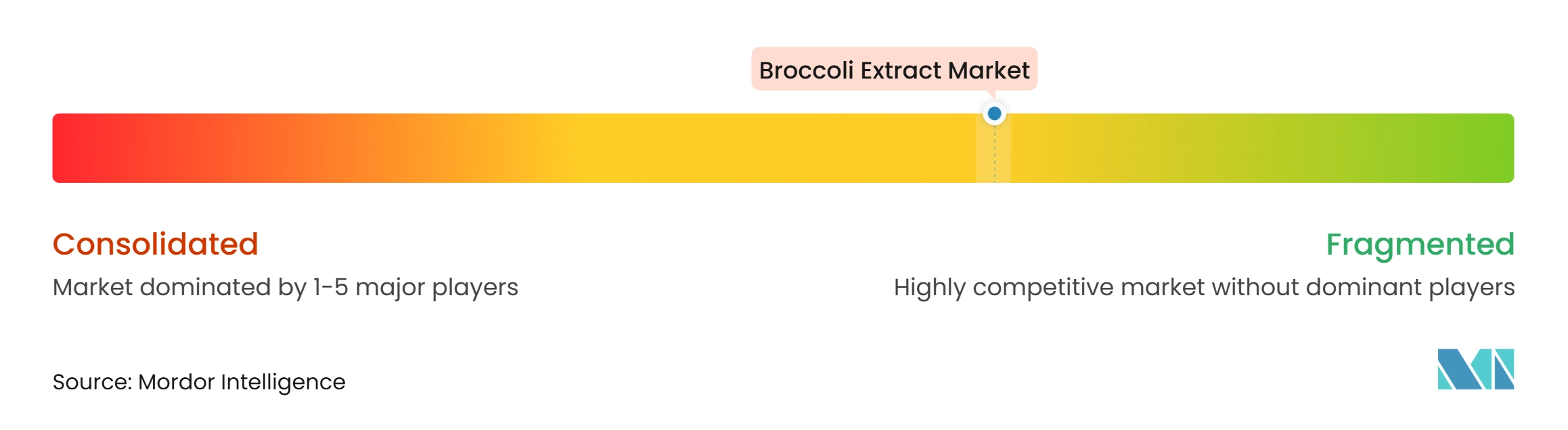
The broccoli extract market is moderately fragmented, with manufacturers competing on product quality, active-compound standardization, production capacity, and pricing. Competition is increasingly influenced by the ability to offer consistent glucosinolate and sulforaphane concentrations, supported by reliable extraction and quality-control processes. Growing emphasis on scientific substantiation and ingredient performance is also encouraging suppliers to strengthen product documentation and develop differentiated ingredient offerings.
Competitive activity is increasingly focused on improving ingredient stability, bioavailability and formulation flexibility. Advancements in extraction, stabilization and delivery technologies are supporting the development of specialized broccoli extract formulations for dietary supplements, functional foods, beverages and personal-care applications. Manufacturers are also placing greater emphasis on traceable sourcing, standardized specifications and controlled production processes to strengthen product quality and customer confidence.
Quality assurance and product differentiation remain important competitive factors. Suppliers with reliable analytical testing, consistent active-compound levels and strong manufacturing standards are better positioned to meet the requirements of established formulators. Continued investment in research, formulation technologies and specialized applications is expected to strengthen competition, while supporting the development of higher-value broccoli extract products.
Broccoli Extract Industry Leaders
-
International Flavors & Fragrances Inc. (BroccoRaphanin®)
-
Brassica Protection Products LLC (TrueBroc®)
-
BK bio (BrocoPower®)
-
Cooke Inc. (Bioriginal Food & Science Corp. – BroccoPhane®)
-
4Potentia (OptiBroc®)
- *Disclaimer: Major Players sorted in no particular order
Broccoli Extract Market Companies Covered in this Report
- International Flavors & Fragrances Inc. (BroccoRaphanin®)
- Brassica Protection Products LLC (TrueBroc®)
- BK bio (BrocoPower®)
- Cooke Inc. (Bioriginal Food & Science Corp. – BroccoPhane®)
- 4Potentia (OptiBroc®)
- Oryza Oil & Fat Chemical Co., Ltd.
- Wellgreen Technology Co., Ltd.
- BIOWAY Industrial Group Ltd. (Bioway (Xi’an) Organic Ingredients Co., Ltd.)
- GreenHerb Biological Technology Co., Ltd.
- Xi’an Healthful Biotechnology Co., Ltd.
- Xi’an Angel Biotechnology Co., Ltd. (Angelbio)
- Pioneer Herb Industrial Co., Ltd.
- Xi’an Kintai Biotech Inc.
- Yunnan Jiuzhen Biotechnology Co., Ltd.
- Chengdu SanHerb Bioscience Co., Ltd. (Sanbroc® GRA)
- Shaanxi LonierHerb Bio-Technology Co., Ltd.
- Shaanxi Aserain Biotechnology Co., Ltd.
- Sangherb
- Xi’an Best Bio-Tech Co., Ltd.
- Clover Nutrition
Recent Industry Developments in Broccoli Extract Market
- October 2026: BrocoVio O introduced an organically certified broccoli seed extract naturally rich in glucoraphanin for dietary supplements and functional wellness formulations.
- May 2026: OptiBroc® introduced a non-GMO broccoli seed extract standardized to at least 13% glucoraphanin, featuring a stable, water-dispersible powder format.
- January 2025: NeuroBrocc launched broccoli-based gummies containing sulforaphane, broccoli seed extract and white mustard seed extract, targeting brain health and detoxification.
Global Broccoli Extract Market Report Scope
The broccoli extract market includes extracts derived from broccoli seeds and sprouts, which contain bioactive compounds such as glucoraphanin and sulforaphane and are used in health and wellness applications. The market is segmented by Product Type, Form, Cultivation Type, Application, and Geography. Based on Product Type, it is segmented into Glucoraphanin-Standardized Extract, Sulforaphane-Standardized Extract, and Broccoli Sprout Extract. Based on Form, it is segmented into Powder and Liquid/Concentrate. Based on Cultivation Type, it is segmented into Conventional and Organic. Based on Application, it is segmented into Dietary Supplements, Functional Foods and Beverages, Cosmetics and Personal Care, and Pharmaceutical and Clinical Nutrition. By geography, it is segmented into North America, Europe, Asia-Pacific, South America, and the Middle East and Africa. Market forecasts are provided in value (USD).
Segmentation Overview
| Glucoraphanin-Standardized Extract |
| Sulforaphane-Standardized Extract |
| Broccoli Sprout Extract |
| Powder |
| Liquid/Concentrate |
| Conventional |
| Organic |
| Dietary Supplements |
| Functional Foods and Beverages |
| Cosmetics and Personal Care |
| Pharmaceutical and Clinical Nutrition |
| North America |
| Europe |
| Asia-Pacific |
| South America |
| Middle East and Africa |
| By Product Type | Glucoraphanin-Standardized Extract |
| Sulforaphane-Standardized Extract | |
| Broccoli Sprout Extract | |
| By Form | Powder |
| Liquid/Concentrate | |
| By Cultivation Type | Conventional |
| Organic | |
| By Application | Dietary Supplements |
| Functional Foods and Beverages | |
| Cosmetics and Personal Care | |
| Pharmaceutical and Clinical Nutrition | |
| By Geography | North America |
| Europe | |
| Asia-Pacific | |
| South America | |
| Middle East and Africa |
Key Questions Answered in the Report
What is the market size of the broccoli extract?
The broccoli extract market is estimated to reach USD 0.13 billion in 2026 and USD 0.14 billion in 2027. The market is projected to grow to USD 0.19 billion by 2032, registering a CAGR of 8.70% during 2027–2032.
Which broccoli extract product type leads revenue?
Glucoraphanin-standardized extract leads with 54.21% revenue share in 2026 as it offers shelf stability and defined specifications.
Which application is expanding most quickly?
Functional foods and beverages are forecast to expand at a CAGR of 10.24% through 2032 as formulators seek convenient plant-based formats.
Which region is forecast to grow fastest?
Asia-Pacific is forecast to expand at a CAGR of 9.81% through 2032, supported by functional food and wellness demand.