
Breastfeeding Accessories Market Size and Share
Market Overview
| Study Period | 2021 - 2031 |
|---|---|
| Market Size (2026) | USD 3.21 Billion |
| Market Size (2031) | USD 4.37 Billion |
| Growth Rate (2026 - 2031) | 6.52 % |
| Fastest Growing Market | Asia-Pacific |
| Largest Market | Asia-Pacific |
| Market Concentration | Medium |
Major Players
*Disclaimer: Major Players sorted in no particular order Image © Mordor Intelligence. Reuse requires attribution under CC BY 4.0. |
|
Breastfeeding Accessories Market Analysis by Mordor Intelligence
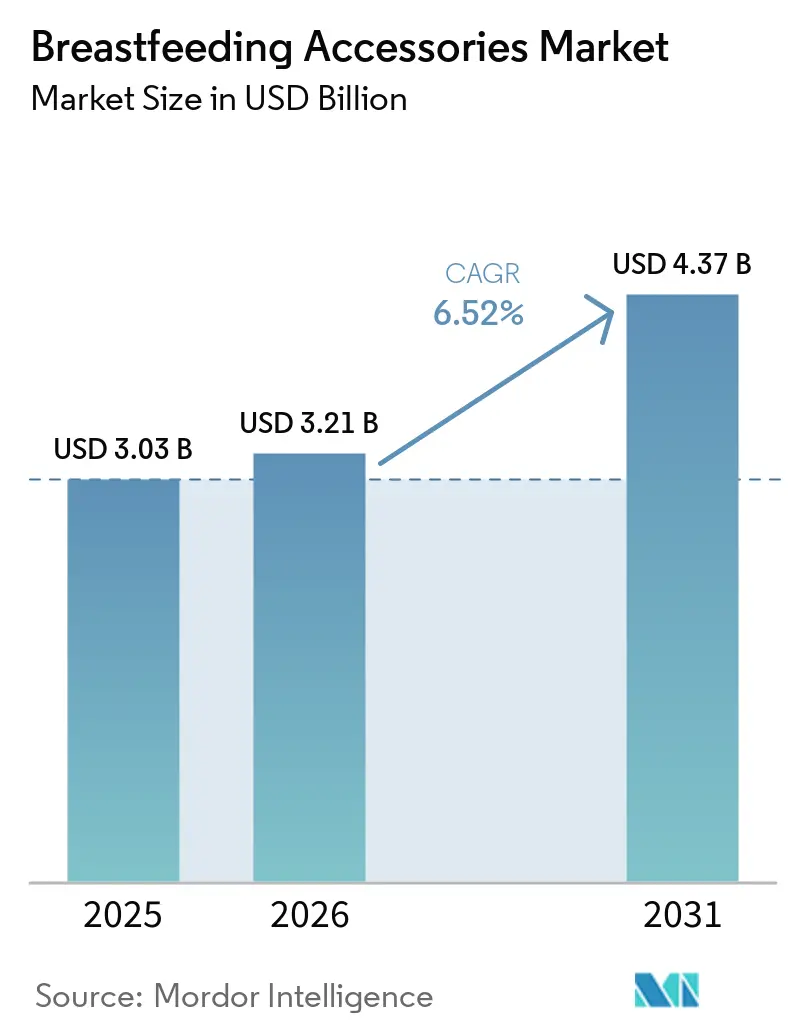
The Breastfeeding Accessories Market size was valued at USD 3.03 billion in 2025 and is estimated to grow from USD 3.21 billion in 2026 to reach USD 4.37 billion by 2031, at a CAGR of 6.52% during the forecast period (2026-2031).
The breastfeeding accessories market is growing as more mothers return to work, driving demand for convenient, portable, and workplace-compatible products. Government and public health initiatives are increasing awareness of lactation support, breastfeeding practices, and the importance of exclusive breastfeeding. The World Health Organization (WHO) and UNICEF (United Nations International Children's Emergency Fund) promote exclusive breastfeeding for infants under six months of age and emphasize the need to strengthen breastfeeding support within healthcare systems. Innovations in wearable, portable, and connected products, along with improved comfort and safer materials, are further supporting product adoption.
Key Report Takeaways
- By product type, Breastmilk Storage and Feeding Products held 24.74% of the Breastfeeding Accessories Market share in 2025, while Postpartum Recovery Accessories are forecasted to grow at a 7.52% CAGR during 2026-2031.
- By technology and product format, Manual Accessories held 31.61% of the Breastfeeding Accessories Market share in 2025, while Smart and App-Connected Accessories are forecasted to grow at an 11.21% CAGR during 2026-2031.
- By material, Polypropylene and BPA-Free Plastics held 35.21% of the Breastfeeding Accessories Market share in 2025, while medical-grade silicone is forecasted to grow at a 9.41% CAGR during 2026-2031.
- By distribution channel, Off-Trade held 62.41% of the Breastfeeding Accessories Market share in 2025, while On-Trade is forecasted to grow at an 11.11% CAGR during 2026-2031.
- By geography, Asia-Pacific held 43.72% of the Breastfeeding Accessories Market share in 2025 and is forecasted to grow at a 9.11% CAGR during 2026-2031.
Note: Market size and forecast figures in this report are generated using Mordor Intelligence’s proprietary estimation framework, updated with the latest available data and insights as of January 2026.
Global Breastfeeding Accessories Market Trends and Insights
Drivers Impact Analysis*
| Driver | (~) % Impact on CAGR Forecast | Geographic Relevance | Impact Timeline |
|---|---|---|---|
| Rising Employment of Women and Return-to-Work Requirements | +1.5% | Global, concentrated in North America, Europe, and urban Asia-Pacific | Medium term (2-4 years) |
| Growing Breastfeeding Awareness and Access to Lactation Support | +1.2% | Global, particularly South Asia and Southeast Asia | Long term (≥ 4 years) |
| Increasing Demand for Milk Storage, Feeding, and Hygiene Solutions | +0.9% | Global, strongest in North America and Western Europe | Short term (≤ 2 years) |
| Rising Adoption of Wearable and Hands-Free Breastfeeding Products | +1.1% | North America, Europe, Australia, and high-income Asia-Pacific | Medium term (2-4 years) |
| Expansion of Workplace Lactation Programs and Reimbursement Support | +0.8% | North America and the EU, emerging in the GCC and parts of Asia-Pacific | Medium term (2-4 years) |
| Growing Adoption of Smart and Connected Breastfeeding Accessories | +0.7% | North America, Europe, South Korea, Japan, and Australia | Long term (≥ 4 years) |
| Source: Mordor Intelligence | |||
Rising Employment of Women and Return-to-Work Requirements
Returning to work is increasing the demand for breastfeeding products that support milk expression, cleaning, storage, and transportation outside the home. Working mothers require practical, portable solutions that enable them to maintain breastfeeding routines throughout the workday. For instance, in March 2026, the Centers for Disease Control and Prevention (CDC) emphasized the need for private pumping spaces, refrigeration or insulated coolers, and facilities to clean pump parts [1]Source: Centers for Disease Control and Prevention, "Breastfeeding and Returning to Your Workplace", cdc.gov. The CDC also identified portable breast pumps, hands-free pumping solutions, insulated cooler bags, and breast milk storage containers as essential for workplace use to support the safe expression, storage, and transport of breast milk.
Growing Breastfeeding Awareness and Access to Lactation Support
Global breastfeeding support initiatives are increasing demand for products that help mothers address common breastfeeding and milk-expression challenges, including latching difficulties, low milk supply, discomfort, and the need for efficient milk storage and expression. For instance, in August 2025, WHO and UNICEF reported that 48% of infants under six months worldwide are exclusively breastfed, while emphasizing that millions of mothers still lack timely, skilled breastfeeding support through healthcare systems [2]Source: World Health Organization, "On World Breastfeeding Week, countries urged to invest in health systems and support breastfeeding mothers", who.int. The organizations planned to call for a greater investment in health systems, trained healthcare professionals, and support services that enable mothers to initiate and sustain breastfeeding.
Increasing Demand for Milk Storage, Feeding, and Hygiene Solutions
Breastmilk storage and feeding products address the need to safely manage expressed milk across caregiving, transportation, and storage settings. For instance, in May 2025, the American Academy of Pediatrics recommended using clean or new storage containers, minimizing milk transfers to reduce the risk of contamination, and refrigerating or freezing milk appropriately for long-term storage [3]Source: American Academy of Pediatrics, "Milk Storage Guidelines", aap.org. These recommendations underscore the need for dedicated breastmilk storage bags, containers, bottles, and related feeding accessories that enable caregivers to store, transport, and feed expressed milk safely and conveniently. As awareness of safe milk-handling practices increases, demand for these products is expected to remain strong.
Rising Adoption of Wearable and Hands-Free Breastfeeding Products
Wearable breast pumps are gaining traction as manufacturers increasingly introduce compact, in-bra, and hands-free designs that offer greater mobility, privacy, and convenience during pumping. These devices allow users to pump more discreetly during daily activities, providing greater flexibility for working mothers and other consumers with active lifestyles. Recent product launches by Medela, Willow, and Philips Avent highlight ongoing innovation in discreet and flexible pumping solutions, including quieter operation, improved comfort, and more user-friendly designs. The growing availability of these formats is expected to support demand for complementary accessories, including collection cups, breast shields, flanges, tubing, and milk storage solutions.
Restraints Impact Analysis*
| Restraint | (~) % Impact on CAGR Forecast | Geographic Relevance | Impact Timeline |
|---|---|---|---|
| Product Safety, Contamination, and Cleaning Risks | -0.9% | Global, particularly markets with limited regulatory enforcement | Medium term (2-4 years) |
| Affordability Constraints in Emerging Economies | -0.8% | South America, the Middle East and Africa, South Asia, and Southeast Asia | Long term (≥ 4 years) |
| Inconsistent Fit, Sizing, and User Comfort | -0.5% | North America, particularly U.S. | Short term (≤ 2 years) |
| Product Selection and Compatibility Complexity | -0.4% | Global, highest in fragmented product ecosystems | Short term (≤ 2 years) |
| Source: Mordor Intelligence | |||
Product Safety, Contamination, and Cleaning-Compliance Risks
Safety concerns can constrain demand, as breastfeeding accessories often come into direct contact with breast milk or sensitive skin. Consequently, consumers place greater emphasis on material safety, product quality, hygiene, and reliability. Product recalls, contamination reports, and concerns about harmful substances can increase scrutiny of plastics, silicone, coatings, and other product components. Manufacturers may also need to meet additional requirements for material testing, quality control, regulatory documentation, product traceability, and post-market monitoring. These requirements can increase product development and compliance costs, delay product launches, and create barriers for smaller manufacturers.
Affordability Constraints in Emerging Economies
High prices may limit the adoption of breastfeeding accessories, particularly in lower-income and emerging markets, where household spending on maternal and infant care products remains constrained. Limited reimbursement coverage and financial support further restrict access to premium products, leading consumers to prioritize essential, lower-cost alternatives. Consequently, price-sensitive markets are likely to generate stronger demand for affordable, basic, and unbranded breastfeeding accessories. In contrast, the adoption of premium wearable pumps and advanced accessories remains comparatively limited, as these products are often perceived as nonessential or unaffordable.
*Our forecasts treat driver/restraint impacts as directional, not additive. The impact forecasts reflect baseline growth, mix effects, and variable interactions.
Segment Analysis
By Product Type: Breastmilk Storage Leads Revenue While Postpartum Recovery Grows Fastest
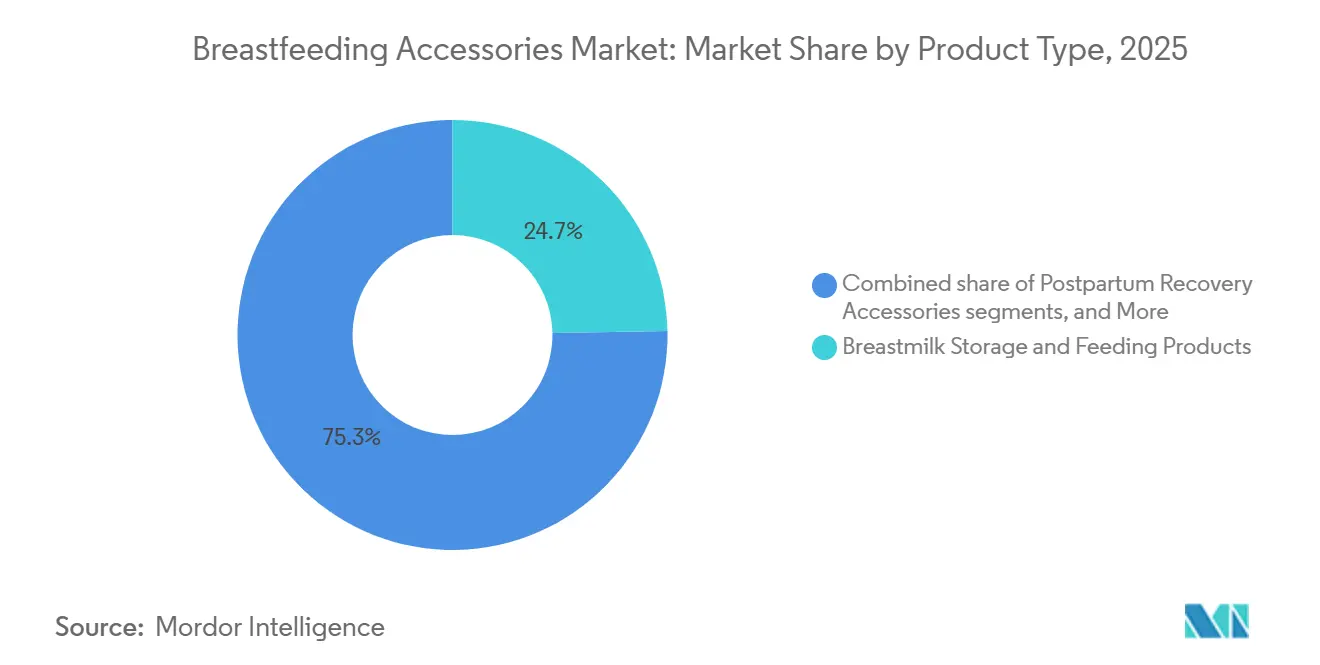
Breastmilk Storage and Feeding Products accounted for 24.74% of the Breastfeeding Accessories Market in 2025, while Postpartum Recovery Accessories are projected to register a CAGR of 7.52% during the 2026–2031 forecast period. Ongoing breastfeeding and maternal care needs support demand for both categories, as mothers increasingly seek products that provide convenience, comfort, hygiene, and flexibility during pregnancy, postpartum recovery, and breastfeeding. Breastmilk storage and feeding products support various pumping routines by being compatible with manual, electric, and wearable breast pumps, enabling mothers to store, transport, and feed expressed milk more conveniently.
Other product categories, including nipple and breast care products, breast pads and breast shells, breast milk preparation and cleaning products, and breastfeeding apparel and comfort products, complement core breastfeeding accessories. These products address hygiene, comfort, feeding preparation, and breastfeeding management needs. Nipple care products help manage breastfeeding-related discomfort, while breast pads and shells help prevent milk leakage. Breast milk preparation and cleaning products support equipment hygiene and drive demand for replenishment. These categories enable manufacturers to expand product portfolios and maintain consumer engagement throughout the breastfeeding journey.



By Technology and Product Format: Manual Products Hold Scale While Smart Formats Lead Growth
Manual Accessories accounted for 31.61% of the breastfeeding accessories market share in 2025, driven by their affordability, ease of use, and independence from electricity or batteries. These accessories are particularly suitable for travel, occasional milk expression, and mothers seeking a simple, portable solution without charging or complex setup. Smart and app-connected accessories are projected to grow at a CAGR of 11.21% during 2026–2031, driven by demand for tracking capabilities, personalized settings, and digital breastfeeding support. These products can record pumping sessions, milk volumes, and feeding schedules, enabling mothers to monitor feeding routines and manage breastfeeding activities more effectively.
Breastmilk storage and feeding products support the safe storage, transportation, and feeding of expressed milk, including bottles, storage bags, and related accessories. Nipple care and breast care products help manage soreness, dryness, cracking, and irritation. Breast pads and breast shells address milk leakage, protect sensitive nipples, and help keep clothing dry. Breastmilk preparation and cleaning products support hygiene during pumping, storage, and feeding by cleaning bottles, pump parts, and accessories. Breastfeeding apparel and comfort products improve convenience during breastfeeding and pumping through accessible and supportive designs. Other products include accessories that support comfort, milk expression, and portability.
By Material: Polypropylene Holds the Largest Base While Medical-Grade Silicone Gains Ground
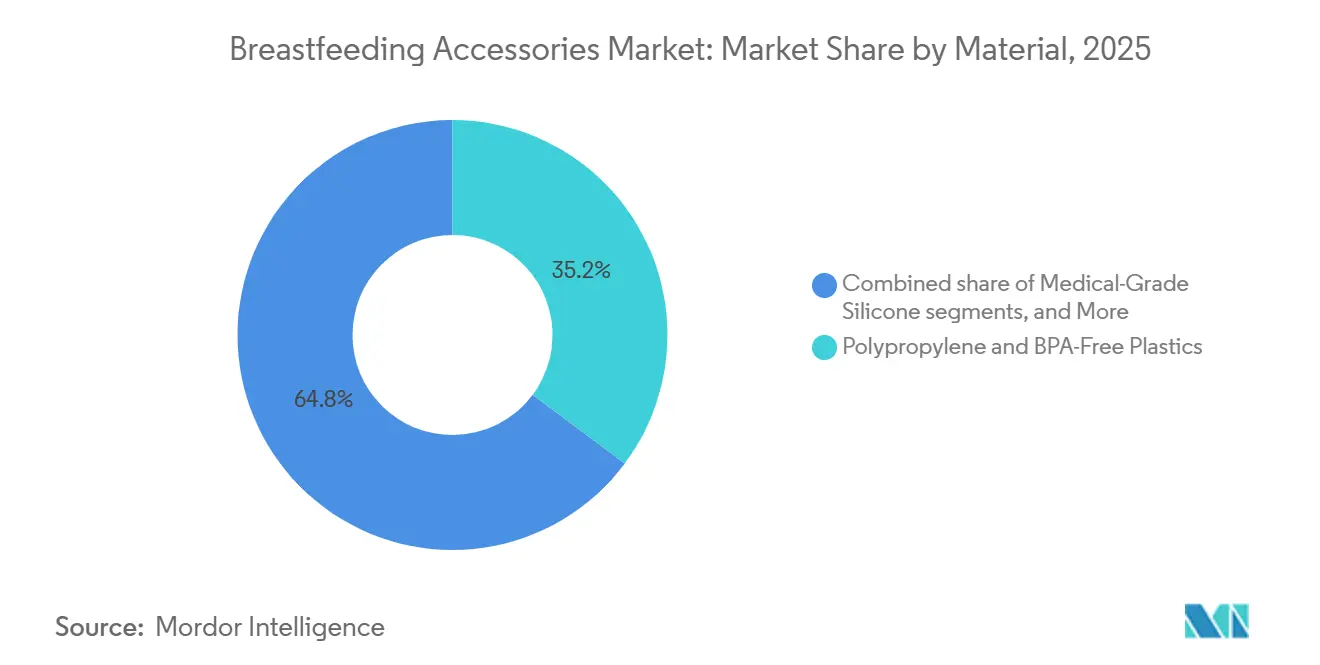
Polypropylene and BPA-free plastics are projected to account for 35.21% of revenue in 2025, supported by lower production costs and suitability for high-volume applications. Manufacturers use these materials in bottles, pump bodies, and connectors. Medical-grade silicone is forecast to grow at a CAGR of 9.41% during 2026–2031, exceeding the overall forecast rate of the Breastfeeding Accessories Market. Its flexibility, durability, and resistance to steam sterilization support its use in breast shields, nipple shields, milk collectors, and other skin-contact components. Regulatory scrutiny of baby-product materials continues to strengthen the focus on material safety and product composition.
Polyethylene and multilayer films remain important for breast milk storage bags due to their barrier properties, flexibility, lightweight nature, and low cost. Concerns about single-use plastics are driving interest in biodegradable and recyclable alternatives, provided they offer comparable safety, durability, barrier performance, and cost efficiency. Cotton and organic fibers remain relevant for nursing pads, breast shells, breastfeeding apparel, and other comfort-focused accessories due to their softness, breathability, and reusability. Brands making organic or sustainability-related claims increasingly require material traceability and certification. Other specialized breastfeeding accessories use materials selected based on durability, hygiene, flexibility, skin-contact suitability, and cost.
By Distribution Channel: Off-Trade Holds Revenue While On-Trade Expands Through Reimbursement
Off-trade channels accounted for 62.41% of the breastfeeding accessories market share in 2025, with support from pharmacies, baby specialty stores, supermarkets, and hypermarkets. These outlets offer convenient access to products during the early stages of breastfeeding, particularly for first-time mothers. On-trade channels are projected to grow at a CAGR of 11.11% during 2026–2031, driven by durable medical equipment (DME) networks, hospital supply desks, lactation consultants, and prescription-related channels. Insurance coverage for breast pumps and lactation support improves access through clinical channels, although reimbursement variations across Europe may constrain channel development.
Supermarkets and hypermarkets provide convenient access to routine breastfeeding products alongside household and baby-care items. Hospital pharmacies support access to products related to childbirth and the early postpartum period, particularly when healthcare professionals recommend specific accessories. Retail pharmacies and drugstores offer products such as breast pads, nipple-care products, and milk-storage solutions. Baby specialty stores provide a wider range of breastfeeding products, including breast pumps, feeding products, nursing accessories, and comfort products. E-commerce complements physical channels through direct-to-consumer purchasing, broader availability, and convenient replenishment.
Geography Analysis
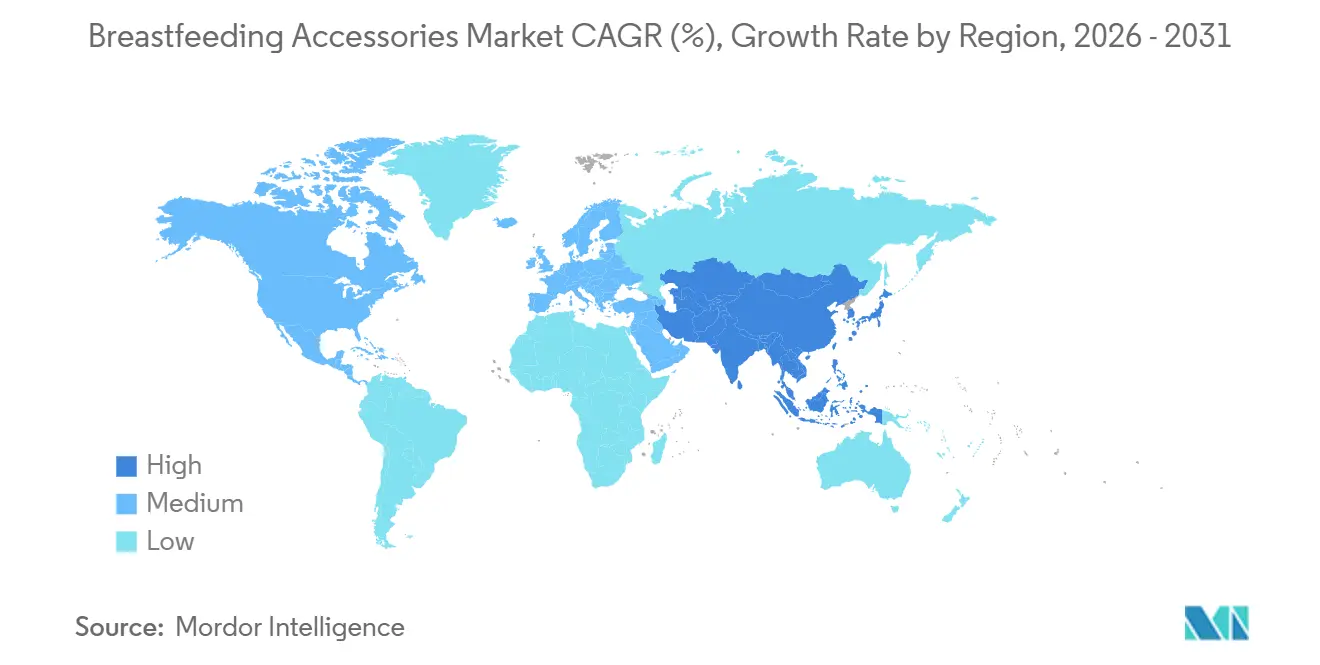
Asia-Pacific accounted for 43.72% of the market and is projected to grow at a CAGR of 9.11% through 2031. Rising maternal employment, urbanization, improved healthcare access, breastfeeding initiatives, and e-commerce expansion support regional market growth. China and India are major demand centers, supported by large populations, rising disposable incomes, and the adoption of convenient breastfeeding products among working mothers. Indonesia, Thailand, Singapore, and Vietnam benefit from expanding middle-income consumer bases and improved access to branded maternal care products. Japan and South Korea drive demand for premium materials, wearable products, and connected breastfeeding solutions.
North America and Europe represent major regional markets, supported by well-established healthcare infrastructure, insurance coverage, employer support programs, and mature pharmacy and specialty retail networks. Demand is increasingly shifting toward wearable, hands-free, and technologically advanced breastfeeding accessories, particularly in the United States and Canada. Europe benefits from established maternal healthcare systems, lactation counseling services, pharmacy distribution channels, and regulatory frameworks that promote the use of certified and medically validated products. Germany, France, the Netherlands, and the United Kingdom offer favorable environments for premium and specialized breastfeeding accessories.
South America and the Middle East and Africa represent comparatively smaller markets but offer growth opportunities as healthcare infrastructure, maternal awareness, urbanization, and online retail penetration improve. In South America, Brazil, Argentina, Colombia, Chile, and Peru are key markets, with demand supported by breastfeeding promotion initiatives and the expansion of digital commerce. In the Middle East, Saudi Arabia and the United Arab Emirates present opportunities for premium products. Meanwhile, South Africa, Egypt, Nigeria, and Morocco offer potential for mid-tier and basic breastfeeding accessories. Affordability remains a key consideration across several developing markets, driving demand for manual pumps, breast pads, nipple-care products, and other essential accessories.

Competitive Landscape
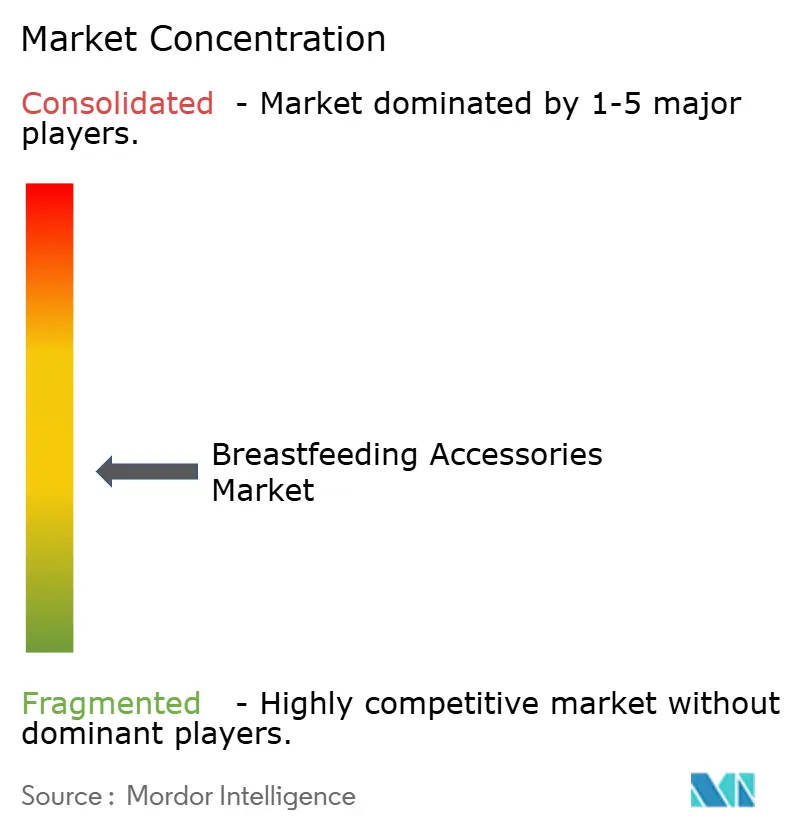
The breastfeeding accessories market is fragmented, with established healthcare and consumer brands competing alongside emerging and digital-first companies. Key participants include Medela, Philips Avent, Ameda, Willow, Elvie, Lansinoh, Spectra, Ardo Medical, Haakaa, and Momcozy, among others. Established companies compete through broad product portfolios, strong brand recognition, healthcare partnerships, and extensive distribution networks. Emerging players differentiate themselves through product innovation, convenience, wearable formats, and specialized product offerings. Competition spans breast pumps, milk storage and feeding products, breast care accessories, nursing products, and related consumables.
Companies increasingly expand their product portfolios and distribution networks to address diverse consumer segments and purchasing occasions. Established players leverage relationships with hospitals, maternity clinics, pharmacies, and e-commerce platforms, while emerging brands increasingly use direct-to-consumer and online channels to strengthen their market presence. Competition also varies across price tiers. Premium brands emphasize technology, comfort, performance, and clinical credibility, whereas value-oriented players focus on affordability, functional design, and accessibility. Product specialization is particularly prominent among companies offering manual silicone accessories, wearable breast pumps, feeding systems, and nursing care products.
Product innovation and technology remain key competitive factors, particularly as demand grows for wearable, hands-free, and connected breastfeeding solutions. Companies are investing in ergonomic designs, enhanced pumping functionality, app connectivity, and accessory compatibility to differentiate their offerings and strengthen consumer engagement. Meanwhile, regulatory compliance, quality assurance, clinical validation, and established distribution networks provide advantages to larger, more established companies. Overall, competition remains active across product categories and distribution channels, with companies differentiating through innovation, convenience, clinical positioning, brand trust, pricing, and geographic expansion.
Breastfeeding Accessories Industry Leaders
-
Medela AG
-
Koninklijke Philips N.V.
-
Pigeon Corporation
-
Willow
-
Chiaro Technology Ltd.
- *Disclaimer: Major Players sorted in no particular order

Recent Industry Developments
- February 2026: Burble launched its patented Burble Bra, a nursing bra designed to securely hold wearable breast pumps while improving fit and pumping convenience. This launch strengthened the company’s offering of breastfeeding apparel and comfort accessories.
- January 2026: Zomee launched its Mother’s Nature line, which includes a warming wearable breast pump that enables hands-free pumping with integrated warming functionality. This launch expands the company’s portfolio of wearable breastfeeding products.
- January 2025: Willow launched a Silicone Wearable Breast Pump, Glass Breast Milk Pitcher, and Breast Milk Storage Bags, expanding its portfolio of pumping, milk collection, feeding, and storage accessories.


Global Breastfeeding Accessories Market Report Scope
The breastfeeding accessories market includes products that support breastfeeding, breastmilk expression, storage, feeding, breast care, and maternal comfort. It is segmented by product type, technology, format, material, distribution channel, and geography. The market covers nipple care products, breast pads, storage and feeding products, apparel, and other accessories; manual, electric, wearable, smart, single-use, and reusable formats; and silicone, BPA-free plastics, films, cotton, and other materials. Distribution includes on-trade and off-trade channels. The market covers North America, Europe, Asia-Pacific, South America, the Middle East, and Africa.
| Nipple Care and Breast Care Products |
| Breast Pads and Breast Shells |
| Breastmilk Storage and Feeding Products |
| Breastmilk Preparation and Cleaning Products |
| Breastfeeding Apparel and Comfort Products (medela.com) |
| Others |
| Manual Accessories |
| Battery-Powered Electric Accessories |
| Plug-in Electric Accessories |
| Wearable Electric Accessories |
| Smart and App-Connected Accessories |
| Single-Use and Reusable Accessories |
| Medical-Grade Silicone |
| Polypropylene and BPA-Free Plastics |
| Polyethylene and Multilayer Films |
| Cotton and Organic Fibers |
| Others |
| On-Trade | |
| Off-Trade | Supermarkets and Hypermarkets |
| Hospital Pharmacies | |
| Retail Pharmacies and Drugstores | |
| Baby Specialty Stores |
| North America | United States |
| Canada | |
| Mexico | |
| Rest of North America | |
| Europe | United Kingdom |
| Germany | |
| France | |
| Italy | |
| Spain | |
| Netherlands | |
| Poland | |
| Belgium | |
| Sweden | |
| Rest of Europe | |
| Asia-Pacific | China |
| Japan | |
| India | |
| Australia | |
| Indonesia | |
| South Korea | |
| Thailand | |
| Singapore | |
| Rest of Asia-Pacific | |
| South America | Brazil |
| Argentina | |
| Colombia | |
| Chile | |
| Peru | |
| Rest of South America | |
| Middle East and Africa | South Africa |
| Saudi Arabia | |
| United Arab Emirates | |
| Nigeria | |
| Egypt | |
| Morocco | |
| Turkey | |
| Rest of Middle East and Africa |
| By Product Type | Nipple Care and Breast Care Products | |
| Breast Pads and Breast Shells | ||
| Breastmilk Storage and Feeding Products | ||
| Breastmilk Preparation and Cleaning Products | ||
| Breastfeeding Apparel and Comfort Products (medela.com) | ||
| Others | ||
| By Technology and Product Format | Manual Accessories | |
| Battery-Powered Electric Accessories | ||
| Plug-in Electric Accessories | ||
| Wearable Electric Accessories | ||
| Smart and App-Connected Accessories | ||
| Single-Use and Reusable Accessories | ||
| By Material | Medical-Grade Silicone | |
| Polypropylene and BPA-Free Plastics | ||
| Polyethylene and Multilayer Films | ||
| Cotton and Organic Fibers | ||
| Others | ||
| By Distribution Channel | On-Trade | |
| Off-Trade | Supermarkets and Hypermarkets | |
| Hospital Pharmacies | ||
| Retail Pharmacies and Drugstores | ||
| Baby Specialty Stores | ||
| By Geography | North America | United States |
| Canada | ||
| Mexico | ||
| Rest of North America | ||
| Europe | United Kingdom | |
| Germany | ||
| France | ||
| Italy | ||
| Spain | ||
| Netherlands | ||
| Poland | ||
| Belgium | ||
| Sweden | ||
| Rest of Europe | ||
| Asia-Pacific | China | |
| Japan | ||
| India | ||
| Australia | ||
| Indonesia | ||
| South Korea | ||
| Thailand | ||
| Singapore | ||
| Rest of Asia-Pacific | ||
| South America | Brazil | |
| Argentina | ||
| Colombia | ||
| Chile | ||
| Peru | ||
| Rest of South America | ||
| Middle East and Africa | South Africa | |
| Saudi Arabia | ||
| United Arab Emirates | ||
| Nigeria | ||
| Egypt | ||
| Morocco | ||
| Turkey | ||
| Rest of Middle East and Africa | ||


Key Questions Answered in the Report
What is the market size of the breastfeeding accessories market?
The breastfeeding accessories market was USD 3.03 billion in 2025, increased to USD 3.21 billion in 2026, and is projected to reach USD 4.37 billion by 2031, representing a 6.52% CAGR during 2026–2031.
Which product category held the largest revenue share in 2025?
Breastmilk Storage and Feeding Products held 24.74% of revenue in 2025. Repeat demand for storage, feeding, cleaning, and hygiene products supports the category’s position across work, travel, and shared caregiving routines. The category also works across manual, electric, and wearable pump formats.
Which technology format is forecasted to grow fastest through 2031?
Smart and App-Connected Accessories are forecast to grow at an 11.21% CAGR during 2026-2031. Session tracking, personalized settings, milk-volume monitoring, and paired applications support demand for connected solutions. Manufacturers are also expanding wearable products that combine convenience with digital features.
What is driving demand for breastfeeding accessories?
Returning-to-work requirements, lactation support, demand for storage products, and wearable designs support product use. Workplace protections can link employees with private pumping space, break time, insurance coverage, and clinical supply channels. These supports can reduce barriers to regular pumping and milk storage during the workday.
Page last updated on:





