
Brain Health Functioning Food Beverage Market Size and Share
Market Overview
| Study Period | 2021 - 2031 |
|---|---|
| Market Size (2026) | USD 30.02 Billion |
| Market Size (2031) | USD 55.08 Billion |
| Growth Rate (2026 - 2031) | 13.08 % |
| Fastest Growing Market | Asia-Pacific |
| Largest Market | North America |
| Market Concentration | Low |
Major Players
*Disclaimer: Major Players sorted in no particular order Image © Mordor Intelligence. Reuse requires attribution under CC BY 4.0. |
|
Brain Health Functioning Food Beverage Market Analysis by Mordor Intelligence
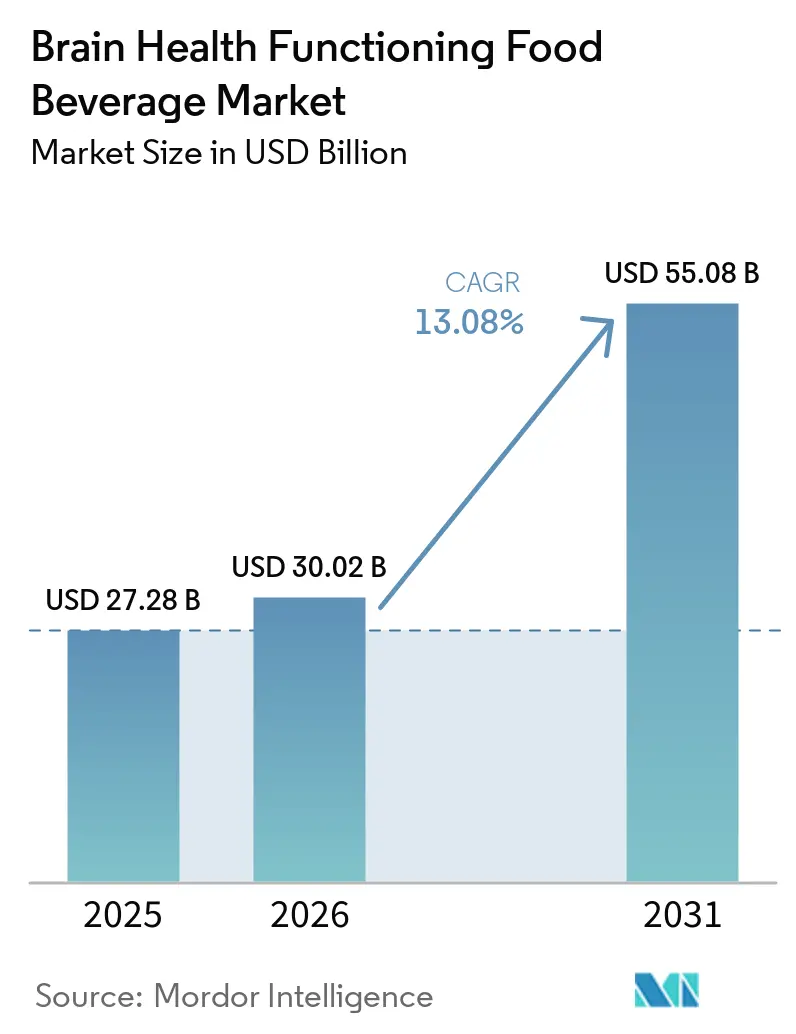
The brain health functioning food beverage market was valued at USD 27.28 billion in 2025 and is estimated to reach USD 30.02 billion in 2026. It is projected to reach USD 55.08 billion by 2031, registering a CAGR of 13.08% during the 2026–2031 forecast period. Demand is expanding beyond products designed for older consumers, as working professionals, students, and parents increasingly seek nutrition products that support cognitive performance and development. Functional foods, beverages, and supplements provide multiple consumption occasions and retail price points, supporting market growth even when individual products face pricing pressures. Product developers are increasingly adopting delivery formats that integrate seamlessly into daily food and beverage routines.
Key Report Takeaways
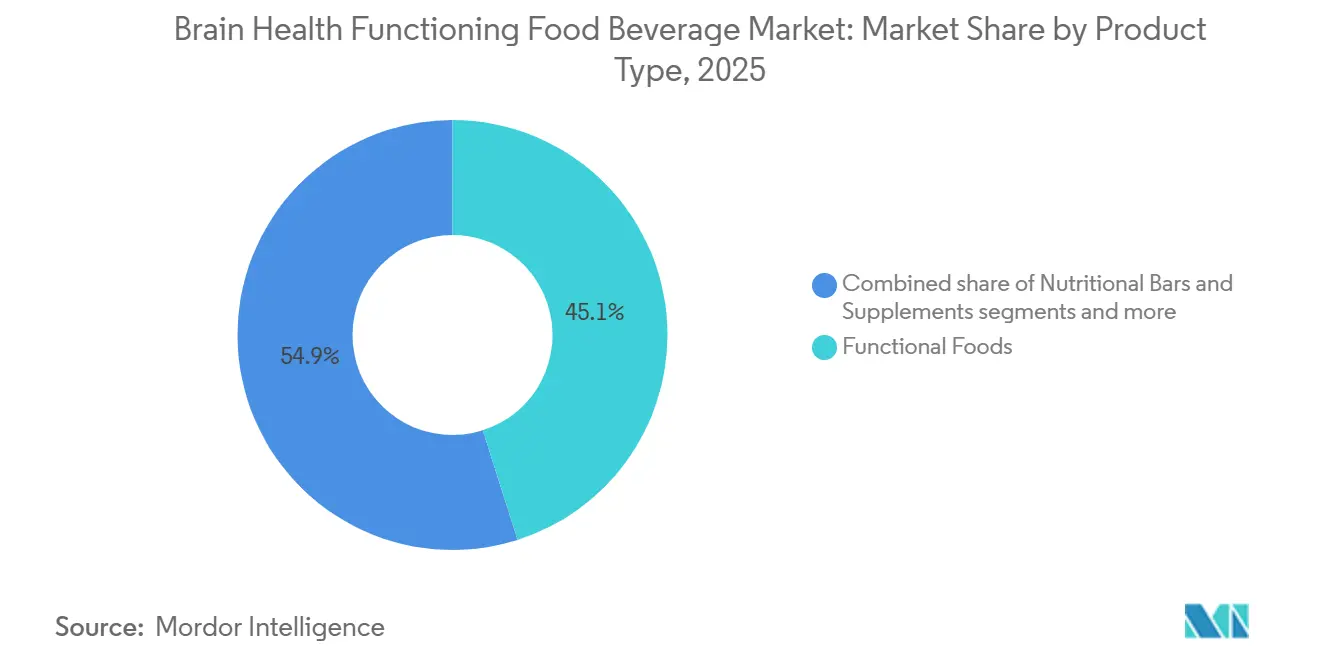
- By product type, functional foods held 45.13% of the brain health functioning food beverage market share in 2025, while nutritional bars and supplements are forecasted to grow at a 15.07% CAGR during 2026-2031.
- By ingredient, omega-3 fatty acids held 30.12% of the brain health functioning food beverage market share in 2025, while amino acids and peptides are forecasted to grow at a 13.71% CAGR during 2026-2031.
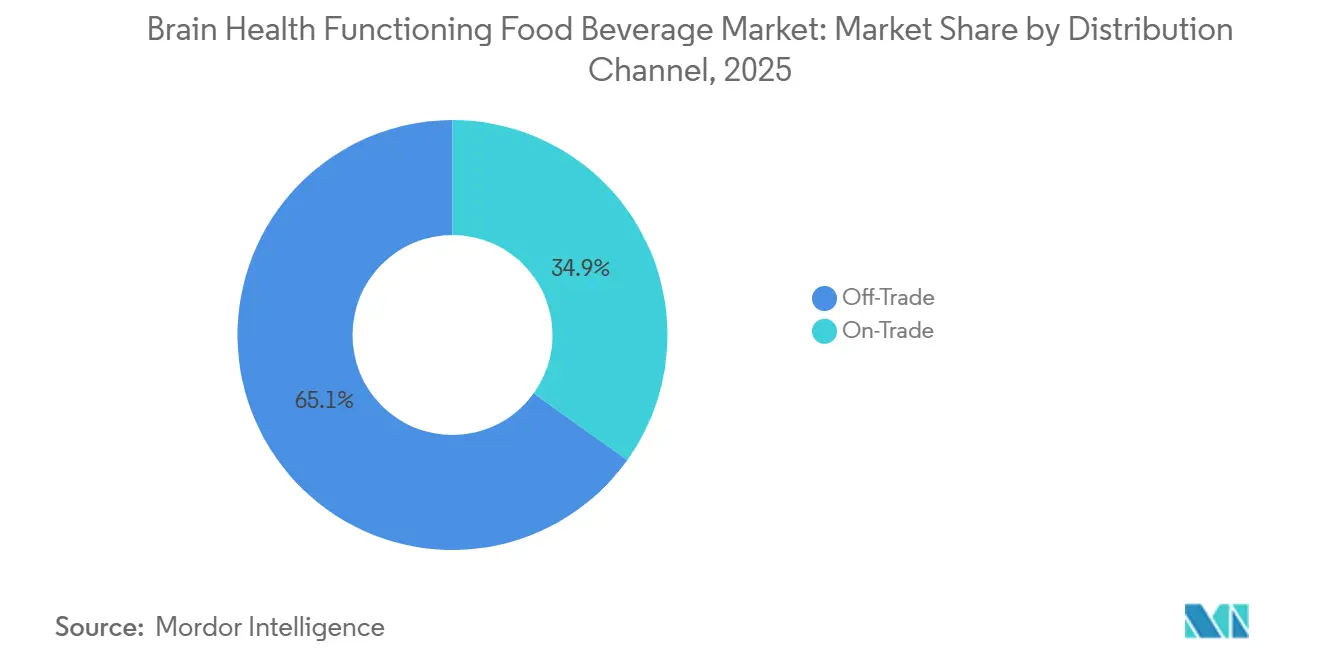
- By distribution channel, off-trade accounted for 65.11% of the brain health functioning food beverage market in 2025, while on-trade distribution is forecasted to grow at an 11.22% CAGR during 2026-2031.
- By geography, North America accounted for 38.81% of the brain health functioning food beverage market in 2025, while Asia-Pacific is forecast to grow at a 14.01% CAGR during 2026-2031.
Note: Market size and forecast figures in this report are generated using Mordor Intelligence’s proprietary estimation framework, updated with the latest available data and insights as of January 2026.
Global Brain Health Functioning Food Beverage Market Trends and Insights
Drivers Impact Analysis*
| Driver | (~) % Impact on CAGR Forecast | Geographic Relevance | Impact Timeline |
|---|---|---|---|
| Rising preventive cognitive wellness adoption | +3.2% | Global, strongest in North America and Europe | Long term (≥ 4 years) |
| Growth of convenience-led functional nutrition | +2.3% | Global, North America and Asia-Pacific | Medium term (2-4 years) |
| Aging population and demand for healthy cognitive aging | +2.7% | Asia-Pacific, Europe, and North America | Long term (≥ 4 years) |
| Expansion of natural nootropic and adaptogenic products | +1.9% | Global, strongest in North America and growing in India and Southeast Asia | Medium term (2-4 years) |
| Growth of gut-brain and psychobiotic products | +1.5% | Global, with early gains in Japan, South Korea, and Germany | Medium term (2-4 years) |
| Rising brain-performance demand among knowledge workers, students and gamers | +1.6% | Global, particularly North America and Asia-Pacific | Short term (≤ 2 years) |
| Source: Mordor Intelligence | |||
Rising Preventive Cognitive Wellness Adoption
Cognitive health is increasingly influencing preventive wellness and dietary choices, driving demand for functional foods and beverages that support focus, mental clarity, memory, and long-term cognitive wellness. For instance, in March 2026, according to AARP's research, 73% of U.S. adults aged 40 and older believe they could adopt a healthier diet to support brain health, while 69% would be extremely or very likely to follow an appropriate diet if it could support mental functioning. Additionally, 92% of adults aged 45 and older consider remaining mentally sharp extremely or very important [1]Source: AARP, "AARP Research Insights on Brain Health", aarp.org. This preventive approach is expanding demand for brain-health-focused foods and beverages beyond older adults and individuals with existing cognitive concerns.
Growth of Convenience-Led Functional Nutrition
The growing emphasis on convenience in food and beverage purchasing is expanding brain health nutrition products beyond traditional supplement formats into a broader range of everyday foods and beverages. Consumers can easily incorporate these products into their established routines. This expansion reflects rising demand for convenient, on-the-go products that support cognitive health while fitting busy lifestyles and regular eating occasions. Nutritional bars and snacks, ready-to-drink beverages, functional waters, teas, and coffees offer accessible ways to add brain-supporting ingredients to daily diets. These formats allow consumers to obtain potential cognitive health benefits without altering their consumption habits or relying solely on conventional supplement regimens.
Aging Population and Demand for Healthy Cognitive Aging
Population aging is creating a sustained consumer base for functional foods and beverages that support healthy cognitive aging. For instance, in October 2025, the World Health Organization projected that the global population aged 60 years and older would increase from 1 billion in 2020 to 1.4 billion by 2030, accounting for one in six people worldwide [2]Source: World Health Organization, "Ageing and health", who.int. This demographic shift is increasing demand for foods and beverages containing cognitive wellness ingredients, such as omega-3 fatty acids, vitamins, minerals, and botanical ingredients. Fortified foods, nutritional bars, functional beverages, and other convenient formats enable older consumers to incorporate brain-health-focused nutrition into their daily diets.
Expansion of Natural Nootropic and Adaptogenic Products
The expanding body of research on natural nootropic and adaptogenic ingredients supports their use in products designed to promote cognitive and mental well-being. For instance, in November 2025, clinical evidence of improvements in cognitive performance, sleep quality, mood, and stress-related outcomes associated with ashwagandha was reported, while highlighting its adaptogenic and neuroprotective properties [3]Source: National Library of Medicine, "Ashwagandha as an Adaptogenic Herb: A Comprehensive Review of Immunological and Neurological Effects", pubmed.ncbi.nlm.nih.gov. This growing scientific interest is encouraging manufacturers to incorporate botanical ingredients, such as ashwagandha, into functional foods and beverages targeting stress management, focus, cognitive performance, and overall brain health. The increasing availability of research-backed botanical ingredients is, therefore, supporting the expansion of natural nootropic and adaptogenic offerings in the brain health functional food and beverage market.
Restraints Impact Analysis*
| Restraint | (~) % Impact on CAGR Forecast | Geographic Relevance | Impact Timeline |
|---|---|---|---|
| Clinical evidence and health-claim challenges | -1.8% | Global, with greatest effect in the United States and European Union | Long term (≥ 4 years) |
| High ingredient and formulation costs | -1.5% | Global, with supply exposure in South America and Southeast Asia | Medium term (2-4 years) |
| Sensory, stability, and bioavailability challenges | -0.9% | Global | Medium term (2-4 years) |
| Regulatory and safety concerns | -0.8% | European Union, United States, and regulated Asia-Pacific markets | Long term (≥ 4 years) |
| Source: Mordor Intelligence | |||
Clinical Evidence and Health-Claim Challenges
Clinical substantiation and regulatory requirements can constrain premium product positioning in the Brain Health Functional Food and Beverage Market. Manufacturers must carefully word cognitive health claims, as consumers may interpret structure/function statements more strongly than intended. Regulatory authorities may scrutinize claims related to memory, focus, mood, and cognitive performance, particularly for products containing emerging botanicals, nootropics, or other brain-supporting ingredients. These requirements can limit manufacturers’ ability to communicate significant cognitive benefits, especially when clinical evidence remains limited. Consequently, companies must balance product differentiation with substantiated evidence and compliant claims language.
High Ingredient and Formulation Costs
Ingredient costs can constrain margins in the brain health nutrition market, particularly for omega-3 fatty acids and clinically standardized botanicals. The divergence between volume and value growth indicates pressure on companies that cannot fully pass on increased costs to consumers, particularly when consumers remain price-sensitive. Proprietary extracts, such as standardized ashwagandha, lion’s mane, and bacopa, also incur higher quality-control, clinical validation, and sourcing costs than generic alternatives. Consequently, manufacturers must balance pricing, formulation quality, product differentiation, and margin protection.
*Our forecasts treat driver/restraint impacts as directional, not additive. The impact forecasts reflect baseline growth, mix effects, and variable interactions.
Segment Analysis
By Product Type: Functional Foods Lead Revenue and Nutritional Bars Drive Growth
Functional foods are projected to account for 45.13% of the brain health functioning food beverage market in 2025. Nutritional bars and supplements are expected to grow at a CAGR of 15.07% during the 2026–2031 forecast period, driven by their integration into routine grocery purchases and increasing consumer preference for convenient brain health products. Fortified dairy products, cereals, and bakery products serve a broad consumer base by enabling consumers to incorporate brain-supporting nutrients into their daily diets. Baby foods fortified with long-chain polyunsaturated fatty acids, choline, and iron support neurodevelopment during early childhood.
Beverages offer convenient options for energy and focus, including functional waters, ready-to-drink teas and coffees, nootropic shots, and functional juices and smoothies. The category benefits from incorporating functional ingredients into familiar beverage formats, allowing consumers to integrate brain health products into their daily routines without significantly changing their consumption habits. These formats also appeal to consumers seeking portable, on-the-go options for supporting cognitive wellness. Brain health supplements, including capsules and tablets, gummies and chewables, powders and sachets, and softgels and liquid formats, remain relevant for consumers seeking targeted ingredient dosages, greater control over their intake, and options that align with their preferred consumption methods.



By Ingredient: Omega-3s Lead Revenue and Amino Acids and Peptides Grow Fastest
Omega-3 fatty acids accounted for 30.12% of the brain health functioning food beverage market share in 2025, while amino acids and peptides are projected to register a CAGR of 13.71% during 2026–2031. Omega-3 fatty acids retain their leading position, supported by decades of consumer familiarity with fish oil and DHA products. EPA and DHA remain core ingredients in brain health formulations. Manufacturers increasingly incorporate amino acids and peptides, including glycine, L-tyrosine, and marine protein hydrolysates, into products targeting cognitive performance and stress resilience. This growth reflects rising consumer interest in targeted nutritional solutions that address specific cognitive and mental wellness needs.
Key ingredient categories include vitamins and minerals, antioxidants and polyphenols, herbal nootropics, adaptogens, phospholipids and choline compounds, probiotics, prebiotics, postbiotics, caffeine, and natural stimulants. B vitamins, zinc, iron, and magnesium remain central to fortified food and beverage formulations. Bacopa, ashwagandha, lion’s mane, and ginkgo are gaining acceptance across Asia-Pacific, supported by familiarity with traditional medicine. Phospholipids and choline compounds are featured in premium formulations for their roles in neuronal membrane structure and acetylcholine synthesis. Probiotics, prebiotics, and postbiotics also support gut-brain health positioning.
By Distribution Channel: Supermarkets Support Volume and On-Trade Builds Trial
Off-trade distribution accounted for 65.11% of revenue in the brain health functioning food and beverage market in 2025. Supermarkets, hypermarkets, convenience stores, pharmacies, drugstores, and specialty health stores provide consumers with broad access to functional foods and beverages. Pharmacies and drugstores serve as key channels for omega-3 softgels, ginkgo tablets, and B-vitamin complexes, while specialty health stores offer premium nootropic and adaptogenic formulations for consumers seeking targeted cognitive health benefits. Convenience stores further expand access to single-serve functional beverages and nootropic-focused products for on-the-go consumption.
On-trade distribution, including functional cafés, beverage bars, restaurants, and health-focused foodservice outlets, is projected to grow at a CAGR of 11.22% during 2026–2031. These channels enable consumers to try functional foods and beverages containing lion’s mane, L-theanine, and adaptogenic blends in ready-to-consume formats. On-trade channels are particularly relevant in urban markets, where functional beverages and health-focused foodservice concepts continue to expand, supported by rising consumer interest in wellness-focused dining and convenient nutrition options. Product trials can increase familiarity with brain-health ingredients, encourage repeat consumption, and support subsequent retail purchases of similar products for at-home use.
Geography Analysis
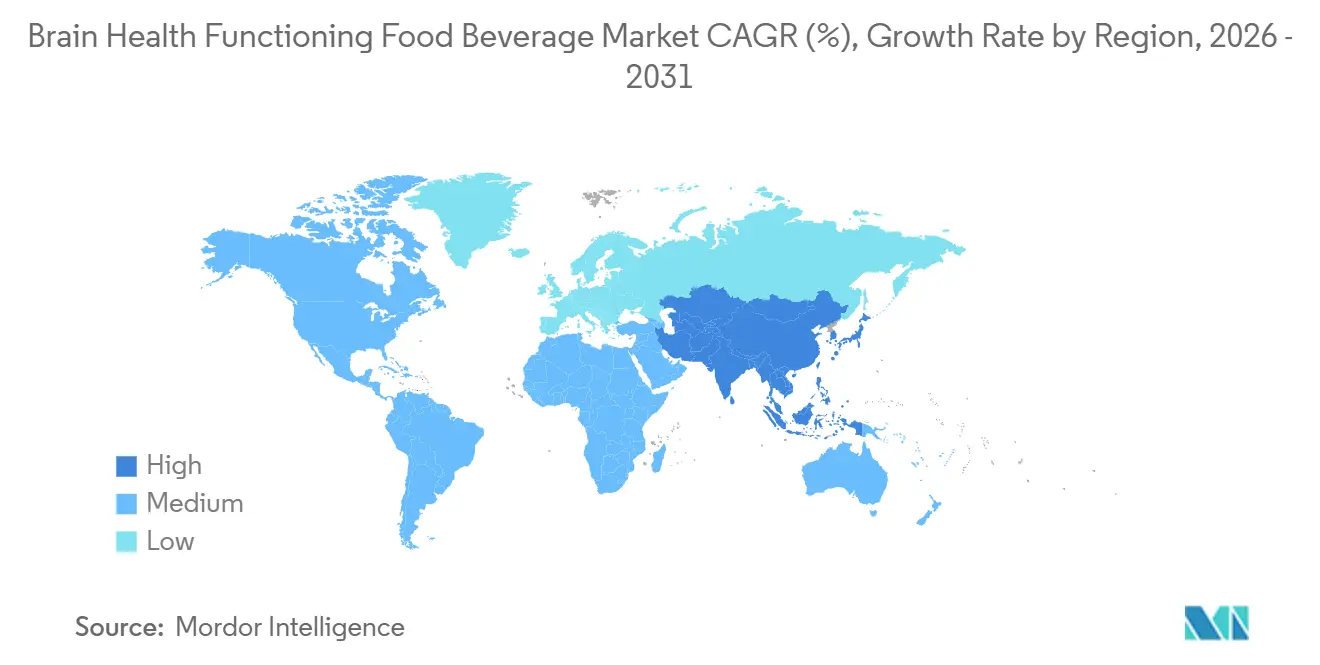
North America accounted for 38.81% of the brain health nutrition market share in 2025, while Asia-Pacific is forecast to grow at a 14.01% CAGR during 2026–2031, making it the fastest-growing regional market. North America benefits from established supplement retail, direct-to-consumer channels, and strong demand for products positioned around cognitive performance. The United States represents the primary market, supported by demand from both an aging population and younger professionals seeking functional foods and supplements. Canada’s natural health product framework provides consumers with clearer quality-assurance signals, while functional cafés and wellness-focused food-service venues create opportunities to trial nootropic shots and fortified beverages.
Europe remains a key regional base for the brain health nutrition market. Germany, the United Kingdom, France, Italy, and Spain are the core revenue-generating markets, supported by established functional food, beverage, and supplement categories. Health claims regulations favor companies with robust scientific documentation, while consumers in Germany and Scandinavia prioritize formulation quality and scientific substantiation. The Netherlands, Belgium, Sweden, and Poland are experiencing growing demand for nootropic beverages, fortified cereals, and gummies. South America is an emerging market, with Brazil and Argentina offering the largest opportunities through expanding functional nutrition and wellness categories.
The Middle East and Africa region includes South Africa, Saudi Arabia, the United Arab Emirates, Nigeria, Egypt, Morocco, Turkey, and the rest of the region. Although the market is smaller than those in North America, Europe, and Asia-Pacific, it offers significant growth opportunities as consumers increasingly adopt functional foods, beverages, and supplements. Saudi Arabia and the United Arab Emirates benefit from expanding premium wellness and nutrition categories, while South Africa has a relatively developed consumer market for supplements and functional products. Brazil, Argentina, Saudi Arabia, and the United Arab Emirates offer particularly attractive opportunities for international companies seeking geographic expansion.

Competitive Landscape
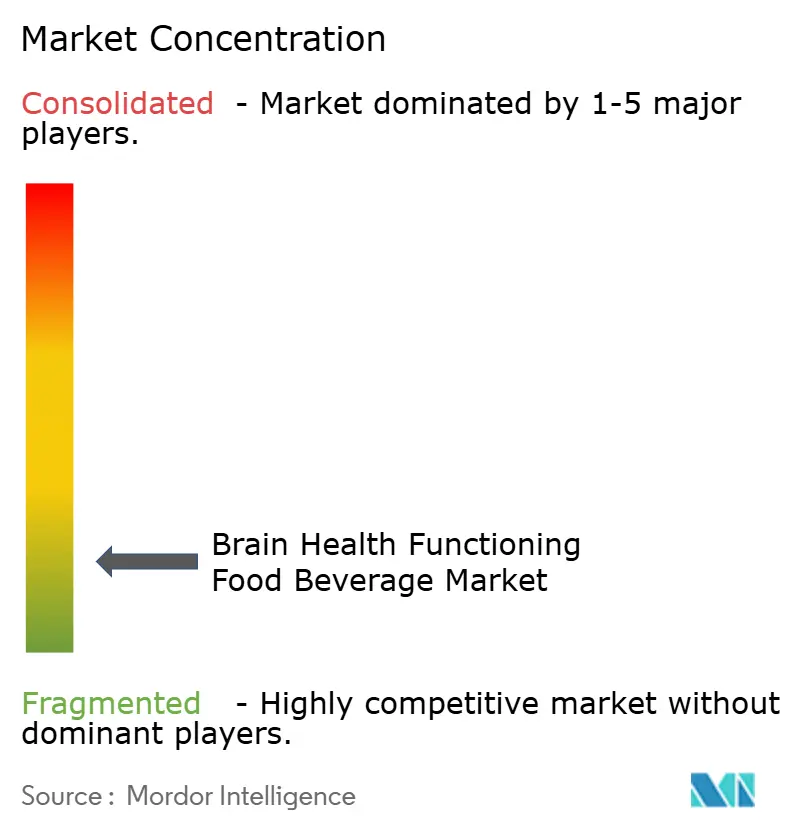
The brain health functioning food beverage market is fragmented, with large consumer goods, nutrition, and healthcare companies competing alongside specialized brain health and functional nutrition brands. Companies with extensive distribution networks leverage established relationships with supermarkets, pharmacies, specialty retailers, and direct-to-consumer channels. Specialized brands differentiate themselves through targeted formulations designed to support cognitive performance, stress resilience, memory, focus, and healthy aging. Functional food and beverage companies further broaden the competitive landscape by incorporating brain-supporting ingredients into everyday products, including snacks, bars, beverages, cereals, and fortified foods.
Formulation quality, ingredient selection, scientific substantiation, and delivery technologies are increasingly important competitive factors. Companies are adopting technologies such as liposomal delivery, enteric coating, microencapsulation, and nanoemulsification to enhance ingredient stability, absorption, and targeted delivery. Products containing omega-3 fatty acids, vitamins and minerals, phospholipids, choline, nootropics, adaptogens, probiotics, and amino acids are increasingly competing on specific benefit propositions. Companies that combine differentiated formulations with credible scientific evidence and transparent ingredient sourcing can secure stronger premium positioning than those offering commodity-focused products.
Digital engagement, personalization, convenience, and consumer education are creating new competitive dimensions in the market. Direct-to-consumer brands leverage personalized recommendations, subscription models, and educational content to strengthen consumer relationships and encourage repeat purchases. At-home wellness assessments, microbiome-based recommendations, and personalized nutrition platforms enable tailored product selection. On-trade channels and functional beverage formats provide opportunities for product trials and consumer education, particularly for newer ingredients. Smaller, science-focused companies compete through ingredient transparency, specialized formulations, and targeted positioning, while larger companies benefit from economies of scale, extensive distribution networks, and established brand recognition.
Brain Health Functioning Food Beverage Industry Leaders
-
PepsiCo, Inc.
-
Unilever PLC
-
Abbott Laboratories
-
Amway Corp.
-
Herbalife Nutrition Ltd.
- *Disclaimer: Major Players sorted in no particular order

Recent Industry Developments
- March 2026: Bulletproof launched Coffee + Creatine, a functional instant coffee that contains 5 g of creatine monohydrate and 250 mg of electrolytes per serving. The product supports mental clarity, cognitive performance, sustained energy, and physical performance, expanding creatine’s use beyond sports nutrition into brain health applications.
- September 2025: New Zealand-based Ārepa expanded its Brain Drinks portfolio with Sparkling Yuzu Lemon & Vanilla and Spiced Orange variants. The beverages contain L-theanine, American ginseng, magnesium, and B vitamins to support mental performance, focus, calmness, and reduced fatigue.
- September 2025: Huel launched Daily Greens Ready-to-Drink (RTD), a lightly carbonated functional beverage containing 42 vitamins, minerals, superfoods, adaptogens, and 4 g of dietary fiber per serving. The beverage contains vitamin B12, iron, and vitamin C to support mental clarity and sustained energy.


Global Brain Health Functioning Food Beverage Market Report Scope
The brain health functioning food beverage market includes foods, beverages, and supplements formulated with ingredients that support cognitive function, memory, focus, mental clarity, mood, stress management, and overall brain health. It covers functional foods such as bakery products, dairy products, cereals and grains, baby food, and nutritional bars and snacks, beverages including energy and focus drinks, functional waters, Ready-to-Drink teas and coffees, nootropic shots, and functional juices and smoothies; and supplements in various formats. The market includes key ingredient categories such as omega-3 fatty acids, vitamins and minerals, antioxidants, herbal nootropics, adaptogens, probiotics, and caffeine. It is analyzed across on-trade and off-trade distribution channels and covers North America, Europe, Asia-Pacific, South America, and the Middle East and Africa, with country-level analysis of major markets and rest-of-region categories.
| Functional Foods | Bakery Products |
| Dairy Products | |
| Cereals and Grains | |
| Baby Food | |
| Nutritional Bars and Snacks | |
| Beverages | Energy and Focus Drinks |
| Functional Waters | |
| Ready-to-Drink Teas | |
| Ready-to-Drink Coffees | |
| Nootropic Shots | |
| Functional Juices and Smoothies | |
| Brain Health Supplements | Capsules and Tablets |
| Gummies and Chewables | |
| Powders and Sachets | |
| Softgels and Liquid Formats |
| Omega-3 Fatty Acids |
| Vitamins and Minerals |
| Antioxidants and Polyphenols |
| Phospholipids and Choline Compounds |
| Amino Acids and Peptides |
| Herbal Nootropics |
| Adaptogens |
| Probiotics, Prebiotics and Postbiotics |
| Caffeine and Natural Stimulants |
| Other Brain-Support Ingredients |
| On-Trade | |
| Off-Trade | Supermarkets and Hypermarkets |
| Convenience Stores | |
| Pharmacies and Drugstores | |
| Specialty Health Stores | |
| Others |
| North America | United States |
| Canada | |
| Mexico | |
| Rest of North America | |
| Europe | United Kingdom |
| Germany | |
| France | |
| Italy | |
| Spain | |
| Netherlands | |
| Poland | |
| Belgium | |
| Sweden | |
| Rest of Europe | |
| Asia-Pacific | China |
| Japan | |
| India | |
| Australia | |
| Indonesia | |
| South Korea | |
| Thailand | |
| Singapore | |
| Rest of Asia-Pacific | |
| South America | Brazil |
| Argentina | |
| Colombia | |
| Chile | |
| Peru | |
| Rest of South America | |
| Middle East and Africa | South Africa |
| Saudi Arabia | |
| United Arab Emirates | |
| Nigeria | |
| Egypt | |
| Morocco | |
| Turkey | |
| Rest of Middle East and Africa |
| By Product Type | Functional Foods | Bakery Products |
| Dairy Products | ||
| Cereals and Grains | ||
| Baby Food | ||
| Nutritional Bars and Snacks | ||
| Beverages | Energy and Focus Drinks | |
| Functional Waters | ||
| Ready-to-Drink Teas | ||
| Ready-to-Drink Coffees | ||
| Nootropic Shots | ||
| Functional Juices and Smoothies | ||
| Brain Health Supplements | Capsules and Tablets | |
| Gummies and Chewables | ||
| Powders and Sachets | ||
| Softgels and Liquid Formats | ||
| By Ingredient | Omega-3 Fatty Acids | |
| Vitamins and Minerals | ||
| Antioxidants and Polyphenols | ||
| Phospholipids and Choline Compounds | ||
| Amino Acids and Peptides | ||
| Herbal Nootropics | ||
| Adaptogens | ||
| Probiotics, Prebiotics and Postbiotics | ||
| Caffeine and Natural Stimulants | ||
| Other Brain-Support Ingredients | ||
| By Distribution Channel | On-Trade | |
| Off-Trade | Supermarkets and Hypermarkets | |
| Convenience Stores | ||
| Pharmacies and Drugstores | ||
| Specialty Health Stores | ||
| Others | ||
| By Geography | North America | United States |
| Canada | ||
| Mexico | ||
| Rest of North America | ||
| Europe | United Kingdom | |
| Germany | ||
| France | ||
| Italy | ||
| Spain | ||
| Netherlands | ||
| Poland | ||
| Belgium | ||
| Sweden | ||
| Rest of Europe | ||
| Asia-Pacific | China | |
| Japan | ||
| India | ||
| Australia | ||
| Indonesia | ||
| South Korea | ||
| Thailand | ||
| Singapore | ||
| Rest of Asia-Pacific | ||
| South America | Brazil | |
| Argentina | ||
| Colombia | ||
| Chile | ||
| Peru | ||
| Rest of South America | ||
| Middle East and Africa | South Africa | |
| Saudi Arabia | ||
| United Arab Emirates | ||
| Nigeria | ||
| Egypt | ||
| Morocco | ||
| Turkey | ||
| Rest of Middle East and Africa | ||


Key Questions Answered in the Report
What is the market size of brain health functioning food beverage market?
The brain health functional food and beverage market was valued at USD 27.28 billion in 2025 and is estimated at USD 30.02 billion in 2026. The market is projected to reach USD 55.08 billion by 2031, registering a CAGR of 13.08% during the forecast period (2026–2031).
Which ingredient category is growing fastest?
Amino acids and peptides are forecast to grow at a 13.71% CAGR during 2026-2031.
Which region has the largest position?
North America held 38.81% of revenue in 2025, supported by established supplement retail and diverse consumer demand.
Which region is expected to grow the fastest?
Asia-Pacific is forecast to grow at a 14.01% CAGR during 2026-2031, supported by urbanization, rising incomes, and familiarity with traditional botanicals.
Page last updated on:





