
Blood Viscometer Market Size and Share
Market Overview
| Study Period | 2020 - 2031 |
|---|---|
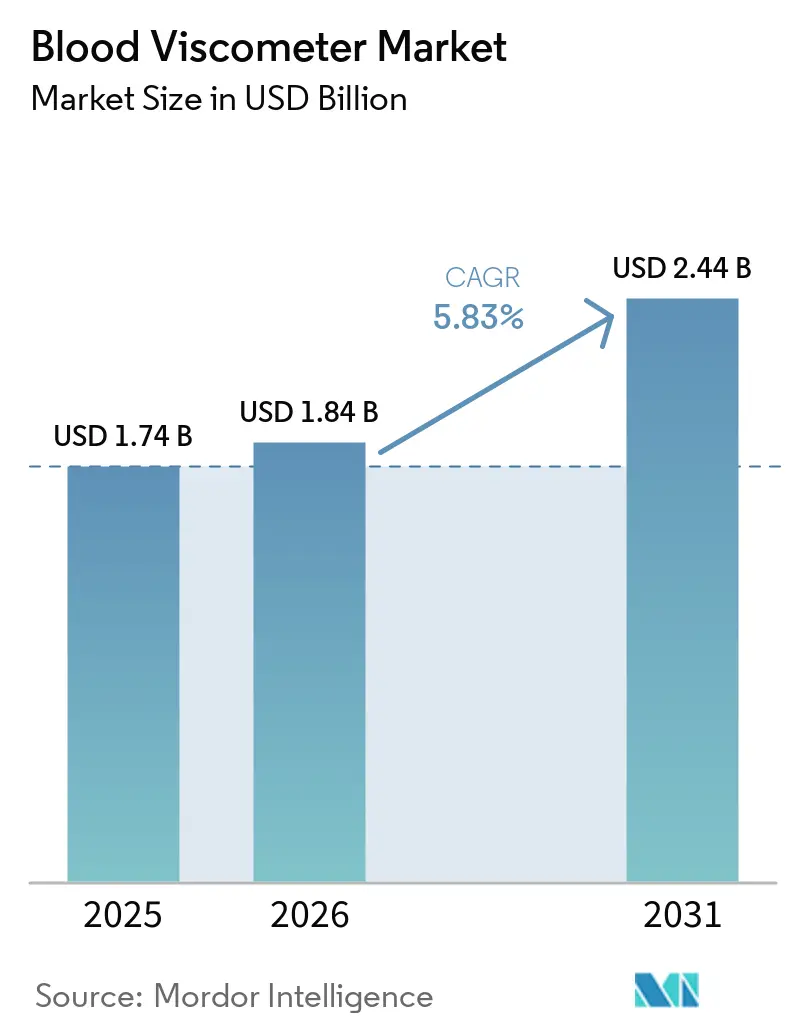
| Market Size (2026) | USD 1.84 Billion |
| Market Size (2031) | USD 2.44 Billion |
| Growth Rate (2026 - 2031) | 5.83 % |
| Fastest Growing Market | Asia-Pacific |
| Largest Market | North America |
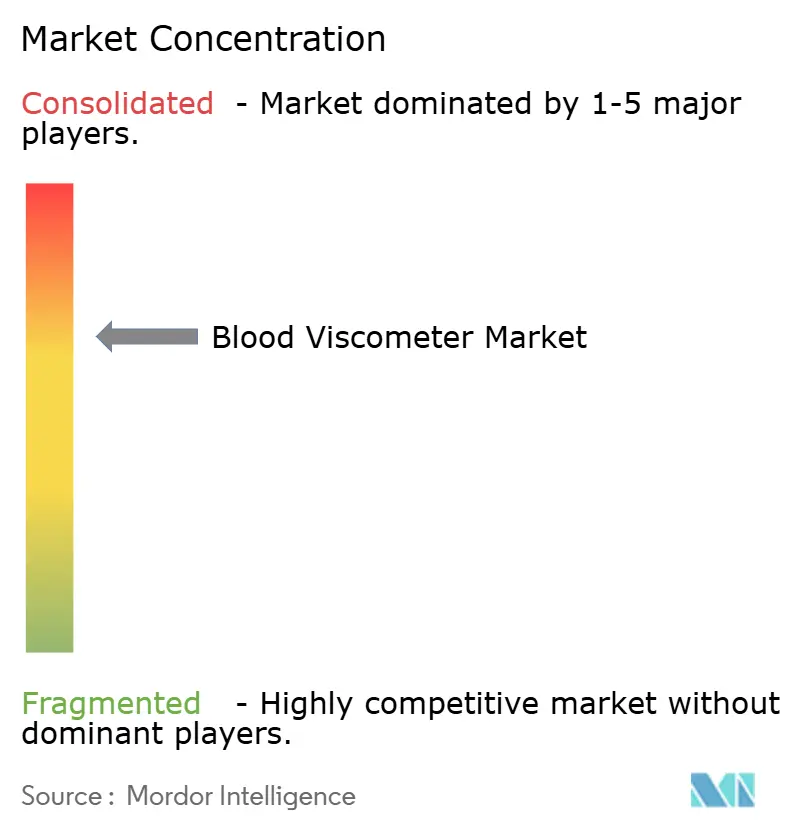
| Market Concentration | Medium |
Major Players *Disclaimer: Major Players sorted in no particular order Image © Mordor Intelligence. Reuse requires attribution under CC BY 4.0. | |
Blood Viscometer Market Analysis by Mordor Intelligence
The Blood Viscometer Market size was valued at USD 1.74 billion in 2025 and is estimated to grow from USD 1.84 billion in 2026 to reach USD 2.44 billion by 2031, at a CAGR of 5.83% during the forecast period (2026-2031).
The blood viscometer market is supported by a rising cardiovascular and metabolic disease burden, which is expanding the number of patients who may need blood rheology assessment. It is also benefiting from laboratories that are replacing manual workflows with automated instruments and connected records. Clinical research is broadening the use of whole-blood viscosity beyond hematology into cardiology, stroke care, and metabolic disease management. These changes make the blood viscometer market less dependent on a single clinical department and give hospitals a wider reason to purchase instruments. Premium suppliers are responding with automated platforms, regulated data controls, and small-sample technologies, while lower-cost formats may support adoption in decentralized settings.
Key Report Takeaways
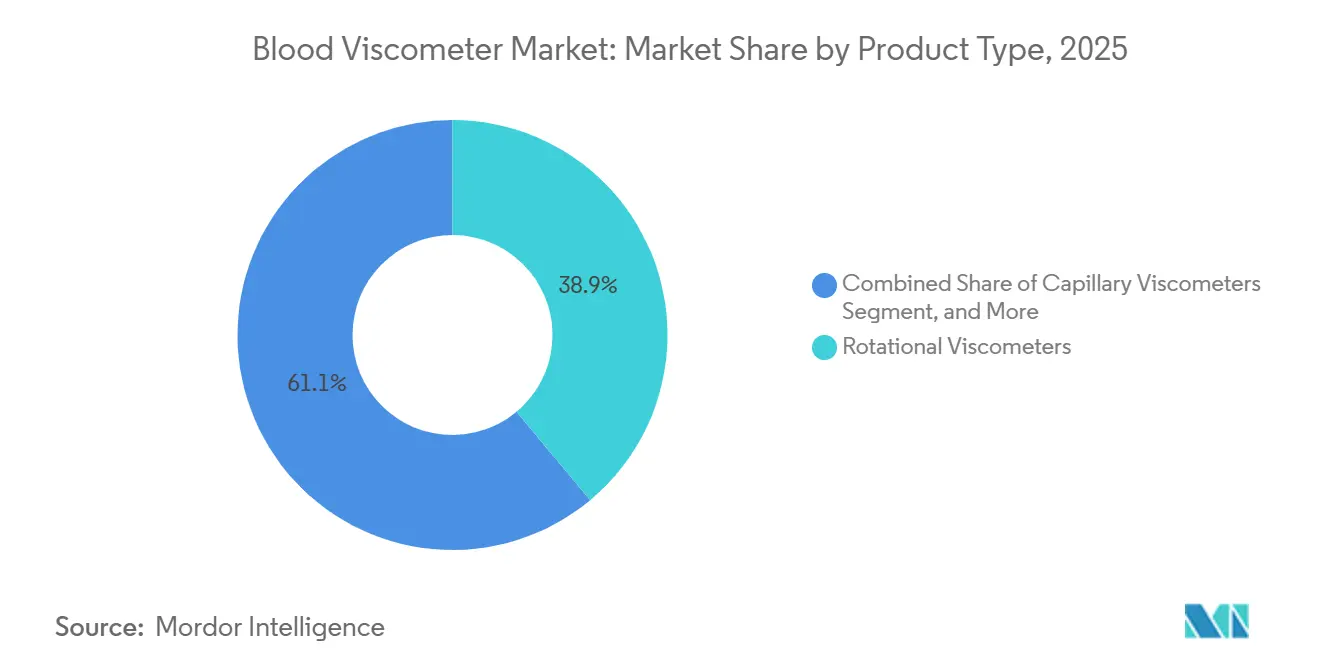
- By product type, rotational viscometers held 38.94% of the blood viscometer market share in 2025, while capillary viscometers are forecast to grow at a 6.24% CAGR through 2031.
- By application, clinical diagnostics and patient monitoring accounted for 42.51% of the blood viscometer market size in 2025, while hematology and blood research are projected to expand at a 6.83% CAGR through 2031.
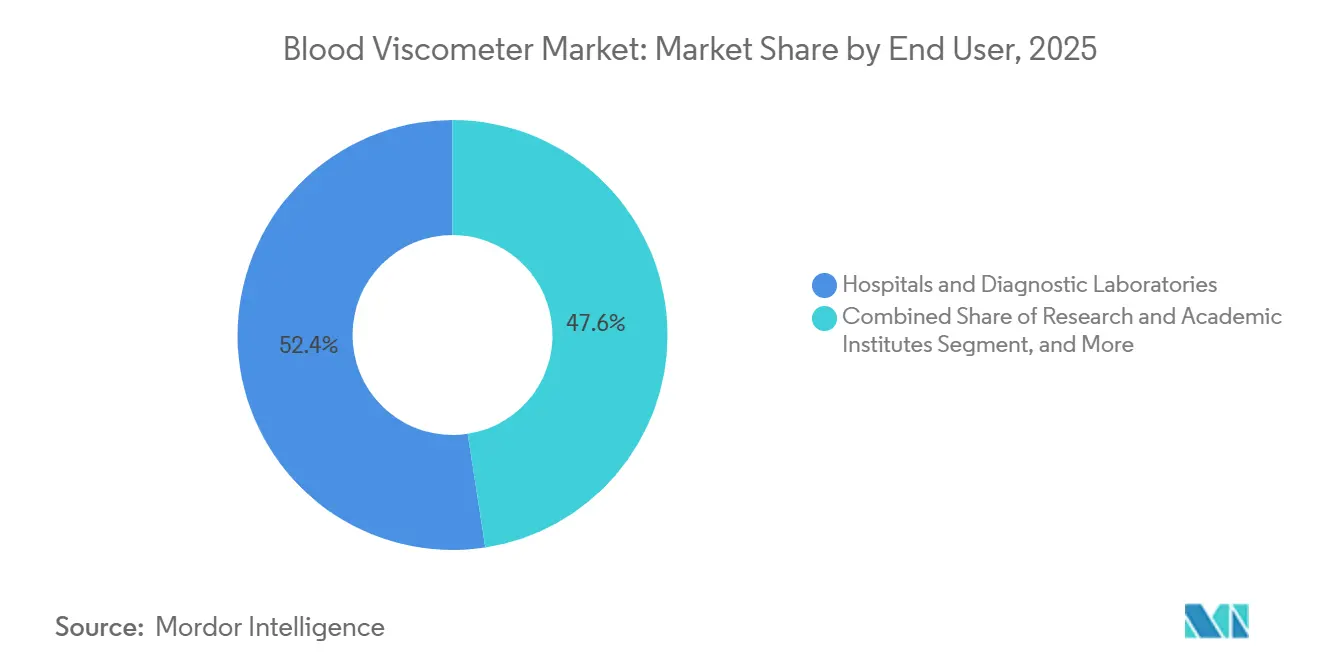
- By end user, hospitals and diagnostic laboratories commanded 52.43% of demand in 2025, while research and academic institutes are forecast to grow at a 7.63% CAGR through 2031 in the blood viscometer market.
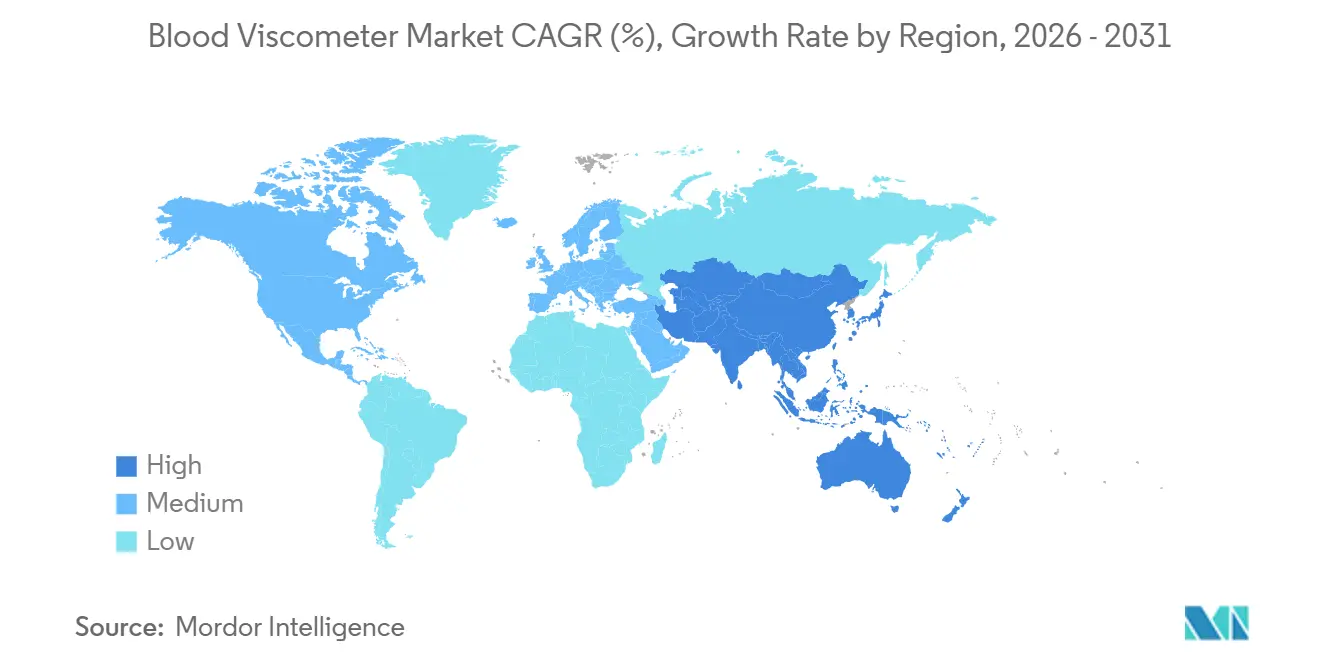
- By geography, North America held 35.73% of revenue in 2025, while Asia-Pacific is forecast to expand at an 8.27% CAGR through 2031.
Note: Market size and forecast figures in this report are generated using Mordor Intelligence’s proprietary estimation framework, updated with the latest available data and insights as of January 2026.
Market Trends and Insights
Drivers Impact Analysis of Blood Viscometer Market*
| Driver | (~) % Impact on CAGR Forecast | Geographic Relevance | Impact Timeline |
|---|---|---|---|
| Rising Cardiovascular and Metabolic Disease Burden | +1.8% | Global | Short term (≤ 2 years) |
| Growing Hematological and Hyperviscosity Disorders | +0.9% | Global, concentrated in North America and Europe | Medium term (2-4 years) |
| Automated and Digital Laboratory Workflows | +1.1% | North America and Europe, spill-over to Asia-Pacific | Medium term (2-4 years) |
| Point-of-Care and Decentralized Diagnostics | +0.7% | Asia-Pacific core, spill-over to the Middle East, Africa, and South America | Short term (≤ 2 years) |
| Microfluidic Low-Volume and High-Shear Testing | +0.6% | North America, Europe, and Asia-Pacific | Long term (≥ 4 years) |
| Clinical Translation of Viscosity as A Hemodynamic Biomarker | +0.5% | Global | Long term (≥ 4 years) |
| Source: Mordor Intelligence | |||
Rising Cardiovascular and Metabolic Disease Burden
The blood viscometer market is gaining support from the connection between elevated blood viscosity and cardiovascular disease. Higher hematocrit, fibrinogen, and reduced red blood cell deformability can increase shear resistance and thrombotic risk in coronary and cerebrovascular circulation.[1] A 2024 projection using Global Burden of Disease 2019 data estimated 20.5 million cardiovascular deaths in 2025 and 35.6 million deaths in 2050, while high systolic blood pressure accounted for 18.9 million future cardiovascular deaths. A 2024 study also linked elevated whole-blood viscosity with impaired insulin-stimulated myocardial glucose metabolism, connecting blood rheology to metabolic and cardiac comorbidity.[2] A 2025 European Society of Cardiology cohort found that whole-blood viscosity differed across ischemic heart disease subtypes and correlated with clinical and laboratory measures.[3] This evidence allows the blood viscometer market to address cardiology, neurology, and diabetes care, rather than remain limited to hematology, where viscosity testing has historically been most familiar.
Growing Hematological and Hyperviscosity Disorders
Hyperviscosity syndrome occurs across polycythemia vera, Waldenström macroglobulinemia, sickle cell disease, plasma cell disorders, and autoimmune conditions. These conditions can require viscosity monitoring when clinicians consider plasmapheresis, phlebotomy, or cytoreductive treatment.[4] A 2025 longitudinal study of 63 patients with sickle cell anemia found that steady-state blood viscosity was the only factor independently associated with vaso-occlusive crisis rates in its multivariate model. A 2025 American Society of Hematology abstract described protocols for measuring whole-blood viscosity under hypoxic conditions, which is important to sickle cell disease monitoring. Specialty hematology centers may use these instruments at several points during care, which supports repeat testing and recurring calibration or consumable demand. Drug developers working on hydroxyurea alternatives and gene therapies can also use viscometry as an outcome measure in clinical programs, creating demand alongside routine specialty-care testing.
Automated and Digital Laboratory Workflows
Laboratory managers are seeking fewer manual steps, better audit trails, and dependable links to laboratory information systems. This preference favors automated instruments in the blood viscometer market over manual alternatives. A February 2026 evaluation reported stable whole-blood viscosity readings over 3 consecutive days from a curved-capillary automated instrument, with little shear-dependent bias. Anton Paar states that its ViscoQC series includes data-integrity features designed for FDA 21 CFR Part 11 compliance, which is important in regulated laboratories and pharmaceutical settings. An EHA 2025 Congress abstract also reported the analytical performance of a fully automated blood viscometer in clinical hematology. Digital connectivity can reduce transcription errors and make visibility results easier to include in routine reporting workflows, especially when several laboratory systems feed the same patient record.
Point-of-Care and Decentralized Diagnostics
Point-of-care formats can expand the blood viscometer market by reducing reliance on central laboratories. Conventional instruments often need trained operators, managed sample transport, and controlled temperatures. Disposable cartridges and automated measurement sequences can lower those operating requirements. A 2026 Lab on a Chip review found that microfluidic systems processing undiluted whole blood achieved circulating tumor cell recovery close to 90%, showing that compact blood-processing devices can provide clinically useful outputs. A ClinicalTrials.gov study is assessing Microvisk Technologies' second-generation INR system during continuous blood donation, a setting that needs portable testing and fast results. A 2024 Lab on a Chip paper measured plasma viscosity from a 5 μL sample within 3 minutes at 37°C and reported precision above 96% against conventional Ostwald viscometer. These formats have particular relevance where decentralized hospitals cannot support large benchtop instruments or maintain the staff and controlled environments needed for conventional testing.
Restraints Impact Analysis of Blood Viscometer Market*
| Restraint | (~) % Impact on CAGR Forecast | Geographic Relevance | Impact Timeline |
|---|---|---|---|
| Instrument, Calibration, and Maintenance Costs | -1.2% | Global, most acute in emerging markets and community hospitals | Medium term (2-4 years) |
| Limited Clinical Standardization and Reimbursement | -0.9% | North America and Europe for reimbursement, global for standardization | Long term (≥ 4 years) |
| Shortage of Skilled Operators and Application Support | -0.5% | Emerging markets in Asia-Pacific, the Middle East, Africa, and South America | Medium term (2-4 years) |
| Pre-Analytical Sensitivity of Whole-Blood Samples | -0.4% | Global | Short term (≤ 2 years) |
| Source: Mordor Intelligence | |||
High Instrument, Calibration, and Maintenance Costs
The blood viscometer market faces a cost barrier because the purchase price is only part of the total ownership. Service contracts, calibration kits, operator training, and quality-control materials add continuing expense for hospitals. An AABB review notes that institutions considering viscoelastic testing need to assess cost-effectiveness against both clinical outcomes and the higher capital and operating costs involved. Clinical-grade high-shear testing also requires temperature control, precise calibration, and regular quality checks. These requirements contribute to a split between premium automated systems in well-equipped hospitals and lower-cost systems used in price-sensitive procurement. The shortage of trained operators and local application support further limits adoption in parts of Asia-Pacific, the Middle East, Africa, and South America, where service coverage can be limited outside major urban centers.
Limited Clinical Standardization and Reimbursement
The lack of common blood-viscosity protocols limits direct comparison of results across sites and platforms. Differences in shear rate, sample temperature, and the time from collection to measurement can change results. A systematic review recommended prompt analysis after collection, storage at 4°C for beyond 4 hours, and measurement at 37°C to better reflect in vivo hemodynamics. The International Council for Standardization in Hematology issued 2025 guidance on laboratory-developed test validation in hemostasis, recognizing the need for cross-platform validation. Dedicated reimbursement for routine cardiovascular viscosity testing has not been established across major payer systems in the United States and Europe. Pre-analytical sensitivity also creates workflow friction because collection, transport, storage, and analysis conditions must be controlled before a result can be trusted in clinical practice.
*Our forecasts treat driver/restraint impacts as directional, not additive. The impact forecasts reflect baseline growth, mix effects, and variable interactions.
Blood Viscometer Market Segment Analysis
By Product Type:
Rotational Systems Lead While Capillary Formats Grow FasterRotational viscometers held 38.94% of revenue in 2025, which reflected established clinical use and broad shear-rate coverage from 0.1 to 1,000 s⁻¹. These systems can assess whole-blood and plasma samples under temperature-controlled conditions. Hospitals in the blood viscometer market often favor familiar systems because their staff understands the workflow and quality procedures. Quality management requirements under ISO 13485 reinforce demand for suppliers that can document manufacturing controls and post-market surveillance. This makes it harder for new vendors to replace established rotational platforms in hospital contracts.
Capillary viscometers are forecast to grow at a 6.24% CAGR from 2026 to 2031. This growth reflects their expanding use in stroke research and in smaller laboratory settings. Publications in 2024 and 2025 used scanning capillary-tube systems to examine blood viscosity in acute ischemic stroke and white-matter hyperintensity cohorts. Automated capillary platforms in the blood viscometer market can reduce footprint and lower operator requirements. A February 2026 evaluation found that a curved-capillary U-tube configuration produced results close to straight-capillary benchmarks. Microfluidic systems also serve low-volume pediatric, rare-disease, and pharmaceutical screening use cases, as RheoSense states that its m-VROC II uses samples as small as 15 μL.

By Application:
Clinical Diagnostics Leads While Hematology Research Grows FasterClinical diagnostics and patient monitoring accounted for 42.51% of revenue in 2025. The blood viscometer market segment is supported by use in stroke units, cardiac intensive care, and metabolic disease clinics. Blood rheology can inform anticoagulation management and fluid therapy decisions in these settings. A 2025 study examined whole-blood viscosity at several shear rates in mechanical thrombectomy patients with large-vessel occlusion stroke. Another 2025 study examined viscosity across stroke subtypes and its relationship with intima-media thickness. Bedside systems in the blood viscometer market could also help emergency departments seeking faster stroke-triage information.
Hematology and blood research are forecast to grow at a 6.83% CAGR through 2031. The blood viscometer industry is extending into oncology, immunology, and drug formulation research through this application. Longitudinal sickle cell research has made blood viscosity more relevant as a prognostic measure rather than a single diagnostic result. Hypoxia-specific measurement protocols could also improve the relevance of testing in sickle cell clinical trials. RheoSense states that its VROC initium one plus system supports viscosities up to 600 cP and concentrations from 1 to 320 mg/mL in a 96-well plate workflow. This throughput suits biologic formulation work that would be slower on conventional benchtop systems.
By End User:
Hospitals Lead While Academic Demand IncreasesHospitals and diagnostic laboratories commanded 52.43% of demand in 2025. Their position stems from high testing volumes, purchasing agreements, and direct responsibility for cardiovascular, hematology, and neurology care. Hospital laboratories in the blood viscometer market need systems that fit existing quality-control processes and routine reporting. Premium suppliers target this requirement through automation and regulated data controls. Blood banks, outpatient specialty clinics, and military medical facilities also contribute demand as use expands into donor screening and casualty care. Pharmaceutical and biotechnology companies remain a smaller but high-value user group because they need accurate measurements at low sample volumes and wide concentration ranges.
Research and academic institutes are forecast to advance at a 7.63% CAGR from 2026 to 2031. Research use in the blood viscometer market is widening across oncology, sports medicine, microfluidics, and AI-assisted diagnostic work. A 2026 review described microfluidic systems that use computational fluid dynamics and machine learning to support blood processing, with cell-isolation yields of 90% to 95% in reported system. University biomedical engineering groups can also generate early clinical data for instrument developers. Collaborations involving Microvisk Technologies, proRheo GmbH, and Rheonics GmbH contribute to the path from proof of concept to clinical validation. This work can shorten the time between laboratory development and commercial entry in the blood viscometer market.
Geography Analysis
North America Blood Viscometer Market
North America held 35.73% of revenue in 2025, which made it the largest regional blood viscometer market. The region has a large cardiovascular patient population, high healthcare spending, and many academic medical centers. These centers act as users and development partners for manufacturers. Major U.S. hospital systems can standardize platforms across several sites, supporting recurring service and consumables demand. This structure creates switching barriers for incumbent vendors.
Europe and APAC Blood Viscometer Market
Europe was the second-largest regional blood viscometer market, with Germany, the United Kingdom, and France as key country markets. Universal healthcare systems, older populations, and established clinical hematology practices support routine use of plasma-viscosity testing. ISO 13485 requirements also direct procurement toward suppliers with documented quality systems. Asia-Pacific is forecast to grow at an 8.27% CAGR from 2026 to 2031, the fastest regional rate. China, India, South Korea, and Japan are expanding hospital capacity and diagnostic infrastructure. Chinese public hospital programs and domestic instruments, including systems from Beijing Steellex Scientific Instrument Co., Ltd., support adoption in county and tertiary hospitals.
APAC, MEA and South America Blood Viscometer Market
National stroke-care programs in China are modernizing blood-rheology testing and widening the demand base beyond individual clinical users. Private multispecialty hospital chains in India have incorporated viscometry into nephrology and oncology care pathways. South Korea and Japan are integrating viscosity data with AI-assisted diagnostic dashboards and robotic hemostasis analyzers. The Middle East and Africa are smaller markets, but laboratory automation investment in Saudi Arabia and the UAE is increasing demand at tertiary hospitals. South Africa remains the most developed sub-Saharan diagnostic market, although premium use is limited to select centers. Brazil and Argentina lead South American demand, where public hospitals are beginning to add hemorheological testing to stroke and hematology workflows. Lower-cost point-of-care and microfluidic formats could help the blood viscometer market gain ground in these price-sensitive regions as production volumes increase.
Competitive Landscape
The blood viscometer market is moderately consolidated in its premium tier. Anton Paar, AMETEK Brookfield, Thermo Fisher Scientific, and RheoSense generate much of their revenue through proprietary measurement methods, regulated platforms, and service coverage in major clinical markets. Anton Paar positions its Lovis 2001 M/ME system against USP <913> and Ph. Eur. 2.2.49, which can support procurement in regulated pharmaceutical and clinical settings. RheoSense focuses on small-sample microfluidic measurement for research and formulation applications. These approaches show that suppliers are differentiating through compliance, accuracy, sample volume, and workflow fit.
The U.S. Food and Drug Administration classifies coagulation systems for whole-blood viscoelastic measurement as Class II devices with special controls. The 2025 rule identifies design validation and clinical evidence requirements that can raise the entry barrier for smaller suppliers seeking U.S. hospital contracts. Chinese manufacturers, led by Beijing Steellex Scientific Instrument Co., Ltd., compete through domestic procurement channels, local-content preferences, and lower prices. Western suppliers respond by emphasizing pharmaceutical-grade precision for biologic formulation and monoclonal-antibody characterization. This use case requires measurement across low sample volumes and demanding shear-rate conditions. The resulting competition differs across premium clinical laboratories, research facilities, and price-sensitive public hospitals.
The next area of blood viscometer market competition involves software and modular system design as much as core instrument hardware. The 2026 Lab on a Chip review described computational fluid dynamics and machine-learning tools that can improve automated blood-analysis systems. Suppliers that embed result interpretation into instrument software may be better placed to address hospital and pharmaceutical workflows. Point-of-care developers also have an opening where small samples, short turnaround times, and portability matter. The blood viscometer market therefore includes large established suppliers as well as smaller companies working on microfluidic and portable formats. The available input does not provide a combined market-share figure for the leading suppliers.
Blood Viscometer Industry Leaders
-
AMETEK Brookfield
-
Anton Paar GmbH
-
Cannon Instrument Company
-
Thermo Fisher Scientific Inc.
-
LAUDA Scientific GmbH
- *Disclaimer: Major Players sorted in no particular order
Blood Viscometer Market Companies Covered in this Report
- A&D Company, Limited
- AMETEK Brookfield
- Anton Paar
- ATAGO Co., Ltd.
- Beijing Steellex Scientific Instrument Co., Ltd.
- Benson Viscometers Ltd.
- BioFluid Technology, Inc.
- Canon
- CSC Scientific Company, Inc.
- Fann Instrument Company
- Health Onvector, Inc.
- Labtron Equipment
- LAMY RHEOLOGY
- LAUDA Scientific GmbH
- Microvisk Technologies Ltd.
- PCE Instruments
- proRheo GmbH
- Rheonics GmbH
- RheoSense, Inc.
- Thermo Fisher Scientific
Recent Industry Developments in Blood Viscometer Market
- February 2026: Jeonbuk National University (South Korea) published a peer-reviewed validation of a tabletop fully automated blood viscometer using a curved capillary U-tube configuration, demonstrating robust analytical precision across shear rates of 1–1,000 s⁻¹ over 20 test days and stable whole-blood viscosity readings across 3 consecutive days (all p > 0.98). The study, published in the Journal of the Korean Society of Mechanical and Aviation Technology, establishes performance benchmarks for automated capillary platforms that could accelerate clinical adoption in high-volume hospital laboratories across Asia-Pacific.
- January 2026: A comprehensive review of blood microfluidics progress and challenges was published in Lab on a Chip by researchers from the University of Illinois Chicago and Rush University Medical Center. The paper documents microfluidic blood-processing efficiencies approaching 90% circulating tumor cell recovery from undiluted whole blood and identifies AI and machine-learning integration and electricity-free portable device design as the next development frontier.
- June 2025: An abstract titled “Analytical Performance of the Fully Automated Blood Viscometer” was presented at the European Hematology Association 2025 Congress by Yoon S. The abstract marked a clinical validation step for automated hemorheological platforms seeking use in European hospital hematology settings.
Global Blood Viscometer Market Report Scope
As per the scope of the report, a blood viscometer is a specialized diagnostic instrument used to measure the viscosity (flow resistance) of blood and plasma. It evaluates how easily blood flows through blood vessels, helping clinicians assess hemorheological abnormalities associated with cardiovascular diseases, thrombosis, diabetes, sickle cell disease, polycythemia, and hyperviscosity syndromes. Blood viscometers are widely used in clinical diagnostics, hematology laboratories, and medical research to support disease diagnosis, patient monitoring, and blood rheology studies.
The blood viscometer market is segmented by product type, application, end user, and geography. By product type, the market is segmented into rotational viscometers, capillary viscometers, microfluidic viscometers, and others. By application, the market is segmented into clinical diagnostics and patient monitoring, hematology and blood research, point-of-care testing, pharmaceutical and biotechnology applications, and others. By end user, the market is segmented into hospitals and diagnostic laboratories, research and academic institutes, pharmaceutical and biotechnology companies, and others. The geography segment is further divided into North America, Europe, Asia-Pacific, the Middle East and Africa, and South America. The report also covers the estimated market sizes and trends for 17 countries across major regions globally. The report offers the market size and forecasts in value (USD) for the above segments.
Segmentation Overview
| Rotational Viscometers |
| Capillary Viscometers |
| Microfluidic Viscometers |
| Others |
| Clinical Diagnostics and Patient Monitoring |
| Hematology and Blood Research |
| Point-of-Care Testing |
| Pharmaceutical and Biotechnology Applications |
| Others |
| Hospitals and Diagnostic Laboratories |
| Research and Academic Institutes |
| Pharmaceutical and Biotechnology Companies |
| Others |
| North America | United States |
| Canada | |
| Mexico | |
| Europe | Germany |
| United Kingdom | |
| France | |
| Italy | |
| Spain | |
| Rest of Europe | |
| Asia-Pacific | China |
| India | |
| Japan | |
| Australia | |
| South Korea | |
| Rest of Asia-Pacific | |
| Middle East and Africa | GCC |
| South Africa | |
| Rest of Middle East and Africa | |
| South America | Brazil |
| Argentina | |
| Rest of South America |
| By Product Type | Rotational Viscometers | |
| Capillary Viscometers | ||
| Microfluidic Viscometers | ||
| Others | ||
| By Application | Clinical Diagnostics and Patient Monitoring | |
| Hematology and Blood Research | ||
| Point-of-Care Testing | ||
| Pharmaceutical and Biotechnology Applications | ||
| Others | ||
| By End User | Hospitals and Diagnostic Laboratories | |
| Research and Academic Institutes | ||
| Pharmaceutical and Biotechnology Companies | ||
| Others | ||
| By Geography | North America | United States |
| Canada | ||
| Mexico | ||
| Europe | Germany | |
| United Kingdom | ||
| France | ||
| Italy | ||
| Spain | ||
| Rest of Europe | ||
| Asia-Pacific | China | |
| India | ||
| Japan | ||
| Australia | ||
| South Korea | ||
| Rest of Asia-Pacific | ||
| Middle East and Africa | GCC | |
| South Africa | ||
| Rest of Middle East and Africa | ||
| South America | Brazil | |
| Argentina | ||
| Rest of South America | ||
Key Questions Answered in the Report
What is the projected value of the blood viscometer market by 2031?
The blood viscometer market is forecast to reach USD 2.44 billion by 2031, growing from USD 1.84 billion in 2026 at a 5.83% CAGR. Demand is supported by broader clinical use in cardiovascular, metabolic, neurological, and hematology settings, as facilities seek measurements that can complement established clinical and laboratory markers.
Which blood viscometer product type held the largest share in 2025?
Rotational viscometers led product revenue with a 38.94% share in 2025 because of clinical familiarity and broad shear-rate capability. They can assess whole-blood and plasma samples in temperature-controlled laboratory workflows, which helps hospitals maintain familiar processes for routine use, training, calibration, and result review. Capillary formats are forecast to grow faster through 2031.
Which application is expanding fastest for blood viscometers?
Hematology and blood research is the fastest-growing application, with a projected 6.83% CAGR through 2031. Sickle cell monitoring, oncology, immunology, drug formulation, and clinical trial work are widening the use of viscosity measurement, particularly where longitudinal assessment or constrained sample volumes matter. These uses can support repeated testing across research programs.
Why are automated blood viscometers gaining adoption?
Automated systems can reduce manual work, support audit trails, and improve reporting through laboratory information system connectivity. They are particularly relevant to high-volume laboratories that need stable measurements, documented processes, and repeatable quality control, while reducing the effort associated with manual data transfer and review. Data integrity requirements also influence selection in regulated laboratories.
Which region is forecast to grow fastest through 2031?
Asia-Pacific is projected to grow at an 8.27% CAGR through 2031, supported by hospital investment and rising chronic disease incidence. Growth also reflects decentralized diagnostic needs across China, India, South Korea, Japan, and other regional markets, where infrastructure investment is widening access to laboratory automation and point-of-care testing. Public hospital upgrading programs are important to this expansion.
What limits wider use of blood-viscosity testing?
Instrument ownership costs, limited protocol standardization, reimbursement gaps, operator shortages, and pre-analytical sensitivity remain key constraints. These factors affect procurement decisions, the comparability of results, and the ability of smaller facilities to maintain consistent testing workflows, especially when reimbursement or specialized technical support is unavailable. Better protocols and service access would address part of this constraint.