
Blood Pressure Transducers Market Size and Share
Market Overview
| Study Period | 2020 - 2031 |
|---|---|
| Market Size (2026) | USD 1.9 Billion |
| Market Size (2031) | USD 2.56 Billion |
| Growth Rate (2026 - 2031) | 6.12 % |
| Fastest Growing Market | Asia-Pacific |
| Largest Market | North America |
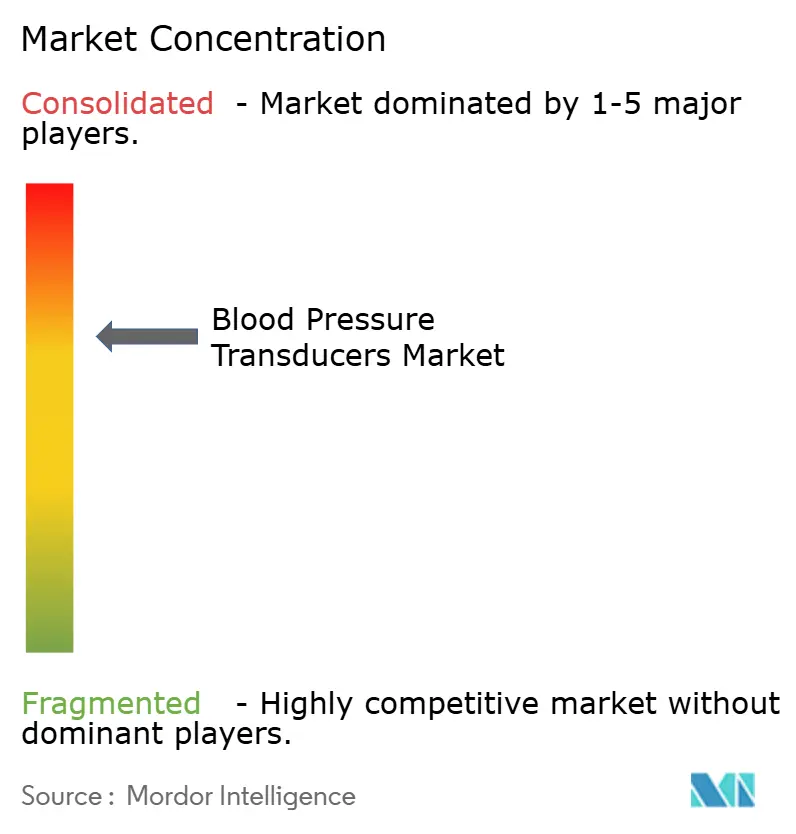
| Market Concentration | Medium |
Major Players *Disclaimer: Major Players sorted in no particular order Image © Mordor Intelligence. Reuse requires attribution under CC BY 4.0. | |
Blood Pressure Transducers Market Analysis by Mordor Intelligence
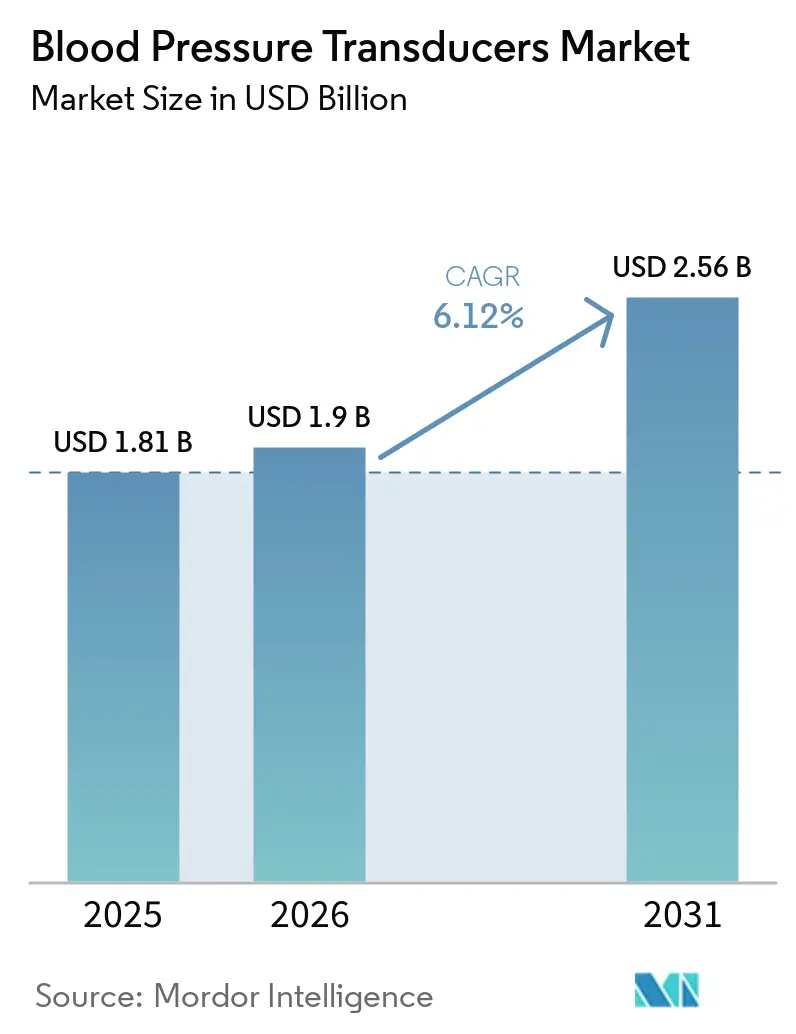
The blood pressure transducers market is projected to expand from USD 1.81 billion in 2025 and USD 1.90 billion in 2026 to USD 2.56 billion by 2031, registering a CAGR of 6.12% between 2026 and 2031. The blood pressure transducers market is supported by the growing clinical burden of hypertension, continued critical care investment, and tighter infection prevention practices in acute settings. Demand is shifting toward disposable systems, wireless connectivity, and non-invasive continuous monitoring, although invasive monitoring remains essential for patients with severe illness. Hospitals are balancing lower acquisition costs against the labor, reprocessing, and infection-control demands of reusable equipment. Suppliers are responding with monitoring platforms that link transducers, clinical software, and compatible patient monitors, which can reinforce customer retention. The blood pressure transducers market also faces procurement pressure from group purchasing organizations, platform costs, and equipment compatibility requirements, particularly where legacy waveform standards and electronic record interfaces make it difficult to introduce a new connected monitoring configuration without additional clinical training, integration work, or changes to established bedside practice during multi-year supply contract renewals.
Key Report Takeaways
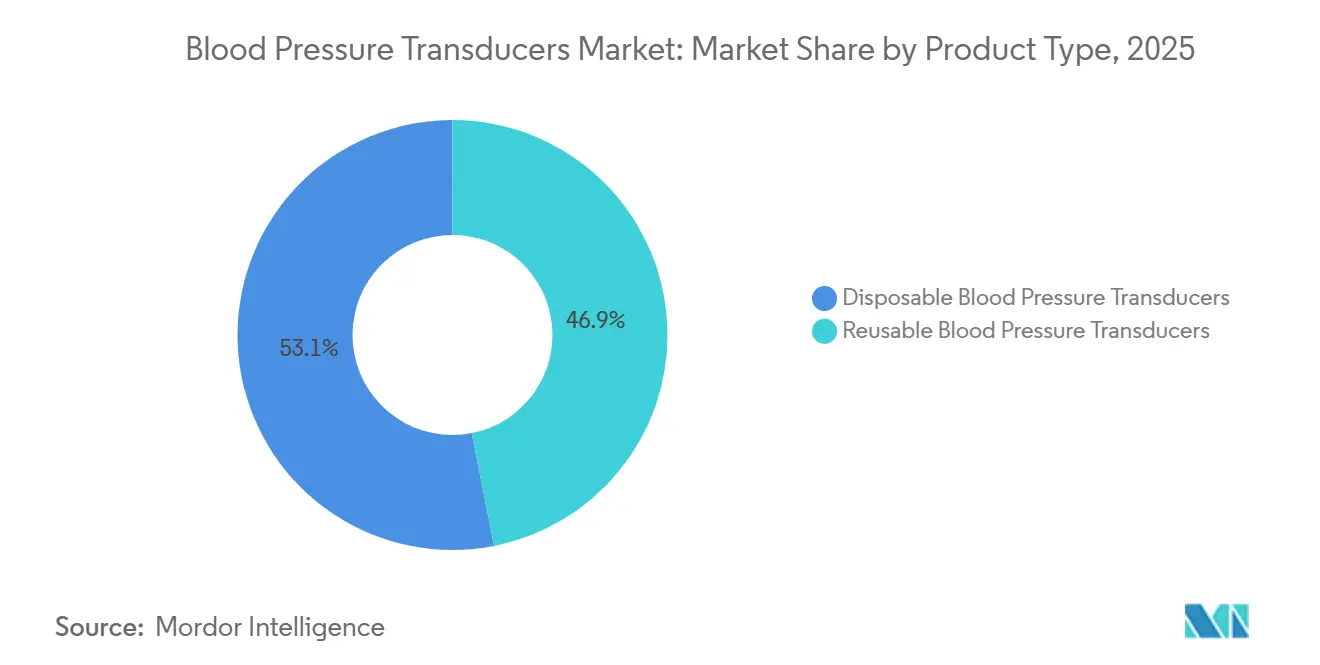
- By product type, reusable devices held 53.14% of the blood pressure transducers market share in 2025, while disposable devices are forecasted to grow at a 6.53% CAGR through 2031.
- By technology, digital transducers accounted for 40.25% of the blood pressure transducers market in 2025, while analog transducers are forecasted to grow at a 7.24% CAGR through 2031.
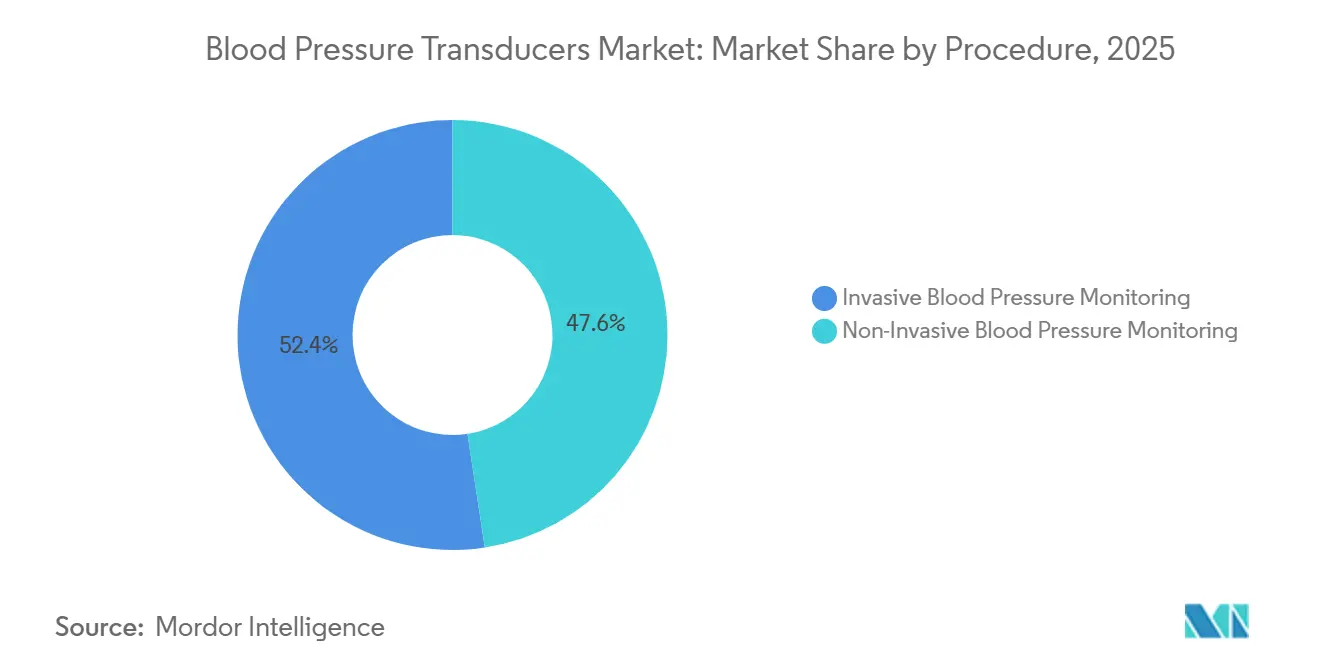
- By procedure, invasive monitoring held 52.37% of the blood pressure transducers market share in 2025, while non-invasive monitoring is forecasted to grow at a 6.78% CAGR through 2031.
- By end-user, hospitals and clinics held 43.26% in 2025, while ambulatory surgical centers are forecasted to grow at a 7.61% CAGR through 2031.
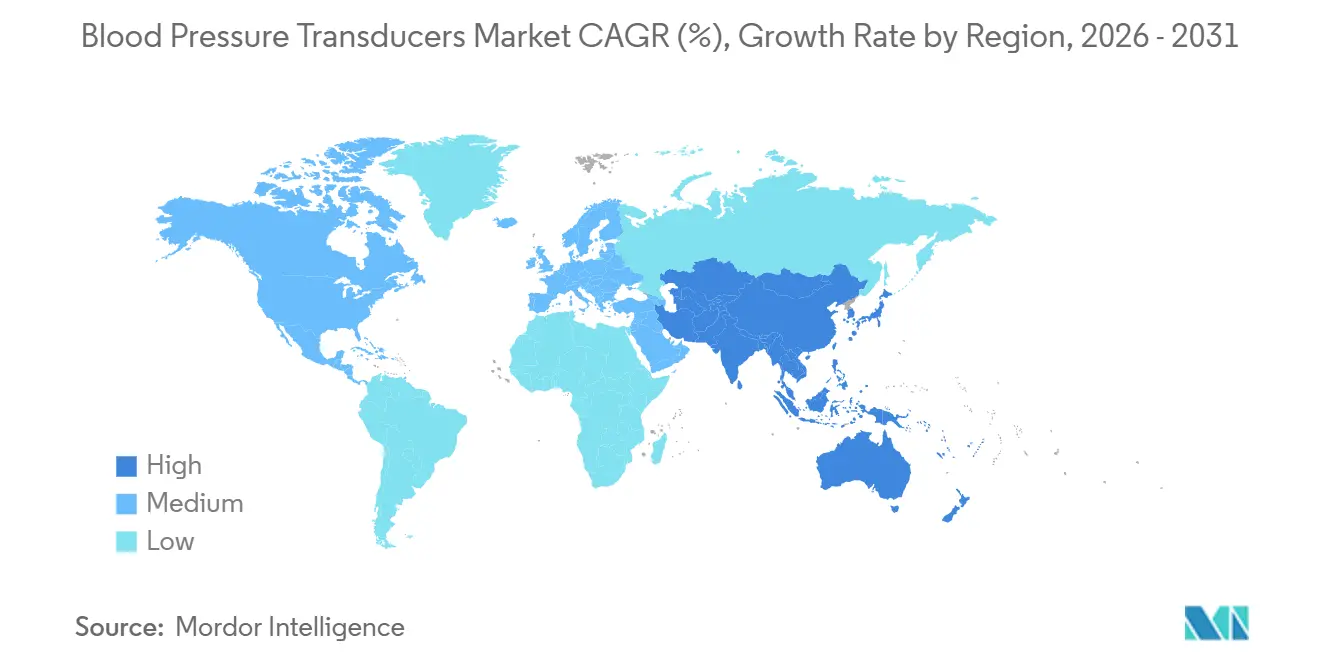
- By geography, North America held 46.61% in 2025, while the Asia-Pacific is projected to grow at an 8.16% CAGR through 2031.
Note: Market size and forecast figures in this report are generated using Mordor Intelligence’s proprietary estimation framework, updated with the latest available data and insights as of January 2026.
Market Trends and Insights
Drivers Impact Analysis of Blood Pressure Transducers Market*
| Driver | (~) % Impact on CAGR Forecast | Geographic Relevance | Impact Timeline |
|---|---|---|---|
| Rising Hypertension and Cardiovascular Disease Burden | +1.2% | Global, most acute in APAC and lower-middle-income countries | Long term (≥ 4 years) |
| ICU Expansion and Greater Invasive Hemodynamic Monitoring | +1.0% | North America, APAC, Europe | Medium term (2-4 years) |
| Shift from Reusable to Disposable Single-Patient-Use Transducers | +0.8% | Global, led by North America and Europe | Medium term (2-4 years) |
| Growth of Remote and Continuous Monitoring Use Cases | +0.6% | North America, APAC | Medium term (2-4 years) |
| Infection Prevention Priorities in Acute Care Settings | +0.5% | Global, with early gains in North America | Short term (≤ 2 years) |
| Adoption of Smart, Wireless, and Digital Transducer Systems | +0.7% | Global, with APAC adoption accelerating | Long term (≥ 4 years) |
| Source: Mordor Intelligence | |||
Rising Hypertension and Cardiovascular Disease Burden
Hypertension provides a durable source of clinical monitoring demand because it raises the number of patients who may require assessment across acute, surgical, and chronic care pathways. The World Health Organization reported that 1.4 billion adults aged 30 to 79 had hypertension in 2024, with 2-thirds living in low- and middle-income countries.[1] The same body of evidence showed that many people remain undiagnosed or inadequately controlled, which keeps pressure on health systems to expand dependable blood pressure assessment. This clinical burden supports the blood pressure transducers market in tertiary hospitals and in newer intensive care units within developing health systems. It also makes demand less dependent on elective procedure volumes because hypertension-related complications reach emergency, inpatient, and postsurgical settings. The longer-term opportunity rests on wider access to clinical monitoring in district hospitals, where additional critical care capacity can convert unmet need into recurring device demand.
ICU Expansion and Greater Invasive Hemodynamic Monitoring
Investment in intensive care capacity directly supports demand for transducers because critically ill patients often require continuous arterial pressure measurement. Mount Sinai Queens began construction on an ICU in April 2026 that will increase capacity from 8 to 21 beds, illustrating the scale of new critical care investment in the United States.[2] Each occupied bed can require a dedicated single-patient-use transducer kit in standard invasive configurations, which links bed expansion to recurring consumable purchases. The Government of Saskatchewan started a 2-phase ICU expansion in May 2026 that will add 7 beds at Royal University Hospital, further showing how capacity projects can add demand for clinical monitoring supplies.[3]The blood pressure transducers market benefits when hospitals add both beds and procedure capability because vascular interventions and high-acuity recovery require reliable hemodynamic observation. This relationship favors suppliers that can serve new units with compatible transducers, monitoring accessories, training, and support.
Shift from Reusable to Disposable Single-Patient-Use Transducers
Infection prevention is changing product choices as hospitals review the clinical and labor requirements attached to reusable pressure monitoring systems. The Joint Commission’s updated infection prevention standards became effective in July 2024 and aligned institutional expectations more closely with federal participation requirements. Disposable transducers remove the need to reprocess a device between patients, which can reduce a potential contamination pathway among clinically unstable or immunocompromised populations. The blood pressure transducers market therefore sees a gradual shift in tenders and group purchasing contracts toward single-patient-use configurations for intensive care and surgical areas. This shift does not remove the role of reusable equipment, especially where acquisition budgets are limited and reprocessing facilities already exist. It does, however, support faster disposable growth as hospitals consider compliance, staff time, patient turnover, and the full operating cost of their monitoring workflow.
Adoption of Smart, Wireless, and Digital Transducer Systems
Digital connectivity is shifting competition from standalone hardware toward monitoring systems that combine waveform capture, analytical software, and compatible consumables. BD introduced the HemoSphere Alta platform in April 2025 with its Cerebral Autoregulation Index parameter and Acumen Hypotension Prediction Index software. Wireless transducers are forecast to grow faster than other technology categories, reflecting interest in cable reduction, patient mobility, and continuous data transmission to nursing teams. Remote monitoring use cases also widen the role of blood pressure data beyond the ICU, including step-down care, recovery, and home-based programs. The blood pressure transducers market can gain from this shift when suppliers offer systems that fit existing monitors and clinical documentation processes. Adoption can still be slow where facilities rely on older waveform standards or lack the integration work needed to connect new devices with established electronic records.
Restraints Impact Analysis of Blood Pressure Transducers Market*
| Restraint | (~) % Impact on CAGR Forecast | Geographic Relevance | Impact Timeline |
|---|---|---|---|
| High Procurement Cost of Advanced Transducers | -0.6% | Global, most pronounced in LMIC and cost-constrained health systems | Medium term (2-4 years) |
| Substitution Risk from Non-Invasive Continuous Blood Pressure Monitoring | -0.4% | North America, Europe | Long term (≥ 4 years) |
| Reimbursement Pressure and GPO-Driven Price Compression | -0.3% | North America | Medium term (2-4 years) |
| Calibration, Compatibility, and Clinical Workflow Friction | -0.2% | Global | Short term (≤ 2 years) |
| Source: Mordor Intelligence | |||
High Procurement Cost of Advanced Transducers
Advanced transducer systems can carry higher costs when they are sold with digital monitoring platforms, analytical software, and dedicated accessories. Health systems in Southeast Asia, Latin America, and Sub-Saharan Africa often give greater weight to acquisition cost, which supports continued use of conventional reusable configurations. This purchasing approach can limit the adoption of wireless and digital systems even when their longer-term operating benefits are clear. The blood pressure transducers market also faces price pressure in North America, where group purchasing organizations standardize formularies and negotiate large supply contracts. Those arrangements favor suppliers that can offer dependable service, broad configuration choices, and competitive unit pricing. The result is a divided purchasing environment in which well-funded systems adopt advanced platforms while cost-sensitive providers retain established products and press suppliers for lower prices.
Substitution Risk from Non-Invasive Continuous Blood Pressure Monitoring
Continuous non-invasive monitoring creates a longer-term competitive challenge because it may address patients who would otherwise receive arterial-line-based measurement. A Nature Communications study published in May 2026 reported that physics-informed machine learning models for cuffless hemodynamic monitoring achieved blood pressure estimates that were clinically comparable with cuff-based references. The blood pressure transducers market can nevertheless face gradual substitution at the margin as non-invasive accuracy, clinical acceptance, and approved indications improve. Suppliers must also address calibration procedures, mixed-equipment compatibility, and workflow disruption, since these barriers can delay the adoption of both invasive and non-invasive technology.
*Our forecasts treat driver/restraint impacts as directional, not additive. The impact forecasts reflect baseline growth, mix effects, and variable interactions.
Blood Pressure Transducers Market Segment Analysis
By Product Type:
Reusable Devices Retain Volume While Disposables Gain GroundReusable devices held 53.14% of the blood pressure transducers market in 2025, reflecting their established use in hospitals that prioritize lower upfront cost and multi-use economics. They remain important in parts of Asia, Latin America, and the Middle East, where providers have reprocessing infrastructure and closely manage capital expenditure. These devices can remain economical when facility processes are efficient and patient volumes justify their continued use. The blood pressure transducers industry continues to need reusable products because many hospitals cannot fully shift to premium single-patient-use systems in the forecast period.
Disposable devices are forecasted to expand at a 6.53% CAGR through 2031, faster than the overall blood pressure transducers market size. Their use can simplify setup, remove sterilization work, and support infection-control procedures in busy ICUs and surgical suites. Reusable volume is not expected to disappear, since emerging-market demand and constrained procurement budgets will sustain the category. Yet the faster growth of disposable kits points to a continuing change in the product mix of the blood pressure transducers market.
By Technology:
Digital Platforms Lead While Analog Systems ExpandDigital transducers accounted for 40.25% of the technology segment in 2025, giving them the leading position within the blood pressure transducers market. Their role reflects longstanding integration with electronic health records, clear waveform display, and clinical protocols for calibration and zeroing. Analog devices continue to serve legacy-equipped facilities and settings where simple, lower-cost systems are preferred. Wearable formats remain a small, developing category that is better aligned with remote and ambulatory use than with conventional critical care.
Analog transducers are projected to record a 7.24% CAGR through 2031, making them the fastest-growing technology category in the blood pressure transducers market. Growth is supported by their proven reliability, consistent signal output, and compatibility with a wide range of existing patient monitoring systems. Many healthcare facilities, particularly those operating under budget constraints, continue to prefer analog transducers due to their lower acquisition costs, ease of maintenance, and familiarity among clinical staff. Their widespread use in critical care units, operating rooms, and catheterization laboratories further supports demand. As healthcare providers seek dependable blood pressure monitoring solutions with minimal infrastructure upgrades, analog transducers are expected to maintain strong adoption across both developed and emerging healthcare markets.
By Procedure:
Invasive Monitoring Remains Central to Acute CareInvasive monitoring accounted for 52.37% of the blood pressure transducers market size in 2025 because it remains essential for critically ill and hemodynamically unstable patients. Arterial-line measurement supplies continuous pressure data that supports vasopressor adjustment, fluid management, and intraoperative decisions. Invasive monitoring is not expected to be displaced in the ICU during the forecast period because the most acute patients have distinct accuracy and response-time needs. This procedure will remain the main volume base for the blood pressure transducers market despite growing interest in alternative methods.
Non-invasive monitoring is projected to grow at a 6.78% CAGR through 2031, supported by step-down care, ambulatory settings, and home healthcare applications. A 2026 study in the Journal of Clinical Monitoring and Computing evaluated a cuffless finger-clip device for continuous monitoring in postoperative cardiac surgery patients. Their expansion creates a complementary care pathway at present, rather than a full replacement for invasive monitoring among the sickest patients. Over time, stronger evidence of accuracy and wider clinical use may make non-invasive systems more relevant to the blood pressure transducers market.
By End-User:
Hospitals Lead as Ambulatory Surgery GrowsHospitals and clinics held 43.26% of the end-user segment in 2025, making them the largest purchasers in the blood pressure transducers market. Their scale reflects intensive care utilization, surgical volume, and health-system procurement contracts that consolidate supply decisions. Diagnostic laboratories form a smaller, specialized channel where transducers support physiological measurement procedures. Home healthcare is a developing outlet where remote monitoring programs may increase interest in clinically useful pressure measurement.
Ambulatory surgical centers are projected to expand at a 7.61% CAGR through 2031, the fastest rate among end-user categories. The Medicare Payment Advisory Commission reported that ambulatory surgical center volumes increased 3.5% in 2024 and grew by more than 2% annually from 2019 through 2024. The blood pressure transducers market can benefit as centers choose compatible systems that fit compact clinical workflows and rapid patient turnover. Expansion of this setting also increases the importance of disposable kits that reduce setup and reprocessing demands.
Geography Analysis
North America Blood Pressure Transducers Market
North America held 46.61% of the blood pressure transducers market in 2025, supported by a mature acute care infrastructure and established reimbursement for invasive hemodynamic monitoring. The region has dense hospital networks and a large installed base of patient monitoring equipment. New ICU projects add to recurring demand because higher bed capacity increases the use of consumable monitoring components. Procurement is divided between cost-focused disposable purchases through group purchasing organizations and investments in connected monitoring platforms. This creates different product and pricing requirements across health systems in the United States, Canada, and Mexico.
Europe and South America Blood Pressure Transducers Market
Europe remains an important regional market because of established hypertension screening, aging populations, and a demanding medical device compliance environment. The EU Medical Device Regulation places emphasis on traceability and post-market surveillance, which can support interest in products with stronger data and documentation functions. Digital and wireless formats can benefit when hospitals place value on logged clinical information and compatible monitoring systems. At the same time, established equipment and purchasing rules can slow adoption of newer platforms. Germany, the United Kingdom, France, Italy, and Spain contribute meaningful demand through their hospital networks. Brazil’s adult hypertension prevalence was 46% in the World Health Organization’s 2025 country profiles, showing the clinical need that supports South American demand even where advanced system penetration is constrained.
APAC and MEA Blood Pressure Transducers Market
Asia-Pacific is forecasted to grow at a 8.16% CAGR through 2031, the fastest regional rate in the blood pressure transducers market. Growth reflects hospital infrastructure investment, expanding private healthcare, and a large population affected by hypertension. The region offers demand for basic reusable products as well as disposable and connected systems, depending on country-level purchasing resources. Providers are increasing their interest in digital monitoring platforms as they expand critical care and postsurgical capacity. The Middle East and Africa also offer long-term demand through health infrastructure investment in Saudi Arabia, the United Arab Emirates, Qatar, and South Africa. Growth in these markets will depend on the pace of ICU expansion, provider budgets, and the availability of trained personnel to operate and maintain advanced systems.
Competitive Landscape
The blood pressure transducers market is moderately consolidated, with BD, ICU Medical, and Merit Medical Systems holding significant positions in disposable invasive configurations. These companies compete through product reliability, clinical compatibility, service, purchasing contracts, and the breadth of their available configurations. BD has developed a platform approach that links TruWave consumables to the HemoSphere monitoring ecosystem. Its April 2025 HemoSphere Alta release added clinical decision-support features to that platform. These releases can strengthen retention where hospitals prefer compatible consumables, monitors, and clinical software from a single supplier.
ICU Medical competes through its Transpac IV and Transpac IT systems, which serve different patient populations and clinical setup needs. The company presents these systems as options for disposable pressure monitoring and integrated pressure monitoring workflows. Regional and specialist manufacturers, including Elcam Medical, CODAN, Utah Medical Products, B. Braun SE, and Argon Medical Devices, compete with focused configurations and cost positions. Group purchasing organization contracts can amplify the value of price, supply assurance, and service coverage in this part of the blood pressure transducers market. Smaller suppliers can still succeed where they meet local preferences, specialized clinical requirements, or tender specifications.
Masimo’s LiDCO system illustrates a different approach because its PulseCO algorithm can use an existing arterial line and blood pressure transducer to calculate advanced hemodynamic information. This model places software and analytical capability alongside installed transducer infrastructure rather than requiring proprietary disposable hardware. Competition is also widening toward non-invasive continuous monitoring, wearable formats, and home-based care applications. Competitive conditions remain open for companies that can provide clinically credible systems, compatible integration, and effective pricing. The main strategic contest is likely to center on platform compatibility, infection-control value, and the ability to serve both high-acuity hospitals and lower-cost care settings.
Blood Pressure Transducers Industry Leaders
-
ICU Medical, Inc.
-
Edwards Lifesciences Corporation
-
B. Braun SE
-
Smiths Group plc
-
Merit Medical Systems, Inc.
- *Disclaimer: Major Players sorted in no particular order
Blood Pressure Transducers Market Companies Covered in this Report
- ADInstruments Pty Ltd.
- Argon Medical Devices
- B. Braun
- Beckton Dickinson
- BIOPAC Systems, Inc.
- Biosensors International Group, Ltd.
- CODAN Medizinische Gerate GmbH and Co KG
- Edward Lifesciences
- Elcam Medical
- GE HealthCare Technologies Inc.
- ICU Medical
- Masimo
- Medtronic
- Merit Medical Systems
- Nihon Kohden
- Philips N.V.
- Siemens Healthineers
- Smiths Group
- Utah Medical Products
- World Precision Instruments, Inc.
Recent Industry Developments in Blood Pressure Transducers Market
- April 2026: BD launched the HemoSphere Stream Module, delivering continuous, noninvasive beat-to-beat arterial waveform data via the VitaWave Plus Finger Cuff to compatible multiparameter monitors. Designed for patients who do not require an arterial line, the system is validated against arterial-line benchmarks and supports Anesthesia Patient Safety Foundation recommendations for continuous intraoperative hemodynamic monitoring.
- April 2026: Mount Sinai Health System broke ground on a new ICU at Mount Sinai Queens, tripling capacity from 8 to 21 beds with USD 13 million in public funding. The unit includes a Class 2 procedure room equipped for fluoroscopy-guided vascular interventions, including PICC placements and central venous catheter insertions.
- April 2026: The Government of Manitoba opened the Brandon Critical Care Center, expanding adult ICU capacity from 10 to 16 beds and adding 30 internal medicine beds, extending critical care access in western Manitoba as part of a provincial capacity-strengthening initiative.
Global Blood Pressure Transducers Market Report Scope
According to the report’s scope, the blood pressure transducers market refers to the segment of medical devices focused on pressure-sensing components that convert physiological blood pressure signals into electrical outputs for monitoring and diagnostic purposes. These transducers are critical in invasive and non-invasive blood pressure monitoring across hospitals, clinics, and home-care settings, supporting patient safety, accurate diagnosis, and effective treatment management.
The blood pressure transducers market is segmented into product type, technology, procedure, end-user, and geography. By product type, the market is segmented into disposable blood pressure transducers and reusable blood pressure transducers. By technology, the market is segmented into digital transducers and analog transducers. By procedure, the market is segmented into invasive blood pressure monitoring and non-invasive blood pressure monitoring. By end-user, the market is segmented into hospitals and clinics, ambulatory surgical centers, diagnostic laboratories, and home healthcare settings. By geography, the market is segmented into North America, Europe, Asia-Pacific, the Middle East and Africa, and South America. The report also covers the estimated market sizes and trends for 17 countries across major regions globally. The report offers values (USD) for all the above segments.
Segmentation Overview
| Disposable Blood Pressure Transducers |
| Reusable Blood Pressure Transducers |
| Digital Transducers |
| Analog Transducers |
| Invasive Blood Pressure Monitoring |
| Non-Invasive Blood Pressure Monitoring |
| Hospitals and Clinics |
| Ambulatory Surgical Centers |
| Diagnostic Laboratories |
| Home Healthcare Settings |
| North America | United States |
| Canada | |
| Mexico | |
| Europe | Germany |
| United Kingdom | |
| France | |
| Italy | |
| Spain | |
| Rest of Europe | |
| Asia-Pacific | China |
| Japan | |
| India | |
| Australia | |
| South Korea | |
| Rest of Asia-Pacific | |
| Middle East and Africa | GCC |
| South Africa | |
| Rest of Middle East and Africa | |
| South America | Brazil |
| Argentina | |
| Rest of South America |
| By Product Type | Disposable Blood Pressure Transducers | |
| Reusable Blood Pressure Transducers | ||
| By Technology | Digital Transducers | |
| Analog Transducers | ||
| By Procedure | Invasive Blood Pressure Monitoring | |
| Non-Invasive Blood Pressure Monitoring | ||
| By End-User | Hospitals and Clinics | |
| Ambulatory Surgical Centers | ||
| Diagnostic Laboratories | ||
| Home Healthcare Settings | ||
| By Geography | North America | United States |
| Canada | ||
| Mexico | ||
| Europe | Germany | |
| United Kingdom | ||
| France | ||
| Italy | ||
| Spain | ||
| Rest of Europe | ||
| Asia-Pacific | China | |
| Japan | ||
| India | ||
| Australia | ||
| South Korea | ||
| Rest of Asia-Pacific | ||
| Middle East and Africa | GCC | |
| South Africa | ||
| Rest of Middle East and Africa | ||
| South America | Brazil | |
| Argentina | ||
| Rest of South America | ||
Key Questions Answered in the Report
How large is the blood pressure transducers market?
The blood pressure transducers market is projected to grow from USD 1.81 billion in 2025 to USD 1.90 billion in 2026 to reach USD 2.56 billion, at a 6.12% CAGR through 2031.
Which product type is growing fastest?
Disposable blood pressure transducers are projected to grow at a 6.53% CAGR through 2031 as hospitals seek simpler setups and reduced reprocessing requirements.
Why do hospitals still use invasive monitoring?
Invasive blood pressure monitoring held 52.37% in 2025 because arterial-line measurement remains important for critically ill and unstable patients.
Which region will grow fastest through 2031?
Asia-Pacific is forecasted to grow at an 8.16% CAGR, supported by healthcare investment, critical care expansion, and hypertension-related demand.