
Blepharoplasty Devices Market Size and Share
Market Overview
| Study Period | 2020 - 2031 |
|---|---|
| Market Size (2026) | USD 4.75 Billion |
| Market Size (2031) | USD 6.70 Billion |
| Growth Rate (2026 - 2031) | 7.15 % |
| Fastest Growing Market | Asia-Pacific |
| Largest Market | North America |
| Market Concentration | Medium |
Major Players *Disclaimer: Major Players sorted in no particular order Image © Mordor Intelligence. Reuse requires attribution under CC BY 4.0. | |
Blepharoplasty Devices Market Analysis by Mordor Intelligence
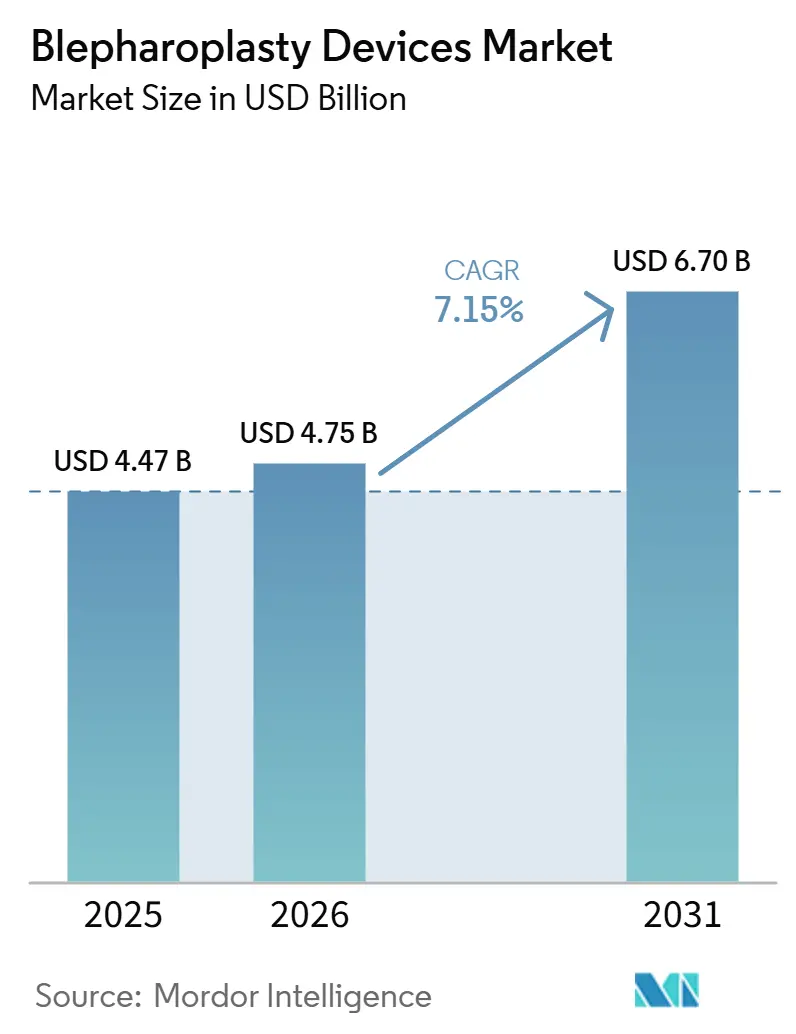
The Blepharoplasty Devices Market size is expected to grow from USD 4.47 billion in 2025 to USD 4.75 billion in 2026 and is forecast to reach USD 6.70 billion by 2031 at 7.15% CAGR over 2026-2031.
The blepharoplasty devices market is expanding on the back of a larger and more durable procedure base, with eyelid surgery moving ahead of liposuction as the most common surgical aesthetic procedure worldwide in 2024 after crossing 2.1 million procedures and posting 13.4% annual growth[1]International Society of Aesthetic Plastic Surgery, “ISAPS Global Survey 2024 Press Release,” ISAPS, isaps.org. The blepharoplasty devices market now draws demand from 2 patient groups at the same time: older patients seeking relief from dermatochalasis or ptosis, and younger patients seeking appearance-related correction shaped by digital visibility and greater comfort with facial procedures. The blepharoplasty devices market is also being reshaped by care delivery changes, because hospitals still hold the largest end user share while office-based and ambulatory settings continue to absorb more cases through specialist-led workflows and lower overhead structures. Growth in the remains moderated by self-pay exposure in cosmetic cases, specialist shortages outside major cities, and the compliance burden for energy-based devices, which keeps competition broad but prevents any single company from controlling the full category stack.
Key Report Takeaways
- By product type, Laser & Energy-Based Systems held 42.4% share in 2025, while Dermal fillers are projected to expand at 8.7% CAGR through 2031.
- By procedure type, Upper Blepharoplasty accounted for 43.4% share in 2025, while Combination Eyelid Surgery is forecast to grow at 8.3% CAGR through 2031.
- By technology, Traditional surgery held 58.3% share in 2025, while Radiofrequency-Based Blepharoplasty is projected to advance at 9.3% CAGR through 2031.
- By gender, Female patients represented 83.2% share in 2025, while Male patients are expected to grow at 9.1% CAGR through 2031.
- By end-user, Hospitals held 34.2% share in 2025, while Ophthalmic and Oculoplastic Clinics are forecast to expand at 8.9% CAGR through 2031.
- By geography, North America held 42.6% share in 2025, while the Asia-Pacific is projected to record the highest regional CAGR at 10.2% through 2031.
Note: Market size and forecast figures in this report are generated using Mordor Intelligence’s proprietary estimation framework, updated with the latest available data and insights as of January 2026.
Global Blepharoplasty Devices Market Trends and Insights
Drivers Impact Analysis*
| Driver | (~) % Impact on CAGR Forecast | Geographic Relevance | Impact Timeline |
|---|---|---|---|
| Rising Demand for Aesthetic and Functional Eyelid Correction | +1.8% | Global, strongest in North America and Europe where dual-use reimbursement pathways are established | Medium term (2-4 years) |
| Aging Population and Higher Prevalence of Dermatochalasis | +1.7% | Global, most pronounced in Europe, North America, and aging urban China | Long term (≥ 4 years) |
| Expansion of Minimally Invasive and Laser-Assisted Techniques | +1.2% | Global, accelerating in North America, Europe, and Asia-Pacific | Medium term (2-4 years) |
| Greater Acceptance of Outpatient and Same-Day Procedures | +0.7% | North America, spreading to Western Europe and select urban Asia-Pacific markets | Short term (≤ 2 years) |
| Social Media-Driven Normalization of Periocular Rejuvenation | +0.6% | Global, concentrated in Asia-Pacific, North America, and Europe | Short term (≤ 2 years) |
| Cross-Border Patient Flow for Specialist and Value-Based Care | +0.5% | Asia-Pacific core, with spillover to Middle East and North America | Medium term (2-4 years) |
| Source: Mordor Intelligence | |||
Rising Demand for Aesthetic and Functional Eyelid Correction
The blepharoplasty devices market benefits from a demand profile that is broader than most elective facial categories, because the same procedure can address cosmetic goals and clinically documented vision-related impairment from dermatochalasis or ptosis. This dual role gives the blepharoplasty devices market a firmer demand base, since functional upper-lid cases can move through reimbursement pathways that do not exist for purely appearance-driven surgery. The 2025 AAFPRS member survey showed that blepharoplasty remained among the leading surgical procedures for both men and women, and patients aged 56 and older formed the majority of surgical candidates in member practices.[2]Source: American Academy of Facial Plastic and Reconstructive Surgery, “AAFPRS Reveals the Trends Defining Facial Plastic Surgery,” PR Newswire, prnewswire.com
ISAPS also showed that eyelid surgery ranked 1st among men and 2nd among women across surgical aesthetic procedures worldwide, which points to strong cross-demographic acceptance rather than isolated demand pockets. The blepharoplasty devices market therefore carries volume support from both age-related medical need and elective appearance preferences, which helps reduce reliance on a single patient profile.
Aging Population and Higher Prevalence of Dermatochalasis
The blepharoplasty devices market is supported by a structural aging trend, because eyelid laxity and related disorders become more common as patients move beyond their mid-50s and into later decades of life. The 2026 Tehran Geriatric Eye Study reported a meaningful rise in eyelid disorders with age and also showed that condition type and severity varied by sex, which matters for procedure planning and treatment setting decisions.[3]Hassan Hashemi, “Epidemiology of Eyelid Disorders in an Elderly Population, Tehran Geriatric Eye Study,” BMC Ophthalmology, doi.org
A 2025 China-based cross-sectional survey in older adults also found a high prevalence of eyelid disorders, reinforcing that aging-related demand is not limited to mature Western healthcare systems. The blepharoplasty devices market is likely to draw steady functional case volume from these demographic shifts, because visual obstruction, lid heaviness, and age-linked periocular changes do not depend on short-term beauty trends alone. Over time, this makes aging one of the most durable growth supports for the blepharoplasty devices market, even when consumer sentiment in elective aesthetics becomes uneven.
Expansion of Minimally Invasive and Laser-assisted Surgery
The blepharoplasty devices market is widening beyond conventional incisional surgery as more patients seek periocular correction with less downtime, lower perceived risk, and shorter social recovery periods. A 2026 review in the Journal of Clinical Ophthalmology and Research[4]“Plasma-Based Technologies in Minimally Invasive Oculoplastic Procedures,” Journal of Clinical Ophthalmology and Research, ovid.com found that plasma-based devices used for non-incisional blepharoplasty achieved success rates above 90% across multiple cohorts, with adverse effects largely limited to transient erythema and edema. ESOPRS meeting materials from 2025 showed that CO2 lasers and radiofrequency were among the most widely adopted modalities in upper blepharoplasty practice, while Er: YAG maintained value in precise benign eyelid lesion work. InMode also confirmed the commercial launch of a CO2 laser in 2025 and said it was pursuing further laser platform expansion in 2026, which shows how device makers are extending beyond single-technology portfolios.
Social Media-Driven Normalization of Periocular Rejuvenation
The blepharoplasty devices market is seeing a shorter path from awareness to consultation because social platforms have made periocular procedures easier for potential patients to see, compare, and discuss in everyday settings. A 2025 observational study of TikTok content tagged to blepharoplasty found that surgeon-generated educational videos produced the strongest engagement metrics, which suggests that procedural information is increasingly consumed in short, accessible formats before a clinic visit.
A separate 2025 study in Frontiers in Digital Health reported that more than 80% of aesthetic practitioners actively used social media for patient acquisition and linked platform exposure with a stronger intent to undergo facial cosmetic surgery. This pattern matters for the blepharoplasty devices market because periocular changes are highly visible on video calls, social feeds, and close-range photography, which keeps eyelid concerns near the top of facial self-assessment. The result is a wider top-of-funnel environment for the blepharoplasty devices market, especially in the age bands that already show overlap between surgical correction and adjunctive non-surgical care.
Restraints Impact Analysis*
| Restraint | (~) % Impact on CAGR Forecast | Geographic Relevance | Impact Timeline |
|---|---|---|---|
| High Out-of-Pocket Cost and Limited Insurance Coverage for Cosmetic Cases | -0.6% | Global, most pronounced in North America and emerging Asia-Pacific markets | Medium term (2-4 years) |
| Procedure Anxiety Over Scarring, Dry Eye, and Revision Risk | -0.3% | Global | Short term (≤ 2 years) |
| Shortage of Fellowship-Trained Oculoplastic Surgeons in Non-Metro Markets | -0.4% | North America, with secondary gaps in Europe and Asia-Pacific outside large cities | Long term (≥ 4 years) |
| Stringent Device and Facility Compliance for Energy-Based Platforms | -0.2% | Europe, North America, and regulated Asia-Pacific markets | Medium term (2-4 years) |
| Source: Mordor Intelligence | |||
High Out-of-Pocket Cost and Limited Insurance Coverage for Cosmetic Cases
The blepharoplasty devices market remains exposed to patient affordability because cosmetic eyelid procedures are still financed directly by many households rather than paid through broad reimbursement pathways. Functional upper-lid cases can move into partial or full coverage when documentation supports visual impairment, but cosmetic cases remain much more sensitive to discretionary spending conditions. This creates a split market where clinically necessary demand is firmer, while appearance-led demand can pause when financing options are narrow, or household budgets weaken.
The blepharoplasty devices market feels this most clearly in middle-income patient groups, because they may show strong interest in consultation but lower conversion when surgery, adjunctive injectables, and post-procedure care are bundled into a self-pay episode. Medical tourism offers some relief for select patients, but it does not remove the cost barrier for the wider population because travel, time away from work, and aftercare logistics still require financial flexibility. As a result, the blepharoplasty devices market keeps a solid demand base, but not all eligible or interested patients convert into procedures at the same rate.
Shortage of Fellowship-Trained Oculoplastic Surgeons in Non-Metro Markets
The blepharoplasty devices market faces a structural access issue because oculoplastic expertise remains concentrated in major urban centers rather than spread evenly across population need. A 2025 study in JAMA Ophthalmology showed that only 5.6% of ophthalmic surgical subspecialists practiced in rural areas, even though more than 17% of patients needing specialized ophthalmic care lived in those settings. The same study also found that the rural share of oculoplastic surgeons declined over time, which means the access gap has been worsening instead of narrowing. A 2024 modeling study further suggested that current fellowship capacity could preserve overall supply ratios in urban areas through 2033 but would not solve the geographic imbalance by itself. For the blepharoplasty devices market, this limits regional procedure penetration, slows clinic network expansion outside large cities, and raises the importance of teleconsultation, referral systems, and lower-acuity treatment options that can work around specialist scarcity.
*Our forecasts treat driver/restraint impacts as directional, not additive. The impact forecasts reflect baseline growth, mix effects, and variable interactions.
Segment Analysis
By Product Type: Injectables Challenge Energy-Based Device Primacy
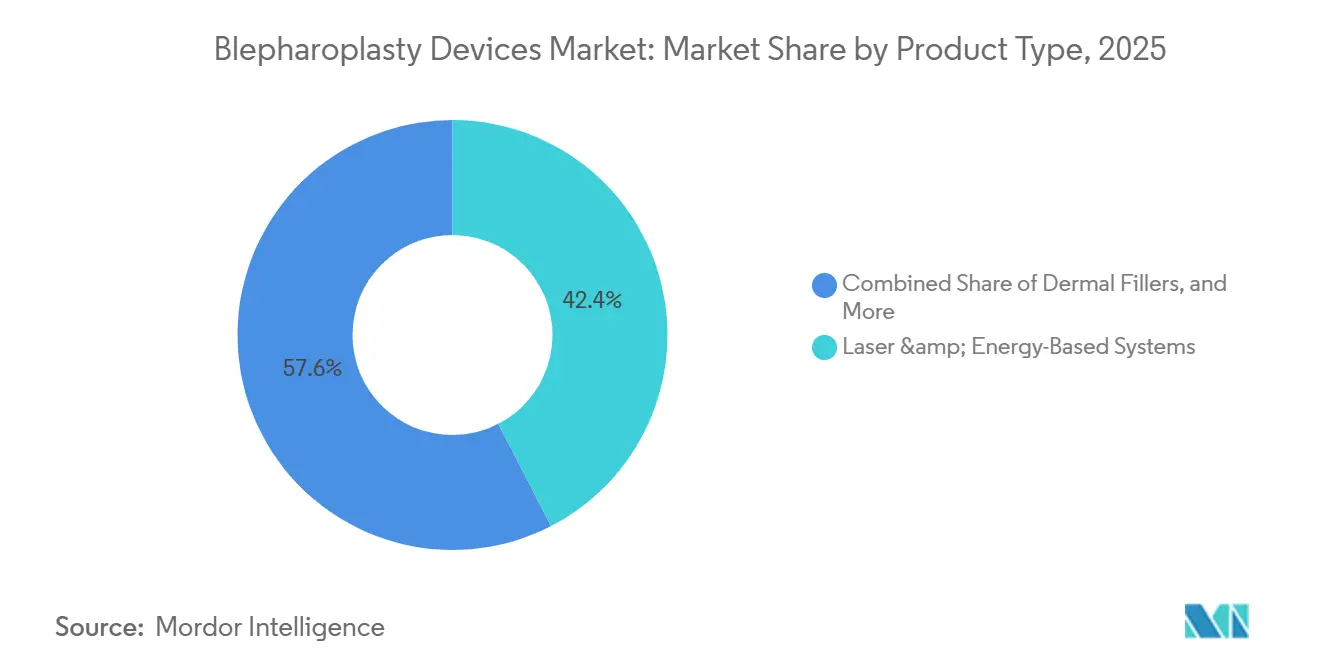
Laser & Energy-Based Systems accounted for 42.4% of the blepharoplasty market size in 2025, making them the largest product group. Their lead reflects the premium value of multi-modality platforms and their use across laser-assisted procedures, CO2 resurfacing, and RF eyelid tightening. A single installed platform can support several periocular services during the same patient visit. Device suppliers are also adding consumable fees and per-treatment revenue models to their installed base. This creates recurring revenue for manufacturers and clinics beyond the original equipment sale.
Dermal Fillers are projected to grow at 8.7% CAGR between 2026 and 2031, making them the fastest-growing product type in the blepharoplasty market. Growth is being supported by the wider use of hyaluronic acid fillers for tear-trough correction among patients with periocular volume loss. These patients may not be suitable for surgical fat excision, since further volume removal could worsen the underlying appearance concern.



By Procedure Type: Combination Surgery Signals Higher Per-Encounter Revenue
Upper Blepharoplasty held 43.4% of the procedure segment in 2025, and this gives it the largest share of the blepharoplasty devices market share at the procedure level. Its lead reflects the large functional burden tied to dermatochalasis in older patients and the relative ease of documenting visual field impairment when upper-lid skin redundancy becomes clinically significant. The procedure also benefits from shorter operative time and a more familiar referral pathway, which helps it remain the default starting point for many first-time surgical patients.
Combination Eyelid Surgery is forecast to grow at 8.3% CAGR through 2031, which makes it the fastest-rising procedure type in the blepharoplasty devices market. This shift reflects patient preference for fuller periocular correction in one episode, especially when upper-lid heaviness and lower-lid aging are viewed as linked concerns rather than separate decisions. A 2025 study in PRS Global Open highlighted the prominence of lower blepharoplasty in U.S. aesthetic practice and pointed to technique refinement, including fat repositioning approaches that can support better planning in combination cases.
By Technology: Traditional Surgery Holds Scale, Radiofrequency Leads Growth
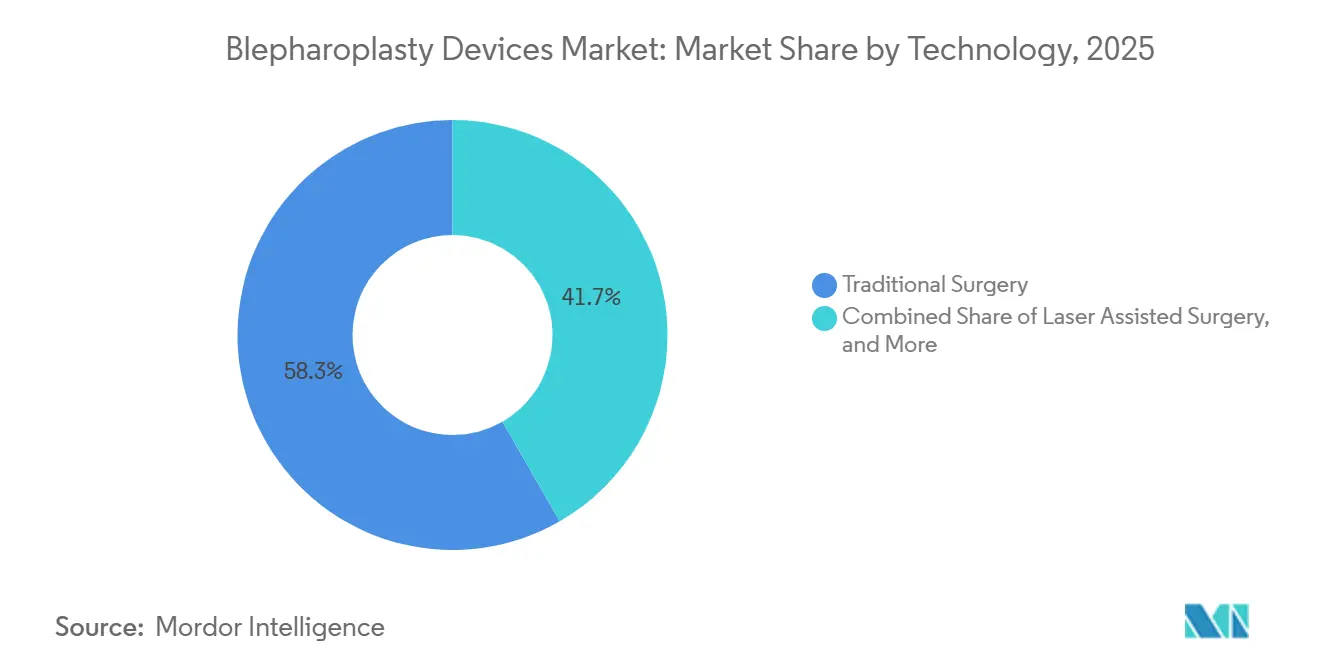
Traditional surgery held 58.3% share in 2025, which means it still anchors the blepharoplasty devices market across the widest range of clinical settings. It remains the training baseline for oculoplastic and plastic surgery pathways, and that matters because surgeon familiarity still shapes both procedural confidence and patient counseling. Conventional incisional methods also work across hospitals, ambulatory surgery centers, and office-based settings without requiring the same level of device investment or platform-specific credentialing.
Radiofrequency-Based Blepharoplasty is expected to advance at 9.3% CAGR through 2031, which makes it the fastest-growing technology in the blepharoplasty devices market. A 2025 study in Lasers in Medical Science evaluated monopolar RF eyelid tightening in Asian patients and reported safe and effective outcomes with a shallow tip designed for more superficial energy delivery in thicker eyelid tissue characteristics. InMode’s 2025 results update also confirmed laser portfolio expansion in 2026, showing that manufacturers see the blepharoplasty industry as a specialist area where broader wavelength offerings can strengthen clinical relevance.
By Gender: Male Patients Are the Market's Most Underserved Growth Segment
Female patients represented 83.2% of procedures in 2025, so they continued to define the main volume base of the blepharoplasty devices market. A 2025 retrospective analysis in Plastic and Reconstructive Surgery found that 82% of blepharoplasty cases were performed on women and reported a mean patient age of 56 years, which aligns closely with the present segment structure.
Male patients are projected to grow at 9.1% CAGR through 2031, making them the fastest-growing gender group in the blepharoplasty devices market. ISAPS reported that blepharoplasty was the most commonly performed surgical aesthetic procedure among men globally in 2024, which points to a stronger level of normalized demand than in earlier cycles.
By End-User: Specialist Clinics Outpace Hospitals on Growth Velocity
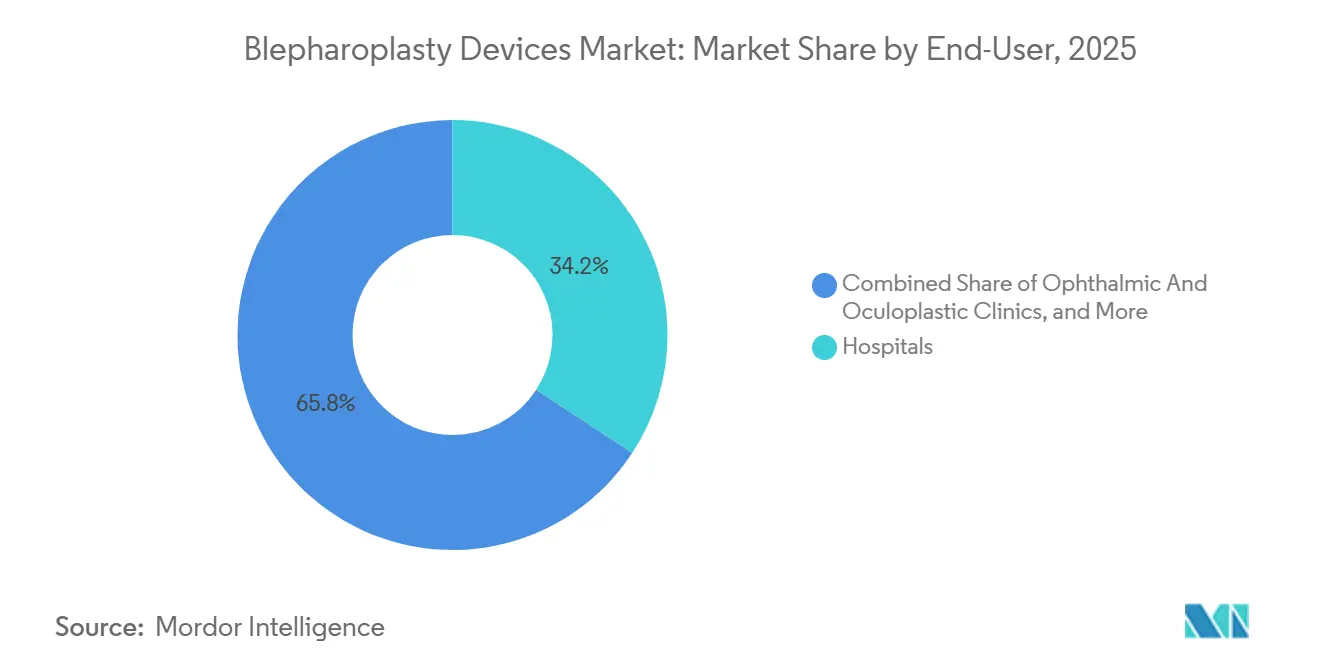
Hospitals held 34.2% of the end user segment in 2025, which gave them the largest individual setting share in the blepharoplasty devices market size by channel. They remain important for cases that involve general anesthesia, multiple procedures, comorbidities, or stronger reimbursement management requirements. Hospitals also benefit when functional upper-lid cases need formal documentation, perioperative monitoring, or cross-specialty support that smaller settings may not provide as smoothly.
Ophthalmic and Oculoplastic Clinics are forecast to grow at 8.9% CAGR through 2031, which makes them the fastest-rising end user setting in the blepharoplasty devices market. Their advantage comes from subspecialist-led care, faster adoption of lasers and injectables, and fewer internal barriers when a new periocular platform is introduced into practice. The 2025 15-year review in Plastic and Reconstructive Surgery found that office-based blepharoplasty volumes increased significantly in the more recent cohort, confirming a meaningful shift toward lower-acuity outpatient delivery.
Geography Analysis
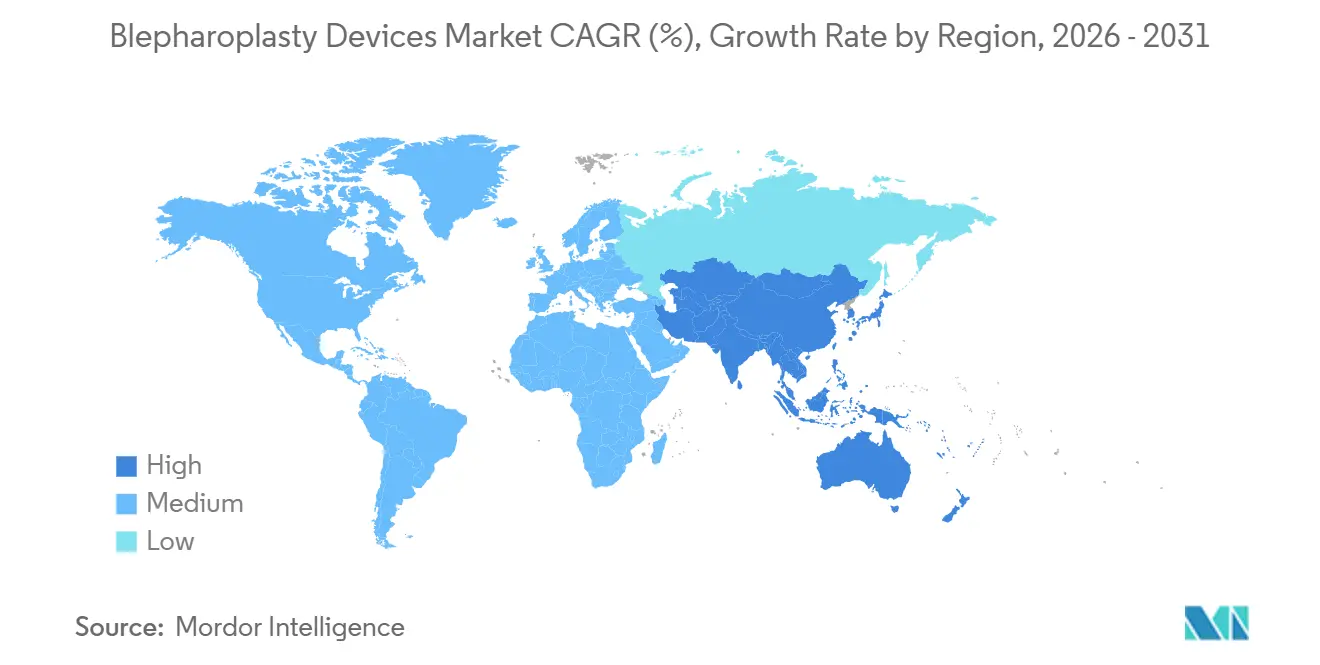
North America held 42.6% of the blepharoplasty devices market share in 2025, which kept it firmly in the leading regional position. The region benefits from a large aging patient base, high healthcare spending, and a clinical pathway that can support both reimbursed functional cases and self-pay cosmetic volume. A 2025 retrospective study showed that more than 56% of blepharoplasties were already being performed in ambulatory settings, which points to a mature delivery model that supports procedural efficiency and specialist throughput. Europe remained the second-largest regional block in the blepharoplasty devices market, supported by older populations and a well-established private aesthetics clinic network in major countries.
Asia-Pacific is the fastest-growing regional segment with a 10.2% CAGR through 2031, and this gives it the strongest expansion profile in the blepharoplasty devices market. Growth is supported by South Korea’s established surgical reputation, China’s widening aesthetics demand, Japan’s mature procedure culture, and ongoing patient movement across borders for specialist facial care. The blepharoplasty devices market in Asia-Pacific also aligns closely with faster-growth technologies such as radiofrequency and combination periocular treatment, which supports both product and procedure depth.

Competitive Landscape
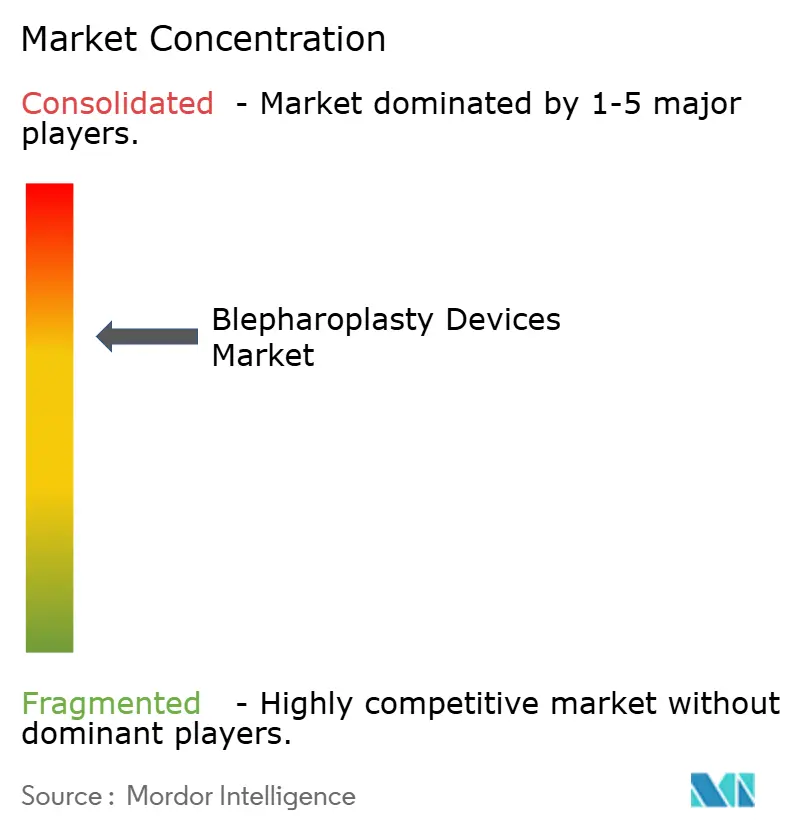
The blepharoplasty devices market remains moderately fragmented because leadership is divided across energy-based devices, injectables, and surgical instruments rather than centered in a single company or a single product class. Device suppliers such as InMode, Candela, Cynosure, Lumenis, and Sisram Medical compete from the platform side, while AbbVie, Galderma, and Merz are more closely associated with injectables and adjunctive facial aesthetics. A separate layer of surgical instrument suppliers supports the procedure base, but these firms do not define category direction in the same way as platform and injectable leaders. This structure means the blepharoplasty devices market is shaped less by one dominant vendor and more by category specialists building relevance around specific clinical steps, from surgery to resurfacing to periocular toxin use. It also means provider loyalty can vary by treatment mix, because a clinic may use one supplier for devices, another for injectables, and others for disposables and minor instruments.
Clinical evidence is also becoming a sharper competitive tool in the blepharoplasty devices market, especially where patients and providers want clearer proof of outcome quality beyond brand familiarity. Candela highlighted this in June 2026 when it published human data tied to its Nordlys 1940 nm non-ablative fractional laser showing reversal of age-associated skin DNA methylation patterns, which reframed laser rejuvenation as more than simple resurfacing.
Blepharoplasty Devices Industry Leaders
AbbVie Inc. (Allergan Aesthetics)
Bausch + Lomb Incorporated
Galderma
Merz Pharma (Merz Aesthetics)
Lumenis Ltd.
- *Disclaimer: Major Players sorted in no particular order

Recent Industry Developments
- March 2026: LaserAway partnered with BENEV to exclusively launch XTherma, a next-generation skin rejuvenation device. The platform combines high-frequency radiofrequency (RF) technology with an integrated cryogen cooling system, making it one of the first technologies in the U.S. market to utilize this dual-modality approach for non-invasive skin tightening and rejuvenation.
- January 2026: Candela announced the continued commercial expansion of its Matrix radiofrequency-based skin renewal platform during the IMCAS World Congress 2026. The company showcased Matrix alongside its newly launched Glacē System as part of its broader strategy to strengthen its portfolio of energy-based aesthetic devices.


Global Blepharoplasty Devices Market Report Scope
As per the scope of the market, blepharoplasty is a cosmetic and reconstructive surgical procedure performed to improve the appearance and function of the eyelids. The procedure involves the removal or repositioning of excess skin, muscle, and fat from the upper and/or lower eyelids to address concerns such as drooping eyelids, under-eye bags, visual field obstruction, and age-related periorbital changes. Advances in laser-assisted surgery, radiofrequency technologies, dermal fillers, and minimally invasive aesthetic treatments have expanded the range of products and technologies used in blepharoplasty procedures.
The blepharoplasty devices market report segments the market by product type, including laser & energy-based systems, dermal fillers, surgical consumables & accessories, and ophthalmic surgical equipment. It also categorizes the market by procedure type, covering upper blepharoplasty, lower blepharoplasty, combination eyelid surgery, and others (revision blepharoplasty, Asian blepharoplasty). Furthermore, the market is segmented by technology, including traditional surgery, laser-assisted surgery, plasma and energy-based techniques, radiofrequency-based blepharoplasty, and others (non-surgical adjunctive techniques, electrosurgical techniques). Based on gender, the market is divided into female and male patients. By end user the market is segmented into hospitals, ophthalmic and oculoplastic clinics, ambulatory surgical centers, plastic surgery centers, and others (cosmetic and aesthetic clinics, dermatology clinics). Geographically, the market is segmented into North America, Europe, Asia-Pacific, the Middle East & Africa, and South America. The market report also covers the estimated market sizes and trends for 17 countries across major regions globally. For each segment, the market size and forecast are provided in terms of value (USD).
| Laser & Energy-Based Systems |
| Dermal Fillers |
| Ophthalmic Surgical Equipment |
| Others (Surgical Consumables & Accessories, Plasma Skin Resurfacing Systems, RF Accessories) |
| Upper Blepharoplasty |
| Lower Blepharoplasty |
| Combination Eyelid Surgery |
| Others (Revision Blepharoplasty, Asian Blepharoplasty) |
| Traditional Surgery |
| Laser Assisted Surgery |
| Plasma And Energy Based Techniques |
| Radiofrequency-Based Blepharoplasty |
| Others (Non-Surgical Adjunctive Techniques, Electrosurgical Techniques) |
| Female |
| Male |
| Hospitals |
| Ophthalmic And Oculoplastic Clinics |
| Ambulatory Surgical Centers |
| Plastic Surgery Centers |
| Others (Cosmetic & Aesthetic Clinics, Dermatology Clinics) |
| North America | United States |
| Canada | |
| Mexico | |
| Europe | Germany |
| United Kingdom | |
| France | |
| Italy | |
| Spain | |
| Rest of Europe | |
| Asia-Pacific | China |
| India | |
| Japan | |
| Australia | |
| South Korea | |
| Rest of Asia-Pacific | |
| Middle East and Africa | GCC |
| South Africa | |
| Rest of Middle East and Africa | |
| South America | Brazil |
| Argentina | |
| Rest of South America |
| By Product Type | Laser & Energy-Based Systems | |
| Dermal Fillers | ||
| Ophthalmic Surgical Equipment | ||
| Others (Surgical Consumables & Accessories, Plasma Skin Resurfacing Systems, RF Accessories) | ||
| By Procedure Type | Upper Blepharoplasty | |
| Lower Blepharoplasty | ||
| Combination Eyelid Surgery | ||
| Others (Revision Blepharoplasty, Asian Blepharoplasty) | ||
| By Technology | Traditional Surgery | |
| Laser Assisted Surgery | ||
| Plasma And Energy Based Techniques | ||
| Radiofrequency-Based Blepharoplasty | ||
| Others (Non-Surgical Adjunctive Techniques, Electrosurgical Techniques) | ||
| By Gender | Female | |
| Male | ||
| By End-User | Hospitals | |
| Ophthalmic And Oculoplastic Clinics | ||
| Ambulatory Surgical Centers | ||
| Plastic Surgery Centers | ||
| Others (Cosmetic & Aesthetic Clinics, Dermatology Clinics) | ||
| By Geography | North America | United States |
| Canada | ||
| Mexico | ||
| Europe | Germany | |
| United Kingdom | ||
| France | ||
| Italy | ||
| Spain | ||
| Rest of Europe | ||
| Asia-Pacific | China | |
| India | ||
| Japan | ||
| Australia | ||
| South Korea | ||
| Rest of Asia-Pacific | ||
| Middle East and Africa | GCC | |
| South Africa | ||
| Rest of Middle East and Africa | ||
| South America | Brazil | |
| Argentina | ||
| Rest of South America | ||


Key Questions Answered in the Report
How large is the blepharoplasty devices space in 2031?
The blepharoplasty devices market is forecast to reach USD 6.70 billion by 2031, up from USD 4.75 billion in 2026.
What is driving demand for eyelid procedures right now?
Demand is being supported by 2 parallel groups, older patients seeking functional correction and younger patients seeking cosmetic improvement, with eyelid surgery already the top global surgical aesthetic procedure by volume in 2024.
Which region is leading today and which one is growing fastest?
North America led with 42.6% share in 2025, while Asia-Pacific is projected to grow fastest at a 10.2% CAGR through 2031.
Which product and technology segments stand out most?
Laser & Energy-Based Systems led product revenue with 42.4% share in 2025, while Traditional surgery led technology with 58.3% share and Radiofrequency-Based Blepharoplasty showed the fastest technology growth at 9.3% CAGR through 2031.
Are hospitals still the main care setting for blepharoplasty?
Hospitals remained the largest end user setting with 34.2% share in 2025, but office-based and specialist clinic activity is rising, with Ophthalmic and Oculoplastic Clinics growing fastest at 8.9% CAGR through 2031.
What is the biggest risk to wider procedure adoption?
Self-pay exposure for cosmetic cases and the shortage of fellowship-trained oculoplastic surgeons outside metro areas are the main barriers, because they limit affordability and access even where patient interest is strong.
Page last updated on:





