
Bar Soap Market Size and Share
Market Overview
| Study Period | 2022 - 2032 |
|---|---|
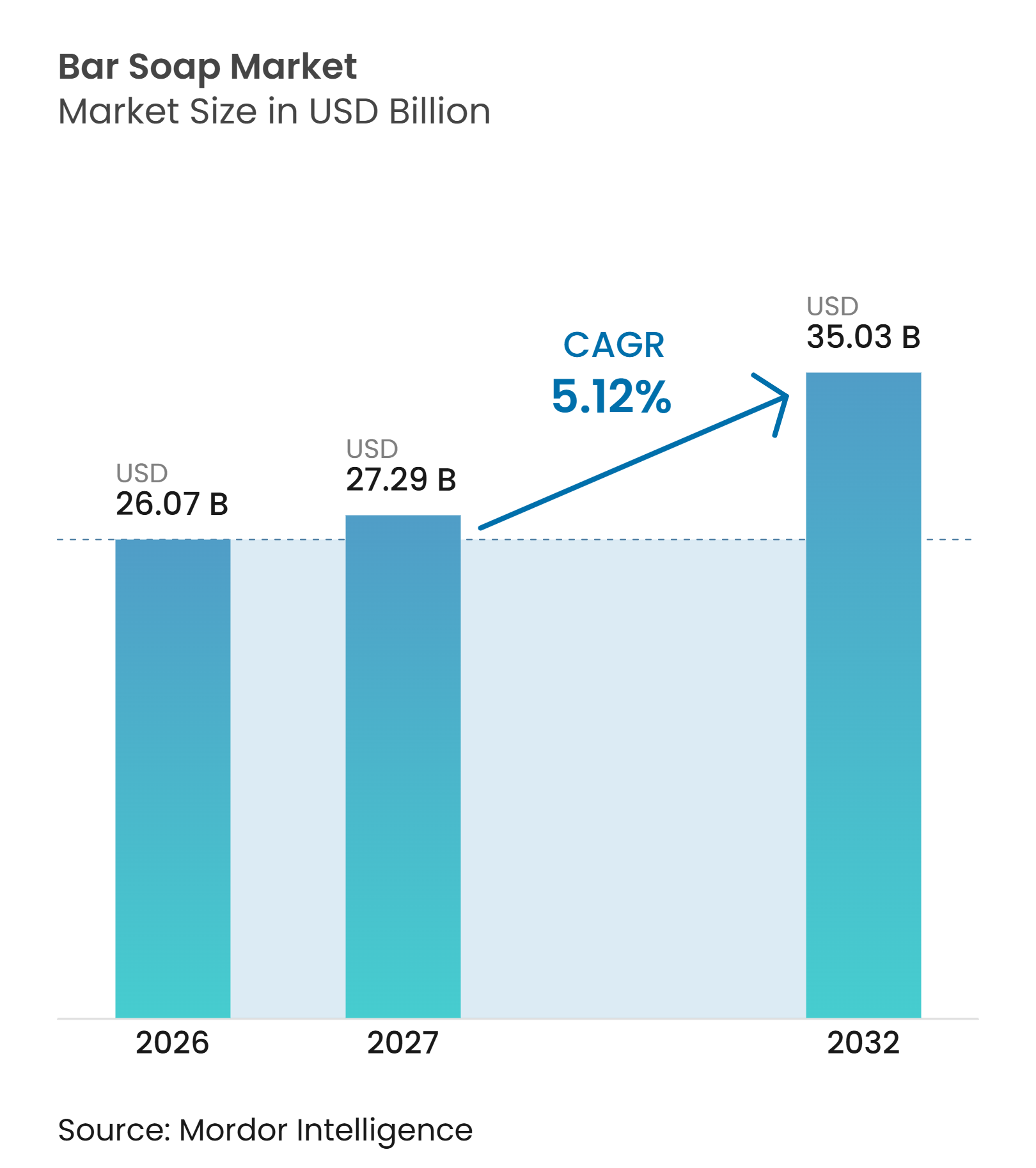
| Market Size (2027) | USD 27.29 Billion |
| Market Size (2032) | USD 35.03 Billion |
| Growth Rate (2027 - 2032) | 5.12 % |
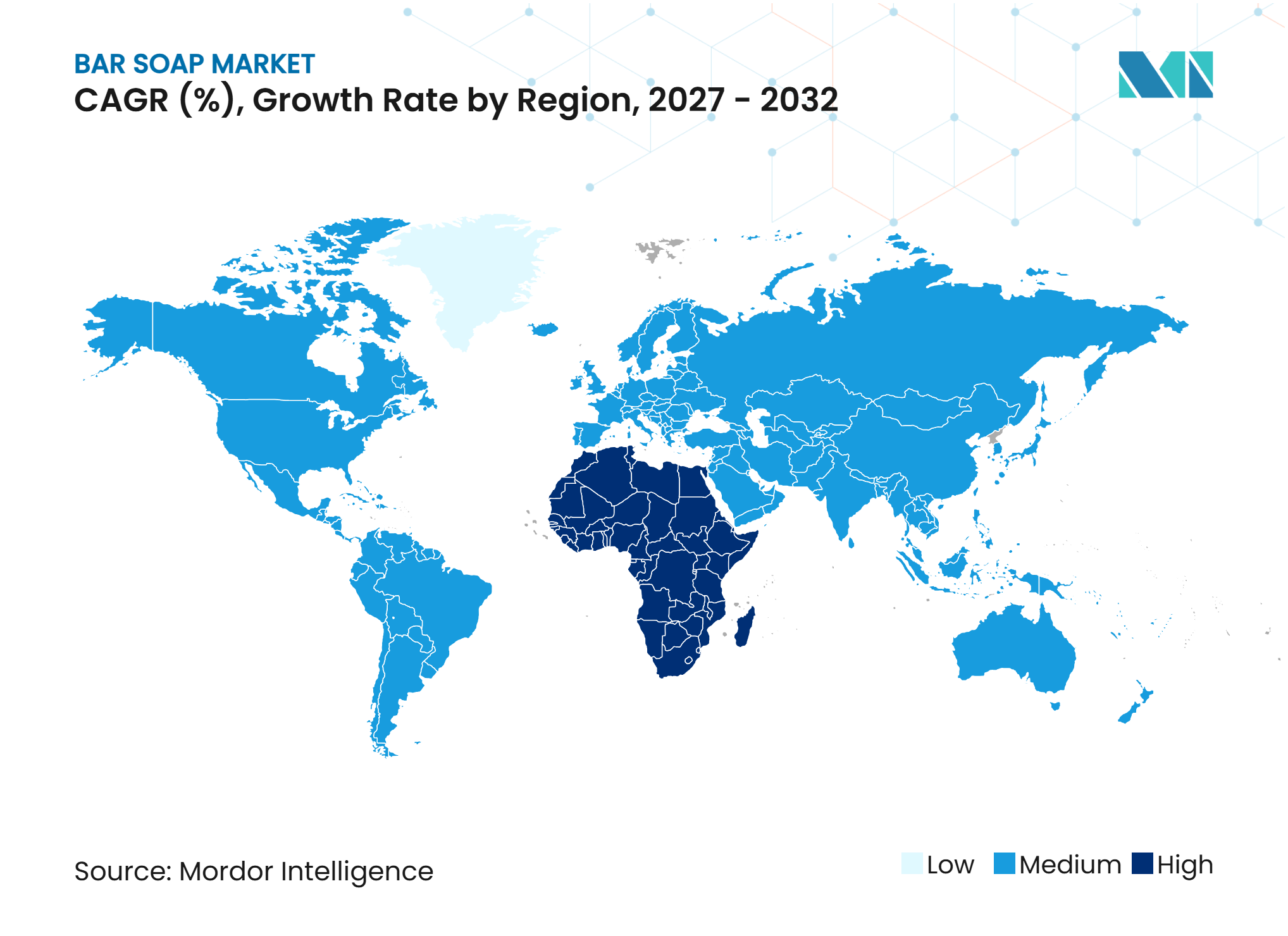
| Fastest Growing Market | Middle East and Africa |
| Largest Market | Asia-Pacific |
| Market Concentration | Medium |
Major Players *Disclaimer: Major Players sorted in no particular order Image © Mordor Intelligence. Reuse requires attribution under CC BY 4.0. | |
Bar Soap Market Analysis by Mordor Intelligence
The bar soap market was valued at USD 26.07 billion in 2026 and is estimated to grow from USD 27.29 billion in 2027 to reach USD 35.03 billion by 2032, at a CAGR of 5.12% during the forecast period (2027–2032). Growth is driven by the continued importance of personal hygiene, increasing consumer attention to skin health, and ongoing product innovation in cleansing formulations. Growing awareness of infection prevention and the importance of regular handwashing is reinforcing the consumption of bar soap products, while increasing consumer scrutiny of ingredient compositions is encouraging manufacturers to introduce formulations featuring botanical extracts, naturally derived oils, moisturizing agents, and dermatologically tested ingredients.
Key Report Takeaways
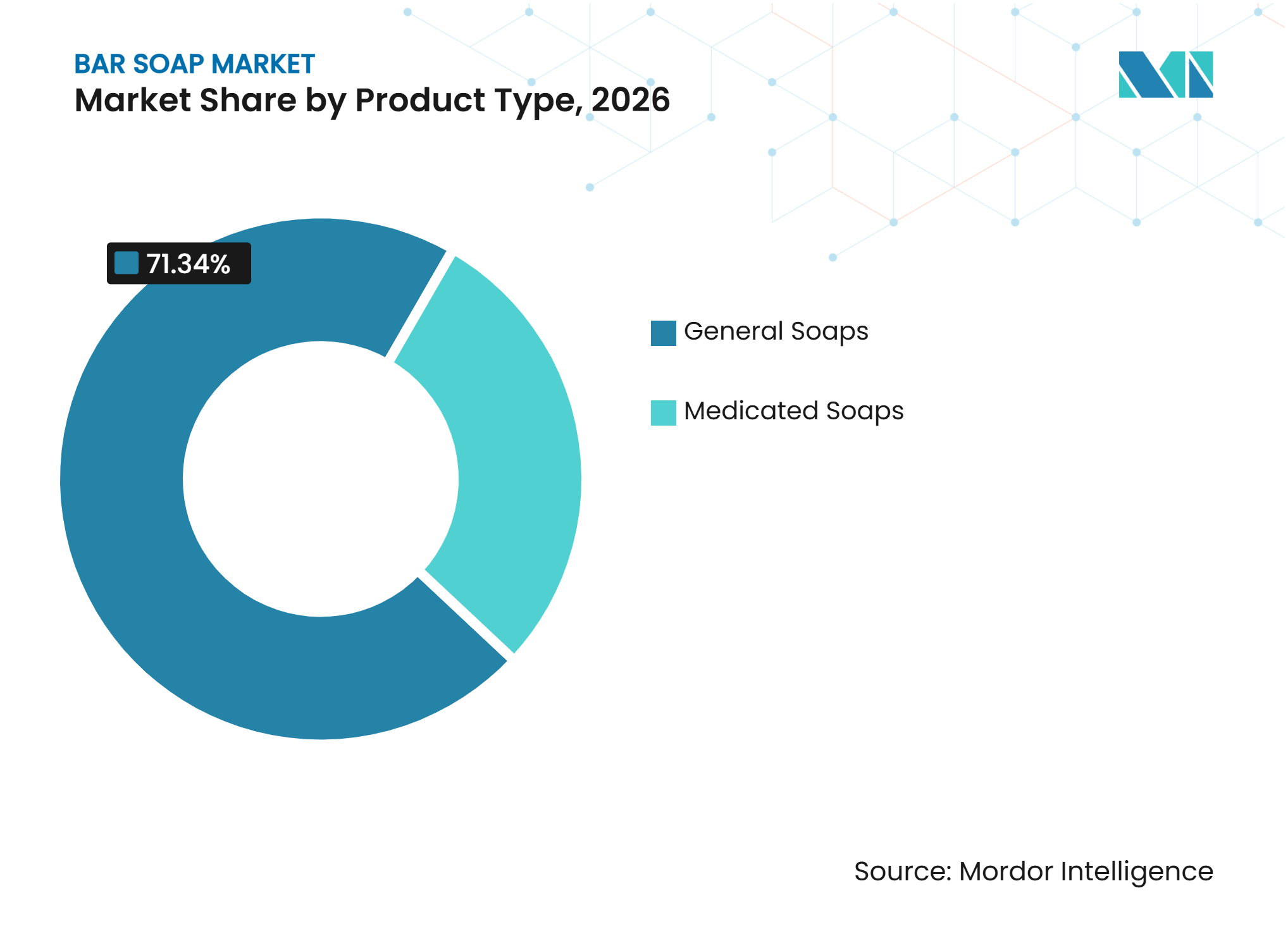
- By product type, General Soaps held 71.34% of the bar soap market share in 2026, while Medicated Soaps are forecast to grow at a 6.03% CAGR through 2032.
- By ingredient type, Conventional/Synthetic ingredients accounted for 78.32% of the bar soap market share in 2026, while Natural/Organic ingredients are projected to expand at a 5.91% CAGR through 2032.
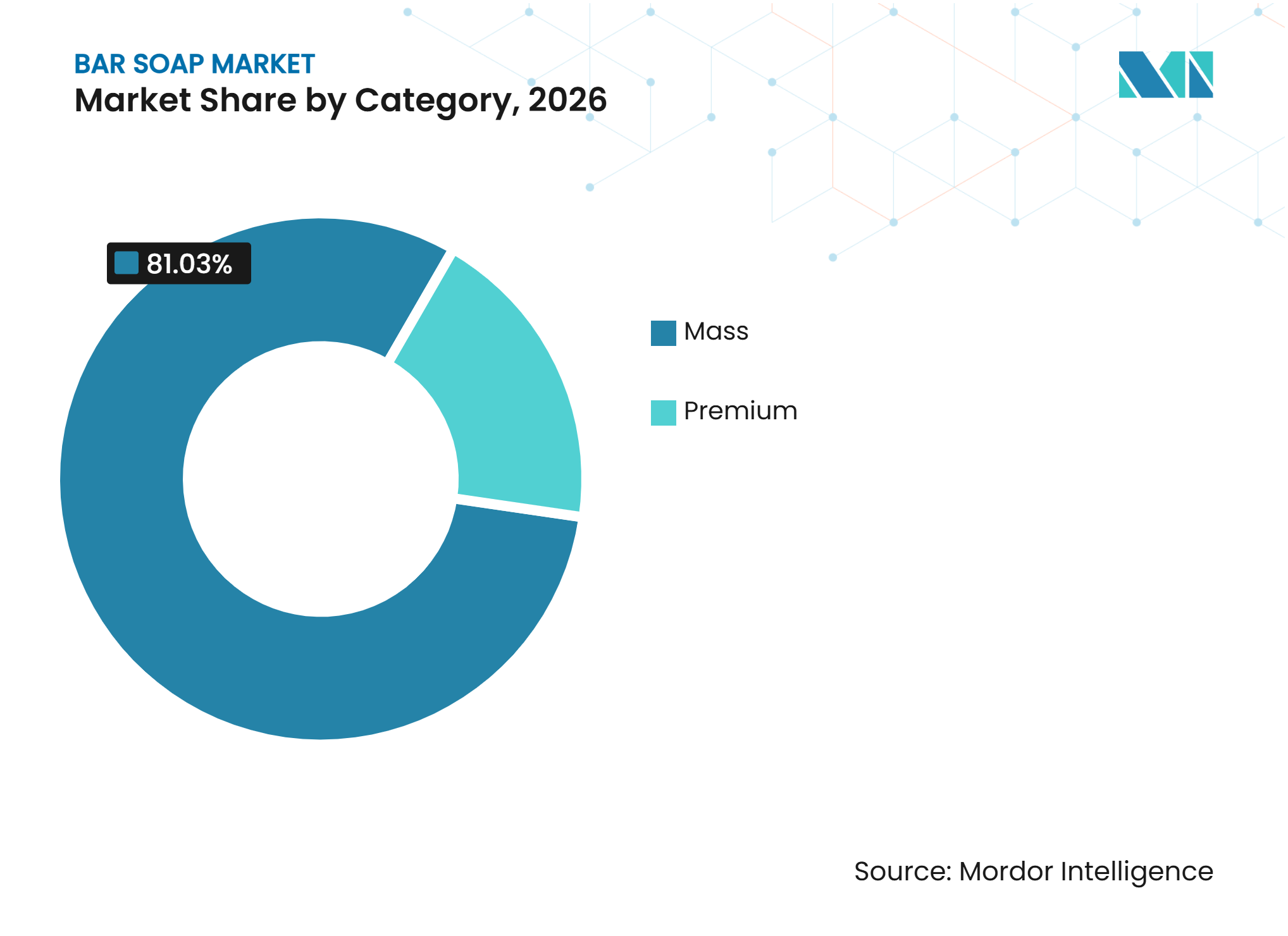
- By category, Mass products represented 81.03% of the bar soap market share in 2026, while Premium products are expected to grow at a 5.56% CAGR through 2032.
- By end user, Adults accounted for 87.24% of the bar soap market share in 2026, while Kids/Children products are forecast to grow at a 5.87% CAGR through 2032.
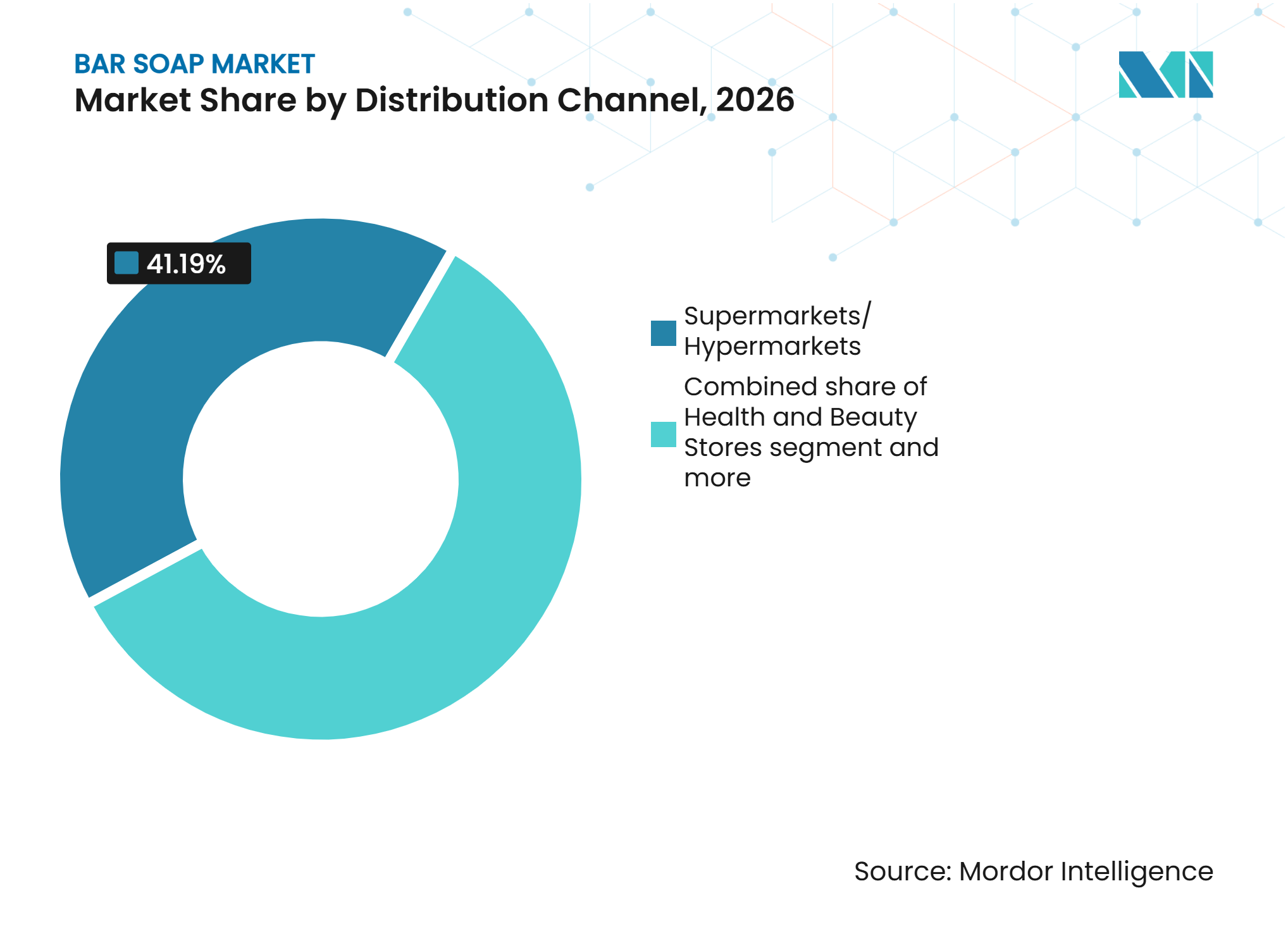
- By distribution channel, Supermarkets/Hypermarkets held 41.19% of the bar soap market share in 2026, while Online Retail Stores are projected to grow at a 6.89% CAGR through 2032.
- By geography, Asia-Pacific accounted for 33.42% of the bar soap market share in 2026, while the Middle East and Africa is forecast to grow at a 6.34% CAGR through 2032.
Note: Market numbers in this report are based on Mordor Intelligence's proprietary estimation framework, which combines nine months of actuals with Q4 projections for base year 2026.
Market Trends and Insights
Drivers Impact Analysis of Bar Soap Market*
| Driver | (~) % Impact on CAGR Forecast | Geographic Relevance | Impact Timeline |
|---|---|---|---|
| Increasing awareness of personal hygiene and cleanliness | +1.0% | Global, concentrated gains in Asia-Pacific and the Middle East and Africa | Short-term (≤ 2 years) |
| Growing emphasis on infection prevention and disease control | +0.8% | Global, led by Sub-Saharan Africa, South Asia, Southeast Asia | Medium-term (2–4 years) |
| Increasing preference for natural and plant-derived ingredients | +0.9% | Europe, North America, urban Asia-Pacific premium segment | Medium-term (2–4 years) |
| Demand for dermatologically tested and sensitive-skin products | +0.6% | North America, Europe, urban China and South Korea | Medium-term (2–4 years) |
| Adoption of sustainable and plastic-free personal care products | +0.5% | Europe (PPWR regulatory influence), North America; spillover to urban Asia-Pacific | Long-term (≥ 4 years) |
| Consumer preference for specialized and functional bar soaps | +0.7% | North America, urban China, South Korea, Europe | Medium-term (2–4 years) |
| Source: Mordor Intelligence | |||
Increasing Awareness of Personal Hygiene and Cleanliness
Growing awareness of personal hygiene and cleanliness is a major driver of the bar soap market. Consumers increasingly recognize the importance of regular cleansing in maintaining skin hygiene and preventing the accumulation of dirt, sweat, excess oils, and environmental impurities. Growing awareness of handwashing practices and routine bathing is reinforcing the use of soap-based cleansing products as an essential component of everyday hygiene. Public health initiatives, hygiene education campaigns, and recommendations from health organizations are further strengthening awareness of the role of soap in removing microorganisms and reducing the risk of hygiene-related infections. Additionally, greater attention to personal cleanliness in daily routines is encouraging consistent consumption of cleansing products.
Growing Emphasis on Infection Prevention and Disease Control
Growing emphasis on infection prevention and disease control is supporting demand for bar soaps, as consumers increasingly recognize regular handwashing as an effective measure for reducing the transmission of infectious microorganisms. Rising awareness of hygiene-related illnesses, including diarrheal infections, respiratory diseases, and other communicable conditions, is encouraging consistent handwashing practices using soap and water. For instance, according to the National Foundation for Infectious Diseases (NFID), in 2025, 62% of United States consumers identified that washing hands with soap and water for 20 seconds effectively reduces the spread of germs[1]. This growing recognition of soap-based cleansing in infection prevention is reinforcing regular handwashing practices and supporting continued demand for bar soaps as essential personal hygiene products.
Increasing Preference for Natural and Plant-Derived Ingredients
Increasing consumer preference for natural and plant-derived ingredients is supporting the growth of the bar soap market, as consumers seek personal care products formulated with recognizable botanical ingredients, naturally derived oils, and plant-based cleansing components. Growing scrutiny of synthetic additives, artificial fragrances, and chemical ingredients is encouraging consumers to examine product labels and consider formulations perceived as gentler and more environmentally responsible. This is driving the incorporation of ingredients such as coconut oil, olive oil, shea butter, aloe vera, neem, turmeric, tea tree oil, and other botanical extracts into bar soap formulations. Additionally, increasing interest in ingredient transparency and responsible sourcing is encouraging manufacturers to develop products with simplified formulations and clearly identified ingredient origins.
Demand for Dermatologically Tested and Sensitive-Skin Products
Growing demand for dermatologically tested and sensitive-skin products is supporting the bar soap market, as consumers pay closer attention to skin compatibility, ingredient safety, and the effects of cleansing formulations on skin health. Increasing consumer focus on dermatologist-tested claims and clinically evaluated product performance is encouraging manufacturers to invest in formulation research and skin compatibility testing. For instance, Galderma S.A., under its Cetaphil brand, offers the Moisturising Syndet Bar, which is dermatologist-tested and clinically proven to be gentle on sensitive skin, supporting skin cleansing while helping maintain the skin's natural moisture barrier. Such product developments reflect the growing focus on gentle cleansing formulations and are supporting demand for dermatologically oriented bar cleansing products.
Restraints Impact Analysis of Bar Soap Market*
| Restraint | (~) % Impact on CAGR Forecast | Geographic Relevance | Impact Timeline |
|---|---|---|---|
| Skin dryness and irritation associated with conventional soap formulations | -0.7% | Global; most pronounced in North America and Europe | Short-term (≤ 2 years) |
| Growing preference for liquid soaps and body washes | -1.2% | China, Japan, South Korea, Germany; spilling into Indonesia and urban India | Medium-term (2–4 years) |
| Stringent regulations governing soap ingredients and product claims | -0.5% | Europe (PPWR, REACH compliance), North America (FDA), GCC markets | Medium-term (2–4 years) |
| Volatility in the availability and quality of natural raw materials | -0.6% | Global; concentrated exposure in Southeast Asia palm oil supply chain | Short-term (≤ 2 years) |
| Source: Mordor Intelligence | |||
Skin Dryness and Irritation Associated with Conventional Soap Formulations
Skin dryness and irritation associated with conventional soap formulations act as a restraint in the market. Certain traditional soap formulations can strip away the skin's natural oils and disrupt its protective moisture barrier during repeated cleansing. Conventional soaps generally contain alkaline cleansing agents that can increase skin pH and remove essential lipids, potentially causing dryness, tightness, itching, and irritation, particularly among individuals with sensitive or dry skin. Repeated exposure to harsh surfactants, synthetic fragrances, preservatives, and other formulation additives can further aggravate skin sensitivity and contribute to discomfort. These concerns may discourage consumers from using conventional bar soaps regularly and prompt them to seek alternative cleansing products formulated with milder surfactants, moisturizing compounds, and skin-compatible pH levels.
Growing Preference for Liquid Soaps and Body Washes
The growing consumer preference for liquid soaps and body washes acts as a restraint on the market, as consumers increasingly shift toward liquid cleansing formats that offer convenient dispensing, ease of application, and controlled product usage. Liquid soaps are generally perceived as more convenient for frequent handwashing, particularly in shared bathrooms, workplaces, healthcare facilities, and public establishments where dispenser-based systems minimize direct contact with the product. Body washes offer additional advantages such as easy application, quick rinsing, and the availability of specialized formulations containing moisturizing agents, exfoliating ingredients, fragrances, and skin-conditioning compounds. The increasing availability of pump bottles, refill pouches, foaming dispensers, and travel-friendly packaging formats is further improving the accessibility and usability of liquid cleansing products.
*Our forecasts treat driver/restraint impacts as directional, not additive. The impact forecasts reflect baseline growth, mix effects, and variable interactions.
Bar Soap Market Segment Analysis
By Product Type:
General Soaps Anchor Volume While Medicated Formats Gain MomentumGeneral soaps dominated the bar soap market with a 71.34% market share in 2026, primarily driven by their established position as everyday cleansing products, broad consumer acceptance, and suitability for routine personal hygiene. Continued demand is supported by simple formulations, consumer familiarity with traditional soap-based cleansing, and the ability to remove dirt, oil, sweat, and impurities without requiring specialized features. The widespread availability of general soaps across different fragrances, formulations, shapes, and bar weights also provides consumers with flexibility in selecting products according to their cleansing preferences. Additionally, improvements in soap manufacturing processes are enabling manufacturers to enhance lather formation, cleansing efficiency, bar hardness, fragrance retention, and product longevity, strengthening the overall consumer experience.
Medicated soaps are the fastest-growing product type in the bar soap market, projected to register a CAGR of 6.03% over 2027–2032, driven by increasing awareness of skin infections, microbial contamination, and the importance of maintaining skin hygiene. According to the World Health Organization (WHO), approximately 1.7 billion people lacked basic hand hygiene services at home in 2024, highlighting the ongoing need to strengthen hygiene practices[2]. Growing awareness of dermatological conditions, including acne, fungal infections, bacterial skin infections, excessive oiliness, and other skin disorders, is encouraging consumers to incorporate medicated cleansing products into their personal hygiene routines. Demand is further supported by the increasing use of active ingredients such as salicylic acid, sulfur, benzoyl peroxide, zinc compounds, and antiseptic agents, which provide targeted cleansing and address specific skin-related concerns.


By Ingredient Type:
Conventional Base Holds While Natural Reformulation Gathers ScaleConventional/synthetic ingredients accounted for a 78.32% share of the ingredient type segment in 2026, supported by their established use in large-scale soap manufacturing and their ability to deliver consistent cleansing performance. Ingredients such as sodium palmate, sodium palm kernelate, sodium cocoate, synthetic surfactants, stabilizers, preservatives, and fragrance compounds provide manufacturers with flexibility in developing formulations with specific lathering, hardness, solubility, and cleansing characteristics. The widespread availability of standardized raw materials and well-established processing techniques enables manufacturers to maintain formulation consistency, optimize production efficiency, and achieve predictable product performance.
Natural/organic ingredients represent the fastest-growing ingredient type in the market, projected to register a CAGR of 5.91% over 2027–2032. This growth is driven by increasing consumer demand for ingredient transparency, plant-derived formulations, and environmentally conscious personal care products. According to the National Sanitation Foundation (NSF), 74% of Americans considered organic ingredients important in personal care products in 2025, reflecting growing interest in ingredient sourcing and formulation composition[3]. This preference is encouraging the incorporation of naturally derived oils, botanical extracts, essential oils, herbal ingredients, and plant-based moisturizing agents into bar soap formulations.
By Category:
Mass Scale Prevails, Premium Accelerates on Ingredient and Science ClaimsThe mass category dominated the bar soap market and accounted for an 81.03% market share in 2026. Its dominance was driven by the widespread availability of standardized cleansing formulations designed to meet routine personal hygiene requirements. Manufacturers continued to optimize production through high-volume manufacturing processes, automated soap finishing, efficient ingredient blending, and standardized quality-control systems, ensuring consistent product quality and performance. The availability of different fragrance profiles, bar sizes, and multipack configurations provided flexibility in product selection and household stocking. Furthermore, improvements in formulation technologies enhanced lather formation, cleansing efficiency, bar hardness, and fragrance retention, supporting product performance and consumer acceptance.
The premium category is the fastest-growing category in the global bar soap market, projected to register a CAGR of 5.56% over 2027–2032, driven by increasing consumer interest in specialized personal care formulations, distinctive sensory experiences, and specialized ingredient combinations. Premium bar soaps are increasingly incorporating ingredients such as shea butter, cocoa butter, botanical extracts, essential oils, milk proteins, and naturally derived glycerin to deliver enhanced skin-conditioning properties and differentiated product experiences. Growing interest in artisanal craftsmanship is also encouraging the development of handcrafted, cold-process, and small-batch soap formulations featuring distinctive textures, intricate designs, and carefully selected ingredient blends.

By End User:
Adult Demand Anchors the Market, Children's Segment Draws Targeted InvestmentAdults represented 87.24% of the bar soap market in 2026, driven by established personal hygiene routines and regular use of cleansing products for daily skin maintenance. Demand was supported by the diverse personal care requirements of adult consumers, including the removal of accumulated sweat, excess sebum, environmental impurities, and body odor. Increasing awareness of skin health is encouraging adults to select cleansing products based on individual skin conditions, ingredient compatibility, and specific grooming preferences. The adoption of structured self-care routines is also supporting the continued use of bar soaps as part of regular bathing and personal hygiene practices. The availability of formulations addressing concerns such as excessive oiliness, dryness, uneven skin texture, and body odor is providing additional relevance to bar soaps among adult consumers.
The kids/children segment is the fastest-growing end-user segment in the global bar soap market, projected to register a CAGR of 5.87% over 2027–2032. Growth is driven by increasing parental attention to children's skin hygiene, gentle cleansing, and age-appropriate personal care formulations. Children's skin is generally more delicate and sensitive to external irritants, encouraging demand for mild cleansing products formulated with skin-compatible ingredients and reduced concentrations of potentially irritating additives. This is supporting the development of children's bar soaps featuring hypoallergenic formulations, fragrance-free options, moisturizing ingredients, and dermatologically tested properties. Growing awareness of ingredient safety is also encouraging parents to examine soap formulations for harsh surfactants, artificial fragrances, and other ingredients that may cause skin irritation.
By Distribution Channel:
Supermarkets Lead Physical Retail While Digital Reshapes DiscoverySupermarkets/Hypermarkets held the largest distribution share at 41.19% in 2026, driven by their extensive product assortments, organized retail infrastructure, and ability to provide consumers with direct access to multiple soap brands and product variants under one roof. These retail formats offer dedicated personal care sections where consumers can physically examine product packaging, compare ingredient lists, evaluate bar sizes, and assess fragrance options before making purchasing decisions. The availability of multipack offerings, promotional displays, bundled products, and private-label soap ranges further strengthens their appeal for routine personal care purchases. The integration of loyalty programs, promotional pricing strategies, and organized merchandising also improves product visibility and encourages repeat purchases.
Online retail stores represent the fastest-growing distribution channel in the bar soap market, projected to register a CAGR of 6.89% over 2027–2032, driven by the increasing integration of digital shopping platforms into routine personal care purchasing. E-commerce platforms provide consumers with access to extensive product catalogs, detailed ingredient descriptions, customer reviews, product ratings, and usage information, enabling more informed purchasing decisions without physically examining products. The availability of specialized search filters and product recommendations also helps consumers identify soaps based on formulation preferences, skin requirements, fragrance profiles, and ingredient characteristics. Furthermore, subscription-based purchasing models and automated replenishment services support convenient repeat ordering of frequently used cleansing products.

Geography Analysis
Asia-Pacific: Volume Leader With a Premiumisation Undercurrent
Asia-Pacific dominated the global bar soap market, accounting for a 33.42% market share in 2026. This is driven by widespread traditional bathing practices, established soap consumption habits, and the continued use of bar soaps in daily personal hygiene routines. Strong regional demand is supported by broad acceptance of solid cleansing formats, familiarity with soap-based formulations, and the availability of products designed for different climatic conditions and skincare preferences. High humidity and hot weather across several parts of the region reinforce the need for regular cleansing to remove sweat, excess sebum, and accumulated impurities. The growing availability of specialized formulations incorporating herbal extracts, botanical oils, moisturizing agents, and skin-conditioning ingredients is further expanding product appeal.
Middle East and Africa: Fast-Growing Region Shaped by Demography and Hygiene Investment
The Middle East and Africa is forecast to be the fastest-growing regional market for bar soaps, registering a projected CAGR of 6.34% over 2027–2032. Growth is supported by increasing emphasis on personal hygiene, expanding access to packaged cleansing products, and the growing adoption of organized retail distribution. Rising hygiene awareness is encouraging regular use of cleansing products, while improvements in sanitation infrastructure and access to essential hygiene supplies are supporting broader product adoption. The region's climatic conditions, particularly high temperatures and frequent perspiration, are reinforcing the importance of regular bathing and skin cleansing.
Other Regions: Contrasting Demand Structures Across Mature and Emerging Markets
North America is gaining traction in the global bar soap market through increasing consumer interest in ingredient transparency, multifunctional cleansing formulations, and environmentally responsible personal care products. Demand for products featuring botanical extracts, naturally derived oils, moisturizing ingredients, and fragrance-free formulations is encouraging product innovation. In Europe, market development is shaped primarily by sustainability compliance, growing scrutiny of cosmetic ingredient safety, and increasing emphasis on packaging recyclability and environmental responsibility. South America is supported by established bathing and personal hygiene habits, widespread consumer familiarity with bar soap formats, and the availability of products suited to different cleansing and skincare requirements.
Competitive Landscape
Market Concentration
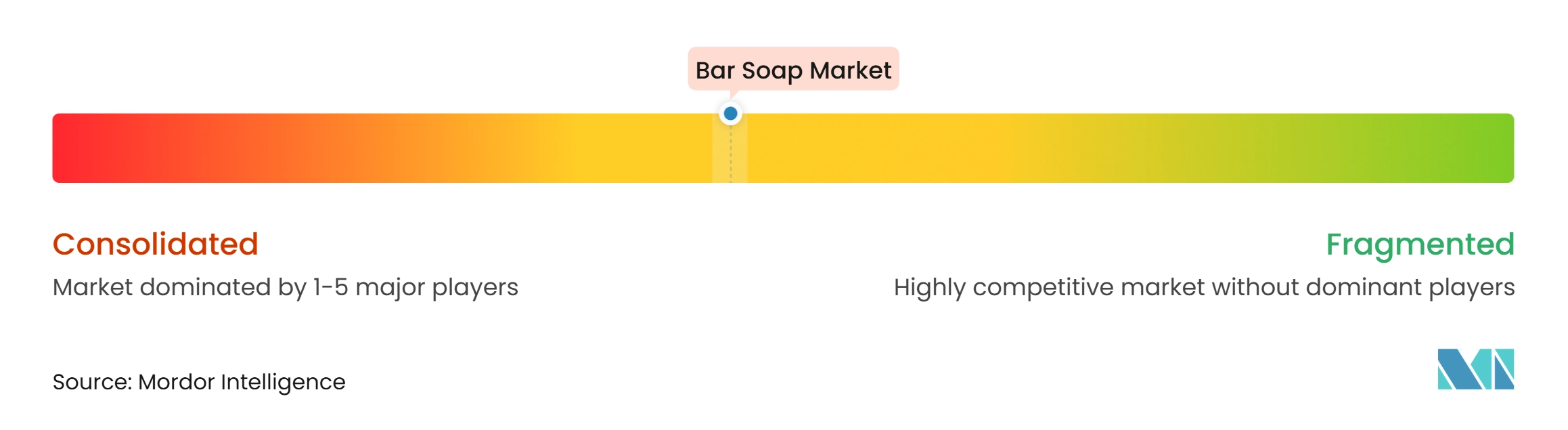
The bar soap market has a moderately concentrated competitive landscape, with multinational consumer goods companies, established personal care manufacturers, and regional soap producers competing through product innovation, brand positioning, manufacturing capabilities, and distribution reach. Key players, including Unilever PLC, The Procter & Gamble Company, Reckitt Benckiser Group plc, Henkel AG & Co. KGaA, and Kao Corporation, maintain their competitive positions through diversified personal care portfolios, established brand recognition, extensive distribution networks, and large-scale manufacturing operations. Competition is primarily driven by the ability to maintain product quality, develop differentiated formulations, strengthen consumer loyalty, and respond to changing preferences in cleansing performance, skin compatibility, and ingredient composition.
Advancements in soap manufacturing and formulation development serve as important competitive differentiators in the global bar soap market. Leading manufacturers are investing in advanced processing equipment, automated production lines, precision ingredient blending, and quality-control technologies to improve manufacturing efficiency, formulation consistency, and product performance. Developments in surfactant chemistry, ingredient processing, and fragrance technologies are supporting improvements in lather formation, bar hardness, fragrance retention, cleansing efficiency, and skin-conditioning properties. Manufacturers are also increasingly incorporating specialized ingredients, including botanical extracts, naturally derived oils, glycerin, and functional additives, to develop differentiated formulations.
Sustainability and packaging innovation are becoming important competitive strategies, as manufacturers face growing pressure to reduce packaging waste, improve material recyclability, and adopt more responsible sourcing practices. Companies are exploring paper-based wrappers, recyclable cardboard cartons, reduced-plastic packaging, and packaging materials with lower environmental footprints. Efforts to optimize packaging weight, improve material efficiency, and incorporate responsibly sourced ingredients are further shaping competitive strategies. Manufacturers are also strengthening supply chain efficiency, adopting sustainable manufacturing practices, and improving resource utilization to address environmental considerations throughout production.
Bar Soap Industry Leaders
-
Unilever PLC
-
The Procter & Gamble Company
-
Reckitt Benckiser Group plc
-
Henkel AG & Co. KGaA
-
Kao Corporation
- *Disclaimer: Major Players sorted in no particular order
Bar Soap Market Companies Covered in this Report
- Unilever PLC
- The Procter & Gamble Company
- Reckitt Benckiser Group plc
- Henkel AG & Co. KGaA
- Kao Corporation
- The Colgate-Palmolive Company
- Beiersdorf AG
- Godrej Consumer Products Limited
- Kenvue Inc.
- Lion Corporation
- Shanghai Jahwa United Co., Ltd.
- Nirma Limited
- Wipro Consumer Care and Lighting
- Dabur India Limited
- ITC Limited
- PZ Cussons plc
- L Occitane International S.A.
- Church & Dwight Co., Inc.
- The Clorox Company
- Amway Corporation
Recent Industry Developments in Bar Soap Market
- September 2026: Dr. Squatch and Megan Fox launched a limited-edition Feral Fox natural bar soap and deodorant bundle, available through Target.com, Walmart.com, and DrSquatch.com, targeting premium personal care consumers internationally.
- June 2026: DR.Rashel unveiled its Grippy Soap range at Flipkart Glam Up Fest 2026. The product features a grip-oriented design, 76% total fatty matter (TFM), and a vegan formulation, available in four variants: Orange, Kashmiri Lavender, Sandalwood, and Jasmine.
- January 2026: Alaffia reintroduced its Good Soap range, expanding its everyday cleansing portfolio with a bar soap offering focused on clean formulations and ethical self-care.
Global Bar Soap Market Report Scope
Bar soap refers to a solid cleansing product manufactured by combining fats, oils, or fatty acids with an alkali, typically sodium hydroxide, through a saponification process. The Bar Soap Market is segmented by product type, ingredient type, category, end user, distribution channel, and geography. Based on product type, the market is segmented into general soaps and medicated soaps. Based on ingredient type, the market is segmented into conventional/synthetic and natural/organic. Based on category, the market is segmented into mass and premium. Based on end user, the market is segmented into kids/children and adults. Based on distribution channel, the market is segmented into supermarkets/hypermarkets, health and beauty stores, online retail stores, and other distribution channels. Based on geography, the market is segmented into North America, Europe, Asia-Pacific, South America, and the Middle East and Africa. For each segment, the market sizing and forecast have been done based on value (in USD).
Segmentation Overview
| General Soaps |
| Medicated Soaps |
| Conventional/Synthetic |
| Natural/Organic |
| Mass |
| Premium |
| Kids/Children |
| Adults |
| Supermarkets/Hypermarkets |
| Health and Beauty Stores |
| Online Retail Stores |
| Other Distribution Channels |
| North America | United States |
| Canada | |
| Mexico | |
| Rest of North America | |
| Europe | United Kingdom |
| Germany | |
| France | |
| Italy | |
| Spain | |
| Netherlands | |
| Poland | |
| Belgium | |
| Sweden | |
| Rest of Europe | |
| Asia-Pacific | China |
| Japan | |
| India | |
| Australia | |
| Indonesia | |
| South Korea | |
| Thailand | |
| Singapore | |
| Rest of Asia-Pacific | |
| South America | Brazil |
| Argentina | |
| Colombia | |
| Chile | |
| Peru | |
| Rest of South America | |
| Middle East and Africa | South Africa |
| Saudi Arabia | |
| United Arab Emirates | |
| Nigeria | |
| Egypt | |
| Morocco | |
| Turkey | |
| Rest of Middle East and Africa |
| By Product Type | General Soaps | |
| Medicated Soaps | ||
| By Ingredient Type | Conventional/Synthetic | |
| Natural/Organic | ||
| By Category | Mass | |
| Premium | ||
| By End User | Kids/Children | |
| Adults | ||
| By Distribution Channel | Supermarkets/Hypermarkets | |
| Health and Beauty Stores | ||
| Online Retail Stores | ||
| Other Distribution Channels | ||
| By Geography | North America | United States |
| Canada | ||
| Mexico | ||
| Rest of North America | ||
| Europe | United Kingdom | |
| Germany | ||
| France | ||
| Italy | ||
| Spain | ||
| Netherlands | ||
| Poland | ||
| Belgium | ||
| Sweden | ||
| Rest of Europe | ||
| Asia-Pacific | China | |
| Japan | ||
| India | ||
| Australia | ||
| Indonesia | ||
| South Korea | ||
| Thailand | ||
| Singapore | ||
| Rest of Asia-Pacific | ||
| South America | Brazil | |
| Argentina | ||
| Colombia | ||
| Chile | ||
| Peru | ||
| Rest of South America | ||
| Middle East and Africa | South Africa | |
| Saudi Arabia | ||
| United Arab Emirates | ||
| Nigeria | ||
| Egypt | ||
| Morocco | ||
| Turkey | ||
| Rest of Middle East and Africa | ||
Key Questions Answered in the Report
What is the projected value of the bar soap market by 2032?
The global bar soap market is forecast to reach USD 35.03 billion by 2032, growing from USD 26.07 billion in 2026 at a 5.12% CAGR during 2027–2032.
Which product type is growing fastest?
Medicated Soaps are the fastest-growing product type, with a projected CAGR of 6.03% through 2032. Demand is supported by stronger attention to hygiene, infection prevention, and skin-focused formulations.
Why are natural and organic soap bars gaining demand?
Natural/Organic ingredients are projected to grow at a 5.91% CAGR through 2032 as consumers seek products with clearer ingredient credentials.
Which sales channel is expected to expand most quickly?
Online Retail Stores are forecast to grow at a 6.89% CAGR through 2032. The channel benefits from direct-to-consumer sales, social commerce, and easier access to premium and specialized products.