
Banana Powder Market Size and Share
Market Overview
| Study Period | 2022 - 2032 |
|---|---|
| Market Size (2027) | USD 342.24 Million |
| Market Size (2032) | USD 447.76 Million |
| Growth Rate (2027 - 2032) | 6.95 % |
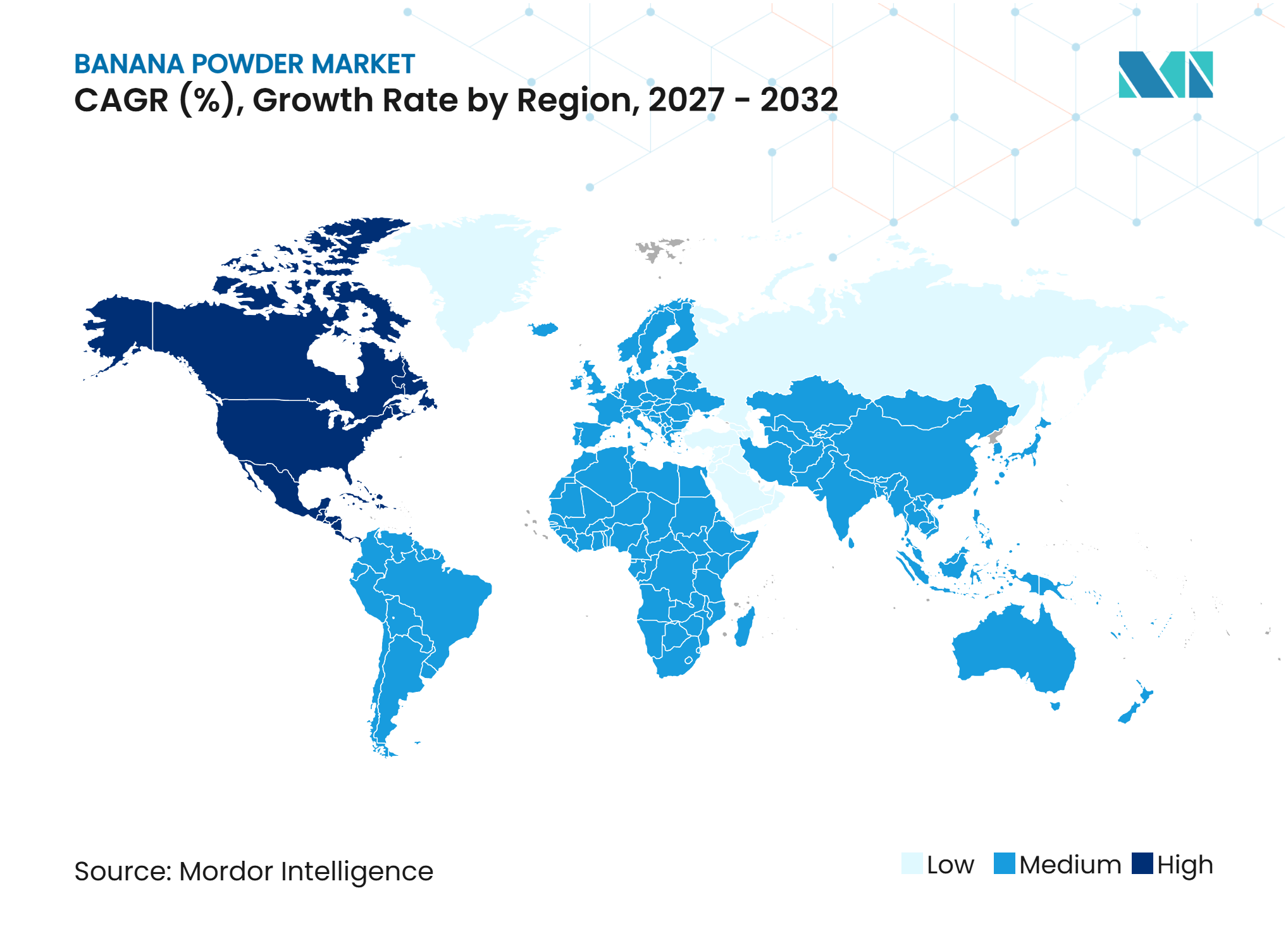
| Fastest Growing Market | North America |
| Largest Market | Asia-Pacific |
| Market Concentration | Low |
Major Players *Disclaimer: Major Players sorted in no particular order Image © Mordor Intelligence. Reuse requires attribution under CC BY 4.0. | |
Banana Powder Market Analysis by Mordor Intelligence
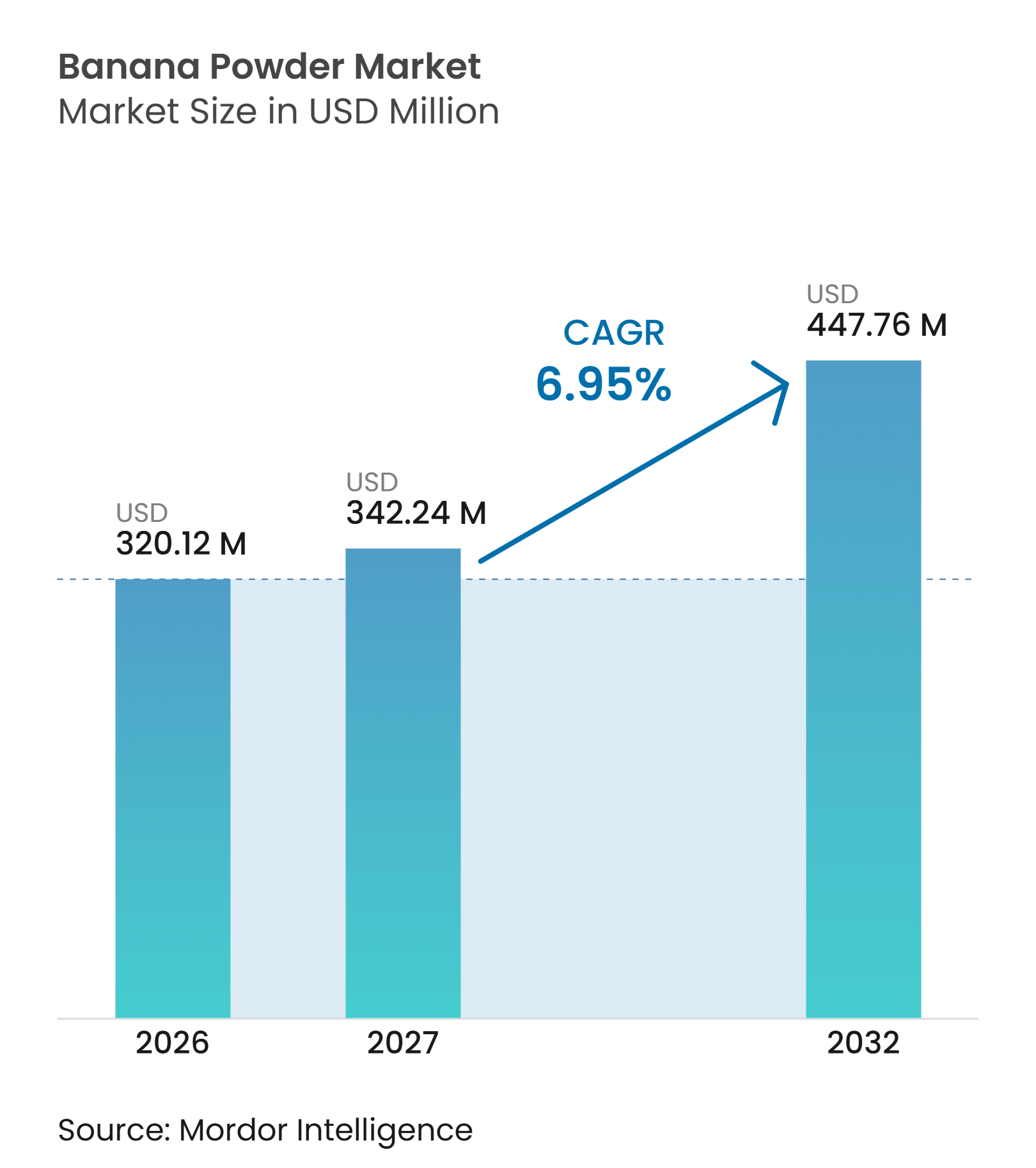
The banana powder market size is expected to grow from USD 320.12 million in 2026 to USD 342.24 million in 2027 and is forecast to reach USD 447.76 million by 2032 at a 6.95% CAGR over 2027-2032. Demand is expanding beyond basic fruit flavoring, as manufacturers increasingly incorporate banana ingredients into clean-label foods, gluten-free formulations, infant foods, and nutrition products. The market benefits from a broad raw-material base, while converting lower-grade fruit into powder creates value-added ingredients with longer shelf life and easier transportation. Advances in green banana starch research are further expanding its applications in products requiring fiber, prebiotic properties, and heat stability. Competitive opportunities are increasingly driven by reliable sourcing, consistent processing quality, certification capabilities, and strong application support.
Key Report Takeaways
• By product type, ripe banana powder held 26.11% of the banana powder market share in 2026, while green banana powder is forecast to expand at a CAGR of 8.56% through 2032.
• By ingredient, conventional held 82.13% of the banana powder market share in 2026, while organic is forecast to expand at a CAGR of 9.13% through 2032.
• By application, bakery accounted for 26.45% of the banana powder market size in 2026, while beverages are forecast to expand at a CAGR of 9.44% through 2032.
• By geography, Asia-Pacific held 52.45% of the banana powder market size in 2026, while North America is forecast to expand at a CAGR of 7.25% through 2032.
Note: Market numbers in this report are based on Mordor Intelligence's proprietary estimation framework, which combines nine months of actuals with Q4 projections for base year 2026.
Market Trends and Insights
Drivers Impact Analysis of Banana Powder Market*
| Driver | (~) % Impact on CAGR Forecast | Geographic Relevance | Impact Timeline |
|---|---|---|---|
| Increasing demand for clean-label and naturally derived ingredients | +2.0% | Global, with intensity in North America and Europe | Long term (≥ 4 years) |
| Rising demand for gluten-free and fibre-enriched food formulations | +1.2% | Global, with Asia-Pacific at the core and spillover to Middle East and Africa and South America | Medium term (2-4 years) |
| Increasing utilization of green bananas in resistant-starch and functional food formulations | +1.0% | North America and Europe, with growing Asia-Pacific adoption | Medium term (2-4 years) |
| Expanding applications in infant nutrition and health-oriented food products | +0.8% | Global, with Asia-Pacific and Middle East and Africa showing faster adoption | Long term (≥ 4 years) |
| Rising preference for shelf-stable fruit ingredients and improved logistics efficiency | +0.7% | Global, with research-led adoption in North America, Europe, and Japan | Long term (≥ 4 years) |
| Growing demand for natural fruit-based sweetening and flavouring ingredients | +0.6% | Global, with strength in beverage and snack categories | Short term (≤ 2 years) |
| Source: Mordor Intelligence | |||
Increasing Demand for Clean-Label and Naturally Derived Ingredients
Food manufacturers are increasingly focusing on naturally derived ingredients and transparent product formulations to meet changing consumer preferences. For instance, in 2025, according to the International Food Information Council's Food & Health Survey, 41% of American consumers look for natural food-production claims, while 48% check ingredient lists when purchasing food and beverages, supporting demand for banana powder as a fruit-derived ingredient that provides natural flavor, sweetness, fiber, and texturizing functionality [1]. Additionally, in April 2025, Terova introduced NuBana green banana powder as a clean-label, whole-fruit ingredient for applications including gluten-free baking, sauces, beverages, supplements, and snack bars, highlighting the growing use of banana powder as a multifunctional ingredient in naturally positioned food formulations.
Rising Demand for Gluten-Free and Fiber-Enriched Food Formulations
Growing demand for gluten-free food products and increasing interest in fiber-enriched formulations are encouraging manufacturers to explore naturally derived ingredients such as banana powder. For instance, in January 2026, according to Coeliac UK's study on shopping habits, only 38.4% of respondents were satisfied with the range of gluten-free products available in supermarkets, indicating opportunities for manufacturers to expand product variety and improve quality [2]. In response to this opportunity, Dole offers green banana powder for use in gluten-free flour formulations, bakery products, pasta, and extruded snacks. Its naturally high resistant starch content also supports the development of fiber-enriched food products, creating opportunities for banana powder in bakery, snack, and other functional food applications.
Increasing Utilization of Green Bananas in Resistant-Starch and Functional Food Formulations
Growing interest in resistant starch as a dietary fiber and prebiotic ingredient is creating opportunities for green banana powder in functional food and nutritional formulations. For instance, in September 2025, according to the Global Prebiotic Association's report, green bananas are a natural source of resistant starch (RS2), which supports gut microbiota activity and digestive health. The report estimates that resistant starch consumption in the United States, Australia, and Europe ranges between 3–9 g per day, compared with a suggested intake of 15–20 g per day for potential health benefits [3]. The gap between current consumption and suggested intake levels highlights opportunities for food manufacturers to incorporate resistant-starch-rich ingredients into functional beverages, nutritional products, bakery items, and snacks.
Expanding Applications in Infant Nutrition and Health-Oriented Food Products
Banana powder offers promising opportunities in complementary foods and infant-focused nutritional formulations. Its natural sweetness, energy content, and functional fibre make it a suitable ingredient for developing nutritious and palatable weaning foods. Its resistant starch content also provides potential prebiotic benefits, supporting the development of formulations focused on digestive health. Growing research into banana-based weaning mixes and infant food products is further expanding its potential applications in early-life nutrition. These characteristics create opportunities for manufacturers to develop innovative banana powder-based products with desirable nutritional, functional, and sensory properties while maintaining high standards of product safety and quality.
Restraints Impact Analysis of Banana Powder Market*
| Restraint | (~) % Impact on CAGR Forecast | Geographic Relevance | Impact Timeline |
|---|---|---|---|
| Fluctuations in raw banana availability and procurement costs | -1.5% | Global, with Asia-Pacific at the core and South America affected | Short term (≤ 2 years) |
| Inconsistency in functional properties due to variations in ripeness and processing conditions | -0.9% | Global supply side, with particular relevance to Asia-Pacific exports to Europe and North America | Long term (≥ 4 years) |
| Moisture absorption and product stability during storage | -0.5% | Global, especially in tropical origin countries and long-haul logistics corridors | Medium term (2-4 years) |
| Lack of standardized product classification and quality specifications | -0.4% | Global, with higher compliance demands for exports to Europe and North America | Long term (≥ 4 years) |
| Source: Mordor Intelligence | |||
Fluctuations in Raw Banana Availability and Procurement Costs
Banana powder processors face supply-chain challenges due to their dependence on consistent fruit availability and quality. Crop diseases, changing climatic conditions, and extreme weather events can affect banana cultivation, harvesting, and overall production levels. These factors may create fluctuations in raw material availability, increase procurement costs, and affect processing operations. Maintaining a reliable supply of suitable bananas is therefore important for manufacturers. This encourages investment in diversified sourcing networks, improved agricultural practices, effective crop monitoring, and flexible procurement strategies to support consistent production and long-term supply stability.
Inconsistency in Functional Properties Due to Variations in Ripeness and Processing Conditions
Variations in banana maturity, raw material composition, and processing conditions can influence the functional properties and consistency of banana powder. Differences in starch content, fiber composition, sweetness, solubility, and texture can affect ingredient performance across food applications. These variations may create challenges for manufacturers in maintaining consistent product quality, formulation stability, and processing performance. Maintaining standardized raw material specifications and controlled processing conditions is therefore important for achieving uniform functional properties. This encourages manufacturers to strengthen quality control, optimize drying and milling processes, and monitor fruit maturity to deliver consistent banana powder suitable for bakery, infant food, and nutritional applications.
*Our forecasts treat driver/restraint impacts as directional, not additive. The impact forecasts reflect baseline growth, mix effects, and variable interactions.
Banana Powder Market Segment Analysis
By Product Type:
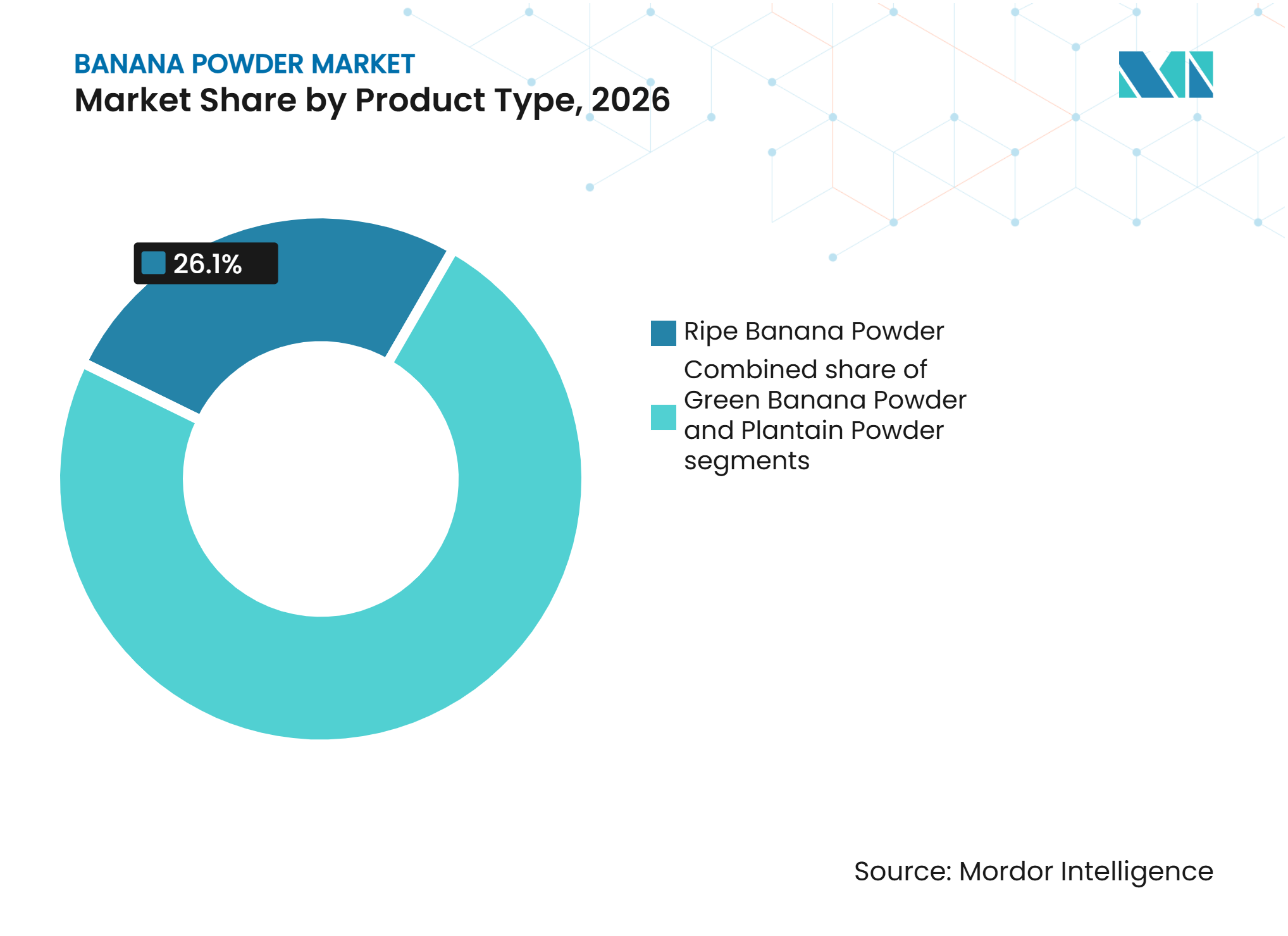
Ripe Banana Powder Leads While Green Banana Powder Gains Functional Food DemandRipe banana powder held 26.11% of the banana powder market in 2026. Ripe banana powder has established applications in infant foods, bakery products, beverage mixes, and smoothie blends due to its natural sweetness, familiar banana flavor, and convenient handling properties. Its fruit-based sweetness can help reduce the need for added sugar in selected formulations, while its concentrated flavor provides a consistent banana profile without requiring fresh fruit. Drum drying and spray drying also support the production of stable powders suitable for large-scale food manufacturing. These characteristics make ripe banana powder suitable for mainstream bakery products, convenient nutrition products, and beverage formulations where flavor, taste, and color are important considerations.
Green banana powder is forecast to expand at a CAGR of 8.56% through 2032. Green banana powder is gaining importance in functional food formulations due to its resistant starch and dietary fiber content, which provide additional nutritional and functional benefits. Its starch properties support applications where manufacturers seek ingredients that contribute to texture, consistency, and fiber enrichment. Its potential use in soups, sauces, bakery products, and extruded snacks further expands its applications across the food processing industry. Growing interest in upcycled ingredients and naturally derived alternatives to conventional starches is also creating opportunities for green banana powder. Its suitability for functional food applications and clean-label formulations supports its potential as a high-growth product category.



By Ingredient:
Conventional Banana Powder Retains Scale While Organic Grades ExpandConventional held 82.13% of the banana powder market share in 2026. Conventional banana powder remains important in large-volume food processing due to its broad application potential, established supply networks, and cost competitiveness. Bakery, confectionery, beverage, and institutional food manufacturers use conventional grades as flavoring, sweetening, and bulking ingredients across various formulations. Consistent microbiological quality, moisture control, and year-round availability are important purchasing requirements for these buyers. Compliance with food safety standards and quality management systems also supports access to formal food manufacturing channels. Its suitability for price-sensitive applications and large-scale production makes conventional banana powder an important category across established food processing industries.
Organic is forecast to expand at a 9.13% CAGR through 2032. Organic banana powder is gaining importance among buyers seeking traceable sourcing, certified production, and clean-label ingredients. Its application potential is particularly strong in premium bakery products, infant foods, specialty retail, and nutritional formulations, where ingredient origin and production practices influence purchasing decisions. Organic production requires compliance with certified agricultural practices, transparent supply-chain records, and appropriate segregation from conventional products. Manufacturers with recognized organic certifications can strengthen their position among international buyers and access premium food applications.
By Application:
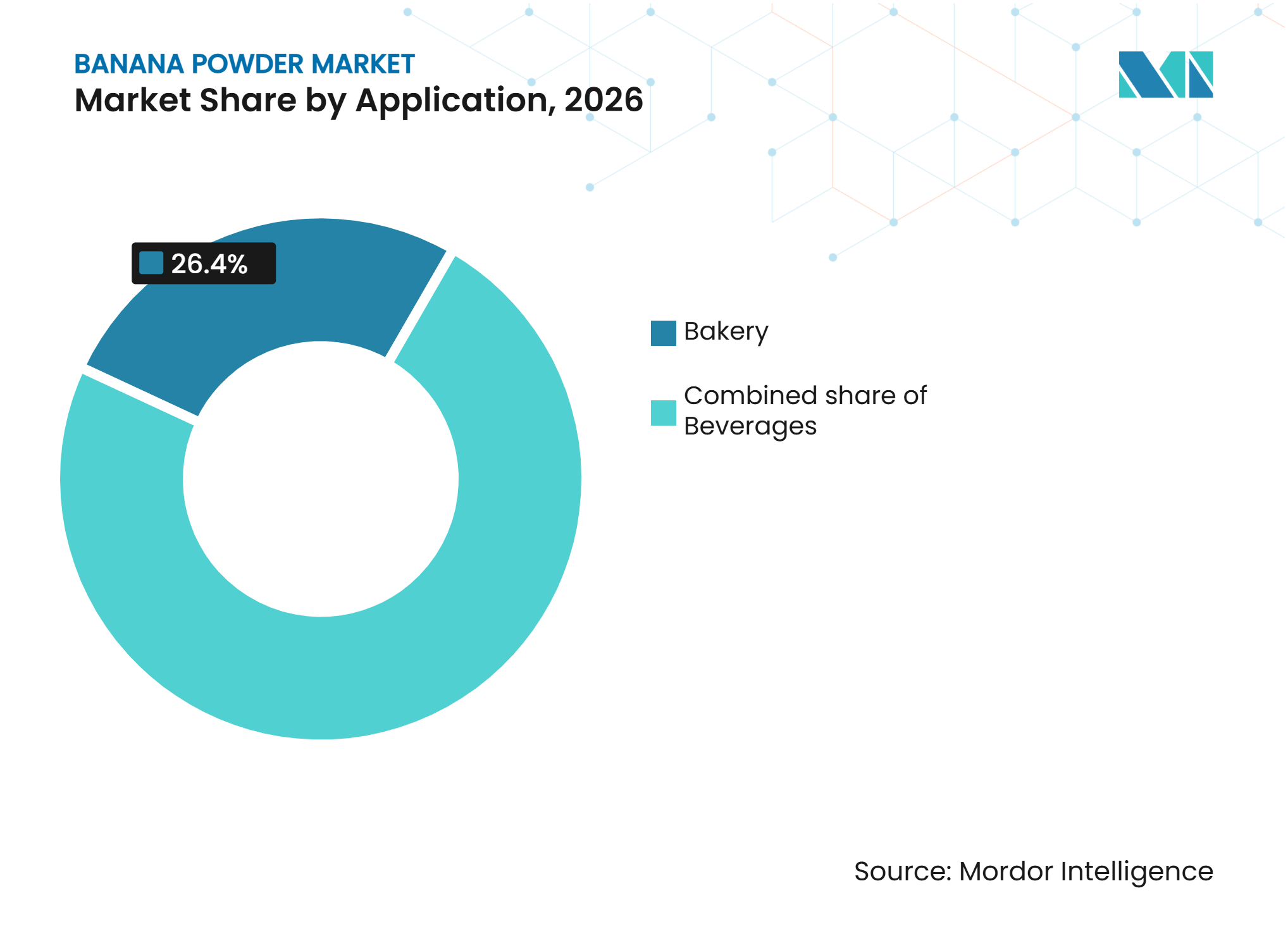
Bakery Holds the Largest Position While Beverages Create New DemandBakery accounted for 26.45% of the banana powder market in 2026. Bakery and confectionery applications use banana powder as a flavoring ingredient, a natural sweetener, a moisture-retention aid, and a source of dietary fiber. It is suitable for biscuits, cakes, muffins, breads, and other baked products, providing a familiar banana flavor and sweetness without handling fresh fruit. Ripe banana powder supports formulations requiring natural sweetness and fruit flavor, while green banana powder offers opportunities for fiber-enriched and functional bakery products. Its nutritional and functional properties also support product development focused on improving ingredient composition while maintaining desirable texture and processing performance. In confectionery, banana powder contributes flavor and color to coatings, chews, and gummies, expanding its use across a range of sweet food products.
Beverages are forecast to expand at a CAGR of 9.44% through 2032. Beverage applications are expanding, driven by growing interest in functional hydration, sports nutrition, and fortified plant-based smoothies. Banana powder offers a convenient way to incorporate familiar fruit flavor, natural sweetness, and carbohydrate content into dry beverage mixes. It can also be combined with protein, vitamins, and electrolytes to develop sports nutrition and functional drink formulations. Its stable powdered form supports convenient storage, handling, and use in ready-to-mix beverage products. These characteristics create opportunities for banana powder across protein drinks, hydration mixes, nutritional beverages, and smoothie blends. Consistent dispersibility, flavor stability, and moisture control further support its suitability for shelf-stable beverage formulations

Geography Analysis
Asia-Pacific
Asia-Pacific held 52.45% of the banana powder market share in 2026. Asia-Pacific benefits from a strong agricultural base and established banana production, creating favorable conditions for banana powder manufacturing. The region's abundant fruit supply supports access to raw materials, processing, and the development of value-added banana products. Growing opportunities for agricultural processing and export-oriented food manufacturing further support the regional market. Countries with established banana cultivation can leverage their agricultural resources to expand banana powder production and serve international food manufacturers. Investments in processing infrastructure, food safety standards, quality management, and supply-chain traceability can further strengthen the region's position as an important production and export hub for banana powder.
North America
North America is forecast to expand at a CAGR of 7.25% through 2032. North America represents an important market for banana powder, supported by demand across infant nutrition, sports nutrition, clean-label bakery, and nutraceutical applications. Growing interest in organic, non-GMO, and naturally derived ingredients is encouraging manufacturers to explore banana powder as a functional ingredient in food and nutritional formulations. Green banana powder also offers opportunities in products focused on dietary fiber and resistant starch, while ripe banana powder provides natural sweetness and familiar fruit flavor. The expansion of convenient nutrition products and functional food formats further supports its application across the region. Consistent product quality, reliable dispersibility, certification, and well-defined ingredient specifications remain important factors influencing purchasing decisions.
Europe, South America, and Middle East and Africa
Europe offers opportunities for premium banana powder grades, supported by growing interest in clean-label ingredients, sustainable sourcing, and naturally derived food components. Demand across bakery, beverages, infant nutrition, and functional food applications creates opportunities for suppliers offering consistent quality and certified sourcing. South America benefits from established banana cultivation and expanding fruit-processing capabilities, supporting the production of banana powder and other tropical fruit ingredients for domestic and international markets. Investments in processing infrastructure further strengthen the region's potential to serve food, beverage, and infant food manufacturers. The Middle East and Africa also offer opportunities through the growing use of convenient fruit-based ingredients in baby foods and everyday food products.
Competitive Landscape
Market Concentration
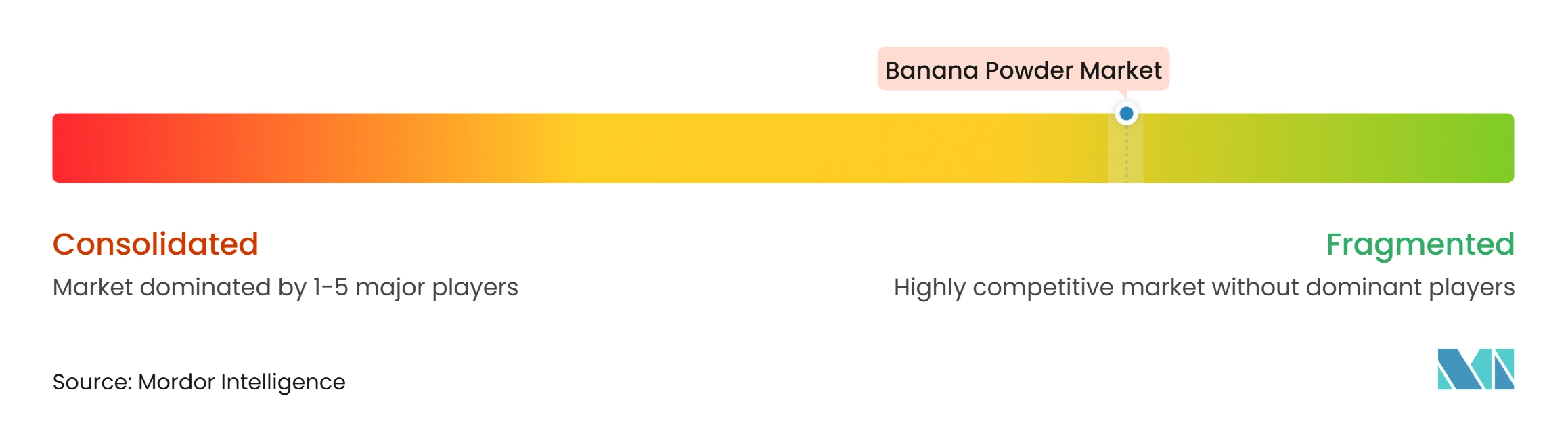
The banana powder market is characterized by fragmented competition, with a mix of integrated fruit companies, specialized ingredient manufacturers, and regional processors serving different customer requirements. Competition is influenced by raw material availability, processing capabilities, product quality, and access to established distribution networks. Larger companies benefit from sourcing capabilities and processing infrastructure, while specialized manufacturers differentiate themselves through product functionality, application expertise, and certification standards. Growing interest in green banana powder, organic ingredients, and functional food applications is also encouraging product innovation and strategic collaborations across the industry.
Companies are increasingly focusing on product development and partnerships to strengthen their market presence and expand application opportunities. These initiatives support the development and commercialization of banana powder for bakery, beverages, sauces, snacks, and nutritional products. Investments in processing facilities and drying technologies are further strengthening production capabilities and supporting consistent product quality. Strategic sourcing arrangements also help manufacturers improve raw material availability and supply-chain reliability. Meanwhile, smaller and regional processors can strengthen their competitive position by focusing on specialized product grades, locally sourced varieties, organic certification, and functional ingredient requirements. Overall, competition is shaped by product differentiation, processing efficiency, supply-chain capabilities, and the ability to meet evolving customer specifications.
Customer requirements and purchasing priorities also contribute to the competitive dynamics of the banana powder market. Food manufacturers evaluate suppliers based on ingredient specifications, microbiological standards, moisture levels, particle size, flavor consistency, and suitability for their intended applications. Requirements vary across conventional food processing, premium nutrition, infant food, and functional ingredient formulations. Suppliers that maintain transparent quality documentation and meet buyer-specific regulatory and certification requirements can strengthen customer relationships and improve repeat-order opportunities. The ability to provide customized grades, consistent batch quality, and dependable delivery therefore remains important for maintaining competitiveness across the market.
Banana Powder Industry Leaders
-
Aarkay Food Products Limited
-
Dole Packaged Foods, LLC (Dole Food Company, Inc.)
-
Naturalin Bio-Resources Co., Ltd. (Naturalin Biotech Co., Ltd.)
-
Mevive International Trading Company
-
National Food 'n' Spices
- *Disclaimer: Major Players sorted in no particular order
Banana Powder Market Companies Covered in this Report
- Aarkay Food Products Limited
- Dole Packaged Foods, LLC (Dole Food Company, Inc.)
- Naturalin Bio-Resources Co., Ltd. (Naturalin Biotech Co., Ltd.)
- Mevive International Trading Company
- National Food 'n' Spices
- Saipro Industries Private Limited
- Taj Pharmaceuticals Limited (Taj Agro International)
- Terova Inc.
- Vinayak Ingredients (India) Private Limited
- Raj Group (Ostrich Foods)
- Natural Holistics
- IMM Food Innovators
- Fusenorganics
- Croplin
- MpLinn Foods
- Harvin Exim
- Green Land
- Surya Agro Food Products
- Pacvel Agencies (VEGARO)
- Fresh Field Foods
Recent Industry Developments in Banana Powder Market
- September 2026: Guangzhou Zhongkang (Sinoconfood) introduced green banana powder for health foods, bakery products, meal replacements, functional beverages, and dietary supplements. The product received its production license and entered mass production.
- April 2025: Terova Inc. launched a range of upcycled green banana powders, including NuBana RS65, N100, and P500, for food, beverage, and nutraceutical applications
- February 2025: Dole Specialty Ingredients introduced an upcycled green banana powder ingredient for clean-label texturizing applications, including soups, sauces, baked goods, and extruded snacks.
Global Banana Powder Market Report Scope
The banana powder market includes powdered products made from ripe bananas, green bananas, and plantains for use in food and nutritional applications. The market is segmented by Product Type, Ingredient, Application, and Geography. By Product Type, the products include Ripe Banana Powder, Green Banana Powder, and Plantain Powder. By Ingredient, it includes Conventional and Organic. By Application, it includes Bakery, Confectionery, Dairy and Frozen Desserts, Snacks/Ready-to-Eat (RTE) Products, Beverages, Soups, Sauces and Savory Mixes, and Other Applications. By Geography, it includes North America, Europe, Asia-Pacific, South America, and the Middle East and Africa. For each segment, market forecasts are provided in terms of value (USD).
Segmentation Overview
| Ripe Banana Powder |
| Green Banana Powder |
| Plantain Powder |
| Conventional |
| Organic |
| Bakery |
| Confectionery |
| Dairy and Frozen Desserts |
| Snacks/Ready-to-Eat (RTE) Products |
| Beverages |
| Soups, Sauces and Savory Mixes |
| Other Applications |
| North America | United States |
| Canada | |
| Rest of North America | |
| Europe | Germany |
| United Kingdom | |
| Italy | |
| France | |
| Asia-Pacific | China |
| India | |
| Japan | |
| Rest of Asia-Pacific | |
| South America | |
| Middle East and Africa | Rest of Middle East and Africa |
| By Product Type | Ripe Banana Powder | |
| Green Banana Powder | ||
| Plantain Powder | ||
| By Ingredient | Conventional | |
| Organic | ||
| By Application | Bakery | |
| Confectionery | ||
| Dairy and Frozen Desserts | ||
| Snacks/Ready-to-Eat (RTE) Products | ||
| Beverages | ||
| Soups, Sauces and Savory Mixes | ||
| Other Applications | ||
| By Geography | North America | United States |
| Canada | ||
| Rest of North America | ||
| Europe | Germany | |
| United Kingdom | ||
| Italy | ||
| France | ||
| Asia-Pacific | China | |
| India | ||
| Japan | ||
| Rest of Asia-Pacific | ||
| South America | ||
| Middle East and Africa | Rest of Middle East and Africa | |
Key Questions Answered in the Report
What is the projected value of the banana powder market by 2032?
The market projects a value of USD 447.76 million by 2032, following growth from USD 342.24 million in 2027 at a 6.95% CAGR.
What is driving demand for banana powder?
Clean-label food development, gluten-free bakery, functional nutrition, and shelf-stable fruit ingredients support demand. Green banana starch research also supports use in fibre-focused foods.
Which banana powder type is growing fastest?
Green banana powder is forecast to expand at a CAGR of 8.56% through 2032, supported by resistant starch and functional food uses.
Which region has the largest position in banana powder?
Asia-Pacific held 52.45% in 2026, reflecting its role as the largest banana-producing region and a growing processing base.