
Bacillus Coagulans Market Size and Share
Market Overview
| Study Period | 2020 - 2031 |
|---|---|
| Market Size (2026) | USD 260.56 Million |
| Market Size (2031) | USD 330.28 Million |
| Growth Rate (2026 - 2031) | 4.84 % |
| Fastest Growing Market | Asia-Pacific |
| Largest Market | North America |
| Market Concentration | Medium |
Major Players *Disclaimer: Major Players sorted in no particular order Image © Mordor Intelligence. Reuse requires attribution under CC BY 4.0. | |
Bacillus Coagulans Market Analysis by Mordor Intelligence
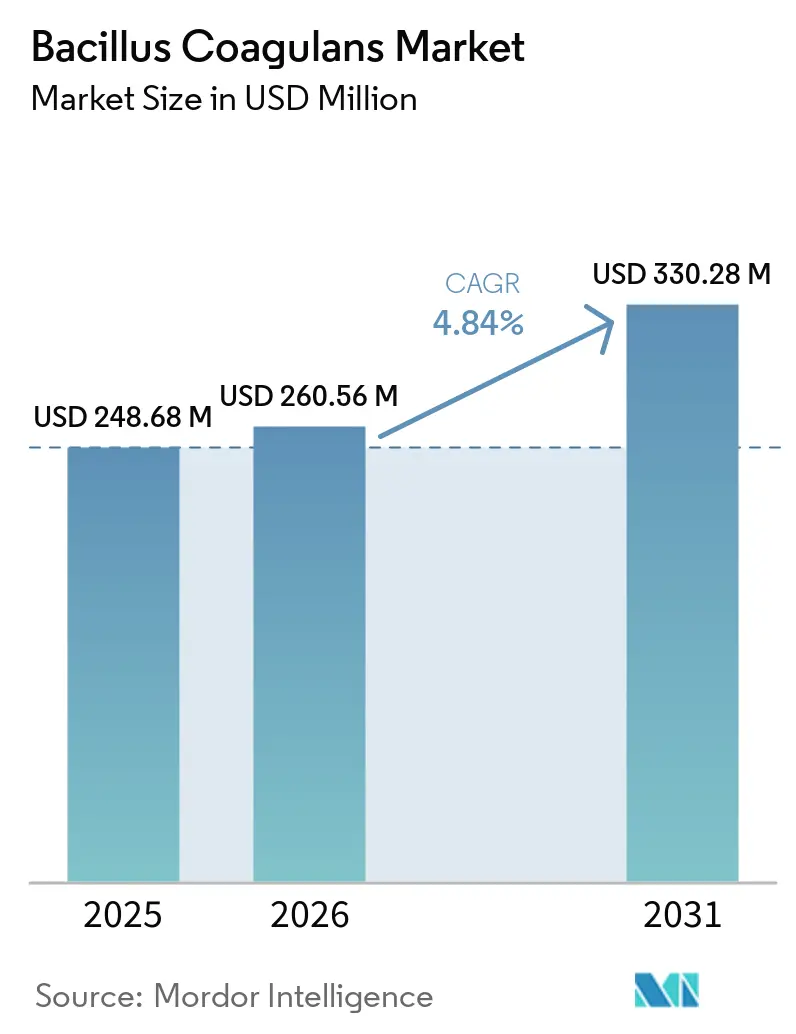
The Bacillus Coagulans Market size is projected to be USD 248.68 million in 2025, USD 260.56 million in 2026, and reach USD 330.28 million by 2031, growing at a CAGR of 4.84% from 2026 to 2031.
The Bacillus Coagulans market benefits from spores that can withstand processing temperatures above 90°C and remain viable without refrigerated distribution. This property reduces handling constraints for food, beverage, and supplement manufacturers that require reliable viability through ordinary retail storage. Demand is also supported by strain-specific clinical work, plant-based delivery formats, and the shift away from antibiotic growth promoters in animal production, which broadens the base of potential buyers. Competitive advantage rests on clinical documentation, regulatory approvals, and the ability to adapt a strain to different product formats without compromising dose consistency. Taxonomic changes can complicate labeling and product documentation, while safety monitoring remains important for products intended for immunocompromised consumers.
Key Report Takeaways
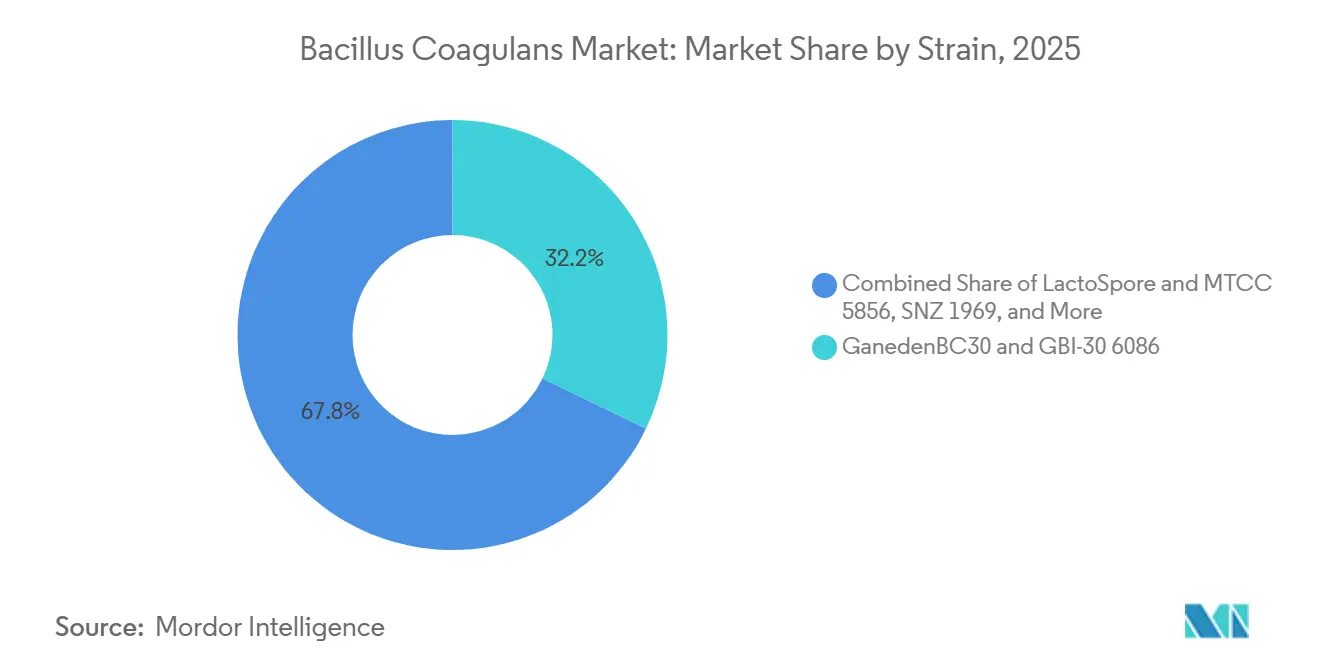
- By strain, GanedenBC30 and GBI-30 6086 held 32.17% of the Bacillus Coagulans market share in 2025, while Unique IS-2 is forecast to grow at a 6.07% CAGR through 2031.
- By form, spore-forming powders held 58.45% of the Bacillus Coagulans market share in 2025, while gummies and chews are forecast to grow at a 6.45% CAGR through 2031.
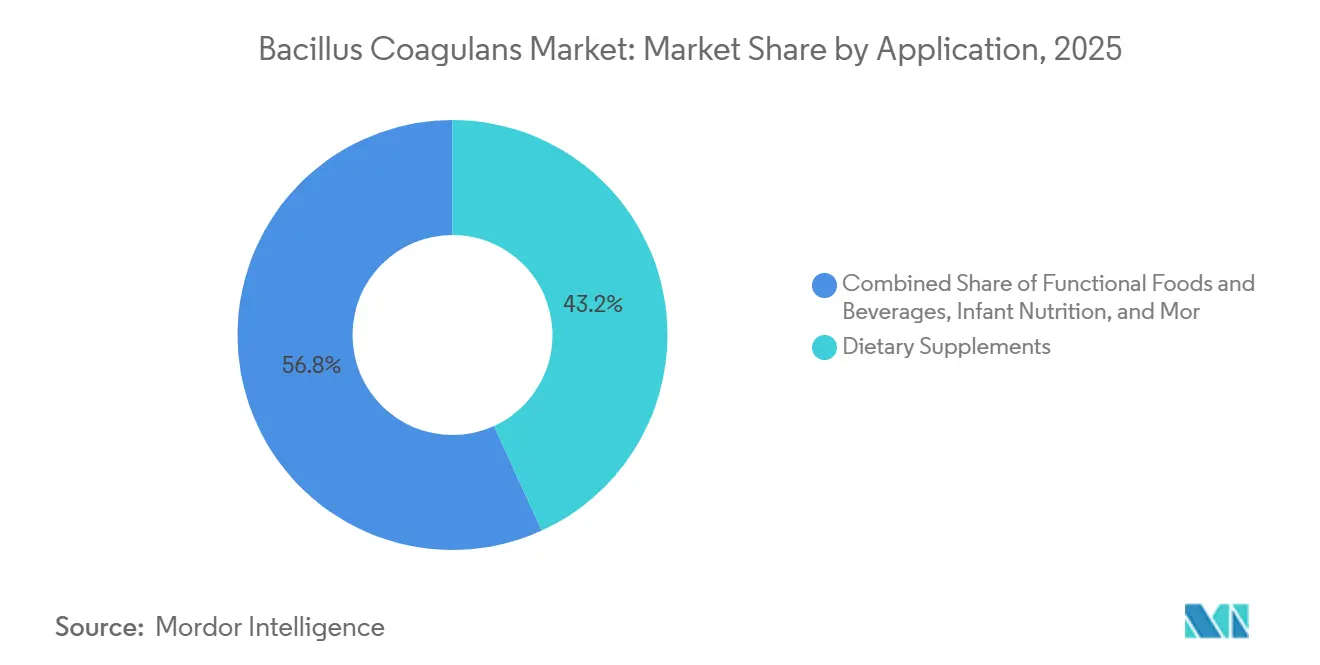
- By application, dietary supplements accounted for 43.19% of Bacillus Coagulans market share in 2025, while sports nutrition is forecast to grow at a 6.33% CAGR through 2031.
- By distribution channel, direct B2B sales held 49.17% of Bacillus Coagulans market share in 2025, while specialty health stores are forecast to grow at a 6.56% CAGR through 2031.
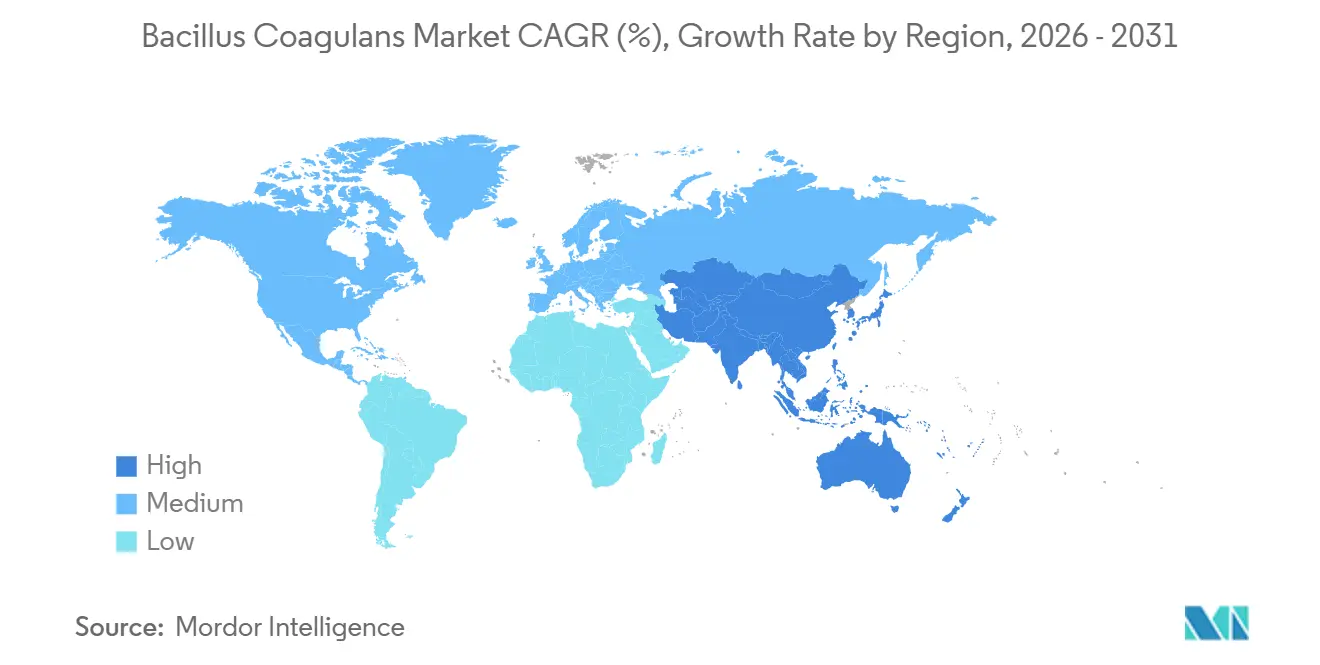
- By geography, North America accounted for 38.34% of Bacillus Coagulans market share in 2025, while Asia-Pacific is forecast to grow at a 6.51% CAGR through 2031.
Note: Market size and forecast figures in this report are generated using Mordor Intelligence’s proprietary estimation framework, updated with the latest available data and insights as of January 2026.
Market Trends and Insights
Drivers Impact Analysis of Bacillus Coagulans Market*
| Driver | (~) % Impact on CAGR Forecast | Geographic Relevance | Impact Timeline |
|---|---|---|---|
| Demand for Stable, Shelf-Ready Probiotics | +1.2% | Global, with concentrated demand in North America and Europe | Short term (≤ 2 years) |
| Heat-Stable Probiotics in Foods And Beverages | +0.9% | APAC core, spill-over to North America and EU | Medium term (2-4 years) |
| Non-Dairy and Plant-Based Probiotic Formats | +0.6% | North America and Western Europe | Short term (≤ 2 years) |
| Strain-Specific Clinical Validation | +0.8% | Global, with early gains in North America, EU, and Japan | Medium term (2-4 years) |
| Restrictions on Antibiotic Growth Promoters | +0.7% | EU, China, Southeast Asia | Long term (≥ 4 years) |
| Live-Culture Claim Clearances in Emerging Markets | +0.5% | Southeast Asia, India, GCC | Medium term (2-4 years) |
| Source: Mordor Intelligence | |||
Increasing Demand for Stable, Shelf-Ready Probiotics
Bacillus Coagulans spores do not depend on refrigerated distribution, which changes the logistics available to ingredient suppliers. A 2024 storage study reported more than 98% viability for BCP92 in gummies, oatmeal, brewed coffee, and peanut butter under food-storage conditions.[1] This stability helps manufacturers serve locations with inconsistent refrigeration and reduces the operational risk associated with temperature excursions. It also supports specialty health stores and online channels that do not maintain pharmaceutical cold equipment throughout local delivery networks. The Bacillus Coagulans market can therefore reach applications where conventional mesophilic probiotics face higher delivery costs. Formulators can also use spores in products seeking simple ingredient lists without relying on preservative additions to protect the live culture.
Heat-Stable Probiotics for Processed Foods and Beverages
The Bacillus Coagulans market can address baking, pasteurization, and high-shear processing because the spores tolerate conditions that can reduce the survival of lactobacilli. A 2024 study of MTCC 5856 reported more than 98% spore survival in upma, tea, and coffee processing, and more than 99% retention in milk and white chocolate matrices.[2] Kerry introduced a liquid BC30 format in 2025 for plant-based and dairy-alternative beverages. The format extends the options for UHT-processed and refrigerated products where powder dispersion can be a technical constraint. Heat tolerance also enables a single formulation to support protein-related positioning and live-culture positioning in sports beverages. This increases the relevance of spores in ready-to-drink products and functional foods that seek a credible microbiome-health component.
Clinical Validation of Strain-Specific Digestive and Immune Benefits
The Bacillus Coagulans market increasingly depends on studies that identify the strain rather than the genus alone. Kerry reported in 2025 that a randomized study of 111 healthy Chinese adults using BC30 improved stool frequency and fecal consistency over 4 weeks and changed measured gut microbiome composition. This evidence gives formulators data from a Chinese adult cohort, a group previously less represented in the public evidence base. A 2026 randomized trial in 72 healthy males found that BC99 reduced muscle damage markers after exercise-induced injury during a 12-week intervention. The study also reported favorable changes in gut microbiota, linking recovery outcomes with a specific biological mechanism. Such evidence requires investment that generic spore suppliers may find difficult to match when developing comparable product claims.
Restriction of Antibiotic Growth Promoters in Animal Nutrition
Restrictions on antibiotic growth promoters are creating a separate demand path for Bacillus Coagulans in animal feed. The European Union prohibited antibiotic growth promoters in feed under Regulation (EC) No. 1831/2003, and reviews continue to identify probiotics as alternatives to these inputs. A 2025 yak study found that dietary Bacillus coagulans at 1 g/kg increased body weight by 20.6% and reduced the feed-to-gain ratio by 2.42 versus controls. The study also recorded higher IgM, IgA, IgG, and IGF-1 levels. China published GB 7300.505-2025 for Bacillus Coagulans feed additives in June 2025, and the standard became effective in July 2026. This provides a formal supply standard for poultry and livestock feed applications and clarifies the route for commercial product development.
Restraints Impact Analysis of Bacillus Coagulans Market*
| Restraint | (~) % Impact on CAGR Forecast | Geographic Relevance | Impact Timeline |
|---|---|---|---|
| Strain-Specific Evidence and Authentication Gaps | -0.8% | Global, most acute in North America and EU | Short term (≤ 2 years) |
| Divergent Regional Regulatory Requirements | -0.6% | APAC, MEA, and South America | Medium term (2-4 years) |
| Incomplete Stability Data in New Food Matrices | -0.4% | North America and EU | Medium term (2-4 years) |
| Safety Perception Risk for Immunocompromised Consumers | -0.3% | Global | Long term (≥ 4 years) |
| Source: Mordor Intelligence | |||
Strain-Specific Evidence and Authentication Gaps
The Bacillus Coagulans market faces a documentation gap between commercial availability and strain-specific clinical evidence. Regulators assess identity and safety at the strain level, including acquired antimicrobial resistance genes under the QPS approach. The changing use of Bacillus, Weizmannia, and Heyndrickxia names has added work to labels, dossiers, and trial records already in commercial use. Suppliers without proprietary dossiers may have difficulty defending product claims. Brand owners can respond by selecting named strains with stronger evidence. This makes entry harder for undifferentiated spore preparations and places pressure on generic positions in the Bacillus Coagulans market, especially where claims face review.
Divergent Regulatory Requirements Across Regions
The Bacillus Coagulans market operates under different rules for live-culture claims, dosage thresholds, and permitted health statements. Indonesia approved BC30 for a Live Culture claim in February 2026 under PERBPOM No. 38/2023.[3] The approval requires strain-name disclosure and end-of-shelf-life validation of at least 1 × 10⁶ CFU/g or mL. These conditions do not align fully with the requirements used in other regions. Separate national reviews can raise the cost and duration of launches for smaller brands. The resulting burden favors strain owners that can fund regional dossiers and continuing compliance programs across multiple product categories.
*Our forecasts treat driver/restraint impacts as directional, not additive. The impact forecasts reflect baseline growth, mix effects, and variable interactions.
Bacillus Coagulans Market Segment Analysis
By Strain:
Proprietary Documentation Supports GanedenBC30 LeadershipGanedenBC30 and GBI-30 6086 held 32.17% of Bacillus Coagulans market share in 2025. Their position reflects a broad regulatory clearance base and published work on gut health, immune function, protein absorption, and different population groups. Kerry’s Chinese adult study from 2025 added data for an East Asian cohort. Its Indonesian clearance in February 2026 expanded the available formulation pathway in Southeast Asia. LactoSpore and MTCC 5856 remain important competitors because of their clinical record. Food and Nutrition Research reported in June 2025 that MTCC 5856 supplementation improved symptoms of major depression and sleep quality in people with IBS. This supports a differentiated gut-brain and sleep-health position for the strain beyond its established digestive-health use.
Unique IS-2 is forecast to grow at a 6.07% CAGR through 2031 within the Bacillus Coagulans market size. Its positioning combines GRAS status, Health Canada NPN registration, and sports nutrition research on BCAA absorption, leg press strength, and vertical jump performance. Sanzyme is studying SNZ 1969 in school-aged children for immune, respiratory, and gastrointestinal outcomes during the 2025-2026 cold and flu season. Mitsubishi Chemical Group offers SANK 70258 and LACRIS-S, including a powder format described as stable to 120°C. These strains can support hot-fill and baked applications where processing conditions would otherwise limit probiotic selection. Leading strains are thus distinguished by regulatory files, human evidence, and application-specific performance rather than by volume alone or basic spore availability.

By Form:
Gummies Expand Consumer-Facing FormatsSpore-forming powders held 58.45% of the Bacillus Coagulans market share in 2025. This format remains the principal bulk ingredient for dietary supplements, functional foods, and animal feed. Its position is supported by the cost and handling advantages of unencapsulated spores for large-scale ingredient purchasing. Gummies and chews are forecast to grow at a 6.45% CAGR through 2031. Their growth reflects the ability of spores to withstand gelatin-setting and pectin-based manufacturing. This enables a delivery form that is less suitable for many conventional lactic acid bacteria during manufacture and shelf storage. The Bacillus Coagulans market, therefore, has a practical route into consumer-friendly supplement formats.
Encapsulated ingredients sit between bulk powders and finished consumer supplements. They can offer easier dosing and better dispersibility for buyers who do not make finished products. Capsules and tablets remain relevant when a product needs clear dose accuracy for IBS or immune positioning. These formats continue to serve pharmaceutical-grade uses and markets where consumers prefer a medicine-like presentation with familiar dosing expectations. Stick packs, sachets, and liquid products make up the other form category. Kerry’s 2025 liquid BC30 introduction addressed dispersion needs in plant-based and dairy-alternative beverages. The mix of formats allows the Bacillus Coagulans market to serve both industrial buyers and finished-product brands across different price points.
By Application:
Sports Nutrition Builds a New Use CaseDietary supplements accounted for 43.19% of the Bacillus Coagulans market share in 2025. The segment is supported by established use in IBS, constipation, and immune health products, where consumers already recognize probiotic supplementation as a familiar category. Typical supplement doses range from 1 × 10⁸ to 2 × 10⁹ CFU per serving. This range can be matched to study protocols more directly than low-dose fortified foods, improving the link between product use and evidence. Sports nutrition is forecast to grow at a 6.33% CAGR through 2031. It is supported by research linking certain strains to post-exercise inflammation and recovery. The 2026 BC99 trial reported lower creatine kinase, lactate dehydrogenase, and CRP after exercise alongside changes in beneficial gut genera.
Functional foods and beverages offer the largest opportunity outside supplements in the Bacillus Coagulans market. Heat stability permits use in baked foods, hot-fill beverages, and UHT formats. Animal feed and feed additives add a volume opportunity that differs from premium human-health applications because purchasing decisions center on production performance and feed economics. In China and India, pharmaceutical products retain a role in medical and microbiological product channels. Infant nutrition and sports nutrition have strong potential but demand comprehensive safety and clinical packages. These requirements favor strains with established regulatory documentation and safety evidence for the intended age group or activity level. The application mix, therefore, rewards suppliers that can align strain evidence with a defined end use and a practical delivery format.
By Distribution Channel:
Specialty Stores Increase Demand for Named StrainsDirect B2B sales held 49.17% of the Bacillus Coagulans market share in 2025. The result reflects the ingredient transaction between strain manufacturers and finished-product formulators, which remains the core commercial arrangement for most branded products. Specialty health stores are forecast to grow at a 6.56% CAGR through 2031. This route gives consumers more access to branded probiotic products and supports comparison among named strains at the point of purchase. It also increases the value of evidence that can be communicated through trained retail staff who can explain differences among product formats and stated benefits. The Bacillus Coagulans market benefits when a branded strain creates consumer demand instead of relying solely on ingredient tenders. BC30, LactoSpore, Unique IS-2, and SNZ 1969 are examples of strains that can be identified in such retail settings.
Pharmacies and drug stores remain relevant where probiotics have pharmaceutical-adjacent positioning. Recommendation channels can support premium pricing and repeat purchases in emerging markets where professional endorsement carries greater weight. Supermarkets and hypermarkets provide a broad reach for gummies and mainstream supplements. Their retail setting makes shelf placement and front-of-pack communication especially important. E-commerce extends specialty retail reach for direct-to-consumer gummies and chew products. Digital listings can present clinical references and product details that may not fit on shelf packaging or conventional point-of-sale materials. Retail visibility can also improve the negotiating position of suppliers in the Bacillus Coagulans market by generating demand from end users.
Geography Analysis
North America Bacillus Coagulans Market
North America accounted for 38.34% of the Bacillus Coagulans market share in 2025. The U.S. FDA GRAS notification framework is an important route for strain acceptance and a reference point for ingredient buyers assessing supplier documentation in other countries. The region also has sustained demand for dietary supplements, which creates a large established base for digestive and immune health products among mainstream consumers. Canada provides a separate formal pathway through the Natural Health Product Directorate and the Health Canada NPN process. Unique IS-2 has received Health Canada NPN registration. Mexico is still developing as a demand center, with digestive-health awareness and income growth supporting supplement adoption. Cross-border entry requires attention to Cofepris requirements and local documentation that can differ from United States product files.
Europe Bacillus Coagulans Market
Europe is governed by the Novel Food Regulation (EU) 2015/2283 and the EFSA QPS framework for strain-level safety assessment. EFSA’s 2026 QPS update confirmed Bacillus coagulans as the accepted name and treated Weizmannia coagulans and Heyndrickxia coagulans as synonyms.[4] This substantially improves compliance clarity, supplier planning, and alignment between scientific records and customer-facing labels for suppliers that had changed labels during the 2022-2025 reclassification period and need consistent terminology across product documentation. Germany, the United Kingdom, and France support demand through established nutraceutical and functional-food sectors. The United Kingdom maintains a separate post-Brexit route, which may require an additional dossier for suppliers planning coordinated European launches. Sabinsa introduced ImmunoSpore in the European Union in May 2026 as a heat-inactivated MTCC 5856 postbiotic standardized to 15 billion spores per gram.
APAC Bacillus Coagulans Market
Asia-Pacific is forecast to grow at a 6.51% CAGR through 2031, the fastest regional rate in the Bacillus Coagulans market. Japan, China, and Southeast Asia are supported by evolving product rules and expanding local strain development, which strengthens regional capacity alongside consumer demand. China’s 2025 feed-additive standard provides a commercial framework for Bacillus Coagulans in livestock and poultry applications. India is both a manufacturing base and a growing consumption center, with Sabinsa and Sanzyme Biologics among the India-based participants.
Competitive Landscape
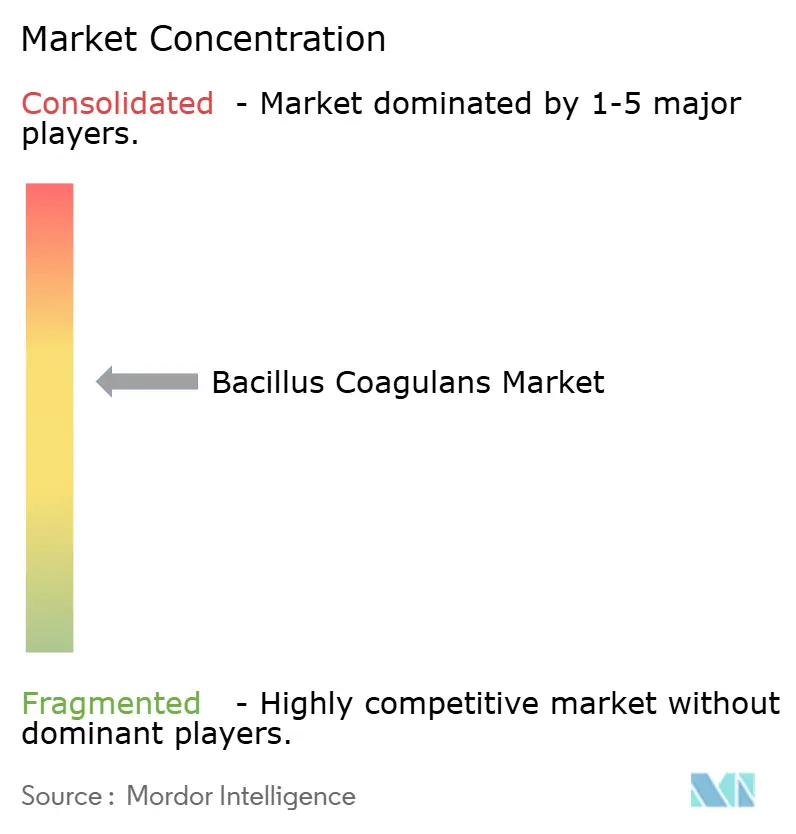
The Bacillus Coagulans market is moderately concentrated because a limited group of companies with proprietary strains, clinical records, and regulatory approvals holds commercial value. Kerry with BC30 and Sabinsa with LactoSpore occupy a leading position through broad geographic access and strain-specific evidence that supports differentiated use claims. Their commercial approach moves beyond bulk powder supply toward differentiated ingredient platforms designed for specific formulations and consumer use occasions. Kerry introduced liquid BC30 in 2025 for plant-based and dairy-alternative beverage formulations. Sabinsa launched ImmunoSpore in the European Union in May 2026 as a heat-inactivated derivative of MTCC 5856. These actions target new applications while retaining the evidence base associated with the original strains.
Competition also includes suppliers that are building independent regulatory positions. The FDA issued a response letter for GRN No. 1283 in 2026 for Wecare Probiotics’ Weizmannia coagulans BC99 spore preparation. This supports a documented path to the U.S. ingredient market for a strain outside the two leading portfolios and broadens the competitive field. Mitsubishi Chemical Group and Kaneka represent important Japanese participants with SANK 70258, LACRIS-S, and Unique IS-2, providing established alternatives to the leading Western portfolios. Their strains have long commercial histories in Japan and increasing supporting documentation for use in food, supplement, and sports nutrition product formats. Clinical work can also open new positions in pediatric nutrition, infantile colic, and women’s health, although these applications require evidence suited to each target population. These uses remain dependent on evidence that matches the intended population and product claim.
Novonesis has a meaningful Bacillus portfolio through Produra coagulans and animal nutrition products. Sanzyme Biologics, Aumgene Biosciences, and Mystical Biotech form part of an India-based supply base that competes on validated strains and price. This places pressure on premiums for Western-origin strains in Asia-Pacific B2B sales, where cost and evidence are both evaluated. The Bacillus Coagulans market does not compete on production scale alone because brand owners require evidence and regulatory documentation. Companies with a named strain and a usable clinical dossier can defend their role in premium applications where customers seek transparent support for formulation and labeling decisions. Companies without that support may be limited to lower-value supply roles with less ability to differentiate their commercial offer. The competitive structure is therefore consistent with a market where several recognized strain owners hold meaningful influence over evidence standards, regulatory access, and formulation choices.
Bacillus Coagulans Industry Leaders
-
Kerry Group plc
-
Lallemand Inc.
-
Lonza Group AG
-
Novonesis A/S
-
Probi AB
- *Disclaimer: Major Players sorted in no particular order
Bacillus Coagulans Market Companies Covered in this Report
- Archer-Daniels-Midland Company
- Aumgene Biosciences Private Limited
- BioGaia AB
- Bioriginal Food and Science Corp.
- Chr. Hansen Holding
- DuPont
- Kaneka
- Kerry Group plc
- Lallemand
- Lonza Group
- Mitsubishi Chemical Group Corporation
- Mystical Biotech Private Limited
- Nebraska Cultures Inc.
- Novonesis A/S
- Probi AB
- Probiotical S.p.A.
- Sabinsa Corporation
- Sanzyme Biologics Private Limited
- Syngen Biotech Co., Ltd.
- UAS Laboratories LLC
Recent Industry Developments in Bacillus Coagulans Market
- May 2026: Sabinsa made the EU market debut of ImmunoSpore, a postbiotic ingredient derived from heat-inactivated Heyndrickxia coagulans MTCC 5856 standardized to 15 billion spores per gram, positioned for immune resilience and healthy aging applications, and presented as the Official Longevity Sponsor of Vitafoods Europe 2026.
- February 2026: Kerry's BC30 (Bacillus coagulans GBI-30, 6086) received formal regulatory approval in Indonesia for a "Live Culture" claim across general food categories under PERBPOM No. 38/2023, opening compliant functional food and beverage formulation pathways in the world's fourth-largest consumer market.
- January 2026: Sanzyme Biologics initiated a randomized, double-blind, placebo-controlled clinical trial (NCT07341750) to evaluate the efficacy of Bacillus coagulans SNZ 1969 on immune health, upper respiratory tract infections, and gastrointestinal infection symptoms in school-aged children aged 6-12 during the 2025-2026 cold and flu season.
Global Bacillus Coagulans Market Report Scope
The Bacillus coagulans market comprises the global industry involved in the production, development, commercialization, and consumption of Bacillus coagulans, a spore-forming probiotic bacterium. It is widely used in digestive health, immune support, and functional nutrition applications. Its heat stability and ability to survive processing and storage make it suitable for use in a range of food, beverage, dietary supplement, and pharmaceutical products. The market includes manufacturers, ingredient suppliers, and end-use industries that incorporate this probiotic into health and wellness products.
The Bacillus coagulans market is segmented by strain, form, application, distribution channel, and geography. By strain, it is further divided into GanedenBC30 and GBI-30 6086, LactoSpore and MTCC 5856, SNZ 1969, Unique IS-2, SANK 70258, and LACRIS-S, and other commercial Bacillus coagulans strains. By form, it is segmented into spore-forming powders, encapsulated ingredients, capsules, tablets, gummies and chews, and others. By application, the market is segmented into dietary supplements, functional foods and beverages, animal feed and feed additives, pharmaceutical products, infant nutrition, sports nutrition, and others. By distribution channel, the market is segmented into direct business-to-business sales, pharmacies and drug stores, specialty health stores, supermarkets and hypermarkets, and other distribution channels. The geography segment is further divided into North America, Europe, Asia-Pacific, the Middle East and Africa, and South America. The report also covers the estimated market sizes and trends for 17 countries across major regions globally. The report offers the market size and forecasts in value (USD) for the above segments.
Segmentation Overview
| GanedenBC30 and GBI-30 6086 |
| LactoSpore and MTCC 5856 |
| SNZ 1969 |
| Unique IS-2 |
| SANK 70258 and LACRIS-S |
| Other Commercial Bacillus Coagulans Strains |
| Spore-Forming Powders |
| Encapsulated Ingredients |
| Capsules |
| Tablets |
| Gummies and Chews |
| Others |
| Dietary Supplements |
| Functional Foods and Beverages |
| Animal Feed and Feed Additives |
| Pharmaceutical Products |
| Infant Nutrition |
| Sports Nutrition |
| Others |
| Direct Business-to-Business Sales |
| Pharmacies and Drug Stores |
| Specialty Health Stores |
| Supermarkets and Hypermarkets |
| Other Distribution Channels |
| North America | United States |
| Canada | |
| Mexico | |
| Europe | Germany |
| United Kingdom | |
| France | |
| Italy | |
| Spain | |
| Rest of Europe | |
| Asia-Pacific | China |
| Japan | |
| India | |
| Australia | |
| South Korea | |
| Rest of Asia-Pacific | |
| Middle East and Africa | GCC |
| South Africa | |
| Rest of Middle East and Africa | |
| South America | Brazil |
| Argentina | |
| Rest of South America |
| By Strain | GanedenBC30 and GBI-30 6086 | |
| LactoSpore and MTCC 5856 | ||
| SNZ 1969 | ||
| Unique IS-2 | ||
| SANK 70258 and LACRIS-S | ||
| Other Commercial Bacillus Coagulans Strains | ||
| By Form | Spore-Forming Powders | |
| Encapsulated Ingredients | ||
| Capsules | ||
| Tablets | ||
| Gummies and Chews | ||
| Others | ||
| By Application | Dietary Supplements | |
| Functional Foods and Beverages | ||
| Animal Feed and Feed Additives | ||
| Pharmaceutical Products | ||
| Infant Nutrition | ||
| Sports Nutrition | ||
| Others | ||
| By Distribution Channel | Direct Business-to-Business Sales | |
| Pharmacies and Drug Stores | ||
| Specialty Health Stores | ||
| Supermarkets and Hypermarkets | ||
| Other Distribution Channels | ||
| By Geography | North America | United States |
| Canada | ||
| Mexico | ||
| Europe | Germany | |
| United Kingdom | ||
| France | ||
| Italy | ||
| Spain | ||
| Rest of Europe | ||
| Asia-Pacific | China | |
| Japan | ||
| India | ||
| Australia | ||
| South Korea | ||
| Rest of Asia-Pacific | ||
| Middle East and Africa | GCC | |
| South Africa | ||
| Rest of Middle East and Africa | ||
| South America | Brazil | |
| Argentina | ||
| Rest of South America | ||
Key Questions Answered in the Report
What is the projected value of the Bacillus Coagulans market by 2031?
The sector is forecast to reach USD 330.28 million by 2031, growing at a 4.84% CAGR from 2026, after standing at USD 260.56 million in 2026. The estimate reflects continued use across supplements, foods, beverages, and animal feed applications. Market development is also shaped by commercial demand for strains that tolerate processing and can remain viable during normal distribution and retail storage.
Which Bacillus Coagulans application is largest?
Dietary supplements were the largest application, accounting for 43.19% of revenue in 2025. Their use is anchored in established digestive, constipation, and immune health product categories, allowing brands to link familiar supplement delivery with documented strain-specific research.
Why are Bacillus Coagulans spores used in foods and beverages?
Their heat stability supports use in baking, pasteurization, hot-fill products, and ambient distribution, reducing reliance on refrigerated handling in the supply chain. Published storage studies reported high viability in several food matrices under normal storage conditions.
Which format is expected to grow fastest?
Gummies and chews are forecast to expand at a 6.45% CAGR through 2031. Spore stability supports their use in gelatin-setting and pectin-based production processes, which can be difficult environments for probiotics that lack heat resistance.
Which region will grow fastest through 2031?
Asia-Pacific is forecast to record the highest regional CAGR at 6.51%. The rate is linked to regulatory progress, local strain development, and expanding consumer health spending, particularly across Japan, China, India, and Southeast Asian countries.
What influences competition among Bacillus Coagulans suppliers?
Suppliers compete through strain-specific clinical evidence, regulatory approvals, and formulations suited to different end uses. A named strain with a credible dossier can be more valuable than a generic spore preparation in premium applications because it gives formulators a clearer basis for claims, compliance, and differentiated product communication.