
Avidin Market Size and Share
Market Overview
| Study Period | 2020 - 2031 |
|---|---|
| Market Size (2026) | USD 252.17 Million |
| Market Size (2031) | USD 343.20 Million |
| Growth Rate (2026 - 2031) | 6.36 % |
| Fastest Growing Market | Asia-Pacific |
| Largest Market | North America |
| Market Concentration | Medium |
Major Players *Disclaimer: Major Players sorted in no particular order Image © Mordor Intelligence. Reuse requires attribution under CC BY 4.0. | |
Avidin Market Analysis by Mordor Intelligence
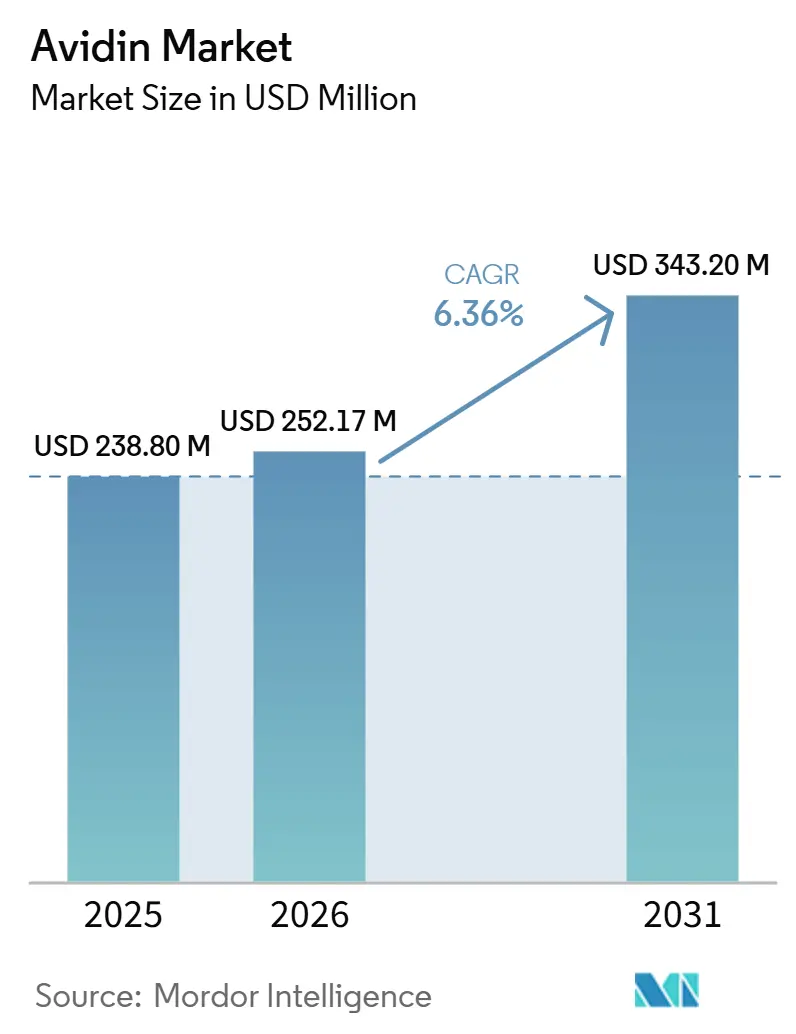
The Avidin Market size is projected to be USD 238.80 million in 2025, USD 252.17 million in 2026, and reach USD 343.20 million by 2031, growing at a CAGR of 6.36% from 2026 to 2031.
The avidin market continues to benefit from the unusually strong biotin-avidin interaction, with a dissociation constant near 10⁻¹⁵ M, which keeps the chemistry central to assay systems where signal fidelity and amplification consistency remain essential. Demand in the avidin market comes from immunoassay reagent production, drug delivery development, cell biology research, and protein purification, and that spread across end uses helps reduce short-term swings when research budgets tighten. The avidin market is also being shaped by a steady shift toward higher specification products, as diagnostic buyers seek tighter analytical documentation, controlled endotoxin levels, and more dependable batch performance in regulated settings. Competition in the avidin market rests on portfolio breadth, supply reliability, custom conjugation capability, and access to recombinant or engineered formats that solve background binding and supply security issues more effectively than native egg-derived products.
Key Report Takeaways
- By type, streptavidin held 52.32% of the avidin market in 2025, while recombinant avidin is projected to record the fastest growth at 7.53% CAGR through 2031.
- By grade, research-grade avidin accounted for 60.34% of the avidin market in 2025, while diagnostic-grade avidin is set to grow the fastest at 7.82% CAGR through 2031.
- By application, research and development represented 40.34% of the avidin market size in 2025, while diagnostics is forecast to expand at 7.65% CAGR through 2031.
- By form, lyophilized avidin captured 45.57% of the avidin market share in 2025, while the same segment is projected to post the fastest growth at 7.46% CAGR through 2031.
- By end user, biotechnology and pharmaceutical companies held 42.46% of the avidin market in 2025, while diagnostic laboratories are expected to advance at the highest pace with 7.93% CAGR through 2031.
- By geography, North America held 42.63% of the market in 2025, while Asia-Pacific region is expected to advance at the highest pace with 7.89% CAGR through 2031.
Note: Market size and forecast figures in this report are generated using Mordor Intelligence’s proprietary estimation framework, updated with the latest available data and insights as of January 2026.
Market Trends and Insights
Drivers Impact Analysis of Avidin Market*
| Driver | (~) % Impact on CAGR Forecast | Geographic Relevance | Impact Timeline |
|---|---|---|---|
| Rising Demand for High Specificity Biotin Binding Reagents In Diagnostic Assays | +1.8% | Global, highest intensity in North America, Europe, and APAC core markets | Short term (≤ 2 years) |
| Growth In Recombinant And Low Nonspecific Binding Avidin Formats | +1.2% | Global, strongest in North America and Europe where GMP compliance creates format differentiation | Medium term (2-4 years) |
| Expansion Of Bioconjugation And Targeted Drug Delivery Workflows | +1.0% | North America and Europe, with emerging activity in China and South Korea | Medium term (2-4 years) |
| Increased Use In Immunohistochemistry, Flow Cytometry, And Cell Sorting | +0.8% | Global, core demand in North America, Europe, and advanced APAC markets | Short term (≤ 2 years) |
| Miniaturized And Automated Assay Platforms Requiring High Performance Detection Chemistry | +0.7% | Global, highest current adoption in North America and Europe, with rapid APAC uptake forecast through 2028 | Medium term (2-4 years) |
| Rise Of Precision Bioprocessing And Custom Affinity Reagent Procurement | +0.5% | North America and Europe, with early adoption in APAC core markets | Long term (≥ 4 years) |
| Source: Mordor Intelligence | |||
Rising Demand for High Specificity Biotin Binding Reagents in Diagnostic Assays
The avidin market is seeing stronger pull from ELISA, lateral flow, and multi analyte immunoassay systems used in oncology, infectious disease, and metabolic screening, where signal consistency directly affects test performance. Buyers are placing greater value on precisely characterized biotin binding reagents because next generation digital immunoassays are moving toward femtomolar detection and leave less tolerance for background variation. A 2026 study in Microsystems & Nanoengineering[1]Adrienne D. Füredi et al., “An Automated, Digital Immunoassay on a Microfluidic Cartridge for On-Demand Cytokine Profiling,” Microsystems & Nanoengineering, doi.org demonstrated a fully automated digital immunoassay on a microfluidic cartridge that integrated pre freeze dried streptavidin phycoerythrin and biotin conjugated detection antibodies, which shows how tightly modern compact assays still depend on this chemistry.
Growth in Recombinant and Low Nonspecific Binding Avidin Formats
The avidin market is moving toward recombinant formats because clinical diagnostics and cell-based assays place a higher premium on low nonspecific background than on the cost advantage of native egg white avidin. Supply security is also becoming part of the buying decision, since native avidin depends on egg white extraction and remains exposed to agricultural disruptions tied to highly pathogenic avian influenza events that have remained relevant since 2024[2]United States Department of Agriculture APHIS, “HPAI Detections in Commercial and Backyard Flocks,” USDA APHIS, aphis.usda.gov.
Engineered variants such as HookDin are positioned as direct performance alternatives because the product page states that the format delivers 200% greater signal intensity than conventional options while reducing background noise by 75% through a near neutral surface charge and the absence of oligomannosidic glycans.
Expansion of Bioconjugation and Targeted Drug Delivery Workflows
The avidin market is also being supported by growing use in bioconjugation development and targeted drug delivery workflows that require reliable affinity binding during characterization and process work. More than 200 antibody drug conjugates were reported to be in active clinical trials by mid 2025[3]Simtra BioPharma Solutions and MilliporeSigma, “Simtra BioPharma Solutions and MilliporeSigma Announce Strategic Alliance for Antibody Drug Conjugates Drug Substance and Drug Product Manufacturing Services,” PR Newswire, prnewswire.com, and that broader pipeline supports downstream demand for high purity. Developers use streptavidin magnetic bead methods to check drug antibody ratio and payload distribution during process development, which turns high specificity biotin binding proteins into routine quality control consumables rather than occasional specialty reagents. A 2025 study in Macromolecular Biosciences showed that an avidin-based photosensitizer bioconjugate achieved an IC₅₀ of 0.36 ± 0.08 µM and was 3.5 times more potent than its precursor against triple-negative breast cancer cell lines.[4]Bing Gao, Christian Schäfers, Szu Li Kuan, and Tanja Weil, “A Supramolecular, Triple Negative Breast Cancer-Targeting Avidin-Photosensitizer,” Macromolecular Biosciences, pmc.ncbi.nlm.nih.gov
Increased Use in Immunohistochemistry, Flow Cytometry, and Cell Sorting
The avidin market continues to draw stable demand from immunohistochemistry, flow cytometry, and cell sorting because avidin conjugated fluorophores, enzyme complexes, and bead based formats remain deeply embedded in these workflows. Higher parameter flow cytometry panels are increasing the need for photostable and low background conjugates, since crowded spectral environments leave little room for nonspecific signal. Cell therapy manufacturing is adding another layer of demand because biotinylated selection antibodies and streptavidin coated magnetic beads are used in T cell and NK cell enrichment for clinical grade production. A 2025 study in Scientific Reports introduced the AVAC automated optical platform, which uses plasmonic gold nanoparticles functionalized through biotin binding chemistry for digital counting and ultrasensitive multiplexed biomarker detection across a broad dynamic range.
Restraints Impact Analysis of Avidin Market*
| Restraint | (~) % Impact on CAGR Forecast | Geographic Relevance | Impact Timeline |
|---|---|---|---|
| Substitution By Streptavidin NeutrAvidin And Alternative Binding Chemistries | -1.5% | Global, most acute in clinical diagnostics applications in North America and Europe | Short term (≤ 2 years) |
| Tight Purity Endotoxin And Batch Consistency Requirements | -0.8% | Global, highest barrier intensity in Europe, North America, and mature APAC markets | Medium term (2-4 years) |
| Limited Awareness Beyond Core Life Science And Diagnostics Users | -0.5% | Middle East and Africa, South America, and less mature APAC subregions | Long term (≥ 4 years) |
| Cost Sensitivity In Routine Research And Low Margin Diagnostic Kits | -0.6% | Global, most significant in academic research settings and commodity oriented kit markets | Short term (≤ 2 years) |
| Source: Mordor Intelligence | |||
Substitution by Streptavidin, NeutrAvidin, and Alternative Binding Chemistries
The avidin market faces a structural substitution risk because native avidin carries a much higher isoelectric point than streptavidin, which increases nonspecific binding to negatively charged surfaces and cell membranes in many clinical grade applications. That property has made streptavidin the default choice in many immunoassay and flow cytometry protocols, and published workflows then reinforce the preference as newer laboratories adopt existing method standards. Engineered neutral charge products such as NeutrAvidin and HookDin now compete in the same performance space, which means native avidin is pressured from above by streptavidin and from within the same broader product family by modified avidin variants.
Tight Purity, Endotoxin, and Batch Consistency Requirements
The avidin market also faces a barrier from strict purity, endotoxin, and batch consistency requirements that limit the number of suppliers able to serve diagnostic and pharmaceutical grade demand at scale. IVD kit producers need defined binding activity, very low endotoxin levels, and stable lot-to-lot behavior across high-volume manufacturing runs, and those needs increase processing, testing, and documentation costs. Thermo Fisher Scientific notes that stability and release expectations for IVD components can directly affect kit performance and shelf life, which helps explain why buyers place strong emphasis on validated reagent quality systems. Compliance obligations under ISO 13485 and applicable GMP frameworks add further pressure because critical reagent lots must be traceable, documented, and technically supported in formal files.
*Our forecasts treat driver/restraint impacts as directional, not additive. The impact forecasts reflect baseline growth, mix effects, and variable interactions.
Avidin Market Segment Analysis
By Type:
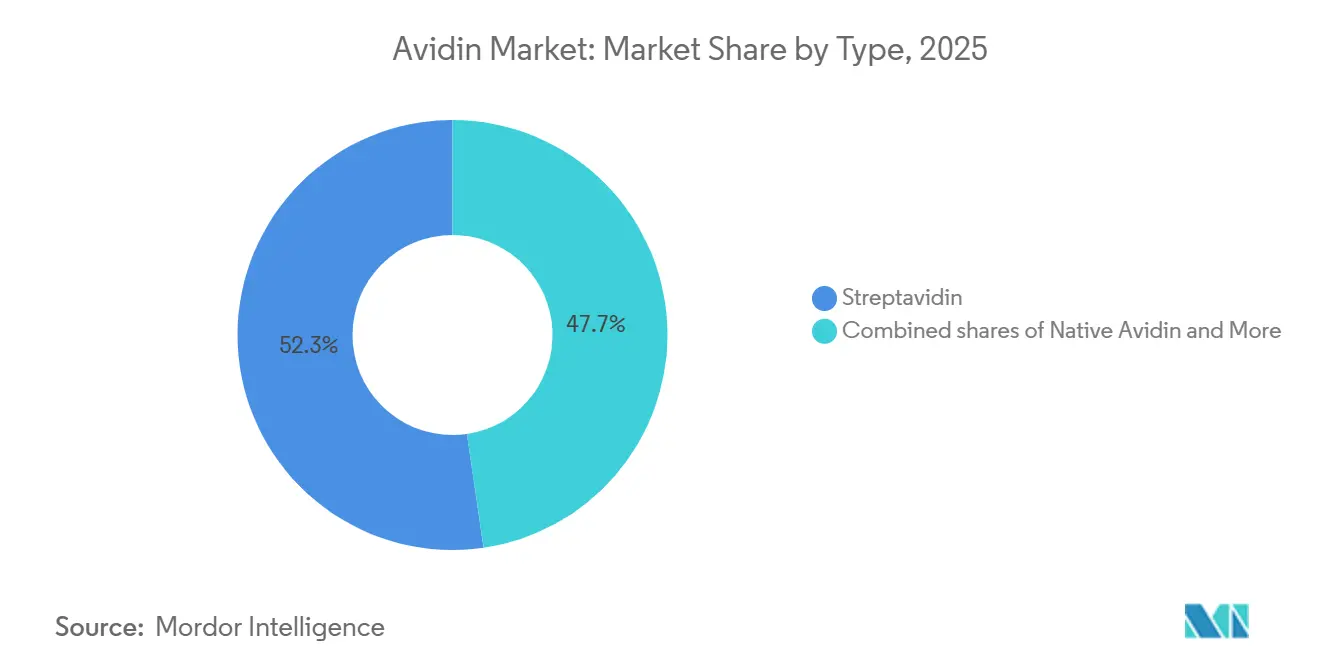
Recombinant Variants Challenge a Streptavidin Dominant MarketStreptavidin held 52.32% of the avidin market share by type in 2025, and that lead reflected its entrenched role in immunoassays, flow cytometry, and biosensor formats where lower nonspecific background remains a decisive buying factor. Native avidin kept a meaningful place in academic and industrial workflows because it stayed widely available, highly soluble in aqueous systems, and cost-effective for ELISA development and affinity purification tasks that can tolerate somewhat higher background. The 2024 and 2025 HPAI cycle in North American poultry exposed the supply vulnerability of egg-derived proteins and encouraged procurement teams to qualify recombinant backups within their vendor panels.
Recombinant avidin is projected to grow at 7.53% CAGR from 2026 to 2031, the fastest rate among type segments in the avidin industry, because engineering flexibility and supply independence are becoming more valuable in high-sensitivity use cases. HookDin illustrates the appeal of this direction, since the company states that the format provides 3 times the biotin binding capacity of monomeric streptavidin on nitrocellulose membranes and cuts background noise by 75%.



By Grade:
Diagnostic Grade Avidin Drives Value Migration Beyond Research ApplicationsResearch grade avidin accounted for 60.34% of the avidin market in 2025, which reflected the large volume consumed in academic laboratories and industrial research workflows where cost and availability remained more important than very tight release specifications. That segment continued to benefit from routine use in protein purification, ELISA development, cell labeling, and general molecular biology work.
Diagnostic grade avidin is expected to expand at 7.82% CAGR between 2026 and 2031, the fastest pace among grade segments in the avidin market, because more commercial diagnostic demand is moving under formal quality expectations. A key part of that growth comes from a reclassification pattern in which some Asia Pacific manufacturers that have used research grade material for kit production will face stronger compliance pressure as local frameworks move closer to ISO 13485 aligned standards.
By Application:
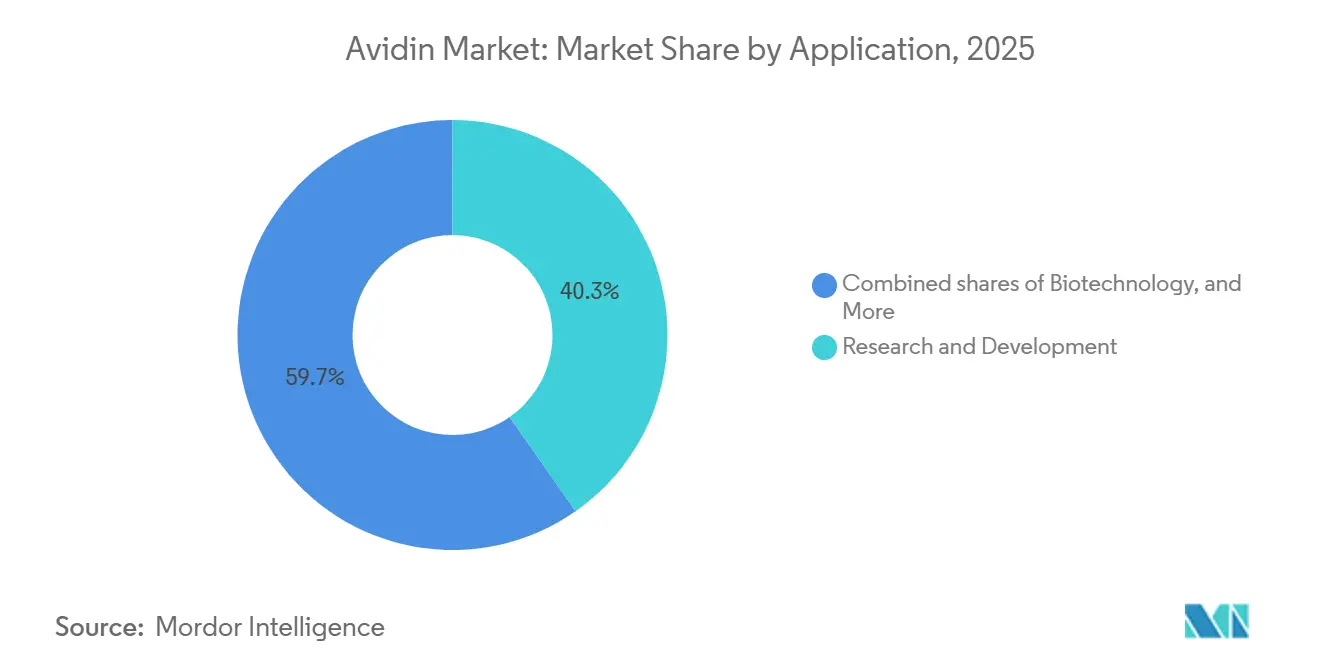
Diagnostics Accelerates as the Fastest Growing Use CategoryResearch and development retained 40.34% of the avidin market size in 2025. That lead came from broad use across protein purification, affinity capture, molecular biology, and cell imaging workflows, where avidin biotin chemistry remains a standard laboratory module. Protein purification remained especially important because immobilized avidin resins are still widely used to isolate biotinylated molecules from complex biological mixtures.
Diagnostics is forecast to expand at 7.65% CAGR from 2026 to 2031, making it the fastest-growing application in the avidin market, as immunoassays, molecular diagnostics, and in vitro diagnostic kits continue to scale globally. Within diagnostics, immunoassays remain the largest avidin-consuming group because ELISA, chemiluminescent assays, and lateral flow tests are spreading across oncology, infectious disease, hormonal, and cardiac marker use cases. A 2025 peer-reviewed study in Sensors described a miniaturized automated ELISA device with hardware cost below USD 1,200 and per-test cost below USD 10 that still relied on the same avidin-biotin detection architecture used by larger benchtop systems.
By Form:
Lyophilized Avidin Anchors Volume Leadership and Future GrowthLyophilized avidin captured 45.57% of the avidin market in 2025, which showed that buyers value ambient stable, single-use, reconstitutable formats for kit production and distributed testing environments. Liquid avidin maintained a complementary role in laboratory research and custom conjugation tasks where immediate use and exact concentration control matter more than long storage life.
Lyophilized avidin is also projected to post the fastest growth at 7.46% CAGR through 2031, which gives this form leadership in both current value and future expansion within the avidin market. The segment benefits from growth in IVD kit manufacturing and from the rising share of point-of-care diagnostics within that broader diagnostic universe. A 2026 study in Microsystems & Nanoengineering validated the direction by showing a fully automated microfluidic immunoassay cartridge that used pre-deposited lyophilized streptavidin phycoerythrin within the disposable device architecture.
By End User:
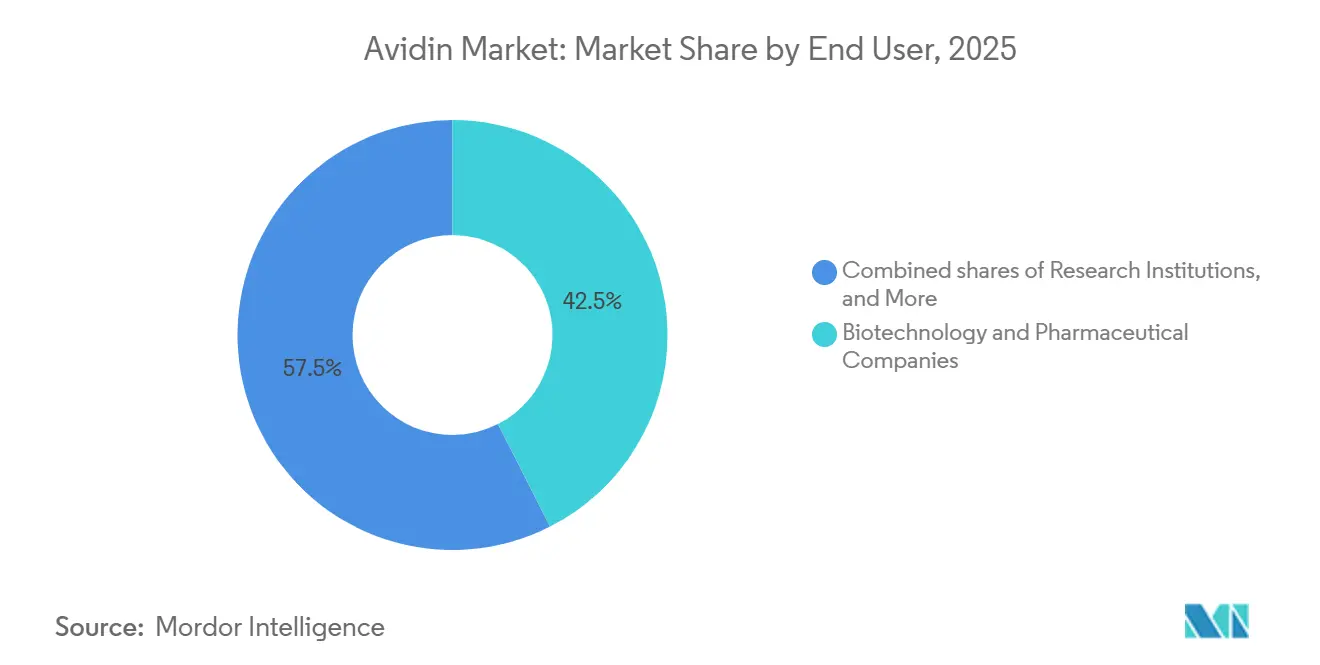
Diagnostic Laboratories Outpace Established Buyer GroupsBiotechnology and pharmaceutical companies held 42.46% of the avidin market by end user in 2025, the largest share, because these organizations use avidin across protein characterization, bioconjugation development, IVD support work, and biologic process applications. Research institutions formed the next major demand base, supported by use in cell biology, genomics, and proteomics projects that continue to rely on research-grade material supplied through established distribution channels.
Diagnostic laboratories are projected to grow at 7.93% CAGR through 2031, the fastest pace among end users in the avidin market, as standardized diagnostic-grade formats become easier to procure from certified suppliers. That shift reflects a maturing buying pattern in which laboratories move away from informal r sourcing and toward supplier qualification systems that support audit readiness and better lot consistency.
Geography Analysis
North America Avidin Market
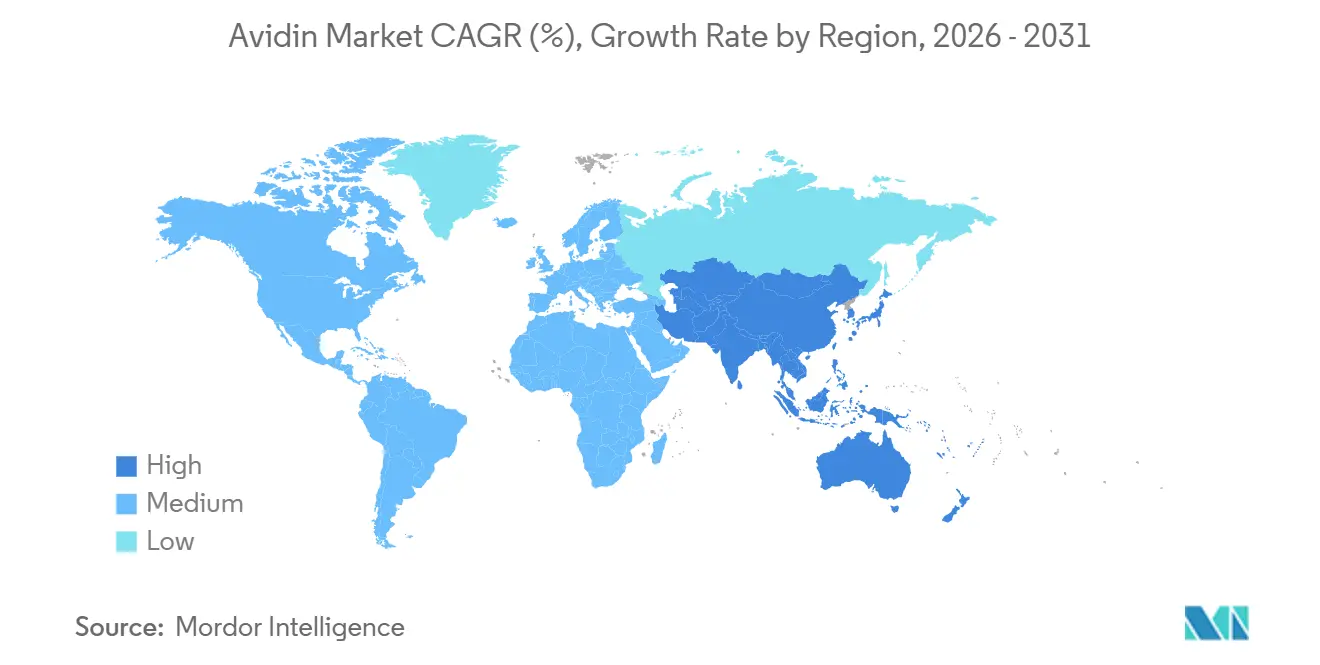
North America held 42.63% of the avidin market share in 2025, making it the largest regional contributor, and the region’s position rests on the high concentration of IVD developers, bioconjugation CDMOs, and life science reagent distributors in the United States. The U.S. base supports demand across research, pharmaceutical, and diagnostic grades because avidin is used in protein purification, immunoassay development, and quality control work for antibody drug conjugate programs.
Europe Avidin Market
Europe remained the second largest regional market in the avidin market, with Germany, the United Kingdom, and France acting as the main contributors across research, diagnostic, and pharmaceutical grades. Germany benefits from strong pharmaceutical and diagnostic manufacturing, the United Kingdom contributes through a well developed biotechnology base, and France adds stable academic demand.
APAC Avidin Market
Asia Pacific is projected to expand at 7.89% CAGR from 2026 to 2031, the fastest regional pace in the avidin market size, because the region combines China’s large IVD manufacturing base, India’s healthcare buildout, Japan’s advanced research environment, and South Korea’s mature diagnostics ecosystem. China remains the largest regional contributor because high volume ELISA and lateral flow production requires steady procurement of avidin related inputs across multiple kit categories.

Competitive Landscape
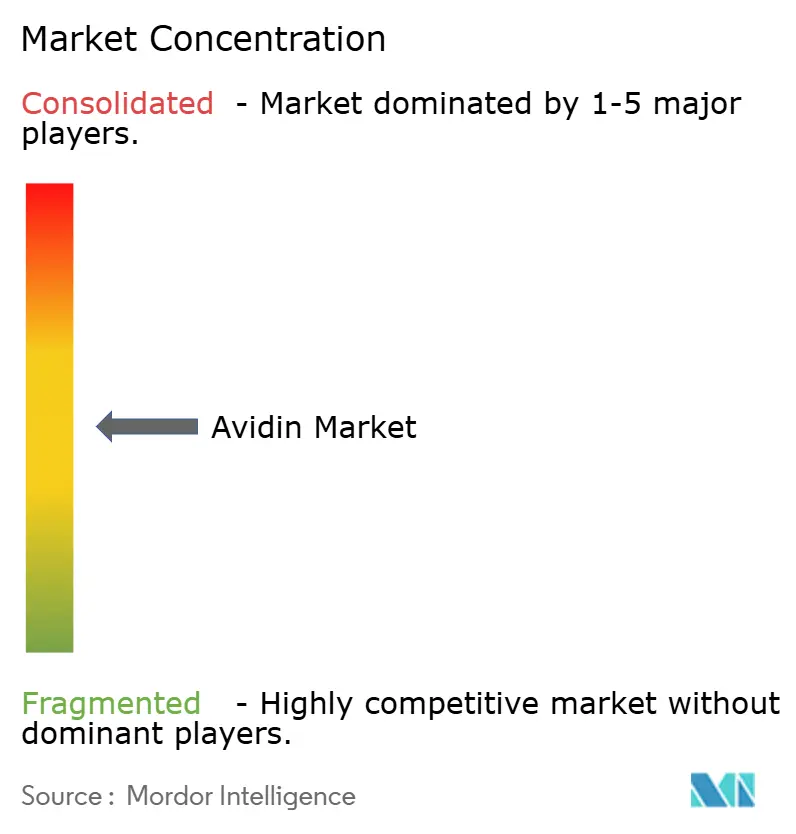
The avidin market shows moderate consolidation, with a relatively small group of large life science reagent suppliers offering native avidin, streptavidin, NeutrAvidin, and multiple conjugated variants across several quality grades. These companies compete first on catalog breadth, supply reliability, regulatory documentation, and technical support for assay development, while smaller specialists focus more on custom conjugation, engineered variants, and format specific expertise. The June 2026 agreement by Merck KGaA to acquire Bio Techne for USD 11.3 billion signaled stronger consolidation pressure across life science reagents and would add Bio Techne’s streptavidin and biotinylated antibody lines to MilliporeSigma’s broader portfolio if completed.
Strategic moves in the avidin market show a push toward deeper service and workflow integration. Bio Rad launched its TrailBlazer Tag and TrailBlazer StarBright Dye Label Kits in November 2024 to support one step antibody conjugation for flow cytometry and fluorescent western blotting, and that move expanded the practical reach of biotin and streptavidin chemistry inside custom panel design workflows.
Avidin Industry Leaders
Thermo Fisher Scientific Inc.
Merck KGaA
Vector Laboratories, Inc.
Avantor, Inc.
Bio-Rad Laboratories, Inc.
- *Disclaimer: Major Players sorted in no particular order
Avidin Market Companies Covered in this Report
- Abcam
- Avantor
- Avidity Biosciences, Inc.
- BioLegend, Inc.
- Bio-Rad Laboratories
- BioVectra Inc.
- Cell Signaling Technology
- Jackson ImmunoResearch Laboratories, Inc.
- Merck
- MP Biomedicals, LLC
- New England Biolabs
- Promega
- Rockland Immunochemicals
- SouthernBiotech
- Takara Bio
- Thermo Fisher Scientific
- Vector Laboratories, Inc.

Recent Industry Developments in Avidin Market
- May 2026: Elabscience introduced a new PolyHRP-Streptavidin conjugate designed to improve the detection of low-abundance biomarkers in ELISA assays. The product uses a polymerized HRP-streptavidin architecture to enhance signal amplification while maintaining low background noise. The launch reflects growing demand for advanced streptavidin-based reagents in diagnostics, immunoassays, and biomarker research.
- February 2026: Antibodies Inc. announced the launch of its Streptavidin/Biotin ABC-Peroxidase Staining Kit, aimed at improving sensitivity in immunohistochemistry (IHC), immunocytochemistry (ICC), Western blotting, and ELISA applications.


Global Avidin Market Report Scope
As per the scope of the report, avidin is a glycoprotein primarily derived from egg white that exhibits an exceptionally high affinity for biotin (vitamin B7), making it a critical tool in biotechnology, diagnostics, pharmaceutical research, and therapeutic applications.
The Avidin Market Report segments the market by type, including native avidin, recombinant avidin, and streptavidin. Based on grade, the market is segmented into research grade avidin, pharmaceutical grade avidin, and diagnostic grade avidin. By application, the market is segmented into diagnostics, therapeutics, research and development, and biotechnology. Based on form, the market is segmented into liquid avidin, powdered avidin, and lyophilized avidin. By end user, the market is segmented into biotechnology and pharmaceutical companies, research institutions, diagnostic laboratories, and others, including contract research organizations (CROs) and academic institutes. Geographically, the market is segmented into North America, Europe, Asia-Pacific, the Middle East & Africa, and South America. The market report also covers the estimated market sizes and trends for 17 countries across major regions globally. For each segment, the market size and forecast are provided in terms of value (USD).
| Native Avidin |
| Recombinant Avidin |
| Streptavidin |
| Research Grade Avidin |
| Pharmaceutical Grade Avidin |
| Diagnostic Grade Avidin |
| Diagnostics |
| Therapeutics |
| Research and Development |
| Biotechnology |
| Liquid Avidin |
| Powdered Avidin |
| Lyophilized Avidin |
| Biotechnology and Pharmaceutical Companies |
| Research Institutions |
| Diagnostic Laboratories |
| Others (Contract Research Organizations (CROs), Academic Institutes) |
| North America | United States |
| Canada | |
| Mexico | |
| Europe | Germany |
| United Kingdom | |
| France | |
| Italy | |
| Spain | |
| Rest of Europe | |
| Asia-Pacific | China |
| India | |
| Japan | |
| Australia | |
| South Korea | |
| Rest of Asia-Pacific | |
| Middle East and Africa | GCC |
| South Africa | |
| Rest of Middle East and Africa | |
| South America | Brazil |
| Argentina | |
| Rest of South America |
| By Type | Native Avidin | |
| Recombinant Avidin | ||
| Streptavidin | ||
| By Grade | Research Grade Avidin | |
| Pharmaceutical Grade Avidin | ||
| Diagnostic Grade Avidin | ||
| By Application | Diagnostics | |
| Therapeutics | ||
| Research and Development | ||
| Biotechnology | ||
| By Form | Liquid Avidin | |
| Powdered Avidin | ||
| Lyophilized Avidin | ||
| By End User | Biotechnology and Pharmaceutical Companies | |
| Research Institutions | ||
| Diagnostic Laboratories | ||
| Others (Contract Research Organizations (CROs), Academic Institutes) | ||
| By Geography | North America | United States |
| Canada | ||
| Mexico | ||
| Europe | Germany | |
| United Kingdom | ||
| France | ||
| Italy | ||
| Spain | ||
| Rest of Europe | ||
| Asia-Pacific | China | |
| India | ||
| Japan | ||
| Australia | ||
| South Korea | ||
| Rest of Asia-Pacific | ||
| Middle East and Africa | GCC | |
| South Africa | ||
| Rest of Middle East and Africa | ||
| South America | Brazil | |
| Argentina | ||
| Rest of South America | ||


Key Questions Answered in the Report
What is the current outlook for avidin demand through 2031?
The avidin market is expected to rise from USD 252.17 million in 2026 to USD 343.20 million by 2031 at a 6.36% CAGR, supported by diagnostics, assay automation, and higher specification reagent demand.
Which product type leads global sales today?
Streptavidin led by type with 52.32% share in 2025 because buyers continue to favor lower nonspecific binding in immunoassays, flow cytometry, and biosensor applications.
Which application is expanding the fastest?
Diagnostics is the fastest growing application, with a projected 765.% CAGR through 2031, driven by immunoassays, molecular diagnostics, and wider IVD kit production.
Why is lyophilized avidin gaining importance?
Lyophilized avidin held 45.57% share in 2025 and is also the fastest growing form because ambient stable, reconstitutable formats fit IVD kits, point of care systems, and cartridge based assays.
Which end users are creating the strongest growth momentum?
Biotechnology and pharmaceutical companies remained the largest end user group in 2025, but diagnostic laboratories are expected to grow fastest at 7.93% CAGR through 2031 as clinical testing capacity scales in emerging regions.
Which region offers the strongest near term expansion?
Asia Pacific is projected to grow at 7.89% CAGR through 2031, ahead of other regions, due to China's IVD scale, India's healthcare expansion, and stronger regional diagnostics manufacturing.
Page last updated on:





