
Aquatic Weed Harvesters Market Size and Share
Market Overview
| Study Period | 2021 - 2031 |
|---|---|
| Market Size (2026) | USD 0.9 Billion |
| Market Size (2031) | USD 1.19 Billion |
| Growth Rate (2026 - 2031) | 5.74 % |
| Fastest Growing Market | Asia-Pacific |
| Largest Market | North America |
| Market Concentration | Low |
Major Players *Disclaimer: Major Players sorted in no particular order Image © Mordor Intelligence. Reuse requires attribution under CC BY 4.0. | |
Aquatic Weed Harvesters Market Analysis by Mordor Intelligence
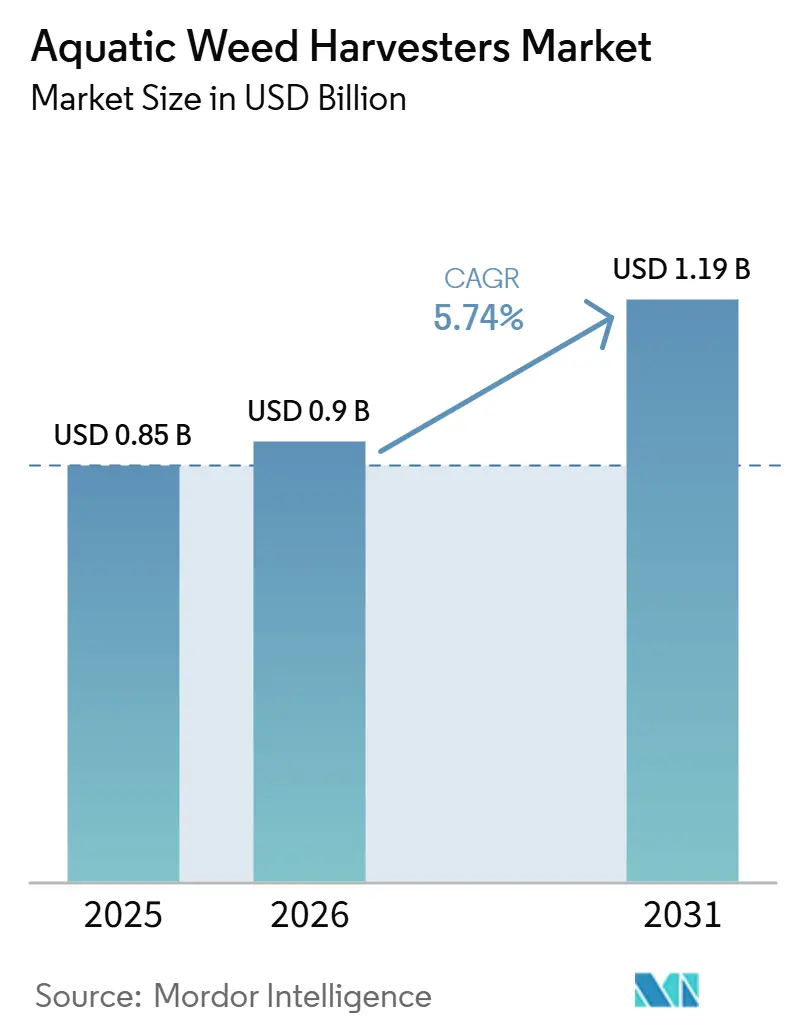
The aquatic weed harvesters market size was valued at USD 0.85 billion in 2025 and is forecast to grow from USD 0.90 billion in 2026 to USD 1.19 billion by 2031, at a CAGR of 5.74% during the forecast period 2026–2031. Increasing regulatory scrutiny of herbicide use in the United States and Europe is expanding the role of mechanical aquatic weed removal, creating a compliance-driven demand base. Texas continues to manage giant salvinia and water hyacinth, highlighting the persistent need for aquatic weed control across diverse water bodies. The ongoing vegetation management programs support sustained demand for mechanical harvesting and related equipment rather than one-time cleanup activities. Freshwater ecosystem restoration initiatives, invasive species management programs, and fleet replacement requirements further reinforce demand, while end users are increasingly evaluating remote-controlled and hybrid harvesting systems to improve operational efficiency and reduce labor requirements. In South Florida, updated flood-control and canal-maintenance requirements are placing greater emphasis on vegetation and debris management to maintain water conveyance and infrastructure performance, thereby supporting long-term equipment demand. Although supply chain constraints and limited biomass collection and disposal infrastructure continue to delay some procurement decisions, recurring maintenance requirements across lakes, canals, reservoirs, and managed waterways provide a stable foundation for long-term market growth.
Key Report Takeaways
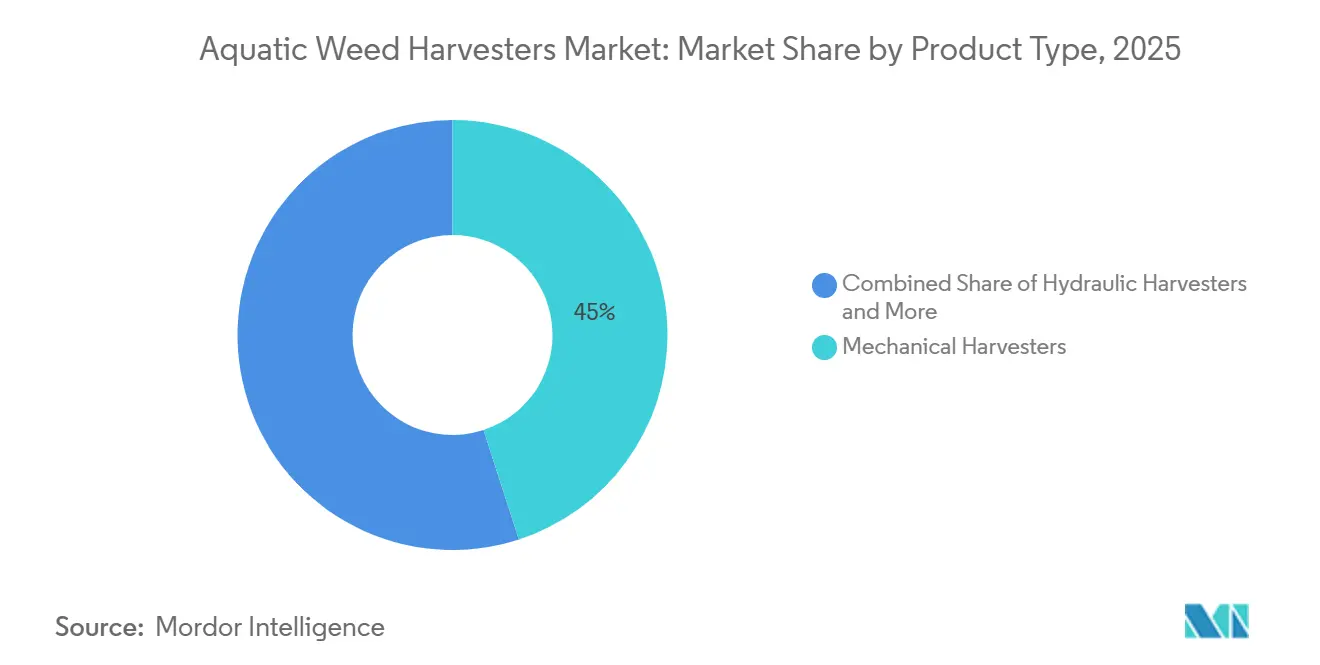
- By product type, mechanical harvesters were the largest segment and held 45.0% of the aquatic weed harvesters market share in 2025, while remote-controlled harvesters are the fastest-growing segment and are forecast to expand at an 11.5% CAGR between 2026 and 2031.
- By application, lakes were the largest segment and held 42.0% of the aquatic weed harvesters market size in 2025, while rivers and canals are the fastest-growing segment and are forecast to expand at a 9.3% CAGR between 2026 and 2031.
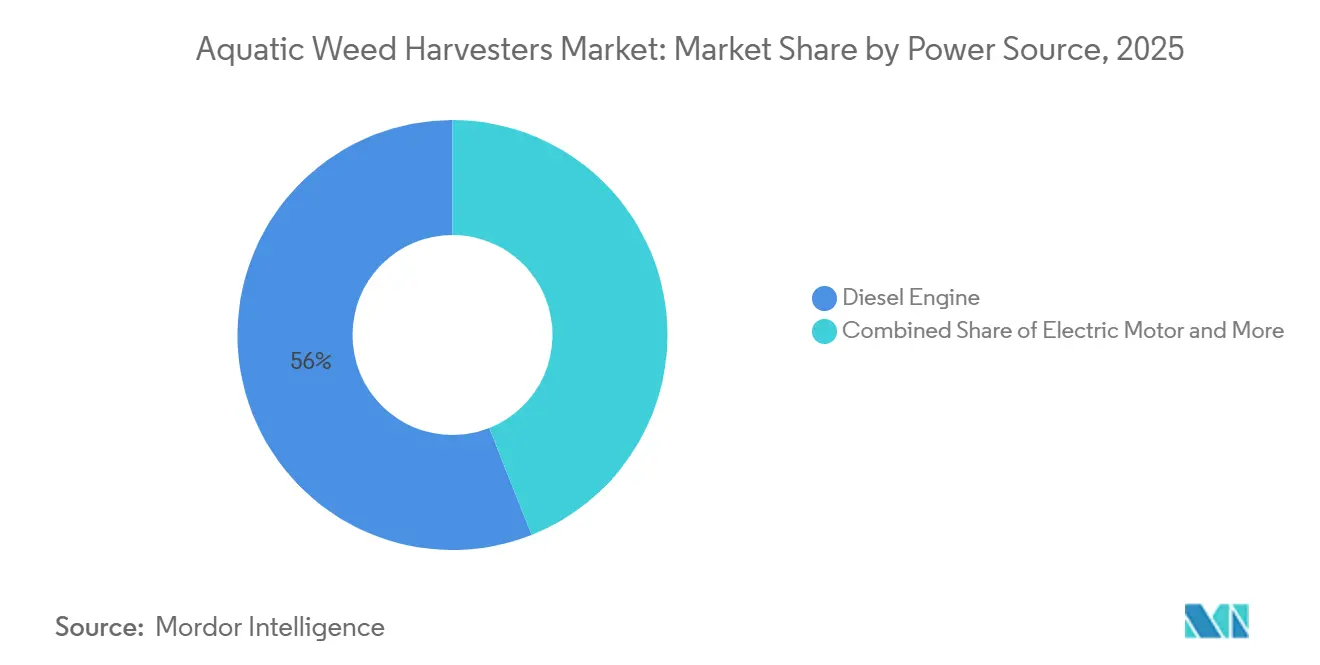
- By power source, diesel engine systems were the largest segment and held 56.0% of the aquatic weed harvesters market share in 2025, while hybrid systems are the fastest-growing segment and are forecast to expand at a 10.6% CAGR between 2026 and 2031.
- By geography, North America was the largest region and held 36.5% of the aquatic weed harvesters market share in 2025, while Asia-Pacific is the fastest-growing region and is forecast to expand at a 7.1% CAGR between 2026 and 2031.
Note: Market size and forecast figures in this report are generated using Mordor Intelligence’s proprietary estimation framework, updated with the latest available data and insights as of January 2026.
Market Trends and Insights
Drivers Impact Analysis of Aquatic Weed Harvesters Market*
| Driver | (~) % Impact on CAGR Forecast | Geographic Relevance | Impact Timeline |
|---|---|---|---|
| Rising Invasive Aquatic Vegetation Pressure in Managed Waterways | +1.2% | Global, strongest in North America, Asia-Pacific, and South America | Short term (≤ 2 years) |
| Tighter Restrictions on Chemical Weed Control in Sensitive Water Bodies | +1.1% | North America and European Union core, spill-over to Australia and Japan | Medium term (2-4 years) |
| Labor-Saving Demand From Public Works and Lake Management Operators | +0.9% | North America core, with secondary gains in Europe and Oceania | Short term (≤ 2 years) |
| Growth of Integrated Weed and Debris Removal Missions | +0.7% | Global, particularly North America, Europe, and Asia-Pacific urban waterways | Medium term (2-4 years) |
| Underreported Demand From Stormwater Retention and Flood-Bypass Channels | +0.5% | North America, Western Europe, and flood-exposed Asia-Pacific corridors | Long term (≥ 4 years) |
| Underreported Adoption in Asset Protection for Marina and Canal Operators | +0.4% | Middle East, Europe, and Asia-Pacific marina-dense markets | Long term (≥ 4 years) |
| Source: Mordor Intelligence | |||
Rising Invasive Aquatic Vegetation Pressure in Managed Waterways
Invasive aquatic plant growth has made control spending a recurring operational need for many water agencies. The United States Army Corps of Engineers manages invasive and exotic vegetation annually across federal navigation channels, supporting ongoing aquatic weed management and navigability in inland and coastal waterways. Texas continues to manage giant salvinia and water hyacinth, highlighting the persistent need for aquatic weed control across diverse water bodies. This pattern supports recurring equipment demand in the aquatic weed harvesters market, as agencies require ongoing harvesting capacity rather than single-season intervention.
Tighter Restrictions on Chemical Weed Control in Sensitive Water Bodies
Regulatory pressure on aquatic herbicides is rising in the two largest developed regions for the aquatic weed harvesters market. The United States Environmental Protection Agency finalized its Herbicide Strategy in August 2024, which widened restrictions across habitats tied to 900 listed species and pushed chemical programs into a tighter review process. The agency also published a 2025 fact sheet for diquat dibromide reducing the permitted application rates for aquatic surface weed uses, indicating that product-level controls are also tightening. In Europe, the non-renewal of flufenacet and continued pesticide exceedances in rivers and lakes maintain political and regulatory pressure on chemical options in water-adjacent settings. As these restrictions expand, mechanical harvesting becomes easier to justify in the aquatic weed harvesters market, as buyers face fewer permit and liability concerns from non-chemical operations.
Labor-Saving Demand From Public Works and Lake Management Operators
Labor cost pressures are changing the equipment mix in the aquatic weed harvesters market. Public works teams have long combined mechanical harvesting with manual collection, but staffing constraints are pushing buyers toward systems that reduce crew hours and improve safe operation in narrow or difficult-access waterways. Aquarius Systems has developed the TrashVeyor, a stationary autonomous debris interceptor supported by an Environmental Protection Agency Small Business Innovation Research grant in 2024[1]. This type of product broadens the value proposition from simple plant removal to reduced operator labor requirements and continuous waterway cleaning. The result is a stronger preference in the aquatic weed harvesters market for suppliers that can pair harvesting platforms with automation, remote operation, or low-touch debris handling.
Growth of Integrated Weed and Debris Removal Missions
Many buyers now require a single vessel to manage weeds, floating waste, and storm debris within the same maintenance cycle. This shift is moving the aquatic weed harvesters market toward broader municipal utility rather than single-purpose weed cutting. Aquarius Systems markets the TrashVeyor for continuous debris interception, while Berky GmbH positions its mowing boats for combined weed and waste collection in canals and harbors. Berky GmbH's cooperation with Everwave on river plastic collection in Germany demonstrated that dual-use deployments can function in both commercial and public settings. This gives the aquatic weed harvesters market a broader procurement opportunity, as budgets for water quality, flood debris, and waterway access can increasingly support the same equipment.
Restraints Impact Analysis of Aquatic Weed Harvesters Market*
| Restraint | (~) % Impact on CAGR Forecast | Geographic Relevance | Impact Timeline |
|---|---|---|---|
| High Upfront Capital Cost for Specialized Harvesting Fleets | -1.2% | Global, most acute for smaller municipalities in South America and Africa | Short term (≤ 2 years) |
| Seasonal Utilization Limits in Temperate Climate Markets | -0.9% | North America and Europe, particularly Canada, Germany, and Nordic markets | Medium term (2-4 years) |
| Permitting Delays for Mechanical Operations in Ecologically Sensitive Waters | -0.6% | North America and European Union, particularly federally protected wetlands and fish habitats | Medium term (2-4 years) |
| Limited Disposal Capacity for Biomass After Harvesting | -0.5% | Densely urbanized markets globally, most constrained in Western Europe and Asia-Pacific coastal cities | Long term (≥ 4 years) |
| Source: Mordor Intelligence | |||
High Upfront Capital Cost for Specialized Harvesting Fleets
Capital cost remains a significant barrier for smaller operators in the aquatic weed harvesters market. Large harvesters designed for full-scale lake or reservoir operations require substantial capital investment, and delivery logistics add further costs for inland or remote buyers. The Okanagan Basin Water Board's June 2024 purchase of a CAD 688,000 (USD 505,000) amphibious Berky GmbH harvester illustrates the level of formal procurement and budget support required even for well-established public programs. Berky GmbH's commercial model includes rental options, indicating that suppliers recognize the scale of the upfront cost barrier. Until service networks and rental fleets expand further, this issue will continue limiting market adoption.
Seasonal Utilization Limits in Temperate Climate Markets
Season length affects the return profile for purchased fleets in the aquatic weed harvesters market. Mechanical harvesting in temperate locations is concentrated in the months when weed growth is active, which shortens annual equipment use even when vegetation pressure is persistent. The Okanagan Basin Water Board confirmed that its milfoil control work is focused in the summer window, reflecting the narrower operating season seen across Canada and the northern United States. New Zealand's Lake Horowhenua program over the 2020–2025 period, also demonstrated that strong biomass removal volumes remain dependent on seasonal growth conditions and linked disposal planning. This keeps buyers in the aquatic weed harvesters market focused on multipurpose vessels that can extend revenue beyond the main weed season.
*Our forecasts treat driver/restraint impacts as directional, not additive. The impact forecasts reflect baseline growth, mix effects, and variable interactions.
Aquatic Weed Harvesters Market Segment Analysis
By Product Type:
Remote-Controlled Units Change the Operating ModelMechanical harvesters held 45.0% of the aquatic weed harvesters market share in 2025, remaining the largest segment. Government lake and reservoir programs continue to favor these units because they handle large biomass volumes and are suited to dense growth conditions. Their installed base also supports recurring replacement demand as public agencies refresh older fleets. Hydraulic harvesters remained relevant in irrigation canals and reservoir applications where cutting depth control matters more than broad-area throughput.
Remote-controlled harvesters are projected to grow at an 11.5% CAGR between 2026 and 2031, making them the fastest-growing product type in the aquatic weed harvesters market. Declining battery costs, safer operation in confined waterways, and easier deployment in private water bodies are broadening demand for this category. These units also appeal to buyers seeking smaller systems with reduced labor requirements and reduced maintenance burdens. This segment of the aquatic weed harvesters market is gradually shifting toward electric, compact, and easily deployable platforms.

By Application:
Rivers and Canals Gain Weight as Compliance Duties ExpandLakes accounted for 42.0% of the aquatic weed harvesters market in 2025, making them the largest application segment. This position reflects the scale of government lake programs and the consistent role of private lake associations in North America and Europe. Reservoir demand also remained strong, as vegetation control is increasingly linked to intake protection and equipment maintenance in managed water systems. Ponds generated a high volume of small orders, but did not match the revenue scale seen in larger public or commercial water bodies.
Rivers and canals are forecast to grow at a 9.3% CAGR between 2026 and 2031, making them the fastest-growing application in the aquatic weed harvesters market. This growth is driven by increasing concerns over aquatic weed infestations in inland waterways, which affect navigation, irrigation, and water quality. In 2025, the International Crops Research Institute for the Semi-Arid Tropics' (ICRISAT) licensed solar-powered water hyacinth harvester indicates that canal and river maintenance in Asia is attracting low-cost mechanical solutions, which could broaden market access in the aquatic weed harvesters market. As governments and water management authorities prioritize waterway maintenance, demand for cost-effective harvesting equipment in rivers and canals is anticipated to rise steadily.
By Power Source:
Hybrid Systems Bridge Range and Emissions NeedsDiesel engine systems held a 56.0% share in 2025, making them the largest power source segment in the aquatic weed harvesters market. This position reflects the operating requirements of large commercial harvesters in remote areas where charging infrastructure is limited and long working hours are standard. Diesel platforms also remain familiar to public works teams that require reliable service support and predictable field performance. However, this installed base now coexists with a clear shift toward lower-emission designs across the aquatic weed harvesters market.
Hybrid systems are projected to grow at a 10.6% CAGR between 2026 and 2031, making them the fastest-growing power source segment in the aquatic weed harvesters market. Buyers operating in urban and recreational waterways prefer lower noise and lower emissions, while still requiring backup range for longer field deployments. Electric motors are also gaining traction in smaller, remote-controlled units, supporting a broader technology shift in the aquatic weed harvesters market.
Geography Analysis
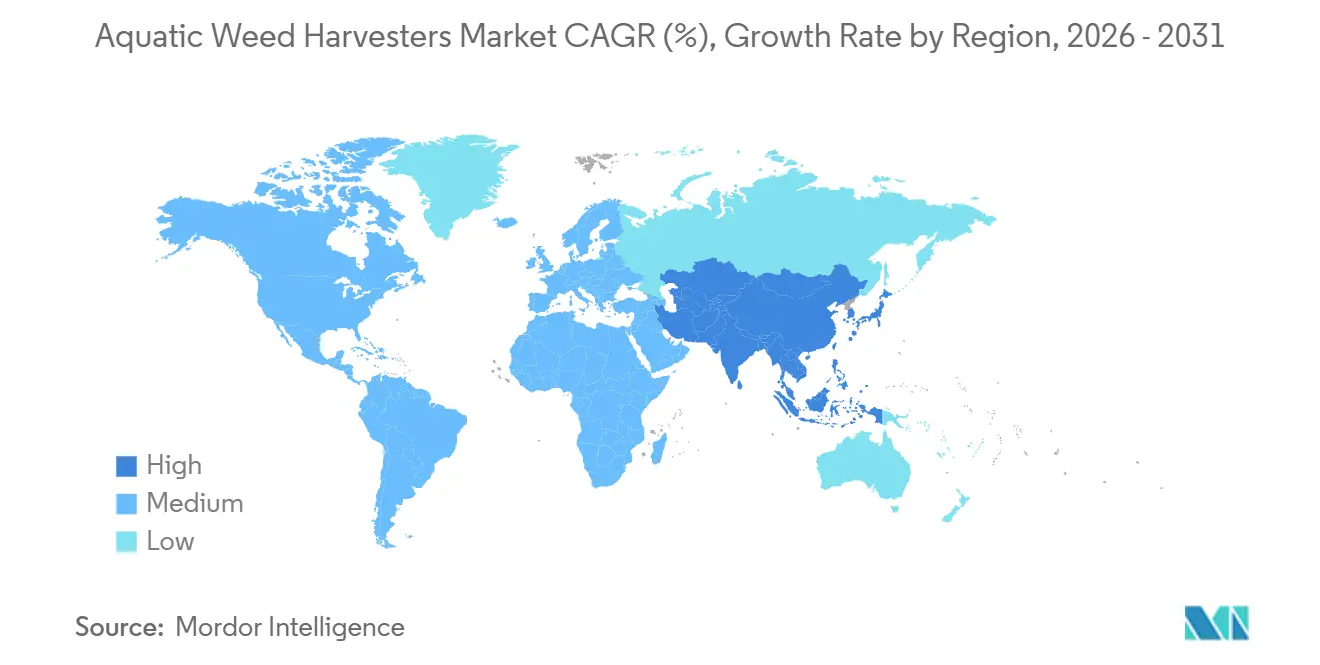
North America held 36.5% of the aquatic weed harvesters market share in 2025 and remains the largest regional market. The region benefits from steady public funding for invasive species management across federal, state, and local agencies. This funding supports a broad range of activities, including mechanical harvesting, which requires specialized equipment and trained operators. Florida and Texas both reported large annual treatment footprints, confirming that procurement needs are driven by recurring field workloads rather than one-off cleanup demand. Beyond these two states, other water-rich states also maintain active aquatic vegetation management programs, further reinforcing consistent regional demand.
Asia-Pacific is forecast to expand at a 7.1% CAGR between 2026 and 2031, making it the fastest-growing regional market for aquatic weed harvesters. Growth is driven by rising freshwater management activity in India, China, and Southeast Asia, where invasive weeds affect irrigation systems, reservoirs, and urban waterways. In 2025, the International Crops Research Institute for the Semi-Arid Tropics’ (ICRISAT) licensed solar-powered water hyacinth harvester, priced below INR 200,000 (USD 2,400), reflected the appeal of low-cost, local solutions for price-sensitive operators[2]. A 2025 Scientific Reports study in nature journal also validated an autonomous catamaran system for water hyacinth detection and mechanical removal in Chennai, supporting the region's role in next-generation equipment design[3]. South America, Africa, and the Middle East are also anticipated to contribute to market growth as waterway access, irrigation protection, and urban canal maintenance receive greater attention.
Europe represents a significant regional market for aquatic weed harvesters, supported by dense networks of canals, rivers, and lakes that require regular maintenance and sustain demand for public-sector fleet operations. Chemical weed control faces continued pressure from pesticide monitoring and water quality standards, which strengthens the case for mechanical removal in regulated settings. The region also holds significance on the supply side, with Berky GmbH and Conver B.V. representing established European manufacturing capacity within the market.
Competitive Landscape
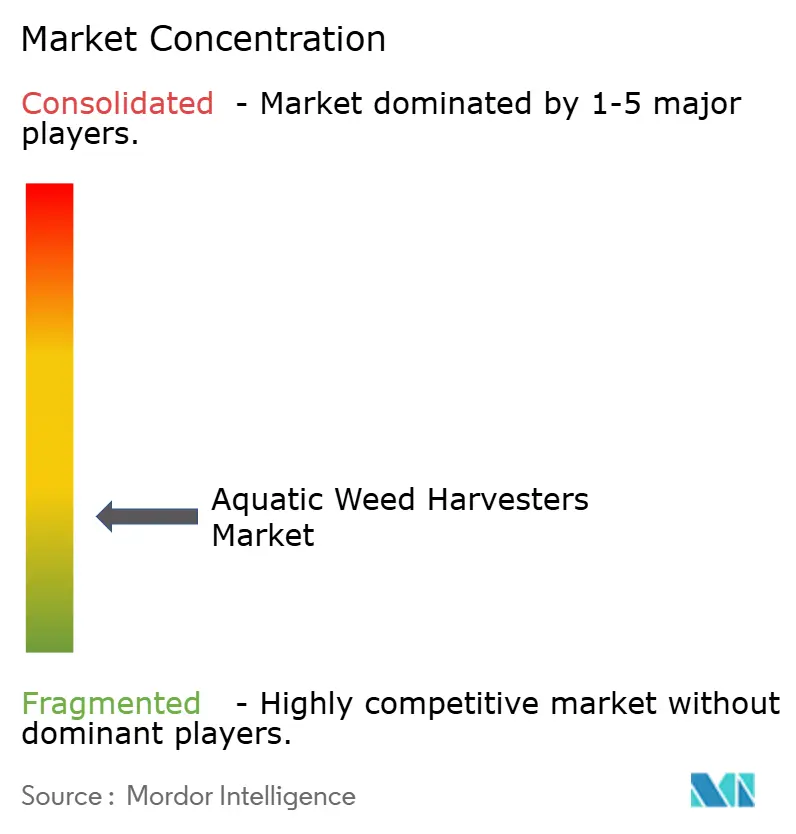
The aquatic weed harvesters market remains fragmented, with Aquarius Systems, Berky GmbH, Weedoo Green Boat Inc., Inland Lake Harvesters Inc., and CONVER holding a major share in 2025. Aquarius Systems maintains a broad portfolio serving both private lake users and larger public programs. Its presence across 50 countries provides scale advantages in distribution, service visibility, and export access. The company's TrashVeyor program also indicates that competition in the aquatic weed harvesters market is expanding beyond plant cutting into adjacent waterway maintenance functions. Berky GmbH remains relevant through its mowing boats, amphibious capability, and rental-based offering for buyers seeking lower upfront commitment.
CONVER has positioned itself around electrification through the C485-E model and active promotion of zero-emission subsidy opportunities for 2026. Weedoo Green Boat Inc. continues to benefit from demand for compact workboats in smaller water bodies and municipal applications. Inland Lake Harvesters Inc. remains closely aligned with lake associations and public lake programs through a focused harvester lineup. As a result, no single supplier in the aquatic weed harvesters market can independently shape pricing or product direction.
Competition is shaped by product fit, local service support, and the ability to meet evolving operating requirements. Suppliers offering low-emission propulsion, debris-handling capability, or remote operation are gaining a clearer advantage in the aquatic weed harvesters market, as buyers seek greater utility from each vessel. The market also continues to provide room for regional specialists, as lakes, canals, reservoirs, and flood channels require different hull designs, cutting depths, and biomass handling configurations. This diversity keeps the competitive structure open even as the leading suppliers expand their installed bases.
Aquatic Weed Harvesters Industry Leaders
-
Berky GmbH
-
Weedoo Greenboat, Inc.
-
Inland Lake Harvesters, Inc.
-
Aquarius Systems
-
Alamo Group, Inc. (Conver B.V.)
- *Disclaimer: Major Players sorted in no particular order
Aquatic Weed Harvesters Market Companies Covered in this Report
- Aquarius Systems (D and D Products, Inc.)
- Inland Lake Harvesters, Inc.
- Berky GmbH
- Weedoo Greenboat, Inc.
- Stonbury Limited
- Alamo Group, Inc. (Conver B.V.)
- Aquamarine Inc.
- Elastec, Inc.
- Eco-Harvesters LLC (Silver Mist Aquatics)
- Lake Weeders Digest LLC (Shoretech Industries)
- Relong Technology Co., Ltd.
Recent Industry Developments in Aquatic Weed Harvesters Market
- June 2026: Weedoo Greenboat, Inc. was recognized by the Florida Sterling Council for organizational excellence, reflecting growing institutional validation of the company's operational processes among state-level bodies.
- November 2025: Aquarius Systems deployed its EH-220 Aquatic Weed Harvester at the Spring Grove Fish Hatchery in Illinois, clearing a 20-acre pond over a six-week operation. The restoration enabled the reopening of a public fishing and recreation facility, illustrating the market's expanding role in ecological restoration alongside routine maintenance.
- April 2025: ICRISAT secured an IP licensing agreement with Eco-Paryavaran for its solar-powered water hyacinth harvester, which was recognized as one of India's Top 100 Innovations of 2025. Devices costing under INR 200,000 (USD 2,400) reduced harvesting costs, time, and labor for rural water body operators, opening a price-sensitive market segment in South Asia.
Global Aquatic Weed Harvesters Market Report Scope
Aquatic weed harvesters are mechanical vessels and equipment designed to cut, collect, and remove invasive or excessive aquatic vegetation, floating debris, and related biomass from water bodies such as lakes, reservoirs, rivers, canals, and ponds.
The Aquatic Weed Harvesters Market is Segmented by Product Type (Mechanical Harvesters, Hydraulic Harvesters, and Remote-Controlled Harvesters), by Application (Lakes, Reservoirs, Rivers and Canals, and Ponds), by Power Source (Diesel Engine, Electric Motor, and Hybrid), and by Geography (North America, South America, Europe, Asia-Pacific, Middle East, and Africa). The Market Forecasts are Provided in Terms of Value (USD).
Segmentation Overview
| Mechanical Harvesters |
| Hydraulic Harvesters |
| Remote-Controlled Harvesters |
| Lakes |
| Reservoirs |
| Rivers and Canals |
| Ponds |
| Diesel Engine |
| Electric Motor |
| Hybrid |
| North America | United States |
| Canada | |
| Mexico | |
| Rest of North America | |
| South America | Brazil |
| Argentina | |
| Rest of South America | |
| Europe | Germany |
| France | |
| United Kingdom | |
| Spain | |
| Italy | |
| Russia | |
| Rest of Europe | |
| Asia-Pacific | China |
| India | |
| Japan | |
| Australia | |
| Rest of Asia-Pacific | |
| Middle East | Saudi Arabia |
| United Arab Emirates | |
| Rest of Middle East | |
| Africa | South Africa |
| Kenya | |
| Rest of Africa |
| By Product Type | Mechanical Harvesters | |
| Hydraulic Harvesters | ||
| Remote-Controlled Harvesters | ||
| By Application | Lakes | |
| Reservoirs | ||
| Rivers and Canals | ||
| Ponds | ||
| By Power Source | Diesel Engine | |
| Electric Motor | ||
| Hybrid | ||
| By Geography | North America | United States |
| Canada | ||
| Mexico | ||
| Rest of North America | ||
| South America | Brazil | |
| Argentina | ||
| Rest of South America | ||
| Europe | Germany | |
| France | ||
| United Kingdom | ||
| Spain | ||
| Italy | ||
| Russia | ||
| Rest of Europe | ||
| Asia-Pacific | China | |
| India | ||
| Japan | ||
| Australia | ||
| Rest of Asia-Pacific | ||
| Middle East | Saudi Arabia | |
| United Arab Emirates | ||
| Rest of Middle East | ||
| Africa | South Africa | |
| Kenya | ||
| Rest of Africa | ||
Key Questions Answered in the Report
What is the 2031 outlook for aquatic weed harvesters?
The Aquatic weed harvesters market is forecast to reach USD 1.19 billion by 2031, rising from USD 0.9 billion in 2026 at a 5.74% CAGR over 2026-2031.
Which product type is growing fastest in this space?
Remote-controlled harvesters are projected to post the highest CAGR at 11.5% between 2026 and 2031 because buyers want safer and lower-labor operation.
Which application creates the largest base?
Lakes led with 42.0% share in 2025 because public lake programs and private lake associations remain the biggest deployment base.
Why are rivers and canals gaining attention?
Rivers and canals are gaining attention as flood-control and navigation systems move toward formal vegetation and debris management duties.
Which region leads revenue and which region grows fastest?
North America held 36.5% share in 2025, while Asia-Pacific is forecast to expand fastest at 7.1% CAGR between 2026 and 2031.