
Antiseptic Bathing Market Size and Share
Market Overview
| Study Period | 2020 - 2031 |
|---|---|
| Market Size (2026) | USD 16.94 Billion |
| Market Size (2031) | USD 21.25 Billion |
| Growth Rate (2026 - 2031) | 4.62 % |
| Fastest Growing Market | Asia-Pacific |
| Largest Market | North America |
| Market Concentration | Medium |
Major Players *Disclaimer: Major Players sorted in no particular order Image © Mordor Intelligence. Reuse requires attribution under CC BY 4.0. | |
Antiseptic Bathing Market Analysis by Mordor Intelligence
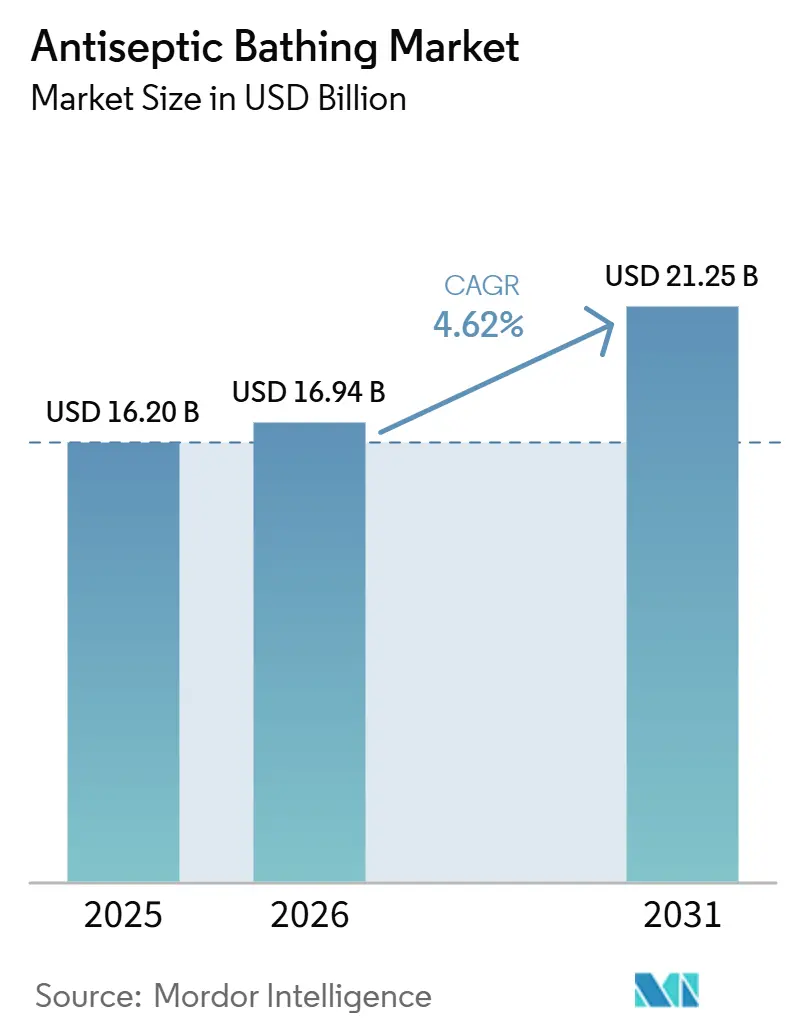
The Antiseptic Bathing Market size is expected to grow from USD 16.20 billion in 2025 to USD 16.94 billion in 2026 and is forecast to reach USD 21.25 billion by 2031 at 4.62% CAGR over 2026-2031.
Demand in the antiseptic bathing market is supported by hospital protocols that make daily antiseptic care a recurring part of care for patients with invasive devices. The World Health Organization reported that many healthcare-associated infections can be prevented through basic infection prevention, control, and water and sanitation measures. This places antiseptic bathing alongside hand hygiene and environmental cleaning in institutional infection prevention programs. Growth opportunities extend from intensive care units to surgical wards, long-term care, and post-discharge care, where simpler products can support caregivers. The antiseptic bathing market also faces uneven clinical evidence, supply exposure for chlorhexidine gluconate, and differing national guidance, which can limit routine use outside high-risk care settings.
Key Report Takeaways
- By product type, CHG Solutions held 32.86% of the antiseptic bathing market share in 2025, while CHG Bath Towels are forecast to grow at a 5.91% CAGR through 2031.
- By active ingredient, Chlorhexidine Gluconate held 58.19% of the antiseptic bathing market share in 2025, while Octenidine is forecast to grow at a 6.05% CAGR through 2031.
- By application, Intensive Care Unit Patient Care held 34.11% share in 2025, while Home-Based Patient Hygiene is forecast to grow at a 5.81% CAGR through 2031.
- By distribution channel, Direct Institutional Sales held 44.23% share in 2025, while Medical and Healthcare Distributors are forecast to grow at a 6.23% CAGR through 2031.
- By geography, North America held 41.47% of the antiseptic bathing market share in 2025, while the Asia-Pacific region is forecast to grow at a 5.98% CAGR through 2031.
Note: Market size and forecast figures in this report are generated using Mordor Intelligence’s proprietary estimation framework, updated with the latest available data and insights as of January 2026.
Market Trends and Insights
Drivers Impact Analysis of Antiseptic Bathing Market*
| Driver | (~) % Impact on CAGR Forecast | Geographic Relevance | Impact Timeline |
|---|---|---|---|
| Healthcare-Associated Infection Prevention Requirements | +1.1% | Global, with acute concentration in North America and Western Europe | Short term (≤ 2 years) |
| Surgical and Invasive Procedure Volumes | +0.8% | Global, with highest procedural density in North America, Western Europe, and Japan | Medium term (2-4 years) |
| Daily Chlorhexidine Bathing in High-Risk Care | +0.9% | North America and core Europe, with spillover to Asia-Pacific and the Middle East and Africa | Short term (≤ 2 years) |
| Ready-to-Use and Rinse-Free Formats | +0.7% | North America, with early adoption in Asia-Pacific and South America | Medium term (2-4 years) |
| Care Decentralization to Home and Long-Term Care | +0.6% | North America, Europe, and rapidly expanding Asia-Pacific markets | Long term (≥ 4 years) |
| Device-Linked Protocols and Recurring Use | +0.5% | Global, with the strongest link in high-intensive-care-unit-density markets | Short term (≤ 2 years) |
| Source: Mordor Intelligence | |||
Rising Healthcare-Associated Infection Prevention Requirements
Healthcare-associated infections remain a persistent concern in acute care and sustain procurement for infection prevention products. A 2026 prevalence survey reported that 1 in 38 U.S. hospital patients had at least 1 healthcare-associated infection on a given day, compared with 1 in 31 in 2015. The U.S. Centers for Disease Control and Prevention reported that 2024 central-line-associated bloodstream infections declined 9% and catheter-associated urinary tract infections declined 10%.[1]Centers for Disease Control and Prevention, “Current HAI Progress Report, 2024 Data,” CDC, cdc.gov Surgical site infections following abdominal hysterectomy increased 8%, which shows that progress is not consistent across infection categories. Hospitals facing infection-related quality scrutiny have a practical reason to maintain adherence to bathing protocols, especially where value-based payment arrangements are important. The antiseptic bathing market, therefore, benefits when infection metrics place pressure on providers to strengthen routine prevention practices and maintain auditable compliance across intensive care, surgical, and post-acute settings.
Increasing Surgical and Invasive Procedure Volumes
Surgical activity creates direct demand for preoperative antiseptic preparation and supports the antiseptic bathing market. The World Health Organization European Health Information Gateway recorded 15.8 million inpatient surgical procedures annually across the WHO European Region in the latest available 2024 dataset. The OECD reported in 2025 that ambulatory surgery has expanded across member countries over time. Same-day procedures shorten the preparation window and increase the value of dependable, concentrated formulations. Home-based preoperative shower protocols can also extend product use beyond hospital purchasing channels. Retail-packaged 4% CHG washes are positioned to serve patients who prepare for surgery at home.
Expansion of Daily Chlorhexidine Bathing Protocols in High-Risk Care
Daily CHG bathing has become an established component of infection prevention bundles in many intensive care settings. A 2024 meta-analysis found moderate-quality evidence that 2% CHG-impregnated wipes reduced central-line-associated bloodstream infection risk by 48% compared with conventional bed bathing.[2]M. Herbers et al., “Bathing with Wipes Impregnated with Chlorhexidine Gluconate,” American Journal of Infection Control, ovid.com A 2026 review found reductions in overall healthcare-associated infections, catheter-associated urinary tract infections, and selected multidrug-resistant organisms in prospective intensive care unit implementation studies. The same review found that outcomes varied by patient population, adherence, and use with other interventions. A 2024 Centers for Disease Control and Prevention study found no detectable CHG on 33% of patients' necks and 19% of axillae under routine protocols. Feedback programs improved the detection of skin CHG levels threefold, creating scope for better training, monitoring, and more reliable delivery formats.
Growing Adoption of Ready-to-Use and Rinse-Free Bathing Formats
Ready-to-use and rinse-free products are replacing basin-based washing in parts of the antiseptic bathing market. Reusable basins can retain microbial biofilm between uses and have been associated with catheter-associated urinary tract infection risk. Pre-moistened products reduce the time needed for each patient bath and simplify staff training. They also reduce water exposure and can fit facilities with frequent staff turnover. A 2025 study found that daily bathing with 2% CHG cloths or 0.08% octenidine wash mitts did not alter skin microbiome structures or lead to accumulated antibiotic resistance genes in intensive care unit patients. Pre-dosed wipes also help caregivers follow a standard protocol in home and long-term care settings, reducing dilution errors and product waste.
Restraints Impact Analysis of Antiseptic Bathing Market*
| Restraint | (~) % Impact on CAGR Forecast | Geographic Relevance | Impact Timeline |
|---|---|---|---|
| Inconsistent Evidence for Routine Preoperative Bathing | -0.3% | North America and Europe, where guidelines are actively debated | Short term (≤ 2 years) |
| Skin Irritation, Sensitization, and CHG Allergy Risk | -0.2% | Global, with higher clinical reporting in Europe where octenidine alternatives are available | Medium term (2-4 years) |
| Product Cost, Training Burden, and Patient Noncompliance | -0.15% | Emerging markets and cost-constrained European public health systems | Long term (≥ 4 years) |
| Microbiome Disruption and Antiseptic-Resistance Concerns | -0.1% | Global, particularly markets with established antimicrobial-resistance surveillance | Long term (≥ 4 years) |
| Source: Mordor Intelligence | |||
Inconsistent Evidence for Routine Preoperative Antiseptic Bathing
The clinical case for antiseptic bathing is stronger in intensive care than in elective surgical settings. A 2026 systematic review found that several multicenter trials did not show significant reductions in composite device-associated infection outcomes when CHG bathing was used outside controlled intensive care protocols. The CLEAN-IT trial across 22 Brazilian intensive care units also did not find a significant reduction in overall nosocomial infections from daily CHG bathing. The German Commission for Hospital Hygiene and Infection Prevention recommends antiseptic whole-body washing in medical intensive care only when other measures prove insufficient. European public hospitals are therefore more likely to adjust purchasing when guidance becomes cautious. Cost, staff training, patient compliance, and questions about microbiome effects can further reduce uptake where infection prevention resources are limited.
Skin Irritation, Sensitization, and Chlorhexidine Allergy Risk
CHG hypersensitivity can range from contact dermatitis to rare anaphylaxis and can limit use in sensitive patients. The concern is especially relevant in long-term care and home care, where older patients may face repeated exposure and have compromised skin barriers. The European Medicines Agency maintained a 2025 post-marketing surveillance process for nationally authorized octenidine products across several member states. This supports octenidine as an alternative where CHG tolerance is a concern. Product developers are responding with lower-concentration formulations, emollients, and skin-compatible alternatives. These changes narrow CHG use for some patients but create room in the antiseptic bathing market for differentiated formulations.
*Our forecasts treat driver/restraint impacts as directional, not additive. The impact forecasts reflect baseline growth, mix effects, and variable interactions.
Antiseptic Bathing Market Segment Analysis
By Product Type:
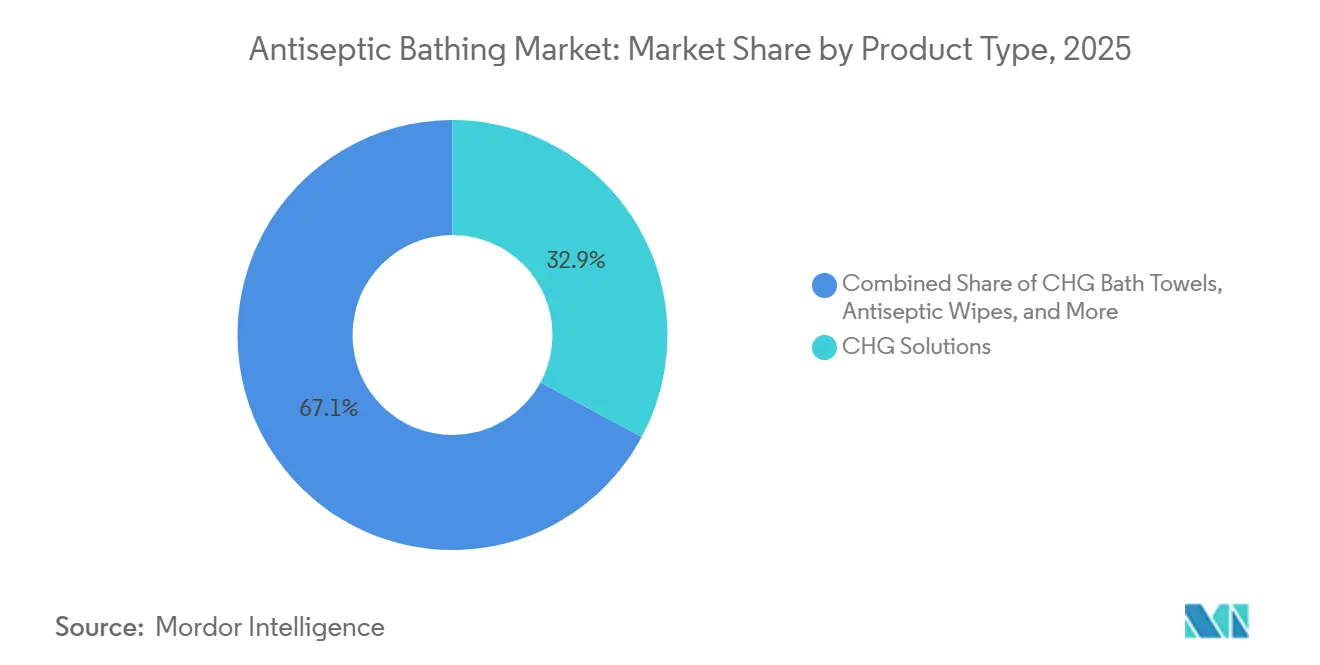
Wipe Formats Gain Ground on Incumbent SolutionsCHG Solutions held 32.86% of product-type revenue in 2025 and remained the largest format in the antiseptic bathing market. Established dilution routines, clinical familiarity, and economical bulk purchasing support their use in high-volume public hospitals. Solutions are often preferred where the cost per patient-day has greater weight in purchasing decisions. Antiseptic wipes are another important format because they combine infection prevention with a simpler bedside workflow. They remove the need for a wash basin and can make delivery more consistent. CHG Bath Towels are the fastest-growing product type, with the antiseptic bathing market size for this segment projected to grow at a 5.91% CAGR through 2031. Cloth-based products are particularly suited to daily protocols in intensive care units.
A 2026 review linked daily CHG-impregnated cloth bathing with lower overall healthcare-associated infection incidence and fewer catheter-associated urinary tract infections in prospective intensive care unit studies. The review also indicated that cloth delivery can produce more repeatable skin CHG concentrations than diluted solutions. Antiseptic shampoo caps have a smaller but growing role where conventional hair washing may create aspiration risk. Their no-rinse design fits intensive care workflows and can support discharge planning for home care. Bathing solutions, foam products, and sprays remain smaller categories in the antiseptic bathing market. Manufacturers are reformulating these products for caregivers who may not have clinical training. Formats that reduce dosing uncertainty can be useful as care moves beyond acute hospitals.



By Active Ingredient:
Octenidine Challenges CHG’s DominanceChlorhexidine Gluconate held 58.19% of active-ingredient revenue in 2025, supported by long-standing clinical use and formulary adoption. This position reflects more than 40 years of clinical validation across acute care settings. CHG remains a core active ingredient in the antiseptic bathing market because protocols, staff training, and procurement systems are already built around it. Octenidine is the fastest-growing active ingredient and is forecast to advance at a 6.05% CAGR through 2031. The EFFECT study found that daily octenidine bathing significantly reduced intensive-care-unit-acquired primary bacteremia. The effect was especially clear for Gram-positive bacteria and skin commensals. The study supports octenidine as an added infection prevention measure in intensive care.
Octenidine offers an option where CHG safety or authorization limits affect product selection. Its lower anaphylaxis risk profile and the absence of documented antiseptic-resistance induction are relevant as antimicrobial-resistance surveillance expands. Povidone-Iodine remains useful in wound and burn care where CHG is contraindicated. Benzalkonium chloride, alcohol-based actives, and triclosan serve narrower product uses. Triclosan remains concentrated in legacy products with a more limited commercial case. Schülke & Mayr identifies octenidine as an alternative for preoperative skin washing where CHG and titanium implant interactions are a concern. This expands the antiseptic bathing industry opportunity for octenidine in orthopedic and dental care.
By Application:
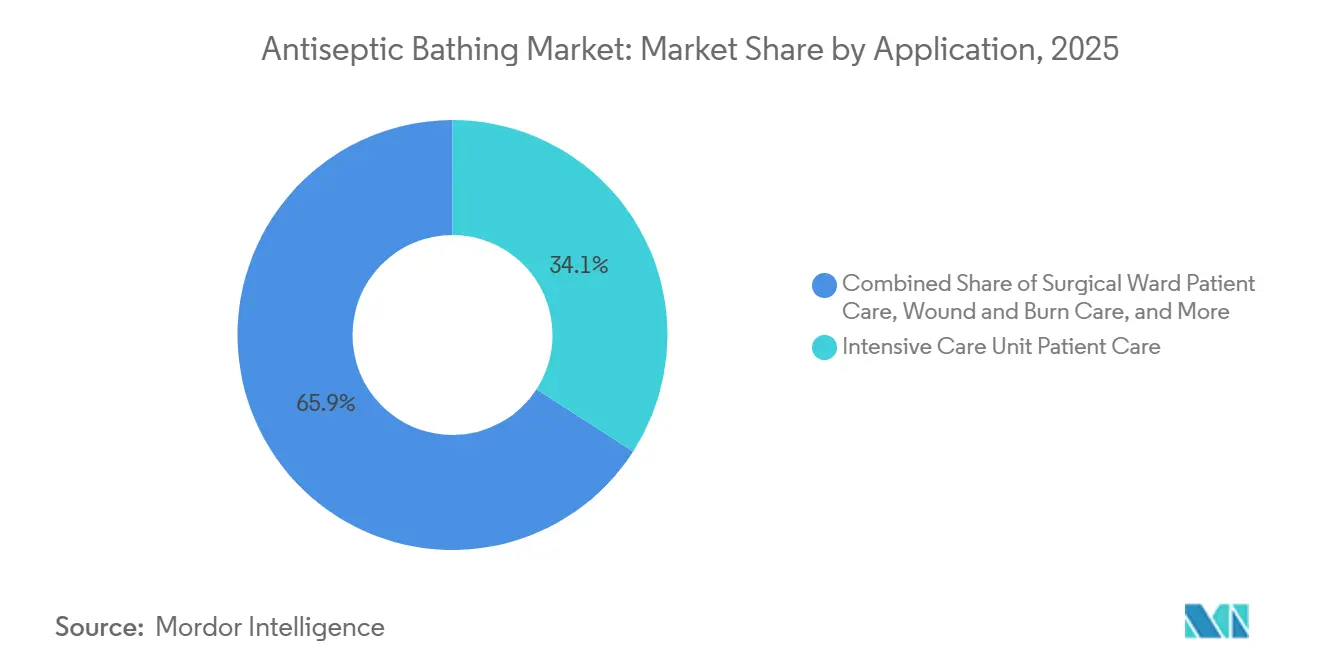
Intensive Care Anchors Demand While Home Care ExpandsIntensive Care Unit Patient Care accounted for 34.11% of application revenue in 2025, making it the largest application in the antiseptic bathing market. Intensive care demand is recurring because patients may require daily bathing during stays involving central lines and catheters. Surgical Ward Patient Care is the next major use area and is supported by preoperative skin preparation and postoperative decolonization practices. Home-Based Patient Hygiene is the fastest-growing application and is projected to advance at a 5.81% CAGR through 2031. Post-discharge protocols increasingly extend antiseptic bathing to patients with invasive devices, wounds, or immunocompromised conditions. Earlier discharge policies shift some infection prevention responsibility from clinical staff to patients and caregivers. This strengthens demand for simple single-use products that reduce the chance of incorrect use.
Long-Term Care Patient Hygiene has a stable demand linked to facility resident counts and routine care requirements. Wound and Burn Care also has steady demand but uses a different product mix. CHG can be unsuitable at high concentrations on open wounds because of cytotoxicity concerns. European wound care practice has historically favored octenidine and polyhexanide solutions in some of these situations. This distinction shapes formulary choices across wound care networks in Germany, France, and Poland. The antiseptic bathing market industry response depends on matching active ingredients and formats to each care setting. Products for home use strengthen the antiseptic bathing market when they give clear instructions and provide reliable single-use dosing for caregivers.
By Distribution Channel:
Distributors and GPOs Reshape Commercial AccessDirect Institutional Sales held 44.23% of distribution-channel revenue in 2025, supported by contracts between manufacturers and large delivery systems. These relationships remain important for products with established hospital formulary acceptance. Medical and Healthcare Distributors are the fastest-growing channel, with a projected 6.23% CAGR through 2031. Their expansion reflects a wider shift toward aggregated purchasing for infection prevention supplies. The Healthcare Group Purchasing Industry Initiative reported in 2026 that group purchasing organizations continue to help providers manage rising supply chain costs. Their role increasingly extends to nursing homes, senior living facilities, and home health agencies. This gives distributors a larger role in supplying fragmented non-acute settings.
A group purchasing contract can provide broad access across many facilities but may reduce manufacturer margins. Losing a contract renewal can also remove a product from consideration across multiple provider sites. Group purchasing organizations influence the antiseptic bathing market as an operational route for distributing contracted products to facilities. Pharmacies and drug stores are gaining relevance as patients encounter antiseptic bathing products through discharge plans. This creates a retail category adjacent to institutional purchasing. Direct sales, distributors, group purchasing organizations, pharmacies, and other channels will remain important because providers use different purchasing structures. Channel selection will depend on clinical setting, contract access, and the level of support required for implementation.
Geography Analysis
North America Antiseptic Bathing Market
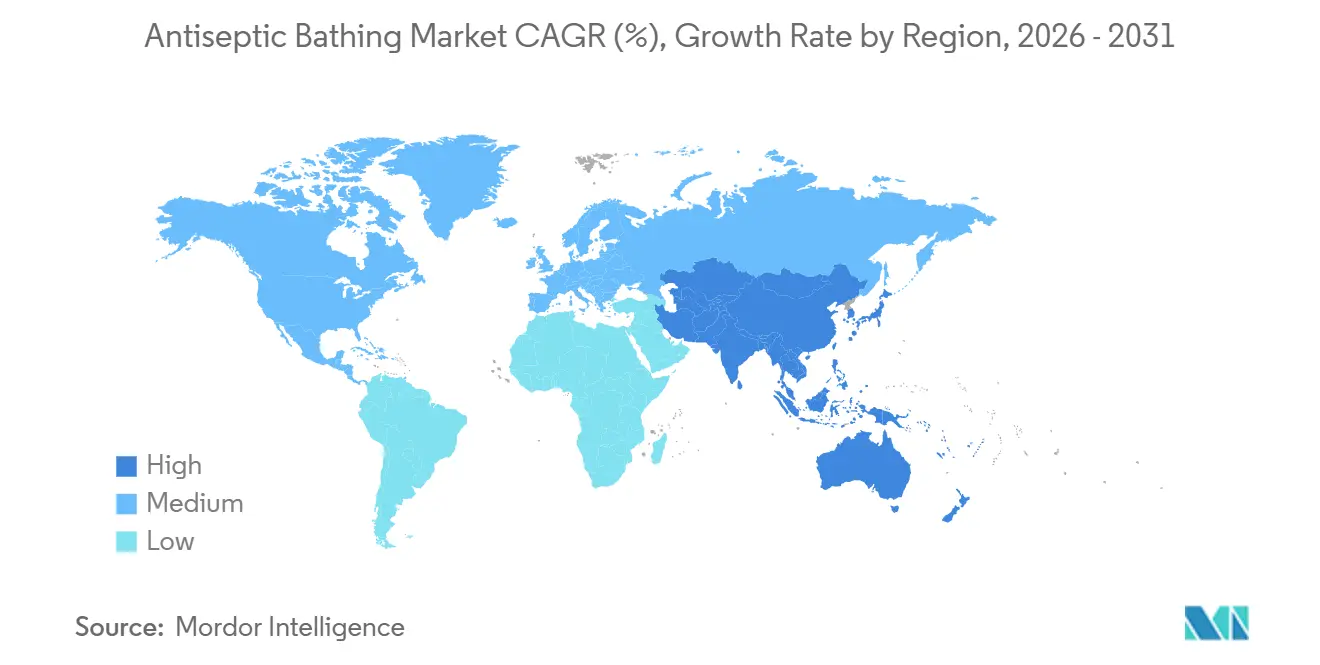
North America held 41.47% of global revenue in 2025 and represented the largest regional antiseptic bathing market. U.S. demand is supported by hospital quality programs, mandatory infection reporting, and payment mechanisms that make healthcare-associated infection prevention financially important. The Centers for Disease Control and Prevention’s National Healthcare Safety Network provides a reporting framework used by health care facilities for these infections. Group purchasing organizations and integrated delivery networks support broad formulary standardization in the United States. They also concentrate buyer power and can pressure supplier margins. Canada has comparable institutional infection prevention activity, while Mexico is an emerging opportunity as private hospital capacity expands.
Europe Antiseptic Bathing Market
Europe has mature, evidence-led purchasing systems in Northern and Western countries, where octenidine is increasingly considered alongside CHG. Southern and Eastern Europe remain more price sensitive and are earlier in the adoption of standardized CHG protocols. Germany is an active research location, with a randomized study of 4% chlorhexidine gluconate and disposable antibacterial bath wipes in intensive care settings that began in September 2024. Mölnlycke’s MHRA-approved Hibiwash product shows how European regulatory requirements can support differentiation for CHG formulations containing emollients. The United Kingdom continues to track bloodstream infections through mandatory surveillance, which maintains focus on infection prevention across National Health Service trusts. The regional antiseptic bathing market is therefore shaped by clinical evidence, regulation, and national procurement rules.
APAC Antiseptic Bathing Market
Asia-Pacific is forecast to be the fastest-growing region, at a 5.98% CAGR through 2031. China is expanding secondary and tertiary hospital capacity, while state procurement platforms can support standardized CHG adoption. India’s growing private hospital base and surgical activity are creating demand for clinical-grade products where soap-and-water protocols were previously common. Japan supports the uptake of rinse-free formats for older patients through high health care spending and an aging population. A Korean intensive care study of daily CHG bathing with antibiotic and proton-pump-inhibitor stewardship is currently recruiting for the prevention of carbapenemase-producing Enterobacteriaceae transmission and infection.

Competitive Landscape
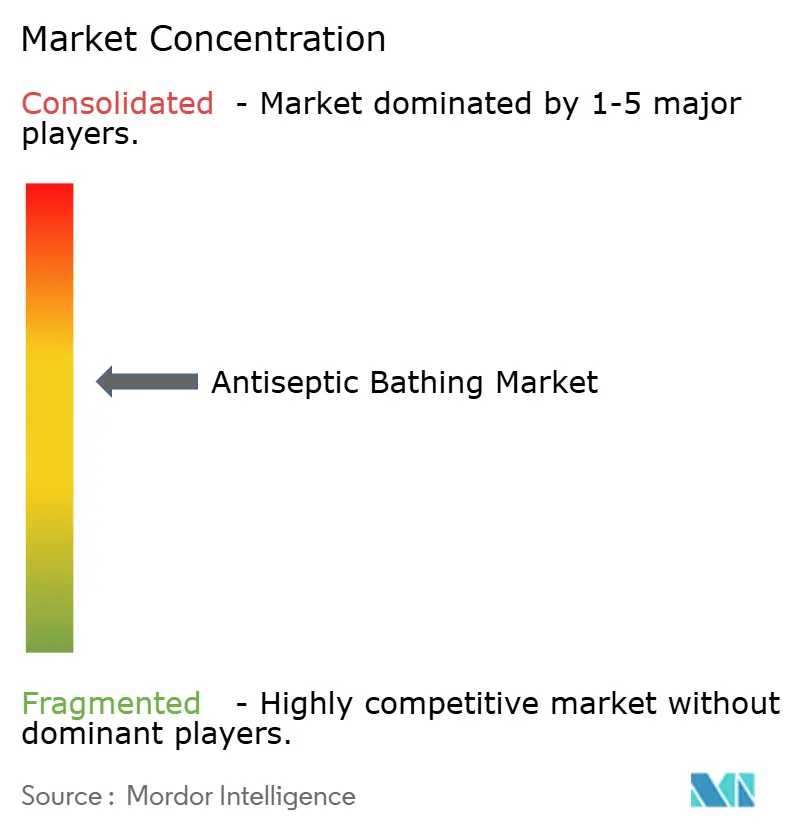
The antiseptic bathing market has moderate consolidation among major institutional suppliers. Stryker’s Sage Products division and Medline Industries have strong positions in North American CHG wipe and cloth procurement. Their position benefits from group purchasing contracts, formulary acceptance, and clinical validation records. Mölnlycke Health Care and B. Braun Melsungen are important European participants. Mölnlycke’s Hibi brand includes CHG rinse and no-rinse formats, while B. Braun’s Lavasept products address procedural and wound care uses. Competition in the antiseptic bathing market centers on contract access, clinical evidence, and product delivery formats.
Mölnlycke began a USD 135 million expansion of its Brunswick, Maine, manufacturing facility in September 2025.[3]Mölnlycke Health Care, “Mölnlycke Breaks Ground on USD 135 Million Expansion in Brunswick, Maine,” Mölnlycke Health Care, molnlycke.com The project adds production lines, warehousing, and a converting line for finished products, and is expected to be completed by early 2027. In March 2026, BD received U.S. Food and Drug Administration clearance for Surgiphor 1000mL, an antimicrobial irrigation system for powered lavage. The product is adjacent to surgical antisepsis and broadens BD’s presence in related consumables. In July 2026, Medline announced a distribution agreement with HPSI Purchasing Services for nursing homes, senior living facilities, home health, and hospice providers. These moves show how manufacturers are building capacity and access across both acute and post-acute care.
Smaller suppliers such as GAMA Healthcare, Paul Hartmann, and Schülke & Mayr use octenidine and polyhexanide products where CHG safety or effectiveness is questioned. Home care products with simple instructions and tamper-evident packaging remain an opening for suppliers serving post-discharge patients. Digital tools that confirm bathing completion may also address inconsistent protocol execution in intensive care. Medtech-supported home health platforms may link product subscriptions to post-discharge care management. This can bypass traditional group purchasing and distributor routes for selected users.
Antiseptic Bathing Industry Leaders
Becton, Dickinson and Company
Ecolab Inc.
Medline Industries, LP
Solventum Corporation
Stryker Corporation
- *Disclaimer: Major Players sorted in no particular order
Antiseptic Bathing Market Companies Covered in this Report
- B. Braun
- Beckton Dickinson
- Cardinal Health
- Ecolab
- GAMA Healthcare Ltd.
- GOJO Industries, Inc.
- Johnson & Johnson
- Kemin Industries
- Kimberly-Clark Worldwide
- Medline Industries
- Molnlycke Health Care
- Hartmann Group
- Perrigo Company
- Reckitt Benckiser Group
- Sage Products
- Smiths Group
- Solventum Corporation
- STERIS
- Stryker
- The Clorox Company

Recent Industry Developments in Antiseptic Bathing Market
- July 2026: Medline Industries announced a new distribution agreement with HPSI Purchasing Services, a GPO serving thousands of nursing homes, senior living facilities, and home health and hospice providers across the United States.
- May 2026: Bactiguard and BD strengthened their global partnership under a restated long-term agreement expanding access to Bactiguard-coated Foley catheters worldwide.
- March 2026: BD received FDA 510(k) clearance for the Surgiphor 1000mL, the first and only 1,000mL antimicrobial irrigation system designed for powered lavage.
- September 2025: Mölnlycke Health Care broke ground on a USD 135 million expansion of its wound care manufacturing facility in Brunswick, Maine, USA, under its strategic manufacturing localization program.


Global Antiseptic Bathing Market Report Scope
The antiseptic bathing market refers to the global market for bathing products infused with antiseptic agents that reduce microbial load on the skin and support infection prevention protocols. These products play a critical role in lowering the risk of hospital-acquired infections, particularly during preoperative preparation, intensive care, and other critical care settings where infection control remains a key priority. The market includes specialized antiseptic solutions, pre-moistened wipes, and cleansing products used across hospitals, clinics, and homecare settings.
The antiseptic bathing market is segmented by product type, active ingredient, application, distribution channel, and geography. By product type, it is further divided into CHG bath towels, CHG solutions, antiseptic wipes, antiseptic bathing solutions, antiseptic shampoo caps, and others. By active ingredient, it is segmented into chlorhexidine gluconate, povidone-iodine, octenidine, benzalkonium chloride, alcohol-based actives, triclosan, and other active ingredients. By application, the market is segmented into intensive care unit patient care, surgical ward patient care, wound and burn care, long-term care patient hygiene, home-based patient hygiene, and others. By distribution channel, the market is segmented into direct institutional sales, medical and healthcare distributors, group purchasing organizations, pharmacies and drug stores, and others. The geography segment is further divided into North America, Europe, Asia-Pacific, the Middle East and Africa, and South America. The report also covers the estimated market sizes and trends for 17 countries across major regions globally. The report offers the market size and forecasts in value (USD) for the above segments.
| CHG Bath Towels |
| CHG Solutions |
| Antiseptic Wipes |
| Antiseptic Bathing Solutions |
| Antiseptic Shampoo Caps |
| Others |
| Chlorhexidine Gluconate |
| Povidone-Iodine |
| Octenidine |
| Benzalkonium Chloride |
| Alcohol-Based Actives |
| Triclosan |
| Other Active Ingredients |
| Intensive Care Unit Patient Care |
| Surgical Ward Patient Care |
| Wound and Burn Care |
| Long-Term Care Patient Hygiene |
| Home-Based Patient Hygiene |
| Others |
| Direct Institutional Sales |
| Medical and Healthcare Distributors |
| Group Purchasing Organizations |
| Pharmacies and Drug Stores |
| Others |
| North America | United States |
| Canada | |
| Mexico | |
| Europe | Germany |
| United Kingdom | |
| France | |
| Italy | |
| Spain | |
| Rest of Europe | |
| Asia-Pacific | China |
| Japan | |
| India | |
| Australia | |
| South Korea | |
| Rest of Asia-Pacific | |
| Middle East and Africa | GCC |
| South Africa | |
| Rest of Middle East and Africa | |
| South America | Brazil |
| Argentina | |
| Rest of South America |
| By Product Type | CHG Bath Towels | |
| CHG Solutions | ||
| Antiseptic Wipes | ||
| Antiseptic Bathing Solutions | ||
| Antiseptic Shampoo Caps | ||
| Others | ||
| By Active Ingredient | Chlorhexidine Gluconate | |
| Povidone-Iodine | ||
| Octenidine | ||
| Benzalkonium Chloride | ||
| Alcohol-Based Actives | ||
| Triclosan | ||
| Other Active Ingredients | ||
| By Application | Intensive Care Unit Patient Care | |
| Surgical Ward Patient Care | ||
| Wound and Burn Care | ||
| Long-Term Care Patient Hygiene | ||
| Home-Based Patient Hygiene | ||
| Others | ||
| By Distribution Channel | Direct Institutional Sales | |
| Medical and Healthcare Distributors | ||
| Group Purchasing Organizations | ||
| Pharmacies and Drug Stores | ||
| Others | ||
| By Geography | North America | United States |
| Canada | ||
| Mexico | ||
| Europe | Germany | |
| United Kingdom | ||
| France | ||
| Italy | ||
| Spain | ||
| Rest of Europe | ||
| Asia-Pacific | China | |
| Japan | ||
| India | ||
| Australia | ||
| South Korea | ||
| Rest of Asia-Pacific | ||
| Middle East and Africa | GCC | |
| South Africa | ||
| Rest of Middle East and Africa | ||
| South America | Brazil | |
| Argentina | ||
| Rest of South America | ||


Key Questions Answered in the Report
What is driving demand for antiseptic bathing products?
Hospital infection prevention protocols, surgical activity, and daily use in high-risk care support demand. The market is projected to grow at a 4.62% CAGR through 2031.
Which antiseptic bathing product type is growing fastest?
CHG Bath Towels are projected to grow at a 5.91% CAGR through 2031, supported by their no-rinse format and use in intensive care workflows.
Why is octenidine gaining attention in patient bathing?
Octenidine is forecast to grow at a 6.05% CAGR through 2031. A 2024 intensive care study found that daily octenidine bathing reduced primary bacteremia.
Which care setting has the largest demand for antiseptic bathing?
Intensive Care Unit Patient Care led applications with a 34.11% share in 2025 because bathing is frequently linked to central lines and catheter use.
How is home care affecting antiseptic bathing demand?
Home-Based Patient Hygiene is projected to grow at a 5.81% CAGR through 2031 as discharge protocols shift some infection prevention tasks to caregivers.
Which region is expanding fastest for antiseptic bathing products?
Asia-Pacific is forecast to grow at a 5.98% CAGR through 2031, supported by hospital expansion, surgical activity, and increasing protocol standardization.
Page last updated on:





