
Anti-Fatigue Cosmetics Market Size and Share
Market Overview
| Study Period | 2021 - 2031 |
|---|---|
| Market Size (2026) | USD 19.78 Million |
| Market Size (2031) | USD 25.04 Million |
| Growth Rate (2026 - 2031) | 4.83 % |
| Fastest Growing Market | Asia-Pacific |
| Largest Market | North America |
| Market Concentration | Medium |
Major Players
*Disclaimer: Major Players sorted in no particular order Image © Mordor Intelligence. Reuse requires attribution under CC BY 4.0. |
|
Anti-Fatigue Cosmetics Market Analysis by Mordor Intelligence
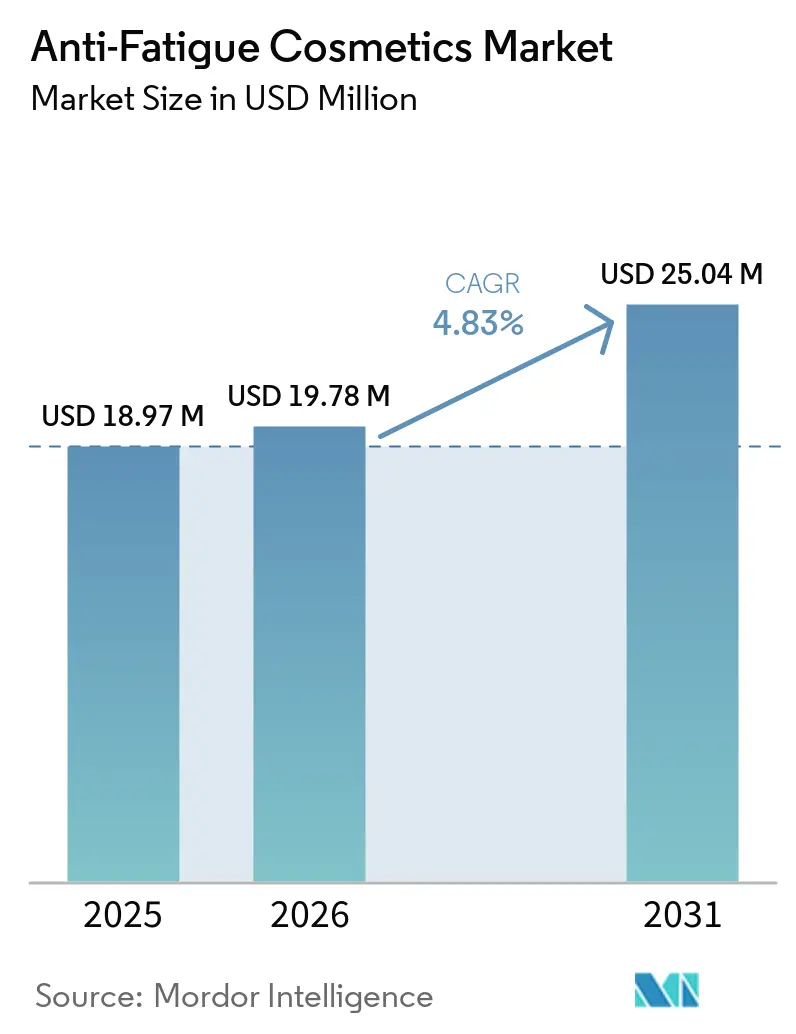
The anti-fatigue cosmetics market size was valued at USD 18.97 million in 2025 and is estimated to grow from USD 19.78 million in 2026 to USD 25.04 million by 2031, at a CAGR of 4.83% during the forecast period (2026-2031). Anti-fatigue cosmetics are skin care products designed to reduce visible signs of tired skin, including dullness, dryness, puffiness, dark circles, and uneven skin tone. Long hours in front of screens, pollution, UV exposure, and lack of sleep are making these concerns more common among consumers. As a result, more people are looking for products that refresh the skin, improve radiance, and support daily skin recovery. Research on visible light and particulate matter is helping brands develop products that protect the skin barrier and reduce the visible impact of environmental stress. Premium and dermatologist-inspired products are expected to see growth opportunities, as consumers are willing to pay more for products that show clear results. Growth in the global anti-fatigue cosmetics market will depend on proven efficacy, safe formulations, and products that fit easily into existing daily skin care routines. The market is moderately consolidated.
Key Report Takeaways
- By product type, moisturizers/creams held 33.42% of the anti-fatigue cosmetics market share in 2025, while serums and essences are forecast to grow at a CAGR of 6.24% through 2031.
- By category, synthetic and conventional formulations held 72.15% of the anti-fatigue cosmetics market share in 2025, while natural and organic formulations are forecast to grow at a CAGR of 6.37% through 2031.
- By price range, mass products held 54.66% of value in 2025, while premium products are forecast to grow at a CAGR of 6.55% through 2031.
- By end user, women held 67.05% of demand in 2025, while men are forecast to grow at a CAGR of 6.12% through 2031.
- By distribution channel, health and beauty stores held 46.74% of value in 2025, while online retail stores is forecast to grow at a CAGR of 6.78% through 2031.
- By geography, North America held 34.83% of value in 2025, while Asia-Pacific is forecast to grow at a CAGR of 6.14% through 2031.
Note: Market size and forecast figures in this report are generated using Mordor Intelligence’s proprietary estimation framework, updated with the latest available data and insights as of January 2026.
Market Trends and Insights
Drivers Impact Analysis of Anti-Fatigue Cosmetics Market*
| Driver | (~) % Impact on CAGR Forecast | Geographic Relevance | Impact Timeline |
|---|---|---|---|
| Growing consumer focus on healthy, radiant, and well-rested skin appearance | +1.5% | Global, with strongest intensity in North America and Europe | Medium term (2–4 years) |
| Increasing exposure to pollution, UV radiation, and blue light | +1.2% | Asia-Pacific core (China, India, Indonesia); spill-over to Middle East and Africa and North America | Short term (≤ 2 years) |
| Incorporation of clinically proven active ingredients such as caffeine, peptides, and antioxidants | +1.0% | Global; strongest in North America, Europe, and Japan | Long term (≥ 4 years) |
| Adoption of dermatologist-inspired anti-fatigue skincare | +0.8% | North America and Europe primarily | Medium term (2–4 years) |
| Demand for antioxidant-rich skincare products to combat oxidative stress | +0.7% | Global; core demand in Asia-Pacific and Middle East and Africa urban centers | Medium term (2–4 years) |
| Continuous innovation in overnight recovery and skin-repair formulations | +0.6% | Global; led by North America and Asia-Pacific | Long term (≥ 4 years) |
| Source: Mordor Intelligence | |||
Increasing Exposure to Pollution, UV Radiation, and Blue Light
Increasing exposure to air pollution, UV rays, and blue light is raising demand for anti-fatigue cosmetics, as these factors can make the skin look dull, dry, puffy, and tired. According to the Clean Air Fund, 17 of the world’s 30 most polluted cities are in India, while New Delhi has the poorest air quality among capital cities globally, with PM2.5 levels nearly 10 times higher than World Health Organization guidelines[1]Source: Clean Air Fund Org, "India", cleanairfund.org. Such high pollution exposure is encouraging consumers to look for skincare products that help protect and refresh the skin. As a result, demand is growing for products with antioxidant ingredients such as vitamin C, ferulic acid, vitamin E, and green tea, which are commonly used to help reduce the impact of environmental stress on the skin. Brands are launching antioxidant serums, protective moisturizers, face mists, and eye treatments that target concerns such as dark circles, puffiness, and tired-looking skin. This creates growth opportunities for anti-fatigue cosmetics, especially in crowded urban markets where pollution, sunlight, long screen time, and busy lifestyles often contribute to visible signs of skin fatigue.
Demand for Antioxidant-Rich Skincare Products to Combat Oxidative Stress
Consumers are becoming more aware that pollution and strong UV exposure can make the skin look tired, dull, dry, puffy, and uneven. This is increasing demand for anti-fatigue skincare products with antioxidants, as these ingredients help protect the skin from environmental damage and support a fresher, healthier appearance. According to GK365, Bengaluru recorded an extreme UV Index of 13, the highest among Indian cities, showing how strong UV exposure can be in urban markets[2]Source: GK365, "UV Index India 2026: Hidden Health Risk Explained — Scale, Cities & Protection", gk365.in. As a result, brands are adding ingredients such as vitamin C, vitamin E, ferulic acid, green tea, and botanical extracts to serums, creams, masks, and eye treatments to target visible signs of fatigue and support skin recovery. For example, Galderma’s Cetaphil AM/PM Antioxidant Serums focus on antioxidant-based care, with products designed to help protect the skin during the day and support recovery at night. This shows how brands are linking protection against oxidative stress to anti-fatigue benefits in everyday skincare routines.
Incorporation of Clinically Proven Active Ingredients such as Caffeine, Peptides, and Antioxidants
The increasing use of well-known active ingredients such as caffeine, peptides, and antioxidants is helping brands make anti-fatigue cosmetics more effective and easier for consumers to understand. Caffeine is commonly added to eye creams, serums, and patches because it helps reduce the look of puffiness and dark circles, which are common signs of tired skin. Peptides are used to support firmer-looking skin and improve the appearance of fine lines, while antioxidants help protect the skin from damage caused by pollution, UV exposure, and other daily stress factors. By combining these ingredients, brands can offer products that address several concerns at once, including dullness, dryness, puffiness, dark circles, wrinkles, and loss of firmness. This approach is also helping companies position their products as targeted solutions for tired-looking skin rather than as basic skincare items. For example, Clarins’ Double Serum Eye combines caffeine with other targeted ingredients to address puffiness, dark circles, wrinkles, and loss of firmness, showing how brands are using familiar and effective ingredients to create multifunctional anti-fatigue products.
Continuous Innovation in Overnight Recovery and Skin-Repair Formulations
Brands are making more anti-fatigue cosmetics that work while consumers sleep, as nighttime is an important period for skin recovery. These products are designed to do more than give the skin a quick fresh look during the day. They help improve hydration, support the skin barrier, and make tired-looking skin appear smoother, brighter, and more rested by morning. Companies are using ingredients such as peptides, antioxidants, botanical extracts, ceramides, and skin-renewal actives to support these benefits. For example, Ashland is expected to launch Eternight biofunctional in April 2026, an iris-root extract platform developed for nighttime skin renewal and longevity-focused formulations. Similarly, Galderma’s Cetaphil AM/PM Antioxidant Serums, expected to launch in March 2026, show how brands are creating separate day and night routines that combine daytime antioxidant protection with nighttime skin recovery.
Restraints Impact Analysis of Anti-Fatigue Cosmetics Market*
| Restraint | (~) % Impact on CAGR Forecast | Geographic Relevance | Impact Timeline |
|---|---|---|---|
| Risk of skin irritation and allergic reactions associated with certain active ingredients | −0.5% | Global, most pronounced in sensitive-skin dominant markets (Japan, South Korea, Western Europe) | Short term (≤ 2 years) |
| High competition from conventional skincare and anti-aging products | −0.4% | North America and Europe | Short term (≤ 2 years) |
| Limited scientific validation of efficacy claims reducing consumer confidence | −0.3% | Global | Medium term (2–4 years) |
| Stringent regulations governing cosmetic ingredient safety and product claims | −0.4% | Europe (European Union, Registration, Evaluation, Authorisation and Restriction of Chemicals), North America (Food and Drug Administration Over-the-Counter framework) | Long term (≥ 4 years) |
| Source: Mordor Intelligence | |||
Risk of Skin Irritation and Allergic Reactions Associated with Certain Active Ingredients
Some active ingredients used in anti-fatigue cosmetics may irritate the skin or cause sensitivity and allergic reactions, which can limit the growth of the global anti-fatigue cosmetics market. Ingredients such as retinoids, strong acids, caffeine, fragrances, and certain plant-based extracts can sometimes lead to redness, dryness, burning, itching, or discomfort, especially for consumers with sensitive skin or when products contain high concentrations of these ingredients. As a result, some consumers may avoid these products, reduce usage, or choose milder and dermatologist-tested alternatives. To address this concern, brands need to use safe ingredient levels, test products carefully for skin tolerance, clearly explain how to use them, and make reliable product claims. These steps can help build consumer trust and support the wider adoption of anti-fatigue cosmetics.
Stringent regulations Governing Cosmetic Ingredient Safety and Product Claims
Strict rules on cosmetic ingredient safety, ingredient disclosure, product registration, and proof of product safety can slow the growth of the global anti-fatigue cosmetics market. These rules increase costs for brands and make product development and launches take longer. In the United States, the Modernization of Cosmetics Regulation Act requires cosmetic companies to register facilities, list products, follow good manufacturing practices, report serious adverse events, and disclose fragrance and flavor ingredients[3]Source: Environmental Working Group, "FDA Warns Cosmetics Industry to Follow Law on Untested Ingredients", ewg.org. It also gives the Food and Drug Administration the authority to recall products that may create health risks. Some state rules are even stricter; for example, California bans certain chemicals, including PFAS (Per- and Polyfluoroalkyl Substances), formaldehyde, mercury, and some parabens and phthalates, while several states in the United States have enacted bans on intentionally added PFAS in cosmetics. In the European Union, companies must meet stricter requirements, including pre-market safety assessments, mandatory product registration, and limits or bans on many cosmetic ingredients.
*Our forecasts treat driver/restraint impacts as directional, not additive. The impact forecasts reflect baseline growth, mix effects, and variable interactions.
Anti-Fatigue Cosmetics Market Segment Analysis
By Product Type:
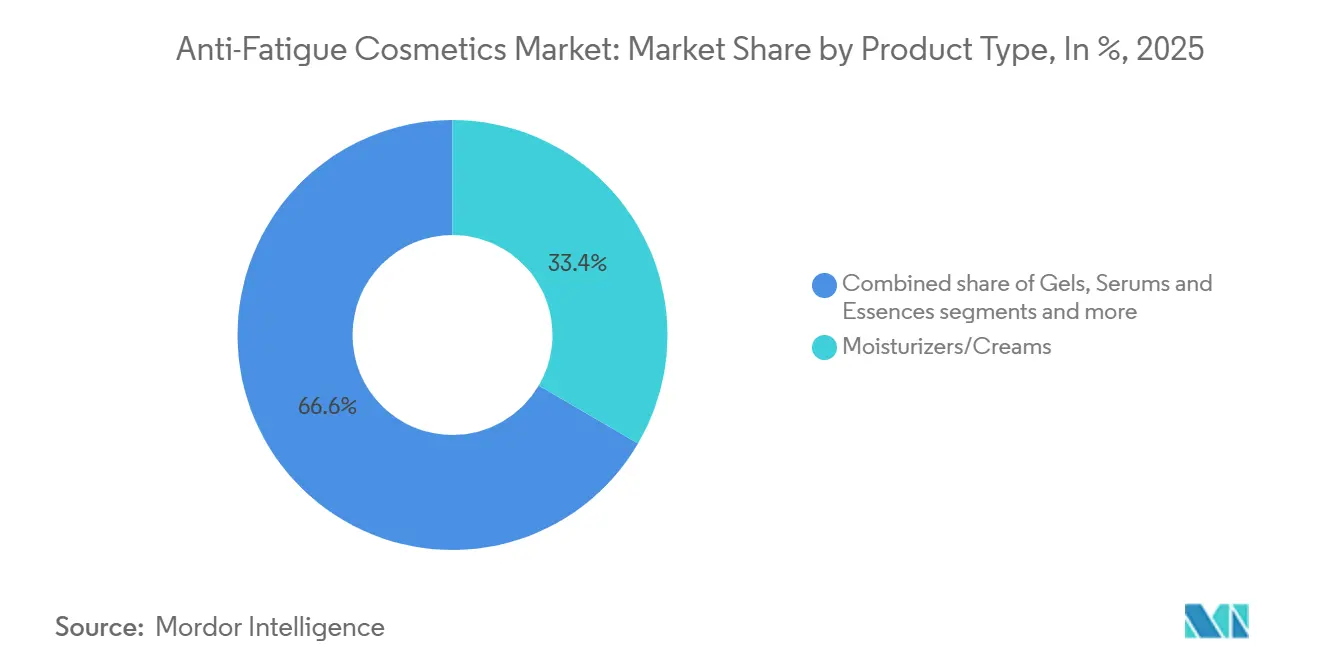
Moisturizers Dominate the Base, Serums Define the Growth CurveMoisturizers/Creams accounted for the largest share of the anti-fatigue cosmetics market in 2025, representing 33.42% of total market revenue. The segment’s prominence is driven by the ease of application, broad product availability across price points and distribution channels, and strong integration into consumers’ daily skincare routines. Moisturizers and creams can contain active ingredients such as caffeine, peptides, antioxidants, and hydrating agents that help improve the appearance of tired-looking skin. Under-eye creams, night moisturizers, and multifunctional face creams are particularly popular among consumers seeking hydration while addressing concerns such as dullness, puffiness, uneven skin texture, and visible signs of fatigue. The increasing preference for convenient, multi-benefit skincare products that combine hydration, revitalization, and targeted skin benefits continues to support demand for this segment.
Serums and Essences are projected to register the fastest growth, with a CAGR of 6.24% through 2031, as consumers increasingly prefer concentrated formulations developed to address specific skin concerns. Their lightweight textures, rapid absorption, and high concentration of targeted ingredients make them well suited to personalized skincare routines focused on hydration, brightening, and skin revitalization. Consumers are increasingly incorporating serums and essences into multi-step skincare regimens to achieve more targeted anti-fatigue benefits. Cleansers provide an accessible entry point for consumers seeking basic anti-fatigue benefits as part of their everyday cleansing routines, while lightweight gels appeal to consumers who prefer non-greasy, fast-absorbing textures, particularly in warmer climates. Meanwhile, masks, patches, mists, sprays, and hybrid skincare-makeup products are gaining attention for their ability to provide quick-refresh benefits and target specific facial areas. These products are particularly suitable for on-the-go skincare routines and consumers seeking convenient solutions to reduce the appearance of tired skin.



By Category:
Synthetics Anchor Volume, Natural Formulations Capture MomentumSynthetic and conventional formulations dominated the anti-fatigue cosmetics market, accounting for 72.15% of the market value in 2025. These products remain popular because their ingredients are stable, easy to control, and suitable for large-scale production. They also allow brands to maintain consistent product quality while keeping prices affordable for mass-market consumers. Since many anti-fatigue products remain on the skin for extended periods, reliable performance and safe preservation support their continued use.
Natural and organic formulations are expected to grow at a 6.37% CAGR through 2031, as more consumers seek products with transparent ingredient sourcing and trusted certifications. Ingredients such as botanical caffeine, food-derived peptides, and fermented antioxidant complexes are gaining interest among skincare buyers. However, brands still face challenges in maintaining product consistency and shelf life with natural ingredients. Large companies can use their research and development strength and acquisitions to expand in this segment, while smaller brands need stronger sourcing and testing practices to build consumer trust.
By Price Range:
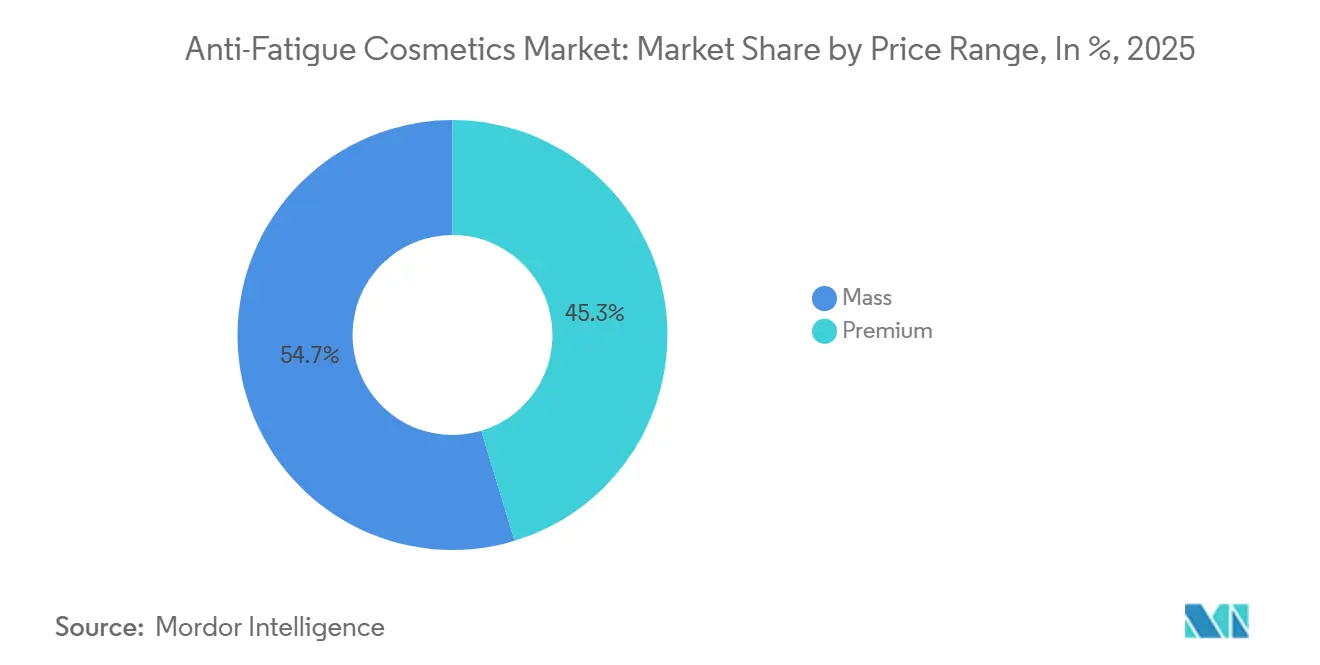
Mass Preserves Volume, Premium Captures Value ExpansionMass products accounted for 54.66% of the anti-fatigue cosmetics market value in 2025, primarily because they are widely available in pharmacies, hypermarkets, drugstores, and other frequently visited retail outlets. Their lower prices make it easier for consumers to try these products and buy them again. Many mass-market brands are also adding more science-backed ingredients and improved formulations to strengthen their position. Beiersdorf’s 2025 expansion of its NIVEA Cellular Epigenetics Rejuvenating Serum across 30 countries shows how advanced skincare technologies are becoming more accessible to a wider consumer base.
Premium products are expected to grow at a 6.55% CAGR through 2031, supported by rising demand for advanced formulations, dermo-cosmetic products, and skincare backed by testing or clinical claims. Consumers in North America and Europe are adding more specialized products to their multi-step skincare routines, which supports the growth of premium products. Specialty retail stores and e-commerce platforms also help brands explain complex product benefits more clearly. This trend is increasing competition for mid-priced products that have limited clinical differentiation.
By End User:
Women Define the Base, Men Are the Category Growth FrontierWomen accounted for 67.05% of demand for anti-fatigue cosmetics in 2025, driven by their regular use of multi-step skincare routines. Products such as eye creams, serums, moisturizers, and night treatments are already part of many women’s daily skincare habits, making anti-fatigue products easier to adopt. Specialty health and beauty retailers also help women discover these products through in-store browsing, expert advice, and product recommendations. This strong buying pattern makes women the main consumer group in the market and creates steady opportunities for repeat purchases.
Men are projected to grow at a 6.12% CAGR through 2031, as more male consumers show interest in simple and effective skincare products. Lightweight gels, anti-fatigue eye treatments, and easy-to-use routines can help reduce barriers for first-time users. Brands are also focusing on products that address common concerns such as tired-looking skin, puffiness, and dullness. L’Oréal’s May 2026 update to its Men Expert Hydra Energetic range, with improved anti-fatigue actives, wider distribution, and sustainability initiatives, reflects the growing focus on men as a separate consumer group.
By Distribution Channel:
Health and Beauty Stores Anchor Share, Online Retail AcceleratesHealth and beauty stores held the largest distribution share, accounting for 46.74% of value in 2025. Consumers prefer these stores because they can check the product’s texture, scent, and absorption before buying. Store staff also help shoppers understand how anti-fatigue cosmetics work and which products suit their needs. Loyalty programs encourage customers to return, while placing these products near eye care items, moisturizers, and serums makes comparison easier.
Online retail stores are expected to grow the fastest, with a 6.78% CAGR through 2031. Consumers use online reviews, ingredient details, and comparison tools to make purchase decisions. Digital education, subscriptions, and social commerce also make online shopping more convenient. Livestreaming and social commerce platforms are gaining strong traction in China, Southeast Asia, and India, and the May 2026 launch of The Ordinary Caffeine 3% + Escin 1% Face Serum via TikTok Shop and physical retail in Southeast Asia underscores the growing importance of this channel.
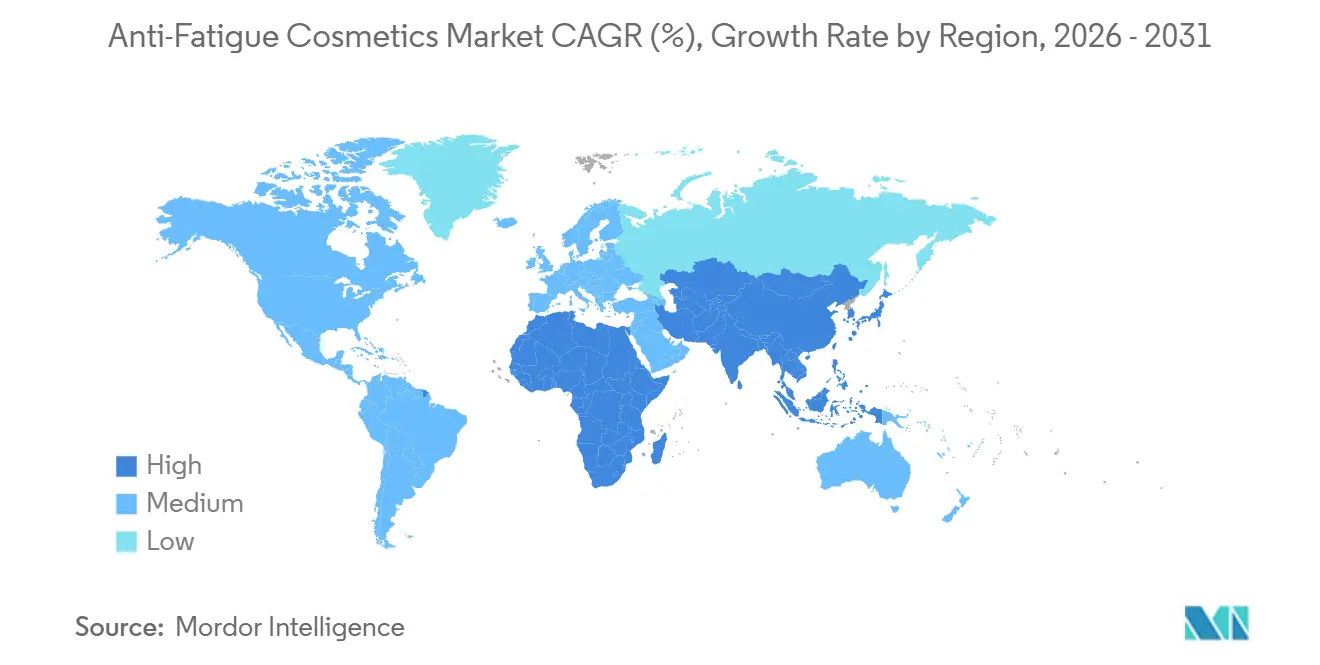
Geography Analysis
North America Anti-Fatigue Cosmetics Market
North America held the largest share of the anti-fatigue cosmetics market, accounting for 34.83% of the market value in 2025. Consumers in the region are highly aware of skincare products that help reduce dullness, puffiness, dryness, and tired-looking skin. Strong spending power and well-developed health and beauty retail stores continue to support product demand. The United States remains the key market in the region, while Canada and Mexico are gaining from the growth of premium skincare products and online retail channels.
APAC Anti-Fatigue Cosmetics Market
Asia-Pacific is projected to be the fastest-growing regional market for anti-fatigue cosmetics. The region is expected to expand at a 6.14% CAGR through 2031, supported by higher spending on skincare, rapid urbanization, and rising interest in targeted beauty products. Consumers are increasingly looking for products that provide visible results, such as brighter skin, reduced dark circles, and a refreshed appearance. China, Japan, South Korea, and India are key growth markets, with strong demand for eye patches, serums, gels, and multifunctional treatments.
EMEA and South America Anti-Fatigue Cosmetics Market
Europe, South America, and the Middle East and Africa also offer growth opportunities for anti-fatigue cosmetics. Europe benefits from mature skincare habits and steady demand for premium, natural, and dermo-cosmetic products. In South America and the Middle East and Africa, rising beauty spending and expanding retail networks are improving product access. Germany, France, the United Kingdom, Brazil, the UAE, Saudi Arabia, and South Africa remain notable country markets as consumers show growing interest in targeted skincare solutions.

Competitive Landscape
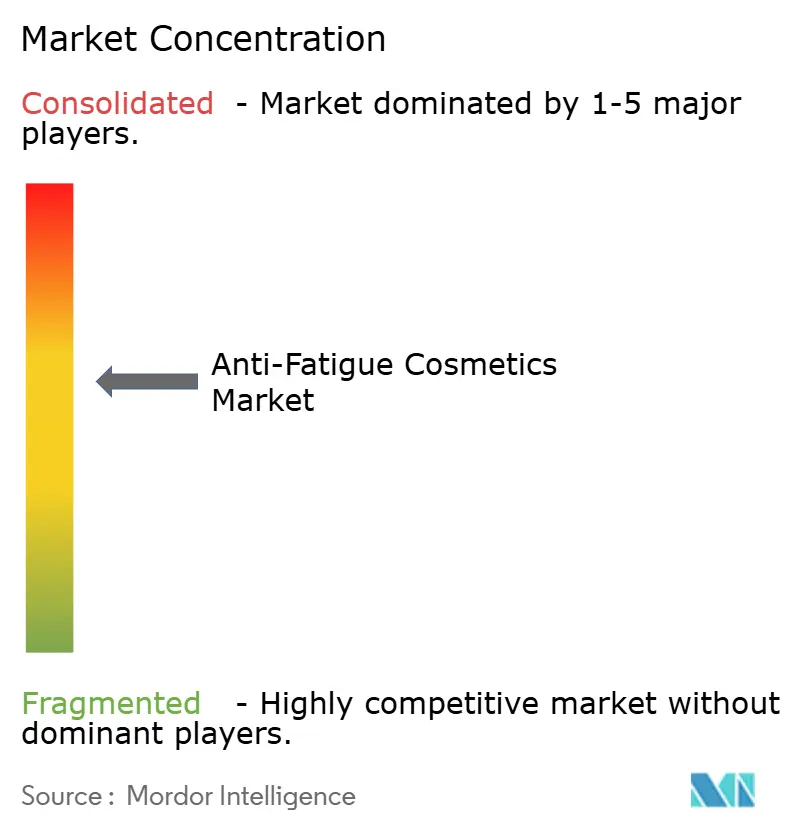
The anti-fatigue cosmetics market is moderately consolidated, with a few large companies holding strong positions. Major players such as L’Oréal, The Estée Lauder Companies, and Shiseido lead the market with strong research and development capabilities, wide brand portfolios, and large distribution networks. These companies use proprietary ingredients and technologies across premium, dermo-cosmetic, and mass-market products. This helps them reach different consumer groups and strengthen their competitive position. Beiersdorf’s EPICELLINE platform and Shiseido’s Second Skin technology show how science-based innovation and visible product benefits are becoming important for differentiation.
Mid-sized and specialized brands compete by offering clear ingredient information, natural and clean-label products, and targeted skincare solutions. Companies such as Caudalie, REN Clean Skincare, Lumene, and DECIEM focus on botanical ingredients, active-led formulas, and affordable pricing to attract consumers. These brands often target specific concerns linked to skin fatigue, such as dullness, dryness, puffiness, and dark circles. The rising availability of serums, eye treatments, patches, and multifunctional products gives smaller brands more opportunities to compete. This allows them to build a strong position without offering a full skincare portfolio.
Strategic partnerships, new ingredient development, and personalization are becoming important ways for companies to compete. Beauty companies are working with biotechnology firms and ingredient specialists to develop advanced actives for skin longevity, anti-aging, and recovery. Personalized skin assessments and customized anti-fatigue routines are also creating new growth opportunities. Emerging markets in Southeast Asia, the Middle East and Africa, and other developing regions offer scope for brands to expand their distribution before the market becomes mature. Overall, competition is moving toward scientific credibility, ingredient innovation, affordable products, and visible results.
Anti-Fatigue Cosmetics Industry Leaders
-
L'Oréal S.A.
-
Unilever PLC
-
Shiseido Company, Limited
-
The Estée Lauder Companies Inc.
-
LVMH Moët Hennessy Louis Vuitton SE
- *Disclaimer: Major Players sorted in no particular order
Anti-Fatigue Cosmetics Market Companies Covered in this Report
- L'Oréal S.A.
- Unilever PLC
- Shiseido Company, Limited
- The Estée Lauder Companies Inc.
- LVMH Moët Hennessy Louis Vuitton SE
- Groupe Clarins SA
- Nuxe Group
- Mesoestetic Pharma Group S.L.
- Bio Veda Action Research Co.
- DECIEM Beauty Group Inc.
- Pierre Fabre S.A.
- Caudalie SAS
- Beiersdorf AG
- The Procter & Gamble Company
- Sofina S.A.
- The Ales Group
- Thalgo T.C.H.
- REN Clean Skincare
- Lumene Oy
- LG Household & Health Care Ltd.

Recent Industry Developments in Anti-Fatigue Cosmetics Market
- July 2026: Korean skincare brand Anua introduced its Retinol Berry Eye Patches, a cooling under-eye treatment designed to brighten and refresh the eye area. The patches combine retinol, caffeine, and other targeted ingredients to address visible signs of tiredness, including dullness and under-eye concerns.
- July 2026: Clarins launched its new-generation Double Serum Eye, an advanced eye treatment that draws on the company’s longevity and epigenetics research to target visible signs of eye-area fatigue and aging, including puffiness, dark circles, wrinkles, and loss of firmness.
- June 2026: Aekyung Industrial simultaneously introduced 3 new Signiq Peptide Eye Creams in South Korea and the United States, targeting key signs of eye-area fatigue, including puffiness, wrinkles, dark circles, and dullness.
- May 2026: RVL Pharmaceuticals expanded into skincare with the launch of Upneeq Reveal Under Eye Complex, a targeted treatment designed to brighten, firm, and smooth the under-eye area. The formulation combines 5% stabilized vitamin C with peptides, caffeine, creatine, and green tea to address visible signs of tired-looking eyes, including dark circles, fine lines, puffiness, and dullness.


Global Anti-Fatigue Cosmetics Market Report Scope
Anti-fatigue cosmetics are skincare products designed to minimize visible signs of skin fatigue, including dullness, dryness, puffiness, dark circles, and a tired-looking complexion, while enhancing skin radiance and revitalization. The global anti-fatigue cosmetics market is segmented by product type, category, price range, end user, distribution channel, and geography. By product type, the market is classified into cleansers, moisturizers/creams, gels, serums and essences, masks and patches, mists and sprays, and others. By category, the market is classified into natural and organic and synthetic and conventional. Based on price range, the market is classified into mass and premium. Based on end user, the market is classified into men, women, and unisex. By distribution channel, the market is classified into supermarkets/hypermarkets, health and beauty stores, online retail stores, and other channels. By geography, the market is segmented into North America, Europe, Asia-Pacific, South America, and the Middle East and Africa. The market forecasts are provided in terms of value (USD).
| Cleansers |
| Moisturizers/Creams |
| Gels |
| Serums and Essences |
| Masks and Patches |
| Mists and Sprays |
| Others |
| Natural and Organic |
| Synthetic and Conventional |
| Mass |
| Premium |
| Men |
| Women |
| Unisex |
| Supermarkets/Hypermarkets |
| Health and Beauty Stores |
| Online Retail Stores |
| Other Distribution Channels |
| North America | United States |
| Canada | |
| Mexico | |
| Rest of North America | |
| Europe | Germany |
| United Kingdom | |
| Italy | |
| France | |
| Spain | |
| Rest of Europe | |
| Asia-Pacific | China |
| Japan | |
| India | |
| Australia | |
| Rest of Asia-Pacific | |
| South America | Brazil |
| Argentina | |
| Rest of South America | |
| Middle East and Africa | South Africa |
| Saudi Arabia | |
| United Arab Emirates | |
| Rest of Middle East and Africa |
| By Product Type | Cleansers | |
| Moisturizers/Creams | ||
| Gels | ||
| Serums and Essences | ||
| Masks and Patches | ||
| Mists and Sprays | ||
| Others | ||
| By Category | Natural and Organic | |
| Synthetic and Conventional | ||
| By Price Range | Mass | |
| Premium | ||
| By End User | Men | |
| Women | ||
| Unisex | ||
| By Distribution Channel | Supermarkets/Hypermarkets | |
| Health and Beauty Stores | ||
| Online Retail Stores | ||
| Other Distribution Channels | ||
| By Geography | North America | United States |
| Canada | ||
| Mexico | ||
| Rest of North America | ||
| Europe | Germany | |
| United Kingdom | ||
| Italy | ||
| France | ||
| Spain | ||
| Rest of Europe | ||
| Asia-Pacific | China | |
| Japan | ||
| India | ||
| Australia | ||
| Rest of Asia-Pacific | ||
| South America | Brazil | |
| Argentina | ||
| Rest of South America | ||
| Middle East and Africa | South Africa | |
| Saudi Arabia | ||
| United Arab Emirates | ||
| Rest of Middle East and Africa | ||


Key Questions Answered in the Report
What is the projected value of the global anti-fatigue cosmetics market by 2031?
The anti-fatigue cosmetics market is projected to reach USD 25.04 million by 2031, growing at a 4.83% CAGR from 2026.
Which product type leads anti-fatigue cosmetics demand?
Moisturizers and creams led with 33.42% of value in 2025, supported by their role in familiar daily skin care routines.
Which product format is growing fastest through 2031?
Serums and essences are projected to grow at 6.24% CAGR, supported by consumer interest in concentrated active ingredients.
Which sales channel has the highest projected growth?
Online retail stores are projected to grow at 6.78% CAGR through 2031 because they support ingredient comparison, direct education, and social commerce.
Page last updated on:


 Your data is secure and never sold or shared.


