
Annuloplasty Rings Market Size and Share
Market Overview
| Study Period | 2020 - 2031 |
|---|---|
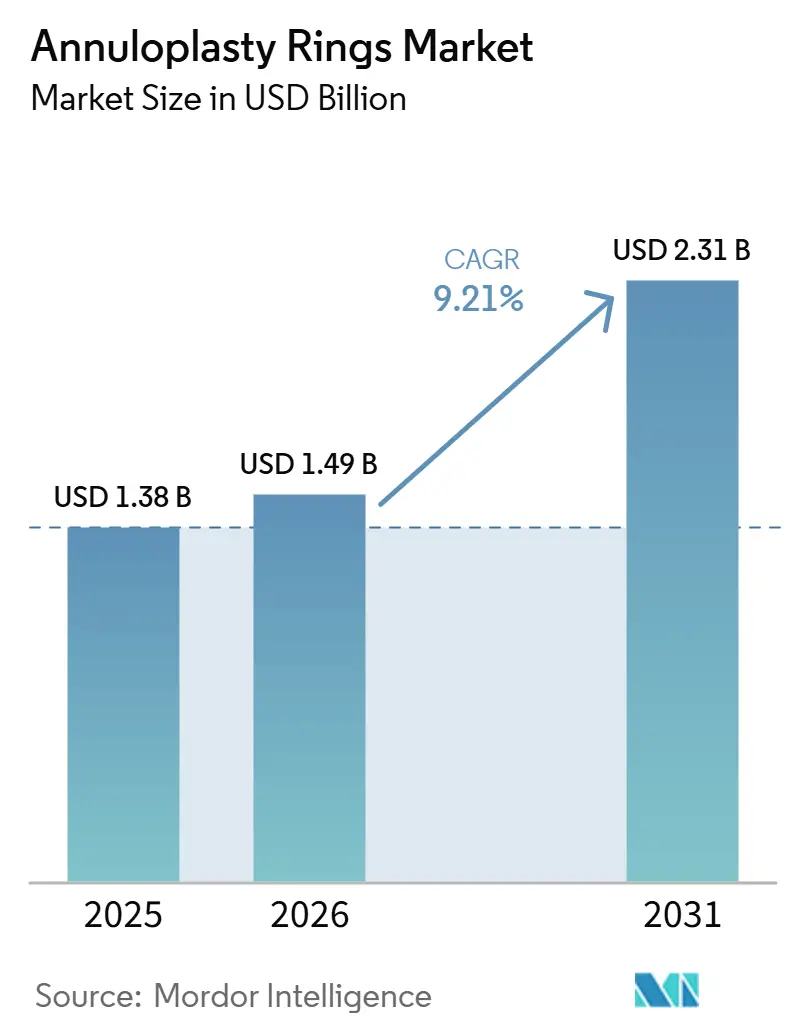
| Market Size (2026) | USD 1.49 Billion |
| Market Size (2031) | USD 2.31 Billion |
| Growth Rate (2026 - 2031) | 9.21 % |
| Fastest Growing Market | Asia-Pacific |
| Largest Market | North America |
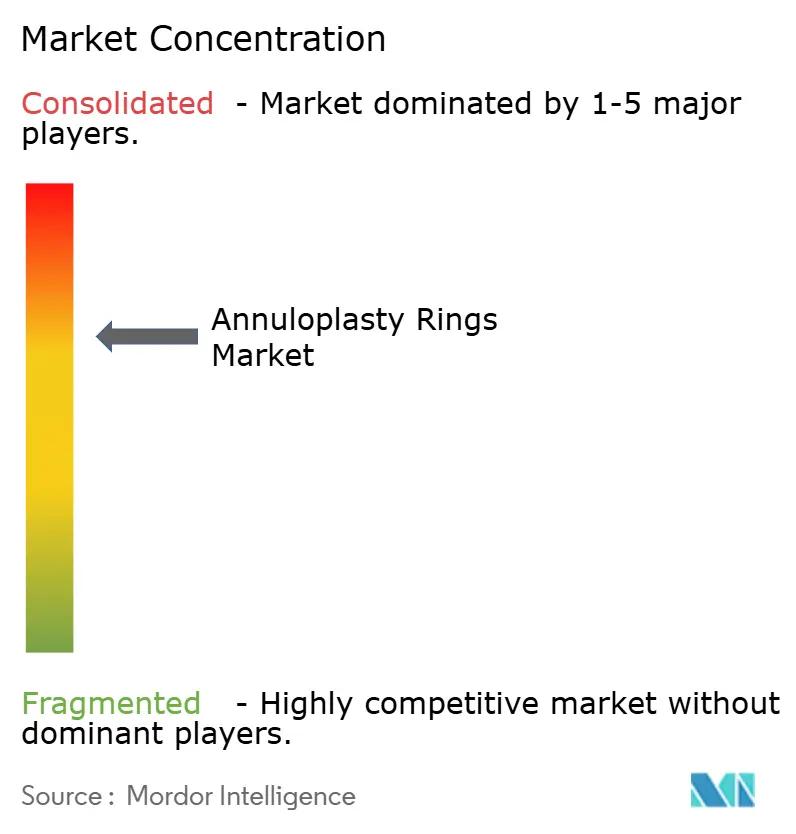
| Market Concentration | Medium |
Major Players *Disclaimer: Major Players sorted in no particular order Image © Mordor Intelligence. Reuse requires attribution under CC BY 4.0. | |
Annuloplasty Rings Market Analysis by Mordor Intelligence
The annuloplasty rings market is expected to grow from USD 1.38 billion in 2025 to USD 1.49 billion in 2026 and is forecasted to reach USD 2.31 billion by 2031 at 9.21% CAGR over 2026-2031. The annuloplasty rings market is being supported by a stronger clinical preference for valve repair and by an aging patient base that is more exposed to degenerative valvular disease. The global burden of non-rheumatic valvular heart disease incidence rate is projected to continue rising through 2035, which keeps the long-term procedure base favorable for the annuloplasty rings market. Mitral regurgitation affects 24.2 million people worldwide, which keeps mitral repair at the center of device demand and gives the annuloplasty rings market a stable clinical anchor. North America leads current revenue because procedure volumes, reimbursement, and cardiac surgery infrastructure are already well developed, while Asia-Pacific is set to expand faster as tertiary cardiac access broadens across major regional health systems. Competition remains concentrated among established structural heart companies, and the move toward hybrid repair pathways is creating new room in the annuloplasty rings market for rings that can work alongside minimally invasive and transcatheter treatment strategies.
Key Report Takeaways
- By product type, saddle-shaped annuloplasty rings led with 53.26% revenue share in 2025, while flat-shaped rings are projected to record the fastest growth at 9.74% CAGR through 2031.
- By material, polyester fabric-covered rings held 42.34% of revenue in 2025, while titanium core rings are forecasted to expand at the highest CAGR of 10.13% through 2031.
- By application, mitral valve repair accounted for 42.31% of the annuloplasty rings market in 2025, while tricuspid valve repair is expected to advance at the fastest pace with a 10.55% CAGR through 2031.
- By end-user, hospitals held 44.24% of revenue in 2025, while cardiac surgery centers are projected to grow faster at a 9.53% CAGR through 2031.
- By geography, North America held 45.47% of revenue in 2025, while Asia-Pacific is forecasted to expand at the highest CAGR of 11.72% through 2031.
Note: Market size and forecast figures in this report are generated using Mordor Intelligence’s proprietary estimation framework, updated with the latest available data and insights as of January 2026.
Market Trends and Insights
Drivers Impact Analysis of Annuloplasty Rings Market*
| Driver | (~) % Impact on CAGR Forecast | Geographic Relevance | Impact Timeline |
|---|---|---|---|
| Rising Global Burden of Valvular Heart Disease | +2.8% | Global, with concentrated impact in North America, Western Europe, and aging Asia-Pacific economies | Long term (≥ 4 years) |
| Aging Cardiovascular Patient Pool Requiring Valve Repair | +1.6% | North America, Europe, Japan, South Korea, Australia | Long term (≥ 4 years) |
| Preference for Valve Repair Over Replacement in Clinical Guidelines | +1.3% | North America and Europe primarily, with growing uptake in Asia-Pacific tertiary centers | Medium term (2-4 years) |
| Expanding Adoption of Minimally Invasive and Robotic Cardiac Surgery | +1.4% | North America, Germany, South Korea, with early adoption in urban China and India | Medium term (2-4 years) |
| Premiumization Through Next-Generation Biocompatible Ring Designs | +0.8% | North America, Europe, and premium centers in Asia-Pacific | Medium term (2-4 years) |
| Increased Use of Ring Sizing and Imaging Guidance to Improve Surgical Outcomes | +0.5% | North America, Germany, Japan, and selected tertiary centers in Asia-Pacific | Short term (≤ 2 years) |
| Source: Mordor Intelligence | |||
Rising Global Burden of Valvular Heart Disease
Valvular heart disease is becoming a larger part of the global cardiovascular burden, and that shift is directly supporting the annuloplasty rings market. Global non-rheumatic valvular heart disease incidence and the age-standardized incidence rate is projected to reach 20.28 per 100,000 people by 2035.[1]T. Ying et al., “Global, Regional, and National Burden of Non-rheumatic Valvular Heart Disease, 1990–2019, and Projections to 2035,” Frontiers in Cardiovascular Medicine, frontiersin.org The burden is not evenly distributed, because high Socio-demographic Index regions recorded incidence of 56.45 per 100,000, which is far above the global average and aligns with the regions that already account for much of the annuloplasty rings market. Surgical repair demand follows this pattern closely because mitral and tricuspid regurgitation with annular dilation remain the main settings for ring implantation. That combination of epidemiology and earlier diagnosis gives the annuloplasty rings market a broader procedure base than demographic aging alone would suggest.
Aging Cardiovascular Patient Pool Requiring Valve Repair
The aging patient pool remains a core long-range support for the annuloplasty rings market. In patients aged 55 years and older, the age-standardized prevalence rate reached 1,876.01 per 100,000, which was close to 5x the global average and reflects the strong age link in degenerative valve disease. This matters most in North America and Europe, where the over-65 population continues to grow and where established surgical systems can convert diagnosis into procedure volume more efficiently. A notable pattern is the increase in patients in their 60s who remain good repair candidates and who are often steered toward ring-based repair because it avoids the long-term issues tied to anticoagulation and structural valve deterioration. In Asia-Pacific, the size of the older population creates a large latent pool that will translate into higher procedure volumes as tertiary cardiac infrastructure expands. As that access improves, the annuloplasty rings market should benefit not only from more elderly patients, but also from better identification of patients who can still tolerate definitive repair.
Preference for Valve Repair Over Replacement in Clinical Guidelines
The preference for repair over replacement continues to support the annuloplasty rings market in eligible mitral regurgitation cases. Multicenter prospective data from the MANTRA study followed 166 patients across 17 institutions using the Memo 4D semi-rigid mitral ring, and 97.9% of patients reached NYHA Class I or II at 30 days while 91.7% had mitral regurgitation reduced to none, trace, or mild, with procedure-related mortality of 0.6%.[2]O. Dzemali et al., “Mitral Valve Repair With the Semi-rigid Memo 4D Annuloplasty Ring, Early Clinical and Echocardiographic Outcomes From the MANTRA Study,” Interdisciplinary Cardiovascular and Thoracic Surgery, pmc.ncbi.nlm.nih.gov These outcomes strengthen surgeon confidence in repair-focused pathways and support hospital purchasing of ring-based systems. The same direction is becoming more visible in tricuspid disease, where physicians are showing greater willingness to intervene instead of simply observing progressive functional regurgitation. Major Western valve guidelines continue to favor repair where it is technically feasible, which keeps clinical decision-making aligned with steady demand for the annuloplasty rings market. As evidence accumulates, hospitals are more likely to preserve ring availability across both routine and complex repair programs.
Expanding Adoption of Minimally Invasive and Robotic Cardiac Surgery
Minimally invasive and robotic cardiac surgery is becoming an important procedural growth channel for the annuloplasty rings market. Robotic-assisted mitral valve repair represented 15% of all mitral repairs in the United States and at Cleveland Clinic robotic cases already accounted for 70% to 80% of isolated mitral repairs in 2024.[3]Cleveland Clinic, “Growing Applications for Robotic Mitral Valve Repair,” Consult QD, consultqd.clevelandclinic.orgThose outcomes are encouraging more hospitals to invest in robotic programs and related instrumentation. These programs tend to favor lower-profile ring formats that can be delivered through smaller access points with fewer handling constraints. They also attract patients who may have delayed surgery in the past, which means the annuloplasty rings market gains not only a change in technique, but often a wider treatable pool as well.
Restraints Impact Analysis of Annuloplasty Rings Market*
| Restraint | (~) % Impact on CAGR Forecast | Geographic Relevance | Impact Timeline |
|---|---|---|---|
| High Procedure and Device Cost in Elective Valve Repair | -0.8% | Emerging markets globally, with pressure in price-sensitive systems across South America, Middle East and Africa, and Southeast Asia | Long term (≥ 4 years) |
| Limited Specialist Access in Low-Resource Cardiac Centers | -0.6% | Sub-Saharan Africa, rural South Asia, and parts of Latin America | Long term (≥ 4 years) |
| Stringent Regulatory and Clinical Evidence Requirements | -0.4% | Global, with specific pressure under EU MDR and FDA device pathways | Medium term (2-4 years) |
| Long Procurement Cycles for Hospital Capital Committees | -0.3% | Europe, GCC, and South America | Medium term (2-4 years) |
| Source: Mordor Intelligence | |||
High Procedure and Device Cost in Elective Valve Repair
High cost remains a meaningful volume restraint for the annuloplasty rings market, especially where elective cardiac surgery competes with limited health budgets. The 2025 Accra Declaration stated that imported surgical consumables remain a major challenge for sustainable cardiac surgery in Africa, despite significant unmet clinical need. The ring itself is only one part of total treatment cost, because cardiopulmonary bypass consumables, perfusion support, anesthesia, and intensive care recovery all add to the final bill. That makes elective valve repair difficult to scale in lower-middle-income settings and can also lead to deferrals when hospitals or payers face cost pressure in developed systems. Manufacturers are trying to reduce some of this friction through pricing flexibility and service support, but the gap between procedure economics and payer capacity is still limiting how far the annuloplasty rings market can reach in cost-sensitive regions. Unless that gap narrows, growth will continue to depend heavily on wealthier systems and premium private networks.
Limited Specialist Access in Low-Resource Cardiac Centers
Limited access to trained specialists is another structural obstacle for the annuloplasty rings market. A WHO-cited review noted that up to three-quarters of medical devices in low- and middle-income countries go unused because of weak infrastructure, limited staff capacity, and poor maintenance systems. In cardiac surgery, that problem translates into large areas where disease exists but repair procedures cannot be performed at scale because surgeons, perfusion teams, imaging support, and perioperative care are not consistently available. Access is usually concentrated in major urban centers, which leaves rural and lower-income populations outside the effective reach of the annuloplasty rings market. Training partnerships, telemedicine support, and gradual center development can improve this picture, but workforce expansion in complex valve repair takes years rather than quarters. That makes specialist scarcity a slow-moving barrier that can hold back adoption even when device demand is clinically justified.
*Our forecasts treat driver/restraint impacts as directional, not additive. The impact forecasts reflect baseline growth, mix effects, and variable interactions.
Annuloplasty Rings Market Segment Analysis
By Product Type:
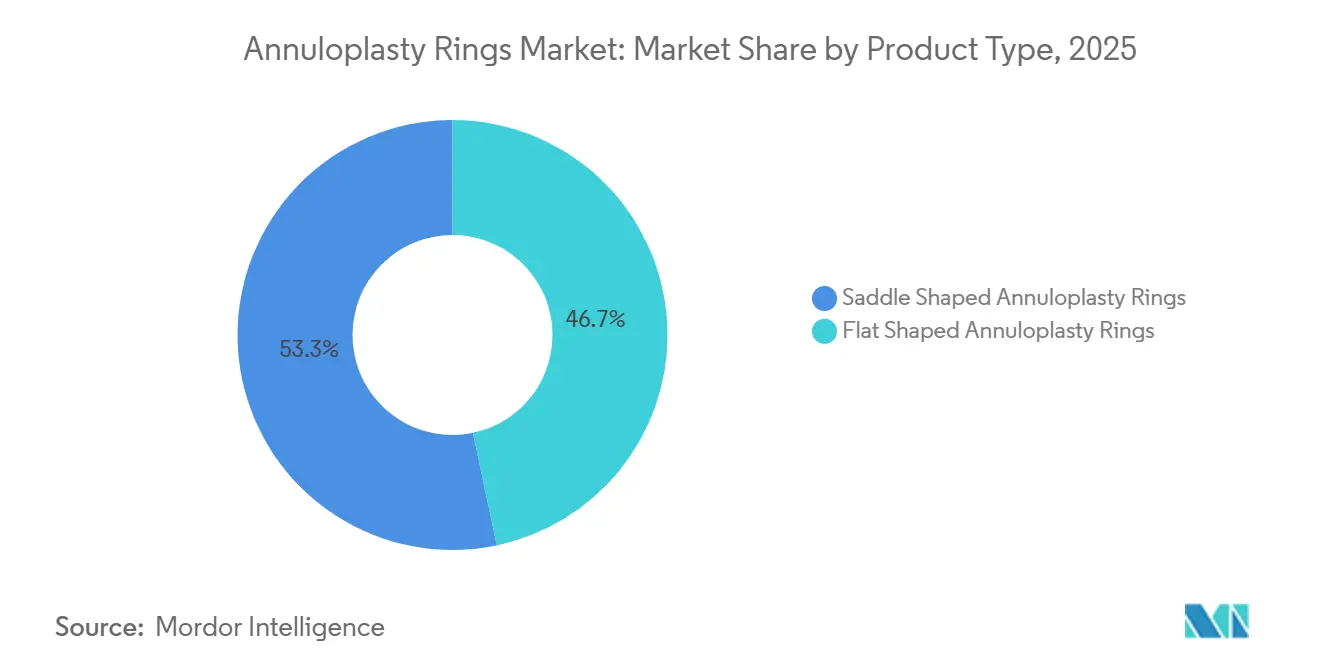
Saddle Geometry Leads While Flat Rings Gain from Robotic AccessSaddle-shaped rings held 53.26% of the annuloplasty rings market share in 2025, making them the largest product category. Their lead comes from long-standing clinical use and from their ability to preserve the native non-planar geometry of the mitral annulus. This geometry helps lower leaflet stress during systole and can reduce the risk of residual regurgitation in appropriately selected repairs. The MANTRA sub-study around the Memo 4D semi-rigid saddle ring showed favorable early hemodynamic outcomes across more than 165 patients treated in 17 international centers, with 91.7% of patients reporting none, trace, or mild mitral regurgitation at 30 days. That clinical base keeps saddle configurations firmly established in the annuloplasty rings market, especially in mitral programs that prioritize durable geometry restoration.
Flat-shaped rings are projected to be the fastest-growing product type in the annuloplasty rings market at a 9.74% CAGR from 2026 to 2031. Their lower profile fits well with thoracoscopic and robotic workflows that depend on smaller access ports and more controlled device handling. As robotic programs expand, product design in the annuloplasty rings industry is likely to favor flatter and more adaptable ring architectures that work more easily with image-guided workflows.


By Material:
Polyester Fabric Holds the Base While Titanium Core Designs AdvancePolyester fabric-covered rings accounted for 42.34% of revenue in 2025, which kept them in the lead across the annuloplasty rings market. Their position reflects a long clinical track record, familiar suturing behavior, and consistent use across rigid and semi-rigid designs. A 2026 retrospective study that reviewed 153 consecutive mitral valve repair patients found that semi-rigid rings, which commonly use polyester sewing platforms, were associated with 2.0% mortality and 95.9% good or moderate repair on follow-up echocardiography. Polyester also remains the preferred outer sewing substrate because it supports controlled tissue ingrowth and is already well understood in implant testing.
Titanium core rings are projected to expand at a 10.13% CAGR through 2031, which makes them the fastest-growing material segment in the annuloplasty rings market. Surgeons are increasingly drawn to the strength-to-weight ratio of metallic core designs, along with MRI compatibility and stronger imaging visibility during follow-up or complex procedures. Nitinol-based concepts are receiving added attention because their shape-memory behavior can allow more dynamic annular remodeling than static polymer or rigid metal formats. As imaging, robotic delivery, and tricuspid repair all gain traction, the annuloplasty rings industry is giving more attention to material systems that improve both procedural handling and long-term structural behavior.
By Application:
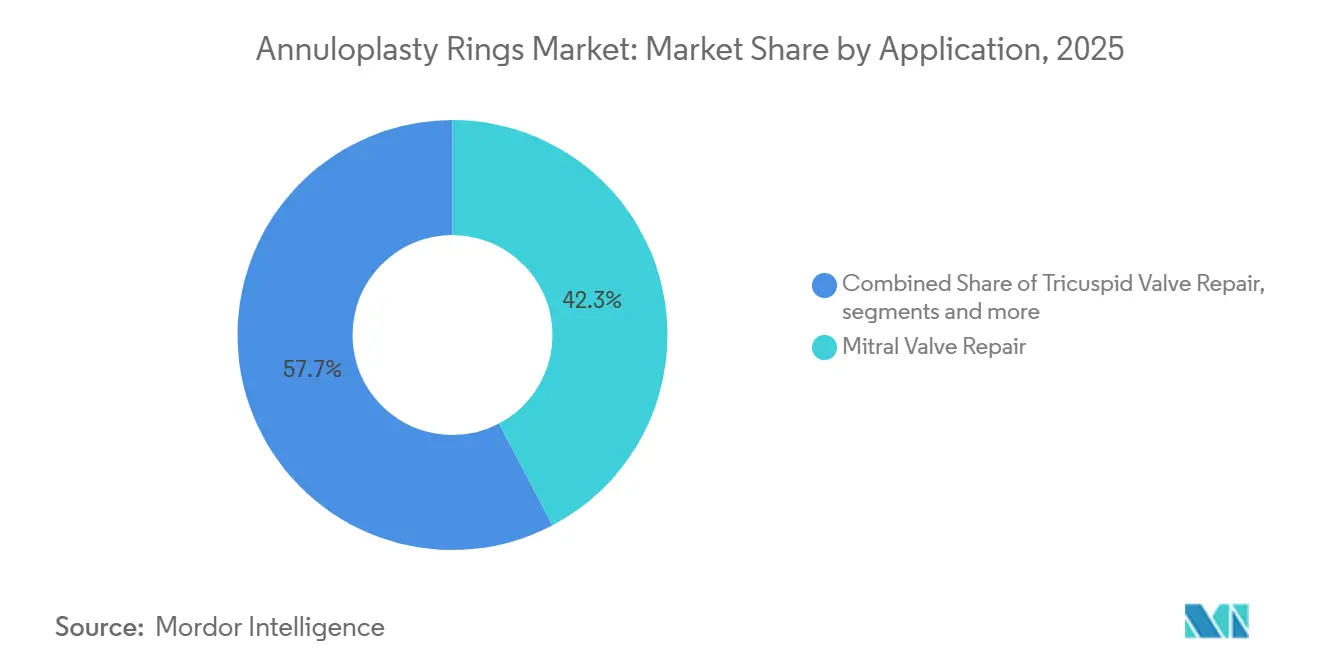
Mitral Repair Anchors Revenue While Tricuspid Repair Expands FasterMitral valve repair held 42.31% share in 2025 and remained the largest application in the annuloplasty rings market. This leading position rests on long-standing evidence in degenerative mitral regurgitation and on continued physician preference for repair over replacement where repair is feasible. It also remains the most commercially active application area, with steady product updates and regulatory activity across mitral-focused platforms during 2025 and 2026. That means the annuloplasty rings market is still anchored by mitral repair, but the design requirements inside this segment are becoming more differentiated.
Tricuspid valve repair is projected to record the fastest growth at 10.55% CAGR from 2026 to 2031, which gives it the strongest application momentum in the annuloplasty rings market. Greater clinical recognition of isolated and functional tricuspid regurgitation as a direct contributor to mortality is increasing the willingness to treat rather than defer intervention. Aortic repair, pulmonary repair, and combined valve repair remain smaller categories, but they should continue to grow as more centers address multi-valve disease in a single operation rather than through staged procedures.

By End-User:
Hospitals Lead Current Volume While Cardiac Surgery Centers Build GrowthHospitals accounted for 44.24% of end-user revenue in 2025, which kept them at the center of the annuloplasty rings market. Their lead is tied to access to cardiopulmonary bypass, hybrid operating rooms, cardiac anesthesia teams, and postoperative intensive care, all of which remain essential for most open-heart repair pathways. Large community hospitals still carry a substantial share of higher-risk patients, where open sternotomy remains the default route because it offers broad operative flexibility. This combination keeps hospitals as the main procedural base for the annuloplasty rings market even as care models begin to diversify.
Cardiac surgery centers are projected to grow at 9.53% CAGR through 2031, making them the fastest-rising end-user segment in the annuloplasty rings market. These facilities can benefit from faster scheduling, narrower clinical focus, and teams that are organized around dedicated cardiac workflows. Traditional ambulatory settings remain limited because most annuloplasty procedures still need full surgical backup and perioperative support.
Geography Analysis
North America Annuloplasty Rings Market
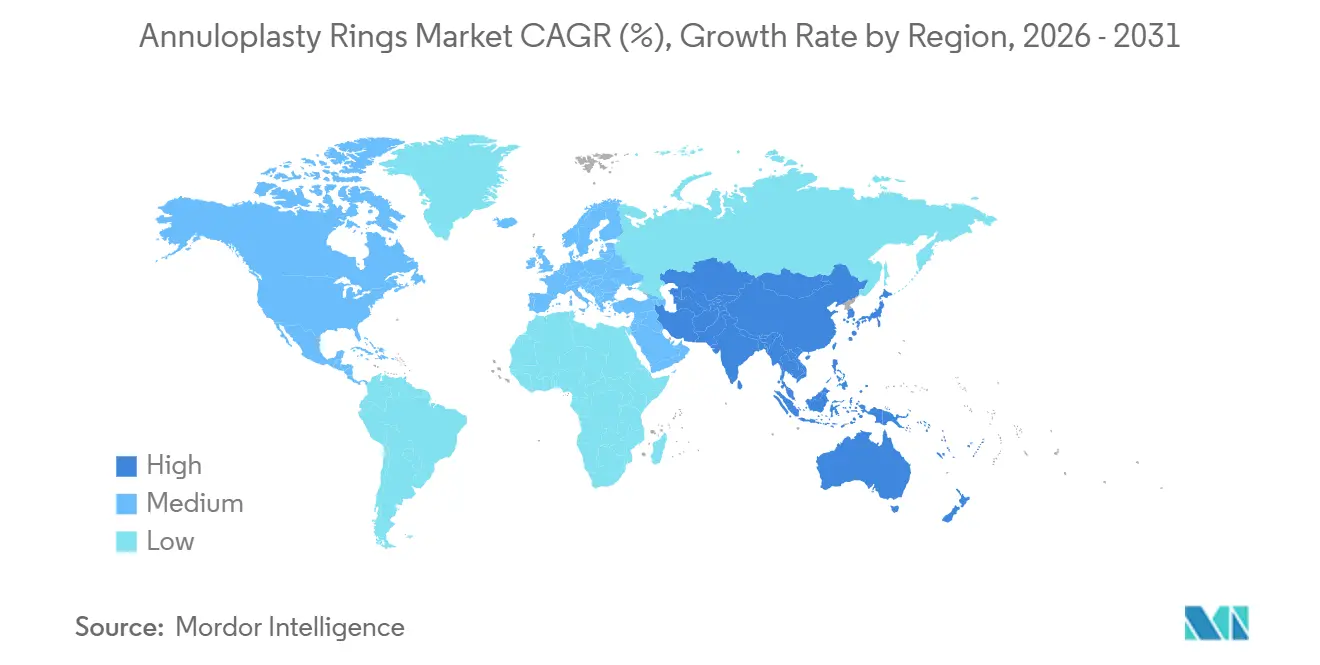
North America held 45.47% of the annuloplasty rings market share in 2025, which made it the largest regional contributor. The United States accounts for most of that base because it combines high per-capita cardiac surgery activity with established reimbursement and a dense network of high-volume valve centers. Canada adds stable demand through its public system, although purchasing cycles can move more slowly. Premium device adoption is also supported by better sizing workflows, and a 2026 University of Freiburg study found that 3D assessment improved annuloplasty ring size prediction compared with conventional 2D measurements.
Europe Annuloplasty Rings Market
Europe remained the second-largest regional block in the annuloplasty rings market in 2025, supported by Germany, the United Kingdom, and France. Centralized procurement of CE-marked devices and consistently high procedure volumes help keep demand stable across the region. EU MDR timelines extend commercialization for newer platforms, but once approval is secured, rollout across multiple countries can still move efficiently. LivaNova presented Memo 3D ReChord data at AATS Week 2025 that highlighted improved surgical accuracy and a short learning curve, which reinforces Europe’s role as a validation ground for newer ring designs.
APAC, MEA and South America Annuloplasty Rings Market
Asia-Pacific is projected to expand at an 11.72% CAGR through 2031, making it the fastest-growing geography in the annuloplasty rings market. Growth in this region is being driven by aging populations and by continued expansion of advanced cardiac surgery infrastructure across China, India, Japan, and South Korea. Japan remains a premium market because hybrid operating room availability and robotic cardiac surgery capabilities are already well developed. South Korean tertiary centers are also piloting AI-assisted sizing tools for mitral repair planning, which points to stronger use of digital support in future procedural workflows. Middle East and Africa remain smaller in absolute size, but the 2025 Accra Declaration made clear that bulk procurement and more local consumable manufacturing are needed to improve the sustainability of cardiac surgery. South America is still emerging, with Brazil and Argentina anchoring most private-center structural heart activity and providing the main base for regional annuloplasty demand.

Competitive Landscape
The annuloplasty rings market shows moderate concentration, with a limited group of global cardiovascular device companies controlling much of worldwide revenue. Surgeon familiarity remains one of the strongest competitive defenses in this space, because ring geometry, sewing feel, and sizing routines become deeply embedded in procedural practice over time. Edwards Lifesciences stated in its 2025 annual report that annuloplasty rings remain part of its structural heart portfolio alongside transcatheter therapies that serve related patient groups, which highlights the advantage of broad portfolio coverage. That breadth matters when hospitals want continuity across surgical and catheter-based treatment lines from the same supplier. The annuloplasty rings market is therefore shaped not only by product performance, but also by the ability to serve a wider structural heart account strategy.
Technology is becoming a more visible differentiator in the annuloplasty rings market, especially in materials, surface treatments, adjustability, and compatibility with advanced imaging. Companies that can connect ring design to better sizing workflows and minimally invasive handling are better placed to defend premium positioning. Focused specialists are also creating pressure on larger incumbents by concentrating on narrower repair niches where dedicated geometry or tricuspid-specific design can solve unmet procedural needs more directly. The result is a market where engineering detail and procedural fit can matter almost as much as corporate scale.
The annuloplasty rings market is not highly fragmented, but it is also not so concentrated that smaller specialists cannot win targeted accounts. Edwards remains well positioned through global scale, established relationships, and a structural heart portfolio that spans multiple therapy types. At the same time, product-specific clinical support can still shift surgeon preference when new designs offer clearer handling or better anatomical fit. As robotic repair, tricuspid intervention, and hybrid treatment planning keep advancing, competitive pressure should stay firm and continue to reward vendors that combine evidence quality with strong procedural support. That balance between scale and specialization should keep the competitive field active across the next stage of the annuloplasty rings market.
Annuloplasty Rings Industry Leaders
Edwards Lifesciences Corporation
Medtronic plc
Abbott Laboratories
LivaNova PLC
Corcym S.r.l.
- *Disclaimer: Major Players sorted in no particular order
Annuloplasty Rings Market Companies Covered in this Report
- Abbott Laboratories
- Affluent Medical
- Artivion, Inc.
- B. Braun
- Beijing Balance Medical Technology Co., Ltd.
- Boston Scientific
- Braile Biomedica
- Cardinal Health
- Cook Group
- Corcym S.r.l.
- Edward Lifesciences
- Genesee BioMedical, Inc.
- Getinge
- Jenavalve Technology
- LivaNova
- Medtronic
- Meril Life Science
- Micro Interventional Devices, Inc.
- NeoChord, Inc.
- Terumo
- Valcare Medical Ltd.

Recent Industry Developments in Annuloplasty Rings Market
- July 2026: Cardiac Dimensions released 5-year data from the CINCH FMR registry (228 patients) for its Carillon transcatheter indirect mitral annuloplasty system. Moderate-to-severe mitral regurgitation declined from 84% at baseline to 9% at 1 year and remained low through 5 years; device/procedure-related serious adverse events stood at 1.8%. The company is advancing toward US FDA approval via the EMPOWER Trial, with commercial expansion continuing across European markets.
- June 2026: Edwards Lifesciences received FDA approval for TRIFORMIS RESILIA, the first surgical valve specifically designed for the tricuspid position, signaling a broader tricuspid structural heart strategy. The valve's tricuspid-specific sewing ring profile complements Edwards' annuloplasty ring portfolio for concomitant tricuspid procedures, reinforcing its competitive position in combined valve repair cases.
- April 2026: Corcym S.r.l. received FDA 510(k) clearance for the TriMemo SEMIRIGID ANNULOPLASTY RING (K260498), a dedicated tricuspid repair device featuring an electropolished Nitinol core, silicone sewing ring with polyester PET fabric, and Carbofilm carbon coating. Bench testing confirmed durability of 400 million fatigue cycles (10-year implant lifetime). Available in 6 sizes (26–36 mm).


Global Annuloplasty Rings Market Report Scope
According to the report’s scope, the annuloplasty rings market refers to the global industry focused on the development, manufacturing, and commercialization of annuloplasty rings used in heart valve repair procedures. These implantable devices help restore and stabilize the shape and function of the mitral or tricuspid valve annulus, improving valve competency and supporting long-term surgical outcomes in patients with valvular heart disease.
The annuloplasty rings market is segmented into product type, material, application, end-user, and geography. By product type, the market is segmented into saddle shaped annuloplasty rings and flat shaped annuloplasty rings. By material, the market is segmented into polyester fabric-covered rings, titanium core rings, nitinol-based rings, and other materials. By application, the market is segmented into mitral valve repair, tricuspid valve repair, aortic valve repair, pulmonary valve repair, and combined valve repair. By end-user, the market is segmented into hospitals, cardiac surgery centers, ambulatory surgical centers, and other end-users. By geography, the market is segmented into North America, Europe, Asia-Pacific, the Middle East and Africa, and South America. The report also covers the estimated market sizes and trends for 17 countries across major regions globally. The report offers values (USD) for all the above segments.
| Saddle Shaped Annuloplasty Rings |
| Flat Shaped Annuloplasty Rings |
| Polyester Fabric-Covered Rings |
| Titanium Core Rings |
| Nitinol-Based Rings |
| Other Materials |
| Mitral Valve Repair |
| Tricuspid Valve Repair |
| Aortic Valve Repair |
| Pulmonary Valve Repair |
| Combined Valve Repair |
| Hospitals |
| Cardiac Surgery Centers |
| Ambulatory Surgical Centers |
| Other End-Users |
| North America | United States |
| Canada | |
| Mexico | |
| Europe | Germany |
| United Kingdom | |
| France | |
| Italy | |
| Spain | |
| Rest of Europe | |
| Asia-Pacific | China |
| Japan | |
| India | |
| Australia | |
| South Korea | |
| Rest of Asia-Pacific | |
| Middle East and Africa | GCC |
| South Africa | |
| Rest of Middle East and Africa | |
| South America | Brazil |
| Argentina | |
| Rest of South America |
| By Product Type | Saddle Shaped Annuloplasty Rings | |
| Flat Shaped Annuloplasty Rings | ||
| By Material | Polyester Fabric-Covered Rings | |
| Titanium Core Rings | ||
| Nitinol-Based Rings | ||
| Other Materials | ||
| By Application | Mitral Valve Repair | |
| Tricuspid Valve Repair | ||
| Aortic Valve Repair | ||
| Pulmonary Valve Repair | ||
| Combined Valve Repair | ||
| By End-User | Hospitals | |
| Cardiac Surgery Centers | ||
| Ambulatory Surgical Centers | ||
| Other End-Users | ||
| By Geography | North America | United States |
| Canada | ||
| Mexico | ||
| Europe | Germany | |
| United Kingdom | ||
| France | ||
| Italy | ||
| Spain | ||
| Rest of Europe | ||
| Asia-Pacific | China | |
| Japan | ||
| India | ||
| Australia | ||
| South Korea | ||
| Rest of Asia-Pacific | ||
| Middle East and Africa | GCC | |
| South Africa | ||
| Rest of Middle East and Africa | ||
| South America | Brazil | |
| Argentina | ||
| Rest of South America | ||


Key Questions Answered in the Report
How large will this market become by 2031?
The annuloplasty rings market is forecasted to reach USD 2.31 billion by 2031 from USD 1.38 billion in 2025 to USD 1.49 billion in 2026, with a 9.2% CAGR over 2026-2031.
Which product type leads current demand?
Saddle-shaped rings led in 2025 with 53.26% share because surgeons continue to value their physiological geometry and long clinical record.
Which application is growing the fastest?
Tricuspid valve repair is the fastest-growing application and is projected to expand at a 10.55% CAGR through 2031 as referral patterns and product development both improve.
Why does North America remain the largest regional contributor?
North America leads with 45.47% share in 2025, because it combines high procedure volumes, favorable reimbursement, and a dense network of advanced valve repair centers.
Page last updated on:





