
AI-Powered Stethoscope Market Size and Share
Market Overview
| Study Period | 2020 - 2031 |
|---|---|
| Market Size (2026) | USD 139.63 Million |
| Market Size (2031) | USD 189.66 Million |
| Growth Rate (2026 - 2031) | 6.32 % |
| Fastest Growing Market | Asia-Pacific |
| Largest Market | North America |
| Market Concentration | Medium |
Major Players *Disclaimer: Major Players sorted in no particular order Image © Mordor Intelligence. Reuse requires attribution under CC BY 4.0. | |
AI-Powered Stethoscope Market Analysis by Mordor Intelligence
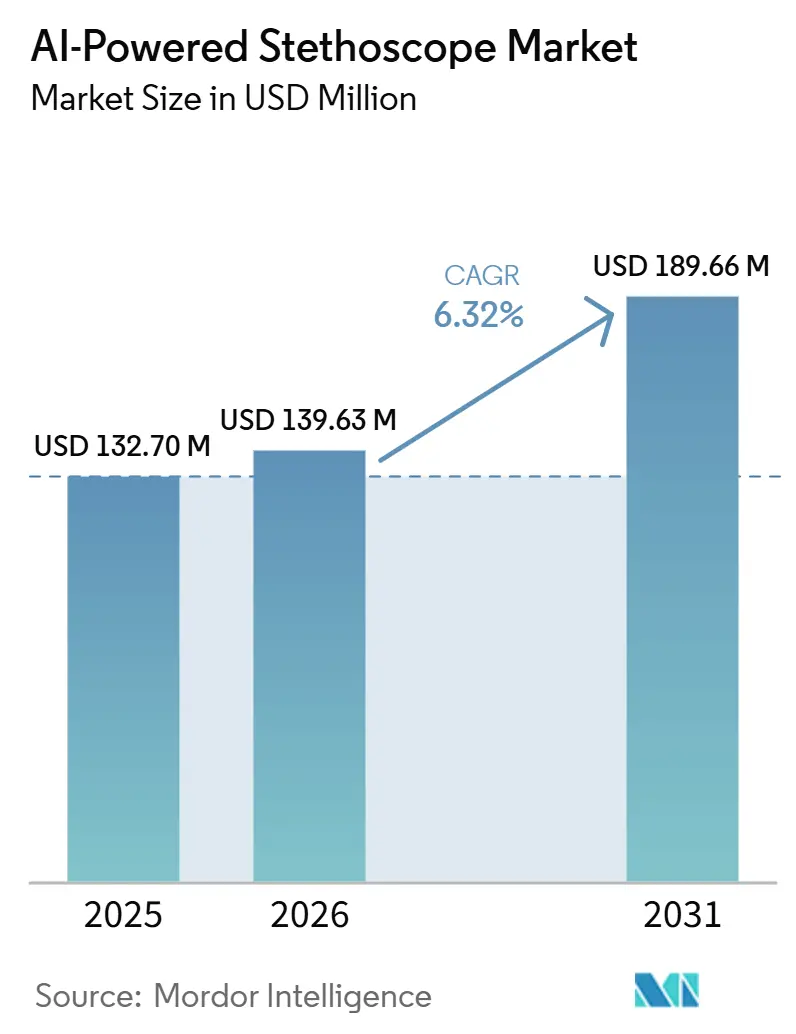
The AI-powered stethoscope market is expected to grow from USD 132.70 million in 2025 to USD 139.63 million in 2026 and is forecasted to reach USD 189.66 million by 2031 at 6.32% CAGR over 2026-2031. The rise of the AI-powered stethoscope market reflects the combined effect of higher clinical confidence in AI-assisted auscultation, an aging patient base, and a steady shift of diagnostic activity toward point-of-care and distributed care settings. The disease burden behind this demand remains large, a PubMed-indexed study projected a 90% increase in cardiovascular disease prevalence between 2025 and 2050. Regulatory progress has also helped the AI-powered stethoscope market, because a faster cadence of FDA clearances since 2024 has reduced approval uncertainty and improved procurement confidence for hospitals and health systems. Demand is moving beyond simple digital amplification, as providers now expect structured recordings, decision support, and cleaner workflow links between bedside assessment, telemedicine, and documentation. Competition in the AI-powered stethoscope market is therefore shifting from hardware sensitivity alone toward software depth, local validation, and stronger integration with clinical systems, which creates room for companies that can support both specialist and frontline use.
Key Report Takeaways
- By product type, wireless devices led with 43.18% revenue share in 2025, while wired devices are forecasted to expand at a 7.54% CAGR through 2031.
- By technology, machine learning held 39.26% of revenue in 2025, while natural language processing is projected to record the highest CAGR at 8.12% through 2031.
- By application, cardiology accounted for 37.44% of revenue in 2025, while primary care is expected to advance at 8.46% CAGR through 2031.
- By end-user, hospitals held 35.62% of revenue in 2025, while ambulatory surgical centers are projected to grow at a 7.86% CAGR through 2031.
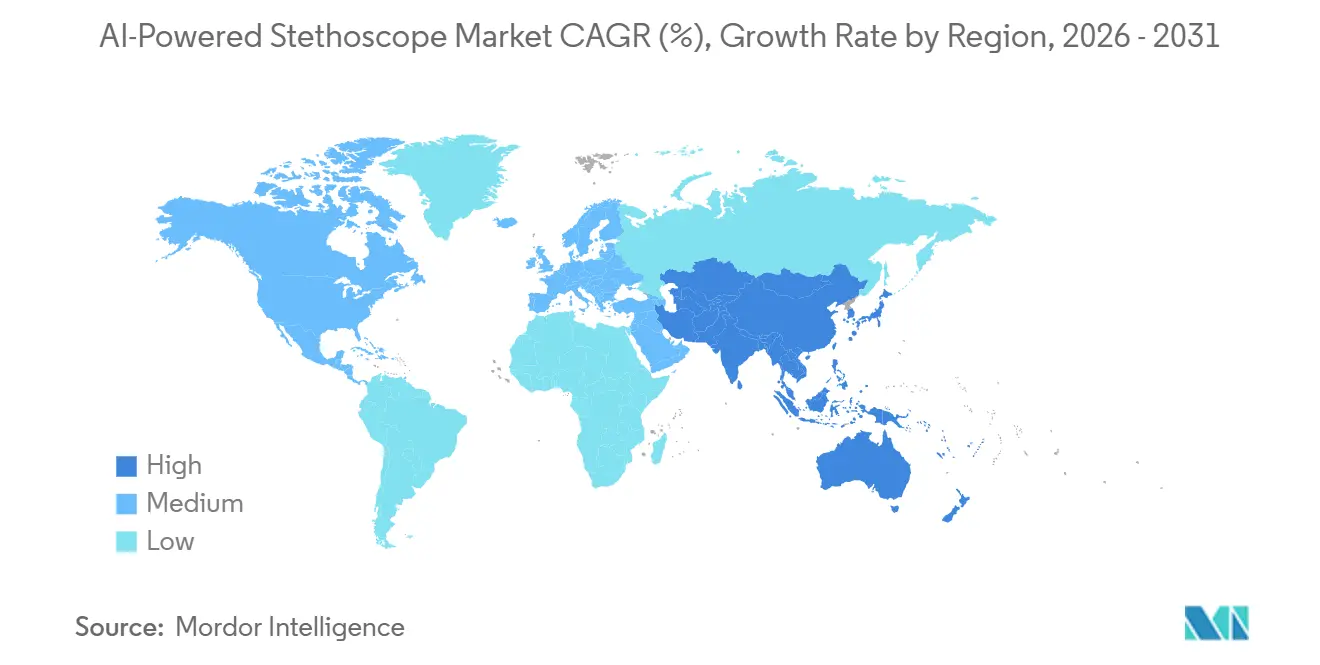
- By geography, North America held 41.73% of the AI-powered stethoscope market share in 2025, while Asia-Pacific is forecasted to expand at an 8.95% CAGR through 2031.
Note: Market size and forecast figures in this report are generated using Mordor Intelligence’s proprietary estimation framework, updated with the latest available data and insights as of January 2026.
Market Trends and Insights
Drivers Impact Analysis of AI-Powered Stethoscope Market*
| Driver | (~) % Impact on CAGR Forecast | Geographic Relevance | Impact Timeline |
|---|---|---|---|
| Rising Cardiovascular and Respiratory Disease Burden | +1.4% | Global, with high concentration in North America, Europe, and South Asia | Medium term (2-4 years) |
| Expansion of Telemedicine and Remote Patient Monitoring | +1.2% | Asia-Pacific core, spill-over to MEA and South America | Short term (≤ 2 years) |
| AI-Enabled Diagnostic Decision Support at Point of Care | +1.0% | North America & EU, with emerging traction in Asia-Pacific | Short term (≤ 2 years) |
| Need for Faster Triage in Primary Care and Emergency Settings | +0.8% | Global, with highest impact in South Asia and Sub-Saharan Africa | Medium term (2-4 years) |
| Clinical Workflow Digitization and EHR Integration Demand | +0.7% | North America & EU, spill-over to APAC | Medium term (2-4 years) |
| Specialty-Grade Acoustic Noise Cancellation and Signal Enhancement | +0.5% | Global | Long term (≥ 4 years) |
| Source: Mordor Intelligence | |||
Rising Cardiovascular and Respiratory Disease Burden
The cardiovascular burden remains the clearest demand base for the AI-powered stethoscope market because routine auscultation is still the first screening step in many care settings. A PubMed-indexed study also projected a 90% increase in cardiovascular disease prevalence and a 73.4% rise in crude mortality between 2025 and 2050, driven by aging, inactivity, and metabolic risk exposure.[1]Muhammad Taimoor Islam et al., “Global Burden of Cardiovascular Diseases: Projections from 2025 to 2050,” PubMed / NCBI, pubmed.ncbi.nlm.nih.gov In February 2026, research highlighted by the European Society of Cardiology showed that an AI-enabled digital stethoscope reached 92.3% sensitivity for moderate to severe valvular heart disease, versus 46.2% for a traditional stethoscope, across 357 patients in 3 primary care settings.[2]Moshe Rancier et al., “Artificial-Intelligence-Enabled Digital Stethoscope Improves Point-of-Care Screening for Moderate to Severe Valvular Heart Disease,” European Society of Cardiology, escardio.org That performance matters because it allows generalist clinicians to identify more patients who need specialist review before the disease progresses. This pattern supports the AI-powered stethoscope market not just as a device upgrade, but as a way to shorten the path between first contact, detection, and referral.
Expansion of Telemedicine and Remote Patient Monitoring
Telemedicine has become a durable care channel, which is pulling the AI-powered stethoscope market toward devices that can create shareable and clinically usable sound records outside hospitals. India’s government-backed eSanjeevani platform delivered more than 100 million consultations, which shows how large virtual care workflows have become in frontline public health delivery.[3]NITI Aayog, “AI-Powered Stethoscope Could Bridge India’s Specialist Shortfall,” Government of India, frontiertech.niti.gov.in In these workflows, the device is useful only when the recording can be transmitted, stored, and reviewed by a remote clinician without loss of context. That is why wireless platforms with app connectivity, structured recordings, and cleaner file transfer are gaining attention in primary care, homecare, and rural screening programs. The strongest near-term pull is coming from nurses, paramedics, and community health workers who need a practical screening tool at the edge of a teleconsultation workflow. As remote care becomes more routine, the AI-powered stethoscope market gains from its ability to turn an in-person listening task into digital clinical evidence that can travel between sites.
AI-Enabled Diagnostic Decision Support at Point of Care
The AI-powered stethoscope market is also being supported by a faster move from experimental algorithms to clinically cleared decision tools. In April 2025, TytoCare received FDA clearance for AI-based detection of wheezes, crackles, and rhonchi, with validation that showed an AUC of 95.85% and performance above both general practitioners and clinical experts in the controlled study cited by the company. These clearances matter because they make the device more useful at the moment of examination, not only after later specialist review. They also raise the importance of dataset depth, explainability, and local validation, because performance proven in one population may not transfer cleanly to every clinical setting. The result is a stronger evidence threshold in the AI-powered stethoscope market, which favors companies that can combine device design, software updates, and clinical validation under one platform.
Need for Faster Triage in Primary Care and Emergency Settings
The need for faster triage is expanding the AI-powered stethoscope market because many frontline settings still operate with limited specialist access. NITI Aayog noted that India had only 4,000 cardiologists for a population of more than 1.3 billion, which leaves a large share of first-line cardiac assessment to general clinicians and health workers. NITI Aayog also highlighted AiSteth deployments across 75 medical institutions in Maharashtra and Karnataka, with more than 52,000 patients screened and reported diagnostic accuracy of 93%. These examples show why point-of-care algorithms matter most where referral capacity is constrained and patient volumes are high. In practical terms, the AI-powered stethoscope market benefits when triage tools reduce unnecessary referrals, flag urgent cases earlier, and help non-specialists act with more confidence.
Restraints Impact Analysis of AI-Powered Stethoscope Market*
| Restraint | (~) % Impact on CAGR Forecast | Geographic Relevance | Impact Timeline |
|---|---|---|---|
| High Upfront Device and Algorithm Integration Cost | -1.5% | Global, most acute in Emerging Markets and rural healthcare settings | Short term (≤ 2 years) |
| Regulatory Validation and Algorithm Transparency Burden | -0.9% | North America & EU, with knock-on impact in APAC markets seeking international alignment | Medium term (2-4 years) |
| Data Privacy and Cybersecurity Concerns in Connected Devices | -0.7% | Global, most complex in multi-jurisdiction deployments (US + EU) | Medium term (2-4 years) |
| Low Clinical Change Acceptance in Resource-Constrained Settings | -0.5% | Emerging Markets, rural healthcare, and older physician demographics globally | Long term (≥ 4 years) |
| Source: Mordor Intelligence | |||
High Upfront Device and Algorithm Integration Cost
High ownership cost remains one of the clearest brakes on the AI-powered stethoscope market, especially in smaller clinics and rural systems with tight procurement budgets. Eko Health listed the CORE 500 at USD 379 and its Eko+ membership at USD 119.99 per year, while Lapsi Health priced the Keikku 2.0 at USD 375 when it launched in October 2025. That pricing gap is meaningful because hospitals may absorb subscription costs more easily than independent physicians, primary care chains, or public health programs can. The challenge is not limited to the device price, since recurring software fees, app support, training time, and integration work all shape the total cost of ownership. Buyers who are used to one-time device procurement often move more slowly when the product includes annual software charges without a clear reimbursement pathway. Until reimbursement and budget treatment become more predictable, adoption in the AI-powered stethoscope market will remain stronger in better-funded health systems than in cost-sensitive care environments.
Data Privacy and Cybersecurity Concerns in Connected Devices
Data privacy is another restraint because connected auscultation platforms capture, store, and transmit sensitive patient information across apps, clouds, and provider systems. Once the device becomes part of a wider digital workflow, hospitals must review not just hardware performance but also storage architecture, access controls, consent handling, and vendor responsibilities. This issue is especially important in cross-border deployments, where providers may need to align with both U.S. health data rules and European privacy requirements. Smaller manufacturers often face longer sales cycles because procurement teams now ask for stronger security documentation before platform approval. These checks slow conversion even when clinical interest is high, because technical diligence runs in parallel with medical evaluation. The result is that privacy and cybersecurity concerns raise the operating threshold in the AI-powered stethoscope market and favor companies that can support enterprise-level compliance expectations.
*Our forecasts treat driver/restraint impacts as directional, not additive. The impact forecasts reflect baseline growth, mix effects, and variable interactions.
AI-Powered Stethoscope Market Segment Analysis
By Product Type:
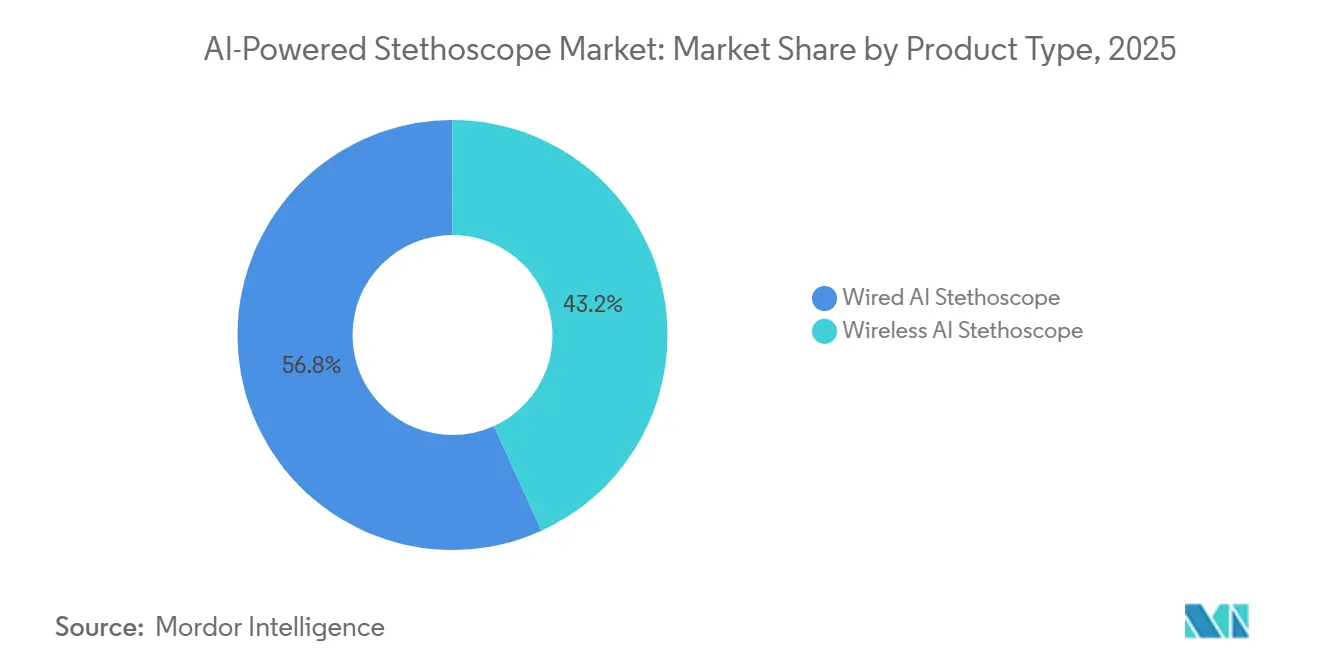
Wireless Leads While Wired Gains Institutional GroundWireless devices accounted for 43.18% of revenue in 2025, which made them the leading format in the AI-powered stethoscope market. Their lead reflects clear clinician preference for Bluetooth-enabled devices that can pair with smartphones and connect to apps without tethered recording limits. These devices fit well into outpatient clinics, telemedicine workflows, and home health environments where captured sounds need to move quickly between providers. The value is not only convenience, because wireless sharing also makes second opinions and asynchronous review more practical. This is one reason the AI-powered stethoscope market has seen strong interest in platforms that combine mobility with cleaner recording quality.
Wired devices are expected to be the fastest-growing product sub-segment, with the AI-powered stethoscope market size for wired platforms projected to expand at a 7.54% CAGR through 2031. Institutional buyers continue to favor wired systems when they want more stable connections, lower per-device cost, and easier use in high-volume clinical settings. Teaching hospitals and academic centers also value wired configurations when multiple listeners need reliable playback for training purposes. Some buyers further see wired transmission as a simpler way to reduce exposure to wireless security concerns in controlled clinical spaces.


By Technology:
Machine Learning Dominates but NLP Redefines the CategoryMachine learning held 39.26% of revenue in 2025, which placed it at the core of the AI-powered stethoscope market. The segment benefits from a longer development history in cardiac sound classification and from the large proprietary datasets built by early leaders. Deep learning methods add performance benefits in sound feature extraction, but they also require heavier compute resources that still limit embedded on-device use in many settings.
Natural language processing is anticipated to be the fastest-growing technology segment, with the AI-powered stethoscope market for NLP-driven solutions forecasted to rise at an 8.12% CAGR through 2031. Growth is tied to the way the device is changing from a listening tool into a documentation and decision support platform. Research presented through the Machine Learning for Health community showed that audio language models such as CaReAQA can generate grounded clinical responses from cardiac and respiratory audio, which signals a broader move toward explanation and workflow support instead of simple classification. This matters because clinicians often trust a result more when the system can organize and describe what it detected in usable language.
By Application:
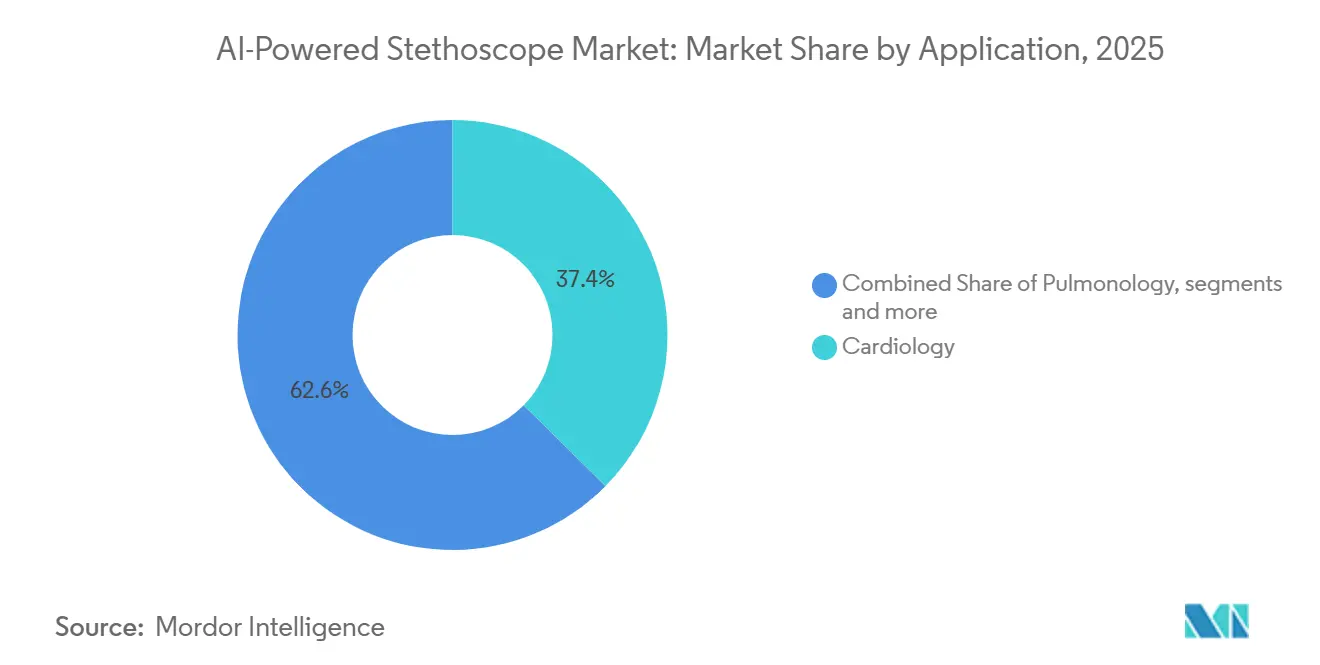
Cardiology Anchors Demand While Primary Care Expands FastestCardiology held 37.44% of revenue in 2025, while primary care is projected to post the fastest 8.46% CAGR through 2031 in the AI-powered stethoscope market. Cardiology remains the largest application because missed murmurs, atrial fibrillation, and heart failure signs carry high clinical and financial consequences. The strongest evidence base has also been built in cardiovascular use, which helps explain why hospitals and specialists have adopted cardiac-focused algorithms first. At the same time, primary care is gaining momentum because AI-assisted auscultation lets general clinicians screen more confidently before specialist referral.
Pulmonology remains a major application in the AI-powered stethoscope market because chronic respiratory disease management depends on repeated listening and clearer sound interpretation. Pediatrics is also emerging as a notable niche, supported by wearable and home monitoring formats that extend use beyond the clinic. The category is expanding because childhood respiratory monitoring, chronic disease follow-up, and early cardiac screening are all tools that can capture repeatable data outside specialist offices. As a result, the AI-powered stethoscope market is widening from specialist cardiology into broader first contact and longitudinal care settings.

By End-User:
Hospitals Lead as Ambulatory Settings AccelerateHospitals held 35.62% of revenue in 2025, which kept them at the center of the AI-powered stethoscope market. Their lead comes from stronger EHR infrastructure, larger procurement budgets, and a higher concentration of cardiology cases that can justify AI platform spending. Hospitals also tend to have more formal clinical governance, which helps them evaluate and approve connected diagnostic systems. This makes them a natural first home for devices that require workflow validation, user training, and privacy review. The hospital position, therefore, reflects both demand scale and the ability to operationalize a more software-centered device category.
Ambulatory surgical centers are expected to be the fastest-growing end-user group, with 7.86% CAGR projected through 2031 in the AI-powered stethoscope market share shift across care settings. MedPAC reported 6,566 Medicare-certified ambulatory surgical centers in the United States in its March 2026 report, showing the continued scale of this outpatient channel. These facilities are increasingly interested in tools that support pre-procedural cardiac screening without adding unnecessary referral steps. Homecare is also becoming more credible as a use environment, with Sonavi Labs positioning Feelix as a platform that allows patients to self-administer auscultation and securely share results with clinicians.
Geography Analysis
North America and Europe AI-Powered Stethoscope Market
North America held 41.73% of revenue in 2025, which made it the largest regional block in the AI-powered stethoscope market. The region benefits from early FDA clearances, stronger enterprise purchasing capacity, and greater readiness to adopt software-supported bedside tools. The United States remains the core country market, with Eko Health reporting more than 650,000 SENSORA devices sold globally by 2025 and raising USD 41 million in Series D funding in June 2024 to scale AI-driven heart and lung disease detection. This leads matters because it gives North American vendors more opportunities to build datasets, refine workflows, and deepen provider familiarity in routine practice. Europe remains important for the AI-powered stethoscope market because strict evidence and privacy expectations can reward platforms that combine clinical validation with stronger compliance discipline.
APAC AI-Powered Stethoscope Market
Asia-Pacific is anticipated to be the fastest-growing region in the AI-powered stethoscope market, with a projected 8.95% CAGR through 2031. Growth is being shaped by large unmet screening needs, expanding digital health delivery, and a stronger policy focus on extending specialist reach through technology-enabled frontline care. India stands out because NITI Aayog highlighted both the specialist shortfall and the role of AI-based auscultation in helping frontline workers screen patients earlier. The region’s faster growth suggests that the AI-powered stethoscope market will expand not only through premium hospital purchases but also through devices adapted for wider first-line use.
MEA and South America AI-Powered Stethoscope Market
The Middle East, Africa, and South America remain earlier-stage parts of the AI-powered stethoscope market, where infrastructure gaps and price sensitivity still slow broad adoption. Even so, long-term demand is meaningful because these regions continue to face specialist access gaps and uneven connectivity across many care settings. Platforms designed for affordability, portability, and offline or low-bandwidth use are better positioned here than premium subscription-led models. Sonavi Labs’ emphasis on home auscultation and secure sharing shows why simpler deployment models may matter more than feature depth in these geographies.

Competitive Landscape
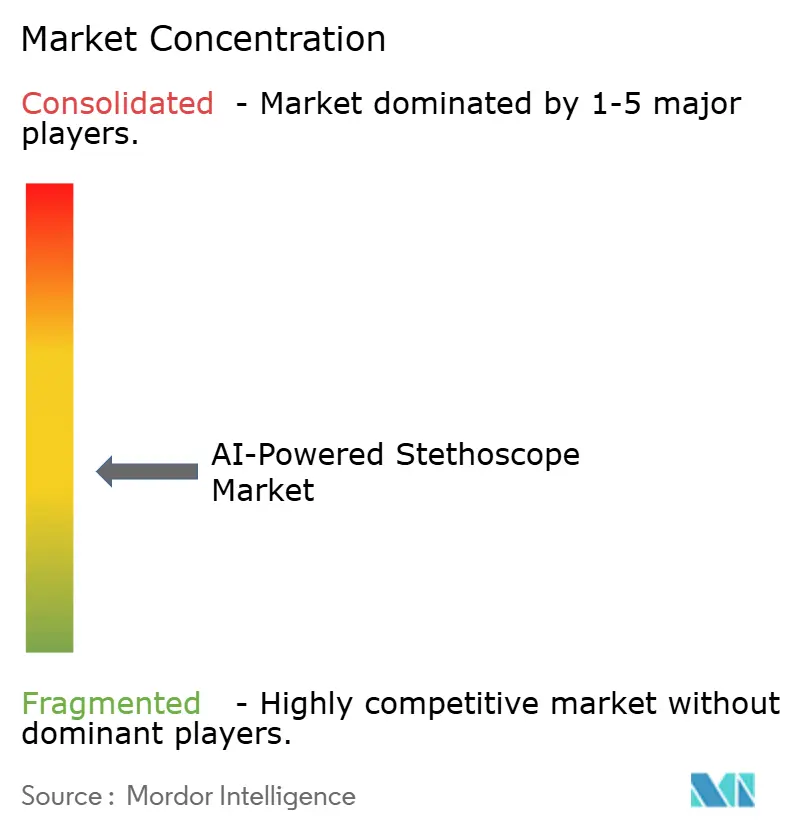
The AI-powered stethoscope market is moderately fragmented, with more than 20 active manufacturers and no single company holding more than a mid-teens global revenue share. Eko Health currently holds the strongest clinically validated position because it combines an installed base scale with multiple FDA-cleared algorithms and broad recognition in digital auscultation. Its position is important, but it does not amount to dominance, since competing firms are entering through remote care, pediatric monitoring, lung sound analysis, and integrated workflow tools. This means competition is no longer centered only on who offers digital amplification, because software depth and clinical fit now shape switching costs more directly. The AI-powered stethoscope market is therefore developing as a platform contest rather than a simple device race.
Several strategic moves since 2024 show how companies are trying to widen their position in the AI-powered stethoscope market. Lapsi Health used the October 2025 launch of Keikku 2.0 to push a convergence strategy that joined auscultation with an integrated AI medical scribe, which raised the competitive bar for vendors focused only on listening hardware. TytoCare, in turn, expanded its remote care position through lung sound algorithm clearances and its next-generation Tyto Stethoscope G3 in March 2026. These moves show that leadership is being built through workflow breadth, algorithm validation, and care setting reach rather than through hardware design alone.
Data scale, compliance capability, and channel access are becoming the main structural filters in the AI-powered stethoscope market. Larger or better-funded companies can support repeated validation work, enterprise security reviews, and product updates across different geographies more easily than smaller entrants can. At the same time, the space still has open room in affordable wearables, continuous home monitoring, and longitudinal disease management, where only a limited number of vendors have credible commercial positions today. This balance between fragmentation and rising execution demands explains why competition remains active, yet increasingly harder for lightly resourced players to sustain.
AI-Powered Stethoscope Industry Leaders
Eko Health
Thinklabs Medical LLC
HD Medical Group
StethoMe
Solventum
- *Disclaimer: Major Players sorted in no particular order
AI-Powered Stethoscope Market Companies Covered in this Report
- A&D Company, Limited
- ADInstruments Pty Ltd
- Aevice Health
- American Diagnostic
- Cardionics, Inc.
- CliniCloud
- Contec Medical Systems
- Eko Health
- eKuore Medical
- HD Medical Group
- Lapsi Health
- M3DICINE Pty Ltd.
- Meditech Equipment
- SensiCardiac
- Solventum
- Sonavi Labs
- StethoMe
- Thinklabs Medical LLC
- Welch Allyn

Recent Industry Developments in AI-Powered Stethoscope Market
- May 2026: Ai Health Highway India Pvt. Ltd. received FDA 510(k) clearance (K252915) for AiSteth, making it the first India-headquartered AI stethoscope manufacturer to secure U.S. market authorization. The Bengaluru-based company had already deployed AiSteth across 75+ medical institutions in Maharashtra and Karnataka and screened over 52,000 patients at 93% reported diagnostic accuracy, establishing credible clinical evidence base ahead of the regulatory milestone.
- March 2026: TytoCare received FDA 510(k) clearance for the Tyto Stethoscope G3 (K252089), the next-generation iteration of its AI-enabled remote stethoscope platform. The upgrade advances TytoCare's integration with its Home Smart Clinic and Pro Smart Clinic solutions and reinforces its positioning as the leading AI-based auscultation platform for remote and home-based care.
- December 2025: CSD Labs received FDA 510(k) clearance for eMurmur Heart AI (K252284), an AI-powered cardiac auscultation analysis platform. The clearance expands the roster of independently validated AI cardiac diagnostic tools in the U.S. market, increasing competitive pressure on established platforms.


Global AI-Powered Stethoscope Market Report Scope
According to the report’s scope, the AI-powered stethoscope market comprises artificial intelligence-enabled digital stethoscopes that capture, analyze, and interpret heart, lung, and other body sounds to assist healthcare professionals in early disease detection, clinical decision-making, and remote patient assessment.
The AI-powered stethoscope market is segmented into product type, technology, application, end-user, and geography. By product type, the market is segmented into wireless AI stethoscope and wired AI stethoscope. By technology, the market is segmented into machine learning, deep learning, natural language processing, and other technologies. By application, the market is segmented into cardiology, pulmonology, pediatrics, primary care, and other applications. By end-user, the market is segmented into hospitals, clinics, ambulatory surgical centers, and homecare settings. By geography, the market is segmented into North America, Europe, Asia-Pacific, the Middle East and Africa, and South America. The report also covers the estimated market sizes and trends for 17 countries across major regions globally. The report offers values (USD) for all the above segments.
| Wireless AI Stethoscope |
| Wired AI Stethoscope |
| Machine Learning |
| Deep Learning |
| Natural Language Processing |
| Other Technologies |
| Cardiology |
| Pulmonology |
| Pediatrics |
| Primary Care |
| Other Applications |
| Hospitals |
| Clinics |
| Ambulatory Surgical Centers |
| Homecare Settings |
| North America | United States |
| Canada | |
| Mexico | |
| Europe | Germany |
| United Kingdom | |
| France | |
| Italy | |
| Spain | |
| Rest of Europe | |
| Asia-Pacific | China |
| Japan | |
| India | |
| Australia | |
| South Korea | |
| Rest of Asia-Pacific | |
| Middle East and Africa | GCC |
| South Africa | |
| Rest of Middle East and Africa | |
| South America | Brazil |
| Argentina | |
| Rest of South America |
| By Product Type | Wireless AI Stethoscope | |
| Wired AI Stethoscope | ||
| By Technology | Machine Learning | |
| Deep Learning | ||
| Natural Language Processing | ||
| Other Technologies | ||
| By Application | Cardiology | |
| Pulmonology | ||
| Pediatrics | ||
| Primary Care | ||
| Other Applications | ||
| By End-User | Hospitals | |
| Clinics | ||
| Ambulatory Surgical Centers | ||
| Homecare Settings | ||
| By Geography | North America | United States |
| Canada | ||
| Mexico | ||
| Europe | Germany | |
| United Kingdom | ||
| France | ||
| Italy | ||
| Spain | ||
| Rest of Europe | ||
| Asia-Pacific | China | |
| Japan | ||
| India | ||
| Australia | ||
| South Korea | ||
| Rest of Asia-Pacific | ||
| Middle East and Africa | GCC | |
| South Africa | ||
| Rest of Middle East and Africa | ||
| South America | Brazil | |
| Argentina | ||
| Rest of South America | ||


Key Questions Answered in the Report
What is the 2026 value of the AI-powered stethoscope market?
The AI-powered stethoscope market stands at USD 132.70 million in 2025 to reach USD 139.63 million by 2026 and is forecasted to reach USD 189.66 million by 2031 at a 6.32% CAGR.
Which product type leads demand for AI-powered stethoscopes?
Wireless devices led with 43.18% share in 2025 because they fit app-based, mobile, and telemedicine workflows more easily than tethered formats.
Which technology is growing fastest in AI-assisted auscultation?
Natural language processing is projected to grow fastest at 8.12% CAGR through 2031 as platforms move toward note creation and decision support.
Which region is expanding the fastest?
Asia-Pacific is forecasted to grow at 8.95% CAGR through 2031, supported by unmet screening needs, digital health expansion, and broader frontline care use.
Page last updated on:





