
Adiponectin Testing Market Size and Share
Market Overview
| Study Period | 2020 - 2031 |
|---|---|
| Market Size (2026) | USD 40.97 Million |
| Market Size (2031) | USD 61.40 Million |
| Growth Rate (2026 - 2031) | 8.43 % |
| Fastest Growing Market | Asia-Pacific |
| Largest Market | North America |
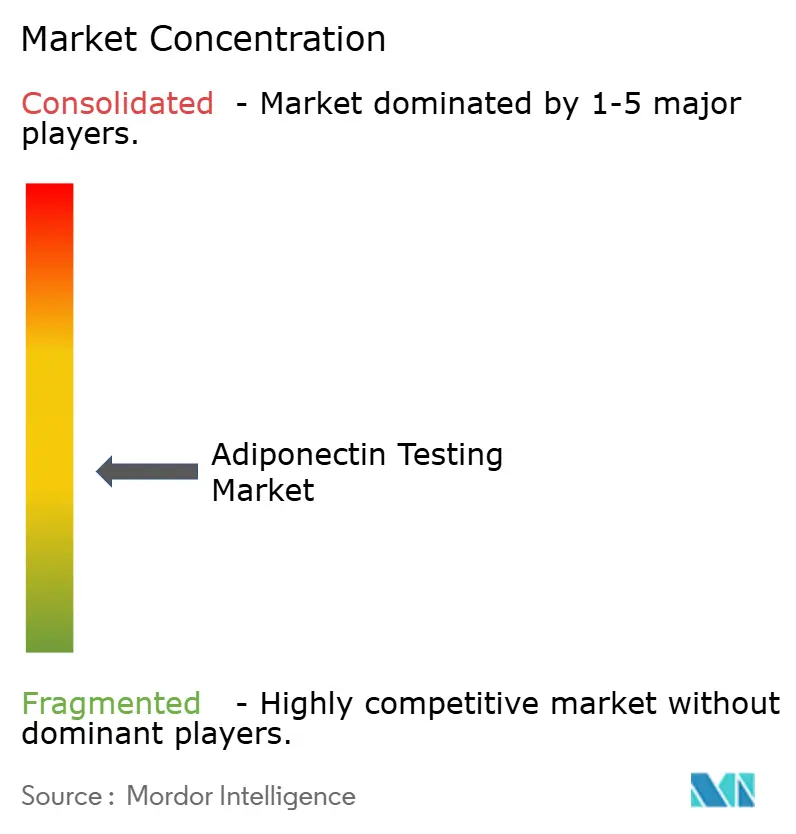
| Market Concentration | Medium |
Major Players *Disclaimer: Major Players sorted in no particular order Image © Mordor Intelligence. Reuse requires attribution under CC BY 4.0. | |
Adiponectin Testing Market Analysis by Mordor Intelligence
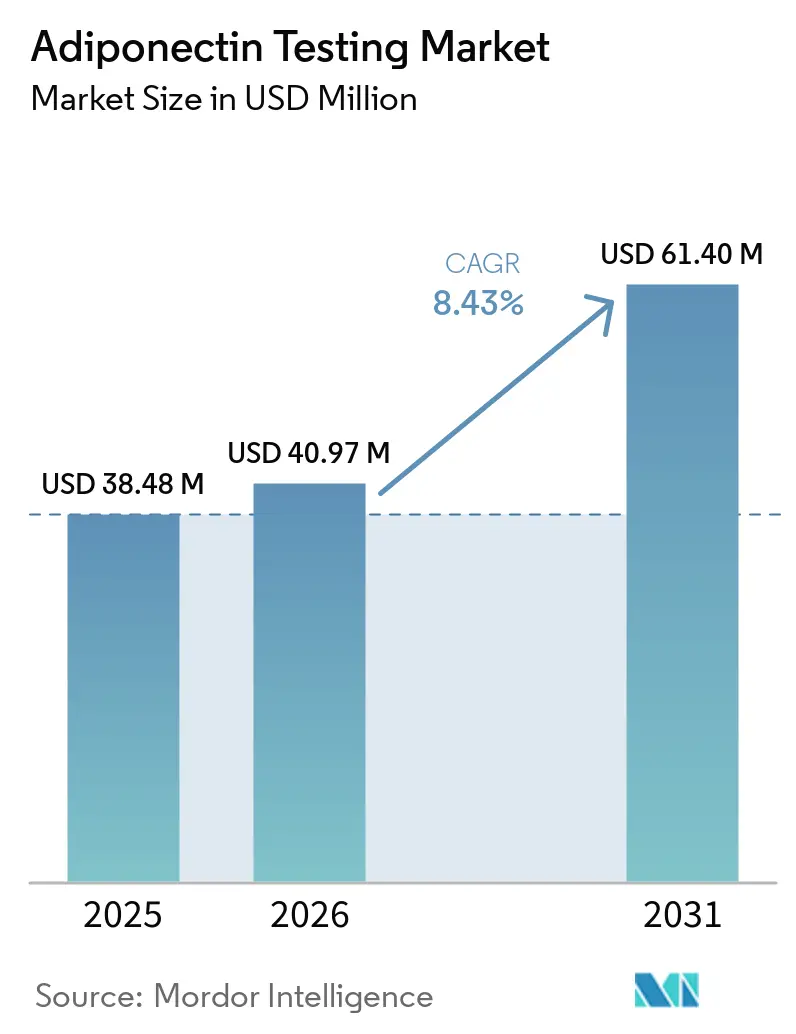
The Adiponectin Testing Market size is expected to increase from USD 38.48 million in 2025 to USD 40.97 million in 2026 and reach USD 61.40 million by 2031, growing at a CAGR of 8.43% over 2026-2031.
The adiponectin testing market is supported by the rising research focus on insulin resistance, visceral obesity, and cardiometabolic dysfunction. Diabetes affected 589 million adults worldwide in 2024, and 853 million adults are projected to be affected by 2050, maintaining demand for research that examines metabolic risk markers. Pharmaceutical obesity trials and SGLT2 inhibitor studies are incorporating adiponectin as a secondary endpoint, which extends assay use beyond conventional metabolic syndrome studies. The adiponectin testing market also benefits from laboratories adopting assays that can support broader adipokine panels and higher-throughput workflows. The absence of globally harmonized reference intervals continues to limit the move from research testing to routine clinical use.
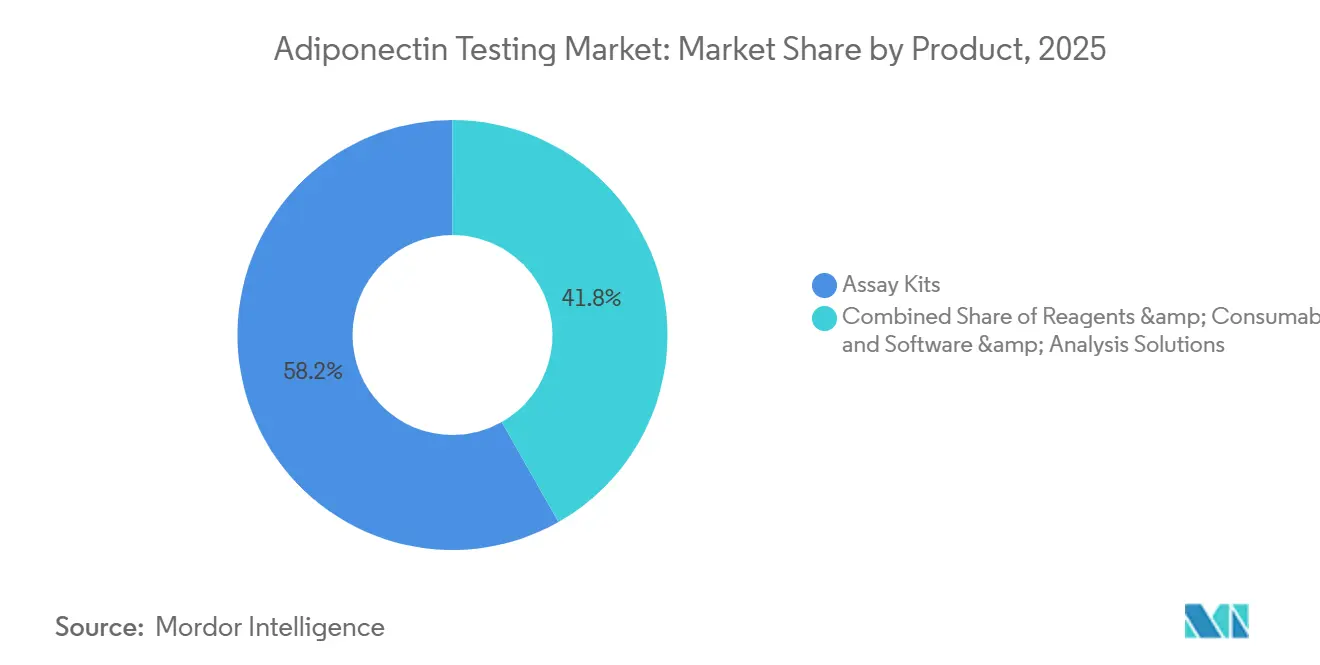
By product, Assay Kits held 58.2% of the adiponectin testing market share in 2025, while Reagents & Consumables are forecast to grow at an 8.6% CAGR through 2031.
By technology, ELISA held 46.5% of global revenue in 2025, while Multiplex Immunoassay is forecast to grow at a 9.8% CAGR through 2031.
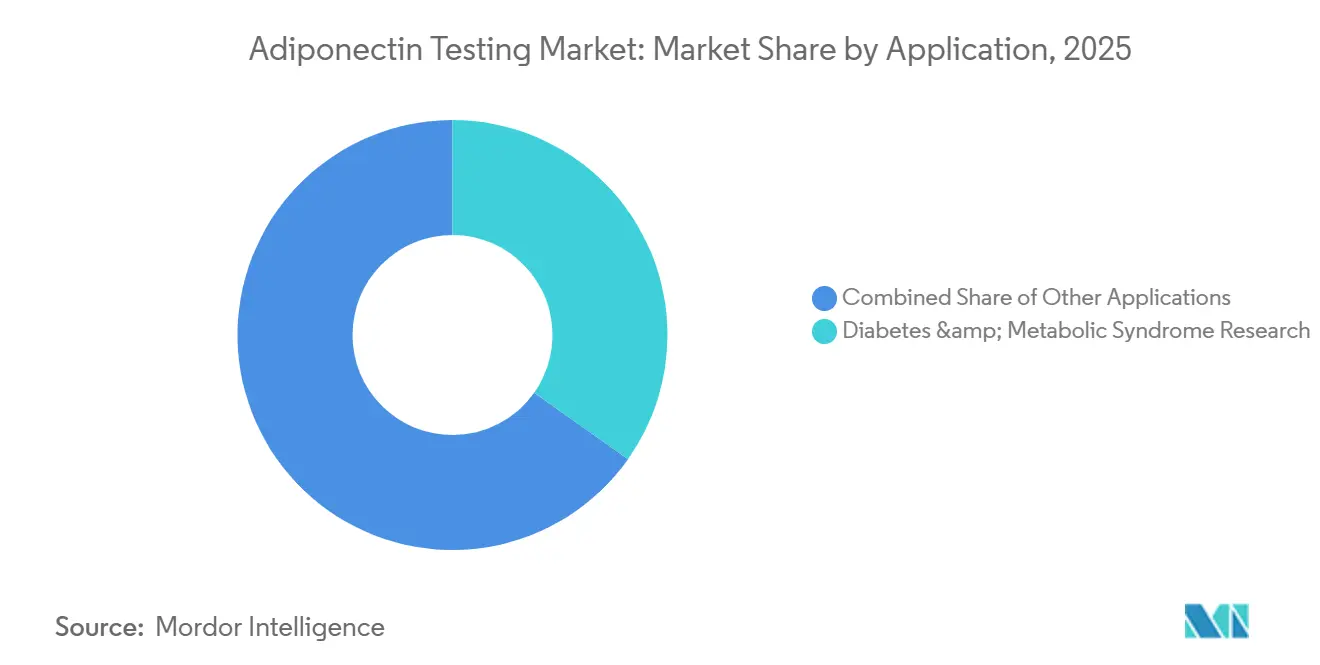
By application, Diabetes & Metabolic Syndrome Research held 34.8% of the 2025 market, while Biomarker Discovery & Clinical Research is forecast to grow at a 9.2% CAGR through 2031.
By end user, Research & Academic Institutes held 46.8% of the 2025 market, while Hospitals & Clinics are forecast to grow at an 8.8% CAGR through 2031.
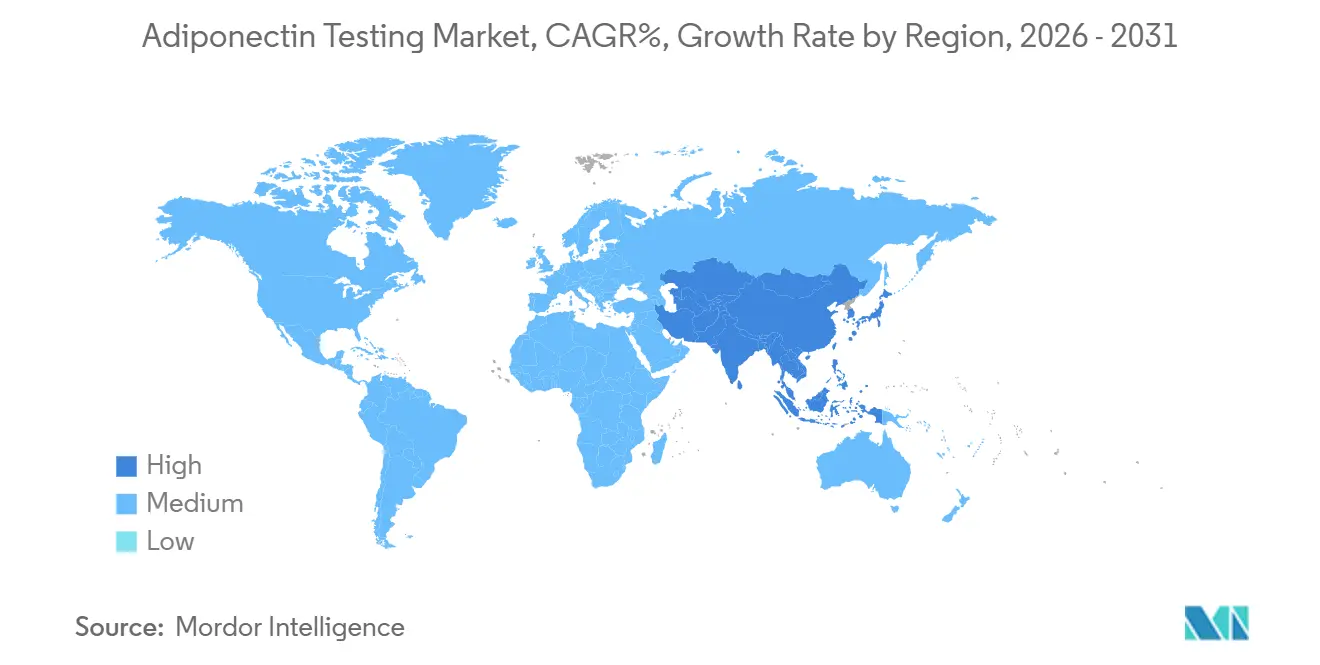
By geography, North America held 42.1% of the 2025 global market, while Asia Pacific is forecast to grow at an 8.2% CAGR through 2031.
Note: Market size and forecast figures in this report are generated using Mordor Intelligence’s proprietary estimation framework, updated with the latest available data and insights as of January 2026.
Market Trends and Insights
Drivers Impact Analysis of Adiponectin Testing Market*
| Driver | (~) % Impact on CAGR Forecast | Geographic Relevance | Impact Timeline |
|---|---|---|---|
| Growing Cardiometabolic Disease Research | +2.4% | Global | Long term (≥ 4 years) |
| Expansion of Obesity and Diabetes Biomarker Studies | +1.8% | North America and Europe, with spillover to Asia Pacific | Medium term (2-4 years) |
| Rising Demand for Multiplex Biomarker Panels | +1.3% | North America and Asia Pacific | Medium term (2-4 years) |
| Translation of Adiponectin Testing Into Weight-Management Monitoring | +0.9% | North America and Europe, with early gains in Asia Pacific | Short term (≤ 2 years) |
| Greater Need for Matrix-Validated Low-Concentration Assays | +0.6% | Global, concentrated in North America | Long term (≥ 4 years) |
| Source: Mordor Intelligence | |||
Growing Cardiometabolic Disease Research
The adiponectin testing market draws sustained demand from research on diabetes, obesity, cardiovascular disease, and related metabolic conditions. A March 2026 study[1] of 190 adults with metabolic syndrome found that serum adiponectin declined across higher cardiovascular risk score quartiles. The same study identified adipokine imbalance, including reduced adiponectin, as 1 of 5 independent predictors of cardiovascular risk score and reported 9.48% of total variance explained by this factor. Research involving 3,199 participants in the Study of Health in Pomerania also associated higher adiponectin with a favorable anti-atherogenic lipoprotein profile. As study designs use adiponectin with inflammation markers, lipid measures, and insulin-resistance indicators, laboratories need sensitive and validated formats. That requirement supports demand for higher-value assays rather than standard research kits alone.
Expansion of Obesity and Diabetes Biomarker Studies
The adiponectin testing market is supported by research aimed at earlier identification of diabetes and obesity-related risk. Of the 589 million adults living with diabetes in 2024, 252 million were unaware of their condition. A 2025 study[2] reported that adiponectin was an independent predictor of insulin resistance in visceral obesity-associated type 2 diabetes and identified an inverse association with HOMA-IR. This evidence supports its use in research protocols that assess metabolic risk before overt disease becomes apparent. The adiponectin testing market therefore serves academic and institutional programs that examine obesity, diabetes, and preventive metabolic health. It also serves drug-development workflows as adiponectin advances from a research marker toward a therapeutic area in obesity and type 2 diabetes.
Rising Demand for Multiplex Biomarker Panels
The adiponectin testing market is changing as laboratories move from single-analyte measurement toward panels that measure several adipokines at once. A 2025 study described a validated immunoaffinity LC-MS/MS assay that simultaneously quantified leptin, resistin, and adiponectin in human plasma. The assay reported a 50 ng/mL lower limit of quantification for adiponectin, which supports use in environments that require documented analytical performance. Meso Scale Diagnostics includes adiponectin in its U-PLEX Calibrator 26 panel with ApoA1, ApoC3, complement C9, and other analytes. Multiplex systems can reduce sample use and support broader correlation analyses across clinical cohorts. This shift can limit demand for standalone ELISA kits in high-throughput settings while increasing the need for matched reagents, calibrators, and antibodies.
Translation of Adiponectin Testing Into Weight-Management Monitoring
The adiponectin testing market has a growing connection with structured obesity intervention programs. A 2026 prospective study followed adipokine profiles, including adiponectin and leptin, for 12 months after bariatric procedures in 76 patients with obesity. The July 2026 CALERIE 2 randomized controlled trial linked caloric restriction with improved glycemic control through the adiponectin-ceramide axis in non-obese adults. These studies make adiponectin measurement relevant to intervention monitoring as well as baseline metabolic research. Hospitals and clinics can use assays within programs that require measurements before and after treatment. Much of this demand is connected to pharmaceutical-sponsored monitoring protocols rather than independent reimbursement for a single diagnostic test.
Restraints Impact Analysis of Adiponectin Testing Market*
| Restraint | (~) % Impact on CAGR Forecast | Geographic Relevance | Impact Timeline |
|---|---|---|---|
| Limited Clinical-Utility Standardization | -1.4% | Global | Long term (≥ 4 years) |
| High Assay Validation and Regulatory Costs | -1.0% | North America and Europe | Medium term (2-4 years) |
| Biological Variability Across Patients and Sample Matrices | -0.7% | Global | Long term (≥ 4 years) |
| Substitution by Established Cardiometabolic Biomarkers | -0.5% | North America and Europe, with core Asia Pacific markets | Medium term (2-4 years) |
| Source: Mordor Intelligence | |||
Limited Clinical-Utility Standardization
The adiponectin testing market remains constrained by the lack of globally harmonized reference intervals. This gap makes it difficult to compare results between kits, laboratories, and regions. It also slows adoption by hospital networks that require consistent results for multisite studies. The reported adiponectin paradox in coronary artery disease creates additional uncertainty because elevated concentrations have been associated with higher long-term mortality in some prospective studies. China has established an expert-consensus approach to diabetes risk screening that includes adiponectin, but it remains a national approach rather than an international standard. As a result, demand remains concentrated in research and pharmaceutical-sponsored programs instead of routine diagnostics.
High Assay Validation and Regulatory Costs
Assay developers face higher costs when they validate performance across matrices and distinguish high-molecular-weight from total adiponectin. These requirements increase the resources needed to bring new formats to regulated settings. The United States Food and Drug Administration biomarker qualification process requires evidence of clinical utility in addition to analytical validation. In Europe, Regulation (EU) 2017/746 created additional compliance requirements for in vitro diagnostic devices. Larger manufacturers can spread these costs across broader product portfolios and established quality systems. Smaller research-grade vendors can face continued margin pressure and longer regulatory timelines.
*Our forecasts treat driver/restraint impacts as directional, not additive. The impact forecasts reflect baseline growth, mix effects, and variable interactions.
Adiponectin Testing Market Segment Analysis
By Product:
Assay Kits Lead While Consumables Support Custom WorkflowsAssay Kits accounted for 58.2% of the adiponectin testing market size in 2025. Their position reflects the long use of sandwich ELISA plate-format kits in peer-reviewed adiponectin research. Literature precedent often influences kit selection in academic laboratories, which makes established ELISA formats familiar to researchers. The installed base of microplate readers also continues to support procurement of ELISA-compatible products. These factors give kit suppliers a dependable base across university and institutional laboratories.
Reagents & Consumables are forecast to grow at an 8.6% CAGR from 2026 to 2031. The adiponectin testing industry is seeing greater use of matched antibody pairs, calibrators, and buffers in custom adipokine panels. The validated 2025 immunoaffinity LC-MS/MS workflow shows how biopharma and contract research settings can assemble custom reagent systems instead of purchasing catalog kits. Software & Analysis Solutions remain smaller, but high-throughput laboratories need reproducible data analysis and documentation for regulatory submissions. Suppliers with integrated offerings across reagents, plates, calibrators, and analysis tools are better placed to serve these workflows.

By Technology:
ELISA Retains Scale While Multiplex Assays Grow FasterELISA held 46.5% of the adiponectin testing market size in 2025. Its lead reflects its suitability for serum adiponectin concentrations and the extensive installed base of microplate readers. ELISA also benefits from its broad presence in published research methods. Chemiluminescent Immunoassay represents a separate technology tier with sensitivity advantages for low-concentration measurement. It has relevance in East Asian laboratories where chemiluminescence analyzers are widely used.
Multiplex Immunoassay is forecast to grow at a 9.8% CAGR through 2031, the highest rate among technology types. Pharmaceutical sponsors use these systems to measure adiponectin with leptin, resistin, and inflammatory cytokines in 1 assay run. Meso Scale Diagnostics offers a panel that includes adiponectin with several related biomarkers. This approach reduces sample consumption and supports analysis across large clinical cohorts. The adiponectin testing industry may also see emerging point-of-care biosensors that measure adiponectin and leptin together, although these formats remain early-stage. A 2025 report described a laser-scribed graphene immunosensor with a miniaturized potentiostat and smartphone application for this purpose.
By Application:
Diabetes Research Provides the Largest BaseDiabetes & Metabolic Syndrome Research accounted for 34.8% of segment revenue in 2025. The segment is supported by adiponectin’s established inverse relationship with type 2 diabetes risk and metabolic syndrome components. The large number of undiagnosed diabetes cases supports continued academic and epidemiological research into risk markers. Obesity Research is another major application because adiponectin deficiency frequently occurs with obesity and metabolic dysfunction. A 2025 systematic review and meta-analysis[3]found significantly lower adiponectin levels in people with obesity than in normal-weight individuals.
Biomarker Discovery & Clinical Research is forecast to expand at a 9.2% CAGR from 2026 to 2031. This application gains momentum as obesity pharmacology and SGLT2 inhibitor trials include adiponectin as a secondary endpoint. The CALERIE 2 trial reported an adiponectin-ceramide mechanism for improved glycemic control after caloric restriction. Cardiovascular Research remains a distinct demand stream because multimarker protocols can combine adiponectin with CRP, BNP, and lipid subfractions. Other applications include emerging research in bone metabolism and renal disease.
By End User:
Academic Institutes Remain Central While Hospitals ExpandResearch & Academic Institutes accounted for 46.8% of the adiponectin testing market size in 2025. Published methods and established laboratory platforms create continued demand for familiar assay products. This setting makes it difficult for new suppliers to displace established methods without a clear performance or pricing advantage. Pharmaceutical and biotechnology companies form the next major user group. They use adiponectin as part of metabolic biomarker panels in Phase I through Phase III trials for obesity, diabetes, and cardiometabolic treatments.
Hospitals & Clinics are forecast to grow at an 8.8% CAGR from 2026 to 2031. This growth is linked to obesity intervention programs that collect baseline and follow-up adiponectin measurements. The adiponectin testing market benefits where hospital testing is embedded in pharmaceutical-sponsored monitoring protocols. Clinical laboratories are also a growing channel for panels that pair adiponectin with HbA1c, fasting glucose, and lipid measures in preventive health programs. Contract research organizations remain smaller but important customers because multisite studies require documented inter-assay variation and traceable calibrators.
Geography Analysis
North America Adiponectin Testing Market
North America accounted for 42.1% of the global adiponectin testing market share in 2025. The region combines metabolic disease research institutions, National Institutes of Health-funded biomarker programs, pharmaceutical-sponsored trials, contract research organizations, and clinical testing networks. The United States is the largest national setting within this demand base. Its academic centers and biopharma infrastructure generate demand across products and technologies. North America also has a strong need for documented assay performance in regulated research settings.
Europe Adiponectin Testing Market
Europe is the second-largest regional bloc in the adiponectin testing market. Germany, the United Kingdom, and the Netherlands support academic demand for assay kits. Regulation (EU) 2017/746[4] raises compliance requirements in regulated procurement channels and can favor larger validated manufacturers. The 2026 Study of Health in Pomerania publication included 3,199 participants and illustrates the region’s continuing role in population-level adiponectin research. This evidence base supports long-cycle purchasing by academic laboratories.
APAC, LATAM and MEA Adiponectin Testing Market
Asia Pacific is forecast to grow at an 8.2% CAGR between 2026 and 2031. China and Japan serve as separate sources of growth, supported by preventive health activity and clinical research capacity. China’s approach to diabetes risk screening has encouraged adiponectin measurement for high-risk groups and established population-specific reference values through latex-enhanced immunoturbidimetry. Japan’s comprehensive preventive medical check-up system provides a channel for optional extended metabolic biomarker panels. South Korea adds demand through its active clinical trial sector, including the 2025 multicenter enavogliflozin study in which serum adiponectin increased by 0.98 mg/L versus placebo after 24 weeks. SPRINGER.COM Latin America and the Middle East and Africa remain smaller. They have early demand from research universities, health-system modernization, preventive care programs, and regional distribution networks.
Competitive Landscape
The adiponectin testing market is moderately fragmented, with more than 20 active vendors. Bio-Techne, Thermo Fisher Scientific, Merck KGaA, Abcam, and Bio-Rad Laboratories form the established supplier group. Their competition centers on assay performance, regulatory documentation, catalog breadth, and distribution reach. Some suppliers focus on broad catalogs for price-sensitive academic purchasing. Others focus on validated formats for pharmaceutical companies and contract research organizations.
Bio-Techne and Thermo Fisher Scientific implemented a European distribution agreement in May 2024 that allowed the Fisher Scientific channel to distribute Bio-Techne’s portfolio across Europe. Bio-Techne also announced a July 2025 partnership with Spear Bio for ultrasensitive immunoassays aimed at therapeutic development. MesoScale Diagnostics uses its U-PLEX platform to measure adiponectin alongside more than 50 co-analytes, which can encourage protocol continuity among pharmaceutical sponsors.
Opportunities remain in high-molecular-weight adiponectin assays, point-of-care formats, and matrix-validated plasma and urine assays with full traceability documentation. Smaller suppliers such as Eagle Biosciences, RayBiotech Life, Boster Biological Technology, and Elabscience Bionovation compete through price and catalog breadth in academic channels. Suppliers that offer matched antibodies, calibrators, plates, and analysis support can address the shift toward custom panels. The adiponectin testing market is likely to retain its split between documented platforms for regulated biopharma work and catalog products for academic laboratories. This adiponectin testing market structure supports distinct positions for specialized and diversified suppliers.
Adiponectin Testing Industry Leaders
-
Thermo Fisher Scientific Inc.
-
Merck KGaA
-
Abcam plc
-
Bio-Rad Laboratories, Inc.
-
Creative Diagnostics
- *Disclaimer: Major Players sorted in no particular order
Adiponectin Testing Market Companies Covered in this Report
- Bio-Techne
- Thermo Fisher Scientific
- Merck
- Abcam
- Bio-Rad Laboratories
- LabCorp
- Quest Diagnostics
- STRATEC SE
- Randox Laboratories
- Eagle Biosciences, Inc.
- Boster Biological Technology Co., Ltd.
- Assaypro LLC
- RayBiotech Life, Inc.
- Enzo Biochem, Inc.
- BioVendor Group
- AdipoGen Life Sciences, Inc.
- Meso Scale Diagnostics, LLC
- Mediagnost GmbH
- CUSABIO Technology LLC
- Elabscience Bionovation Inc.
- Creative Diagnostics
- Aviva Systems Biology Corporation
- ERBA Diagnostics, Inc.
- Zeus Scientific Inc.
- Trinity Biotech plc
Recent Industry Developments in Adiponectin Testing Market
- July 2026: Nature Communications published results from the CALERIE 2 randomized controlled trial (Warmbrunn et al.), establishing a direct mechanistic link between caloric restriction, elevated high-molecular-weight adiponectin, and improved glycemic control via the adiponectin-ceramide axis. The findings open new assay demand from weight-management and caloric intervention research sponsors who must now measure HMW adiponectin specifically, not only total adiponectin.
- July 2025: Bio-Techne Corporation announced a strategic partnership with Spear Bio to distribute next-generation ultrasensitive immunoassays for low-abundance biomarkers. The initial focus covers Alzheimer’s disease biomarkers, with the partnership establishing a commercial infrastructure for expanding to additional protein targets including metabolic adipokines.
- August 2025: Results from a phase III Korean multicenter randomized controlled trial published in Cardiovascular Diabetology showed that enavogliflozin, a selective SGLT2 inhibitor, raised serum adiponectin by 0.98 mg/L over 24 weeks versus placebo in 160 patients with type 2 diabetes. The publication embeds adiponectin monitoring as a validated clinical endpoint in SGLT2 inhibitor development programs, creating recurring assay demand across the drug class.
- April 2025: Researchers at Pacific Northwest National Laboratory published a validated multiplex immunoaffinity LC-MS/MS assay for simultaneous adiponectin, leptin, and resistin quantification in the Journal of Mass Spectrometry and Advances in the Clinical Lab. The assay achieved a lower limit of quantification of 50 ng/mL for adiponectin and was validated across 256 plasma samples spanning normal-weight, overweight, and obese subjects.
Global Adiponectin Testing Market Report Scope
Segmentation Overview
| Assay Kits |
| Reagents & Consumables |
| Software & Analysis Solutions |
| ELISA |
| Chemiluminescent Immunoassay (CLIA) |
| Multiplex Immunoassay |
| Other Technologies |
| Diabetes & Metabolic Syndrome Research |
| Obesity Research |
| Cardiovascular Research |
| Biomarker Discovery & Clinical Research |
| Other Applications |
| Research & Academic Institutes |
| Pharmaceutical & Biotechnology Companies |
| Clinical Laboratories |
| Hospitals & Clinics |
| Contract Research Organizations (CROs) |
| North America | United States |
| Canada | |
| Mexico | |
| Europe | Germany |
| United Kingdom | |
| France | |
| Italy | |
| Spain | |
| Rest of Europe | |
| Asia-Pacific | China |
| India | |
| Japan | |
| South Korea | |
| Australia | |
| Rest of Asia-Pacific | |
| Middle East & Africa | GCC |
| South Africa | |
| Rest of Middle East and Africa | |
| South America | Brazil |
| Argentina | |
| Rest of South America |
| By Product | Assay Kits | |
| Reagents & Consumables | ||
| Software & Analysis Solutions | ||
| By Technology | ELISA | |
| Chemiluminescent Immunoassay (CLIA) | ||
| Multiplex Immunoassay | ||
| Other Technologies | ||
| Diabetes & Metabolic Syndrome Research | ||
| Obesity Research | ||
| Cardiovascular Research | ||
| Biomarker Discovery & Clinical Research | ||
| Other Applications | ||
| By End User | Research & Academic Institutes | |
| Pharmaceutical & Biotechnology Companies | ||
| Clinical Laboratories | ||
| Hospitals & Clinics | ||
| Contract Research Organizations (CROs) | ||
| By Geography | North America | United States |
| Canada | ||
| Mexico | ||
| Europe | Germany | |
| United Kingdom | ||
| France | ||
| Italy | ||
| Spain | ||
| Rest of Europe | ||
| Asia-Pacific | China | |
| India | ||
| Japan | ||
| South Korea | ||
| Australia | ||
| Rest of Asia-Pacific | ||
| Middle East & Africa | GCC | |
| South Africa | ||
| Rest of Middle East and Africa | ||
| South America | Brazil | |
| Argentina | ||
| Rest of South America | ||
Key Questions Answered in the Report
What is the projected value of adiponectin testing by 2031?
The adiponectin testing market is projected to reach USD 61.4 million by 2031, growing at an 8.4% CAGR from 2026.
Which product category generated the largest revenue in 2025?
Assay Kits held 58.2% of 2025 revenue, supported by widespread use of ELISA formats in academic research.
Which testing technology is growing the fastest?
Multiplex Immunoassay is forecast to grow at a 9.8% CAGR through 2031 because it measures adiponectin with several related biomarkers in a single run.
Why is adiponectin measured in obesity and diabetes studies?
Studies use adiponectin to examine insulin resistance, visceral obesity, cardiometabolic risk, and treatment responses.
Which end user is expected to grow the fastest?
Hospitals & Clinics are forecast to grow at an 8.8% CAGR through 2031, supported by obesity intervention monitoring programs.
Which region has the strongest growth outlook?
Asia Pacific is forecast to grow at an 8.2% CAGR through 2031, supported by preventive screening activity and clinical research capacity.